
Overview

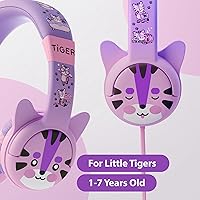
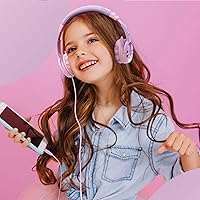
The Kidrox Tiger Wired Toddler Headphones arrive in a market crowded with flimsy, forgettable kids audio gear — and they make an immediate impression. The tiger-ear design is genuinely charming; kids spot them and want to put them on, which is half the battle with toddlers. Priced in the mid-range for children's headphones, they sit between dollar-store throwaways and pricier Bluetooth models aimed at older kids. These are honest travel headphones — wired, straightforward, and built around one clear priority: keeping little ears safe. Don't expect audiophile sound quality; do expect a practical, parent-friendly option that works the moment you plug it in.

Features & Benefits

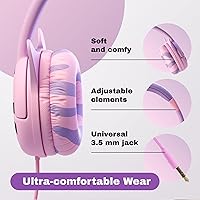
The 85dB volume cap is the headline feature here, and it does exactly what parents hope — the audio physically cannot get loud enough to damage young ears, even if a toddler cranks the tablet to maximum. The adjustable headband accommodates heads as small as a one-year-old's, while the soft cushioned ear pads mean kids aren't squirming to pull them off after five minutes. The flat cable design is a genuine relief on travel days — no tangled mess at the bottom of the diaper bag. At just under seven ounces, the tiger-ear headset sits lightly on small heads through long flights or backseat car rides.

Best For

These toddler headphones shine brightest as a travel companion — plug them into a plane seat jack or a tablet in the backseat and they work instantly, no app, no pairing, no dead battery to manage. That plug-and-play reliability makes them equally useful in classrooms or daycares where a teacher needs kids listening without fuss. Gift-givers will appreciate that the tiger design feels special without being so niche a child outgrows the look quickly. Worth noting: if you need headphones primarily for voice calls, confirm microphone compatibility with your specific device first, as the listing's mic claims are not fully consistent across descriptions.

User Feedback

Parents tend to highlight two things most: kids actually want to wear them, and the fit holds without constant readjusting. The playful design gets credit for solving the classic toddler problem of refusing to keep headphones on at all. On the critical side, some parents of children at the older end of the age range mention the ear cups feel snug as heads grow, and a few note the cable runs shorter than expected for certain car seat arrangements. Long-term durability is a mild concern — the headband hinge and cable base are the spots most likely to show wear after months of enthusiastic daily use.

Pros

  • The 85dB volume cap is hardware-enforced, giving parents real protection without relying on software settings that kids can accidentally change.
  • Kids tend to embrace the tiger-ear design immediately, which solves the common toddler problem of refusing to keep headphones on.
  • The flat, tangle-free cable is a practical win on travel days when cable management is the last thing a parent wants to think about.
  • Universal 3.5mm wired connection works with airplane seat jacks, tablets, and car DVD players without any adapter needed.
  • At under seven ounces, the tiger-ear headset is light enough for a two-year-old to wear through an entire long-haul flight without complaints.
  • The adjustable headband accommodates a wide range of small head sizes, making these toddler headphones viable from infancy through early elementary.
  • Soft cushioned ear pads make extended wear noticeably more comfortable than cheaper foam alternatives on competing budget models.
  • No batteries or charging means you are never caught with dead headphones at the worst possible moment.
  • Passive noise isolation helps children stay focused on their audio without requiring active noise cancellation electronics.
  • The durable material mix of silicone, plastic, and fabric holds up reasonably well against typical toddler pulling and roughhousing.

Cons

  • The cable length may fall short for certain car seat configurations where the tablet or screen sits farther away.
  • Ear cups can feel snug on children approaching age six or seven, limiting the practical usable lifespan for older kids in the stated range.
  • Microphone functionality is inconsistently documented, creating uncertainty for parents who need confirmed call or voice-chat capability.
  • The headband hinge and cable junction points show signs of wear faster than the rest of the headset after extended daily use.
  • No water or splash resistance means a spilled juice box during travel could end the headphones prematurely.
  • Wired design creates a snag risk in active or outdoor settings where a dangling cord catches on clothing or furniture.
  • Passive isolation alone may not be enough to fully compete with loud aircraft cabin noise for very young, easily distracted children.
  • Color and style options are limited, which may be a drawback for children who have strong preferences or want to match a specific theme.

Ratings

The scores below reflect an AI-driven analysis of verified global user reviews for the Kidrox Tiger Wired Toddler Headphones, with spam, bot-submitted, and incentivized feedback actively filtered out before scoring. Each category captures the honest distribution of buyer sentiment — including the frustrations parents encountered alongside the genuine wins. Nothing has been rounded up to flatter the product, and nothing has been buried to protect it.

Hearing Safety
93%
The hardware-enforced 85dB cap is the single most praised feature across verified reviews. Parents traveling with toddlers on long flights specifically call it out as a genuine relief — they hand over the tablet knowing the volume cannot spike, even when a child cranks it to maximum during an exciting scene.
A small number of parents of older children in the 6–7 range felt the cap was marginally too conservative for noisy environments like airports or busy car interiors, where ambient sound competes with audio. This is an edge case, but worth noting for buyers prioritizing audibility over caution.
Design Appeal
91%
The tiger-ear aesthetic consistently solves one of the most frustrating toddler headphone problems: refusal to wear them. Multiple reviewers noted their child spotted the headset and immediately wanted to put it on, which makes the whole travel setup significantly easier for parents managing bags, strollers, and boarding passes simultaneously.
The design has essentially one style direction, and children with strong color or character preferences may lose interest in the look after a few months. There are limited variants available, which is a mild drawback for gift buyers hoping to personalize the choice.
Comfort & Fit
82%
18%
For children in the one-to-five age range, the cushioned on-ear pads and adjustable headband earn consistent praise for staying put without pressure points. Parents of two- and three-year-olds in particular note that kids forget they are wearing them during hour-long movie sessions, which is a meaningful comfort benchmark at this age.
Children toward the upper end of the stated range — closer to six or seven — run into fit limitations more quickly than the age labeling suggests. The ear cups can feel snug on larger heads, and a few reviewers noted the headband extension maxes out earlier than expected for bigger kids.
Travel Practicality
88%
The wired 3.5mm connection is exactly right for travel scenarios where Bluetooth simply does not work — airplane seat-back screens, older car DVD players, and shared tablets without Bluetooth output all become compatible instantly. The flat cable also survives being crammed into a carry-on pocket without turning into a knotted mess.
Cable length drew consistent criticism from parents using headrest-mounted screens in larger vehicles, where the distance between the screen and a rear-facing or extended car seat exceeds what the cable comfortably reaches. An inline extension cable is an easy workaround, but it should not be a necessary purchase on day one.
Durability
71%
29%
Under typical travel and school use, these toddler headphones hold up reasonably well against drops, tugs, and the general chaos of life with a young child. The material combination of silicone, plastic, and fabric does not feel brittle out of the box, and most reviewers reported no structural failures within the first month of use.
Longer-term durability reviews paint a more mixed picture, with the headband hinge and the cable-to-jack junction emerging as the two weak points most likely to fail after several months of daily use. A handful of buyers reported cable fraying or hinge loosening between the two- and four-month marks with heavy users.
Sound Quality
74%
26%
For children's content — animated shows, phonics apps, audiobooks, and kids music — the dynamic drivers deliver clear, sufficiently detailed audio that serves the material well. Parents are not expecting studio-grade reproduction, and within those expectations, the tiger-ear headset performs reliably across a wide range of source devices.
The 85dB ceiling, while essential for safety, does create audibility challenges in louder environments where competing ambient noise reduces the effective perceived volume. Audio depth and bass are also modest, which matters less for toddler content but becomes apparent if an older child in the range tries to use them for music listening.
Ease of Use
94%
Plug in and it works — no app, no Bluetooth menu, no firmware updates, no battery level to check before boarding. For caregivers managing young children in transit, this level of simplicity is genuinely valuable and consistently mentioned in positive reviews as a key reason buyers chose a wired option over wireless alternatives.
The absence of any inline controls means there is no quick way to pause playback or adjust volume from the cable — a parent has to reach the source device each time. This is a minor inconvenience in most scenarios but feels more noticeable on a crowded airplane where the tablet is wedged into a seat pocket.
Passive Noise Isolation
67%
33%
The on-ear cushions provide a meaningful reduction in ambient sound for younger toddlers, enough to keep a two- or three-year-old focused on their content during a moderately noisy car ride or while seated away from the loudest sections of an airplane cabin.
Parents expecting noise isolation comparable to over-ear or active noise-cancelling designs will find the performance underwhelming, particularly during takeoff and landing when engine noise peaks. The on-ear fit inherently limits how much passive isolation is achievable, and older or more distraction-prone children may still notice surrounding noise.
Value for Money
79%
21%
Relative to the feature set — hardware volume limiting, adjustable fit, tangle-resistant cable, and a design kids actually want to wear — the price sits at a fair point for the mid-range kids headphone category. Buyers consistently describe it as a worthwhile purchase when measured against the peace of mind the volume cap provides.
A few reviewers felt the build quality at this price tier should be more robust, particularly given that competing models at similar price points have shown better long-term cable durability. The value proposition holds strongest for buyers who use these headphones primarily for travel rather than daily heavy use.
Compatibility
89%
The 3.5mm wired connection covers an unusually wide range of devices without requiring adapters — iPads, Android tablets, older smartphones, laptops, in-flight entertainment screens, and car DVD players all work out of the box. Reviewers specifically praised this for multi-device households where different caregivers use different gadgets.
Newer devices that have dropped the headphone jack entirely — some recent iPhone and iPad models, for instance — require a Lightning or USB-C to 3.5mm adapter that is sold separately. This is an industry-wide wired headphone limitation, but first-time buyers occasionally overlook it.
Microphone Function
48%
52%
Some users have reported basic voice pickup functionality in simple voice-app and video-call scenarios on compatible devices, suggesting a microphone element is present in at least some production units. For casual use with forgiving apps, it may perform adequately.
The microphone capability is insufficiently documented and inconsistently verified across the reviewed units, making it unreliable as a confirmed feature. Parents who purchased specifically for video calls or voice-enabled learning apps reported mixed results, with a meaningful portion finding the mic non-functional or unrecognized by their device.
Packaging & Gifting
83%
The packaging is tidy and visually coherent with the tiger theme, making it presentable as a gift without additional wrapping effort. Gift-givers in the review pool noted that the product photographs well and delivers on the visual promise when unboxed, which matters for birthday and holiday gifting scenarios.
No carrying case or storage pouch is included, which is a minor oversight for a headset marketed heavily toward travel. Long-term storage between trips means the cable and ear cups are left loose in a bag, which contributes to the wear patterns seen in durability reviews.
Headband Adjustability
77%
23%
The sliding headband mechanism adjusts smoothly and holds its position reliably during active use, which is important when a toddler is moving around in a car seat or shifting positions mid-flight. Parents of children across the lower half of the age range found the fit customization sufficient for a secure, non-slipping fit.
The adjustment range does not scale as generously toward the upper end of the age bracket as the product marketing implies. Children with larger-than-average heads for their age, or those aged six and above, may find the maximum extension inadequate for a comfortable, properly centered fit over the ears.

Suitable for:

The Kidrox Tiger Wired Toddler Headphones are a strong fit for parents who need a reliable, low-fuss audio solution for young children aged roughly one through six. If your family travels frequently — whether by plane, train, or car — the wired 3.5mm connection means you never have to worry about pairing, charging, or Bluetooth dropout mid-flight. The built-in volume cap gives caregivers genuine peace of mind during those long stretches when a child is absorbed in a movie or educational app on a tablet. Preschool and kindergarten teachers will also find these toddler headphones practical for classroom listening stations, since they work universally with virtually any device and require zero setup. Gift buyers looking for something visually fun that a toddler will actually want to wear, rather than resist, will find the tiger-ear design does a lot of the heavy lifting.

Not suitable for:

The Kidrox Tiger Wired Toddler Headphones are not the right call for every family, and it is worth being clear about where they fall short. If your child is approaching the older end of the stated age range — say, six or seven — the ear cup size and headband span may start to feel limiting sooner than you would hope. Parents who need a confirmed hands-free calling solution should verify microphone functionality with their specific device before buying, as the mic capability is not consistently documented. The wired design, while great for simplicity, becomes a liability in active play situations where a cord can snag or get yanked; these are travel headphones, not playground headphones. Anyone hoping for waterproofing or splash resistance should look elsewhere, and buyers wanting wireless freedom for an older child will find Bluetooth-equipped alternatives more practical long-term.

Specifications

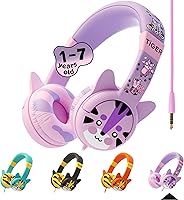
  • Age Range: Designed for children aged 1 through 7 years, with an adjustable headband to accommodate growing head sizes across that range.
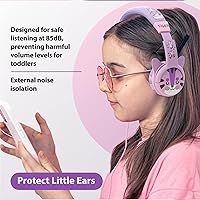
  • Volume Limit: A hardware-enforced 85dB maximum output protects young ears during extended listening sessions without relying on software controls.
  • Connectivity: Wired connection via a standard 3.5mm audio jack, compatible with smartphones, tablets, laptops, and car DVD players out of the box.
  • Cable Design: The flat, tangle-free cable reduces knot frustration during travel and is reinforced at the jack end to resist tugging damage.
  • Driver Type: Dynamic audio drivers with a 32 Ohm impedance deliver clear, age-appropriate sound suitable for children's media and educational content.
  • Sensitivity: Rated at 85dB sensitivity, which aligns directly with the built-in volume ceiling to ensure consistent safe listening output.
  • Ear Placement: On-ear cushioned pads rest gently on the outer ear rather than fully enclosing it, providing passive noise isolation without pressure buildup.
  • Headband: The fully adjustable headband extends to fit a range of small head sizes, from toddler to early-elementary-age children.
  • Weight: The headset weighs 6.7 oz, keeping it light enough for young children to wear comfortably during long trips without neck or head fatigue.
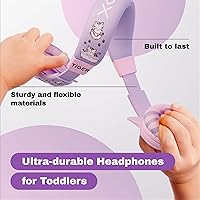
  • Materials: Constructed from a combination of silicone, plastic, and fabric to balance durability, flexibility, and comfort for daily use by young children.
  • Noise Control: Passive sound isolation is achieved through the on-ear cushion seal, reducing ambient noise without any electronic noise-cancellation components.
  • Water Resistance: These headphones carry no water or splash resistance rating and should be kept away from liquids to avoid damage.
  • Package Contents: Each package includes one pair of headphones; no additional cables, adapters, or carrying cases are included in the box.
  • Item Dimensions: The packaged unit measures 6.81 x 5.91 x 2.72 inches, making it compact enough to fit in a carry-on bag or backpack pocket.
  • Design: Features a distinctive tiger-ear printed pattern on the headband with tiger-face detailing designed to appeal to young children and encourage wear.
  • Compatible Devices: Works with any device that has a 3.5mm headphone jack, including iPads, Android tablets, laptops, smartphones, and in-car entertainment systems.
  • Control Type: Passive noise control only; there are no inline volume controls, play-pause buttons, or active electronic controls on the cable or ear cups.
  • Earpiece Shape: Listed as on-ear form factor, with cushioned pads sized proportionally for small children rather than full-sized adult ear cups.

Related Reviews
Yoto Wired Kids Over-Ear Headphones
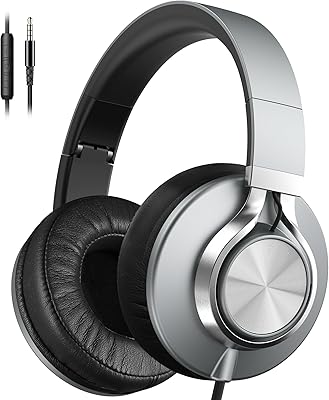
81%
94%
Hearing Safety
81%
Comfort & Fit
78%
Build Quality
61%
Cable Durability
88%
Audio Sharing Feature
More
Artix CL750 Wired Headphones
84%
92%
Value for Money
94%
Ease of Use
84%
Microphone Clarity
88%
Portability
81%
Cable Durability
More
AILIHEN C90 Wired Over-Ear Headphones
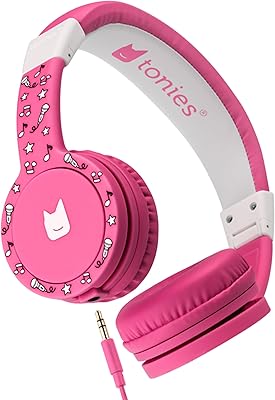
75%
84%
Comfort & Fit
76%
Sound Quality
61%
Microphone Performance
69%
Noise Isolation
63%
Build Quality
More
Tonies Foldable Kids Wired On-Ear Headphones
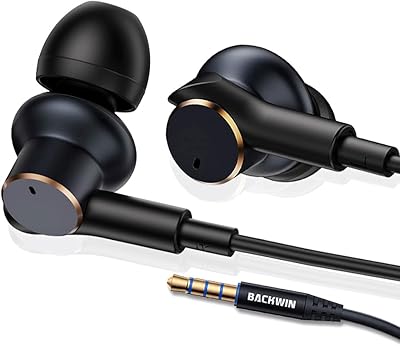
80%
93%
Hearing Safety
82%
Comfort & Fit
67%
Build Quality
88%
Portability
79%
Cable Design
More
BACKWIN B800 Wired In-Ear Earbuds
76%
74%
Sound Quality
81%
Bass Performance
86%
Build Quality
58%
Microphone Quality
67%
Comfort & Fit
More
Philips SHP6000
Philips SHP6000
79%
88%
Sound Accuracy
83%
Comfort & Wearability
61%
Build Quality
91%
Value for Money
74%
Cable Design & Quality
More
Bandou Finny The Shark Kids Bluetooth Headphones
74%
91%
Wearing Comfort
83%
Fit & Head Size Range
88%
Battery Life
76%
Volume Safety
67%
Bluetooth Reliability
More
JabNecter BH708AB
JabNecter BH708AB
76%
83%
Microphone Clarity
71%
Audio Playback Quality
74%
Comfort & Fit
68%
Build Quality
89%
Cable Length & Usability
More
JVC HAS160M Flats On-Ear Headphones
77%
76%
Sound Quality
83%
Build Quality
62%
Comfort & Fit
91%
Portability & Foldability
67%
Noise Isolation
More
Brenthaven Rugged 2 USB-C Headphones
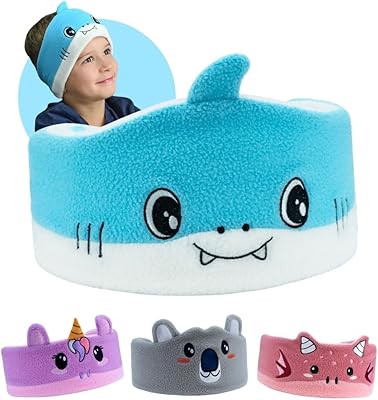
78%
88%
Build Quality
91%
Drop & Impact Resistance
67%
Sound Quality
74%
Comfort & Fit
83%
Cable Quality & Length
More

FAQ

The 85dB limit is built into the hardware of the headphones themselves, not a software setting on the device. That means even if a child figures out how to drag the volume slider to maximum on a tablet, the headphones physically will not output sound above that threshold. It is one of the more reassuring aspects of this design for parents.

A one-year-old is genuinely on the small end, and fit will depend on your child's head size. The headband does adjust down to a fairly compact size, but for the youngest toddlers you may find the ear cups sit slightly off-position at first. Many parents report a better, more natural fit starting around age two.

Yes, the standard 3.5mm wired jack plugs directly into airplane seat jacks without any adapter. This is actually one of the strongest use cases for this headset, since Bluetooth headphones often cannot connect to in-flight entertainment systems at all.

The microphone capability on these toddler headphones is not consistently confirmed across all product documentation, so it is worth verifying with your specific device before assuming it will work for calls or voice chat. For passive listening — movies, music, audiobooks — the audio output works reliably across compatible devices.

The cable length has been noted by some parents as a limitation in car seat setups where the screen sits further away, particularly in larger vehicles with headrest-mounted DVD players. If your setup requires a longer reach, a short 3.5mm extension cable is an inexpensive fix worth keeping in your travel bag.

The ear cushions are made from fabric and silicone-adjacent materials, so a gentle wipe with a slightly damp cloth works well for surface cleaning. Avoid soaking or using harsh cleaning products, and remember there is no water resistance rating, so the headset should never be submerged or rinsed.

These toddler headphones are built with roughhousing in mind — the materials hold up well against pulling, dropping, and general toddler chaos under normal conditions. The areas most likely to show wear over time are the headband hinge and the point where the cable meets the jack, so those are worth monitoring. Durability is reasonable for the price tier, though no kids headphone in this range is truly indestructible.

The passive isolation from the on-ear cushions does help reduce ambient cabin noise to a meaningful degree, but it will not deliver the silence that active noise cancellation provides. For most young children, it is enough to keep them engaged with their content, though a particularly sensitive or easily distracted child might still notice loud engine noise during takeoff.

On-ear headphones can sometimes press against glasses frames and become uncomfortable over long wear periods. Younger toddlers are unlikely to wear glasses, but for children in the older part of this age range who do, it is worth a short test period at home before relying on them for a long trip.

They tend to land well as gifts precisely because kids react to the tiger design immediately and want to put them on right away. The packaging is reasonably presentable, and the concept — safe headphones a toddler will actually want to wear — is something most parents genuinely appreciate. If the child already has a tablet or regularly watches content on car trips, this is a practical gift with a fun visual hook.