Overview

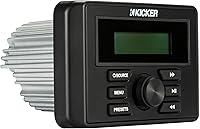
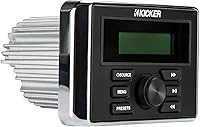
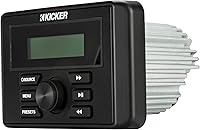
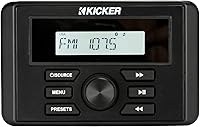
The Kicker 46KMC3 Marine Bluetooth Media Receiver is built around one practical premise: your boat has a 3-inch gauge opening, and you want to fill it with a capable stereo instead of a blank cap. That's the niche, and this Kicker marine receiver is purpose-built for exactly that. It carries a genuine IP66 weather rating, meaning it can take real spray — not just light mist — without flinching. Four-channel output, a rotary control dial, and a clean mounting footprint make it a surprisingly well-rounded option for boaters who want reliable audio without a complicated installation headache.
Features & Benefits

The KMC3 handles connectivity well — Bluetooth, USB, RCA, auxiliary, and AM/FM are all present, covering practically every source scenario you'd encounter on the water. Wireless pairing range is listed at 30 feet, which works comfortably on most small boats but may drop off toward the back of longer vessels. The rotary encoder feels purposeful under wet hands, and the screen gives a quick read without demanding you stare at it. Kicker rates total peak power at over 200 watts across four channels; real-world listening levels are what actually matter here, and consistent boater reports suggest it performs well at practical volumes.

Best For

This gauge-style marine stereo is the right call if your boat already has a 3-inch gauge opening in the dash — that's the single most important qualifier. If you'd need to cut a new hole, look elsewhere. Anglers on aluminum rigs, pontoon boaters, and PWC riders who want music without committing a big dash section to a full-size head unit will appreciate the compact footprint. It's also a natural fit for anyone who wants Bluetooth playback alongside a real AM/FM tuner — not just phone-dependent audio, but a proper radio when the signal is there.

User Feedback

Sitting at a 4.8-star average across roughly 60 ratings, the KMC3 has a strong early track record — but that sample size is worth noting; it's encouraging, not definitive. Owners frequently call out how painlessly it drops into an existing gauge hole and how the build holds up through seasons of saltwater and sun. Where criticism does appear, it tends to cluster around two points: Bluetooth range feeling limited on larger boats, and the display washing out in harsh midday glare. Boaters upgrading from old analog radios are typically the most satisfied; those expecting audiophile-level performance from a compact marine unit may find the ceiling lower than hoped.

Pros

  • Drops directly into an existing 3-inch gauge opening with minimal installation effort.
  • IP66 weather resistance holds up reliably against spray, rain, and saltwater exposure.
  • Covers Bluetooth, AM/FM, USB, RCA, and auxiliary inputs — nearly every source scenario covered.
  • Four-channel output gives enough flexibility to drive a decent set of marine speakers.
  • Rotary encoder control is easy to operate with wet hands while underway.
  • RCA outputs allow future expansion to an external amp or subwoofer without replacing the unit.
  • Compact and lightweight at 2.1 pounds, ideal for small boats where dash space is tight.
  • Early owner feedback is strong, with consistent praise for build durability across multiple seasons.
  • Bluetooth pairing is straightforward, with a 30-foot range that works well on most small craft.

Cons

  • Only useful if your boat already has a 3-inch gauge hole — a hard dealbreaker for many buyers.
  • Bluetooth range of 30 feet can fall short on larger boats with helm-to-stern distances.
  • Display readability in direct midday sun is a recurring complaint among owners.
  • Peak power figures look impressive on paper, but RMS output is more modest in real use.
  • No multi-zone audio control limits appeal for boaters wanting independent volume areas.
  • The 60-rating review pool, while highly positive, is still too small to draw firm long-term conclusions.
  • Mounting depth of 5 inches may create fitment issues in dashboards with limited behind-panel clearance.
  • No dedicated subwoofer pre-out zone; bass expansion requires working within standard RCA outputs.

Ratings

Our AI rating engine analyzed verified owner reviews for the Kicker 46KMC3 Marine Bluetooth Media Receiver from buyers across North America and Europe, actively filtering out incentivized, duplicate, and bot-generated submissions to surface genuine field experience. Scores reflect real on-water usage patterns — not manufacturer claims — and transparently capture both the aspects boaters consistently praise and the friction points that show up season after season.
Ease of Installation
93%
Owners replacing an existing gauge-hole stereo repeatedly call this one of the cleanest installs they have done. The unit drops into a standard 3-inch opening, the trim ring covers imperfections, and most boaters complete the wiring in under an hour without professional help.
A small number of owners discovered their dash cavity was shallower than the required 5-inch depth, turning a simple swap into a more involved job. The install is nearly effortless — but only when the mounting space genuinely cooperates.
Weather & Water Resistance
91%
The IP66 certification holds up in practice, not just on paper. Boaters who regularly run in choppy conditions, rain, or direct wake spray report that the unit keeps functioning without corrosion or moisture ingress after multiple seasons of saltwater exposure.
IP66 covers heavy spray but not submersion, and a handful of owners on very low-freeboard boats noted concern about wave wash going directly over the dash. It is highly weather-resistant for typical use, but it is not waterproof in the full immersion sense.
Sound Quality
78%
22%
For a compact gauge-mount unit, the KMC3 produces noticeably clear audio at moderate to high volumes on the water. Boaters upgrading from basic OEM marine radios consistently report a meaningful improvement in both clarity and presence across four channels.
Audiophiles and buyers who have used higher-tier marine head units will find the sonic ceiling limited. At peak volumes there is some compression, and without an external amp the low-end response is thin — acceptable for casual listening, less so for those wanting real bass output.
Bluetooth Performance
71%
29%
Pairing is quick and stable for most users within a comfortable range, and Bluetooth reconnection when returning to the boat is generally automatic. On smaller boats and PWCs where the phone stays close to the helm, the wireless experience is reliable and convenient.
The 30-foot range claim is optimistic on larger boats or when electronics-heavy consoles create interference. Several owners on center-console and pontoon boats reported dropouts when moving to stern seating. It is a workable range for small craft, but not adequate for every layout.
Display Readability
62%
38%
In overcast conditions or shaded helm areas, the screen displays track info and source selection clearly enough for quick glances while underway. The information layout is clean and not overly cluttered for a small-format display.
Harsh midday sun is a genuine problem. Multiple owners in sunny climates describe the screen as difficult to read without cupping a hand around it. For boaters who spend long summer days on the water in open cockpits, this is a recurring frustration rather than an occasional inconvenience.
Build Quality
88%
The physical construction feels solid and purposeful — not plasticky or fragile. Long-term owners who have run the unit through full seasons in saltwater environments report that the housing, buttons, and rotary dial remain functional without significant wear or corrosion.
A small portion of owners noted that the trim ring finish showed minor UV fading after prolonged sun exposure in southern climates. The core electronics hold up well, but the cosmetic elements are not entirely immune to the harsh marine environment over time.
Input & Source Variety
89%
Having Bluetooth, USB, RCA, auxiliary, and AM/FM in a single gauge-mount unit is genuinely practical. Boaters who want to switch between streaming a phone, playing from a USB drive, and catching a local weather or sports broadcast can do all of that without adapters or workarounds.
There is no digital media input beyond USB, so owners expecting optical audio or more advanced streaming protocols will find the options limited. The source range covers everyday needs well but stops short of what premium marine head units offer.
Volume & Output Power
74%
26%
At realistic listening volumes on a small to mid-size boat, the four-channel output is more than capable of filling the space with clear sound. Owners on fishing boats and pontoons report comfortable listening even at moderate engine RPM.
The peak wattage figure looks strong, but RMS output is considerably more modest, and it shows at higher volumes in open-air conditions where wind and engine noise compete with the audio. Boaters on faster vessels or larger open boats will likely want to add an external amp to get satisfying loudness.
Control Usability
84%
The rotary encoder is one of the more practical control choices for a marine environment. It is easy to grab and turn with wet hands, gives a satisfying tactile response, and allows volume and menu adjustments without taking eyes off the water for long.
Navigating through input sources and settings menus requires more button presses than some competing units with dedicated source buttons. A few owners noted that the interface logic takes some getting used to before it feels intuitive under way.
RCA & Expansion Options
81%
19%
Having RCA pre-outs means the KMC3 functions well as a source unit in a larger system build. Boaters who start with just the receiver and plan to add an amplifier or powered subwoofer later can do so without replacing the head unit, which adds long-term value.
The RCA output configuration is functional but not particularly flexible. There is no dedicated subwoofer pre-out or zone output, which limits how far you can expand the system before the receiver itself becomes the bottleneck in a more complex build.
Value for Money
83%
For a gauge-mount unit with genuine IP66 protection, four-channel output, and broad source connectivity from a reputable marine audio brand, the pricing sits in a reasonable range. Boaters who need exactly this format consistently describe the purchase as money well spent.
For buyers who do not specifically need the gauge-mount form factor, similarly priced traditional marine head units offer more output power, better displays, and more advanced features. The value proposition is strong only when the 3-inch gauge opening is already there and the compact format is genuinely needed.
Compatibility & Fit
77%
23%
When the mounting conditions are right, fitment is excellent. The trim ring handles minor irregularities in the dash cutout gracefully, and the unit looks factory-integrated on boats where the gauge-hole layout aligns with the receiver's dimensions.
This is one of the most niche-specific installs in marine audio. Boats without a 3-inch gauge opening, or those with very shallow dash cavities, are simply not compatible without modifications. Buyers who do not confirm fitment before purchasing account for a notable share of returns and disappointed reviews.
Long-Term Durability
86%
The multi-season reliability reports from verified owners are genuinely encouraging. Units that have been exposed to repeated saltwater spray, high UV environments, and seasonal temperature swings continue to function without major hardware failures according to experienced boaters who have owned the unit for two or more years.
The review pool of roughly 60 ratings, while highly positive, is too small to draw definitive long-term conclusions. There is limited data on how the unit behaves after four or five full seasons of heavy use, which leaves some uncertainty for buyers prioritizing maximum longevity.

Suitable for:

The Kicker 46KMC3 Marine Bluetooth Media Receiver is the right buy if your boat already has a 3-inch gauge opening in the dash and you want to fill it with a real, weather-hardened stereo rather than a blank plug. Anglers on aluminum fishing boats, pontoon owners, and PWC riders will find the compact gauge-mount format especially practical — it slots in cleanly without requiring new cutouts or custom brackets. Recreational boaters who split their time between streaming a phone playlist and catching AM/FM weather radio will appreciate having both options in a single unit. The IP66 build quality makes it genuinely suited to open-water use, not just protected coves or calm lake days. If your goal is a clean, hassle-free install that produces solid sound across four channels without wiring in a separate amp, this Kicker marine receiver hits that target well.

Not suitable for:

If your boat does not already have a 3-inch gauge opening, the Kicker 46KMC3 Marine Bluetooth Media Receiver immediately loses its core appeal — you would need to cut a new hole, at which point a traditional full-size marine head unit likely makes more sense for the same effort. Boaters on longer vessels, such as offshore cruisers or large pontoons, may find the 30-foot Bluetooth range falls short when the helm is far from the stern seating area. The KMC3 is also not the right fit for anyone chasing high-fidelity audio performance; it is a practical, volume-capable marine unit, not a precision sound system. Buyers expecting crisp display visibility in direct midday sun should be aware that some owners report washout in bright conditions. And if you need zone-specific audio control across multiple deck areas, this gauge-style marine stereo does not offer the multi-zone output flexibility that a higher-tier dedicated marine receiver would provide.
Specifications

  • Brand & Model: Manufactured by KICKER under model number 46KMC3.
  • Total Peak Power: Delivers over 200 watts of total peak power distributed across four channels.
  • Channel Output: Four-channel stereo audio output for driving up to four speakers simultaneously.
  • Connectivity: Supports Bluetooth, USB, RCA, auxiliary, and AM/FM tuner inputs.
  • Bluetooth Range: Wireless Bluetooth streaming range extends up to 30 feet from a paired device.
  • Weather Rating: Certified IP66, providing protection against powerful water jets and heavy spray exposure.
  • Mounting Diameter: Designed to fit a standard 3-inch gauge opening in marine dash panels.
  • Trim Ring Size: Outer trim ring measures 3.5″ wide by 5.5″ tall for a finished dash appearance.
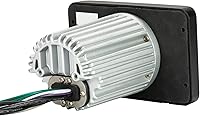
  • Mounting Depth: Requires 5 inches of clearance behind the mounting surface for full installation.
  • Panel Protrusion: Unit protrudes 1-5/16″ forward from the mounting area once installed.
  • RCA Connectors: Includes RCA outputs for connecting to external amplifiers or signal processors.
  • Audio Mode: Operates in stereo audio output mode across all connected channels.
  • Control Type: Features a rotary encoder ring controller for volume and menu navigation.
  • Item Weight: Complete unit weighs 2.1 pounds, making it practical for lightweight marine installs.
  • Color: Available in black with a gauge-style bezel finish suited to standard marine dashboards.
  • Compatible Devices: Compatible with smartphones and external speakers via Bluetooth or wired inputs.
  • Audio Encoding: Processes and outputs audio in stereo format across all supported input sources.
  • Availability Status: The unit is currently in active production and has not been discontinued by the manufacturer.

Related Reviews
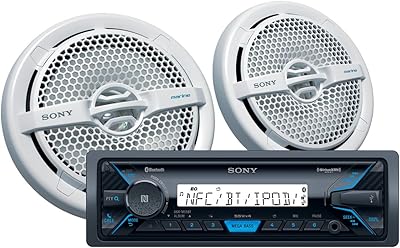
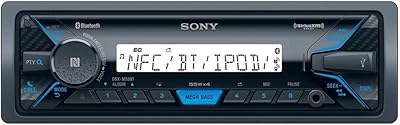
Sony DXS-M5511BT Marine Digital Media Receiver with Bluetooth
85%
94%
Bluetooth Connectivity
86%
Sound Quality
92%
Water-Resistance/Durability
68%
Ease of Installation
91%
Value for Money
More
Citreal Marine Bluetooth Stereo Receiver
74%
76%
Water Resistance
83%
Bluetooth Performance
81%
Ease of Installation
61%
Sound Quality
79%
AM/FM Reception
More
VOXXBASS Bluetooth Marine Radio Receiver
86%
92%
Durability and Waterproofing
87%
Sound Quality
90%
Bluetooth Connectivity
75%
Ease of Installation
85%
Compatibility with Devices
More
SOUNDKITS Bluetooth Marine Boat Radio Receiver
84%
85%
Bluetooth Range
70%
Sound Quality
92%
Water Resistance (IPX5)
88%
Ease of Installation
80%
Build Quality
More
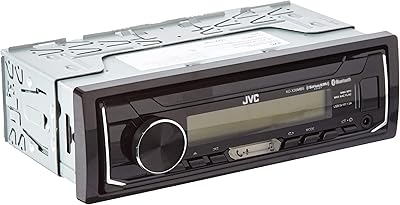
JVC KD-X35MBS Marine Bluetooth Receiver
80%
85%
Sound Quality
76%
Ease of Installation
92%
Durability/Water Resistance
88%
Bluetooth Connectivity
87%
Value for Money
More
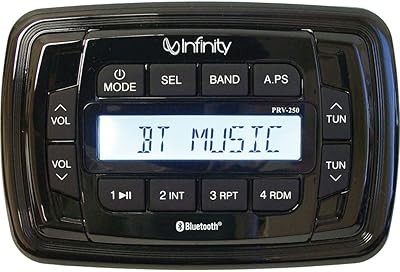
Sony DSXM55BT Marine Stereo Receiver
81%
83%
Bluetooth Connectivity
76%
Sound Quality
78%
Build & Marine Durability
89%
Ease of Installation
54%
Display Readability
More
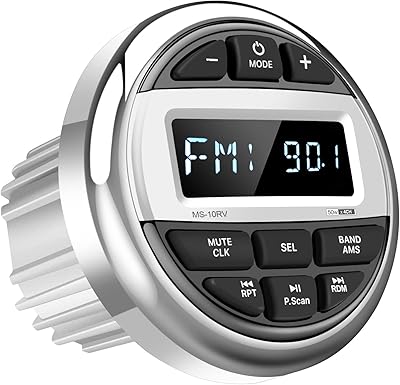
Infinity INF-PRV250 Bluetooth Marine Receiver
84%
89%
Audio Performance
72%
Bluetooth Connectivity
91%
Waterproof Durability
85%
Ease of Installation
84%
Build Quality
More
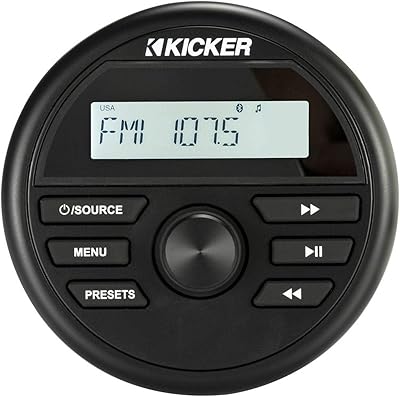
Kenwood KMR-D362BT Marine CD Receiver
76%
83%
Bluetooth Performance
78%
Sound Quality
81%
Water Resistance
58%
Display Readability
84%
Ease of Installation
More
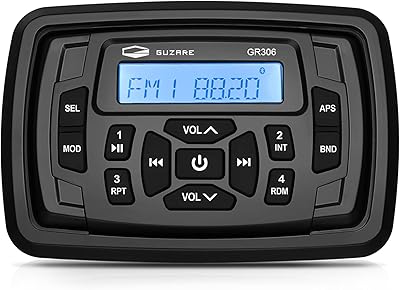
GUZARE GR306 Marine Bluetooth Stereo Receiver
75%
88%
Weather & Water Protection
83%
Bluetooth Reliability
76%
Sound Quality
86%
Ease of Installation
58%
Display Readability
More
Kicker 46KMC2 Marine Bluetooth Media Receiver
81%
93%
Weather Resistance
88%
Bluetooth Performance
84%
Sound Quality
76%
Ease of Installation
79%
Control Usability
More

FAQ

If your dash has a standard 3-inch round gauge opening, the KMC3 is designed to drop straight in without any cutting. The trim ring covers the edges cleanly. Just confirm your hole diameter before ordering — that single measurement determines whether this install is easy or complicated.

The unit needs 5 inches of clearance behind the mounting surface. That is on the deeper side for a gauge-hole install, so it is worth measuring your available cavity before committing. Tight spaces behind fiberglass dash panels can be a problem on some smaller boats.

IP66 means the unit is rated to withstand powerful water jets, which covers normal wave splash, rain, and spray from nearby activity. It is not rated for submersion, so it should not sit below the waterline or take direct sustained flooding. For typical open-water recreational use, the rating is more than adequate.

On a small to mid-size boat, 30 feet is generally workable if you keep your phone in the helm area or cockpit. On larger vessels where the helm is well forward and seating is aft, you may notice dropouts. Bluetooth range on water can also vary based on interference from other electronics aboard.

Yes, the unit includes RCA outputs which allow you to run signal to an external marine amplifier down the road. This makes the KMC3 a reasonable starting point if you plan to expand your system gradually rather than doing everything at once.

This is one area where some owners have noted limitations. In moderate light it reads well enough, but in harsh midday sun the display can wash out and become harder to read quickly. If most of your boating is in high-sun conditions, that is worth factoring into your decision.

The install follows a standard marine stereo wiring approach: power, ground, speaker leads, and antenna connections. Most boaters with basic wiring experience handle it without professional help. KICKER includes documentation, and the gauge-mount format means there is no need for a custom dash cutout if your hole is already the right size.

It can work on a PWC if the dash has the right gauge opening and there is adequate depth behind the panel. The compact size and weather resistance make it physically suited to personal watercraft environments. Just verify your specific PWC's dash layout allows for the 5-inch mounting depth requirement.

The USB input supports audio playback from a connected device, not just charging. You can plug in a USB drive or compatible phone and play music directly without relying on Bluetooth. This is useful as a backup source if you prefer not to drain your phone battery wirelessly.

The review base is still relatively modest — around 60 ratings — so long-term data is limited compared to more established products. That said, owners who have used it across multiple seasons consistently mention that the build quality holds up well against sun exposure and saltwater spray, which is encouraging for a unit in this size and format.