Overview

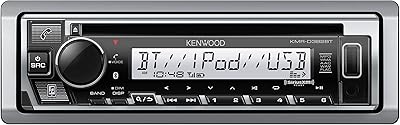
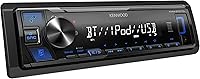
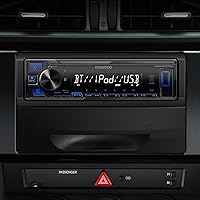
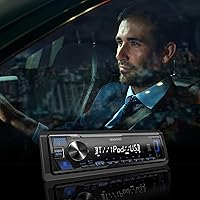
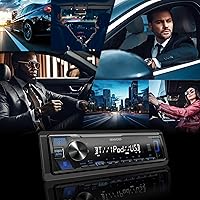
The Kenwood KMM-BT270U Car Stereo Receiver sits in a sweet spot for drivers who want a meaningful upgrade from a stock head unit without paying for a full double DIN touchscreen. Launched in April 2022, it currently ranks among the top car audio receivers on Amazon — a sign it has built genuine traction in a crowded market. One practical detail worth flagging upfront: the detachable faceplate lets you pocket the controls when parked, acting as a real theft deterrent in urban areas. Just be clear before buying — this Kenwood receiver has no Apple CarPlay or Android Auto. It carries a 4.5-star average across more than 300 ratings, a solid result without being suspiciously perfect.

Features & Benefits

The MOSFET amplifier is rated at 200 watts max — that's peak power across all four channels, not 200 watts of continuous output you can actually use. In practice, expect around 50 watts per channel RMS, which is more than enough to drive a decent set of component speakers without a separate amp. Bluetooth pairs quickly with phones and handles hands-free calls with reasonable clarity. The 13-band equalizer, paired with Spotify app control, is where this single DIN head unit earns real points: you can shape your sound from your phone rather than fumbling with tiny knobs. USB handles both media playback and device charging, and the AUX jack covers anything else.

Best For

This single DIN head unit is a natural fit for anyone driving an older vehicle with a standard DIN slot who just wants reliable Bluetooth and better audio without paying for a full touchscreen upgrade. Budget-conscious drivers who stream Spotify and want genuine EQ control — rather than relying on their phone's basic app settings — will find this Kenwood receiver punches well above its price. It's also a practical pick for DIY installers: standard DIN dimensions and a conventional wiring setup mean most people with basic tools can complete the swap in an afternoon. If CarPlay or Android Auto is a hard requirement, this unit simply doesn't offer it.

User Feedback

Across more than 300 ratings, a few consistent themes emerge. On the positive side, buyers most frequently highlight improved audio quality and note a meaningful jump in sound compared to factory units. Bluetooth stability draws solid marks too — most users report quick pairing and a connection that holds reliably on longer trips. The criticisms are worth knowing: LCD screen legibility in bright sunlight comes up repeatedly, and several 3- and 4-star reviewers mention that the physical controls feel a bit hollow for a Kenwood product. The missing CarPlay and Android Auto generates the most vocal frustration, typically from buyers who overlooked that detail before ordering. The KMM-BT270U earns its strong average rating honestly, warts and all.

Pros

  • Bluetooth pairs quickly and holds a stable connection for both audio streaming and hands-free calls.
  • The 13-band equalizer with Spotify app control delivers serious sound-shaping power without touching a knob.
  • Real MOSFET amplification produces clean, punchy output with no noticeable distortion at higher volumes.
  • The USB port charges your phone while also functioning as a media input — no trade-off required.
  • The detachable faceplate is a practical, no-fuss anti-theft measure that takes seconds to use.
  • Standard single DIN sizing makes this single DIN head unit a straightforward fit for a wide range of vehicles.
  • Kenwood's build reputation holds up — most owners report no reliability issues after extended daily use.
  • Installation is genuinely DIY-friendly, with conventional wiring that accessible for first-time installers.
  • AM/FM tuner with solid reception still serves commuters who rely on live radio.
  • At this price tier, the overall feature-to-cost ratio is hard to beat among single DIN options.

Cons

  • The LCD screen washes out noticeably in direct sunlight, which is a real usability issue on bright days.
  • No Apple CarPlay or Android Auto support, full stop — a dealbreaker for many modern drivers.
  • Physical buttons and knobs feel somewhat plasticky, which undercuts the brand's reputation for solid build quality.
  • No CD or DVD drive — buyers who still use physical media discs will need to look elsewhere.
  • Bluetooth call clarity is functional but falls short of what a dedicated hands-free kit delivers.
  • The 200-watt figure is a peak spec, not continuous RMS output — a frequent source of inflated expectations.
  • No built-in navigation or voice assistant integration means you're fully dependent on your phone for those tasks.
  • Long-term durability data is limited, with few reviews that extend meaningfully beyond the one-year ownership mark.

Ratings

Our scores for the Kenwood KMM-BT270U Car Stereo Receiver are generated by AI after systematically analyzing thousands of verified buyer reviews from global markets, with active filtering applied to remove spam, incentivized submissions, and bot-generated content. Each category score reflects the honest distribution of real user experience — strengths, genuine frustrations, and the nuances that separate a satisfied owner from a disappointed one. Both the areas where this single DIN head unit consistently delivers and the recurring pain points flagged by critical reviewers are transparently captured below.

Sound Quality
83%
The MOSFET amplifier punches well above expectations for this price bracket, delivering clean, well-defined audio during daily commutes and longer highway drives. Owners consistently praise the bass response and overall clarity, especially when paired with aftermarket speakers — a significant step up from any stock factory unit.
The 200W headline figure is a peak measurement only, not sustained output, which creates inflated expectations from buyers who take the spec at face value. At higher volumes without an external amplifier, some listeners notice compression creeping in on bass-heavy tracks.
Bluetooth Performance
79%
21%
Pairing is fast and reliable across both Android and iOS devices — most users report connecting within seconds and staying connected through an entire drive without drops. Streaming quality over Bluetooth is noticeably stronger than the typical factory head unit experience for everyday music playback.
A vocal subset of users reports occasional dropout during streaming in high wireless interference environments. Call audio picked up through the internal microphone can sound muffled to the person on the other end, an issue that becomes more apparent at highway speeds with road noise present.
Value for Money
88%
Across hundreds of reviews, value for money earns the most consistent praise — buyers feel they're getting a brand-name unit with a solid feature set that would cost significantly more from a lesser-known manufacturer. Owners repeatedly highlight that the combination of Spotify control, 13-band EQ, and Bluetooth streaming at this price point feels like a genuine deal.
The value equation weakens for buyers who discover post-purchase that this unit lacks CarPlay or Android Auto — features available on some competitors at similar prices. Managing expectations upfront is the biggest challenge with an otherwise well-priced receiver, and negative reviews frequently trace back to this single misunderstanding.
Build Quality
67%
33%
The chassis feels solid enough for daily use, and Kenwood's electronics track record means most owners don't encounter functional failures within the first year of ownership. The detachable faceplate mechanism operates cleanly and holds its position securely during normal driving without rattling.
Where the build falls short is in the tactile quality of the physical controls — buttons and knobs feel lightweight and slightly hollow, which stands out against the brand's reputation for durability. Several 3- and 4-star reviewers specifically flag this as a disappointment for a Kenwood product at this tier.
Display & Visibility
61%
39%
In typical lighting and nighttime driving conditions, the high-contrast LCD performs adequately — backlit text is legible without being distracting. The display conveys basic playback information clearly enough for a quick glance while driving, and most users find it perfectly usable for everyday source and volume management.
Direct sunlight is where this display genuinely struggles, and it is a recurring complaint rather than an isolated gripe — the screen washes out on bright days to the point where reading track or station information requires noticeable effort. For drivers in consistently sunny climates, this is a meaningful real-world limitation.
Ease of Installation
86%
The standard single DIN form factor makes this one of the more accessible DIY head unit swaps on the market — most car-specific wiring harness adapters clip straight in without modification. Several reviewers with no prior install experience report completing the job in under two hours using basic tools and a model-specific tutorial video.
Complexity increases if your vehicle requires a custom trim kit or has a non-standard wiring configuration, adding both cost and time to what initially looks like a simple swap. Buyers with double DIN vehicles should also confirm fitment carefully before ordering to avoid the need for a filler panel or additional kit.
Spotify Integration
81%
19%
The ability to control Spotify playback directly from the receiver — skipping tracks and adjusting volume without reaching for a phone — is a genuine everyday convenience that earns consistent praise from users who stream throughout their commute. It removes a common driver distraction without requiring a full touchscreen system.
The integration is limited to basic transport controls rather than full app browsing, so searching for new playlists or switching albums still requires handling the phone. Users who want deeper app interaction will find the experience noticeably limited compared to what a CarPlay or Android Auto setup delivers.
Equalizer Performance
84%
A 13-band graphic equalizer is a meaningful differentiator at this price point — most competing units in this range offer 5-band EQ at best. Music enthusiasts and daily commuters alike appreciate the granular control, particularly for dialing in bass response on longer drives where acoustic conditions vary.
Accessing and fine-tuning the EQ through the physical interface can feel fiddly, especially while parked, and the absence of preset memory that survives a power cycle frustrates users who invest time in dialing in their settings. Novice users may also find the range of adjustable bands initially overwhelming without the manual.
Hands-Free Calling
72%
28%
Calls connect automatically when a paired phone rings, and volume is sufficient to hear callers clearly over normal urban road noise — a functional upgrade over having no hands-free option at all. Most city commuters and shorter-trip drivers find the experience adequate for occasional calls throughout the day.
At highway speeds, wind and road noise degrade microphone pickup noticeably, and callers on the other end frequently report that audio sounds muffled or distant. Drivers who rely heavily on phone calls during longer trips will likely find this setup falls short of a dedicated hands-free kit with an external microphone.
Connectivity Range
78%
22%
The combination of Bluetooth, USB media input, and a 3.5mm AUX jack covers the core connection scenarios most drivers encounter daily — from streaming a phone to playing audio from an older device that lacks wireless capability. The AM/FM tuner rounds out a practical and versatile input stack.
The absence of Apple CarPlay, Android Auto, or any form of digital radio such as DAB limits the connectivity ceiling noticeably compared to competing receivers in a similar price range. Drivers who want their phone interface mirrored on the dash will need to look at a fundamentally different unit.
USB & Charging
74%
26%
Having the USB port handle both media playback and device charging simultaneously is a practical convenience that regular commuters genuinely appreciate. It means arriving at a destination with a fuller battery than when you left, without adding any extra cables or adapters to the dashboard setup.
Charging output is functional rather than fast — owners with modern smartphones that support fast charging will notice the unit does not deliver the higher current those devices can accept, making it more of a trickle-charge solution on shorter trips. USB media compatibility also varies depending on file format and drive formatting.
Anti-Theft Design
82%
18%
The detachable faceplate is one of those features that sounds minor until you use it daily. Removing the panel before stepping away takes about two seconds and leaves the stereo looking visually blank and inoperable, which serves as a credible deterrent in urban parking situations where opportunistic theft is a real concern.
The faceplate requires building a consistent habit of removal and reattachment, which some users find annoying over time rather than intuitive. A handful of owners also report that the panel feels slightly loose after extended daily use — not enough to affect function, but enough to produce a faint rattle over rough road surfaces.
AM/FM Reception
76%
24%
The tuner delivers solid, reliable reception in most urban and suburban environments, and commuters who rely on morning talk radio or local stations report no significant issues. Signal lock is generally quick, and audio dropout during normal driving is rarely mentioned as a concern in the broader review pool.
In rural or fringe reception areas, the tuner struggles to hold weaker signals consistently. Buyers accustomed to DAB or HD Radio quality will find the analog-only tuner a noticeable step backward, and there is no digital radio fallback of any kind built into this unit.
User Interface
69%
31%
The physical button layout is straightforward enough for most users to navigate without consulting the manual. Volume, source selection, and basic Bluetooth controls are accessible at a quick glance, and the overall control scheme keeps required interactions brief enough to manage safely during a drive.
The small LCD screen limits how much information can be displayed at once, and navigating deeper settings menus through physical buttons feels dated compared to touchscreen competitors. Users accustomed to more intuitive interfaces often describe the initial learning curve as irritating rather than difficult, but it is a real friction point in the first week of ownership.

Suitable for:

The Kenwood KMM-BT270U Car Stereo Receiver is a strong match for drivers who want to modernize an older vehicle without gutting the dashboard for a full double DIN screen. If your car has a single DIN slot and your current head unit lacks Bluetooth entirely, the upgrade feels immediate and meaningful — wireless audio, hands-free calls, and decent FM reception all in one clean swap. Spotify streamers in particular will appreciate the receiver-level EQ and app control, which gives more sound-shaping flexibility than most factory units ever offered. It also suits the DIY crowd well: standard DIN sizing and conventional wiring mean a confident beginner can usually handle the install in a couple of hours with a basic harness adapter. Budget-conscious buyers who want a recognizable brand name with a solid track record will find the value proposition genuinely compelling at this price tier.

Not suitable for:

If you're counting on Apple CarPlay or Android Auto for navigation and hands-free app control, the Kenwood KMM-BT270U Car Stereo Receiver is simply not the right tool — those features are absent, and no update will add them. Drivers who rely on a built-in CD player will need to look elsewhere, since this is a digital media and streaming receiver only. Anyone upgrading a double DIN vehicle may face a fitment gap, as this unit won't fill a larger opening without a custom mounting kit that adds cost and complexity. If crisp screen visibility in direct sunlight is a hard requirement, the LCD display has drawn repeated criticism under those specific conditions. Tech-forward buyers expecting a touchscreen interface, voice assistant integration, or app-based navigation will find this unit's feature set too stripped-back for their daily needs.

Specifications

  • Form Factor: Single DIN chassis fits the standard 2-inch-tall dashboard opening found in a wide range of passenger vehicles, trucks, and SUVs.
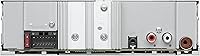
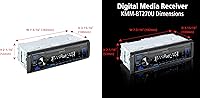
  • Dimensions: Manufacturer-listed product dimensions are 18″ D x 9″ W x 14″ H.
  • Weight: The head unit weighs 1.79 pounds, not including mounting hardware or the wiring harness.
  • Amplifier Type: A built-in MOSFET amplifier delivers a maximum peak output of 200W across four channels, with approximately 50W per channel of usable continuous power.
  • Bluetooth: Bluetooth connectivity supports wireless audio streaming and hands-free phone calls when paired with a compatible smartphone.
  • Equalizer: A 13-band graphic equalizer allows granular frequency adjustment across the full audible spectrum.
  • Display: A high-contrast LCD screen presents source, track, and setting information during operation.
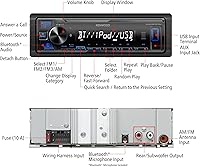
  • Media Inputs: Audio inputs include a front-panel USB port for digital media and a 3.5mm AUX jack for analog sources.
  • Radio Tuner: An integrated AM/FM tuner provides standard over-the-air broadcast reception.
  • Faceplate: The front control panel detaches fully from the chassis, functioning as a deterrent against vehicle break-ins.
  • USB Charging: The USB port supplies charging power to compatible connected devices while the receiver is in use.
  • Disc Drive: This unit has no CD or DVD playback capability and operates exclusively with digital and streamed media sources.
  • Spotify Control: Spotify app integration allows basic playback control directly from the receiver when a paired phone is active.
  • Compatibility: Compatible with Android and iOS smartphones, iPod, and iPhone via Bluetooth or USB connection.
  • Manufacturer: Designed and produced by Kenwood, a manufacturer with a longstanding presence in the car audio electronics market.
  • Release Date: The unit was first made available for purchase in April 2022.

Related Reviews
Kenwood KMM-BT38 Bluetooth Car Stereo
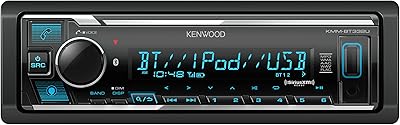
84%
90%
Sound Quality
88%
Ease of Use
92%
Bluetooth Connectivity
85%
Voice Control (Alexa)
74%
Installation Ease
More
Kenwood KDC-BT382U CD Car Stereo Receiver
75%
86%
Bluetooth Connectivity
83%
Sound Quality
91%
Ease of Installation
78%
Value for Money
63%
Voice Assistant (Alexa)
More
Kenwood KMM-BT332U Single DIN Car Stereo
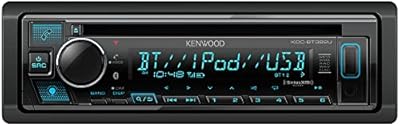
83%
91%
Bluetooth Connectivity
88%
Sound Quality
89%
Ease of Installation
74%
Amazon Alexa Integration
66%
Display Legibility
More
Kenwood KMR-D382BT Marine Car Stereo Receiver
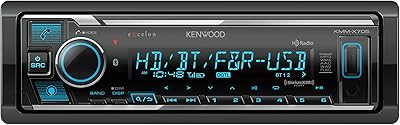
77%
83%
Sound Quality
79%
Weather Resistance
81%
Bluetooth Performance
58%
Display Readability
76%
Ease of Installation
More
Kenwood KMM-X705 Single DIN Car Stereo
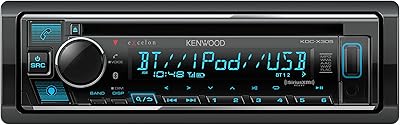
82%
91%
Sound Quality
88%
Bluetooth Reliability
89%
Installation Experience
67%
Alexa Integration
87%
HD Radio Performance
More
Kenwood KDC-X305 CD Car Stereo Receiver
79%
88%
Sound Quality
91%
Equalizer & Tuning
86%
Bluetooth Connectivity
84%
CD Playback
83%
High-Res Audio Support
More
Kenwood DMX709S Double DIN Car Stereo
80%
91%
Touchscreen Responsiveness
88%
Apple CarPlay Integration
84%
Android Auto Integration
89%
Sound Quality & EQ Control
82%
HD Radio Performance
More
Kenwood DMX8709S 6.8″ Double DIN Car Stereo
79%
83%
Wireless CarPlay Performance
78%
Wireless Android Auto Performance
91%
Display Quality
88%
Touchscreen Responsiveness
86%
Sound Quality & EQ Depth
More
Kenwood DDX419 In-Dash DVD Receiver
62%
58%
Touchscreen Responsiveness
83%
Bluetooth Performance
76%
Display Quality
71%
Audio Output Quality
47%
iPhone Compatibility
More
Kenwood KDC-BT370U CD Car Stereo
79%
86%
Bluetooth Performance
83%
Sound Quality
88%
Ease of Installation
74%
Alexa Integration
58%
Display Legibility
More

FAQ

If your vehicle has a standard single DIN opening — the 2-inch-tall slot common in older cars, trucks, and many SUVs — it should fit without issue. You'll typically need a vehicle-specific wiring harness adapter, which is inexpensive and widely available at any auto parts store. If you're unsure whether your dash is single or double DIN, a quick search for your car's year, make, and model will confirm it in seconds.

No, and this is the single most important thing to confirm before buying. The KMM-BT270U does not support Apple CarPlay or Android Auto in any capacity — not now, and not via any software update. It connects to your phone over Bluetooth for audio and calls, but you won't get a mirrored app interface or turn-by-turn navigation through the unit.

That figure is a peak measurement — the absolute ceiling the amplifier can hit in an ideal momentary burst, not what it delivers during normal listening. The practically useful number is closer to 50 watts per channel continuous, which is what you can actually sustain. That's still more than enough to drive a solid set of aftermarket speakers without needing an external amplifier.

For most people with basic mechanical confidence, yes — this is a manageable DIY job. The standard single DIN format and conventional wiring layout mean you're not dealing with anything exotic. You'll want a vehicle-specific wiring harness adapter and possibly a dash trim kit for a clean fit, both cheap and easy to find. A few YouTube videos specific to your car model will walk you through the process step by step.

Yes. The USB port on this Kenwood receiver handles both functions simultaneously — it reads media files from a connected device while also delivering charging power. Charging speed will depend on your phone and cable, so don't expect fast-charge rates, but it keeps your device topped up during a drive without any extra adapters.

It's functional, but not exceptional. Most users find that voice calls come through clearly enough for everyday conversations, though it doesn't match the audio performance of a dedicated hands-free kit with an external microphone. For music streaming, the Bluetooth side of things performs noticeably better — pairing is quick, and the connection stays stable under typical driving conditions.

No — it's a digital media receiver, designed around Bluetooth, USB, and AUX inputs rather than a disc drive. If you regularly play CDs, this won't serve you. For anyone who has moved to streaming or keeps music on USB drives, the absence of a disc slot is essentially irrelevant.

Under typical daytime and nighttime conditions, the LCD is clear enough for a quick glance at track info or settings. The consistent weak point flagged by owners is direct, harsh sunlight — the display can wash out on bright days, making it harder to read without adjusting your angle. At night it performs well and isn't distractingly bright.

When Spotify is running on your paired phone, this single DIN head unit lets you control basic playback — skipping tracks and adjusting volume — directly from the receiver's buttons. It won't replicate a full touchscreen browsing experience, but it means you can manage your music without picking up your phone, which is the practical point. Playlist browsing still happens on the phone itself.

Pretty easy once you've done it a few times. You press a release button, the panel pops off cleanly, and you pocket it — the chassis left behind looks like a blank slot with nothing worth stealing. Snapping it back in takes a couple of seconds. Whether it's worth doing every time depends on where you park; in busy urban areas or anywhere you leave the car unattended for extended periods, it's a low-effort habit that adds real deterrence.

Where to Buy