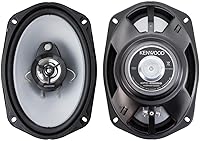
Overview

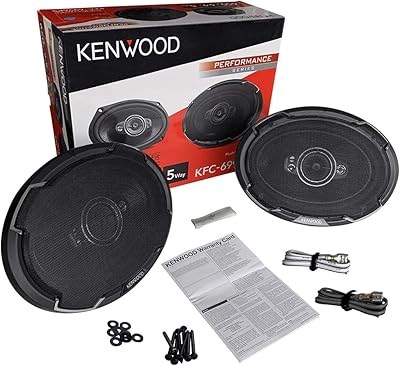
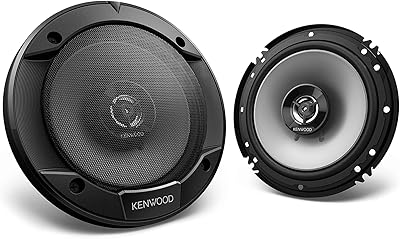
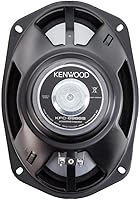
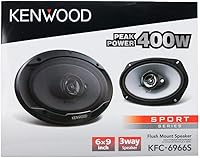
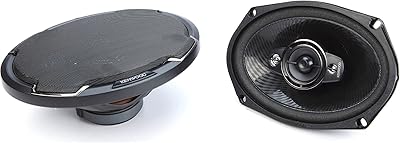
The Kenwood KFC-6966S 6×9″ 3-Way Car Speakers sit in a comfortable middle ground — branded, well-regarded, and priced where most sensible car audio upgrades happen. Kenwood has been a fixture in the car audio world for decades, and this Sport Series model reflects that experience without pretending to be something it isn't. The 3-way coaxial design — woofer, midrange, and tweeter packed into a single unit — means more frequency coverage than a basic 2-way speaker, which translates to a fuller, more balanced sound during your daily drive. These are door speakers, not a component system or a subwoofer replacement. Set expectations accordingly and they will likely impress you.

Features & Benefits

The 3-way driver layout is where these Kenwood 6×9s earn their keep. A 6-inch woofer handles the low end, a dedicated midrange fills in vocal presence, and a 1-inch tweeter keeps the highs from sounding muddy — all in a single coaxial unit that drops straight into standard 6×9″ door or rear deck openings. The polypropylene cone holds up well over time and delivers consistent bass response without the floppiness you sometimes get from cheaper materials. The 400W figure is peak, not continuous, so don't let that number set unrealistic expectations about real-world output. Installation is genuinely straightforward — hardware and instructions are included, no special tools required.

Best For

This Sport Series pair is an ideal match for drivers replacing tired factory speakers — the kind that buzz at moderate volume or have lost whatever warmth they once had. If your vehicle already has 6×9″ cutouts in the doors or rear deck, you're looking at a relatively quick swap that most DIYers can handle in an afternoon. These speakers pair well with an aftermarket head unit, where even modest power gains make a real difference. Audiophiles chasing studio accuracy will want to look at component systems. But for the daily commuter who wants noticeably stronger bass and clarity without an amplifier in the mix, these Kenwood 6×9s hit the mark.

User Feedback

With over 2,100 ratings, the KFC-6966S speakers have earned a strong track record, and the feedback largely reflects what you'd expect from a well-built mid-range coaxial. Most buyers highlight the noticeable step up over factory speakers right out of the box, especially in bass presence and overall volume. Drop-in fit is consistently praised; many report zero hassle getting them into standard 6×9″ slots. That said, a handful of owners flag depth clearance issues in tighter door panels, so measuring your mounting cavity before buying is worth doing. The polypropylene build gets the job done but doesn't feel premium in hand — functional, not fancy. On balance, most buyers consider them solid value.

Pros

  • Immediate, noticeable sound improvement over factory speakers — no amplifier required.
  • Drop-in installation for standard 6×9″ door or deck openings keeps the process simple and fast.
  • 3-way driver configuration delivers a fuller frequency range than most coaxial competitors at this price.
  • Polypropylene cone handles heat and humidity better than paper-cone alternatives over long-term use.
  • Compatible with both OEM and aftermarket head units — no special adapters needed for most vehicles.
  • Includes all mounting hardware and instructions, making it accessible even for first-time installers.
  • Bass output is genuinely satisfying for a coaxial speaker running off head unit power alone.
  • Over 2,100 real-world ratings provide a reliable confidence baseline before purchasing.
  • Kenwood brand backing offers more reliable support infrastructure than generic alternatives at similar price points.

Cons

  • The 400W peak power figure is a ceiling spec, not a realistic operating target — actual continuous output is considerably lower.
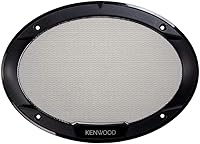
  • Plastic grille and housing feel noticeably budget in hand, which may bother detail-oriented buyers.
  • Depth clearance can be an issue in shallower door cavities — always measure before ordering.
  • High-volume listening can introduce some harshness in the upper frequency range over extended periods.
  • No weatherproofing of any kind limits these to fully enclosed interior installations only.
  • Buyers using factory-amplified systems from brands like Bose may need additional wiring adapters for proper impedance matching.
  • The KFC-6966S speakers do not perform well when paired with high-powered amplifiers — they are not built for that use case.
  • Minor grille rattle has been reported by some owners after extended use, particularly at higher volumes.

Ratings

The scores below are generated by AI after analyzing thousands of verified global user reviews for the Kenwood KFC-6966S 6×9″ 3-Way Car Speakers, with filters applied to remove incentivized, bot-generated, and outlier feedback. The result is a transparent snapshot of what real buyers experienced — the highs and the frustrations alike. Both strengths and recurring pain points are reflected honestly across every category.

Sound Quality
83%
Most owners report a clear, satisfying jump in audio quality compared to stock factory speakers — vocals come through with more definition, and the bass has actual body to it without needing a subwoofer. On highway commutes or road trips, the difference is easy to notice even at moderate volume.
Listeners with more discerning ears find the overall sound a bit colored — the low end can feel slightly overemphasized at higher volumes, and the midrange loses some nuance compared to higher-tier component systems. These are coaxial speakers at a mid-range price, and that ceiling is audible.
Bass Performance
81%
19%
For a coaxial 6×9″ speaker with no external amplifier, the bass output genuinely surprises people. The polypropylene cone moves enough air to give hip-hop and bass-heavy tracks a satisfying thump during daily driving without sounding muddy or one-note.
Deep, low-frequency bass — the kind you feel in your chest — is beyond what these can deliver without amp support. Users who pushed the volume expecting concert-level low end were disappointed, and a few noted distortion creeping in before the speakers reached their loudest setting.
Treble & Highs
76%
24%
The 1-inch tweeter handles cymbal hits and high-frequency details reasonably well at moderate listening volumes, which is more than most factory tweeters manage. Buyers playing a mix of pop, rock, and podcasts found the high-frequency range clear and non-fatiguing over long drives.
At higher volumes, the highs can become slightly harsh — a sharpness that grates over time, particularly on compressed audio streams. Users who listen primarily to acoustic or classical music flagged the treble as the weakest link in the frequency range.
Midrange Clarity
77%
23%
Vocals and guitar sit at a listenable level without sounding recessed, which is a real improvement over most OEM speakers. Buyers who listen to a lot of talk radio or podcasts specifically mentioned that speech intelligibility improved noticeably after the swap.
The dedicated midrange driver helps, but it still can't match what a proper component speaker system produces in that frequency band. Male vocals in particular can sound slightly boxy in cars with smaller cabin spaces, depending on door placement and panel resonance.
Installation Ease
89%
Drop-in fit for standard 6×9″ openings is consistently praised — most buyers had both speakers in within an hour using basic hand tools. The included hardware and instructions are genuinely useful, and wiring up to an existing aftermarket head unit is a straightforward plug-and-play process.
A small but consistent group of buyers ran into depth clearance issues in certain vehicles where the door panel cavity is shallower than average — sedans and compact hatchbacks being the most common culprits. Checking the mounting depth before purchasing is strongly advised.
Build Quality
71%
29%
The polypropylene cone holds up well in typical in-car conditions — heat cycles, vibration, and humidity don't seem to degrade performance quickly based on multi-year ownership reports. The overall construction feels solid enough for the price tier.
Holding these in your hands, the plastic grille and housing feel noticeably budget in tactile terms — nothing about the physical build suggests premium. A few users reported minor rattles developing over time, typically traced back to the grille clips rather than the driver itself.
Value for Money
88%
At the price point these sit at, the performance-to-cost ratio is hard to argue with. Buyers who compared them directly to similarly priced Pioneer and JVC alternatives felt these Kenwood 6×9s held their own — and the brand backing adds a layer of confidence that no-name equivalents lack.
For buyers who stretch their budget even slightly higher, a step up in Kenwood's own lineup or a competing brand's next tier starts to offer meaningfully better output and materials. At the very bottom of its market segment, value is excellent; near the top, there are more compelling options.
Power Handling
67%
33%
Connected to a decent aftermarket head unit, these speakers use the available power well — sound stays clean and controlled at the 20-30W RMS range that most headunits actually deliver. They respond well to modest EQ adjustments without compressing badly.
The 400W peak figure is a marketing ceiling, not an operational target. Real-world continuous handling is considerably lower, and buyers who wired these to an amplifier expecting high-wattage performance found the speakers hit their limits sooner than anticipated. The peak spec creates expectations the product cannot meet.
Compatibility
86%
These work with virtually any standard car stereo setup — OEM head units, aftermarket receivers, and basic amp configurations all play nicely with the standard impedance and wiring connectors. No adapters were needed for the vast majority of reported installs.
Buyers driving vehicles with Bose, Harman, or other factory-amplified systems occasionally hit impedance mismatch issues that required additional wiring adapters. It is a niche scenario, but worth investigating before purchasing if your car came with a branded factory audio system.
Frequency Range
78%
22%
The wide frequency response means these speakers handle a broad mix of music genres without needing heavy EQ correction. From spoken word podcasts to bass-heavy tracks, the range feels appropriately covered for casual everyday listening in most vehicle types.
At the extreme ends — very deep bass and very high treble — the performance drops off in ways that trained ears will notice. The frequency response figures look impressive on paper, but real-world output at those extremes is noticeably softer than the middle-range frequencies.
Durability Over Time
79%
21%
Buyers reporting 2-plus years of use generally describe consistent performance — no major cone degradation, no blown drivers from reasonable use, and no significant change in tonal character over time. Polypropylene ages better in-car than paper-cone equivalents.
Some owners who pushed volume levels regularly reported one driver developing an intermittent buzz after 12 to 18 months. Whether this reflects a genuine durability issue or installation resonance is hard to separate from the reviews, but it appears infrequently enough to not be a widespread concern.
Packaging & Unboxing
82%
18%
Hardware arrives well-organized and intact — both speakers are protected adequately, and the included mounting hardware accounts for most common vehicle configurations. The instructions, while brief, cover the key steps without requiring guesswork on first-time installs.
The instruction sheet is minimal and assumes a basic understanding of car audio wiring. Absolute beginners would benefit from supplementing it with an online tutorial. Nothing critical is missing, but the documentation level is entry-level at best.
Grille & Aesthetic
66%
34%
The grey color and low-profile grille design blend passably into most door panels without calling attention to themselves. For buyers who just want clean-looking speakers without custom trim work, the appearance is acceptably neutral.
The grille plastic feels thin and flexes under minimal pressure — it looks fine from a normal viewing distance but does not hold up well to close inspection. Buyers who care about interior aesthetics may find the finish underwhelming compared to similarly priced alternatives with fabric grilles.
Warranty & Brand Support
73%
27%
Kenwood as a brand has established service channels and a recognizable support infrastructure, which matters when something goes wrong. Buyers report the limited warranty process is functional, and replacement units were issued without excessive friction in documented cases.
The limited warranty terms leave some gray area around what is and isn't covered — particularly for installation-related damage or high-power use. A few buyers found claims denied for reasons that felt debatable, and the warranty duration is not notably generous for the category.

Suitable for:

The Kenwood KFC-6966S 6×9″ 3-Way Car Speakers are a strong match for everyday drivers who are tired of the thin, lifeless sound that most factory-installed speakers produce and want a meaningful upgrade without tearing apart their dashboard or wiring in an amplifier. If your vehicle already has standard 6×9″ mounting cutouts in the doors or rear deck — which covers a large portion of sedans, SUVs, and trucks sold over the past two decades — this is about as close to a drop-in upgrade as car audio gets. Daily commuters who listen to a mix of music, podcasts, and radio will notice the difference immediately, particularly in bass presence and vocal clarity at highway speeds. These speakers also pair especially well with an aftermarket head unit, where even a modest bump in clean output power brings out noticeably better dynamics. Budget-conscious buyers who want a recognizable brand rather than a generic import will find the value proposition here genuinely reasonable.

Not suitable for:

The Kenwood KFC-6966S 6×9″ 3-Way Car Speakers are not the right tool for anyone pursuing a serious, high-fidelity audio build. If you are planning to wire in a dedicated amplifier pushing significant wattage, these speakers will hit their real-world limits faster than the peak power spec suggests — and that gap between marketing numbers and actual continuous handling can lead to disappointment or premature wear. Audiophiles who prioritize precise imaging, wide soundstage, and clean midrange reproduction should look at component speaker systems where the tweeter and woofer are mounted independently for better staging. Anyone installing speakers in a vehicle with non-standard door depths — particularly compact hatchbacks or certain import models — may run into fitment issues that require additional hardware not included in the box. These speakers also have no water resistance whatsoever, so any application involving open-air exposure, convertibles with leaky seals, or marine environments is out of the question.

Specifications

  • Speaker Size: Each speaker measures 6×9 inches, fitting standard coaxial mounting locations found in doors, rear decks, and dash panels across a wide range of vehicles.
  • Configuration: 3-way coaxial design integrates a woofer, midrange driver, and tweeter into a single unit for broader frequency coverage without requiring separate component mounting.
  • Peak Power: Rated at 400W peak power handling per pair, though real-world continuous (RMS) output will be considerably lower and more representative of everyday performance.
  • Woofer Diameter: The main woofer measures 6 inches in diameter and handles low-frequency reproduction including bass response during normal listening.
  • Tweeter Diameter: The integrated tweeter measures 1 inch and manages high-frequency detail including upper vocal ranges and instrument overtones.
  • Cone Material: The woofer cone is constructed from polypropylene, a material chosen for its resistance to moisture, heat cycling, and long-term structural stability in automotive environments.
  • Mounting Types: Compatible with door mount and bracket mount configurations, covering the most common 6×9″ factory cutout locations in passenger vehicles.
  • Connectivity: Wired coaxial connection using standard speaker wire terminals, compatible with both OEM factory head units and aftermarket receivers without adapters in most vehicles.
  • Frequency Response: Covers a wide frequency range from low bass through upper treble, designed to handle varied music genres without requiring significant EQ correction for casual listening.
  • Impedance: Standard 4-ohm impedance rating ensures compatibility with the power output stage of most factory and aftermarket head units without impedance mismatch issues.
  • Audio Output: Configured for 2.0 stereo output, delivering left and right channel audio independently for standard two-speaker door or deck installations.
  • Dimensions: Overall product dimensions measure 11.7″ deep by 14.8″ wide by 5.4″ high, reflecting the combined packaging footprint for the pair.
  • Weight: The complete package weighs 4.1 pounds, reflecting the weight of both speakers along with included mounting hardware.
  • Water Resistance: These speakers carry no water resistance rating and are not suitable for use in wet, open-air, or marine environments.
  • Included Items: Each package contains two speakers, a hardware kit for mounting, and a printed instruction sheet covering basic installation steps.
  • Warranty: Covered by a limited warranty from Kenwood; exact terms and duration should be confirmed with the manufacturer or retailer at time of purchase.
  • Color: Available in grey, with a neutral grille finish designed to blend into standard door panel and rear deck trim without requiring custom fascia work.
  • Model Number: The official model designation is KFC-6966S, part of Kenwood's Sport Series lineup of entry-to-mid-range coaxial car speakers.

Related Reviews
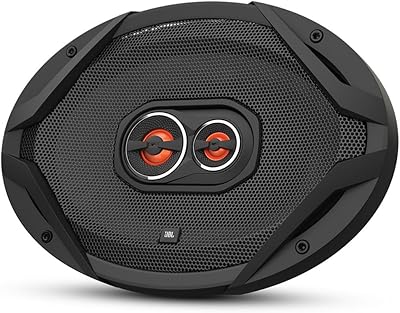
JBL GX963 6×9″ 3-Way Car Speakers
85%
89%
Sound Quality
91%
Bass Response
87%
Ease of Installation
84%
Durability
82%
Build Quality
More
Kenwood KFC-6986PS 6x9 4-Way Car Speakers
76%
84%
Sound Clarity
58%
Bass Response
81%
High-Frequency Detail
79%
Midrange Presence
76%
Installation Ease
More
Kenwood KFC-6996PS 6×9 Car Coaxial Speakers
80%
84%
Sound Clarity
61%
Bass Response
78%
Stereo Imaging
91%
Installation Ease
74%
Build Quality
More
Kenwood KFC-1796PS 6-3/4″ 2-Way Speakers
85%
88%
Sound Quality
74%
Bass Performance
93%
Installation Ease
81%
Build Durability
85%
Audio Clarity
More
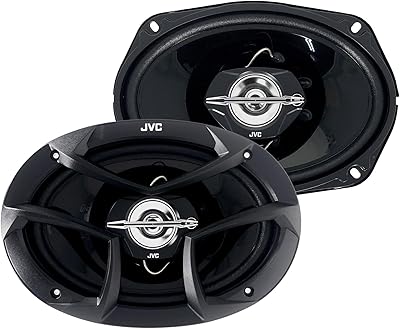
JVC CS-J6930 6x9″ 3-Way Car Speakers
73%
78%
Sound Quality
74%
Bass Response
81%
Vocal & Midrange Clarity
73%
Treble & High-Frequency Detail
91%
Value for Money
More
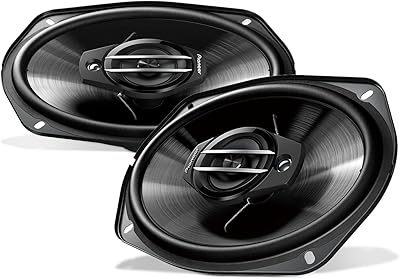
Pioneer TS-G6930F 6” x 9” 3-Way Car Speakers
84%
88%
Sound Quality
93%
Ease of Installation
77%
Bass Performance
92%
Value for Money
85%
Build Quality
More
Kenwood KFC-1696PS 6.5-Inch 2-Way Car Speakers
83%
88%
Sound Quality
91%
Ease of Installation
84%
Build Quality
75%
Bass Response
80%
Durability
More
Kenwood KFC-C6896PS 6×8 2-Way Car Audio Speakers
84%
88%
Sound Quality
91%
Bass Performance
85%
Ease of Installation
82%
Clarity and Treble
80%
Build Quality
More
Infinity REF-9623ix 6″ x 9″ 3-Way Car Audio Speaker
85%
88%
Sound Quality
91%
Installation Ease
80%
Bass Response
89%
Clarity of Highs
93%
Power Output
More
Kenwood KFC-1666S 6.5-inch Car Coaxial Speakers
76%
83%
Sound Quality vs. Factory Audio
61%
Bass Performance
79%
Treble & Clarity
91%
Installation Ease
67%
Build Quality & Materials
More

FAQ

If your vehicle already has standard 6×9″ speaker cutouts in the doors or rear deck — which covers a huge range of sedans, trucks, and SUVs — these should drop right in with the included hardware. The one thing worth checking before you buy is the mounting depth, since some vehicles with shallower door cavities can be tighter than expected. A quick measurement beforehand saves a lot of hassle.

You can run them directly from a head unit and they will sound noticeably better than stock speakers without any amplifier involved. Most aftermarket head units put out enough clean power to get solid performance from these. Adding an amp will push them further, but their continuous power handling has a real ceiling, so pairing them with a high-powered amplifier is not what they are designed for.

That 400W figure is a peak rating, which represents the absolute maximum the speaker can handle in a brief burst under ideal conditions. In everyday use, the continuous or RMS power these handle is considerably lower. Most head units output between 15W and 22W RMS per channel, which is well within the comfortable operating range of these speakers — the headline number is more of a tolerance ceiling than a practical output target.

For anyone with basic hand tools and a bit of patience, yes — this is one of the more DIY-friendly speaker swaps you can do. The included hardware covers most common mounting configurations, and the wiring is straightforward standard speaker wire. If your car uses a factory-amplified system from a brand like Bose or Harman Kardon, you may need a wiring adapter, so it is worth checking your vehicle's audio setup before starting.

The difference is noticeable from the first listen — stock OEM speakers prioritize cost over audio quality, and most have paper cones that degrade over time. These Kenwood 6×9s deliver meaningfully more bass presence, cleaner midrange, and better overall volume before distortion sets in. It is not a night-and-day audiophile transformation, but for everyday listening it is a clear, satisfying improvement.

Technically yes, but it is not recommended for balanced stereo audio — your left and right channels will sound uneven if one speaker is significantly different from the other. Since the pair is sold together, most buyers replace both sides at the same time, which is the setup this product is designed around.

No — these speakers have no water resistance rating whatsoever. If your car regularly gets moisture exposure, whether from a leaky convertible top, an open-air vehicle, or off-road conditions, these are not the right choice. You would need speakers specifically rated for outdoor or marine environments.

They will work with most factory head units without any issue. You will get a solid improvement in sound just from swapping the speakers. That said, if you pair them with an aftermarket head unit down the road, you will likely notice another meaningful jump in clarity and output, since most aftermarket units deliver cleaner and slightly more powerful output than factory radios.

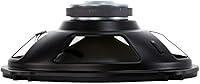
Depth clearance is one of the more common installation hiccups with these speakers. Before buying, measure the depth of your door cavity from the mounting surface to any obstructions behind it — wiring harnesses and window regulators are the usual culprits. This Sport Series pair has a moderate profile, but compact hatchbacks and some import models with particularly shallow doors have caught people off guard.

The polypropylene cone holds up well to the usual in-car stresses — heat, humidity fluctuations, and constant vibration — better than paper-cone alternatives in the same price range. Most long-term owners report consistent performance after a couple of years of daily use. The grille plastic is a bit thin and can develop minor resonance issues over time, but the driver itself tends to remain solid with reasonable use.

Where to Buy