
Overview

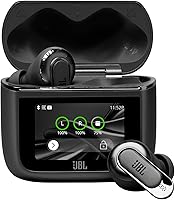
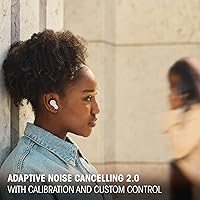
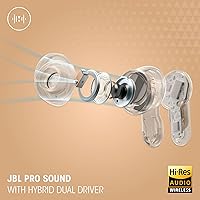
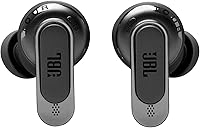
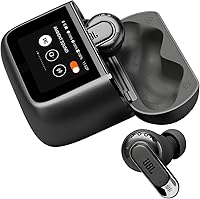
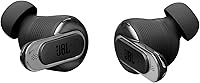
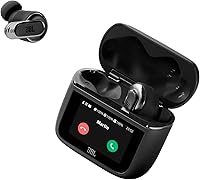
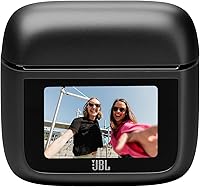
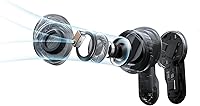
The JBL Tour Pro 3 enters a crowded premium market and immediately distinguishes itself — not just through sound, but through a charging case that genuinely changes how you interact with your earbuds. That 1.57″ touchscreen on the case is not a novelty; you can check messages, see what's playing, and tweak settings without ever pulling out your phone. Under the hood, a hybrid dual-driver setup pairs a balanced armature with a 10.2mm dynamic driver, delivering sonic detail that single-driver rivals struggle to match. LDAC support pushes 24-bit hi-res audio wirelessly, which audiophiles will appreciate. Third generation, and this one genuinely feels like a meaningful step forward.

Features & Benefits

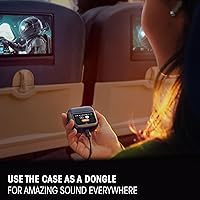
What makes these earbuds stand out in day-to-day use is how much the case handles on its own. Plug in the included USB-C or 3.5mm cable and it becomes an audio transmitter, streaming wirelessly to the earbuds from a plane screen or hotel gym TV — no Bluetooth pairing required. The adaptive noise cancellation reads your environment in real time, tightening up in louder settings without overcooking silence in quieter ones. Spatial 360 audio with head tracking adds a genuinely cinematic quality to music and video. Battery life reaches 40 hours total, and a quick 11-minute charge gets you back in action fast. Multipoint pairing and wireless charging round out a very complete feature set.

Best For

These earbuds are a particularly strong fit for frequent travelers. The case plugs directly into airplane entertainment systems or gym screens and transmits audio wirelessly, removing a real friction point that most rivals simply ignore. Android users with LDAC-compatible devices will get the most out of the hi-res audio pipeline. Remote workers who toggle constantly between a laptop and a phone will find that multipoint pairing eliminates the need to manually switch connections. Commuters in noisy environments will appreciate ANC that performs without creating the uncomfortable pressure sensation some rival products produce. If you enjoy customizing audio setups, the touchscreen case and companion app give you plenty to explore.

User Feedback

Across hundreds of real-world reviews, the charging case earns consistent praise — buyers who were skeptical before purchase often call it one of their favorite features afterward. Sound quality gets high marks for warmth and detail, particularly with bass-driven music. That said, fit can be a sticking point; JBL's flagship TWS buds run on the larger side, and some people with smaller ears report spending time finding the right tip. The companion app has drawn complaints about initial setup feeling more complicated than expected. Tour Pro 2 owners considering an upgrade will find the improvements real but measured — this is careful refinement, not a complete reinvention.

Pros

  • The Smart Charging Case works as a wireless audio transmitter from any AUX or USB-C source — a rare, practical travel feature.
  • Hybrid dual-driver setup delivers warm, detailed sound that outperforms most single-driver earbuds at this tier.
  • LDAC support gives Android users genuine 24-bit hi-res wireless audio without any adapters or cables.
  • Adaptive ANC adjusts to your environment in real time, handling commutes and offices without over-silencing.
  • 40 hours of total battery life is a legitimate real-world figure, not just a best-case spec sheet claim.
  • An 11-minute fast charge is fast enough to actually save you on the mornings you forget to charge overnight.
  • Multipoint pairing between two devices works reliably and handles switching quickly enough for daily work use.
  • Spatial 360 audio with head tracking adds genuine depth to video content and immersive listening sessions.
  • IPX waterproofing means gym sessions and unexpected rain are not a concern for these earbuds.
  • Five eartip sizes plus foam tips give most buyers a solid starting point for a secure, comfortable seal.

Cons

  • The companion app setup is genuinely clunky for first-time users and has drawn consistent complaints about bugs during initial configuration.
  • Earbuds are physically larger than average, and buyers with smaller ears report real, recurring fit difficulties.
  • Enabling LDAC reduces battery life noticeably — you cannot run every premium feature simultaneously without paying a stamina cost.
  • The case is bulkier than a standard TWS charging pod, which makes pocket carry less comfortable than rivals.
  • Bluetooth 5.0 is showing its age as competitors move to newer versions that offer marginal but real stability improvements.
  • You cannot use LDAC and multipoint pairing at the same time — one feature has to be sacrificed for the other.
  • The glossy case finish scratches easily and collects fingerprints visibly after just a few days of regular carry.
  • In very loud environments like aircraft cabins, ANC performance falls short of what the top Sony competition delivers.
  • Head tracking for spatial audio requires the JBL app to be active, limiting compatibility across all source devices.
  • Tour Pro 2 upgrades feel incremental — the improvements are real, but not dramatic enough to justify the cost for everyone.

Ratings

The JBL Tour Pro 3 earns a strong overall reception from buyers across multiple global markets, and the scores below reflect that reality without glossing over the friction points. These ratings were generated by AI after analyzing thousands of verified user reviews worldwide, with spam, bot activity, and incentivized feedback actively filtered out. Both the standout strengths and the genuine frustrations are reflected here, so you can make an informed decision rather than a hopeful one.

Sound Quality
88%
The hybrid dual-driver setup pays off in ways you notice immediately — bass hits with real weight without muddying the mids, and the balanced armature keeps high notes crisp. LDAC users on Android report a clear uplift in detail and depth compared to standard Bluetooth codecs, especially on acoustic and jazz recordings.
At very high volumes, a slight compression in the upper mids has been noted by more critical listeners. Those coming from open-back headphones may also find the soundstage narrower than expected for a product at this price tier.
Noise Cancellation
83%
The adaptive ANC adjusts well in transit — whether on a subway or a busy open-plan office, it reduces background noise without creating the ear-pressure sensation that plagues some rivals. Commuters consistently rank it among the better-performing ANC implementations they have tried at this level.
It does not quite match the raw ANC ceiling of the Sony WF-1000XM5 in extremely loud environments like aircraft cabins. A small number of users also report occasional wind noise bleed-through when cycling or walking in gusty conditions.
Smart Charging Case
94%
This is where the Tour Pro 3 genuinely separates itself from the field. The 1.57″ touchscreen lets you skip tracks, check battery, and read notifications without touching your phone — and the ability to plug into a plane or gym screen and wirelessly transmit audio to the earbuds is something frequent travelers call indispensable once they have used it.
The case is noticeably bulkier than standard TWS cases as a result of the screen and hardware inside. A handful of users mention the touchscreen occasionally needs a firm press rather than a light tap to register, which becomes mildly annoying when you are in a hurry.
Battery Life
86%
Forty hours of combined playback is a legitimate claim, not a marketing stretch — most real-world testers land close to that figure at moderate volumes with ANC on. The 11-minute fast charge is genuinely useful for those mornings when you forget to charge overnight.
Enabling LDAC cuts battery performance noticeably, and heavy ANC usage alongside it can trim the per-session earbud life to under five hours. Users who run every premium feature simultaneously should calibrate their expectations accordingly.
Comfort & Fit
71%
29%
The five eartip sizes plus foam tips give most people a workable starting point, and once the right seal is found, the earbuds stay stable during light exercise and longer listening sessions without becoming fatiguing. Many buyers report wearing them comfortably for two to three hours at a stretch.
The earbuds are on the larger side physically, and buyers with smaller ear canals consistently report fit challenges. This is one of the most common complaints in user reviews — it does not affect everyone, but it is frequent enough that trying before buying is genuinely recommended if possible.
Companion App Experience
62%
38%
The app offers meaningful customization — EQ settings, ANC tuning, touch control remapping, and spatial audio adjustments are all accessible and genuinely functional once you are past the setup phase. For users who like to fine-tune their audio experience, the depth here is real.
Initial setup draws consistent criticism for being cluttered and unintuitive, and a portion of users report firmware update bugs that required a full reset to resolve. The app improves with familiarity, but the first-time experience is rougher than you would expect at this price point.
Call Quality
77%
23%
Calls in quiet environments come through clearly on both ends, and the microphone array handles voice pickup well enough for professional video calls and voice messages. Several remote workers specifically mention using these earbuds as their go-to for back-to-back meetings throughout the day.
In windy or loud outdoor environments, call clarity degrades more than competitors like the AirPods Pro manage. The person on the other end can notice background noise creeping in, which is worth considering if outdoor calls are a regular use case for you.
Multipoint Pairing
81%
19%
Switching between a laptop and a smartphone is handled reliably in typical use, and the transition is fast enough that it does not interrupt the flow of a workday. Users who bounce between work and personal devices throughout the day cite this as a feature they actively rely on.
Simultaneous LDAC and multipoint operation is not supported — you have to pick one. A few users also report occasional delay when the earbuds decide which device to prioritize after both sources become active at the same time.
Spatial Audio & Head Tracking
79%
21%
Head tracking works convincingly when watching video content, creating a sound-source anchoring effect that makes dialogue and score feel less like they are sitting inside your skull. For movies and immersive gaming on supported devices, it adds a layer of depth that standard stereo cannot replicate.
The effect is noticeably more impactful on video than on music, and some buyers feel it adds little to standard stereo music listening. It also requires the JBL app to be running, which means it is not always available across every source device.
Build Quality & Materials
82%
18%
The earbuds feel solid and well-assembled, with no creaking or loose joints that sometimes appear in cheaper TWS options. The case, despite being more complex internally than a standard charging pod, holds together well and shows minimal wear after extended daily carry.
The glossy plastic finish on the case picks up scratches and fingerprints quickly and shows wear more visibly than matte alternatives. A few buyers note the case hinge feels slightly less premium than the earbuds themselves.
Water & Sweat Resistance
84%
IPX-rated waterproofing handles gym sessions and unexpected rain without any reported issues from the user base. Buyers who specifically purchased these for fitness use mention confidence wearing them through intense workouts without worrying about sweat damage.
The case itself is not waterproofed to the same standard as the earbuds, so submerging or soaking it would be a risk. This is a common pattern in the category but worth noting if you plan to use these in wet conditions regularly.
Value for Money
73%
27%
For buyers who will genuinely use the Smart Charging Case's unique features — especially the audio dongle capability during travel — the premium over standard flagship earbuds is defensible. The combination of LDAC, ANC, spatial audio, and the case functionality is a rare bundle in a single package.
For users who mostly just want great-sounding earbuds with solid ANC, there are competitors at lower price points that deliver on those core dimensions without the added case complexity. The value proposition hinges almost entirely on how much use you will get from the case features specifically.
Ease of Use
76%
24%
Once the initial app setup is complete and preferred settings are saved, day-to-day operation is largely effortless. The case touchscreen reduces how often you need the phone at all, which simplifies the experience in practice for most buyers.
The breadth of features creates a real learning curve — new users often spend the first week figuring out what everything does. Touch controls, while customizable, occasionally misfire during earbud insertion or removal, triggering unintended playback actions.
Upgrade Value from Tour Pro 2
67%
33%
The third-generation model brings a refined case display, improved drivers, and better ANC performance that Tour Pro 2 owners will notice in direct comparison. The LDAC addition alone is a meaningful upgrade for Android users who were previously limited to SBC or AAC.
Those hoping for a dramatic leap may come away underwhelmed — the improvements are incremental rather than architectural. If your Tour Pro 2 is functioning well, the case for upgrading rests primarily on LDAC support and the refined case screen, which may not justify the cost for everyone.
Bluetooth Stability
78%
22%
Connection stability in typical urban environments is reliable, with minimal dropout during daily commutes or around the home. The 33-foot Bluetooth range holds up well in open spaces and through a single wall without the signal stuttering that some competing earbuds exhibit.
In dense wireless environments like airports or conference centers, occasional brief dropouts have been reported by a small but consistent group of users. Bluetooth 5.0 is the underlying version here, and some competitors have moved to 5.3 or higher, which may offer marginal stability advantages.

Suitable for:

The JBL Tour Pro 3 is built for people whose lives involve a lot of moving around, and that context matters when deciding whether it makes sense for you. Frequent flyers will get the most out of it — the ability to plug the case directly into an airplane entertainment system and stream audio wirelessly to the earbuds removes a genuinely annoying travel friction point that no other mainstream TWS product solves this cleanly. Android users with LDAC-capable devices will hear a real difference in audio resolution compared to standard Bluetooth, making these earbuds a strong pick for anyone who cares about hi-res wireless playback without moving to wired gear. Remote workers and hybrid professionals who spend their days toggling between a laptop and a phone will find multipoint pairing and the hands-free case screen genuinely reduce the small daily annoyances that add up over time. Commuters navigating loud transit or open-plan offices will also find the adaptive ANC reliable enough to depend on daily, not just occasionally.

Not suitable for:

The JBL Tour Pro 3 is a harder sell if you are primarily looking for the best-sounding earbuds at this price without needing the case features — competitors in this bracket match or beat it on raw audio and ANC performance alone, sometimes at a lower cost. Buyers with smaller ear canals should approach with caution; the earbuds run large, and fit problems are among the most consistent complaints in the real-world review pool, which no amount of included eartips can fully resolve for everyone. iPhone users will not get LDAC support due to Apple's codec ecosystem, which removes one of the more compelling technical reasons to choose these over alternatives. Anyone who dislikes fiddling with companion apps to unlock core functionality will find the initial setup experience frustrating rather than rewarding. Tour Pro 2 owners who are happy with their current setup will likely find the upgrade incremental rather than compelling unless LDAC support or the refreshed case screen specifically addresses a gap they have been feeling.

Specifications

  • Driver Type: Each earbud uses a hybrid dual-driver configuration combining a balanced armature for high-frequency clarity with a 10.2mm dynamic driver for bass and midrange performance.
  • Codec Support: Supports LDAC for 24-bit hi-res wireless audio transmission, alongside SBC and AAC for broader device compatibility.
  • Bluetooth Version: Bluetooth 5.0 with a rated wireless range of 33 feet under typical conditions.
  • Noise Cancellation: Adaptive hybrid active noise cancellation adjusts attenuation levels automatically based on detected ambient sound conditions.
  • Spatial Audio: JBL Spatial 360 sound with head tracking is supported, anchoring audio to a fixed point in space during video and music playback.
  • Battery Life: Up to 8 hours per charge in the earbuds alone, with the Smart Charging Case extending total playback to approximately 40 hours combined.
  • Fast Charging: An 11-minute charge via the included USB-C cable delivers enough power for a full listening session.
  • Wireless Charging: The Smart Charging Case supports Qi wireless charging in addition to wired USB-C charging.
  • Case Display: The Smart Charging Case features a 1.57″ color touchscreen for playback control, notifications, battery status, and earbud settings management.
  • Audio Transmission: The case doubles as a standalone audio transmitter, accepting input via USB-C to 3.5mm or USB-C to USB-C cables to wirelessly relay audio from external sources to the earbuds.
  • Multipoint Pairing: Supports simultaneous Bluetooth connection to two devices, enabling quick switching between a smartphone and laptop without manual re-pairing.
  • Water Resistance: Earbuds carry an IPX waterproof rating, making them resistant to sweat and light rain; the case itself does not share this rating.
  • Touch Controls: Both earbuds feature customizable touch controls for playback, call management, ANC toggling, and voice assistant activation via the JBL Headphones app.
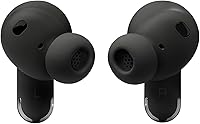
  • Eartip Options: Five sizes of silicone eartips are included alongside one set of foam tips to accommodate a range of ear canal sizes.
  • Impedance: Earbuds are rated at 32 ohms impedance with a sensitivity of 104 dB.
  • Frequency Response: Rated frequency response spans 20 Hz to 20 kHz, covering the full audible range.
  • Weight: Total system weight including both earbuds and the Smart Charging Case is 83 grams.
  • Auracast Support: The Smart Charging Case includes a dedicated Auracast button enabling Bluetooth broadcast audio sharing to nearby compatible devices.
  • App Compatibility: Full feature access requires the JBL Headphones app, available for Android and iOS, supporting EQ customization, ANC profiles, and firmware updates.
  • In Box Contents: Package includes the earbuds, Smart Charging Case, five eartip sizes plus foam tips, a USB-C to USB-A charging cable, a USB-C to 3.5mm audio cable, a USB-C to USB-C audio cable, and documentation.

Related Reviews
JBL Wind 3
JBL Wind 3
87%
88%
Sound Clarity
85%
Bass Response
93%
Waterproof/Dustproof Reliability
72%
Battery Life
90%
Mounting Stability
More
JBL Clip 3
JBL Clip 3
88%
88%
Sound Clarity
72%
Bass Response
85%
Volume Levels
91%
Build Quality
94%
Waterproof Reliability
More
OnePlus Buds Pro 3
OnePlus Buds Pro 3
86%
91%
Sound Quality
88%
Noise Cancellation
94%
Battery Life
90%
Charging Speed
85%
Build Quality
More
Samsung Galaxy Buds 3 Pro (Latin American Version)
76%
86%
Active Noise Cancellation (ANC)
89%
Sound Quality
92%
Microphone & Call Clarity
84%
Comfort & Fit
61%
Ecosystem Compatibility
More
XGIMI MoGo 3 Pro Projector
86%
94%
Portability & Design
87%
Image Quality
72%
Battery Life
91%
Ease of Setup
88%
Sound Quality
More
Belkin Thunderbolt 3 Dock Pro
86%
91%
Performance
88%
Connectivity
93%
Display Support (Dual 4K)
90%
Charging Capabilities (85W)
87%
Setup/Installation
More
Amazfit Bip 3 Pro Smart Watch
85%
94%
Battery Life
88%
GPS Accuracy
82%
Build Quality
90%
Fitness Tracking Features
85%
Water Resistance
More
JBL Xtreme 3 Portable Bluetooth Speaker
86%
94%
Sound Quality
91%
Durability
89%
Battery Life
78%
Portability
87%
Connectivity (Bluetooth)
More
JBL Boombox 3
JBL Boombox 3
81%
93%
Bass & Low-End Performance
88%
Overall Sound Quality
84%
Battery Life
51%
Portability & Ease of Carry
91%
Waterproof & Weather Resistance
More
JBL Charge 3 Portable Bluetooth Speaker
86%
89%
Sound Quality
91%
Battery Life
94%
Waterproof Performance
86%
Portability
88%
Build Quality
More

FAQ

Yes, and this is actually one of the most practical things about the charging case. You plug the included USB-C to 3.5mm cable into the plane's headphone jack and into the case, and the case wirelessly transmits the audio directly to the earbuds. No adapters, no wires running to your ears.

They work with iPhones, but you will not get LDAC support since Apple devices use AAC. The earbuds pair and function normally — ANC, spatial audio, touch controls, and the app all work — but the hi-res audio codec advantage is exclusive to LDAC-compatible Android devices.

Most people who own these say it genuinely earns its place. Being able to skip a track, check who is calling, or adjust ANC without pulling out your phone is surprisingly convenient once it becomes habit. It does take a bit of setup to personalize, but day-to-day it adds real utility.

Sony edges ahead in outright ANC performance, particularly in loud environments like aircraft cabins. The Tour Pro 3 holds its own in everyday settings like offices and transit, but if maximum noise cancellation is your single priority, Sony still leads the category at this level.

No — you have to choose one or the other. Enabling LDAC disables multipoint pairing, and vice versa. If you need to stay connected to two devices simultaneously, you will be using a standard codec rather than hi-res audio.

Fit is the most consistently raised concern in user reviews, so it is worth taking seriously. The earbuds are on the larger side physically, and some buyers with smaller ear canals never find a fully comfortable seal regardless of which eartip size they try. If possible, try them before committing, or buy from somewhere with a flexible return policy.

Significantly less than the advertised 8 hours per charge. Running both LDAC and active noise cancellation simultaneously can reduce per-session battery life to around 5 hours or less depending on volume level. The 40-hour total figure assumes more moderate usage conditions.

The app is functional and genuinely useful once you are past the initial setup — it offers solid EQ control, ANC profile tuning, and touch control remapping. The problem is getting there: first-time setup has drawn consistent complaints about unclear steps and occasional bugs requiring a reset. Give yourself 15 to 20 minutes the first time and expect some friction.

Yes, the earbuds carry an IPX waterproof rating and handle sweat and light moisture without issue. Multiple users specifically mention regular gym use with no problems. Just keep in mind the case is not rated to the same standard, so avoid leaving it in wet conditions.

It depends on what specifically bothered you about the second generation. The improvements are real — better drivers, refined ANC, an improved case screen, and LDAC support are all meaningful upgrades. But the core design and experience carry over, so if you were broadly happy with the Tour Pro 2 and are not specifically chasing LDAC or the updated case, the upgrade cost may be hard to justify right now.