Overview

The JBL Stage 1200D Dual 12″ Subwoofer Enclosure is built for the enthusiast who wants real, chest-thumping bass without spending a weekend designing and building a custom box. JBL has been a respected name in car audio for decades, and the Stage line sits comfortably in their mid-to-upper consumer range — not entry-level, but not exotic either. What sets this dual-sub enclosure apart is that it comes factory-tuned by engineers, meaning the port length and box volume are already optimized for the drivers inside. You bolt it in, wire it up, and get down to business. At its price point, that level of built-in engineering convenience carries real weight.

Features & Benefits

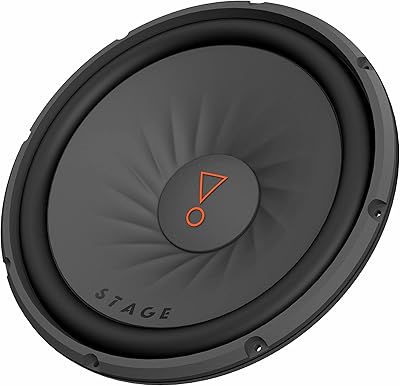
Inside this loaded subwoofer box, two Stage 122AM 12-inch drivers share a single slot-ported enclosure tuned to produce punchy, impactful low end. The combined 500W RMS rating is the number that actually matters here — not the headline 1000W peak figure, which only reflects momentary bursts the amp will rarely deliver. Think of RMS as the steady, sustainable output you will actually hear on every hard bass note. The enclosure's 2-ohm impedance is a deliberate design choice: most quality mono amplifiers produce their highest output at 1 or 2 ohms, so this box is positioned to squeeze maximum power from your amp without needing a bridge or rewire. The 5/8-inch MDF shell is stiff enough to suppress cabinet resonance, and the black carpet finish holds up to the general abuse of trunk life reasonably well.

Best For

This dual-sub enclosure makes the most sense for buyers who want a turnkey dual-sub upgrade — no enclosure design, no tuning math, no sourcing drivers separately. Fitment is worth mapping carefully before you buy: at just over 30 inches wide, this loaded subwoofer box won't fit in the trunk of most compact sedans. If your vehicle has the space — a mid-size sedan, full-size SUV, or a hatchback with a wide cargo floor — it drops in cleanly. Mono amp owners running a 1 or 2-ohm stable amplifier will find the electrical match natural and straightforward. Bass lovers into hip-hop, EDM, or hard rock will appreciate the punch. Serious audiophiles chasing ultra-deep, flat sub-bass extension may find a custom ported build more satisfying.

User Feedback

Across roughly 93 ratings, the JBL Stage 1200D holds a solid 4.4-star average — a respectable consensus for a sub enclosure at this price tier. Buyers who praise it most consistently point to strong output levels and how straightforwardly the installation goes when the vehicle has adequate trunk room. Build quality draws positive remarks as well, particularly the rigidity of the cabinet. On the critical side, some buyers note that fitting this loaded subwoofer box into smaller trunks is trickier than expected, and a handful mention confusion about amplifier compatibility — specifically whether their amp is truly rated for a 2-ohm load. A few reviewers cite long-term durability as a genuine positive, with the enclosure staying solid and the carpet holding up over time. The sample size is modest, so treat the extremes in either direction with appropriate skepticism.

Pros

  • Two 12-inch Stage 122AM drivers come pre-loaded in a finished enclosure — no additional hardware sourcing required.
  • The slot-ported box is factory-tuned by JBL engineers, producing punchy low-end that most DIY ported builds struggle to match.
  • At 2-ohm impedance, this dual-sub enclosure wrings maximum output from a compatible mono amp without extra wiring.
  • Solid 5/8-inch MDF construction keeps the cabinet tight and resonance-free even when pushed at high volume.
  • Black carpet exterior blends naturally into most trunk setups and handles everyday bumps and abrasion without obvious wear.
  • Installation is approachable for anyone with basic car audio experience — run your RCA cables, connect to your amp, and you are done.
  • JBL's HARMAN reliability testing — including thermal cycling and extended full-power runs — provides real confidence in long-term build integrity.
  • Owners consistently report that real-world output meets or exceeds what they expected for a dual-sub setup in this price range.
  • The 1-year manufacturer warranty offers reasonable coverage for a product in this category.
  • At roughly 15 pounds, the JBL Stage 1200D is manageable for a solo installer without needing a second pair of hands.

Cons

  • At over 30 inches wide, this loaded subwoofer box is physically too large for compact and subcompact car trunks.
  • Budget amplifiers not rated for stable 2-ohm operation can underperform or sustain damage when paired with this enclosure.
  • The 1000W peak figure is misleading; sustained, real-world performance is governed by the 500W RMS rating instead.
  • Being a bulky shipped item, some buyers report receiving units with minor cosmetic damage to the carpet exterior.
  • Factory tuning favors punchy mid-bass impact over deep sub-bass extension, which may disappoint listeners chasing rumbling low frequencies.
  • With roughly 93 ratings total, the review base is too small to draw confident conclusions about long-term reliability patterns.
  • No amplifier is included, and buyers unfamiliar with 2-ohm matching may need to research compatibility before committing to a purchase.
  • The carpet exterior attracts dust and debris in a trunk environment and is not particularly easy to clean or refresh.
  • Only available in black, so buyers assembling a custom interior aesthetic may find integration more difficult than expected.
  • Owners using a factory head unit may need a separate line output converter to properly route the RCA signal cables.

Ratings

The JBL Stage 1200D Dual 12″ Subwoofer Enclosure earned a 4.4-star average across roughly 93 verified buyer ratings worldwide. The scores below are generated by AI after analyzing that full review base — actively filtering out spam, bot-generated content, and incentivized feedback to surface what actual owners honestly experienced. Both the genuine strengths and the real pain points of this dual-sub enclosure are reflected across every category, with no effort to soften or inflate either side.
Bass Output & Impact
88%
Owners consistently describe the dual-sub output as immediately impressive, with a physical low-end punch that fills the cabin noticeably. In daily driving at moderate-to-high volume — playing hip-hop or EDM — the slot-ported design delivers exactly the kind of authoritative thump that makes a real difference over a single-sub setup.
A handful of buyers expecting cinema-level sub-bass rumble note that the tuning prioritizes punch over extension, meaning the very lowest frequencies are not as prominent. Listeners coming from sealed enclosures may find the bass character different rather than strictly superior, particularly for acoustic or classical material.
Build Quality
83%
The 5/8-inch MDF cabinet feels solid and does not flex or rattle at high volume, which buyers appreciate over cheaper particle board enclosures that loosen at the joints over time. The overall fit and finish is noticeably better than what most buyers achieve if they attempt to build a similarly sized ported box themselves.
The carpet covering, while adequate, is not a premium wrapping — some owners note it begins to show wear at the edges after a year or more of trunk use, particularly when cargo regularly slides across it. A few reviews also mention minor carpet lifting at the seams, suggesting adhesion consistency varies between units.
Value for Money
79%
21%
For buyers who would otherwise spend time and money sourcing two separate drivers, a suitable enclosure, and having it tuned, the all-in-one pricing makes reasonable sense. The factory-tuned ported design means you are effectively getting JBL engineering included in the package — something DIY builders routinely undervalue until they get the tuning wrong.
At its price point, some buyers feel a single well-matched 12-inch subwoofer in a quality custom box could outperform this system for similar money. The value calculation also shifts unfavorably for anyone who still needs to purchase a capable 2-ohm stable mono amplifier, since that represents a substantial additional investment.
Ease of Installation
86%
Buyers consistently describe the installation experience as one of this enclosure's strongest points — the subs are pre-wired, the box is finished, and there are no calculations or port tuning decisions to make. For someone upgrading from a factory stereo system over a weekend, this kind of turnkey simplicity removes a real and meaningful barrier to entry.
Installation ease assumes you already have a compatible mono amplifier, proper wiring, and RCA signal cables — buyers new to car audio may find there are more steps involved than the product implies. Some owners with factory head units ran into the additional need for a line output converter, an unexpected hurdle that adds both cost and complexity to the setup.
Amplifier Compatibility
71%
29%
For buyers who already own a quality mono amplifier rated at 1 or 2 ohms, pairing with this loaded subwoofer box is clean and straightforward — the 2-ohm impedance is precisely where most dedicated mono amps deliver their best performance. Experienced car audio enthusiasts report getting strong, consistent output from this combination without any unusual tuning challenges.
Buyers with budget amplifiers or multi-channel amps frequently encounter compatibility issues, since many affordable amps are only rated stable at 4 ohms. This mismatch is the most commonly flagged technical complaint in the review base, with some buyers discovering their existing amp underdelivers or runs hot when connected to this enclosure.
Enclosure Tuning
84%
JBL's engineers have dialed in the port length and box volume specifically for the Stage 122AM drivers, producing a more coherent low-end than most first-attempt DIY ported builds. Owners describe the bass response as consistent and predictable across music genres, rather than spiking at one or two frequencies the way cheaper tuned boxes often do.
The fixed factory tuning is a strength for most buyers, but it leaves no room to adjust if your listening preferences or amplifier characteristics call for a different port frequency. Audiophiles who want to re-tune the enclosure for deeper extension would need to modify or replace the port entirely, which defeats the plug-and-play advantage.
Long-Term Durability
77%
23%
Owners who have run the JBL Stage 1200D for extended periods report that the MDF structure stays solid and the drivers maintain their output without noticeable degradation. JBL's HARMAN testing process — covering extreme heat, cold, and sustained full-power runs — lends real credibility to these long-term ownership reports.
The review base of roughly 93 ratings is not large enough to draw firm conclusions about failure rates after two or three years of regular use. Carpet wear at the edges and corners is the most consistent cosmetic complaint from longer-term owners, and while mainly aesthetic, it is worth noting for buyers who care about appearance.
Fitment Versatility
58%
42%
For vehicles that can accommodate the dimensions — mid-size sedans, full-size SUVs, larger crossovers, and most pickup truck cabs — the rectangular form factor sits cleanly in a trunk without requiring unusual mounting hardware. Owners who confirm fitment before ordering report a secure, stable placement that does not shift under hard acceleration or braking.
At just over 30 inches wide and nearly 14 inches deep, this dual-sub enclosure physically excludes a wide range of popular compact vehicles — Honda Civics, Toyota Corollas, and similar sedans simply do not have the trunk width. This is the single most common reason buyers return the product, and it must be verified with a tape measure before ordering.
Low-Frequency Extension
73%
27%
The slot-ported design delivers strong output in the 40–80 Hz range that most listeners associate with felt, physical bass — the zone where kick drums land hard and bass lines hit with authority. For everyday listening across commercial music genres, this is exactly where impactful bass needs to perform, and the enclosure delivers it reliably.
Buyers chasing sub-bass extension into the 20–30 Hz range for movie soundtracks or deep electronic music will find the ported tuning less capable than a custom enclosure optimized for lower frequencies. The tradeoff is intentional — deeper extension requires more box volume or lower port tuning — but it is a real limitation for those specific listening priorities.
Cabinet Resonance Control
82%
18%
The 5/8-inch MDF construction is notably effective at keeping the cabinet walls from flexing or vibrating sympathetically at high volume, which translates to cleaner bass output with less coloration from the box itself. Multiple buyers comment that even at high listening levels the enclosure stays quiet — no panel buzzing or port chuffing under normal operating conditions.
A small number of owners report occasional port noise at very high gain settings, which typically points to the amplifier pushing the drivers beyond their rated limits rather than a fundamental design flaw. The enclosure has no internal bracing beyond the MDF panels themselves, which is standard at this price tier but leaves room for improvement in future iterations.
Exterior Finish Quality
69%
31%
The black carpet covering blends into the trunk environment of most vehicles without drawing unwanted attention, and the finish is clean and even straight out of the box. For buyers who want a practical, low-visibility setup rather than a show-car look, the carpet finish is entirely appropriate and serviceable.
The carpet quality is functional but not premium — it collects pet hair and dust readily, and there is no easy way to clean it thoroughly once debris is embedded. A minority of buyers note that the carpet edges near corners can begin to lift with extended trunk use, suggesting the adhesive bond is not uniformly applied across all units.
Package Completeness
63%
37%
The enclosure itself represents genuine value in terms of what arrives ready to use — two professionally installed 12-inch drivers in a finished, tuned box is a meaningful starting point that would take most buyers several hours and considerable effort to replicate independently. The inclusion of brand stickers and an owner's manual, while minor, reflects attention to the overall unboxing experience.
No amplifier, no speaker wire, no RCA cables, and no power wiring kit are included — buyers new to car audio need to budget separately for all of these items, which can add meaningfully to the total cost. Some buyers expected at least basic accessory cables given the price, and the absence leaves a practical gap for first-time installers.
Brand Reliability
87%
JBL's position under the HARMAN umbrella means the reliability testing applied here is not just marketing language — drivers undergo documented protocols including UV exposure, temperature cycling, and sustained high-power operation before reaching market. For buyers familiar with JBL products across other categories, there is a reasonable expectation of consistent performance over time.
Brand recognition does not entirely insulate this product from quality control variability — some buyers report receiving units with cosmetic defects or carpet issues that suggest inconsistency in the manufacturing process. The 1-year warranty is also shorter than competitors offering 2–3 year coverage on comparable car audio enclosures, which is a minor but legitimate concern.
Shipping & Packaging
66%
34%
Buyers who received the enclosure in good condition report that the internal packaging adequately protects the carpet surface and corners during transit, with no meaningful damage to the unit on arrival. The enclosure ships in a container sized appropriately for the product, which minimizes the risk of the unit shifting excessively inside the carton.
A recurring thread across the review base involves units arriving with corner damage or carpet compression from transit — not a widespread defect, but enough reports to represent a real risk worth noting. Buyers who receive a visibly damaged unit should document the condition immediately and initiate a return before installation, as post-installation damage claims can be considerably harder to resolve.
Sub-Bass Accuracy
74%
26%
For punch-focused listening — the kind of bass response that registers as physical impact during hard-hitting music — this dual-sub enclosure performs above its price tier. The ported design reinforces the frequencies that most listeners consciously notice and enjoy, making it an effective match for commercial music where bass is mixed specifically for impact.
Listeners with reference-grade hearing or those accustomed to high-end sealed systems may perceive the bass as slightly colored or one-note at very high output levels, where ported resonance becomes more audible. This is a characteristic of slot-ported enclosures in general rather than a defect unique to this product, but it is a real distinction for critical listeners.

Suitable for:

The JBL Stage 1200D Dual 12″ Subwoofer Enclosure is the right fit for enthusiasts who want a genuine dual-sub upgrade without designing a custom box from scratch or sourcing drivers and enclosures separately. If your vehicle — a mid-size sedan, full-size SUV, or wider hatchback — has at least 30 inches of usable trunk width, this enclosure drops in cleanly and gets to work right away. It pairs naturally with anyone already running a quality mono amplifier rated stable at 1 or 2 ohms, since the box is wired to extract maximum output from that type of amp without any additional configuration. Music listeners who gravitate toward hip-hop, EDM, hard rock, or any genre where punchy, physical bass impact matters most will find the slot-ported tuning well-matched to their tastes. It is also a practical choice for buyers who want a brand with established reliability credentials rather than a generic no-name enclosure.
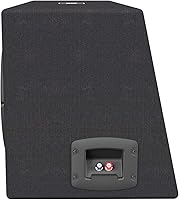
Not suitable for:

The JBL Stage 1200D Dual 12″ Subwoofer Enclosure is a poor choice for anyone driving a compact or subcompact car — at just over 30 inches wide and nearly 14 inches deep, it will not physically fit in a small trunk, and there is no workaround for that hard limit. Buyers running older or budget amplifiers should carefully verify that their amp is rated stable at 2 ohms before purchasing; an incompatible amp will underperform the subs or risk damaging the hardware. Audiophiles who want a fully custom-tuned system — with a specific box volume, calculated port length, and tailored frequency response — will find the factory tuning too rigid, since it is optimized for punch rather than flat, extended sub-bass. Anyone expecting the 1000W peak figure to reflect the sustained everyday output of this box should note that the 500W RMS rating is what actually governs real listening performance. Finally, buyers who need to preserve most of their trunk space or want a low-profile install will need to consider an entirely different form factor.
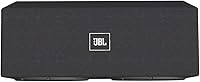
Specifications

  • Driver Model: Each of the two included subwoofers is a JBL Stage 122AM 12-inch dynamic driver, factory-installed and internally wired within the enclosure.
  • RMS Power: The two drivers share a combined 500W RMS power handling rating, representing the sustained continuous output level they are engineered to receive safely during normal listening.
  • Peak Power: The system carries a 1000W peak rating, reflecting maximum momentary capacity during brief transient bursts rather than a continuous operating figure.
  • Impedance: The enclosure presents a 2-ohm final impedance load, optimized for pairing with mono amplifiers rated stable at 1 or 2 ohms.
  • Enclosure Type: The design is a slot-ported (bass-reflex) enclosure, factory-tuned by JBL engineers to maximize low-frequency output and impact from the specific drivers installed.
  • Cabinet Material: The enclosure shell is constructed from 5/8-inch medium-density fiberboard (MDF), chosen for its acoustic rigidity and resistance to internal resonance.
  • Exterior Finish: The outer surface is wrapped in black carpet, providing abrasion resistance and a neutral appearance consistent with standard aftermarket car audio enclosures.
  • Dimensions: The enclosure measures 13.69 inches deep, 30.13 inches wide, and 15 inches tall in its rectangular prism form factor.
  • Weight: The fully loaded enclosure weighs approximately 14.96 pounds (6.8 kg).
  • Connectivity: The enclosure accepts amplified speaker-level input via wired terminals; it is a fully passive unit with no built-in amplifier or wireless input capability.
  • Output Mode: The system is configured for mono audio output, matching the single-channel signal delivered by a dedicated car subwoofer amplifier.
  • Driver Type: Both subwoofers use a dynamic driver architecture with a 12-inch woofer cone in each unit.
  • Warranty: JBL provides a 1-year manufacturer warranty covering defects in materials and workmanship for the enclosure and its installed drivers.
  • Enclosure Shape: The cabinet is a rectangular prism, a standard geometry that simplifies trunk placement and secure positioning against vehicle surfaces.
  • Model Number: The official JBL model identifier is JBLSUBST1200DAM, also sold under the Stage 1200D designation across retail and online listings.

Related Reviews
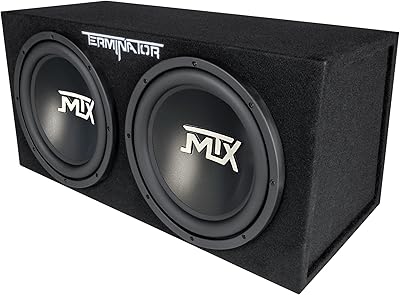
MTX TNE212D Dual 12″ Subwoofer Enclosure
79%
83%
Bass Output & Impact
88%
Build Quality
79%
Carpet Finish & Aesthetics
91%
Value for Money
84%
Installation Ease
More
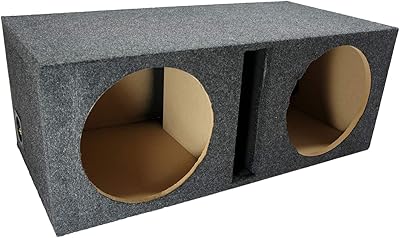
Atrend E12DSV Dual 12-Inch Vented Subwoofer Enclosure
77%
88%
Build Quality
83%
Bass Performance
91%
Airtight Seal
76%
Port & Tuning
67%
Subwoofer Compatibility
More
JBL 12″ Dual 4ohm DVC Car Subwoofer
83%
87%
Bass Performance
91%
Value for Money
82%
Ease of Installation
79%
Sound Quality at High Volume
85%
Build Quality
More
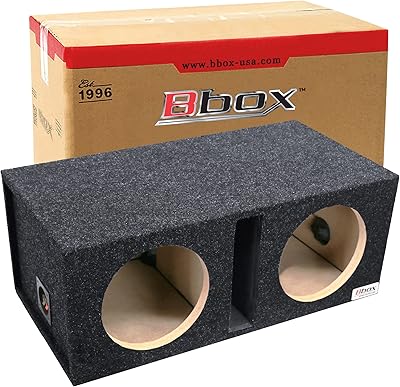
Bbox E12DT Dual 12-Inch Subwoofer Enclosure
78%
91%
Build Quality
88%
Airtight Seal
84%
Bass Accuracy
63%
Fitment & Sizing
82%
Installation Ease
More
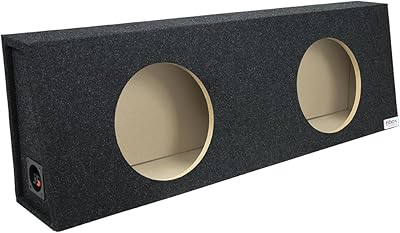
American Sound Connection 212VH Dual Sub Box
74%
83%
Build Quality
88%
Bass Output
91%
Value for Money
76%
Driver Compatibility
79%
Installation Ease
More
KICKER 43DC122 Dual 12-Inch Subwoofer Enclosure
76%
88%
Bass Output
71%
Amplifier Compatibility
82%
Installation Experience
54%
Enclosure Size & Fitment
79%
Build Quality
More
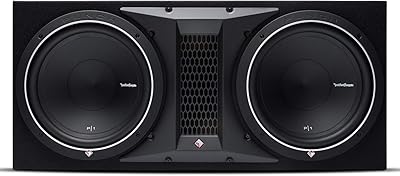
Rockford Fosgate P1-2X12 Dual 12″ Subwoofer Enclosure
77%
91%
Bass Output
88%
Build Quality
86%
Ease of Installation
83%
Value for Money
62%
Trunk Fitment
More
American Sound Connection 212H Dual Sub Box
71%
83%
Hatchback Fitment
76%
Bass Accuracy
81%
Value for Money
62%
Build Quality
74%
Ease of Installation
More
Rockford Fosgate P3-2X12 Dual 12″ Subwoofer Enclosure
82%
94%
Bass Output & SPL
88%
Bass Clarity & Tightness
91%
Build Quality
83%
Ease of Setup
74%
Amplifier Compatibility
More
CT Sounds STRATO-12-D2 12 Inch Dual 2 Ohm Car Subwoofer
86%
93%
Bass Performance
89%
Durability
91%
Power Handling
88%
Sound Clarity
84%
Ease of Installation
More

FAQ

Fitment is something you genuinely need to verify before ordering. The enclosure is just over 30 inches wide and nearly 14 inches deep, which rules out most compact sedans — a standard Civic trunk simply does not have that much usable width. Mid-size sedans, SUVs, and larger hatchbacks are generally fine, but pull out a tape measure and check your trunk opening width and usable depth before committing to the purchase.

You need a mono amplifier rated stable at 2 ohms — in plain terms, that means the amp is engineered to run safely and at full power into a 2-ohm speaker load. Some budget amplifiers are only rated at 4 ohms, and connecting them to a 2-ohm load can cause overheating or early failure. For the best match, look for a mono amp with a 2-ohm RMS rating somewhere between 500W and 750W, which gives the drivers adequate clean power without overdoing it.

Focus on the 500W RMS figure — that is the real-world number. RMS reflects the continuous power the drivers can handle during normal listening, which governs how loud and reliably the system plays over time. The 1000W peak rating covers very brief momentary spikes that a properly matched amp will rarely hit in practice. Base your amplifier selection on the RMS figure to avoid overpowering the drivers or being let down by an underpowered pairing.

The JBL Stage 1200D Dual 12″ Subwoofer Enclosure ships with both 12-inch Stage 122AM drivers already mounted and internally wired inside the box. There is no driver installation required — you connect your amplifier's speaker output to the enclosure's wiring leads, and the system is ready to play.

You will need a separate mono amplifier, speaker wire to connect the amp's output to the enclosure's input terminals, and a wiring kit for the amp itself — typically a power cable, ground wire, and inline fuse holder. You will also need RCA signal cables to run from your head unit's preamp outputs to the amp's inputs. If your head unit lacks RCA outputs, which is common on factory stereos, add a line output converter to that list as well.

Yes, but you will need a line output converter (LOC) — an inexpensive adapter that takes the speaker-level signal from your factory head unit and converts it into an RCA-level signal your amplifier can read. The LOC connects between your factory speaker wiring and the RCA inputs on your amp. It is a routine solution in car audio and is widely available at electronics and auto parts stores.

It depends on what you want from your bass. This loaded subwoofer box uses a slot-ported design, which is generally more efficient and louder around its tuned frequency range — you get that punchy, impactful character that suits hip-hop, EDM, and rock well. Sealed enclosures tend to reach lower frequencies and sound tighter or more controlled, but they require more power to reach the same volume level. If raw output and physical impact are the priority, ported is typically the stronger choice.

Owner feedback suggests the carpet covering handles normal conditions reasonably well, with no widespread complaints about peeling or significant fraying in typical use. That said, it does attract dust, pet hair, and debris more readily than a smooth surface would, and it is not easy to clean thoroughly. If your trunk regularly sees heavy cargo or sharp-edged equipment, some edge wear over time is plausible, though the MDF structure underneath should remain solid.

For most vehicles, pointing the driver faces toward the rear seat gives the strongest perceived bass inside the cabin. More importantly, make sure the slot port has a few inches of clearance and is not blocked by cargo, a spare tire cover, or the trunk walls — a restricted port chokes output noticeably. Bass at these low frequencies is largely omnidirectional, so many owners experiment with orientation and find the results vary meaningfully by vehicle shape.

The 1-year JBL manufacturer warranty covers defects in materials and workmanship — driver failures under normal use, structural flaws in the enclosure, and similar manufacturing issues. It does not cover damage from running the system beyond its rated power levels, physical damage incurred during shipping after the return window, or normal wear like carpet abrasion. To make a claim, contact JBL customer support directly with your original proof of purchase, so keep your receipt or order confirmation in a safe place.

Where to Buy