Overview

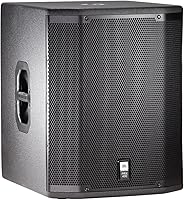
The JBL PRX418S 18-Inch Passive Subwoofer has been a dependable fixture in live sound rigs since its 2012 introduction, and it has held its ground in a market that keeps moving. Built around an 18-inch driver, this passive subwoofer requires an external amplifier to operate — a point worth underscoring early, because it is where a lot of buyer confusion originates. Within JBL's PRX lineup, it occupies the role of a workhorse touring cabinet: rugged, consistent, and designed for the real demands of mid-to-large venues. At 79 pounds, it is not a one-person load-in, but for working sound techs who know what they need, the trade-off is straightforward.
Features & Benefits

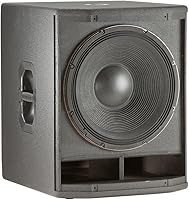
The PRX418S handles 800W continuous power — with program and peak ratings climbing much higher — which provides real headroom in demanding environments. Its 18-inch woofer covers a frequency range starting at 35 Hz, though the flat, usable response begins around 52 Hz: deep and punchy, but not sub-basement territory. That is solid performance for live music and speech reinforcement. A large vent area keeps port distortion in check at high output levels, and at 100 dB sensitivity, you do not need a massive amplifier to generate significant volume. The included pole mount lets you stack a top cabinet directly on the box — a genuinely practical touch for mid-size event setups.

Best For

This passive subwoofer fits most naturally into the hands of working live sound professionals — touring engineers, church audio teams, and event rental companies — who already own or plan to run a dedicated amplifier channel. It makes a strong case for mid-to-large venues where consistent, high-output bass matters and a powered cabinet is not required. For anyone already working within the JBL PRX system, pairing it with the PRX412M or PRX415M provides a matched, predictable rig that travels well. Where it falls short: solo operators needing a plug-and-play setup, or anyone running smaller intimate venues where a large passive cabinet is simply overkill.

User Feedback

Among verified buyers, the conversation around this 18-inch JBL sub tends to split along a predictable line. Professionals who understood what they were buying report strong satisfaction — they frequently cite build quality and raw output as standout strengths, with touring users noting the cabinet holds up well over time on the road. The 79-pound weight comes up consistently, and fairly so — solo load-ins are genuinely awkward without help. The critical reviews mostly trace back to one problem: buyers who paired the passive design with an underpowered amp and blamed the cabinet. With a 3.8-star average across a modest number of ratings, informed buyers tend to walk away satisfied and well-served.

Pros

  • Handles 800W continuous power with significant headroom for demanding live environments.
  • The 18-inch driver delivers punchy, extended low end that holds up across medium-to-large venues.
  • High 100 dB sensitivity means you can get strong output without an enormous amplifier driving it.
  • Large vent area keeps distortion controlled even when pushed hard at high sound pressure levels.
  • Included pole mount adds practical flexibility for stacking top cabinets without extra hardware.
  • Integrates cleanly with JBL PRX412M and PRX415M tops for a matched, consistent system.
  • Build quality earns consistent praise from touring users who put it through heavy regular use.
  • Passive design gives engineers direct amplifier-level control over the sub channel independently.
  • A long-established product with a proven track record in professional live sound since 2012.

Cons

  • Requires a separate external amplifier, adding significant cost and complexity to the total system.
  • At 79 pounds, solo load-ins are genuinely difficult and physically demanding without assistance.
  • Amp-matching is the buyer's responsibility — underpowering this cabinet leads to poor results.
  • No onboard DSP or crossover means additional processing equipment may be needed for optimal tuning.
  • Usable frequency response starts around 52 Hz, which is solid but not exceptional sub-bass depth.
  • The 3.8-star average rating suggests a meaningful portion of buyers had unmet expectations.
  • Cabinet dimensions make transport and storage more logistically involved than compact alternatives.
  • Not compatible with passive setups outside the recommended amplifier and speaker pairings without careful planning.

Ratings

Our AI scoring system analyzed verified buyer reviews for the JBL PRX418S 18-Inch Passive Subwoofer from around the world, filtering out incentivized and bot-generated feedback to surface what real working audio professionals actually experience. The scores below reflect both what this cabinet genuinely excels at and where it creates real frustration — nothing has been softened or inflated. If you are trying to decide whether this passive subwoofer belongs in your rig, these ratings give you an honest, ground-level picture.
Sound Output & Volume
91%
Touring engineers and rental company operators consistently report that this cabinet delivers serious low-end punch for its footprint. At 100 dB sensitivity, it reaches usable stage volumes without demanding an unusually powerful amplifier, which is a meaningful advantage when you are managing a full PA system across a long night.
A small number of users pushing the cabinet in very large outdoor environments felt it needed a second unit to fill the space adequately. It is a strong single-cabinet solution, but it does have a ceiling when the venue scales up significantly.
Low-Frequency Extension
78%
22%
The usable bass response starting around 52 Hz covers kick drum, bass guitar, and general live music reinforcement effectively. For the vast majority of live sound scenarios — clubs, churches, mid-size outdoor events — the low end feels full and controlled without sounding loose.
Buyers expecting the kind of sub-bass extension you get from purpose-built home theater or studio subwoofers will be disappointed. The 52 Hz floor is honest and functional, but it is not the ultra-deep, room-pressurizing low end that some users anticipate based on the cabinet size.
Build Quality & Road Durability
88%
Multiple touring users reported running this cabinet through years of regular gigging — loading in and out of vans, stacking it in trailer bays, setting up on outdoor stages — with no significant structural issues. The alloy steel enclosure holds up in the real world in a way that clearly reflects professional-grade construction standards.
A few buyers noted the cabinet shows cosmetic wear — scuffs and finish damage — more readily than they expected for a cabinet at this price point. Nothing structural, but it can look tired faster than competing enclosures that use more abrasion-resistant finishes.
Ease of Setup
62%
38%
For engineers who already run passive PA systems, the hookup is completely standard — speaker cable in, done. The included pole mount is a convenient touch that saves the step of sourcing a separate adapter, and the cabinet works with any professional amplifier without proprietary connectors or software.
This is where the passive design creates a real barrier for buyers who did not read carefully. You need an external amplifier, a crossover or DSP, and the knowledge to configure them correctly — and that combined setup effort is genuinely more complex than plugging in an active subwoofer. Several negative reviews trace back entirely to this learning curve.
Amplifier Compatibility
71%
29%
The 8-ohm impedance is a standard, amplifier-friendly load that pairs without issue with virtually every professional power amplifier on the market. Engineers running multi-cabinet setups appreciate the flexibility this gives them when configuring amp channels and impedance loads.
The burden of selecting, purchasing, and correctly configuring a matching amplifier falls entirely on the buyer, and that cost and complexity is not trivial. Users who underpower this cabinet — a common mistake — report noticeably weak and muddy bass performance that the cabinet itself is wrongly blamed for.
Value for Money
73%
27%
Within the passive subwoofer category at this output level, the PRX418S sits at a reasonable price point relative to comparable professional alternatives. Event rental companies in particular report strong long-term value, since the cabinet has proven reliable across hundreds of events without requiring significant maintenance.
When you factor in the required external amplifier and any additional DSP or crossover hardware, the total system cost climbs considerably above what an equivalent active subwoofer would cost as a single purchase. For buyers on a tighter budget, that full-system math can be a genuine deterrent.
Portability & Transport
49%
51%
The rectangular enclosure stacks and loads into standard cargo vans and trailers in a predictable, space-efficient way. It does not have any awkward protrusions or non-standard shapes that complicate loading alongside other gear.
At 79 pounds, this is a legitimately heavy cabinet that solo operators consistently flag as a problem. Without a second person or a quality hand truck, moving this cabinet through a venue — especially up stairs or across uneven outdoor terrain — is physically demanding and carries a real injury risk.
Port & Distortion Control
84%
The large vent area design pays off noticeably when the cabinet is pushed hard. Users running it at high SPL levels for extended sets report that the low end stays controlled and defined rather than breaking up, which is a meaningful differentiator in demanding live sound environments.
At the absolute limits of its power handling — peak and sustained high-volume use — a small number of experienced engineers noted some chuffing from the port under very aggressive program material. It is not a chronic issue, but it suggests the cabinet is best operated with some headroom rather than run at its absolute ceiling.
Ecosystem Integration
86%
For anyone already running JBL PRX-series tops, this subwoofer integrates into that system with excellent sonic consistency. The matched voicing between the PRX418S and recommended top cabinets like the PRX412M means you spend less time fighting the system to achieve a balanced, coherent sound across the frequency range.
Outside the JBL PRX ecosystem, the sonic matching benefits disappear and the cabinet becomes a more generic passive sub. Users pairing it with non-JBL tops sometimes report that dialing in a flat, integrated system response takes more effort and DSP work than expected.
Mounting & Flexibility
81%
19%
The integrated pole mount is a well-executed practical feature that touring engineers appreciate for its simplicity. Being able to place a full-range top directly on the sub without additional hardware saves real time during setup, particularly on show days with tight changeover windows.
The pole mount is only compatible with the JBL SS4-BK pole by default, which limits flexibility if you are using third-party poles or mounting systems that do not match that specification. It is a minor limitation, but users with mixed-brand hardware setups occasionally find it less convenient than expected.
Frequency Range Accuracy
76%
24%
Within its stated operating range, the PRX418S tracks the frequency response spec reliably, which experienced engineers appreciate when integrating it into a tuned system. The crossover region blends cleanly with well-matched top cabinets, avoiding the harsh handoff artifacts that plague cheaper subwoofers.
The gap between the stated low extension of 35 Hz and the practical flat response at 52 Hz is wider than some buyers expect. Marketing language around the full frequency range can create unrealistic expectations, particularly for buyers less familiar with the difference between nominal range and usable response.
Manufacturer Support & Longevity
83%
JBL has kept this product actively supported since its 2012 launch, which is a reassuring sign for buyers investing in a permanent installation or a rental fleet. Replacement parts and service resources are generally accessible through authorized service centers, which touring users cite as a practical advantage over less-established brands.
A few buyers report slower-than-expected responses from JBL support when dealing with warranty questions or technical issues. The warranty terms are listed as limited, and the specifics can vary by region and retailer, so it is worth verifying coverage details at the point of purchase.

Suitable for:

The JBL PRX418S 18-Inch Passive Subwoofer was built for professionals who already understand how a passive PA system works — and for those buyers, it is a genuinely strong choice. Live sound engineers running mid-to-large venues will appreciate the 18-inch driver's output capability and the headroom that comes with 800W continuous power handling. Touring bands and event rental companies benefit from the cabinet's road-worthy construction and its predictable behavior night after night. Church audio teams looking to expand an existing passive rig will find it integrates cleanly, particularly alongside other JBL PRX-series tops like the PRX412M or PRX415M. Anyone who wants granular amplifier-level control over their sub channel — rather than relying on onboard DSP — will feel right at home with this setup.
Not suitable for:

The JBL PRX418S 18-Inch Passive Subwoofer is a poor fit for anyone expecting a self-contained, plug-and-play bass solution. This cabinet has no onboard amplifier, which means purchasing and properly sizing a separate power amp is a real additional cost and technical responsibility — buyers who overlook this tend to be the most disappointed. Solo operators handling their own load-ins should think carefully: at 79 pounds, this is not a one-person carry without some effort, and the cabinet dimensions add to that challenge in tight stage or load-dock situations. Home studio users or anyone setting up a small-venue or casual DJ rig will likely find the output overkill and the passive requirement unnecessarily complex. If your priority is simplicity, an active subwoofer with onboard amplification and DSP will serve you far better than this passive workhorse.
Specifications

  • Driver Size: The cabinet houses a single 18-inch dynamic driver designed for high-output, low-frequency reinforcement in live sound applications.
  • Power Handling: Rated at 800W continuous, 1600W program, and 3200W peak, giving the cabinet substantial headroom for demanding live environments.
  • Frequency Range: The system covers a frequency range of 35–250 Hz, with a practical flat frequency response between 52 Hz and 120 Hz.
  • Sensitivity: System sensitivity is rated at 100 dB, meaning the cabinet produces strong output without requiring an exceptionally powerful amplifier.
  • Impedance: The cabinet presents an 8-ohm load to the amplifier, a standard impedance that is compatible with most professional power amplifiers.
  • Cabinet Type: This is a fully passive (unpowered) enclosure with no onboard amplification or DSP — an external amplifier is required for operation.
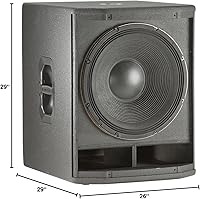
  • Dimensions: The cabinet measures 29″ deep by 26″ wide by 29″ tall, making it a substantial enclosure suited for stage and venue deployment.
  • Weight: At 79 pounds, the PRX418S is a heavy cabinet that typically requires two people for safe and comfortable transport and load-in.
  • Enclosure Material: The cabinet is constructed from alloy steel, contributing to its road-worthy durability and resistance to the wear of touring use.
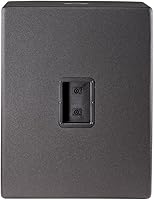
  • Pole Mount: An integrated pole mount is included and is compatible with the JBL SS4-BK pole, allowing a top cabinet to be stacked directly on the sub.
  • Connectivity: The cabinet connects via speaker pins using standard wired speaker connections, with no wireless or powered connectivity options.
  • Vent Design: A large vent area is incorporated into the enclosure design to reduce port distortion and maintain clarity at high sound pressure levels.
  • Recommended Pairings: JBL officially recommends pairing this subwoofer with the PRX412M or PRX415M full-range tops for a matched, optimized system response.
  • Color: Available in black, with a passive configuration designation reflected in the product styling as Passive | Black.
  • Warranty: The PRX418S carries a limited warranty from JBL; buyers should confirm current terms directly with JBL or their authorized retailer at time of purchase.

Related Reviews
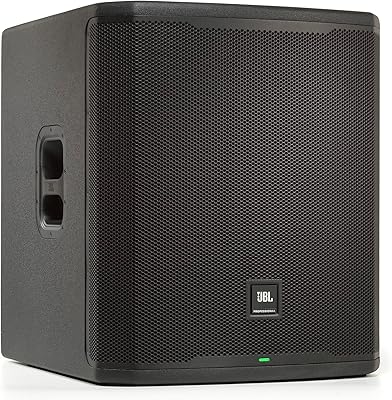
JBL PRX918XLF 18-Inch Powered Subwoofer
78%
91%
Bass Output & Volume
84%
Low-Frequency Extension
88%
DSP & Signal Processing
67%
App Control & BLE Connectivity
86%
Build Quality & Cabinet
More
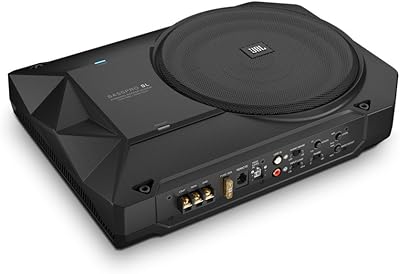
JBL BassPro SL 8-inch Powered Subwoofer
85%
88%
Bass Performance
94%
Ease of Installation
90%
Sound Quality for Size
82%
Build Quality
87%
Value for Money
More
JBL Stage 82 8-inch Car Audio Subwoofer
86%
92%
Value for Money
88%
Bass Performance
85%
Durability and Build Quality
90%
Installation Ease
87%
Power Handling
More
Bazooka BT6014 6-Inch Passive Tube Subwoofer
79%
78%
Sound Quality
71%
Bass Output
88%
Ease of Installation
84%
Value for Money
91%
Space Efficiency
More
OVEHEL 18-inch RGB Ring Light Kit
78%
88%
Brightness Output
86%
Color Accuracy
71%
RGB & Scene Modes
74%
Tripod Stability
81%
Ease of Assembly
More
Hifonics HFX12D4 12-Inch Car Subwoofer
72%
82%
Value for Money
74%
Bass Output
63%
Build Quality
88%
Installation Ease
76%
Enclosure Compatibility
More
JBL SUBBP12AM 12-inch Powered Subwoofer
75%
86%
Bass Output Quality
81%
Ease of Installation
78%
Amplifier Performance
67%
Long-Term Durability
73%
Value for Money
More
Crunch CRW12D4 12-inch Car Subwoofer
70%
83%
Value for Money
74%
Bass Output
67%
Build Quality
86%
Installation Ease
81%
Wiring Flexibility
More
QSC KS118 Active 18″ Subwoofer
88%
96%
Raw Sound Output
93%
Low-Frequency Extension
94%
Build Durability
67%
Portability & Transport
89%
DSP & Interface Ease
More
Desobry 18-Inch Portable TV
71%
83%
Value for Money
61%
Picture Quality
54%
OTA Antenna Performance
88%
Portability & Weight
81%
Connectivity & Input Options
More

FAQ

It is fully passive, meaning it has no onboard amplifier whatsoever. You will need to purchase and connect a separate power amplifier to drive it. This is one of the most common sources of confusion for first-time buyers, so it is worth factoring the cost of a suitable amp into your total budget before purchasing.

You will want an amplifier that can deliver at least 800W into 8 ohms to get full continuous performance from this cabinet, with more headroom being preferable for live use. Many engineers use professional amplifiers from brands like Crown, QSC, or Lab Gruppen with this type of cabinet. Make sure your amp has a built-in crossover or that you use a separate crossover or DSP unit to properly high-pass your tops and low-pass the sub channel.

Yes, and it is actually designed for exactly that. The cabinet includes an integrated pole mount that accepts the JBL SS4-BK pole, which lets you mount a top speaker directly above the sub. JBL officially recommends pairing it with the PRX412M or PRX415M full-range tops for a matched system, though other pole-mount-compatible speakers will physically fit as well.

It weighs 79 pounds, and while a determined person could move it alone on a flat surface, it is genuinely a two-person carry — especially up stairs or ramps. If you are a solo operator handling your own load-ins regularly, factor that into your decision. Many users recommend a good subwoofer dolly or hand truck to reduce the physical strain.

For professional live sound use, yes — the fundamentals of a well-engineered passive cabinet do not really age the way consumer electronics do. The driver, power handling, and sensitivity specs remain competitive, and the cabinet has a long track record in real touring and installation environments. It is still actively sold and supported by JBL, which says something about its continued relevance.

It performs best in medium-to-large indoor venues — think clubs, churches, theaters, and outdoor events where you need consistent, high-output bass across a significant coverage area. It would be overkill for a small coffee shop or intimate acoustic set, but for a band playing a 500-seat room or a sound company renting gear for corporate events, it is a practical and reliable choice.

The manufacturer specifies a frequency range starting at 35 Hz, but the practical, flat usable response begins around 52 Hz. That is solid performance for live music, kick drum, bass guitar, and speech reinforcement — but it is not the kind of ultra-deep sub-bass extension you would find in a purpose-built home theater or studio subwoofer. For live sound, 52 Hz is more than adequate in the vast majority of applications.

Yes, and many users do — outdoor festivals, open-air events, and outdoor stage setups are well within its intended use case. That said, it is not waterproof or weather-sealed in any way, so it should not be exposed to rain or moisture. Standard outdoor live sound precautions apply: protect it from the elements when not in use and avoid leaving it in direct weather.

Absolutely. The passive design means it connects to any professional power amplifier via standard speaker cables — there is nothing proprietary about the connection. You can run it with any amplifier that matches its impedance and power requirements. Similarly, while JBL recommends their own PRX tops for a matched system, any compatible full-range top speaker can be used alongside it.

The 3.8-star average largely reflects a segment of buyers who were not fully prepared for the passive design requirements. Reviews from working audio professionals tend to be much more positive, with consistent praise for output, build quality, and road durability. If you go in knowing you need a capable amplifier and understand how to properly set up a passive sub system, the likelihood of disappointment drops considerably.

Where to Buy