

Overview

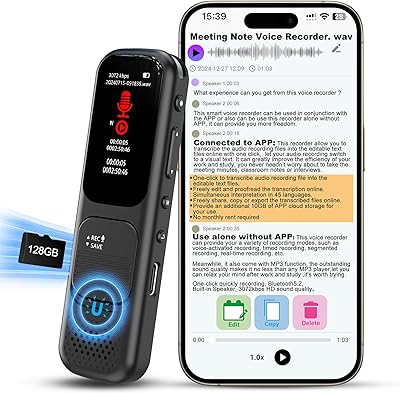
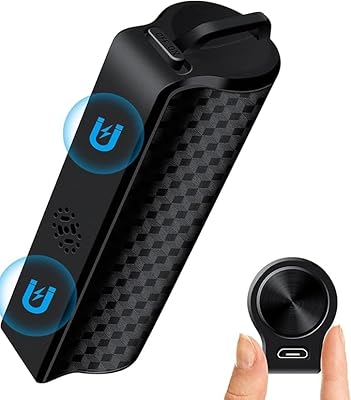
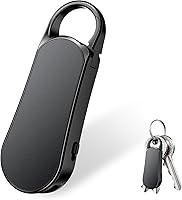
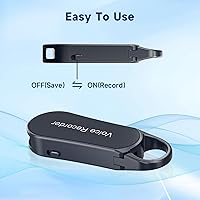
The Howabo V56 128GB is a compact, pen-sized recorder that launched in late 2024, targeting students, professionals, and anyone who needs reliable long-session audio capture without carrying anything bulky. At its mid-range price point, this voice recorder steps above the budget crowd with meaningfully better storage and recording resolution — not just marginally. It fits in a shirt pocket, weighs barely over an ounce, and ships with a lanyard for hands-free wear. One button starts and stops recording. That simplicity is genuinely refreshing. Howabo is a lesser-known brand, so first-time buyers should calibrate expectations accordingly, but the specs on paper are hard to ignore.

Features & Benefits

The 128GB of built-in storage is the headline spec, and it genuinely earns attention — that capacity translates to well over a thousand hours of audio, meaning most users will never come close to filling it. The 1536kbps bitrate is notably high for this class of device; where a smartphone voice memo sounds flat and distant in a crowded room, recordings at this resolution capture vocal detail with considerably more fidelity. The dual noise-cancelling mics handle moderately loud environments reasonably well, though heavy ambient noise will always test any built-in mic system. Battery life hits 35–40 hours on a single Type-C charge, which is generous. The 3.5mm headphone jack allows real-time monitoring, a small but useful touch many recorders at this price skip entirely.

Best For

This pocket recorder is a natural fit for college students who want to capture long lectures without monitoring the device every hour. Journalists and interviewers will appreciate clean vocal pickup in variable environments — a quiet office one moment, a noisy hallway the next. Remote workers needing to log meetings discreetly will also find it useful. The voice-activated mode makes it particularly practical for anyone who records and then forgets — the device pauses during silence, keeping files clean and manageable. Where it falls short is niche audio work: musicians tracking instruments or anyone needing stereo field recording will want to look elsewhere. This is a spoken-word recorder, and it knows it.

User Feedback

Early buyers of the V56 consistently highlight battery and storage as genuine standouts — two areas where the device over-delivers relative to its price. Ease of use also gets frequent praise; the one-button design removes any learning curve. On the critical side, some users report that VOR sensitivity can be tricky — delayed activation occasionally clips the first syllable of a sentence, which matters in fast-paced conversations. Build quality feedback is mixed; the lightweight frame feels practical to some but less reassuring to others. Given that this recorder only arrived in late 2024, the review pool remains thin, so drawing firm conclusions about long-term durability would be premature. Worth watching as more feedback accumulates.

Pros

  • 128GB of built-in storage means virtually no file management headaches for months of daily recording.
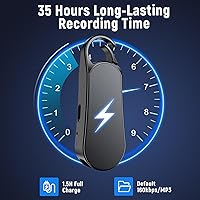
  • The V56 runs 35–40 hours on a single charge, easily covering a full week of classroom or meeting use.
  • USB-C charging refills the battery in about 1.5 hours using the same cable as most modern phones.
  • One-button operation removes any learning curve — press to record, press to stop, done.
  • At 1536kbps, vocal recordings sound noticeably more detailed than a typical smartphone voice memo.
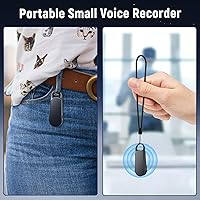
  • The included lanyard allows completely hands-free carry during active note-taking or fieldwork.
  • Dual built-in mics handle moderate ambient noise better than single-mic recorders at this price level.
  • The 3.5mm headphone jack lets users monitor or review audio directly without transferring files first.
  • VOR mode keeps recordings clean by pausing automatically during silence, trimming dead air from long sessions.
  • At its price point, the spec-to-cost ratio is genuinely difficult to match with established-brand alternatives.

Cons

  • VOR activation can clip the first word of a sentence after a pause, creating frustrating gaps in recordings.
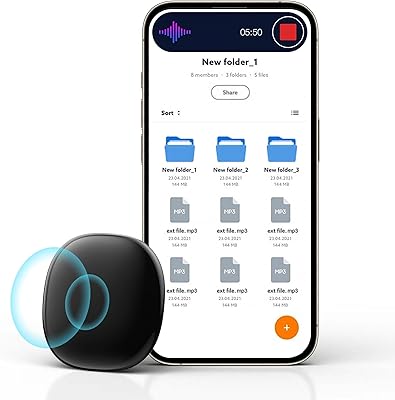
  • No companion app means file labeling, sorting, and session organization must be done on a computer after the fact.
  • Build quality feedback is mixed — the plastic housing feels lightweight in a way that reads as fragile to some buyers.
  • On-device playback navigation is slow and imprecise, making it hard to locate a specific moment in a long recording.
  • Howabo is a new brand with limited long-term reliability data and no established service or repair network.
  • Noise reduction struggles in genuinely loud environments like open offices or outdoor settings despite marketing claims.
  • Built-in storage cannot be expanded with a memory card, and there is no slot for external microphone attachment.
  • The review pool is still thin given the late-2024 launch, so durability conclusions remain premature.
  • Onboard speaker quality is basic and not comfortable for extended review sessions without headphones.

Ratings

The Howabo V56 128GB has been scored by our AI system after analyzing verified buyer reviews from global markets, with spam, bot-submitted, and incentivized feedback actively filtered out before any score was calculated. The result is an honest, weighted picture of how this pocket recorder actually performs across real use cases — from crowded university lecture halls to one-on-one interviews. Both what works well and what genuinely frustrates users are reflected in the numbers below.

Audio Clarity
83%
Users recording lectures and meetings consistently report that vocal detail comes through noticeably cleaner than a smartphone recording in the same room. At 1536kbps, spoken dialogue retains a natural texture that lower-bitrate recorders tend to muddy, especially when playing back at higher volumes.
In louder environments like open-plan offices or busy classrooms, some muddiness creeps back in despite the noise-reduction circuitry. The dual mics handle moderate ambient noise well, but challenging acoustics — echo-heavy conference rooms, for instance — expose the limits of built-in mic hardware at this price level.
Battery Life
91%
Thirty-five to forty hours of continuous recording on a single charge is genuinely impressive for a device this small. Students who record back-to-back classes all week report going several days without reaching for the charger, which removes a real logistical headache from their routine.
Battery performance does appear to drop somewhat under continuous high-resolution recording compared to the rated figure, and a small number of buyers note that the stated capacity feels optimistic in heavier use. That said, even at reduced real-world figures, it still outpaces most competitors in this tier.
Storage Capacity
94%
128GB of built-in storage is essentially a non-issue for the vast majority of users — even daily recorders who capture multiple hours per week are unlikely to fill it within a year. Buyers frequently mention the freedom of never having to manage files or delete recordings on the go.
Because the storage is built-in rather than expandable via microSD, users who want a backup copy of their audio to a separate card are out of luck. It is a minor structural limitation, though for most practical purposes the sheer capacity makes it a non-factor in day-to-day use.
Voice Activation (VOR)
71%
29%
The voice-activated recording mode is a real convenience win during long lectures or multi-hour meetings, automatically pausing during silence and keeping recordings tidy without manual intervention. Users who set it up correctly appreciate how it trims dead air and keeps file sizes manageable.
VOR sensitivity is a recurring complaint — some buyers report that the recorder clips the first syllable or word when a speaker starts talking after a pause, which creates annoying gaps in transcription or playback review. The sensitivity level does not appear to offer granular user adjustment, making it harder to fine-tune for different environments.
Noise Reduction
74%
26%
In relatively quiet or moderately noisy environments the noise-reduction processing does a solid job of pushing background hum to the background, making vocal recordings noticeably cleaner than the raw room sound. Users in library study sessions and small meeting rooms report strong results.
Marketing language around the noise-cancellation sets expectations high, and some buyers feel those expectations are not fully met in genuinely noisy settings. Open offices, cafeterias, and outdoor environments still bleed through, and a few users note the processing can occasionally create an artificial quality to the captured voice.
Ease of Use
93%
One-button operation is as straightforward as it sounds — press to record, press to stop. Users of all ages and tech comfort levels praise the fact that there is essentially no learning curve, and the included lanyard makes it easy to keep the device accessible without ever setting it down.
The simplicity that makes it easy to start recording can also make it harder to navigate playback and file management, with some users finding the interface for reviewing recorded files less intuitive than the recording process itself. A clearer display or more tactile controls would help during playback.
Build Quality
66%
34%
The lightweight plastic body keeps the recorder genuinely pocketable and comfortable to carry all day. For users who simply want a durable enough device that survives daily bag tossing and light handling, it performs reasonably well in normal conditions.
At this price and given the brand is new, build quality feedback is mixed. A number of buyers describe the housing as feeling somewhat hollow or cheap relative to their expectations, and there are early questions about how well the device holds up with regular long-term use — something the limited review history cannot yet fully answer.
Portability
92%
Measuring under three inches long and weighing just over an ounce, this pocket recorder genuinely disappears into a pocket, bag, or shirt. The included lanyard is a thoughtful addition that allows for completely hands-free carry during active note-taking or fieldwork.
The very compact size, while excellent for portability, does mean the device can feel a little fiddly to handle when navigating controls with larger hands. There are no belt-clip or mounting accessories included, so users who want a specific carry solution will need to source their own.
Charging Convenience
88%
USB-C charging in roughly 1.5 hours is genuinely convenient — the same cable used for most modern phones works here, which matters when traveling light. Users appreciate not needing to carry a proprietary cable or hunt for a legacy micro-USB cord.
A small number of buyers note that the charging port cover or connection feels less solid than they expected, raising mild concerns about long-term port durability. Nothing widely reported yet, but worth monitoring as the product ages in more hands.
Value for Money
81%
19%
The combination of 128GB storage, a high bitrate, and multi-day battery life at this price point is hard to match with most established-brand alternatives. For students or professionals who need a reliable daily recorder and do not want to pay a premium brand tax, the value equation is strong.
The unknown brand factor genuinely affects perceived value for some buyers — paying a mid-range price for a recorder from a company with little track record introduces more risk than purchasing from an established name. Buyers who prioritize long-term brand support or warranty reliability may feel the value trade-off is less clear-cut.
Microphone Performance
76%
24%
Dual built-in mics give the recorder a better pickup pattern than single-mic alternatives, and users recording one-on-one interviews or small group discussions generally report clear, usable audio without post-processing. The sensitivity picks up quieter speakers more reliably than budget single-mic recorders.
The dual mic setup is not a substitute for directional or external microphone accessories, and users who place the device more than a few feet from a speaker notice a drop in clarity. There is no option to attach an external mic, which limits flexibility for more demanding recording setups.
Playback Experience
63%
37%
Audio played back through the device sounds acceptably clear for review purposes, and the 3.5mm headphone jack lets users monitor recordings in real time or review them privately without needing to transfer files first. That jack alone puts it ahead of some competing devices at this price.
Several buyers describe the onboard speaker and navigation interface as basic to a fault — fine for quickly checking a recording, but not comfortable for extended playback sessions. The controls for fast-forwarding or locating a specific moment within a long recording can feel slow and imprecise.
File Management
58%
42%
Files transfer to a computer via USB-C without requiring special drivers on most systems, and the folder structure is straightforward enough for users who simply want to copy audio files over and work with them in a standard audio player or transcription app.
There is no companion app, and the on-device file organization options are limited. Users who record dozens of sessions and want to sort, label, or manage files directly on the device find the experience frustrating. For high-volume users, the lack of organizational tools becomes a real daily friction point.
Brand Reliability
54%
46%
Early adopters who have contacted Howabo support describe reasonably responsive replies to basic queries, and the warranty coverage offered appears standard for the category. At the time of launch, there were no widespread reports of defective units.
Howabo is a new brand with a short track record and a thin review history, which means long-term reliability is genuinely unknown. Buyers who have experienced issues with lesser-known electronics brands before will reasonably feel cautious, and the absence of an established service network adds risk for anyone outside a straightforward return window.

Suitable for:

The Howabo V56 128GB is a strong match for college students who need a reliable, low-maintenance recorder they can clip on, press once, and forget about for an entire week of lectures. The voice-activated mode and multi-day battery life make it especially practical for anyone whose schedule involves long or back-to-back sessions — no charging anxiety, no storage juggling. Journalists and interviewers who conduct in-person conversations across varied environments will appreciate the cleaner vocal pickup compared to a smartphone memo app, particularly in quieter settings like offices or small meeting rooms. Remote professionals who want a discreet, physical backup of important calls or internal meetings will find the pocket-sized form factor and one-button simplicity genuinely useful day-to-day. Voice journalers, self-study note-takers, and anyone building a personal audio archive will also get solid mileage from the massive built-in storage without ever needing to manage files mid-session.

Not suitable for:

This voice recorder is not the right tool for anyone whose recording needs go beyond spoken-word capture. Musicians wanting to track instruments, bands doing rehearsal recordings, or anyone needing true stereo field audio will find the built-in mics limiting and the recording chain simply not designed for that purpose. Users who rely heavily on file organization — labeling sessions, sorting by date or speaker, searching within recordings — will hit a real wall, as there is no companion app and on-device management is basic at best. Buyers who place significant weight on brand trust and long-term warranty support should factor in that Howabo is a new company with a short track record; if post-purchase support matters to you, that uncertainty is worth taking seriously. Anyone who needs to attach an external microphone for improved pickup, or expand storage via a memory card, will also find the hardware does not accommodate either. Finally, power users who want granular control over VOR sensitivity or recording parameters may find the simplified interface frustrating over time.

Specifications

  • Brand: Manufactured and sold by Howabo, a consumer electronics brand that entered the market in late 2024.
  • Model: The device carries the model designation V56.
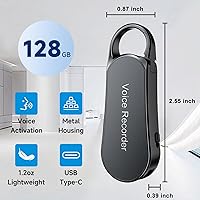
  • Dimensions: The recorder measures 2.55″ in length, 0.87″ in width, and 0.39″ in depth, making it roughly pen-sized.
  • Weight: The unit weighs 1.23 ounces, light enough to wear on the included lanyard without any noticeable neck strain.
  • Storage: 128GB of built-in, non-expandable flash storage is included, with no microSD card slot available.
  • Recording Bitrate: Maximum audio recording resolution reaches 1536kbps, which is high for a consumer portable recorder in this price category.
  • Battery Life: A full charge supports 35 to 40 hours of continuous recording under standard operating conditions.
  • Charge Time: The built-in battery charges fully in approximately 1.5 hours via the USB-C port.
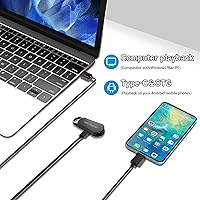
  • Connectivity: USB Type-C is the sole wired interface, used for both charging and transferring recorded files to a computer.
  • Microphones: Two built-in noise-cancelling microphones are positioned to capture audio in a range of environments from quiet rooms to moderately noisy spaces.
  • Headphone Output: A 3.5mm headphone jack allows real-time audio monitoring or direct playback review without requiring file transfer.
  • Voice Activation: Voice-activated recording (VOR) mode automatically starts and pauses the recorder based on detected sound, reducing silent gaps in recordings.
  • Operation: A single dedicated button handles the core record and stop functions, requiring no menu navigation for basic use.
  • Included Accessories: The package includes a lanyard for hands-free carry and a USB-C charging cable.
  • Audio Format: The device records in a standard compressed audio format compatible with playback on Windows and Mac computers without additional drivers.
  • Power Source: One internal rechargeable battery powers the unit; no replaceable batteries are required for normal operation.
  • Compatibility: The recorder connects to personal computers via USB-C and is compatible with both Windows and Mac operating systems for file transfer.
  • Release Date: The product was first made available for purchase in December 2024.

Related Reviews
ThePhotoStick 128GB
ThePhotoStick 128GB
83%
89%
Ease of Use
75%
Backup Speed
91%
Platform Compatibility
88%
Portability
92%
Value for Money
More
OhO 128GB Camera Glasses
83%
90%
Video Quality
88%
Ease of Use
71%
Battery Life
85%
Build Quality
68%
Comfort for Extended Wear
More
Google Pixel Tablet 11-inch 128GB
85%
89%
Display Quality
92%
AI Functionality
86%
Smart Home Integration
82%
Battery Endurance
71%
Value for Money
More
KEHZKCT 128GB Security Camera
83%
89%
Ease of Installation
91%
Motion Detection Accuracy
75%
Night Vision Performance
80%
Video Quality (1080p)
82%
Battery Life
More
AFFETUNI MC-01 128GB Magnetic Voice Recorder
80%
93%
Battery Life
91%
Magnetic Mount Strength
72%
Audio Clarity & Noise Reduction
94%
Storage Capacity
89%
Ease of Use
More
Innioasis Y1 MP3 Player 128GB
82%
89%
Value for Money
92%
Battery Life
74%
Bluetooth Connectivity
88%
Ease of Use
80%
Build Quality
More
LTZXTC 128GB Mini Body Camera
84%
89%
Video Quality
60%
Battery Life
94%
Ease of Use
91%
Portability/Size
85%
Motion Detection Accuracy
More
HONGHOO 128GB 4K Body Camera
85%
94%
Video Quality (4K Resolution)
88%
Night Vision Performance
78%
Battery Life
91%
Portability & Weight
84%
Ease of Use & Setup
More
Transcend MSA230S 128GB mSATA SSD
86%
91%
Performance (Read/Write Speed)
89%
Reliability and Durability
92%
Value for Money
85%
Compatibility with Devices
90%
Installation Ease
More
Foeuyte Q3 128GB MP3 Player
86%
89%
Sound Quality
91%
Storage Capacity
86%
Display Quality
93%
Portability
88%
Battery Life
More

FAQ

In everyday conditions — recording lectures, meetings, or interviews at standard resolution — most users report getting close to the rated 35 hours, though heavier continuous use at maximum bitrate tends to bring that figure down somewhat. Even at the lower end of realistic performance, it comfortably covers several full days of recording before needing a charge.

This is a known limitation with VOR technology in general, and the V56 is not fully immune to it. When a speaker begins talking after a period of silence, there can occasionally be a short delay before the recorder kicks in, which clips the first syllable or word. It works well in sessions where people are talking fairly continuously, but in conversations with long pauses between speakers, you may want to switch to manual continuous recording mode instead.

No — the 128GB storage is built-in and there is no microSD slot or other expansion option. That said, 128GB holds a very large volume of audio at any recording quality setting, so the vast majority of users will never come close to filling it.

It depends on how large the room is and how clearly the lecturer projects their voice. In a standard-sized classroom or lecture theater where the speaker uses a microphone system, the V56 handles the job well. In a very large auditorium where you are sitting far from an unamplified speaker, any built-in mic system will struggle, and this recorder is no exception.

Plug the recorder into your computer using the included USB-C cable and it will appear as a removable storage device, similar to a USB flash drive. You can then drag and copy your audio files directly — no special software or driver installation is required on most modern Windows and Mac systems.

Not in any meaningful way. The on-device interface is intentionally minimal, and there is no companion app to help with tagging, labeling, or sorting sessions. Files are organized by record date in a basic folder structure. If organization matters to your workflow, plan to manage that on your computer after transferring files.

No, the device does not have an external microphone input. The 3.5mm jack on the Howabo V56 128GB is an output only, designed for headphone monitoring. Users who need external mic support should look at recorders with a dedicated input jack.

It does a reasonable job in moderate ambient noise — air conditioning hum, keyboard clatter, low background chatter — but it is not a studio-grade noise gate. In genuinely loud environments like open-plan offices with lots of nearby conversation or outdoor settings with wind, you will still hear background noise in the recording. Set expectations accordingly rather than expecting the specs to describe a perfect result.

Yes, easily. The device is small enough to sit on a table or desk without being conspicuous, and recording it via VOR means no visible button pressing during the session. That said, always be aware of local laws and company policies around recording conversations before using any recording device in a professional setting.

Howabo is a relatively new brand that launched this recorder in late 2024, so there is not yet a long track record to draw on. Early buyers report reasonably responsive customer support for basic issues, and a standard warranty appears to be included. If long-term brand reliability and established after-sales service are important to you, that is a fair consideration to weigh against the device's otherwise strong specs for the price.