
Overview

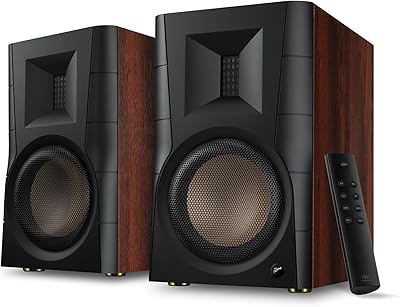
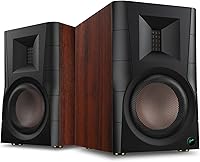
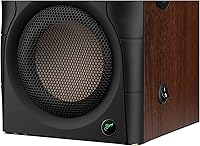
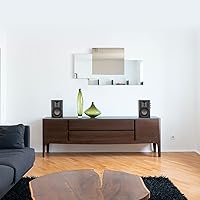
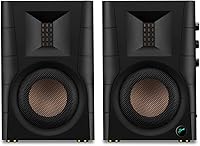
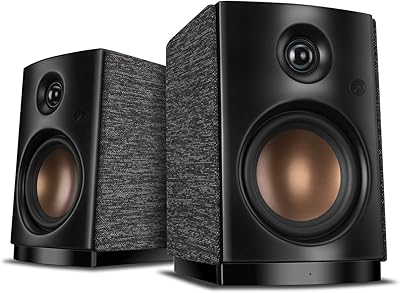
The HiVi-Swans D200 enters a crowded field of powered bookshelf speakers with something most competitors at this price point skip: a genuine audio pedigree. Swan has been building speakers for decades, and that background shapes expectations before you even plug them in. The wood grain cabinet is an immediate visual differentiator — no plasticky desktop box vibes here. Sitting above entry-level Bluetooth speakers but well short of professional studio monitor territory, this powered speaker pair targets listeners who want real sonic performance without buying a separate amplifier or receiver. It is a clean, self-contained setup that punches meaningfully for its tier.

Features & Benefits

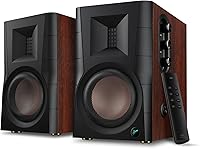
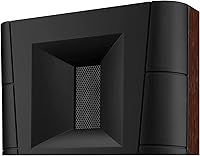
The standout spec is the isodynamic ribbon tweeter — a planar magnetic driver that moves a thin film rather than a dome, producing smoother, more detailed high frequencies with less distortion than conventional tweeters. Pair that with 260W RMS total output from a built-in Class D amplifier and the D200 system has real headroom, even if a 5-inch woofer will always have physical limits in the low end. Bluetooth 5.0 with aptX HD delivers higher-resolution wireless audio than standard connections, though wired optical or coaxial will still edge it out. The balanced XLR input is a genuine bonus for turntable users, and the included remote handles volume, input switching, bass, treble, and mute.

Best For

These Swan bookshelf speakers suit a specific kind of buyer particularly well. If your desk already has a turntable, a PC, and a TV all competing for one speaker input, the connection flexibility here is hard to match at this cabinet size — optical, coaxial, Bluetooth, AUX, and balanced XLR in a single powered pair. Home office listeners tired of soundbars will find a meaningful step up in stereo imaging. Casual content creators or podcast producers who want monitoring-adjacent accuracy without a full studio rig will also get solid value. One honest caveat: if you listen loud and bass-heavy, budget for a subwoofer alongside this powered speaker pair.

User Feedback

With around 86 ratings at time of writing — a modest count that reflects the niche these speakers occupy rather than any product concern — the D200 system holds a strong 4.4-star average. Owners consistently highlight the ribbon tweeter clarity, many noting it sounds distinctly different from conventional speakers they have owned. Build quality and the cabinet finish earn repeat compliments too. On the flip side, bass can feel thin at higher volumes, which is predictable for a compact 5-inch driver and not a flaw so much as a physical reality. A subset of buyers also reports that switching between digital inputs is poorly documented, and remote reception occasionally frustrates depending on room layout.

Pros

  • The ribbon tweeter delivers noticeably smoother high frequencies compared to standard dome-tweeter speakers in this price range.
  • Five input types — balanced XLR, optical, coaxial, AUX, and Bluetooth — cover virtually every source device a desktop user could have.
  • Built-in Class D amplification means no separate receiver or amp is needed, keeping the setup clean and affordable.
  • Bluetooth 5.0 with aptX HD provides a real improvement in wireless audio quality over older or cheaper BT implementations.
  • The wood grain cabinet looks and feels more premium than the plastic housings common among competing desktop speakers.
  • The included remote controls volume, input, bass, treble, and mute — genuinely useful for bedroom TV or couch listening.
  • Balanced XLR input eliminates the ground hum issues that plague turntable users relying on unbalanced connections.
  • All necessary cables are included in the box, so most buyers can connect their devices immediately without extra purchases.
  • Near-field stereo imaging at one to two meters is precise and well-suited to focused desktop listening sessions.

Cons

  • Bass thins out noticeably at higher volumes, making a subwoofer a near-necessity for bass-heavy listening.
  • The printed manual is too sparse to reliably guide users through digital input switching without outside research.
  • Remote control reception is inconsistent — some buyers report needing a precise angle or shorter distance for reliable response.
  • The wood grain finish is a vinyl wrap rather than real veneer, which some buyers at this price point find disappointing.
  • A faint idle hiss from the amplifier is audible in quiet rooms when listening close to the drivers.
  • Performance drops significantly beyond two meters, limiting usefulness in larger rooms or living room setups.
  • aptX HD only benefits users whose source devices also support the codec — not all phones or laptops qualify.
  • With only 86 ratings at time of writing, the long-term reliability picture for the D200 system is still relatively unproven.
  • On-speaker EQ offers only basic bass and treble shelving, which is limiting for buyers who want more precise tonal control.

Ratings

The HiVi-Swans D200 has been scored across 13 categories after our AI analyzed verified buyer reviews from multiple global markets, filtering out incentivized and bot-generated feedback to surface what real owners actually experience. Swan's reputation in the audio community sets a high bar, and these scores reflect where this powered speaker pair genuinely delivers — and where it falls short. Both the standout strengths and the recurring frustrations are represented here without softening either side.

Sound Clarity & Treble Detail
92%
The isodynamic ribbon tweeter is the single most praised aspect across buyer feedback. Owners who switched from conventional dome-tweeter speakers consistently describe a noticeably smoother, more extended top end — cymbals, acoustic guitar strings, and vocals at close desktop distances sound detailed without the harshness some competitors introduce.
A small number of listeners with bright room acoustics find the treble slightly forward during long sessions. This is less a flaw and more a placement sensitivity issue, but buyers in highly reflective spaces may need to experiment with toe-in angle before the sound fully settles.
Bass Response
61%
39%
For near-field desktop listening at moderate volumes, the 5-inch woofer handles bass lines with reasonable definition. Electronic music and vocal tracks sit well in the mix, and the built-in bass control lets users nudge the low end up without needing external EQ.
At higher volumes or in larger rooms, the physical limits of a 5-inch driver become obvious — the low end thins out and loses authority. Buyers who enjoy bass-heavy genres like hip-hop or EDM at room-filling levels will almost certainly need a subwoofer alongside this powered speaker pair to feel satisfied.
Build Quality & Materials
88%
The wood grain cabinet finish earns consistent compliments from owners who are used to cheaper plastic housings at this price point. The enclosure feels solid and well-damped, with minimal cabinet resonance reported during playback — a detail that matters more than it sounds for long listening sessions.
A few buyers note that the wood grain is a vinyl wrap rather than real wood veneer, which some find acceptable and others consider misleading given the asking price. Knob and port tolerances are good but not exceptional, placing the build quality solidly above average without reaching premium-tier refinement.
Amplifier Power & Headroom
83%
260W RMS total from a Class D amplifier is a genuinely generous figure for this cabinet size. In practice, users report that the D200 system gets very loud before any sense of strain, making it usable not just as a desktop monitor but also as a small room speaker for casual parties or home theater duty.
Class D amplifiers at this price tier can occasionally introduce a faint noise floor at idle or low volumes, and a handful of users mention a slight background hiss when no signal is playing. It is not disruptive in normal use but is noticeable in a quiet room with ears close to the drivers.
Bluetooth Performance
74%
26%
Bluetooth 5.0 with aptX HD is a real step above standard Bluetooth codecs — pairing is fast, connection drop complaints are rare, and streaming from a phone or laptop at moderate bitrates sounds noticeably cleaner than older BT versions. For casual wireless listening, it works reliably within the stated 10-meter range.
Wireless audio still does not fully match optical or coaxial input in this system — attentive listeners will catch a subtle reduction in dynamic nuance when switching from a wired digital source to Bluetooth. It is also worth noting that aptX HD requires a compatible source device, so the benefit is not universal across all buyers.
Input Versatility
91%
The combination of balanced XLR, optical, coaxial, 3.5mm AUX, and Bluetooth in a compact powered pair is genuinely uncommon and a frequent reason buyers choose these Swan bookshelf speakers over alternatives. Turntable users especially appreciate the balanced input, which eliminates the ground loop hum that plagues unbalanced connections.
With five input types come five ways to get confused during initial setup, and several users report the printed manual is too sparse to guide them clearly through digital input switching. Buyers coming from simpler Bluetooth-only speakers may find the first-time configuration more involved than expected.
Remote Control
67%
33%
Having a physical remote that controls volume, input selection, bass, treble, and mute from across the room is a convenience that buyers consistently appreciate — particularly for bedroom TV setups where getting up to adjust the speakers would be annoying. The layout is straightforward once learned.
Reception inconsistency is the most repeated remote complaint. Some users report needing to point the remote at a very specific angle or from a shorter distance than expected for reliable response. In rooms with furniture blocking the line-of-sight to the speaker, this becomes a genuine daily frustration rather than a minor quirk.
Setup & Ease of Use
63%
37%
Physical setup is straightforward — the speakers arrive with all the necessary cables included (optical, coaxial, audio, and connecting cable between units), which buyers appreciate since it reduces the need for separate purchases. Plugging in and getting sound within minutes is achievable for most users.
Input switching logic and the sequence for selecting digital versus analog sources is where the experience breaks down. The manual is thin, and the on-speaker indicators are not always intuitive. More than a few buyers needed to search online forums to understand how to reliably switch between, say, optical and Bluetooth without unintended behavior.
Value for Money
79%
21%
The ribbon tweeter alone would cost significantly more in a passive speaker requiring a separate amp. Getting that driver technology, a capable Class D amplifier, and a full input suite in one integrated package represents solid value for the desktop audiophile who has done their research and knows what planar magnetic drivers offer.
Buyers who compare purely on wattage or box size to cheaper alternatives will feel the price is steep. And for those who primarily want Bluetooth convenience and do not care about wired audio fidelity, there are simpler options at lower prices. The value story here depends heavily on whether the buyer will actually use what differentiates this powered speaker pair.
Near-Field Imaging & Stereo Soundstage
86%
At typical desktop distances of one to two meters, these Swan bookshelf speakers produce a convincing stereo image with clear instrument separation. Listeners working in music production or content editing appreciate the center focus and width the ribbon tweeter contributes to the soundstage.
The near-field optimization means performance degrades noticeably when pushed further away or used as room-filling speakers. Buyers who tested them as a living room solution at three or more meters of listening distance found the soundstage collapsed and the balance felt off compared to closer placement.
EQ & Tone Controls
72%
28%
Having physical bass and treble controls directly on the speaker — adjustable from the remote too — gives users real-time flexibility without downloading an app or relying on software EQ. For buyers connecting multiple source types, being able to quickly tune the sound profile for TV versus music is a practical perk.
The controls are simple shelving adjustments rather than parametric EQ, which means bass-heavy compensation can introduce boominess rather than tightness. Experienced listeners who want granular control will outgrow the onboard EQ quickly and may need an external DAC or preamp with better equalization.
Packaging & Unboxing Experience
81%
19%
Buyers note the packaging is well-structured for protecting the cabinet during shipping, and the inclusion of multiple cable types in the box means most users can connect immediately regardless of their setup. The presentation aligns with the product's positioning as a step above commodity desktop speakers.
A small number of buyers reported minor cosmetic marks on the cabinet wrap upon unboxing, suggesting the internal padding could better protect surfaces during transit. This appears to be an occasional quality control issue rather than a systemic one, but it is worth inspecting the unit carefully on arrival.
Desktop Footprint & Placement Flexibility
77%
23%
At roughly 9.25 inches deep and 11 inches tall, the cabinet is substantial enough to look intentional on a desk without dominating a small workspace. The design supports stand mounting too, giving buyers flexibility to raise the tweeters closer to ear level — a genuine acoustic benefit many overlook.
On a compact desk under 48 inches wide, fitting both speakers with adequate separation for proper stereo imaging can be a challenge. The weight of approximately 9.24 pounds per pair also means flimsy desktop surfaces or thin monitor stands may not be ideal mounting points without additional support.

Suitable for:

The HiVi-Swans D200 is built for the buyer who has outgrown cheap desktop speakers but does not want the complexity or cost of a separate amplifier and passive speaker combination. If your desk already hosts a turntable, a PC, and a TV — and you are tired of swapping cables or sacrificing one device — the balanced XLR and digital input options here solve that problem cleanly. Home office workers who spend long hours listening to music, podcasts, or video calls will appreciate the ribbon tweeter's fatigue-free high-frequency presentation compared to typical dome-tweeter alternatives. Bedroom users looking to replace a mediocre soundbar with something that produces real stereo separation will find this powered speaker pair a meaningful and logical step up. Casual content creators and podcasters who want something closer to monitoring accuracy without buying dedicated studio monitors and a separate interface will also get genuine utility here.

Not suitable for:

The HiVi-Swans D200 is not the right choice for buyers who listen primarily to bass-heavy music at high volumes — a 5-inch woofer has physical limits, and without a subwoofer, genres like hip-hop, EDM, or cinematic soundtracks will feel thin and unsatisfying at the low end. Anyone setting up a larger living room system where the speakers need to fill significant space will likely be disappointed, as the near-field design is optimized for close-range listening and loses coherence beyond two meters. If you are purely a wireless Bluetooth listener with no interest in wired inputs, simpler and less expensive alternatives will serve you just as well without the setup complexity. Buyers who expect a plug-and-play experience and are not prepared to spend time figuring out digital input switching should also think twice, as the manual is sparse and initial configuration can frustrate those unfamiliar with optical and coaxial routing. Finally, if you require professional studio monitoring accuracy with a flat frequency response for critical mixing work, this powered speaker pair sits below that standard and should not substitute for purpose-built studio monitors.

Specifications

  • Total Output: The system delivers 260W RMS total power, split as 130W RMS per channel through the built-in Class D amplifier.
  • Amplifier Type: A Class D amplifier is integrated directly into the active speaker cabinet, eliminating the need for any external receiver or amplifier.
  • Woofer: Each speaker houses a 5-inch bass driver responsible for midrange and low-frequency reproduction.
  • Tweeter: A 1-inch isodynamic ribbon tweeter using planar magnetic driver technology handles high-frequency reproduction above the crossover point.
  • Frequency Response: The system's frequency response extends up to 20,000 Hz, covering the full range of human hearing on the high end.
  • Bluetooth: Bluetooth 5.0 with aptX HD codec support is built in, offering a wireless range of up to 10 meters from the source device.
  • Inputs: Available wired inputs include a 3.5mm AUX jack, optical (TosLink), coaxial (S/PDIF), and a balanced XLR connection.
  • Surround Config: The system operates in a 2.0 stereo configuration with no subwoofer channel output.
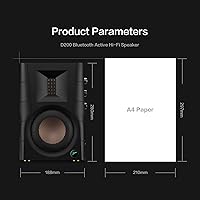
  • Dimensions: Each cabinet measures 9.25″ deep by 7.4″ wide by 11.02″ tall.
  • Weight: The total system weight is approximately 9.24 pounds for the pair.
  • Cabinet Material: The cabinet is finished in a wood grain wrap, giving it a more furniture-friendly appearance than typical plastic desktop speaker housings.
  • Power Supply: The system runs on corded AC power at 120V, 60Hz, drawing up to 120W at maximum load.
  • Input Sensitivity: The rated input sensitivity is 550mV, which is compatible with standard line-level output from most source devices.
  • Included Cables: The box includes a power cord, 3.5mm audio cable, connecting cable between speakers, coaxial cable, and a fiber optic (TosLink) cable.
  • Remote Control: A battery-operated remote control is included and supports volume adjustment, input selection, bass and treble control, power, and mute functions.
  • Warranty: HiVi-Swans covers this product under a limited manufacturer warranty; buyers should confirm the exact duration and terms at point of purchase.
  • Water Resistance: The system has no water resistance rating and is intended exclusively for indoor, dry-environment use.
  • Mounting: The speakers support shelf placement as primary use and can also be used with compatible speaker stands for elevated positioning.

Related Reviews
HiVi-Swans OS-10
HiVi-Swans OS-10
77%
88%
Sound Clarity
64%
Bass Response
91%
Build Quality
71%
Connectivity Range
83%
Value for Money
More
HiVi-Swans D300
HiVi-Swans D300
83%
91%
Sound Quality
89%
Ribbon Tweeter Performance
83%
Bass Response
88%
Build Quality
93%
Input Versatility
More
GKU D200 4K Dash Cam
86%
92%
Video Quality
87%
Night Vision Performance
89%
Ease of Setup
82%
App Experience
84%
Storage Capacity
More
Denman Jack Dean D200 Flexible Vent Brush
85%
92%
Drying Speed
89%
Detangling Effectiveness
85%
Comfort During Use
88%
Frizz Reduction
80%
Versatility for Hair Types
More
DOSS Extreme Boom Pro D200 Portable Bluetooth Speaker
86%
88%
Sound Quality
94%
Battery Life
87%
Build Quality
91%
Waterproof Performance
84%
Bluetooth Range
More
Flower Knows Swan Ballet Embossed Blush 02 Romanticism
88%
92%
Blendability & Application
88%
Long-lasting Wear
90%
Buildable Coverage
85%
Natural Finish
87%
Packaging Design
More
Flower Knows Swan Ballet Shine Lipstick B06 Blue Ribbon
86%
89%
Hydration & Comfort
92%
Packaging Design
91%
Gloss & Shine
85%
Shade & Color Payoff
78%
Longevity of Wear
More

FAQ

No — the HiVi-Swans D200 is an active speaker system with amplification built directly into the cabinet. You plug them into the wall, connect your source, and you are ready to go. No receiver, no external amp, no extra boxes on your desk.

If your turntable has a built-in phono preamp or you are using a separate phono stage, yes — you can connect it via the balanced XLR input or the 3.5mm AUX input. The balanced XLR option is particularly good for turntable setups because it eliminates the ground loop hum that often plagues unbalanced connections. Note that these speakers do not have a dedicated phono input, so a raw cartridge signal will not work without a preamp in between.

Input switching is done using either the button on the speaker or the included remote. The process itself is straightforward, but several owners have noted that the printed manual does not explain the digital input selection sequence clearly. If you find yourself stuck, searching the model number alongside your specific input type on audio forums tends to surface step-by-step guidance faster than the manual will.

That depends heavily on how you listen and what you listen to. For near-field desktop use at moderate volumes with vocal music, jazz, classical, or podcasts, the 5-inch woofer is genuinely capable. If you regularly play bass-heavy genres like hip-hop or EDM at higher volumes, or if you sit more than two meters away, you will likely want a subwoofer alongside this powered speaker pair to feel fully satisfied.

A ribbon tweeter moves a thin strip of material rather than a dome, which produces high frequencies with less distortion and a more natural, airy quality. In plain terms, cymbals sound like cymbals instead of a metallic blur, and female vocals have a clarity that standard tweeters often smear. It is one of the most consistently praised aspects of the D200 system by real owners, and it is a genuine differentiator at this price point.

There is a difference, but Bluetooth 5.0 with aptX HD narrows the gap compared to older wireless connections. For casual listening, most people will not find the wireless performance frustrating. If your source device supports aptX HD, the quality is genuinely decent. For critical listening or the best sound the system can produce, a wired optical or coaxial connection will still edge out Bluetooth — the digital inputs keep the signal cleaner.

Yes, and this is actually one of the better use cases for these Swan bookshelf speakers. Connect your TV via optical or coaxial output, and you get a clean stereo upgrade over built-in TV speakers or a budget soundbar. The included remote handles volume and mute from across the room, which makes the bedroom setup genuinely practical without needing to get up.

They get very loud — more than you will likely need at close desk distances. The 260W RMS rating reflects the total system output from both channels combined, and in practice it means the amplifier has plenty of headroom before straining. Real-world desktop users rarely push them past a quarter of their potential volume, which also means the amplifier runs comfortably without heat stress at typical listening levels.

It is functional but imperfect. Most users find it genuinely useful for input switching and volume adjustment, especially in bedroom or TV setups. The recurring complaint is that reception can be finicky — some buyers need to point it at a specific angle or from a closer distance than expected for it to register. If your couch or chair has a direct line of sight to the speakers, it works reliably. Furniture blocking the path can make it inconsistent.

They are an excellent choice for that transition, provided your budget stretches to the asking price and you value wired connectivity alongside Bluetooth. The ribbon tweeter alone will make the jump from entry-level computer speakers feel dramatic. Just go in knowing that the bass will not shake your desk — these reward careful listening more than they reward playing music as loud as possible.