Overview

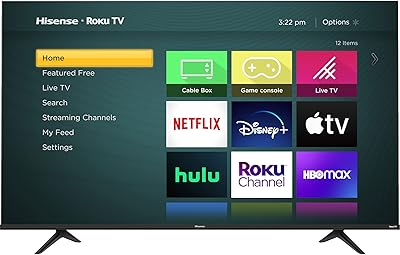
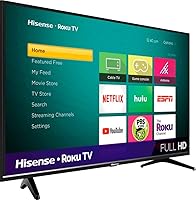
The Hisense 40H4F 40-Inch Roku LED Smart TV is a straightforward, no-frills option for anyone who needs a reliable screen in a bedroom, kitchen, or dorm room without overspending. Hisense has carved out a reputation in the value TV space alongside brands like TCL, and this 2020 model fits that mold well. The Roku platform is arguably the biggest selling point here — it is fast, clean, and requires almost no learning curve. For a streaming-first household adding a secondary set, this Hisense Roku TV covers the essentials without asking you to justify the expense.
Features & Benefits

The panel runs at a native 60 Hz refresh rate, so let's be clear upfront: the advertised Motion Rate 120 is processed image enhancement, not a true 120 Hz display. For everyday streaming on a 40-inch screen, 1080p resolution looks perfectly sharp at normal viewing distances. The Roku interface delivers access to over 5,000 channels through a clean, organized home screen that the whole family can navigate in seconds. Built-in Wi-Fi means no extra streaming stick is required, and both Alexa and Google Assistant work with the 40H4F through compatible external devices — useful if you are already invested in one of those ecosystems.

Best For

This budget smart TV makes the most sense for renters, students, or anyone furnishing a guest room or home office without a big budget. Cord-cutters who live inside the Roku ecosystem — Netflix, Hulu, Disney+, and dozens more — will feel at home immediately. Non-tech-savvy users, including older adults, consistently appreciate how intuitive and stable Roku's interface is compared to competing platforms. Worth noting: the actual screen measures 39.5 inches rather than a full 40, which is standard industry rounding and irrelevant in practice. For those wanting voice assistant access without flagship pricing, this fits the brief.

User Feedback

Owners of this Hisense Roku TV frequently highlight how quick and painless the initial setup is, and most find the picture quality genuinely impressive for the price point. The Roku interface earns praise nearly across the board. On the downside, the included remote feels plasticky and light, and viewers watching live sports sometimes notice motion inconsistencies during fast action — an expected trade-off given the native 60 Hz panel. The built-in speakers are adequate for bedroom use but lack presence in larger rooms. Long-term reliability is generally positive over one to two years, though a handful of users report display issues with extended heavy use.

Pros

  • Roku TV platform is fast, intuitive, and loaded with 5,000-plus streaming channels out of the box.
  • Initial setup from unboxing to first stream takes most users under 15 minutes.
  • 1080p resolution looks genuinely sharp and detailed at normal viewing distances for a 40-inch screen.
  • Built-in Wi-Fi eliminates the need for any additional streaming hardware or cables.
  • Works with both Alexa and Google Assistant through compatible smart speakers already in your home.
  • Lightweight at under 13 pounds, making solo mounting or room-to-room repositioning easy.
  • DTS TruSurround processing noticeably improves dialogue clarity over untreated budget TV audio.
  • The 40H4F represents strong overall value for a guest room, dorm, or kitchen secondary screen.
  • Roku home screen keeps app discovery simple, with free ad-supported content clearly surfaced.
  • Long-term reliability within the first two years is solid for buyers using it as a secondary set.

Cons

  • Black levels are flat and unconvincing — dark scenes in movies lack shadow depth and contrast.
  • Motion Rate 120 is processed enhancement only; the native 60 Hz panel struggles visibly during live sports.
  • The included remote feels cheap and hollow, with imprecise button feedback and a narrow response angle.
  • Physical port selection is limited, creating headaches for users with more than one or two connected devices.
  • Built-in speakers lose clarity and fullness quickly in any room larger than a small bedroom.
  • No 4K support means buyers with 4K streaming subscriptions are leaving content quality on the table.
  • Input lag makes this budget smart TV a poor choice for fast-paced or competitive gaming.
  • The one-year warranty offers minimal coverage protection for buyers planning years of heavy daily use.
  • Roku home screen displays promoted content and ads that some users find increasingly intrusive over time.
  • Wi-Fi performance can be inconsistent on 5GHz networks, occasionally causing setup or streaming hiccups.

Ratings

The Hisense 40H4F 40-Inch Roku LED Smart TV scores below are generated by AI after analyzing thousands of verified global user reviews, with spam, bot-submitted, and incentivized feedback actively filtered out. This Hisense Roku TV lands in a competitive budget segment, and these ratings honestly reflect where it earns genuine praise and where real buyers have run into frustrations. Both strengths and recurring pain points are represented without bias.
Picture Quality
72%
28%
For a budget 40-inch panel, the 1080p image holds up well in well-lit bedrooms and living spaces. Colors are punchy enough for casual streaming, and sharpness at normal viewing distances is consistently described as better than expected by first-time Hisense buyers.
Black levels are noticeably flat — dark scenes in movies or thriller series lack depth and shadow detail. The LED panel cannot match even entry-level QLED sets in contrast, which becomes obvious in dim room viewing.
Smart Platform (Roku)
91%
Roku is the clear standout feature of the 40H4F. Users across all age groups praise its intuitive layout, near-instant app loading, and the sheer breadth of available channels. Setup takes minutes, and navigating between Netflix, Hulu, and free ad-supported content is genuinely effortless.
A small number of users report occasional Roku freezes after extended use, requiring a TV restart. The platform also pushes promoted content and ads on the home screen, which some find intrusive over time.
Motion Handling
58%
42%
For slow-paced content like dramas, news, or standard streaming, motion looks clean and stable. Casual viewers watching sitcoms or reality TV rarely have any complaints about the image during normal playback.
The Motion Rate 120 label is processed enhancement — the panel is natively 60 Hz, and fast sports, action films, or video games expose this clearly. Users watching live football or basketball regularly flag visible blur and judder during rapid movement.
Value for Money
88%
As a secondary TV for a guest room, dorm, or kitchen, the 40H4F delivers a strong package at its price point. Buyers consistently express surprise at getting a full smart TV with a reliable streaming platform and 1080p resolution without paying flagship prices.
If your expectations are shaped by mid-range or premium TVs, the overall experience will feel limited. Shoppers comparing it to similarly priced TCL Roku models sometimes find TCL offers slightly better panel brightness for close to the same spend.
Audio Quality
61%
39%
DTS TruSurround processing does make a noticeable difference compared to TVs with no audio enhancement at this tier. In a small bedroom with the volume at moderate levels, dialogue clarity is solid and adequate for everyday viewing.
The built-in speakers struggle in rooms larger than a standard bedroom. Bass is thin, and at higher volumes some users report a tinny edge to the sound. Most buyers in living room setups eventually pair it with an external soundbar.
Setup & Installation
93%
Almost universally praised — unboxing to first stream typically takes under 15 minutes. The Roku guided setup walks users through Wi-Fi connection and account login in a straightforward sequence that works smoothly even for less tech-savvy buyers.
A small subset of users encountered Wi-Fi pairing hiccups during initial setup, particularly on 5GHz networks. The quick-start guide is minimal and offers little help if something goes wrong during the network connection step.
Remote Control
54%
46%
The Roku remote includes dedicated shortcut buttons for popular streaming apps, which saves navigation time on a daily basis. The voice-ready design is a thoughtful addition for users with compatible Alexa or Google Assistant devices nearby.
Build quality of the remote is a common complaint — it feels hollow and lightweight in hand, and the button feedback is soft and imprecise. Several users report responsiveness issues at wider angles, requiring a more direct line of sight to the TV than expected.
Build Quality & Design
67%
33%
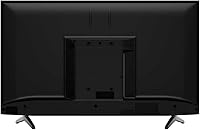
The 40H4F has a clean, minimal aesthetic with thin-ish bezels that look reasonably modern for its release year. At under 13 pounds, it is easy to mount or reposition without help, which buyers installing it in secondary rooms appreciate.
The plastic construction feels utilitarian rather than premium — back panel flex and the stand's stability on uneven surfaces are recurring minor criticisms. It is not a TV you buy for its looks, and the build communicates its budget positioning clearly.
Connectivity Options
59%
41%
Built-in Wi-Fi removes the need for any extra streaming hardware, which is genuinely convenient for renters or users in rooms without easy cable access. The wireless connection is stable for HD streaming under normal home network conditions.
Physical port selection is limited, which frustrates users trying to connect a gaming console, soundbar, and streaming stick simultaneously. Buyers with multiple HDMI devices find themselves switching cables more often than they would like.
Voice Assistant Compatibility
74%
26%
Integration with both Alexa and Google Assistant works reliably when a compatible smart speaker is already in the room. Users who have built out a smart home setup find the hands-free TV control genuinely useful for basic commands like powering on or switching inputs.
Neither assistant is built into the TV itself — both require a separately purchased device to function. For buyers expecting a fully self-contained voice-controlled experience, this distinction is a real limitation that the marketing language does not make obvious.
Streaming Performance
86%
Day-to-day streaming on Netflix, Disney+, and YouTube runs smoothly with no meaningful buffering on a stable broadband connection. The Roku platform handles app switching quickly, and most users find the overall streaming experience consistent and reliable.
4K content is not supported, which is not a dealbreaker at 40 inches but worth knowing if your streaming subscriptions include 4K libraries. Users pushing higher bitrate streams on congested home networks occasionally report brief stuttering.
Gaming Performance
47%
53%
For casual or retro gaming at lower frame rates, the 40H4F is functional and the 1080p resolution looks clean with static game menus and slower-paced titles. It covers the basics for light gaming use without any additional investment.
Input lag is a real concern for anything beyond casual play — competitive or fast-paced gamers will notice the delay. The 60 Hz native panel and absence of any game mode optimization make this a poor fit for anyone who takes their gaming seriously.
Long-Term Reliability
69%
31%
The majority of buyers report trouble-free operation across the first year or two of regular use. For a TV used as a secondary set with moderate daily viewing hours, longevity feedback is generally positive within the warranty window.
A subset of longer-term owners report display or power cycling issues emerging after 18 to 24 months of heavy daily use. The one-year manufacturer warranty provides limited coverage for buyers who experience hardware problems beyond that window.
Energy Efficiency
71%
29%
The LED panel is reasonably efficient for its size class, and the TV does not run noticeably warm even during extended streaming sessions. Users who leave it on for background viewing report no concerns about heat output or energy draw.
Standby power draw is not best-in-class, and there are no advanced eco-mode settings to speak of. For users who are diligent about energy consumption, the options for customizing power behavior are fairly basic compared to newer models.

Suitable for:

The Hisense 40H4F 40-Inch Roku LED Smart TV is a practical fit for anyone furnishing a secondary space without wanting to spend heavily doing it. Students moving into a dorm or first apartment will find the combination of a clean streaming platform and simple setup genuinely hard to beat at this price tier. It works equally well in a guest bedroom, a kitchen counter setup, or a home office where the TV runs in the background rather than serving as the household centerpiece. Older adults or less tech-savvy users tend to thrive with Roku's interface — there is no steep learning curve, and the remote keeps things straightforward. Cord-cutters who live primarily inside apps like Netflix, Hulu, or free ad-supported platforms will get everything they need without paying for features they will never use. If you already own Alexa or Google Assistant devices and want voice control without upgrading to a premium smart TV, this Hisense Roku TV slots into that ecosystem without friction.
Not suitable for:

Buyers expecting a primary living room TV that can handle movie nights with cinematic contrast, competitive gaming sessions, or 4K streaming should look elsewhere — the Hisense 40H4F 40-Inch Roku LED Smart TV was not designed for those scenarios. The native 60 Hz panel means fast sports and action-heavy content will show motion artifacts that no amount of processed enhancement fully corrects, which is a recurring frustration for sports fans who watch live games regularly. Anyone connecting multiple devices simultaneously — a console, a soundbar, and a cable box — will find the physical port selection limiting and the cable-swapping routine tiresome. The built-in speakers, while fine for a small bedroom, will disappoint anyone who cares about audio quality in a mid-sized or larger room. Buyers comparing this budget smart TV directly to TCL's similarly priced Roku lineup should do their homework, as TCL sometimes edges ahead on panel brightness and port variety. Finally, if you are buying a TV to last five or more years under heavy daily use, the build quality and warranty terms here suggest you should temper your long-term expectations accordingly.
Specifications

  • Screen Size: The panel measures 39.5 inches diagonally — marketed as 40-inch, which is standard industry rounding and has no practical impact on fit or viewing experience.
  • Resolution: Full 1080p HD (1920x1080 pixels), delivering a sharp and detailed image well-suited to the screen size at typical bedroom viewing distances.
  • Display Type: LED-backlit LCD panel with a 16:9 widescreen aspect ratio, offering adequate brightness for normally lit indoor rooms.
  • Refresh Rate: Native refresh rate is 60 Hz; the advertised Motion Rate 120 refers to processed image enhancement, not a true 120 Hz hardware panel.
  • Smart Platform: Runs Roku TV, giving access to over 5,000 streaming channels and 500,000-plus movies and TV episodes through a clean, well-organized home screen interface.
  • Voice Compatibility: Compatible with Amazon Alexa and Google Assistant through separately purchased smart speaker devices — neither assistant is built into the TV itself.
  • Audio System: Built-in stereo speakers with DTS TruSurround processing, designed to improve dialogue clarity and spatial sound compared to standard unprocessed TV audio.
  • Connectivity: Built-in dual-band Wi-Fi for wireless streaming; physical ports include HDMI inputs and USB, with a wireless-first design philosophy at this tier.
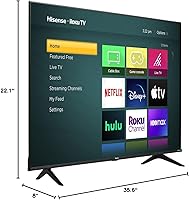
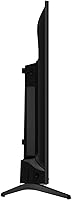
  • Dimensions (with stand): With the included stand attached, the TV measures 35.6″ wide by 22.1″ tall by 8″ deep — practical for standard media consoles and bedroom dressers.
  • Dimensions (without stand): Without the stand, the unit measures 35.6″ wide by 20.4″ tall by 3.2″ deep, relevant for wall-mount planning and VESA bracket selection.
  • Weight: The TV weighs 12.8 pounds without the stand, light enough for straightforward solo wall mounting or easy repositioning between rooms.
  • Included Items: In the box: the TV unit, Roku voice remote, power cable, quick start guide, and two AAA batteries pre-paired for immediate use.
  • Warranty: Backed by a one-year limited manufacturer warranty covering defects in materials and workmanship from the original purchase date.
  • Model Year: Released as a 2020 model (model number 40H4F), representing Hisense's H4 Series entry-level smart TV lineup for that product cycle.
  • Power Supply: Rated at 240 volts, compatible with standard North American household power outlets via the included power cable.
  • Remote Type: Ships with a Roku voice remote featuring dedicated shortcut buttons for popular streaming services and voice search functionality.
  • Sound Enhancement: DTS TruSurround processing applies virtual surround and dialogue enhancement to improve perceived audio depth from the built-in speaker system.
  • Brand: Manufactured by Hisense, a Chinese consumer electronics company known for delivering value-oriented TVs competing in the same budget tier as TCL and entry-level Samsung.

Related Reviews

TCL 40S325 40-inch 1080p Smart LED Roku TV
83%
91%
Value for Money
85%
Picture Quality
94%
Ease of Setup
88%
Smart Platform Performance
70%
Sound Quality
More
Hisense 43R7E 43-inch 4K Roku Smart LED TV
81%
87%
Picture Quality
92%
Value for Money
91%
Ease of Setup
85%
Streaming Performance
61%
Sound Quality
More
Hisense 50R7E 50-Inch 4K Roku Smart LED TV
84%
87%
Picture Quality
92%
Roku Streaming Performance
90%
Value for Money
65%
Sound Quality
70%
Brightness in Well-lit Rooms
More
Hisense 40A4NR 40-inch FHD Smart Roku TV
76%
88%
Value for Money
91%
Smart Platform
74%
Picture Quality
61%
Brightness & Glare
67%
Audio Performance
More
TCL 40S350R 40-Inch Roku LED Smart TV
75%
74%
Picture Quality
91%
Smart TV Experience (Roku OS)
88%
Value for Money
93%
Ease of Setup
79%
Build Quality & Design
More
TCL 32S327 32-inch Roku Smart LED TV
72%
88%
Value for Money
91%
Smart TV Platform
67%
Picture Quality
93%
Setup & Ease of Use
54%
Audio Performance
More
Hisense 65-Inch R6090G 4K UHD Roku Smart TV
83%
87%
Picture Quality
91%
Ease of Use (Roku Interface)
88%
Alexa Voice Control Integration
85%
Connectivity Options
72%
Sound Quality
More
Hisense 43H4F 43-Inch Roku LED Smart TV
73%
88%
Smart Platform
74%
Picture Quality
63%
Motion Handling
86%
Value for Money
91%
Ease of Setup
More
TCL 43S325 43-Inch 1080p Smart LED Roku TV
85%
91%
Value for Money
80%
Picture Quality
88%
Ease of Setup
85%
Voice Control Functionality
87%
Connectivity Options
More
TCL 55S425 55-inch 4K Roku Smart TV
73%
74%
Picture Quality
89%
Value for Money
91%
Smart Platform (Roku)
93%
Ease of Setup
51%
Audio Performance
More

FAQ

Technically, the panel measures 39.5 inches diagonally — the 40-inch label is standard industry rounding that every major TV brand uses. In practice, this half-inch difference is completely invisible in day-to-day use and will not affect whether the TV fits your stand or wall mount.

Yes, all the major platforms are available through the built-in Roku TV system, including Netflix, Disney+, Hulu, HBO Max, Apple TV+, Peacock, and hundreds of free ad-supported channels. You do not need to buy any separate streaming device — just connect to Wi-Fi and log into your accounts.

You can, but Alexa is not built into the TV itself. You will need a separate Alexa-enabled device like an Amazon Echo in the same room. Once linked, you can use voice commands to power the TV on and off, adjust volume, switch inputs, and search for content. Google Assistant works the same way.

This is an important distinction worth understanding before buying. The Hisense 40H4F 40-Inch Roku LED Smart TV has a native 60 Hz panel — Motion Rate 120 refers to Hisense's processed motion enhancement technology, not a hardware refresh rate of 120 Hz. For casual streaming and everyday TV watching this is perfectly fine, but sports fans and gamers should be aware that fast motion will not look as smooth as a true 120 Hz display.

The 40H4F includes HDMI ports, but the total count is limited — typically two to three on this model. If you plan to connect a gaming console, a soundbar via ARC, and a cable box simultaneously, you may find yourself swapping cables more than you would like. A small HDMI switch is a cheap fix if port count becomes an issue.

For a bedroom or small room at normal volumes, the built-in speakers with DTS TruSurround processing are functional and decent. Dialogue is reasonably clear, which is the main thing most people care about day to day. That said, they are not going to impress anyone in a larger room, and if you watch a lot of action films or music content, a soundbar will make a noticeable difference.

Absolutely — setup is one of the most consistently praised aspects of this Hisense Roku TV. Roku walks you through the entire process step by step on screen, from Wi-Fi connection to account creation. Most people are up and streaming in under 15 minutes. It is one of the friendliest smart TV platforms available for users who are not comfortable with complicated menus.

Yes, you can wall-mount the 40H4F using a standard VESA-compatible mounting bracket — just verify the VESA pattern specifications match your bracket before purchasing one. Without the stand, the TV weighs 12.8 pounds, so it is straightforward to mount solo if needed.

They are very close competitors and both run the same Roku platform, so the smart TV experience is essentially identical. The key differences tend to come down to panel brightness and port configuration — TCL models at similar price points sometimes edge ahead slightly on brightness in well-lit rooms. Both brands offer solid reliability and the same Roku ecosystem, so it often comes down to whichever model is on sale at the time you are buying.

For very casual gaming — retro titles, slower-paced games, or someone who plays occasionally — this budget smart TV will work without major issues. For anyone who plays fast-paced or competitive games, the 60 Hz native refresh rate and the absence of a dedicated game mode with low input lag will be a real limitation. Serious gamers should look at purpose-built gaming monitors or TVs with explicit game mode support.

Where to Buy