
Overview

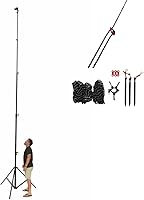
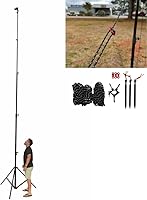
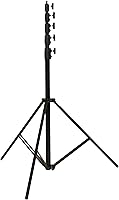
The Glide Gear TST 20 20-Foot Camera Tripod exists for a very specific situation: you need a high-angle or overhead shot, you don't have drone clearance, and renting a crane isn't in the budget. At full extension, you're looking at roughly two stories of height — a perspective most shooters never get from ground-based gear. Glide Gear builds for working videographers and serious enthusiasts, not weekend hobbyists, and that focus shows in the design choices. The included stabilization kit means you're not sourcing extra hardware before your first shoot. That said, this is a specialist tool — don't buy it expecting a versatile all-day tripod.

Features & Benefits

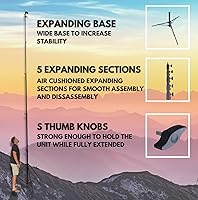
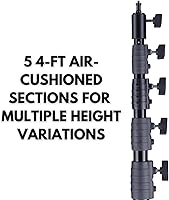
Five telescoping sections with air-cushioned collapse are the standout engineering choice here. When a section gives way at 15 feet up, a slow controlled descent is the difference between a safe landing and a shattered lens — so this matters. The aluminum construction keeps the whole rig at around 11 pounds, which is manageable for solo transport, though the 58-inch collapsed length rules out most sedan trunks; you'll want an SUV or a van. Dual mounts — a standard 1/4-inch thread for your camera plus a light mount — give you real flexibility without adapter hunting. The 8 lb payload limit comfortably handles mirrorless bodies with moderate lenses, but heavily rigged cinema cameras will push that ceiling.

Best For

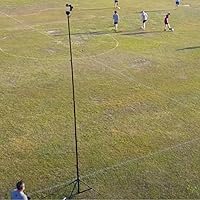
This 20-foot tripod makes the most sense for event videographers who regularly need a crowd-clearing angle at concerts, sports sidelines, or weddings without deploying a drone. It's also a natural fit for one-person production crews — nobody has to stand there holding a boom pole while you operate the camera from below. Real estate and architectural shooters will find it useful for exterior establishing shots just above roofline level. Flat-lay and cooking content creators running a permanent studio setup will appreciate the repeatable height. For film students or indie productions, this tall camera stand delivers a genuine crane-alternative angle without the crane rental invoice.

User Feedback

Across roughly 83 ratings, the Glide Gear mast sits at 4.1 stars — solid, but not without caveats. Buyers consistently praise how much reach you get for the physical footprint and how manageable solo assembly is compared to alternatives at this size. The stabilization kit earns mentions as a genuine value-add. Where things get mixed: wobble at full extension is the most cited complaint, and it's worth taking seriously — outdoors or in any breeze, that's 20 feet of aluminum acting like a sail. A few owners also note latch creep after extended use cycles, and the nearly 5-foot collapsed length is a recurring concern in transport-related comments.

Pros

  • Reaches approximately 20 feet — roughly two full stories — giving shooters angles no standard tripod can touch.
  • Air-cushioned section collapse slows descent automatically, protecting your camera if a latch releases unexpectedly at height.
  • At around 11 pounds, this 20-foot tripod is lighter than you might expect for its scale.
  • The stabilization kit is included out of the box, so you are not hunting for add-ons before your first shoot.
  • Dual mounting options — a standard 1/4-inch thread and a light mount — handle both camera bodies and accessory lights.
  • Solo setup is genuinely manageable; users consistently note they can extend and position it without a second pair of hands.
  • The minimum standing height of around 67 inches offers a range of working heights beyond pure overhead use.
  • Robust section latches provide a secure lock at each extension point, which matters when gear is 15 or 20 feet in the air.

Cons

  • Wobble at full 20-foot extension is a documented and recurring complaint — expect noticeable sway in any real-world environment.
  • The 58-inch collapsed length will not fit in most standard sedan trunks, making transport logistics a genuine planning concern.
  • An 8 lb payload ceiling means heavily rigged cinema cameras are borderline at best and unsafe at worst.
  • Latch creep has been reported after repeated use cycles, which requires periodic checking before each deployment.
  • Outdoor use in even moderate wind is risky — 20 feet of aluminum mast acts as a significant wind-catching surface.
  • The Glide Gear mast is a single-purpose tool; buyers who need an everyday tripod will find no value in the overhead-only design.
  • At this height, small base footprint adjustments have an amplified effect on stability, requiring a careful and level setup surface.
  • With only 83 ratings, the long-term durability picture is still relatively limited compared to more established competitors.

Ratings

The scores below for the Glide Gear TST 20 20-Foot Camera Tripod were generated by our AI engine after analyzing verified buyer reviews collected globally, with spam, bot-submitted, and incentivized feedback actively filtered out before any score was calculated. This tall camera stand occupies a narrow but real niche, and the ratings reflect that — strengths are credited honestly, and the genuine pain points real owners have encountered are weighted with equal transparency.

Height Range & Reach
94%
The 20-foot reach is the entire reason this stand exists, and buyers consistently confirm it delivers. Event videographers and content creators describe the elevated perspective as transformative for shots that would otherwise require a crane or aerial permit — the kind of angle that instantly separates footage from everything shot at ground level.
On uneven terrain or sloped flooring, reaching the full 20-foot height requires careful base leveling that adds setup time in fast-paced environments. A handful of buyers also note that fixed section increments mean you cannot always land on an exact preferred framing height — you work with what each locked position gives you.
Stability at Full Extension
52%
48%
At partial extension — roughly 10 to 14 feet — the Glide Gear mast holds reasonably steady indoors, and shooters using lightweight mirrorless bodies report workable stability for locked-off shots in calm studio conditions. The air-cushioned section design also ensures that any accidental latch release does not cause an instant uncontrolled drop.
At the full 20-foot mark, wobble is the dominant complaint across the review pool. Even minor foot traffic or airflow from an HVAC vent creates visible sway at the camera position, making it unsuitable for precise framing in dynamic spaces and a real safety concern for any outdoor use in anything above dead-calm conditions.
Portability
58%
42%
At around 11 pounds, this 20-foot tripod is lighter than most buyers expect given its extended reach, and the single-case transport format keeps all components together without loose hardware to track. For shooters working out of a van or larger SUV, loading and unloading the unit is described as genuinely manageable.
The 58-inch collapsed length is a recurring transport frustration — it will not fit in a standard sedan trunk without folding rear seats, and even compact SUVs can make it a tight proposition. Buyers who rely on public transit, ride shares, or compact vehicles will find the form factor a serious logistical obstacle.
Payload Capacity
71%
29%
For the intended use case — a mirrorless body or compact DSLR with a prime or short zoom — the 8 lb ceiling is more than adequate, and users with Sony A7-series or Canon R-series cameras report confident performance with comfortable headroom remaining. Adding a small LED panel alongside the camera also stays within the limit.
Anyone running a more involved cinema configuration will find the payload ceiling genuinely limiting. A BMPCC 6K fitted with a matte box, follow focus, and external monitor can approach or exceed 8 lbs before the lens is factored in, making this stand unsuitable for that class of production at any extended height.
Value for Money
74%
26%
For buyers who genuinely need consistent overhead shots at two-story height — without drone permits or crane rental costs — the price point is defensible and likely lower than the nearest practical alternative. Event videographers note that recouping the investment is fast when compared against what a single crane rental day would otherwise cost.
For shooters who only occasionally need extreme high angles, the price is harder to justify given the real stability limitations at full extension. The wobble issue in particular leaves some buyers feeling the stand does not fully deliver on its positioning, with a sense that they paid for the promise of 20 feet more than the reliable reality of it.
Build Quality
76%
24%
The aluminum mast construction feels solid for its market position, and most users describe the overall assembly as sturdier than they anticipated given the collapsed footprint. Section walls have enough thickness to resist flex under moderate load, and the hardware at the mount points shows no obvious cost-cutting in materials.
Some owners note the finish on latch housings shows wear after repeated field deployments, and a handful report minor play developing in section joints over time. It does not feel like a lifetime professional-grade tool, but it handles the workload of a serious enthusiast without any obvious structural failure in typical use cycles.
Ease of Setup
78%
22%
Reviewers consistently highlight that extending the mast solo is more intuitive than expected — the section order is logical, and the latches click into place with satisfying firmness. Most users report being fully extended and ready to shoot within a few minutes of arrival, which matters significantly for time-sensitive event work.
Leveling the base legs on anything other than a flat indoor surface adds noticeable setup time, and at full extension a slight base tilt amplifies considerably at the camera position. A few buyers also mention that ball head stiffness takes some adjustment to manage comfortably when working from directly beneath the rig.
Latch & Section Reliability
67%
33%
Out of the box and through early use, the section latches hold firmly and show no immediate signs of slip under standard camera load. Several buyers note the locking mechanism feels well-engineered for the price tier, providing reasonable confidence when a camera is sitting well above head height on a shoot.
After extended use — particularly for operators who deploy the stand weekly — some report gradual latch creep where sections drift downward incrementally during a session. It is not universal, but it appears often enough in longer-term reviews that a thorough pre-shoot latch check should be treated as mandatory rather than optional.
Mounting Versatility
83%
Having both a 1/4-inch camera thread and a dedicated light mount on the same rig meaningfully reduces the number of stands a solo operator needs on location. Users running a compact LED panel alongside their camera report that the dual-mount setup handles both without any improvised rigging or additional hardware.
Bodies or ball heads using a 3/8-inch connection need an adapter that is not included in the box, which is a minor but real friction point for cinema-oriented shooters. Some users also note that the included ball head has a limited tilt range that makes directly-downward overhead framing harder to achieve cleanly.
Out-of-Box Readiness
86%
The included stabilization kit is a genuine advantage — most competing products at this height category require separate purchase of base weights or support hardware. Buyers consistently note being able to run their first shoot without sourcing any additional components, which saves meaningful time and cost on deadline-driven production schedules.
The included documentation is minimal, which leaves some first-time buyers uncertain about optimal section extension order and latch engagement technique. A brief printed setup guide or a manufacturer-linked video walkthrough would significantly reduce the initial learning curve for users new to tall mast systems and telescoping stand operation.
Indoor Performance
88%
In a controlled indoor setting — a studio, event hall, or gymnasium with a smooth floor — this tall camera stand delivers on its core promise reliably. With no wind variable and a level base, users report stable locked-off shots at heights genuinely impossible with any conventional tripod format.
Even indoors, foot traffic vibration on wooden flooring or airflow from overhead HVAC systems creates noticeable movement at the camera when the mast is fully extended. Users shooting in busy event venues note that positioning the stand away from high-foot-traffic areas is effectively mandatory for consistently clean results.
Outdoor Performance
44%
56%
In genuinely calm outdoor conditions — sheltered courtyards, covered stages, or early-morning shoots before any wind develops — some users manage workable results at partial extension. Keeping the mast between 12 and 15 feet rather than pushing to full height noticeably improves outdoor stability for lighter mirrorless setups.
Any meaningful wind at full extension turns this stand into a liability rather than an asset. Buyers who have attempted outdoor use at open-air concerts or sports events consistently report that unpredictable gusts make the mast position genuinely unsafe, and the absence of anchor points or guy-wire provisions makes outdoor mitigation very difficult.
Solo Operability
81%
19%
One of the most consistently praised aspects in the review pool is how manageable this 20-foot tripod is for a single operator working alone. Extending sections from the bottom up, locking each latch, and repositioning the base is a workflow most users describe as comfortable and repeatable after just a single practice session.
At full extension, making fine camera angle adjustments via the ball head while standing at ground level is awkward without a remote pan head or monitor system. Repositioning the stand even a short distance once fully extended also requires collapsing it first — a time cost that becomes frustrating on fast-moving, unpredictable shoots.

Suitable for:

The Glide Gear TST 20 20-Foot Camera Tripod was built for a narrow but real niche, and it genuinely delivers for the right buyer. Event videographers who regularly shoot concerts, graduation ceremonies, or sports sidelines will find that two stories of clearance opens up crowd-skimming angles that simply aren't possible from the ground. Solo operators benefit especially — this tall camera stand removes the need for a dedicated boom assistant, since the camera sits unattended at height while you work below. Content creators with a dedicated studio space, particularly those shooting overhead flat-lay or recipe videos, can lock in a repeatable height and leave the rig in place between sessions. Film students and low-budget indie productions will also find it a credible crane substitute for establishing or reveal shots, at a fraction of jib rental costs.

Not suitable for:

Buyers expecting a general-purpose workhorse tripod for everyday shooting should look elsewhere — the Glide Gear TST 20 20-Foot Camera Tripod is a specialized tool, and using it outside its intended role exposes its limitations quickly. At full 20-foot extension, there is noticeable sway, which makes it poorly suited for outdoor or breezy environments where wind loading on the mast becomes a real stability concern. Photographers who travel by car and pack light will likely struggle with the 58-inch collapsed length, which does not fit comfortably in most sedan trunks and may require an SUV, van, or dedicated equipment trailer. Anyone running a fully rigged cinema body — think a BMPCC 6K loaded with follow focus, matte box, and monitor — will be pushing against the 8 lb payload ceiling, which introduces both safety and performance risk. If you need a versatile, portable tripod for run-and-gun documentary or travel work, this 20-foot stand is not the right fit.

Specifications

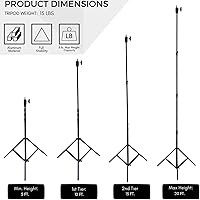
  • Max Height: The mast extends to a full 20 feet (approximately 600 cm) across all five telescoping sections at maximum reach.
  • Min Height: At its lowest usable standing position, the unit measures approximately 67 inches (171 cm), offering a range of working heights beyond pure overhead use.
  • Sections: Five independently lockable telescoping sections allow incremental height adjustments from minimum to maximum extension.
  • Collapse Mechanism: Each section uses an air-cushioned collapse system that automatically slows descent, reducing the risk of sudden drops that could damage mounted gear.
  • Mast Material: The full mast assembly is constructed from aluminum, providing a practical balance between structural rigidity and manageable carry weight.
  • Payload Capacity: The stand supports camera bodies and accessories with a combined weight of up to 8 lbs (approximately 3.6 kg).
  • Unit Weight: The complete assembled unit weighs approximately 11.2 lbs (5.1 kg), as measured in shipping configuration.
  • Collapsed Length: When fully retracted, the unit measures 58.5 inches in its longest dimension, which exceeds the cargo space of most standard sedan trunks.
  • Package Size: The shipping box dimensions are approximately 58.5 x 6.9 x 5.3 inches, reflecting the form factor of the collapsed mast assembly.
  • Camera Mount: A standard 1/4-inch threaded mount accommodates the majority of consumer and prosumer camera bodies directly without an adapter.
  • Light Mount: A secondary light mount is included on the rig, allowing an accessory light to be attached alongside the camera in a single setup.
  • Tripod Head: The unit ships with a ball head, enabling quick directional angle adjustments once the camera is mounted at height.
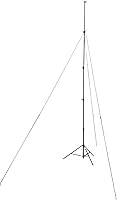
  • Stabilization Kit: A stabilization kit is included in the box, providing additional base support hardware without requiring a separate purchase.
  • Latch System: Each of the five sections is secured by an individual clamp latch designed to lock the extended position firmly under load.
  • Color: The unit is finished in black across the mast sections and hardware components.

Related Reviews
Geekoto 73-Inch Camera Tripod
80%
91%
Portability
78%
Build Quality
74%
Ball Head Performance
69%
Stability
72%
Quick-Release Plate
More
Glide Gear TMP 1000 Teleprompter
78%
91%
Build Quality
88%
Optical Clarity
67%
Ease of Setup
86%
Glass Size & Reading Range
84%
Tablet & Device Compatibility
More
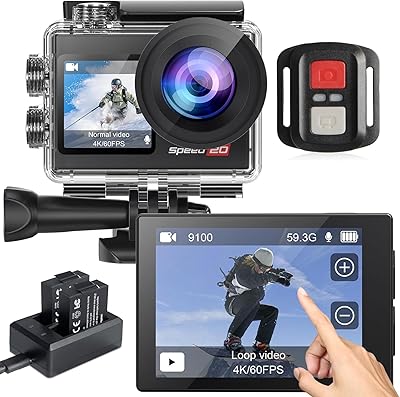
Hiicam Speed 20 4K Action Camera
75%
88%
Value for Money
71%
Video Quality
74%
Image Stabilization
79%
Waterproofing
86%
Battery Life
More
Glide Gear TMP 500 Teleprompter
81%
88%
Build Quality
91%
Glass Clarity
79%
Ease of Setup
86%
Portability
74%
Device Compatibility
More
Glide Gear TMP 75
Glide Gear TMP 75
84%
91%
Build Quality
93%
Glass Quality
96%
Ease of Setup
78%
Smartphone Compatibility
88%
Portability
More
PHOPIK PT244 77″ Camera Tripod
86%
91%
Value for Money
95%
Portability & Size
88%
Build Quality
82%
Ease of Use
86%
Stability with Heavy Equipment
More
Glide Gear TMP 750 Teleprompter
79%
91%
Build Quality
88%
Glass Clarity
86%
Ease of Setup
63%
App Compatibility
74%
Portability
More
MACTREM BT80 80″ Aluminum Camera Tripod
76%
76%
Build Quality
72%
Stability
84%
Leg Lock Mechanism
68%
Ball Head Performance
88%
Height Range & Versatility
More
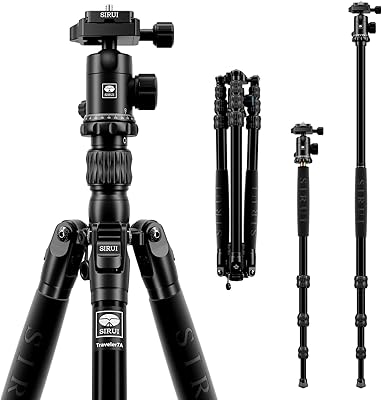
Sirui Traveler 7A Aluminum Camera Tripod
86%
91%
Portability & Size
88%
Build Quality & Durability
89%
Ease of Setup
85%
Weight Capacity
90%
Monopod Conversion
More
SmallRig AP-20 Carbon Fiber Tripod
78%
86%
Build Quality
92%
Weight & Portability
79%
Stability & Rigidity
74%
Ball Head Performance
88%
Ease of Setup & Height Adjustment
More

FAQ

Most buyers report being able to extend and position it solo without much difficulty. The key is extending each section incrementally from the bottom up rather than trying to raise the whole mast at once. That said, having someone spot the base while you lock the upper sections at full height is a smart safety habit, especially on uneven ground.

Almost certainly not in a standard sedan. The collapsed length is just under 59 inches, which clears most sedan trunk openings by less than nothing. You will realistically need an SUV with the rear seats folded, a minivan, or a cargo van to transport it without disassembly.

It is real and worth factoring into your buying decision. At full height, even minor vibrations or air movement will create visible sway at the top of the mast. Indoors with a controlled environment and a light mirrorless body, it is manageable. Outdoors in any wind, it becomes a genuine stability concern and a safety issue for your gear.

Anything in the mirrorless or DSLR range with a modest lens attached will sit comfortably within the 8 lb payload. A Sony A7 series body with a standard prime, or a Canon R-series with a kit zoom, works without issue. Where you run into trouble is with fully rigged cinema cameras — a BMPCC 6K loaded with a follow focus, matte box, and external monitor can easily exceed the limit and should not be mounted at height.

In calm, controlled outdoor conditions it can work, but you need to be realistic about wind exposure. At full extension, the mast functions like a large sail, and wind loading at height creates sway that is hard to counteract. For outdoor events, plan for a sheltered position, sandbag the base legs if possible, and have someone monitoring it at all times. Never leave it unattended outdoors.

A handful of owners have reported latch creep — meaning sections very slowly drift downward after extended use — particularly after the stand has been raised and lowered dozens of times. It is not universal, but it is worth checking each latch before a shoot rather than assuming everything stayed set from the last session.

For most setups, you are ready to shoot out of the box. The ball head and stabilization kit are both included, so you are not sourcing hardware separately. The one thing to verify is your camera's mounting thread — the 1/4-inch thread covers most bodies, but some cameras require a 3/8-inch adapter plate, which is not included.

Yes. The stand has two separate mounting points — the 1/4-inch camera thread and a dedicated light mount — so you can run a small LED panel alongside your camera without a separate stand. Just keep the combined weight of both items within the 8 lb payload ceiling.

The base footprint is reasonably wide given the collapsed diameter, but physics works against any tall mast: the higher you extend it, the more a bump at the base translates into movement at the top. On a smooth, flat indoor surface it holds well. On uneven terrain or carpet, you will want to take extra care with leg placement and consider adding weight to the base.

It is actually one of the better use cases for this tall camera stand. Studio environments are indoors, still, and let you leave the rig in a fixed position between shoots, which largely eliminates the wobble concern. You can dial in your overhead framing once, lock the sections, and repeat that setup every session without measuring from scratch.

Where to Buy