
Overview

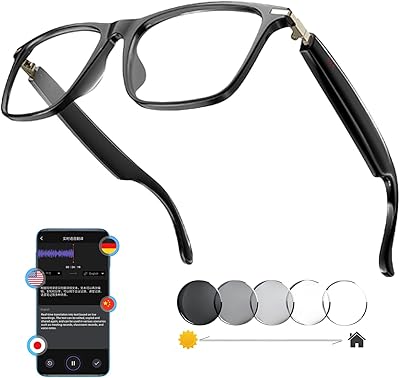
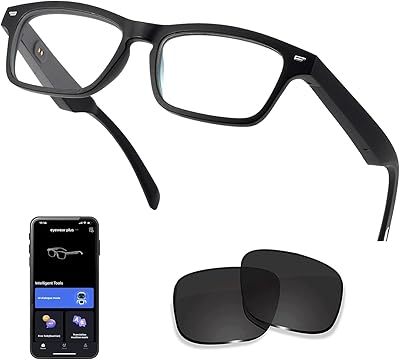
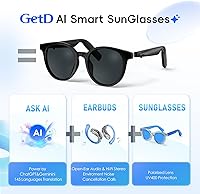
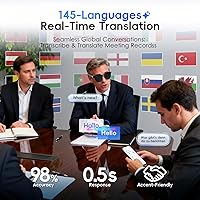
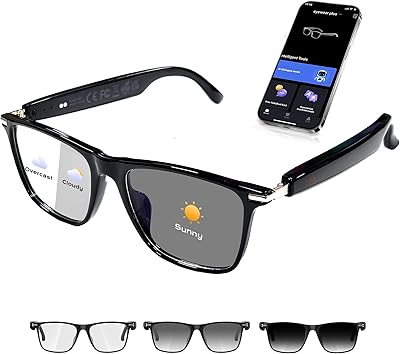
The GetD GG14 AI Smart Glasses arrived in early 2025 as one of the more affordable ways to dip into the AI wearables space — occupying territory similar to Meta's Ray-Ban smart glasses but at a fraction of the cost. The pitch is a three-in-one device: open-ear audio, UV400 polarized sunglasses, and a ChatGPT-powered AI assistant, all packed into a lightweight TR90 frame. In practice, that ChatGPT connection runs through your phone, not onboard hardware, so a signal dependency is baked in. For the price, though, these AI smart glasses offer a surprisingly capable package — just come in with realistic expectations about build quality.

Features & Benefits

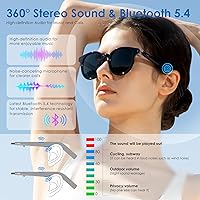
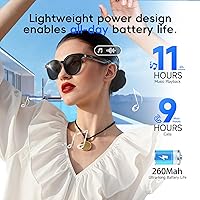
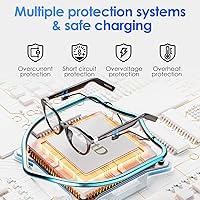
What stands out most in these AI smart glasses is the combination of audio and translation in a wearable you would actually put on for UV protection alone. The open-ear audio design means you hear music and calls without blocking out traffic or conversation — genuinely useful when commuting or navigating a foreign city. There is some sound leakage at higher volumes, so quiet offices are not ideal. The dual beamforming microphones handle outdoor call noise better than expected. Battery life holds up close to the claimed figures at moderate volume, and a quick ten-minute charge buys roughly another hour when running low. The IP54 water resistance adds peace of mind on rainy days, and prescription lens support makes this wearable translator accessible to far more buyers than most competitors.

Best For

The GetD GG14 suits a fairly specific type of buyer, and knowing who that is helps set the right expectations. Frequent international travelers get the most obvious value — hands-free real-time translation without pulling out a phone mid-conversation is a legitimate convenience. Commuters and outdoor walkers who want audio without earbuds blocking ambient sound will also find the open-ear format a genuine improvement over traditional options. If you already wear prescription glasses or sunglasses daily, consolidating those into one gadget has obvious appeal. For anyone curious about AI wearables but not ready to spend flagship money, the GetD GG14 is a solid low-risk experiment. It also makes for a practical, tech-forward gift — the kind that sparks a conversation before it is even unboxed.

User Feedback

Since this wearable translator launched in early 2025, the review pool is still building, so patterns here reflect early adopter impressions rather than a broad consensus. On the positive side, buyers consistently mention all-day wearing comfort and how quickly the glasses pair with a phone — both things that matter in daily use but rarely get enough credit. The more pointed feedback circles around two areas: the AI assistant can feel more like a novelty than a practical tool once the initial excitement fades, and translation responses in fast or noisy conversations can lag noticeably. Some reviewers also flag early concerns about hinge durability. The volume ceiling comes up repeatedly too — loud environments can outpace what the open-ear speakers deliver. Overall, early sentiment leans cautiously positive, with the caveats you would expect from any first-generation device.

Pros

  • Three functions in one frame — sunglasses, Bluetooth audio, and AI translation — cuts down on the gadgets you carry.
  • Open-ear design keeps you aware of your environment, making it safer and more practical than in-ear alternatives.
  • Bluetooth 5.4 delivers stable pairing and reliable call quality, even in moderately noisy outdoor conditions.
  • Battery life holds up for a full day of moderate use, and a short ten-minute charge adds roughly an hour of playback.
  • UV400 polarized lenses provide genuine sun protection, not just a cosmetic feature bundled for marketing.
  • Prescription lens compatibility opens this up to a much wider audience than most smart glasses on the market.
  • IP54 rating handles light rain and sweat without issue, making it practical for commutes and outdoor workouts.
  • The TR90 frame is light enough to wear for extended periods without the discomfort of heavier wearables.
  • Real-time translation across a wide range of languages is a legitimately useful travel tool when conditions cooperate.
  • Magnetic charging is convenient and less prone to wear than exposed USB ports on competing devices.

Cons

  • AI translation relies on a phone connection and app — there is no offline or standalone mode whatsoever.
  • Translation can lag noticeably in fast-moving or noisy conversations, which is exactly when you need it most.
  • Open-ear speakers leak sound at higher volumes, making these AI smart glasses unsuitable for quiet shared spaces.
  • The volume ceiling is low enough that loud urban environments can easily overpower what the speakers produce.
  • Early adopter reports raise questions about long-term hinge durability and lens coating longevity.
  • The AI assistant feature tends to feel more like a novelty than a reliable daily tool after the initial curiosity fades.
  • App dependency means the experience is only as good as the companion software, which is still maturing post-launch.
  • With a limited review history since its early 2025 release, long-term reliability data simply does not exist yet.
  • Build quality is noticeably mid-range — the frame flex and materials do not inspire confidence for heavy daily use.
  • Call clarity drops in strong wind or very loud street noise despite the dual beamforming microphone setup.

Ratings

The scores below were generated by our AI review engine after analyzing verified global buyer feedback for the GetD GG14 AI Smart Glasses, with algorithmic filters applied to remove incentivized, duplicate, and bot-generated submissions. Each category reflects the genuine distribution of real-world user sentiment — strengths are credited where earned, and recurring pain points are scored without softening.

Value for Money
81%
19%
For buyers entering the AI wearables space without spending flagship money, these AI smart glasses consistently over-deliver on paper. The combination of translation, open-ear audio, and polarized UV protection in a single device at this price tier is genuinely hard to match, and most users acknowledge they got more than they expected.
A portion of buyers feel the value equation softens once they discover how phone-dependent the AI features are — what feels like a self-contained smart device turns out to require constant smartphone tethering. For users who rarely travel internationally, many of the headline features go unused, which quietly erodes the perceived value.
Build Quality
62%
38%
The TR90 frame is lightweight and flexes rather than cracks under mild stress, which buyers appreciate during commutes and travel where the glasses get tossed into bags. First impressions out of the box are generally positive — the frame looks more polished than budget wearables typically do at this price range.
Extended daily wear reveals the limits of the construction. Hinge durability is the most cited concern, with several early adopters noting loosening after a few months of regular use. Lens coating longevity and frame flex under repeated stress are also flagged, signaling this is better suited as a travel or occasional-use pair than a primary daily driver.
Translation Accuracy
66%
34%
In calm, controlled conditions — think a hotel lobby, a restaurant, or a slow-paced market exchange — the real-time translation performs reliably enough to handle common travel conversations. Users in Europe and East Asia report reasonable accuracy across popular language pairs, and the bidirectional nature means both speakers can use it without switching modes.
Speed and accuracy drop noticeably in fast or overlapping conversation, and noisy environments like train stations or busy streets expose the latency clearly. The feature is only as reliable as the phone signal behind it, so dead zones during travel — exactly when you might need translation most — leave users with nothing to fall back on.
Battery Life
77%
23%
At moderate listening volume, the battery holds up well enough to cover a long-haul flight or a full urban commute day without needing a top-up. The quick-charge capability earns genuine praise — a brief charge during a layover or coffee break adds meaningful runtime, which reduces the anxiety of running low mid-trip.
Running the AI translation feature simultaneously with audio drains the battery considerably faster than the headline figures suggest, and users who push the volume higher report noticeably shorter sessions. The 230 mAh dual-battery capacity is adequate for moderate use but not generous enough to absorb heavy multitasking without compromising endurance.
Comfort & Fit
84%
This is one of the categories where the GetD GG14 earns its strongest and most consistent praise. The lightweight TR90 frame sits gently on the nose and ears even after several hours of continuous wear, and buyers who have tried heavier smart glasses specifically call out the lack of fatigue as a deciding factor in daily use.
Fit is naturally subjective, and buyers with narrower or wider-than-average face shapes report that the frame proportions do not adjust well. A small number of users also mention that the added electronics in the temples create slight imbalance compared to standard sunglasses, which is noticeable during physical activity.
Audio Quality
69%
31%
For casual listening during outdoor commutes, the open-ear audio delivers a decent stereo experience that handles podcasts, navigation prompts, and music well enough. Buyers who switch from standard earbuds specifically appreciate being able to hear surrounding traffic and conversations without constantly removing the glasses.
The volume ceiling is a recurring frustration — in genuinely loud environments like city traffic or a busy gym, the speakers simply cannot compete with ambient noise. Sound leakage at higher volumes is also a consistent complaint, making these unsuitable for shared quiet spaces and limiting their usefulness on public transit during off-peak hours.
Bluetooth Connectivity
78%
22%
Bluetooth 5.4 delivers stable, fast pairing that users appreciate — the glasses connect reliably when taken out of a case and rarely drop mid-session during everyday scenarios. Buyers who use these for commuting report consistent performance across both iOS and Android without needing to re-pair frequently.
A small subset of users report occasional audio stuttering when the phone is pocketed with the body between the glasses and device, suggesting the connection is more sensitive to signal obstruction than a dedicated Bluetooth headset. Range at the edges of standard operating distance also shows some instability.
Call Quality
71%
29%
The dual beamforming microphones perform respectably in moderate outdoor conditions — callers on the other end can hear clearly during low-traffic walks, casual street conversations, and indoor use. Users who take work calls during morning walks find the hands-free format genuinely convenient and more natural than speakerphone.
Wind is the primary enemy here. Strong gusts or high-speed cycling conditions noticeably degrade call clarity despite the noise-filtering microphones. A few users also note that call audio coming through the open-ear speakers can feel thin and insufficiently loud in moderately noisy outdoor settings.
AI Assistant Usefulness
59%
41%
For users who genuinely encounter language barriers in their daily life or travel frequently, the ChatGPT-powered assistant provides real, tangible utility — particularly for translation tasks and quick voice-to-text note-taking during meetings or city navigation. These are the scenarios where the AI feature moves from novelty to practical tool.
Outside of translation-heavy travel use cases, the AI assistant tends to feel underutilized and gimmicky over time. Since it requires phone connectivity and app interaction, it adds friction compared to simply speaking to a phone directly. Several early adopters note that the novelty of voice-querying an AI through sunglasses fades quickly without frequent travel to motivate it.
Lens Quality
83%
The UV400-rated polarized lenses are a genuine highlight and not just a checkbox feature — buyers notice the reduction in glare while driving, near water, and in bright urban settings. The optical clarity is described as sharp and comparable to standalone sunglasses that cost notably more.
A portion of users report minor scratching on the lens coating after a few months of daily use, suggesting the coating is not especially hardened. Those who store the glasses loosely in bags without a case tend to see surface wear emerge sooner than expected, which is worth factoring in if this is your primary pair.
App Experience
57%
43%
When the app works smoothly, it ties the AI features together reasonably well — translation activation, voice assistant prompts, and firmware updates all flow through it without requiring technical expertise. Setup is described as accessible even for less tech-savvy users.
The app is the single point of failure for everything beyond basic audio. Bugs, connectivity hiccups, and update-related disruptions are more common than they should be for a product relying so heavily on software. Being a first-generation device, the app ecosystem is still visibly maturing, and that instability surfaces in real-world use more than the hardware itself.
Water Resistance
72%
28%
The IP54 rating handles the scenarios most buyers actually encounter — light rain on a commute, sweat during a run, or an unexpected drizzle on a city walk. Users who would hesitate to wear standard electronics in these conditions report using the GetD GG14 confidently in everyday wet-weather situations.
The IP54 rating leaves a clear gap for anyone expecting more robust protection. Users caught in heavy rain or who attempted to rinse the frame report concerns, and the rating explicitly does not cover submersion. Buyers hoping to use these near pools, on boats, or during intense water-based activities will need to manage expectations carefully.
Charging Convenience
75%
25%
The magnetic charging connector is genuinely practical — it snaps on quickly without needing to locate a precise port, and the quick-charge capability means a short plug-in during a lunch break or hotel morning routine delivers meaningful battery recovery. Buyers who travel frequently specifically appreciate not hunting for a USB port orientation.
The proprietary magnetic connector is the trade-off for that convenience — forgetting the cable at home means no charging options whatsoever, unlike devices that use universal USB-C. A handful of users also report that the magnetic connection can be displaced in bags or during transport, occasionally leading to incomplete charges overnight.
Design & Style
76%
24%
For a tech-forward wearable, the frame reads as conventional enough that most people would not immediately identify it as a smart device — which is exactly what many buyers want. The classic sunglasses silhouette means they travel well socially, avoiding the conspicuous look of bulkier smart glasses on the market.
The slightly thicker temples required to house the battery and electronics are noticeable up close, and buyers comparing them side-by-side with premium fashion eyewear note the construction gap clearly. Color options and frame variety are limited for a product positioned across a broad unisex demographic.

Suitable for:

The GetD GG14 AI Smart Glasses make the most sense for frequent international travelers who want a hands-free way to navigate language barriers without fumbling with a phone mid-conversation. Commuters, cyclists, and walkers will also appreciate the open-ear audio format, which lets you listen to music or take calls while staying aware of your surroundings — a real safety advantage over traditional earbuds. If you already rely on prescription or tinted lenses daily, the ability to have those same frames handle Bluetooth audio and voice translation is a meaningful consolidation of gadgets. Tech-curious buyers who want to experiment with AI wearables without the financial commitment of a flagship device will find this a reasonable starting point. It also works well as a thoughtful gift for someone who travels often or commutes long distances and would genuinely use the audio and translation features day to day.

Not suitable for:

Buyers expecting a polished, premium experience on par with established smart glasses brands will likely be disappointed — the GetD GG14 AI Smart Glasses are a first-generation budget device, and the build quality reflects that positioning. The AI translation feature depends entirely on a phone connection and a working app, so anyone hoping for standalone, offline functionality will need to look elsewhere. Audiophiles or anyone who needs serious volume in loud environments should know that the open-ear speakers have a ceiling, and sound leakage makes them inappropriate for shared quiet spaces like offices or libraries. People who need robust, long-term durability — particularly in the frame hinges and lens coating — may find early user reports a reason for caution. Finally, buyers who want a deeply integrated AI assistant that works fluidly without latency in fast-paced real conversations will likely find the current software experience more frustrating than useful.

Specifications

  • Frame Material: The frame is constructed from TR90, a lightweight thermoplastic polymer known for flexibility and resistance to deformation under daily wear stress.
  • Bluetooth: Bluetooth 5.4 provides a stable, low-latency wireless connection to paired iOS and Android devices within standard operating range.
  • Battery Capacity: A dual-battery system totaling 230 mAh powers both the audio and AI functions, distributed across the two temple arms of the frame.
  • Music Playback: Continuous music playback reaches up to 11 hours when the volume is set at approximately 50%, with shorter runtimes at higher output levels.
  • Call Time: Active call time extends up to 9 hours on a full charge under typical usage conditions, making it suitable for long travel days.
  • Standby Time: When idle and connected but not actively playing audio, the glasses can remain on standby for up to 15 days before requiring a recharge.
  • Quick Charge: A 10-minute charge via the magnetic connector restores approximately 1 hour of active playback, providing a useful top-up option when time is limited.
  • Water Resistance: The IP54 rating confirms protection against dust ingress and light water splashes from any direction, but the glasses are not rated for submersion or heavy rain.
  • Microphones: Two beamforming microphones are built into the frame to capture the wearer's voice while actively filtering ambient background noise during calls.
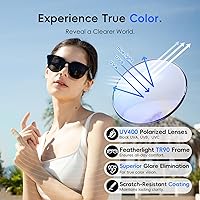
  • Lens Protection: Lenses are UV400-rated, blocking 100% of UVA and UVB radiation, and carry a polarized coating to reduce glare from reflective surfaces.
  • Translation: Real-time bidirectional voice translation supports 145 languages via a connected smartphone and AI processing, requiring an active internet connection to function.
  • Charging Port: Charging is handled through a proprietary magnetic connector that attaches to the frame, eliminating exposed port openings that could accumulate dirt or moisture.
  • Compatibility: The companion app and Bluetooth audio functions are compatible with both iOS and Android smartphones, with no desktop-only requirements for core features.
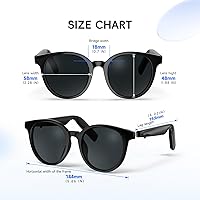
  • Weight: The complete frame weighs 5 oz, which is comparable to standard sunglasses and light enough for extended wear without noticeable fatigue.
  • Prescription Lenses: All frame variants are designed to accept custom prescription lenses, allowing opticians to fit corrective lenses in place of the standard polarized ones.
  • AI Platform: The AI assistant function is powered by ChatGPT via a cloud connection, meaning all AI processing occurs remotely through the paired phone rather than on the device itself.
  • Audio Technology: GDirect directional sound technology channels audio toward the wearer's ears through the open-ear design, reducing sound spillage compared to standard speaker setups.
  • Device Availability: The glasses became publicly available in February 2025, making this a first-generation product with an actively developing software and firmware ecosystem.

Related Reviews
ITHUGE UF-09(ai) AI Smart Translation Glasses
70%
67%
Translation Accuracy
62%
Build Quality
78%
Battery Life
53%
Ease of Setup
59%
Audio Quality
More
AMZISH AI Smart Camera Glasses
74%
74%
Translation Accuracy
67%
Video Recording Quality
82%
Battery Life
61%
Frame Comfort & Wearability
78%
Audio & Call Quality
More
Domhong E13 AI Smart Translation Glasses
72%
83%
Value for Money
67%
Translation Accuracy
58%
Audio Quality
76%
Comfort & Fit
78%
Battery Life
More
EarlySincere W100 AI Translation Bluetooth Sunglasses
72%
73%
Translation Accuracy
67%
Battery Performance
54%
App Dependency
71%
Audio Quality
61%
Comfort & Fit
More
Kvsju AI Smart Glasses with Chat GPT
85%
94%
Real-Time Translation Accuracy
78%
Audio Quality
85%
Battery Life
91%
Ease of Use
88%
Comfort and Fit
More
MNVOEQ T6 AI Bluetooth Translation Smart Glasses
69%
67%
Translation Accuracy
61%
Audio Quality
53%
Battery Life
79%
Comfort & Fit
72%
Lens Quality
More
HAIXINDA UF-15-AI Smart Translation Glasses
69%
71%
Translation Accuracy
48%
App Setup Experience
63%
Audio Quality
54%
Battery Life
77%
Comfort & Fit
More
xunmirusu M01 AI Smart Glasses
67%
74%
Translation Accuracy
41%
Battery Life
62%
AI Chat Usefulness
66%
Audio Quality
69%
Lens Performance
More
Delhi Tornado KY01B+Ai Smart Glasses
67%
81%
Value for Money
62%
Translation Accuracy
44%
Battery Life
58%
Audio Quality
77%
Bluetooth Connectivity
More
QxzPower 1080P HD AI Smart Camera Glasses M01Pro Black
85%
91%
Video Quality
88%
Audio Clarity
84%
Comfort for Extended Wear
85%
App Integration & Usability
89%
Ease of Setup
More

FAQ

No, it does not. The translation runs through a cloud-based AI service via your paired smartphone, so an active internet connection is required every time you use it. If you plan to use this wearable translator abroad, make sure you have a local SIM or a reliable roaming plan — otherwise the translation feature simply will not activate.

Yes, the full feature set — including AI translation and voice assistant access — requires the companion app on your iOS or Android phone. Basic Bluetooth audio and calls will work without the app, but you will miss out on the AI functions that are central to the product's value proposition.

Yes, and this is one of the more genuinely practical aspects of the design. The frames are built to accept standard prescription lenses, so you can take them to most optical shops and have corrective lenses fitted. Just confirm with your optician beforehand that they can work with the frame shape.

At low to moderate volumes, leakage is minimal and unlikely to bother those around you. As you push the volume higher, the open-ear design does let more sound escape — enough that it becomes noticeable in quiet environments like libraries or open-plan offices. For commuting or outdoor use, though, it is generally a non-issue.

They carry an IP54 rating, which covers sweat, light rain, and the occasional splash without any concern. That said, you should avoid submerging them, wearing them in heavy downpours, or rinsing them under a tap. For gym sessions and everyday outdoor use, the protection level is adequate.

At moderate volume, you can expect audio playback close to the claimed figures — enough to cover a long-haul flight or a full day of commuting without needing a recharge. If you are running the AI translation feature heavily on top of audio, expect more drain. The quick-charge capability is a genuine help here — a short charge while at a cafe or airport gate adds meaningful runtime.

In controlled settings with clear speech and a strong connection, the translation is responsive enough for slow-paced exchanges — ordering food, asking for directions, or basic hotel check-ins. In fast, overlapping conversations or noisy environments, the latency becomes more noticeable and the experience gets patchy. It is a useful travel tool, but managing expectations around real-conversation speed is important.

Yes, the glasses support both iOS and Android. Each device pairs independently via Bluetooth, and the companion app is available on both platforms. You cannot have them connected to both phones simultaneously, but switching between devices is straightforward.

The TR90 frame is light and reasonably flexible, which helps absorb minor stress. However, early user reports do flag the hinges as a potential weak point over extended daily use — this is worth monitoring. For occasional travel use or secondary-pair use, durability concerns are lower than if you plan to use them as your sole pair of glasses every single day.

Honestly, it depends on your lifestyle. Travelers who actively use translation find the AI integration genuinely practical. For people who do not regularly encounter language barriers, the novelty of voice-querying ChatGPT through sunglasses tends to wear off fairly quickly. Think of the AI as a useful bonus for specific scenarios rather than a feature you will rely on constantly — that framing makes the experience feel more satisfying.