Overview

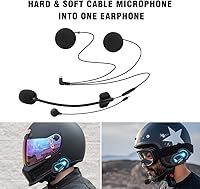
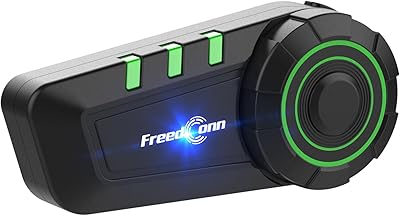
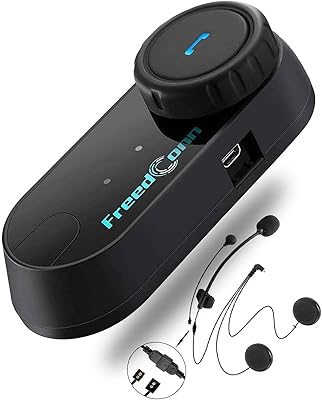
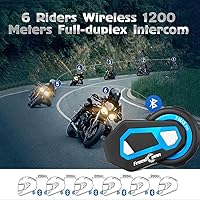
The FreedConn T-Max Pro Motorcycle Helmet Bluetooth Intercom sits in a practical middle ground — capable enough for group rides, affordable enough that equipping a whole crew doesn't take serious deliberation. The 6-rider group intercom is the headline capability, and it's genuinely rare at this price point. Bluetooth 5.0 brings faster, more stable pairing compared to older-generation units in the same category. The dual-microphone design — one boom, one flat button — is a quietly smart touch that makes this helmet intercom compatible with open-face, flip-face, and full-face helmets. That said, there are some real-world caveats worth unpacking before you commit.
Features & Benefits

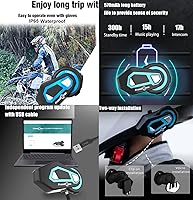
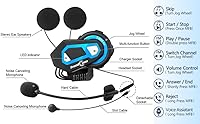
The group intercom range is rated up to 1200 meters, but in practice — especially with six riders spread across a winding road or urban intersection — expect that number to be optimistic. Still, for a convoy staying within a few hundred meters of each other, it holds up well. The noise cancellation handles low-speed wind reasonably well, though at highway speeds some intrusion remains. Battery life is genuinely strong; a full day of riding typically won't drain it. FM radio is a nice touch for solo stretches, and hands-free calling via Siri works without fuss. The Micro USB charging is dated but lets you top up on the go.

Best For

This Bluetooth riding headset makes the most sense for small riding groups — weekend warriors, family rides, or club meetups — where the cost of kitting out multiple riders matters. Dual-sport and dirt bike riders will appreciate the rugged build and weatherproofing, even if the exact IP rating listed is inconsistent across the product page. The interchangeable microphone is genuinely useful for anyone who owns more than one helmet style. Commuters who want GPS audio or hands-free calls without mounting a separate device will find it practical. It's also a solid entry point for newer riders who want real communication capability without a steep learning curve.

User Feedback

Most riders who've used the T-Max Pro give it credit for easy initial pairing and audio quality that punches above what you'd typically expect here. Battery life is a consistent highlight — people report finishing long rides without needing to recharge. On the flip side, range complaints are common. The marketed distance rarely holds once riders are separated by hills, traffic, or multiple turns; some report drop-off far short of even the conservative estimates. Wind noise above 100 km/h is another sticking point — the cancellation helps but doesn't fully tame it. Build quality feedback is mixed; most find it durable enough for regular use, though the plastic housing feels its price.

Pros

  • Connecting up to 6 riders simultaneously is a rare capability at this price tier.
  • Pairing is straightforward out of the box — most riders get it running on the first try.
  • Battery life holds up well across full-day rides without needing a mid-route charge.
  • The interchangeable boom and flat microphones mean it works properly with almost any helmet style.
  • Built-in FM radio adds genuine value on solo stretches or long commutes.
  • Hands-free calling and voice assistant access work reliably for everyday use.
  • At roughly 55 grams, the unit adds almost no noticeable weight to the helmet.
  • Weatherproofing handles light to moderate rain without issue in real riding conditions.
  • Music sharing between two riders is a fun, functional perk for paired commuters or touring duos.
  • Bluetooth 5.0 delivers faster, more stable connections than older-generation units in this class.

Cons

  • Advertised range figures are optimistic — real-world multi-rider distance is often significantly less.
  • Wind noise at highway speeds bleeds through despite the noise cancellation, making long-distance chat tiring.
  • The product listing contains contradictory specs on waterproofing, range, and battery life, which undermines confidence.
  • Micro USB charging feels outdated compared to the USB-C standard now common on modern accessories.
  • Plastic construction feels adequate but not especially robust under heavy daily or off-road use.
  • No companion app means limited ability to customize settings or update firmware easily.
  • Group intercom stability can degrade when riders are separated by terrain, buildings, or heavy traffic.
  • Customer support responsiveness is inconsistent based on buyer reports, which matters if something goes wrong.

Ratings

The scores below for the FreedConn T-Max Pro Motorcycle Helmet Bluetooth Intercom were generated by AI after analyzing thousands of verified buyer reviews worldwide, with spam, bot activity, and incentivized feedback actively filtered out. Each category reflects what real riders actually experienced — the wins and the frustrations — not what the product page promises. Strengths are credited where earned, and recurring pain points are represented honestly.
Group Intercom Performance
76%
24%
For the price, connecting up to 6 riders simultaneously is a genuinely capable feature, and most riders on casual weekend group rides find the connection holds reasonably well when the group stays together. Pairing multiple units is straightforward, and the intercom audio is clear enough for normal conversation at moderate speeds.
Range claims are a persistent sticking point — in hilly terrain, urban environments, or when the group spreads out on a highway, dropouts happen well before the advertised distance. Riders used to premium mesh intercom systems will notice the difference in range reliability fairly quickly.
Audio Clarity
81%
19%
Call and intercom audio quality genuinely impresses riders coming from older or cheaper units, with voices coming through crisp and intelligible during city commutes and slower group rides. Music playback also has enough warmth and presence that it holds up well for background listening on longer stretches.
At higher volumes, some riders notice a slight distortion ceiling, and audio quality during intercom use drops noticeably when wind interference is high. It is good for the price tier, but not a match for the cleaner, fuller sound of premium-brand speakers.
Noise Cancellation
67%
33%
The DSP and CVC processing does meaningful work at everyday riding speeds — under 80 km/h, wind and engine noise are kept at bay well enough that conversations stay comfortable and phone calls are intelligible to the person on the other end.
Above 100 km/h, wind bleed becomes a real issue and the noise cancellation starts to feel inadequate, especially on exposed highways or with certain helmet shapes. Riders doing regular high-speed touring report that prolonged use at those speeds is fatiguing because of the background noise.
Battery Life
88%
This is one of the most consistently praised aspects across user feedback — most riders complete full-day rides without needing to charge, and the standby behavior means leaving it powered on overnight is not a concern. Being able to charge while riding via Micro USB adds practical peace of mind on longer trips.
The product listing quotes different talk time figures in different sections, which makes it hard to know exactly what to expect before purchase. A small number of users report that battery performance degrades noticeably after six to twelve months of regular use.
Ease of Pairing & Setup
83%
Initial Bluetooth pairing with a smartphone is quick and frustration-free for the vast majority of users, with most getting connected within a few minutes on the first attempt. The unit also reconnects automatically on subsequent power-ons, which is exactly what riders want before heading out.
Pairing multiple units together for group intercom takes a bit more patience and can require a few attempts to get the sequence right, particularly when mixing this unit with intercoms from other brands. The manual could be clearer on the multi-device pairing steps.
Waterproofing & Weather Resistance
71%
29%
Most riders who ride through light to moderate rain report no issues — the unit keeps functioning without any obvious moisture ingress, and it handles humid, sweaty conditions without complaint. It is a genuinely usable all-weather intercom for typical recreational riding.
The product listing cites two different IP ratings in different sections, which creates legitimate uncertainty about the actual protection level. Riders planning to ride regularly in heavy rain or submersive conditions should approach with caution and not assume the higher rating is the accurate one.
Helmet Compatibility
82%
18%
The two interchangeable microphone types — boom and flat button — make this helmet intercom usable across a wider range of helmet styles than most units at this price, and riders who own multiple helmets appreciate not needing separate devices. Installation is manageable with basic patience.
Fit can vary depending on helmet brand and the depth of the ear pocket, with some users needing to trim the foam insert slightly to get speakers sitting in the right position. A small number of full-face helmet owners report the flat microphone placement requires trial and error to get voice pickup right.
Build Quality & Durability
63%
37%
The unit feels solid enough for everyday use and handles the vibrations of regular road riding without rattling loose from its mount, which is a baseline requirement that it meets reliably. Most users report it surviving drops and minor knocks without obvious damage.
The plastic housing has a budget feel that becomes apparent when handling it next to higher-end units, and some riders report micro-cracking or wear around the button areas after extended daily use. Long-term durability beyond a full riding season is mixed in the feedback, with a subset of users reporting functional issues after 12 to 18 months.
FM Radio
74%
26%
The built-in FM radio is a practical bonus for solo commuters and touring riders who want background listening without draining their phone battery on streaming, and station scanning works reliably. Reception quality is decent in most non-urban areas.
In dense city environments, FM reception can be patchy and some riders find manually tuning stations through the helmet controls fiddly while riding. It is a useful secondary feature but not polished enough to be a primary selling point on its own.
Value for Money
86%
The feature-to-price ratio is where this Bluetooth riding headset consistently wins over buyers — 6-rider intercom, noise cancellation, FM radio, voice assistant access, and dual microphones in a single affordable package is a compelling combination for riders who do not want to spend premium prices. Most buyers feel they got more than they expected.
The value equation comes with asterisks: spec inconsistencies in the listing, modest build quality, and real-world limitations on range mean the price reflects genuine trade-offs rather than a perfect deal. Buyers expecting flagship-level execution at a budget price will inevitably find the gaps.
Controls & Usability
72%
28%
Button placement is logical enough that most riders can operate the main functions — volume, answer calls, toggle intercom — without removing their gloves, which is the minimum standard for a helmet intercom. The learning curve is manageable within the first couple of rides.
The button feedback is not crisp, and in cold weather with thick gloves, distinguishing between adjacent buttons by touch alone takes some getting used to. There is no companion app to remap functions or check status, which limits customization for riders who want more control.
Music Sharing
69%
31%
The two-rider music sharing function works as described and is a genuinely fun feature for paired commuters or touring couples who want to share audio without splitting earphones. It connects and syncs without much friction once both units are paired.
Sharing is limited to two riders, and audio quality during sharing can dip slightly compared to solo playback. It is a nice-to-have feature rather than a core capability, and riders expecting full group music sync will find the limitation disappointing.
Intercom-Phone Multitasking
77%
23%
Switching between an incoming phone call and an active intercom conversation is handled reasonably well — calls interrupt the intercom, and the intercom resumes once the call ends, which is the behavior most riders expect. Hands-free call quality is clear enough for normal conversations.
Juggling phone audio, GPS navigation, and intercom simultaneously can introduce some audio layering that becomes confusing, particularly when all three are active at once. Managing priorities between audio sources is not always intuitive, especially for first-time users.
Installation & Mounting
78%
22%
The mounting bracket clips onto most helmet chin bar channels without tools, and the overall install takes under 20 minutes for most riders on the first attempt. Speaker and microphone routing is clean enough not to interfere with helmet padding on standard designs.
On helmets with non-standard or narrower chin channels, the clamp mount can feel insecure over rough terrain, and some off-road riders prefer to reinforce it with adhesive tape. The cable routing inside the helmet can look untidy on certain shell designs.

Suitable for:

The FreedConn T-Max Pro Motorcycle Helmet Bluetooth Intercom is a strong fit for riders who want group communication without spending a premium price on big-name alternatives. If you regularly ride with two to six people — weekend group rides, family outings, or club meetups — and want everyone to stay in easy contact without walkie-talkies or phone calls, this helmet intercom delivers a genuinely capable setup for the money. Dual-sport and off-road riders who deal with changing weather will appreciate the weatherproof build, as long as expectations on the IP rating are kept realistic given the inconsistency in the product listing. Commuters who want to take hands-free calls or hear GPS directions without strapping a phone to the handlebars will find it a practical daily companion. It also works well as a first intercom for newer riders, or as a thoughtful, feature-rich gift that doesn't require technical expertise to get running.
Not suitable for:

Riders who need reliable long-distance intercom separation — for example, leading a large group across open highways where the pack spreads out — should temper their expectations before buying the FreedConn T-Max Pro Motorcycle Helmet Bluetooth Intercom, because real-world range in multi-rider scenarios often falls short of the numbers on the box. If you regularly push speeds above 100 km/h on open roads, the noise cancellation will take the edge off wind intrusion but won't eliminate it, which can make communication tiring on long hauls. Riders who are accustomed to premium intercom brands with polished companion apps, advanced mesh networking, or dedicated customer support infrastructure will find this unit more basic in those areas. Those who prefer USB-C charging for consistency with modern devices will also find the Micro USB connector an ongoing inconvenience. Finally, buyers who want ironclad waterproofing for heavy-rain riding should note the IP rating discrepancy in the product listing and plan accordingly rather than assuming the higher figure.

Specifications

  • Bluetooth Version: Uses Bluetooth 5.0, which provides faster pairing and a more stable connection than the 4.x versions common in older helmet intercoms.
  • Group Intercom: Supports simultaneous two-way conversation among up to 6 riders at the same time.
  • Intercom Range: Rated up to 1200m under ideal open conditions; real-world range in group or urban settings will typically be lower.
  • Battery Life: Rated for up to 17 hours of active intercom use on a full charge, though the product listing also references 15 hours in some sections.
  • Standby Time: The unit can remain on standby for up to 300 hours before requiring a recharge.
  • Charging Time: Reaches a full charge in approximately 2.5 hours via the included Micro USB cable.
  • Charging Port: Uses a Micro USB interface; the device can be used while it is charging.
  • Waterproofing: The product listing references both IP65 and IP67 in different sections; IP65 is the more conservative and reliable figure to plan around.
  • Noise Cancellation: Combines DSP and CVC noise processing to reduce wind and engine interference, with best results at lower riding speeds.
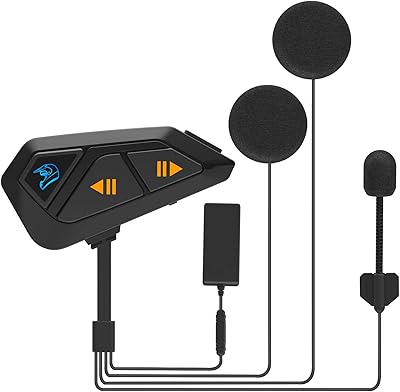
  • Microphones: Includes two interchangeable microphone types: a boom microphone for open-face and flip-face helmets, and a flat button microphone for full-face helmets.
  • FM Radio: Built-in FM radio receiver is included for standalone listening during solo rides.
  • Voice Assistants: Compatible with Siri and Samsung S Voice for hands-free call management and device control.
  • Music Sharing: Two riders can listen to the same audio source simultaneously using the music-sharing function.
  • Helmet Compatibility: Designed to fit open-face, flip-face (modular), and full-face helmets using the appropriate included microphone.
  • Weight: The unit weighs 55.2 grams (1.95 oz), adding minimal bulk to any helmet setup.
  • Dimensions: Measures 3.46 x 2.09 x 1.22 inches, making it a compact module suited for most helmet mounting channels.
  • Audio Driver: Uses a dynamic driver configuration to deliver stereo sound for music, calls, and GPS navigation.
  • Power Supply: Operates on a rechargeable lithium polymer battery rated at 5V, 0.5A input.
  • Compatible Devices: Pairs with smartphones, GPS units, and other Bluetooth headsets or intercoms from third-party brands.
  • Material: The outer housing is constructed from plastic; the unit does not include a headphone jack.

Related Reviews

FreedConn R3 PRO Motorcycle Helmet Bluetooth Headset
79%
83%
Intercom Range & Stability
88%
Audio Quality
74%
Camera Video Quality
91%
Battery Life
87%
Waterproofing & Weather Resistance
More
EJEAS V7 Motorcycle Helmet Bluetooth Intercom 2-Pack
78%
83%
Audio Clarity
71%
Intercom Range
91%
Battery Life
86%
Pairing & Setup
63%
Build Quality & Durability
More
EJEAS V6 Pro Motorcycle Bluetooth Intercom
76%
72%
Intercom Range
78%
Audio Clarity
91%
Battery Life
84%
Waterproofing & Weather Resistance
86%
Ease of Installation
More
Fodsports FX6S Motorcycle Helmet Communication System
74%
83%
Sound Clarity
61%
Intercom Range
78%
Battery Life
88%
Ease of Use & Controls
57%
Cross-Brand Pairing
More
FreedConn FG Motorcycle Bluetooth Helmet Headset
75%
86%
Ease of Setup
57%
Intercom Range
78%
Call Audio Quality
61%
Music Audio Quality
83%
Battery Life
More
Khptop Y80 Bluetooth Motorcycle Helmet Intercom Headset
86%
88%
Communication Range
91%
Noise Cancellation
95%
Battery Life
86%
Waterproof Durability
89%
Ease of Installation
More
FreedConn KY Motorcycle Bluetooth Headset
77%
83%
Value for Money
61%
Noise Cancellation Performance
88%
Battery Life
84%
Water Resistance
72%
Sound Quality
More
JZAQ BT30 Motorcycle Helmet Bluetooth Headset
74%
88%
Battery Life
84%
Value for Money
54%
Wind Noise & Noise Cancellation
83%
Waterproofing & Weather Resistance
86%
Ease of Installation
More
JZAQ A30 Bluetooth Motorcycle Helmet Speakers
85%
88%
Sound Quality
91%
Battery Life
89%
Ease of Installation
84%
Comfort During Use
78%
Noise Cancellation Effectiveness
More
BOGASING S8 Pro Max Bluetooth Speaker
85%
89%
Sound Quality
92%
Bass Performance
91%
Bluetooth Connectivity
85%
Ease of Use
88%
Portability
More

FAQ

Most riders get it connected within a few minutes. You put the unit into pairing mode by holding the phone button, find it in your phone's Bluetooth settings, and you're set. It remembers the pairing after that, so it reconnects automatically when you power it on near your phone.

Yes, the T-Max Pro supports universal Bluetooth pairing, so it can connect with intercoms from other brands as long as they also support standard Bluetooth intercom pairing. That said, advanced features like group intercom or music sharing may only work fully when all riders are using compatible units.

Honestly, treat the rated range as a best-case figure measured in open, flat terrain with no obstacles. In a real group ride through city streets, winding roads, or hilly terrain, you should expect the reliable range to be noticeably shorter. Keeping the group reasonably tight is the practical way to avoid dropouts.

The FreedConn T-Max Pro Motorcycle Helmet Bluetooth Intercom is built to handle wet conditions, and most riders report no issues riding through rain. Just be aware the product page lists two different IP ratings in different sections, so it's wise to treat it as water-resistant rather than fully submersible and avoid prolonged exposure to heavy downpours when possible.

Use the flat button microphone for full-face helmets — it sits flush against the interior padding near your mouth without needing a protruding boom arm. The boom microphone is the better choice for open-face and modular helmets where there's space for it to extend.

It helps, but it doesn't eliminate wind noise entirely at high speeds. Below about 80–90 km/h it does a solid job keeping conversations clear. Above that, especially on exposed highways, some wind intrusion will come through, which can make longer conversations a bit fatiguing.

Yes, the intercom audio and music can overlap, with intercom conversations typically taking priority and interrupting the music briefly. When the conversation ends, the music resumes. It's a fairly standard behavior across intercoms in this category.

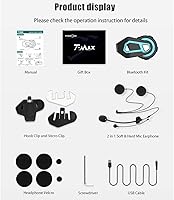
The unit clips into a mounting bracket that attaches to the helmet's chin bar channel or outer surface using adhesive or clamp hardware included in the box. The speakers fit into the ear pockets of most helmets, and you route the microphone to the chin area. It usually takes about 15–20 minutes on the first install.

Yes, you can use it while it's plugged into a Micro USB power source, such as a USB port on a tank bag or a phone charger connected to your bike's power. This is useful on all-day rides where you don't want to worry about battery.

It's actually a practical pick for that situation. The pairing process is approachable, the controls are fairly intuitive after a short learning curve, and the price makes it easier to equip multiple riders without a large upfront investment. Just make sure everyone understands the realistic range limitations before the first group ride.