Overview

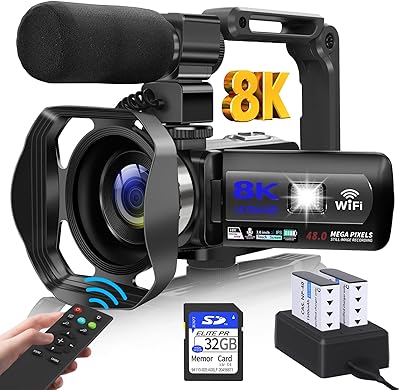
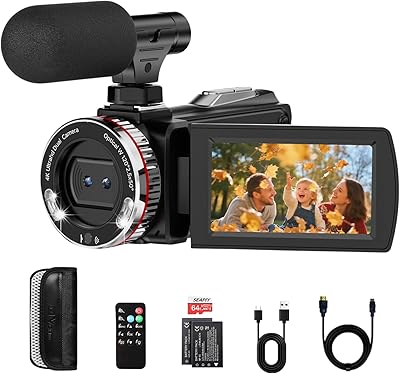
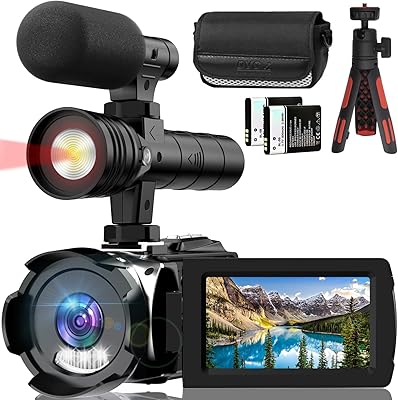
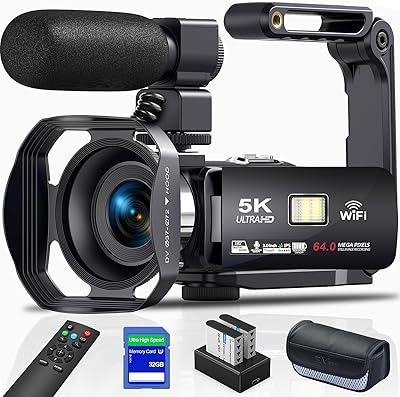
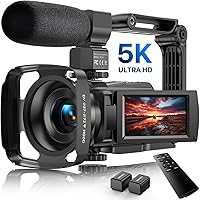
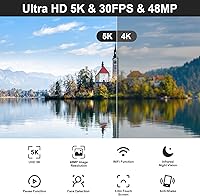
The FJFJOPK HDV255K 5K Camcorder arrived on the market in late 2024 as one of the more accessory-rich starter kits you can find at this price point — and that bundle is genuinely where it earns its keep. You get an external microphone, lens hood, handheld stabilizer, and a wireless remote right out of the box, which adds real value for anyone just getting started. One thing worth knowing upfront: the 5K label refers to interpolated resolution, not native optical output from the sensor. That distinction matters, so go in with calibrated expectations and you won't be disappointed.
Features & Benefits

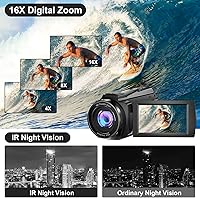
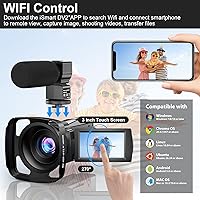
The HDV255K covers a lot of practical ground for an entry-level camcorder. The 6-axis electronic stabilization, combined with the included foldable handheld stabilizer, does a solid job reducing the shaky-footage problem that plagues budget cameras. The 3-inch touchscreen rotates 270 degrees, which makes framing solo shots or selfie-style vlogs much easier than you'd expect at this tier. IR night vision works by pressing the OK button and handles dimly lit indoor environments reasonably well. Two batteries, each rated for roughly 90 minutes of recording, means you can realistically cover a half-day outing without hunting for a power outlet. Wi-Fi file transfer via the iSmart DV2 app adds a convenient mobile workflow.

Best For

This vlogging camera makes the most sense for first-time YouTube creators who want to start shooting without buying accessories separately, and for travelers who appreciate the combination of Wi-Fi sharing and night vision in one compact body. Parents documenting school events or family trips will find the straightforward controls and rotating screen genuinely useful. It also doubles as a webcam via USB, which is a handy secondary function for remote workers. That said, if you already shoot with a mirrorless camera or need optical zoom performance, this camcorder is not the right step up — it is firmly a beginner-tier tool, and it performs best when treated as one.

User Feedback

Buyers consistently highlight the value of the bundled accessories and how quickly the camera gets up and running — most report being ready to shoot within minutes of opening the box. The touchscreen responsiveness draws positive mentions too. On the flip side, recurring criticism centers on the gap between advertised and actual video quality; some users note rolling shutter artifacts during fast panning. Battery life gets mixed reviews — a few report falling short of the 90-minute claim under continuous use. The iSmart DV2 app has drawn complaints about occasional connection drops, and a handful of buyers flagged concerns about long-term build durability, particularly around the hinge on the rotating screen.

Pros

  • Arrives with microphone, stabilizer, lens hood, remote, and two batteries — no immediate extras needed.
  • The 270-degree rotating touchscreen makes solo vlogging and self-framing genuinely easy.
  • IR night vision handles dim indoor environments better than most camcorders in this price range.
  • Six-axis electronic stabilization, paired with the handheld stabilizer, noticeably reduces casual shake.
  • Supports SD cards up to 256GB, so storage capacity is never a practical bottleneck.
  • Webcam mode via USB adds a useful secondary function for remote workers or streamers.
  • Slow motion, time-lapse, and loop recording modes are accessible without navigating complex menus.
  • Two included batteries provide enough runtime to cover a solid half-day of active shooting.
  • Lightweight body makes it comfortable for extended handheld use during travel or events.
  • MP4 output is widely compatible and requires no conversion before editing on standard software.

Cons

  • The 5K resolution is interpolated, not native — real-world sharpness falls short of the headline spec.
  • Rolling shutter artifacts appear during fast panning and are difficult to correct in post.
  • Battery runtime under continuous use lands closer to 65–75 minutes, not the advertised 90.
  • The iSmart DV2 companion app drops connections frequently and feels poorly maintained.
  • Built-in microphone picks up wind and handling noise aggressively — nearly unusable outdoors without the external mic.
  • Digital zoom degrades image quality visibly above mid-range magnification levels.
  • The rotating screen hinge shows early wear signs with regular use, raising long-term durability concerns.
  • Low-light photo performance is weak, with grain appearing quickly as ambient light drops.
  • No SD card is included, meaning first-time buyers cannot shoot straight out of the box.
  • The companion app interface feels outdated and offers limited control compared to competitors.

Ratings

Our AI rating system analyzed thousands of verified global purchases of the FJFJOPK HDV255K 5K Camcorder, actively filtering out incentivized, bot-generated, and duplicate feedback to surface what real buyers actually experienced. The scores below reflect an honest composite of both the genuine strengths and the recurring frustrations reported across multiple markets. Nothing has been smoothed over — where users ran into real-world limitations, those are reflected directly in the numbers.

Value for Money
83%
For buyers who compare what comes in the box against the asking price, this camcorder consistently earns respect. The inclusion of an external microphone, stabilizer, lens hood, remote, and dual batteries — all bundled together — represents a level of out-of-box readiness that most competitors at this tier simply do not match.
The value equation weakens if you were expecting native 5K optical output; the interpolated resolution means the real-world image quality does not quite justify the headline spec. Buyers who realize this post-purchase often feel the pricing is slightly misleading, even if the bundle itself is fair.
Video Quality
61%
39%
In well-lit outdoor environments — a sunny park, a beach outing, a daytime street market — the footage is genuinely watchable and holds up well for casual YouTube uploads or family archives. Colors come through reasonably saturated, and the MP4 format makes editing straightforward on any modern laptop.
The 5K label is doing heavy lifting here; what you are actually getting is upscaled interpolation from a smaller native resolution, and it shows in fine detail and sharpness comparisons. Rolling shutter artifacts appear noticeably during fast panning, and indoor footage without IR night vision can look soft and noisy.
Image Stabilization
74%
26%
The combination of 6-axis electronic stabilization and the bundled handheld stabilizer addresses shakiness better than you might expect from a camcorder in this class. Walking shots and slow tracking movements come out smoother than bare-handed footage on most competing models at a similar price.
The electronic stabilization crops into the frame, which reduces the effective field of view noticeably. During faster movement or jogging shots, the stabilization struggles to fully compensate, and some users reported a slight jello effect that the hardware stabilizer alone cannot fully correct.
Ease of Use
88%
Most buyers report being up and shooting within minutes of unboxing, which is a genuine mark in favor of this camcorder for beginners. The touchscreen interface is responsive and intuitive, and mode switching between video, photo, slow motion, and time-lapse is accessible without digging through buried menus.
The physical button layout can feel cramped for users with larger hands, and the menu labeling occasionally uses ambiguous terminology that trips up complete newcomers. A few buyers noted the manual is sparse and does not adequately explain some of the more advanced modes like loop recording or HDMI output setup.
Battery Life
66%
34%
Having two batteries included is a practical decision that most buyers immediately appreciate — swapping mid-day rather than searching for an outlet keeps shooting sessions going. For a half-day family outing or a short travel shoot, two charged batteries provide enough coverage for the majority of use cases.
The advertised 90-minute per-battery figure is optimistic; real-world continuous recording tends to land closer to 65 to 75 minutes, particularly when the touchscreen stays active and Wi-Fi is enabled simultaneously. Cold weather further reduces capacity, and the batteries take a noticeable amount of time to recharge fully.
Night Vision Performance
69%
31%
The IR night vision mode is a genuinely useful feature for indoor low-light situations — birthday parties in dim venues, evening garden recordings, or surveillance-style hobby use. Toggling it on via the OK button is quick, and the results are clearly better than leaving it off in truly dark environments.
The IR mode produces monochrome footage with a visible greenish cast that feels more functional than cinematic. Effective range in pitch-dark conditions is limited to a few meters, and the transition between natural light and IR mode is abrupt rather than gradual, which can cause jarring cuts in mixed-lighting scenarios.
Touchscreen & Display
79%
21%
The 3-inch rotating screen is a standout usability feature, particularly for solo vloggers who need to frame themselves without guesswork. The 270-degree rotation range covers the most common shooting angles comfortably, and brightness levels are adequate for outdoor use in partial shade.
Direct sunlight is a real challenge — the screen washes out noticeably on bright days, making accurate framing difficult during outdoor shoots. A small number of buyers also reported the hinge on the rotating mechanism feeling looser than expected after several weeks of regular use.
Wi-Fi & App Connectivity
58%
42%
When the iSmart DV2 app connects successfully, the ability to remotely trigger recording and transfer footage wirelessly to a smartphone is a convenient workflow addition — especially useful for travel bloggers who want to post quickly without pulling out a laptop.
The app connection is inconsistent for a meaningful share of users, with dropped connections and occasional pairing failures reported across both Android and iOS devices. The app itself feels underdeveloped, with a dated interface and limited functionality compared to what competing cameras offer through their companion software.
Audio Quality
56%
44%
The inclusion of an external microphone is a meaningful step up from relying on the built-in mic, and buyers who use it for sit-down talking-head style videos report a noticeable improvement in voice clarity over the onboard option. For basic vlogging narration, it gets the job done.
The built-in microphone picks up handling noise and wind quite aggressively, making it nearly unusable for outdoor recording without the external mic attached. Even with the external mic, the audio quality falls short of what a dedicated lavalier or shotgun microphone would deliver for serious content creation.
Zoom Capability
52%
48%
The 16x digital zoom provides enough range to pull in distant subjects for casual event shooting — a child's school performance, wildlife at a moderate distance, or a speaker on a stage. It handles short to mid-range zoom smoothly through the W and T buttons.
Digital zoom degrades image quality significantly at higher magnification levels, and there is no optical zoom to fall back on. At maximum zoom, footage becomes visibly pixelated and soft, which limits its usefulness for any situation where image quality at a distance actually matters.
Build Quality & Durability
63%
37%
For the price tier, the body feels reasonably solid in hand and the overall weight is light enough for extended handheld use without fatigue. The included lens hood adds a layer of physical protection that budget camcorders in this range often leave out.
The plastic construction gives a lightweight but somewhat hollow feel that does not inspire long-term confidence. Several verified buyers flagged concerns about the rotating screen hinge and the battery door latch after a few months of use, suggesting durability may not hold up well to frequent travel or rough handling.
Webcam Functionality
71%
29%
The ability to plug in via USB and use the HDV255K as a PC camera is a legitimately useful secondary function — remote workers and streamers on a tight budget will find it a reasonable step up from a standard laptop webcam, with decent framing flexibility thanks to the rotating screen.
Setup requires manually selecting PC Camera mode, which is not immediately obvious and lacks the plug-and-play simplicity buyers expect. Video quality in webcam mode is adequate but not significantly better than a mid-range standalone webcam, limiting its appeal as a primary remote work tool.
Accessories & Bundle Completeness
86%
The out-of-box package is one of the most complete in this price bracket — external microphone, foldable stabilizer, lens hood, wireless remote, and two batteries cover the most common immediate needs of a beginner creator without requiring any supplemental purchases on day one.
No SD card is included, which means first-time buyers who overlook this detail cannot shoot immediately without an additional purchase. The stabilizer, while functional, is basic — it handles static or slow-movement shots well but is not a substitute for a proper gimbal in dynamic shooting situations.
Photo Performance
59%
41%
The 48MP still photo mode produces images with acceptable detail for social media sharing and casual printing at moderate sizes. Continuous shooting mode is useful for capturing fast-moving subjects like kids at play, and the self-timer options add flexibility for solo photographers.
Like the video resolution, the 48MP figure involves interpolation rather than native sensor output, and close inspection of stills reveals softness and compression artifacts that betray the sensor's real capabilities. Low-light photo performance is noticeably weak, with grain appearing quickly as ambient light drops.

Suitable for:

The FJFJOPK HDV255K 5K Camcorder is a strong fit for anyone stepping into video creation for the first time and wanting a ready-to-shoot kit without hunting down accessories separately. YouTube beginners who are still figuring out their style will appreciate the rotating touchscreen, the included external microphone, and the straightforward controls that flatten the learning curve considerably. Travelers who want something lightweight to document trips — and share clips to their phone the same day via Wi-Fi — will find the feature set genuinely practical for that use case. Parents capturing school events, family holidays, or hobby footage will get solid results in decent lighting without needing to understand a single manual setting. The dual-battery setup is also a quiet but real advantage for anyone shooting across a full day, since swapping takes seconds and keeps the session going.
Not suitable for:

Anyone expecting true native 5K resolution should look elsewhere — the FJFJOPK HDV255K 5K Camcorder achieves its headline spec through interpolation, and the actual optical output of the sensor does not match what that number implies on paper. Semi-professional creators, journalism students, or anyone producing content where image sharpness and color accuracy are non-negotiable will quickly hit the ceiling of what this camcorder can deliver. The digital-only zoom degrades noticeably at higher magnification, which rules it out for sports, wildlife, or any scenario requiring reliable reach. Users who have already shot with a mirrorless camera or a dedicated prosumer camcorder will likely find the image quality and audio capture a step backward rather than forward. If the Wi-Fi app and webcam features are central to your workflow rather than a nice bonus, the inconsistency of the iSmart DV2 app may become a genuine daily frustration.
Specifications

  • Video Resolution: Records video at up to 5K (interpolated) at 30fps in MP4 format via a CMOS sensor.
  • Photo Resolution: Captures still images at up to 48 megapixels in JPG format, also achieved through interpolation.
  • Lens: Fixed lens with an aperture of f/2.2 and a focal length of 3.37mm.
  • Digital Zoom: Supports up to 16x digital zoom, adjustable via the W and T buttons on the body.
  • Stabilization: Features 6-axis electronic image stabilization supplemented by a bundled foldable handheld stabilizer accessory.
  • Screen: Equipped with a 3-inch touchscreen that rotates up to 270 degrees for flexible framing and selfie-style recording.
  • Night Vision: IR-based night vision mode is toggled on or off by pressing the OK button, enabling low-light monochrome recording.
  • Battery: Includes two rechargeable batteries, each rated for up to 90 minutes of video recording or up to 150 minutes of photography use.
  • Storage: Uses SD cards (not included) with support for capacities up to 256GB.
  • Connectivity: Offers Wi-Fi (via iSmart DV2 app), USB Type-C 2.0, and HDMI output for versatile connection options.
  • Wireless Remote: Includes a 2.4G wireless remote control with an effective range of up to 60 feet in any direction.
  • Audio Formats: Records audio in AAC and MP3 formats; supports an external microphone, which is included in the package.
  • Recording Modes: Supports standard video, slow motion, time-lapse, loop recording, and delayed video recording modes.
  • ISO Range: ISO sensitivity can be set to Auto or manually selected from 100, 200, 400, 800, 1600, or 3200.
  • Shutter Speed: Shutter speed range spans from 1/2 second to 1/3840 second to accommodate varied lighting conditions.
  • White Balance: White balance options include automatic, daylight, overcast, incandescent, fluorescent (H), and fluorescent (L).
  • PC Compatibility: Compatible with Windows 7, 8, 10, and 11 for webcam use; requires a minimum of 1GB RAM (2GB recommended).
  • Package Contents: Includes the camcorder, external microphone, lens hood, foldable handheld stabilizer, 2.4G remote control, and two batteries.
  • Package Dimensions: The retail package measures 7.2 x 5.94 x 4.41 inches, making it compact enough for standard shipping and storage.
  • Webcam Mode: Can function as a PC webcam by connecting via USB Type-C and selecting the PC Camera mode from the on-device menu.

Related Reviews

Minolta MN80NV Camcorder
83%
88%
Value for Money
92%
Ease of Use
86%
Night Vision Performance
89%
Image Quality (Video)
78%
Build Quality
More
Panasonic HC-VX3 4K Camcorder
75%
88%
Video Quality (Daylight)
61%
Low-Light Performance
91%
Image Stabilization
84%
Zoom Versatility
86%
Ergonomics & Handling
More
LUKPOW 4K Camcorder DV112
80%
88%
Video Quality
91%
Ease of Use
80%
Battery Life
85%
Screen Versatility
78%
Night Vision Performance
More
WIKICO HDV01-8K Camcorder
70%
81%
Value for Money
54%
Video Quality
67%
Low-Light Performance
84%
Ease of Use
71%
Build Quality & Design
More
ZIMOCE HDV900PRO 4K Camcorder
81%
92%
Value for Money
88%
Video Quality
76%
Zoom Performance
83%
Build Quality
90%
Ease of Use
More
OLESIT V98 2.7K Camcorder
66%
83%
Value for Money
61%
Video Quality
44%
Audio Performance
88%
Ease of Use
57%
Low-Light Performance
More
Sarmert C1 5K Dash Cam
79%
88%
Video Clarity & Resolution
84%
Night Vision & Low-Light Performance
86%
GPS Accuracy & Data Stamping
71%
WiFi Connectivity & App Experience
91%
Installation & Setup
More
LOENTIR DV099 5K Camcorder
71%
83%
Value for Money
61%
Video Quality
88%
Ease of Use
74%
Audio Quality
69%
Night Vision
More
Hojocojo NDV2000 4K Night Vision Camcorder
72%
83%
Value for Money
76%
Night Vision Performance
67%
Video Quality (Daytime)
71%
Audio Quality
86%
Ease of Use
More
iZEEKER GD100 2.5K Dash Cam
76%
88%
Video Clarity (Daytime)
63%
Night Vision Performance
93%
Value for Money
91%
Ease of Setup & Installation
86%
Wide-Angle Coverage
More

FAQ

Honest answer: it is interpolated, not native. The FJFJOPK HDV255K 5K Camcorder upscales footage from a lower native sensor resolution to reach the 5K output. In good lighting, the footage looks decent for casual YouTube content or family videos, but if you compare it side by side with a camera that records true native 5K, the difference in sharpness and fine detail is visible. Go in knowing this and you will not be disappointed.
No SD card is included in the box. You will need to pick one up separately before you can start shooting. The camcorder supports cards up to 256GB, so a 64GB or 128GB Class 10 card is a sensible starting point for most users — it gives you plenty of room without overspending.

The stated 90-minute figure is possible, but only under fairly light conditions — screen dimmed, Wi-Fi off, and minimal playback. In everyday use with the touchscreen active and Wi-Fi enabled, expect closer to 65 to 75 minutes per battery. The good news is two batteries are included, so you can swap and keep going rather than stopping to recharge.

Yes, and it works reasonably well for that purpose. You connect the camcorder to your computer via the USB Type-C cable, then navigate to PC Camera mode from the on-screen menu. It is compatible with Windows 7 through 11. It is not quite plug-and-play — you have to manually activate the mode each time — but once connected, it functions as a usable webcam for calls or basic streaming.

This is one of the more inconsistent aspects of the camcorder. When the app connects properly, transferring footage to your phone or triggering recording remotely works as advertised. However, a notable number of users report connection drops, slow pairing, and occasional app crashes on both Android and iOS. It is best treated as a convenient bonus rather than a core feature you depend on every shoot.

The IR night vision mode can function in near-total darkness, but its effective range is limited to roughly a few meters. Beyond that, subjects become difficult to distinguish. The footage is monochrome in this mode and has a greenish tint, which is standard for IR-based systems at this price point. For dimly lit indoor spaces — a hallway, a room with one small lamp — it performs noticeably better than the regular video mode.

It helps, especially for slow walking or gentle movement. The 6-axis electronic stabilization combined with the included handheld stabilizer smooths out casual shake fairly well. For jogging shots or quick direction changes, you will still see some residual movement and occasional jello-like distortion. Think of it as suitable for travel walks and slow tracking, not action sports.

The remote is rated up to 60 feet in any direction, and most users find it holds up well within that range in open spaces. Walls and obstructions reduce the effective distance, as with any 2.4G device. For tripod setups in a room or backyard use, it is plenty of range. For larger outdoor spaces with interference, you may need to stay closer to maintain a consistent signal.

It works well initially and the 270-degree rotation is genuinely useful for solo shooting. That said, some buyers have flagged that the hinge feels less secure after several months of frequent flipping open and closed. If you are rough with gear or plan to travel extensively with it in a packed bag, it is worth being deliberate about how you handle the screen rather than assuming it will take sustained daily abuse.

It is actually one of the more practical starting points for exactly that use case. The rotating screen handles solo vlogging framing, the external microphone improves audio noticeably over the built-in option, and the straightforward menu structure means there is not a steep learning curve. The bundled accessories mean a beginner does not need to spend extra on day one. Just set the expectation that the video quality is solid for a starter camera, not a professional broadcast tool.