Overview

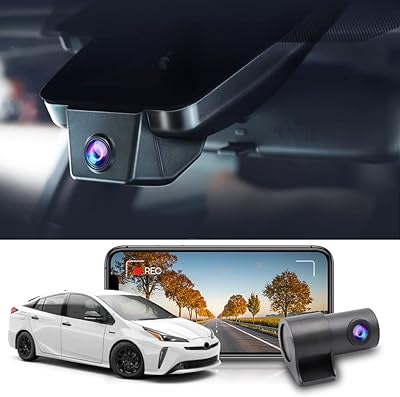
The Fitcamx 4K Toyota 4Runner Dual Dash Cam takes a fundamentally different approach than most aftermarket options — it's engineered specifically for 2020–2024 4Runner models, not adapted from a universal mount design. All wiring tucks behind the headliner, and nothing hangs from your windshield once the install is done right. It ships with a 128GB microSD card included, so you're not hunting for accessories before your first drive. One critical detail to know upfront: this vehicle-specific cam only works with trims equipped with Toyota Safety Sense. If your 4Runner doesn't have TSS, it simply won't fit as intended — a detail that catches more buyers off guard than it should.
Features & Benefits

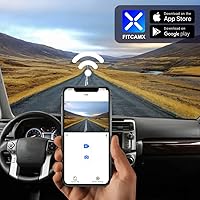
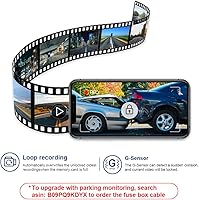
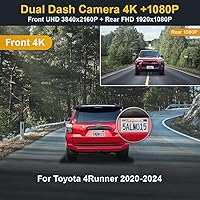
The front lens captures footage at 4K resolution, which makes a real difference when you need to read a license plate after an incident. The rear handles 1080P — still clear, but worth knowing the gap exists. An f/1.6 aperture combined with WDR technology keeps footage usable in tricky lighting, whether you're exiting a dark tunnel into afternoon glare or driving at dusk. The 170-degree front and 140-degree rear viewing angles cover a wide sweep of road on both ends. WiFi is built in, letting you pull clips to your phone via the Fitcamx app — just remember to disable cellular data first for reliable pairing. The G-Sensor auto-locks footage during impacts so collision evidence isn't overwritten.

Best For

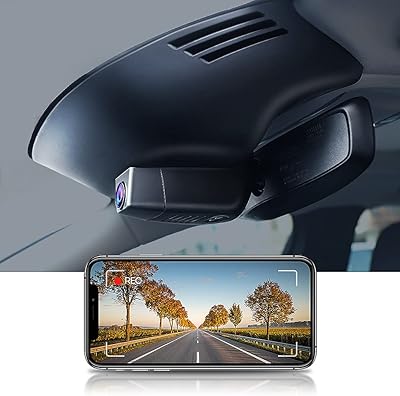
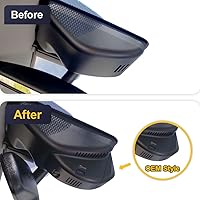
This 4Runner dash cam is a strong fit for owners who care about keeping their cabin looking stock. If you want an aftermarket unit that a passenger wouldn't even notice, the OEM-style ceiling integration delivers exactly that. Off-road and trail drivers also benefit from the wide temperature tolerance — the hardware handles desert heat and cold-weather runs without issue. That said, two real limitations deserve honest mention. There is no parking mode, which rules it out for anyone wanting overnight street surveillance. And clip review happens through the app rather than card ejection — which works well once configured, but adds a small learning curve for less tech-comfortable buyers.

User Feedback

With 158 ratings averaging 4.3 out of 5 stars, the Fitcamx dual-camera system has a respectable but modest review base — not enough volume to be fully conclusive. Buyers consistently praise the clean, hidden install, with many noting the camera is virtually invisible once mounted. Daytime footage quality draws positive comments; night performance gets more mixed reactions, which isn't uncommon at this tier. A handful of users flag the WiFi pairing as occasionally finicky, echoing the product's own tip about disabling Bluetooth and cellular data. The lifetime support claim appears to hold up based on reported experiences, with no widespread complaints about responsiveness or build quality.

Pros

  • OEM-style install looks completely factory — no suction cups, no exposed wires, nothing hanging from the windshield.
  • Includes a 128GB microSD card in the box, so you can set it up without any extra purchases.
  • Front 4K resolution captures license plates and road details with enough clarity to hold up after an incident.
  • f/1.6 aperture and WDR technology keep footage usable in tunnels, at dusk, and in high-contrast lighting conditions.
  • G-Sensor automatically locks collision footage, ensuring critical clips survive loop recording overwrites.
  • Wide 170-degree front field of view covers multiple lanes and intersections without distortion at the edges.
  • Built-in WiFi lets you review and download clips to your phone without ever ejecting the memory card.
  • Temperature-resistant hardware handles both desert heat and winter cold without performance issues.
  • Lifetime after-sales support is offered, and buyer experiences reported so far suggest it is responsive.
  • Supports up to 256GB microSD cards, giving you meaningful room to upgrade storage if needed.

Cons

  • Only compatible with Toyota Safety Sense trims — non-TSS 4Runner owners cannot use this camera at all.
  • Rear camera records at 1080P while the front shoots 4K, creating a noticeable resolution gap between the two feeds.
  • No parking mode means the camera goes completely dark when the engine is off — a real gap for city dwellers.
  • WiFi pairing requires disabling cellular data and Bluetooth first, which is an unintuitive step that trips up new users.
  • 158 total ratings is a relatively thin sample size, making it harder to assess long-term reliability with confidence.
  • Night footage quality draws mixed reactions from buyers, suggesting low-light performance is inconsistent in some conditions.
  • App-only clip access means drivers who prefer on-screen playback or a dedicated display are out of luck.
  • Installation, while clean in result, requires routing cables through headliner panels — not a true beginner DIY job.
  • No mention of any cloud backup or automatic upload feature, so footage management depends entirely on the phone app.

Ratings

The scores below reflect AI-driven analysis of verified global buyer reviews for the Fitcamx 4K Toyota 4Runner Dual Dash Cam, with spam, bot submissions, and incentivized feedback actively filtered out to protect accuracy. Each category score is calibrated to reflect genuine consensus — where owners are consistently impressed, the scores climb; where frustrations surface repeatedly, they drop accordingly. Both the standout strengths and the real-world pain points are represented transparently here.

Install Quality
93%
The hidden ceiling-mount design consistently draws the strongest praise from buyers. Owners repeatedly describe the finished install as looking completely factory, with zero visible wires and nothing occupying windshield space — a level of clean integration that generic suction-cup cams simply can't match.
The install itself is not beginner-friendly. Routing cables through the headliner panels requires patience and trim tools, and buyers who attempted it without experience reported a steeper learning curve than expected for a product pitched as easy to use.
Front Video Quality
88%
Daytime 4K footage from the front camera draws consistent praise for capturing license plates and lane details clearly, even at highway speeds. The f/1.6 aperture and WDR processing handle high-contrast scenes like tunnel exits noticeably better than standard-aperture competitors in the same category.
Night footage quality receives more mixed reactions. Some buyers report acceptable low-light performance, while others find the front image loses meaningful detail after dark — an area where the gap between specification and real-world output is more noticeable than the specs suggest.
Rear Camera Quality
71%
29%
The rear 1080P camera provides adequate rearward coverage for most daily driving scenarios, and the 140-degree field of view captures a wide enough sweep to document what's happening behind the vehicle during highway lane changes and intersection approaches.
The resolution gap between front and rear is a recurring point of frustration, particularly at this price tier. Buyers expecting matched quality on both feeds are often disappointed when rear footage lacks the same plate-readable sharpness the front delivers.
OEM Aesthetics
94%
This is arguably the single most praised aspect across the entire review base. Buyers who prioritized keeping their 4Runner interior looking stock describe the result as genuinely invisible — guests sitting in the vehicle often don't notice the camera exists, which is exactly what this crowd is paying for.
The aesthetic payoff is entirely contingent on a clean install. Any cable routing shortcuts taken during installation can undermine the factory look, and buyers who skipped the full headliner tuck reported visible wire runs that defeated the purpose of buying a premium OEM-style unit.
App & WiFi Experience
62%
38%
When the WiFi connection is properly established, buyers appreciate being able to pull clips to their phone quickly without ejecting the card — especially useful after a near-miss incident when you want footage fast. The app interface is functional and covers the basics well on both iOS and Android.
Connectivity reliability is the most cited frustration in reviews. Multiple buyers report that the pairing drops unexpectedly, requires disabling cellular data and Bluetooth as a prerequisite, and occasionally refuses to connect without a full camera restart — an unintuitive workflow that undercuts an otherwise capable feature.
G-Sensor & Incident Lock
86%
The automatic incident lock works reliably according to buyer reports — footage from sudden stops or collisions gets flagged and protected from overwrite without any driver action required. This is exactly the kind of passive safety net that justifies carrying a dash cam in the first place.
A few buyers reported the G-Sensor triggering false locks on rough off-road terrain, which fills up the protected file partition faster than expected and requires manual cleanup through the app. The sensitivity calibration options appear limited based on available documentation.
Low-Light Performance
67%
33%
The f/1.6 aperture is a meaningful hardware advantage in low-light settings, and buyers who drive regularly at dusk or through poorly lit urban areas note that footage remains more detailed than they expected for a vehicle-integrated cam. WDR processing helps reduce overblown headlights in oncoming traffic scenes.
Results in true nighttime conditions are inconsistent enough that several reviewers specifically flagged it as a weak point. The front camera holds up better than the rear in darkness, but neither feed reaches the clarity level that dedicated low-light cams with larger sensors can produce.
Loop Recording
91%
Continuous loop recording works without any manual intervention, and the included 128GB card provides a comfortable rolling buffer for most driving patterns before oldest footage is overwritten. Buyers consistently describe the storage management as genuinely hands-off once the camera is running.
The maximum supported card size of 256GB, while expandable, is below what some competing systems now accept. Heavy daily drivers or those who take extended road trips may find themselves wishing for higher capacity ceiling options without needing to transfer footage manually.
Compatibility Clarity
53%
47%
For buyers who confirm Toyota Safety Sense compatibility before purchasing, the fit is precise and exactly as described. The vehicle-specific design means no adapter guesswork and no universal mount compromises — the camera simply belongs in the vehicle.
The Toyota Safety Sense requirement generates more pre-purchase confusion than almost any other factor in the review base. Buyers with non-TSS trims who purchased without checking reported fitment failures, and even among TSS owners, a subset encountered uncertainty about which exact sub-trim configurations are supported.
Build & Durability
82%
18%
The ABS and PC composite housing feels solid in hand and holds up well to the thermal cycling that comes from daily use in vehicles parked in direct sun. Off-road buyers report no rattles or mounting shifts after repeated trail runs on rough terrain.
With a relatively modest review base, long-term durability beyond one to two years is harder to assess with confidence. A small number of buyers raised questions about adhesive and clip integrity over time in extreme heat climates, though this remains a minority concern rather than a documented pattern.
Value for Money
74%
26%
For 4Runner owners who genuinely want an invisible, factory-look dual-camera setup, the premium positioning is defensible — no comparable generic unit delivers the same OEM integration. The included 128GB card and lifetime support add tangible out-of-box value that softens the initial outlay.
Buyers who compare the hardware spec sheet against similarly priced universal dash cams will find the Fitcamx dual-camera system asking a lot for a rear camera that only reaches 1080P and an app experience that still has rough edges. The value equation depends heavily on how much the OEM aesthetic is worth to you personally.
Parking Surveillance
18%
82%
There is genuinely nothing positive to report here from the perspective of parking mode functionality, as the feature does not exist on this unit. The omission is at least clearly documented in the product listing for buyers who read carefully before purchasing.
The complete absence of parking mode is the sharpest limitation in the entire feature set. Urban owners who park on the street overnight, or anyone who has experienced a hit-and-run in a parking lot, will find this a dealbreaker — and several reviewers flagged that they wished they had noticed this before buying.
Thermal Tolerance
89%
The -20°C to 85°C operating range covers virtually every climate scenario a 4Runner owner is likely to encounter, including cold-start mornings in northern winters and sustained afternoon heat in parked vehicles in desert regions. Off-road buyers in particular praised the hardware stability across temperature extremes.
The upper thermal ceiling, while broad, has not been extensively stress-tested in public reviews for multi-year sustained exposure in the hottest U.S. climates. The rating covers operational performance, but cabin temperatures in Arizona or Texas summers can challenge electronics rated even at this threshold.
After-Sales Support
79%
21%
The lifetime support claim appears to carry some weight based on buyer-reported experiences, with most who contacted Fitcamx describing responsive and helpful interactions around setup questions and app troubleshooting. Having a direct manufacturer support channel rather than a third-party reseller is a meaningful practical advantage.
Support quality is difficult to score with high confidence on a 158-review sample. A handful of buyers reported slower response times for hardware issues versus software questions, and the quality of support for edge-case compatibility problems appears less consistent than for standard setup inquiries.

Suitable for:

The Fitcamx 4K Toyota 4Runner Dual Dash Cam is built for a very specific buyer — and for that buyer, it's genuinely hard to beat. If you own a 2020–2024 4Runner with Toyota Safety Sense and you've been reluctant to install a dash cam because every option you've seen involves suction cups, dangling wires, or a unit stuck awkwardly on the windshield, this is the answer. The ceiling-integrated, OEM-style mount produces a result that looks like it came from the factory, which matters a lot to owners who take pride in a clean interior. Off-road and trail drivers will also appreciate the hardware's temperature tolerance — it holds up in the kind of heat and cold that a weekend on the trails can throw at it. Anyone who wants a true plug-in-and-forget setup, with app-based clip access rather than fumbling with a memory card, will find the workflow here genuinely convenient once the WiFi pairing is dialed in.
Not suitable for:

There are clear situations where the Fitcamx 4K Toyota 4Runner Dual Dash Cam is simply the wrong tool, and it's worth being direct about them. The most important dealbreaker is trim compatibility — if your 4Runner does not have Toyota Safety Sense, this camera will not fit as designed, full stop. Urban drivers who rely on parking mode to monitor their vehicle overnight while parked on the street will need to look elsewhere, as this unit offers no parking surveillance whatsoever. The rear camera captures at 1080P rather than 4K, so buyers expecting matched resolution front and back should factor that in. Drivers who prefer reviewing footage directly on a screen rather than through a smartphone app may find the WiFi-only clip access frustrating, particularly since reliable pairing requires disabling cellular data — a small but real quirk. Finally, with just over 150 reviews, the overall confidence level is decent but not deep enough to dismiss individual complaints about night footage quality or app stability.
Specifications

  • Front Resolution: The front camera records at 4K (2160P), capturing fine road details such as license plates in a wider range of conditions than standard 1080P units.
  • Rear Resolution: The rear camera records at 1080P, providing clear coverage of the road behind the vehicle while leaving the higher resolution allocation to the front lens.
  • Front Field of View: The front lens covers a 170-degree horizontal angle, capturing multiple lanes of traffic and wide intersections in a single frame.
  • Rear Field of View: The rear lens covers a 140-degree angle, providing broad rearward coverage with minimal blind spots along the back of the vehicle.
  • Aperture: An f/1.6 aperture allows more light into the sensor compared to narrower lenses, improving footage quality in low-light driving conditions.
  • Video Technology: Wide Dynamic Range (WDR) processing balances exposure across bright and dark areas in the same frame, useful in high-contrast situations like tunnel exits.
  • Connectivity: Built-in WiFi enables wireless communication between the camera system and the Fitcamx mobile app without requiring physical card removal.
  • App Compatibility: The Fitcamx app supports both iOS and Android devices, allowing live preview, clip playback, and footage downloads directly to a smartphone.
  • Included Storage: A 128GB microSD card is included in the box, providing sufficient capacity for several hours of continuous loop recording before the oldest footage is overwritten.
  • Max Storage: The system supports microSD cards up to 256GB, giving buyers the option to extend recording capacity beyond the included card.
  • G-Sensor: An integrated G-Sensor detects sudden deceleration or impact forces and automatically locks the current video file to prevent it from being overwritten by loop recording.
  • Loop Recording: Continuous loop recording automatically overwrites the oldest unlocked footage when storage is full, requiring no manual file management from the driver.
  • Parking Mode: Parking mode is not supported on this unit, meaning the cameras do not record or monitor the vehicle when the engine is switched off.
  • Operating Temp: The hardware is rated to function reliably between -20°C and 85°C (-4°F to 185°F), covering typical cold-weather starts and sustained heat exposure in parked vehicles.
  • Mount Type: The system uses a ceiling-integrated mount that hides all wiring behind the headliner, producing an OEM-style appearance with no external cables or windshield hardware.
  • Compatibility: This camera system is designed exclusively for Toyota 4Runner model years 2020 through 2024, and requires the vehicle to be equipped with Toyota Safety Sense (TSS).
  • Housing Material: The camera body is constructed from ABS and PC composite material, offering a balance of structural rigidity and resistance to temperature-related warping.
  • Warranty Support: Fitcamx offers lifetime after-sales support, meaning buyers can contact the manufacturer for assistance beyond a standard limited warranty window.
  • In-Box Contents: The package includes the dual camera system, a routing cable, a 128GB microSD card, a removal pry tool, and a printed user manual.
  • Power Source: The system draws power through the vehicle's existing wiring harness via the included cable, eliminating the need for a separate power adapter or OBD port connection.

Related Reviews
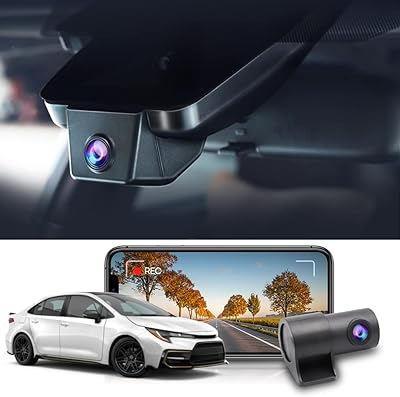
Fitcamx 4K Dual Dash Cam for Toyota Corolla 2020-2022
86%
92%
Video Quality
88%
Ease of Installation
75%
App Functionality
85%
Wi-Fi Connectivity
89%
Storage Capacity
More
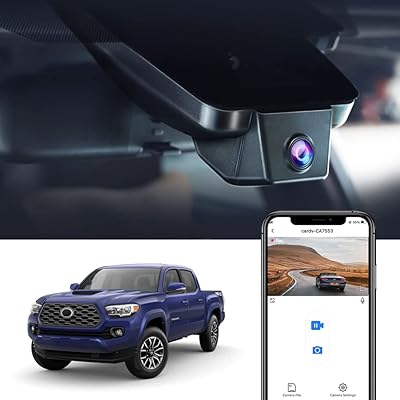
FITCAMX Tacoma OEM-Style 4K Dash Cam
79%
93%
OEM Fit & Aesthetics
88%
Video Quality — Daytime
67%
Video Quality — Nighttime
82%
Installation Experience
59%
App & WiFi Reliability
More
Fitcamx 2K Dual Dash Cam for Toyota Prius 2018-2022
84%
88%
Video Quality (Day/Night)
92%
Ease of Installation
67%
WiFi Connectivity & App Performance
85%
Storage Capacity (64GB/256GB)
91%
Build Quality and Design
More
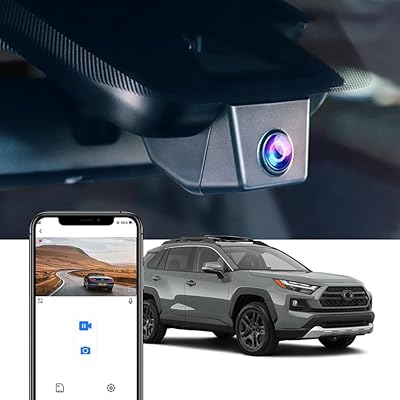
FITCAMX RAV4 2022-2025 4K Dash Cam
68%
93%
OEM Fit & Interior Integration
91%
Installation Ease
88%
Daytime Video Quality
67%
Low-Light & Night Performance
58%
App & WiFi Experience
More
FITCAMX Model A 4K Dash Cam
75%
93%
OEM Fit & Aesthetics
88%
Daytime Video Quality
74%
Night Vision Performance
71%
Installation Experience
62%
WiFi & App Usability
More
IIWEY N2 4K Dual Dash Cam
83%
92%
Video Quality
84%
Ease of Use
89%
Durability
60%
Installation Process
90%
Wi-Fi Functionality
More
DDPAI N5 Dual Front and Rear Dash Cam
77%
88%
Video Quality (Front)
71%
Video Quality (Rear)
74%
Parking Mode & Surveillance
82%
Wi-Fi Speed & App Experience
83%
GPS Accuracy & Logging
More
Sarmert M572 4K Dual Dash Camera
75%
84%
Video Clarity (Daytime)
71%
Night Vision & Low Light
63%
App Experience
58%
Parking Mode
89%
Supercapacitor Reliability
More
Kingslim D6 4K Dual Dash Cam
84%
91%
4K Video Quality
88%
Night Vision Performance
84%
Ease of Setup
89%
WiFi & GPS Functionality
82%
Build Quality & Durability
More
Kingslim D4 Dual Dash Cam
75%
88%
Daytime Video Quality
71%
Night Vision Performance
84%
GPS Accuracy
57%
App & WiFi Connectivity
76%
Ease of Installation
More

FAQ

It depends on whether your SR5 is equipped with Toyota Safety Sense. The camera system requires TSS to mount correctly, so the trim name alone is not enough to confirm compatibility — check your window sticker or build sheet for the TSS package.

Many owners install it themselves, but it does involve routing cables through headliner panels to hide the wiring, which requires some patience and the right trim tools. The included pry tool helps, but if you're not comfortable working inside your headliner, a car audio or auto accessory shop can handle it cleanly in an hour or two.

No, the whole point of the built-in WiFi is that you don't need to eject the card. You connect your phone to the camera's WiFi network through the Fitcamx app and download clips from there. One thing to know: you'll want to turn off your phone's cellular data and Bluetooth before connecting, or the pairing can be unreliable.

Yes, the front records at 2160P (4K). In practice, the biggest benefit is being able to read license plates and street signage more clearly in footage — something that matters a lot if you ever need to file an insurance claim. The rear camera is 1080P, which is still usable but noticeably lower detail if you compare the two feeds side by side.

The G-Sensor-locked clips are stored separately from regular loop footage and should survive a power interruption intact. Regular unsaved footage that was still being written at the moment of power loss could be incomplete or corrupted, but that's a standard limitation of any continuous-recording dash cam.

Yes, the system supports microSD cards up to 256GB. If you drive long distances frequently or want a longer rolling buffer before footage starts overwriting, upgrading to a 256GB card is a straightforward option.

The operating temperature ceiling of 85°C (185°F) means it can handle what most trail environments throw at it, including sustained sun exposure in a parked vehicle. The ABS and PC housing is reasonably durable. Dust ingress is less documented, but being mounted inside the cabin means it's not directly exposed to trail debris.

No, it does not. Parking mode — where the camera monitors the vehicle while parked and unattended — is not a feature this unit supports. If overnight street parking surveillance is important to you, you'll need to look at a different camera system that includes hardwire parking mode capability.

The app works on both iOS and Android and most buyers get it running without issues once they follow the WiFi pairing steps correctly. That said, a handful of users have reported occasional connection drops or slow preview loading, usually resolved by re-toggling the WiFi connection. Very old phones with outdated operating systems may have more trouble with app stability.

The manufacturer advertises lifetime after-sales support, and buyer experiences reported so far suggest the support team is responsive to questions about setup, app issues, and compatibility. Keep your order details and any documentation handy when reaching out, as that tends to speed up the process regardless of the brand.