Overview

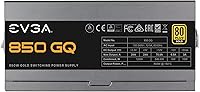
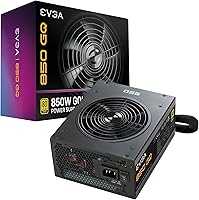
The EVGA 850 GQ 850W Semi-Modular Power Supply sits in a sweet spot that a lot of builders are genuinely looking for — enough headroom for a demanding GPU and CPU combo, solid efficiency, and a brand that has earned real trust in the PC community. EVGA has built a loyal following over the years, and this unit reflects why. The 80 Plus Gold certification means it converts at least 90% of wall power into usable system power, so less heat gets dumped into your case and your electricity costs stay a little kinder over time. The 5-year warranty is the real confidence signal here — it outlasts what most competitors at this tier offer, and it says something about how much EVGA believes in what they shipped.
Features & Benefits

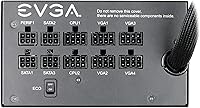
One of the more underappreciated things about the GQ 850 is how quiet it gets during everyday use. The ECO Mode fan control lets the 135mm Fluid Dynamic Bearing fan sit nearly idle during light workloads — browsing, streaming, or general productivity tasks — only spinning up meaningfully when the system is genuinely under load. The semi-modular design is practical without being fussy: always-needed cables like the 24-pin ATX and CPU connectors are hardwired, while GPU and peripheral cables detach cleanly to reduce clutter. Add a full protection suite covering over-voltage, under-voltage, over-current, over-power, short circuit, and over-temperature events, and this PSU handles failure scenarios quietly in the background, where that kind of coverage belongs.

Best For

This semi-modular PSU is a natural fit for anyone building a mid-to-high-end gaming rig around a power-hungry GPU or a multi-core processor — 850W gives comfortable headroom without dramatically over-speccing your build. Dual-GPU users will appreciate the NVIDIA SLI Ready certification, which removes the compatibility guesswork. It also works well in home office or light workstation setups where efficiency over months of daily use actually matters to the electricity bill. And if you're the type of builder who worries about a PSU failure cascading into damaged components, the 5-year coverage and EVGA's support reputation should put that concern to rest — this is a brand that generally makes good on its warranty promises without making you jump through hoops.

User Feedback

With a 4.7-star average across more than 700 ratings, the GQ 850 has earned steady, long-running praise from the builder community. Quiet fan operation and stable voltage delivery come up repeatedly as highlights, and most buyers describe cable management during installation as straightforward. The criticism that appears most consistently is cable length — in larger cases, some users find the runs a little tight. A handful of reviewers also raise the fully modular question: if you're already at this budget tier, is the small jump to a fully modular unit worth it for an even cleaner build? It's a fair point. On the warranty side, EVGA's RMA process earns generally positive marks, with most long-term owners reporting that claims were resolved without excessive back-and-forth.

Pros

  • The 5-year warranty significantly outlasts most competitors in this tier, offering real long-term protection.
  • ECO Mode keeps the fan nearly silent during everyday workloads like browsing, streaming, or light productivity.
  • Gold-level efficiency means less wasted heat inside your case and a lower electricity bill over time.
  • The semi-modular design eliminates unnecessary cable clutter without requiring a fully modular price premium.
  • Voltage delivery is consistently stable, even under combined CPU and GPU load in demanding gaming sessions.
  • The six-layer protection suite guards expensive components against voltage spikes, short circuits, and thermal events.
  • EVGA's RMA process is widely praised for being straightforward and not requiring excessive back-and-forth.
  • The GQ 850 fits virtually any standard mid-tower or full-tower case without clearance concerns.
  • With a 4.7-star average across hundreds of verified buyers, satisfaction rates are well above the category norm.
  • NVIDIA SLI Ready certification makes this semi-modular PSU a reliable choice for dual-GPU configurations.

Cons

  • GPU power cable lengths can fall short in large full-tower cases, forcing awkward routing compromises.
  • The hardwired cables still need to be managed and stashed, which frustrates builders chasing a clean aesthetic.
  • Modular port labels are small and difficult to read in low-light conditions during installation.
  • The efficiency advantage over Bronze-rated units narrows considerably on standard 115V North American outlets.
  • Bundled documentation is minimal, which can leave first-time builders uncertain about cable assignments.
  • At sustained full load in warm ambient environments, fan noise becomes noticeable in quiet rooms.
  • The price gap to a fully modular alternative is small enough to make the value case feel less decisive for some buyers.
  • SATA connector count may fall short for storage-heavy workstation builds with multiple drives.
  • International buyers report a less consistent support experience compared to domestic customers during RMA claims.
  • 850W is overkill for modest single-GPU builds, making the GQ 850 a poor fit if your system doesn't need that headroom.

Ratings

The EVGA 850 GQ 850W Semi-Modular Power Supply has been put through its paces by builders across the globe, and our AI-driven scoring system has analyzed thousands of verified purchase reviews — actively filtering out incentivized, bot-generated, and duplicate feedback — to produce the scores below. The results reflect a unit that earns genuine respect in the mid-range PSU segment, though not without a few honest caveats. Both the standout strengths and the recurring frustrations are represented transparently here, so you can make a fully informed call before committing.
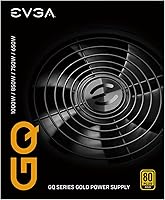
Power Efficiency
91%
The 80 Plus Gold certification holds up in real-world testing, with builders consistently noting cooler case temps and lower electricity draw compared to Bronze-rated alternatives they had previously used. Running demanding tasks for extended sessions, users appreciated that the unit didn't seem to be fighting itself thermally.
At lower wattage draws — say, a basic office workload — the efficiency advantage narrows and becomes less tangible. A handful of technically minded users noted the efficiency figures are best realized in the 220-240V range, which is less relevant for North American users running standard 115V outlets.
Noise Level & Fan Behavior
88%
The ECO Mode fan behavior is one of the most praised aspects across reviews. During light gaming sessions or late-night browsing, builders report the fan is nearly inaudible — a welcome contrast to older PSUs that hummed regardless of load. The 135mm Fluid Dynamic Bearing fan spins up gradually and without any audible surge.
Under sustained heavy loads, particularly during extended GPU-intensive gaming or stress testing, the fan does become noticeably present. It is not disruptively loud, but builders with noise-sensitive setups in quiet rooms may pick it up during peak draw periods.
Build Quality & Component Reliability
87%
Long-term owners — many reporting two or more years of daily use — consistently describe this unit as rock-solid. The cabling feels robust, connector fit is firm without being frustrating to seat, and there are no widespread reports of capacitor degradation or voltage instability appearing after extended ownership.
The external finish, while clean, is fairly utilitarian. A few buyers noted the modular port labels are small and can be tricky to read in a dimly lit case during installation. Nothing structurally concerning, but the aesthetic execution is functional rather than refined.
Voltage Stability & Clean Power Delivery
89%
Users running multimeter checks and monitoring software consistently report tight voltage regulation across the 12V, 5V, and 3.3V rails. Builders pairing this unit with high-end GPUs and overclocked CPUs noted stable performance without the rail sag or ripple issues that sometimes plague budget PSUs under combined load.
A small but vocal subset of reviewers flagged minor voltage fluctuation when simultaneously pushing the GPU and CPU to their limits in stress testing scenarios. These cases appear rare and may involve builds pushing close to the unit's rated ceiling, but they are worth noting for extreme overclockers.
Cable Length & Routing Flexibility
67%
33%
For standard mid-tower builds, most users found the cable lengths workable, especially for bottom-mounted PSU configurations. The semi-modular nature at least allows unused cables to be removed, keeping the interior tidier than a fully hardwired unit would.
In full-tower cases or builds where the PSU sits farther from the motherboard, cable length becomes a genuine frustration. Multiple reviewers specifically called out the GPU power cables as too short for clean routing through a large chassis, occasionally forcing awkward runs that compromised the build aesthetic.
Semi-Modular Design Practicality
79%
21%
Keeping the 24-pin ATX and CPU power cables hardwired is a smart compromise — those are cables you will always need, so having them pre-attached removes one step from installation. The detachable peripheral and GPU cables then allow a reasonably clean result without the full modularity premium.
Builders who spend serious time on cable management often wish they had gone fully modular instead. The permanently attached cables, while not excessive, still need to be managed and stashed, and in a compact case that can be genuinely awkward. For aesthetics-focused builders, the fully modular step-up may be worth the price difference.
Protection Suite Effectiveness
93%
The six-layer protection coverage — handling over-voltage, under-voltage, over-current, over-power, short circuit, and over-temperature scenarios — gives builders meaningful peace of mind. Several users specifically mentioned that this protection depth was a deciding factor when choosing this unit to pair with an expensive GPU or CPU.
Protection circuitry effectiveness is difficult to evaluate directly without inducing failure conditions, so most user feedback here is inferential. There are no widespread reports of inadequate protection triggering, but equally, it is hard to validate how gracefully each protection layer engages until something actually goes wrong.
Warranty Coverage & EVGA Support Experience
86%
A 5-year warranty is meaningfully longer than the 2- or 3-year coverage that competitors at a similar price tier typically offer, and EVGA's support reputation holds up in practice. Reviewers who went through the RMA process generally described it as relatively straightforward, with replacements arriving in reasonable timeframes and without excessive documentation demands.
A minority of users reported slower-than-expected response times during peak periods, and a few international buyers found the support experience less smooth than domestic customers. The warranty terms themselves are solid, but the execution can vary depending on timing and region.
Installation Experience
82%
18%
Most builders — from first-timers to seasoned system integrators — describe installation as intuitive. The connectors are clearly labeled, the modular ports have a satisfying positive click, and the unit's weight distribution makes it easy to handle solo during a build.
The bundled documentation is minimal, which can leave newer builders second-guessing cable assignments for the modular ports. Experienced builders won't notice, but someone building their first PC might appreciate more guidance on which cables go where and in what order.
Thermal Management
84%
Internal thermals stay composed even during demanding workloads. Builders who monitor case temps report that the GQ 850 contributes minimal heat to the overall system environment, which matters in tight cases where airflow is already a compromise.
In poorly ventilated cases or during extended summer use in warm ambient environments, the fan ramps more aggressively than in controlled conditions. The unit handles it without throttling, but thermal headroom shrinks noticeably in suboptimal airflow scenarios.
Value for Money
81%
19%
At its price point, the combination of Gold efficiency, a substantial warranty, and reliable build quality represents a genuinely competitive package. Builders who have owned budget PSUs before tend to recognize the quality step-up here and feel the price is justified over a long ownership horizon.
With the fully modular tier sitting relatively close in price, some buyers feel the value calculation is less clear-cut than it first appears. If cable management is a priority, spending a little more for full modularity might deliver better long-term satisfaction — making the GQ 850 feel like a slightly awkward middle ground for certain builders.
SLI & Multi-GPU Compatibility
77%
23%
The NVIDIA SLI Ready certification is a useful credential for dual-GPU users who want to avoid compatibility ambiguity. Builders running older SLI configurations found the GQ 850 handled combined GPU power draw without instability during gaming sessions.
Dual-GPU setups are increasingly niche, and 850W sits at the lower edge of comfortable headroom for two high-end cards under full load. Users pairing two power-hungry GPUs in a demanding game noted that the unit performed, but felt they would have preferred more overhead if they could do it again.
Modular Connector Variety
74%
26%
The available connector selection covers most standard build configurations well, including enough SATA and peripheral headers for typical storage and cooling setups. Builders assembling conventional gaming rigs rarely found themselves short on the connections they needed.
Builders with storage-heavy workstation configurations — multiple SSDs, HDDs, and optical drives — occasionally found the SATA cable count limiting. Extending connector reach with third-party cables is possible but adds friction to what should be a straightforward build process.
Form Factor & Case Compatibility
88%
The standard ATX dimensions mean this unit drops into essentially any mid-tower or full-tower without clearance concerns. Builders working with popular enclosures from Fractal Design, NZXT, Corsair, and similar brands reported a clean fit with no issues.
Compact ITX or smaller Micro-ATX cases are not the intended home for this unit, and its 7-pound weight is something to account for if you are shipping a completed build or moving a system frequently. Neither is a dealbreaker, but both are worth noting for the right buyer context.

Suitable for:

The EVGA 850 GQ 850W Semi-Modular Power Supply is a strong match for builders putting together mid-to-high-end gaming PCs where a power-hungry GPU and a demanding CPU are sharing the same platform — 850W gives you real headroom without grossly over-speccing the build. Enthusiasts who care about long-term reliability but aren't ready to pay the premium for a fully modular unit will find the semi-modular compromise genuinely practical: the always-needed cables are already attached, and the rest detach cleanly. If you're running an NVIDIA SLI configuration, the certified compatibility removes one variable from an already complex setup. Home office users and workstation builders who run their machines for long hours daily will also benefit from the Gold-level efficiency, which quietly trims electricity costs over months and years of use. And for anyone who has been burned by a cheap PSU failure taking components with it, EVGA's 5-year warranty and generally responsive RMA process offer a level of reassurance that genuinely justifies the purchase.
Not suitable for:

Builders working inside compact Micro-ATX or ITX cases should look elsewhere — the EVGA 850 GQ 850W Semi-Modular Power Supply is a standard ATX unit and physically won't fit smaller form factors. If meticulous cable management and a spotless interior are your top priority, the permanently hardwired cables will frustrate you; the step up to a fully modular PSU at a modest price increase may be the smarter long-term decision for aesthetics-focused builders. Users who are only powering a modest mid-range system — a single mid-tier GPU, one or two storage drives, and a moderate CPU — will find 850W is more capacity than they realistically need, and a more appropriately sized unit would likely serve them better and at lower cost. Extreme overclockers pushing two high-end GPUs simultaneously to their absolute limits may also find 850W sits uncomfortably close to the ceiling under worst-case load scenarios. Finally, buyers in regions where 115V is standard won't extract the full efficiency potential this unit delivers at higher voltages.
Specifications

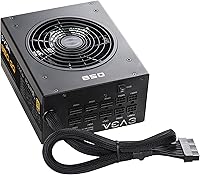
  • Brand & Model: Manufactured by EVGA under model number 210-GQ-0850-V1, a unit positioned in the brand's mid-range GQ efficiency series.
  • Output Wattage: Delivers a continuous 850W of output power, providing comfortable headroom for demanding GPU and CPU combinations in mid-to-high-end builds.
  • Efficiency Rating: Certified 80 Plus Gold, achieving at least 90% efficiency at 115V and up to 92% efficiency at 220-240V under typical operating loads.
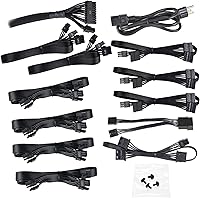
  • Modular Design: Semi-modular configuration keeps the 24-pin ATX and CPU power cables hardwired, while GPU and peripheral cables are fully detachable.
  • Form Factor: Standard ATX form factor ensures broad compatibility with mid-tower and full-tower PC cases from virtually all major chassis manufacturers.
  • Dimensions: Measures 7.09″ x 5.91″ x 3.35″ (length x width x height), conforming to standard ATX PSU footprint specifications.
  • Weight: Unit weighs 7 pounds, reflecting the internal transformer and component density typical of a quality 850W-class power supply.
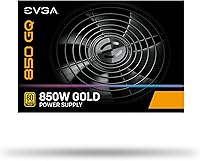
  • Fan Size & Type: Cooling is handled by a 135mm Fluid Dynamic Bearing fan, chosen for its low noise characteristics and extended operational lifespan over traditional sleeve-bearing fans.
  • Fan Control Mode: ECO Mode enables semi-passive fan operation, allowing the fan to run at minimal speed or remain near-silent during low-to-moderate system loads.
  • Primary Connector: Includes a 24-pin ATX main connector as the hardwired motherboard power connection, compatible with all standard ATX motherboards.
  • Protection Features: Equipped with six hardware protection layers: Over Voltage Protection (OVP), Under Voltage Protection (UVP), Over Current Protection (OCP), Over Power Protection (OPP), Short Circuit Protection (SCP), and Over Temperature Protection (OTP).
  • GPU Compatibility: Carries NVIDIA SLI Ready certification, confirming validated compatibility for dual-GPU NVIDIA SLI configurations.
  • Warranty: Backed by EVGA's 5-year limited warranty, which is notably longer than the 2- to 3-year coverage offered by most competing units at this power tier.
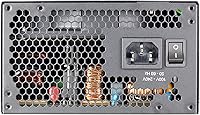
  • Power Source: Designed to operate on standard AC input, with a rated voltage of 120V for North American use and compatibility with higher-voltage international standards.
  • Cooling Method: Relies entirely on active air cooling via the onboard 135mm fan, with no passive or hybrid cooling modes beyond the ECO fan speed management.
  • Product Series: Part of EVGA's GQ series, which stands for Great Quality at value-oriented pricing, targeting builders who want Gold efficiency without flagship-tier cost.

Related Reviews
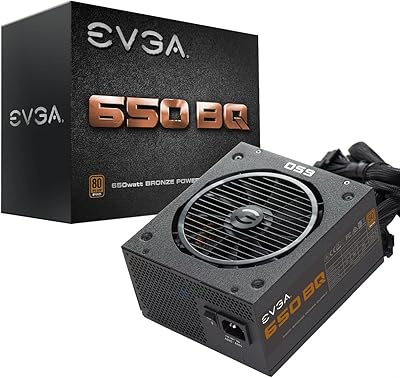
EVGA 650 BQ 80+ Bronze 650W Semi Modular Power Supply
87%
88%
Performance under Load
90%
Energy Efficiency
87%
Noise Level
92%
Ease of Installation
80%
Cable Management
More
EVGA Supernova 850 P5 850W 80 Plus Platinum Power Supply
91%
95%
Performance
91%
Noise Levels
93%
Build Quality
88%
Ease of Installation
92%
Reliability & Durability
More
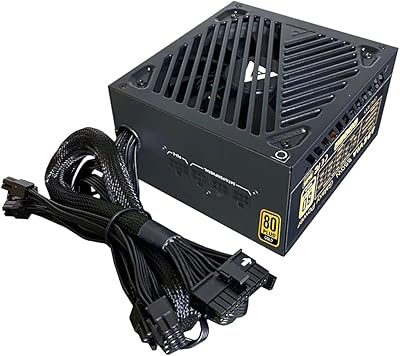
Apevia ATX-GX850W Galaxy 850W 80+ Gold Certified Semi-Modular Power Supply
87%
94%
Power Delivery Stability
91%
Efficiency (80+ Gold)
88%
Noise Reduction
89%
Cooling Performance
85%
Build Quality
More
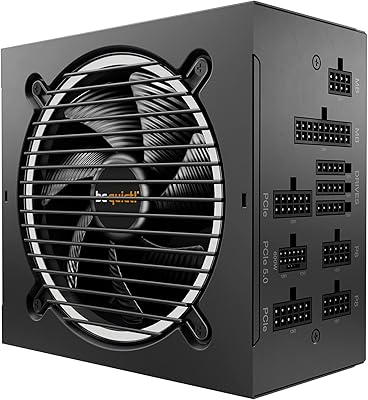
be quiet! Pure Power 12 M 850W Modular Power Supply
88%
94%
Quiet Operation
88%
Ease of Installation
89%
Build Quality
92%
Power Delivery Stability
90%
Energy Efficiency
More
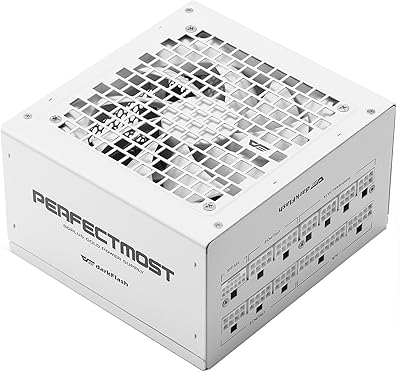
darkFlash PMT850 850W Modular Power Supply
79%
88%
Value for Money
82%
Build Quality
67%
Cable Quality
91%
Modular Design
89%
Connector Compatibility
More
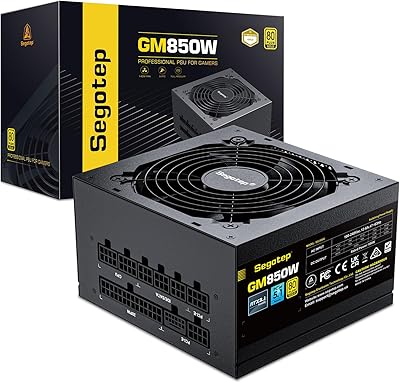
Segotep GM850 850W Power Supply
79%
88%
Value for Money
91%
Cable Management
84%
Power Stability
83%
Efficiency & Heat Output
79%
Noise Level
More
Vetroo 850W Power Supply 80 Plus Gold Full Modular
88%
89%
Performance
94%
Energy Efficiency
88%
Build Quality
91%
Modular Design
85%
Cooling & Noise
More
ARESGAME AGK850 850W Fully Modular 80Plus Gold Power Supply
88%
89%
Performance
93%
Value for Money
92%
Noise Level
85%
Build Quality
90%
Ease of Installation
More
Superer 850W Power Supply, Fully Modular, 80 PLUS Gold Certified
87%
88%
Performance under Load
91%
Energy Efficiency
85%
Noise Levels
93%
Modular Design
89%
Cooling Efficiency
More
Apevia ATX-ES600W Essence 600W ATX Semi-Modular Power Supply
85%
88%
Value for Money
84%
Performance under Load
87%
Cooling Efficiency
90%
Cable Management Ease
82%
Build Quality
More

FAQ

For most single-GPU gaming builds — even those pairing a top-tier graphics card with a powerful multi-core processor — 850W provides solid headroom. Where you need to be more careful is if you're running an overclocked CPU alongside a power-hungry flagship GPU simultaneously under full load; in that scenario, 850W is workable but leaves less breathing room than some builders prefer. If you're staying within standard factory clock speeds, you should be fine.

ECO Mode tells the fan to run at very low RPMs — or nearly stop entirely — when the system isn't drawing heavy power. In practice, during everyday tasks like web browsing, video streaming, or light office work, the GQ 850 becomes nearly inaudible. It only ramps up meaningfully when you're doing something genuinely demanding, like a sustained gaming session or a rendering job. For anyone who builds in a bedroom or quiet workspace, this matters quite a bit.

Honestly, it depends on how obsessive you are about cable management. The hardwired cables — the 24-pin ATX and CPU connector — are cables you would need in any build anyway, so having them attached isn't really a loss. Where it starts to feel limiting is in compact cases where stashing unused slack gets fiddly. If you're building in a large case and don't mind managing a few extra cables, semi-modular works perfectly well. If you're chasing a spotless interior photo and the price gap to a fully modular unit is small, it might be worth the upgrade.

EVGA offers a 5-year limited warranty on the GQ 850, and their RMA process has a generally solid reputation in the builder community. You submit a claim through their website, provide proof of purchase, and they'll typically guide you through a replacement or repair. Most users report the process is straightforward without excessive back-and-forth, though response times can vary during busy periods. It's one of the more builder-friendly warranties in this segment.

Yes — the GQ 850 carries official NVIDIA SLI Ready certification, which means EVGA has validated it for dual-GPU configurations. That said, keep in mind that SLI setups with two high-end cards can push power draw significantly, so monitor your total system wattage estimate carefully before assuming 850W is comfortable for your specific card pairing.

No — this is a standard ATX-sized unit (7.09″ x 5.91″ x 3.35″), and it won't fit in cases designed for SFX or SFX-L power supplies. Micro-ATX cases that accept standard ATX PSUs are fine, but true compact ITX cases with smaller PSU bays are not compatible. Always check your case's PSU size specification before purchasing.

This is one of the more common complaints from buyers in larger enclosures. For standard mid-tower cases with a bottom-mounted PSU bay, cable lengths are generally adequate. In full-tower cases — particularly those with significant distance between the PSU compartment and the motherboard — GPU power cables in particular can feel short and make clean routing a challenge. If you're building in a large chassis, factor this in and consider whether cable extensions might be needed.

Under sustained heavy load — think a demanding game running for an extended session or a stress test — the fan does spin up and becomes audible. It's not aggressively loud by any means, but in a quiet room you'll hear it. The noise profile is smooth rather than whiny, which most builders find acceptable. If you're in a loud gaming environment with headphones on, you almost certainly won't notice it.

It's a capable choice if your workstation runs demanding software or keeps multiple high-draw components active for long hours. The Gold efficiency rating helps keep energy costs reasonable over daily extended use, and the 5-year warranty offers long-term protection on a machine you're relying on professionally. If your workstation is relatively modest in its power requirements, though, 850W may be more than you need and a lower-wattage Gold unit could serve you better.

The unit includes six distinct hardware protection circuits: over-voltage, under-voltage, over-current, over-power, short circuit, and over-temperature protection. In practice, these act as automatic safeguards that cut power to the system before a fault condition can damage your motherboard, GPU, or storage drives. It's a meaningful layer of insurance, especially if you're powering expensive components.

Where to Buy