
Overview

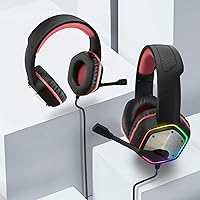
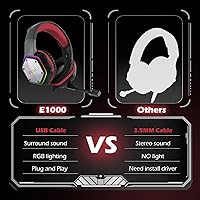
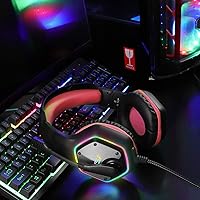
The EKSA E1000 arrived on the scene in 2020 as a no-fuss USB gaming headset aimed squarely at budget-conscious PC and console players. Plug it in and it works — no driver downloads, no software to configure. The bold red colorway and RGB lighting give it a look that fits right into a gaming setup without demanding a premium price. It competes in a crowded entry-level field, but its consistent sales rank and thousands of repeat buyers suggest it has carved out a legitimate spot. For what it asks, this gaming headset punches respectably above its weight class.

Features & Benefits

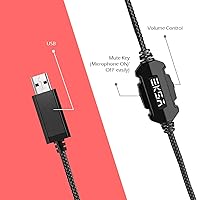
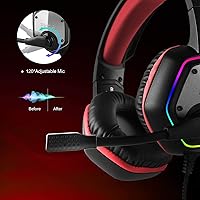
The E1000 uses a built-in USB audio chip to deliver virtual 7.1 surround sound — worth noting that this is software-emulated, not hardware-based, so expectations should be calibrated accordingly. That said, for in-game positional awareness in shooters or open-world titles, it holds its own. The 50mm drivers produce enough body to make footsteps and explosions feel present. The noise-canceling microphone is rotatable and handles voice chat well; teammates will hear you clearly without keyboard clatter bleeding through. A 2.2-meter cable keeps things slack-free at a desk or couch, and a one-key mute switch sits right on the ear cup for instant silencing.

Best For

This USB headset makes the most sense for entry-level PC gamers who want surround sound without wrestling through audio software setup. PS4 and PS5 owners will appreciate the straightforward USB compatibility — no adapters, no fiddling. Students pulling double duty between calls and gaming sessions get solid value from the mic, which holds up fine for Discord and in-game comms. The adjustable headband makes it practical in shared households where multiple people might reach for it. If RGB aesthetics matter and the budget is tight, this gaming headset checks that box without asking you to sacrifice basic comfort or functionality.

User Feedback

With over 16,000 ratings and a 4.3-star average, buyer sentiment lands firmly in positive territory. The memory foam earmuffs and reduced clamping force come up repeatedly as genuine strengths for long sessions. RGB brightness also earns consistent praise across reviews. On the downside, a fair share of buyers flag the all-plastic build as feeling lighter than expected, and the microphone, while dependable for casual voice chat, falls short for anyone hoping to stream or record. Still, several reviewers specifically mention that build quality surprised them for the price — and that kind of honest, unsolicited approval is probably the most reliable signal a budget headset can get.

Pros

  • Plug-and-play USB setup works instantly on PC, PS4, and PS5 with zero driver installation.
  • Virtual 7.1 surround sound adds genuine directional awareness for shooters and open-world games.
  • Memory foam earmuffs hold up well during multi-hour gaming or work-from-home sessions.
  • The noise-canceling mic keeps voice chat clear without letting keyboard or fan noise bleed through.
  • A 2.2-meter cable gives desktop and couch setups plenty of slack without tangling.
  • RGB lighting is bright and smooth-cycling, adding real desk presence for the price.
  • The one-key mute button sits right on the ear cup for fast, confident silencing mid-game.
  • A two-year warranty is a meaningful safety net that most headsets at this price tier skip.
  • The E1000 consistently draws favorable comparisons to pricier entry-level rivals from verified buyers.
  • Adjustable headband fits a wide range of head sizes, making it practical for shared household use.

Cons

  • The all-plastic frame flexes under pressure and lacks the structural confidence of metal-reinforced headsets.
  • No way to disable or customize the RGB lighting — it stays on whenever the headset is connected.
  • The headband adjustment slider can loosen over time and may stop holding its position reliably.
  • Mic performance breaks down in genuinely noisy environments where background interference is heavy.
  • Fixed, non-detachable cable means any fraying near the connector requires replacing the whole unit.
  • No companion app means zero EQ control or surround sound customization beyond the chip defaults.
  • USB-only connectivity rules out mobile devices, handheld Switch mode, and analog-only systems entirely.
  • Earcups can retain heat during extended sessions, which some users find uncomfortable in warmer conditions.
  • The volume wheel lacks detents, making precise incremental adjustments harder than they should be.

Ratings

The EKSA E1000 has accumulated a substantial footprint of verified buyer feedback across global markets, and the scores below reflect an AI-assisted analysis of that data — with spam, incentivized reviews, and bot activity actively filtered out. What emerges is an honest picture of where this gaming headset genuinely delivers and where it falls short for real users. Both the wins and the frustrations are represented here without softening either side.

Value for Money
91%
Buyers consistently flag this as one of the strongest points. For the asking price, the combination of virtual surround sound, RGB lighting, and a noise-canceling mic is difficult to match. Many reviewers explicitly mention it outperforms headsets they paid more for.
A small segment of buyers feel the plastic-heavy construction slightly undermines the perceived value, especially when placed next to metal-framed competitors at a similar price. The value case weakens if durability becomes an issue over time.
Sound Quality
78%
22%
The 50mm drivers produce a fuller sound profile than the price suggests, with enough low-end presence to make in-game effects feel grounded. Casual gamers playing shooters or RPGs find the virtual surround effect adds noticeable directional awareness during sessions.
Audiophiles and anyone accustomed to dedicated DAC setups will find the audio flat and compressed. The virtual 7.1 effect is software-emulated through the USB chip, and at higher volumes some users report a slight muddiness in the mid-range frequencies.
Microphone Performance
74%
26%
For Discord calls, party chat, and standard in-game communication, the mic does its job reliably. Teammates rarely complain about clarity, and the omnidirectional noise reduction handles keyboard noise and ambient room sound reasonably well during casual play.
It is not a streaming or recording microphone by any measure. Users who tried using it for content creation or video calls in noisy environments noted that the noise cancellation struggles under heavier background interference. The rotatable arm also wobbles slightly after extended use.
Comfort & Fit
83%
The memory foam protein earmuffs are a genuine highlight at this tier. Users who game for three or four hours at a stretch report minimal ear fatigue, and the adjusted clamping force means it does not squeeze aggressively on wider head shapes. A solid everyday wear experience.
A handful of users with smaller heads find the headband sits loosely even at its lowest adjustment. The over-ear cups can also retain heat during longer sessions in warmer climates, which a few reviewers described as uncomfortable after the two-hour mark.
Build Quality
63%
37%
The headset feels sturdy enough for regular daily desk use, and the cable is generously long with a reinforced connector end. Most buyers report no functional issues through months of regular use, which suggests the construction is at least durable for light to moderate handling.
The all-plastic frame is the most consistently cited criticism. It flexes under moderate hand pressure and lacks the confidence of even modestly priced metal-reinforced headsets. A few users reported creaking from the headband adjustment slider within the first few weeks of ownership.
Ease of Setup
96%
Plug-and-play is genuinely what this USB headset delivers. There are no drivers to install, no companion apps to configure, and no compatibility layers to navigate on Windows or PlayStation consoles. Users report it being recognised instantly on PS4, PS5, and Windows PCs without a single extra step.
The lack of any companion software means there is no way to tweak the EQ or surround sound profile to personal preference. Users who want to fine-tune audio output will find the experience limited to whatever the built-in chip delivers by default.
RGB Lighting
82%
18%
The RGB implementation draws consistent praise relative to the price point. The lighting cycles smoothly and is bright enough to be visible even in lit rooms, which matters for streamers or users who care about desk aesthetics. It adds a visual credibility that punches above the cost.
There are no controls to customize lighting modes or turn the RGB off without unplugging. Users who prefer a cleaner look during daylight hours or work calls have no option to disable it, which a few found mildly frustrating.
Cable Quality & Length
79%
21%
The 2.2-meter cable is one of the more practical design decisions here. It gives desktop users clean slack management and console players sitting a reasonable distance from their setup enough freedom to move without yanking the headset. The cable itself feels reinforced at the stress points.
The cable is fixed and non-detachable, so any fraying or connector damage means replacing the whole unit. A small number of users reported the USB connector fitting loosely in certain PC front-panel ports, leading to intermittent audio dropouts.
Noise Isolation
69%
31%
The over-ear design provides passive isolation that is adequate for blocking moderate ambient noise — a fan running, a TV in the background, or a busy household. For the core gaming use case in a home environment, it creates enough separation to stay focused.
In genuinely noisy environments — open offices, shared dorm rooms, or loud households — the passive isolation starts to break down. The earcups do not create an airtight seal on all head shapes, and sound bleed becomes noticeable at higher volumes.
Compatibility
88%
USB connectivity covers PC, PS4, and PS5 without any adapters, which is exactly what its target audience needs. The breadth of compatible devices means it travels well between a gaming rig and a console setup without carrying extra cables or dongles.
The USB-only connection excludes mobile devices, Nintendo Switch in handheld mode, and older analog-only systems. Users hoping for a single headset across all their devices will hit a wall fairly quickly outside the core PC and PlayStation ecosystem.
Controls & Usability
81%
19%
The inline volume wheel and one-key mute button are positioned intuitively on the ear cup, making mid-game adjustments quick without breaking focus. The mute toggle has a satisfying tactile click that gives clear confirmation without looking down.
The volume dial lacks detents, making precise incremental adjustments slightly hit-or-miss. A few users also noted the mute button is close enough to the volume wheel that accidental presses happen occasionally during heated gaming moments.
Headband Adjustability
76%
24%
The sliding headband covers a wide enough range to accommodate most adult head sizes comfortably, and the weight distribution feels balanced enough that users rarely report top-of-head pressure during standard sessions. The adjustment mechanism moves smoothly out of the box.
The headband adjustment slider lacks a locking mechanism, so it can creep during use on certain head shapes. Over time, the tension in the slider loosens, and some users report it no longer holding its set position as firmly after several months of regular adjustments.
Warranty & Support
84%
A two-year warranty is above the standard for this price bracket and gives buyers a meaningful safety net. User reports about customer support interactions tend to be positive, with replacement or refund resolutions handled within a reasonable timeframe.
Some buyers note that warranty claims require back-and-forth email communication without a dedicated support portal, which can feel slow. International buyers outside major markets have reported longer resolution times and occasional shipping complications for replacements.

Suitable for:

The EKSA E1000 is a smart pick for anyone stepping into PC or console gaming without wanting to spend heavily upfront. Students pulling double duty between online classes and evening gaming sessions will find the plug-and-play USB setup genuinely convenient — no driver hunting, no configuration headaches, just plug in and get going. PS4 and PS5 owners specifically benefit from the straightforward USB compatibility, which sidesteps the adapter frustrations that plague some competing headsets in this range. The memory foam earmuffs and reduced clamping force make it a reasonable choice for longer sessions, whether that is a weekend gaming marathon or back-to-back video calls. Households where multiple people share a single headset will also appreciate the adjustable headband, which accommodates a wide range of head sizes without fuss. If RGB aesthetics matter to you and the budget is firm, this gaming headset delivers that visual personality without making you choose between looks and basic functionality.

Not suitable for:

The EKSA E1000 is not the right call for buyers who prioritize audio fidelity or professional-grade microphone output. The virtual 7.1 surround sound is processed through a built-in USB chip rather than dedicated hardware, so anyone accustomed to a proper DAC or a high-impedance headphone setup will likely find the audio underwhelming. Content creators, streamers, or remote workers who rely on clear, broadcast-quality voice capture should look elsewhere — the mic handles casual in-game chat well, but it is not built for recording or streaming environments where ambient noise rejection and tonal accuracy really matter. The all-plastic construction is also worth weighing carefully if longevity is a priority; buyers who are hard on their gear or expect a headset to survive years of daily use may find the frame less reassuring than metal-reinforced alternatives. Finally, anyone who needs wireless freedom or wants to use a single headset across mobile devices and a Nintendo Switch will hit real limitations here, since this USB headset has no Bluetooth support and no analog fallback.

Specifications

  • Connector: The headset uses a USB-A connector, enabling plug-and-play audio on compatible PCs, laptops, and PlayStation consoles without additional adapters.
  • Driver Size: Each ear cup houses a 50mm dynamic neodymium driver, which helps reproduce a broad frequency range suitable for gaming audio.
  • Impedance: The headset operates at 32 Ohm impedance, making it easy to drive directly from a USB port without requiring a dedicated amplifier.
  • Surround Sound: Virtual 7.1 surround sound is processed through a built-in USB audio chip, requiring no software installation or external sound card.
  • Microphone Type: The microphone is omnidirectional and noise-canceling, mounted on a rotatable arm that can be repositioned or folded away when not in use.
  • Mute Control: A dedicated one-key hardware mute button is located on the ear cup, providing instant microphone silencing without navigating in-game menus.
  • Volume Control: An inline analog volume wheel on the cable allows continuous audio adjustment during use without interrupting gameplay or active calls.
  • Cable Length: The fixed, non-detachable cable measures 2.2 meters, providing enough reach for most desktop, couch, and console gaming configurations.
  • Ear Cushion: The earmuffs are constructed from memory protein foam wrapped in a soft synthetic material designed to reduce pressure during extended wear.
  • Headband: The headband is adjustable with a sliding mechanism and is engineered to distribute weight evenly while reducing lateral clamping force on the head.
  • RGB Lighting: Both ear cups feature built-in RGB lighting that activates automatically when the headset is connected, with no user-configurable mode controls.
  • Weight: The headset weighs approximately 0.46 kg (around 1.01 lbs), keeping it lightweight enough for prolonged gaming or work sessions.
  • Compatibility: The headset is confirmed compatible with Windows 7, 8, and 10 PCs, PS4, PS5, and any laptop or device with a standard USB-A audio port.
  • Bluetooth: This headset is wired-only and does not support Bluetooth or any other wireless connectivity standard.
  • Water Resistance: The headset carries no water resistance rating and should be kept away from moisture, liquids, and high-humidity environments.
  • Warranty: EKSA provides a two-year manufacturer warranty alongside 24-hour customer support for defects and product-related issues.
  • Audio Driver Type: The drivers use a dynamic driver configuration, which is the standard design for gaming headsets in this price category.
  • Earpiece Shape: The ear cups feature a rounded, over-ear form factor intended to fully enclose the ear rather than resting against it.

Related Reviews
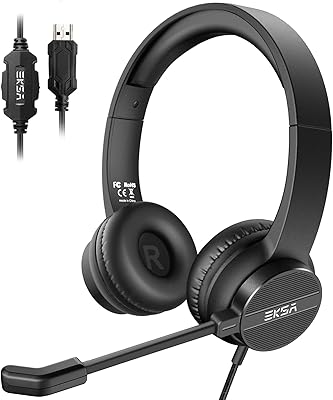
EKSA H12E USB Headset
77%
86%
Microphone Clarity
78%
Noise Cancellation Performance
83%
Wearing Comfort
61%
Build Quality & Durability
91%
Value for Money
More
EKSA H2-D USB Headset
72%
68%
Microphone Clarity
61%
Noise Cancellation (ENC)
83%
Wearing Comfort
59%
Build Quality
54%
Cable Durability
More
EKSA H1 Noise Cancelling Bluetooth Headset
86%
89%
Noise Cancellation Performance
91%
Comfort for Extended Use
87%
Battery Life
93%
Range & Connectivity
72%
Microphone Quality
More
EKSA H6-D
EKSA H6-D
81%
88%
Microphone Noise Cancellation
91%
Battery Life
86%
Call & Voice Clarity
83%
Connectivity & Compatibility
79%
Comfort & Fit
More

FAQ

Yes, it connects directly to the PS5 via USB-A and is recognised immediately without any setup steps. Just plug it into the USB port on the front of the console and audio routes through it automatically.

No software or driver installation is required at all. The EKSA E1000 has a built-in USB audio chip that handles everything on-device, so the virtual 7.1 surround sound is active the moment you plug it in. It is genuinely plug-and-play in the truest sense.

Not reliably. This headset uses a USB-A connector only, which means it will not work with the Switch in handheld mode or with smartphones that use a 3.5mm jack or USB-C audio. It is designed specifically for PC and PlayStation use cases.

Honestly, no — and it is worth being upfront about that. The mic performs well for in-game voice chat, Discord calls, and casual online communication, but it is not built for broadcast-quality audio. Background noise rejection starts to struggle in louder environments, and the tonal quality is not what you would want for content creation.

Unfortunately, no. The RGB lighting activates automatically when the headset is plugged in and there are no physical controls or software settings to disable or change it. If you need lighting-off functionality, this USB headset does not offer that option.

Most users find it comfortable for extended sessions. The memory foam earmuffs distribute pressure well, and the reduced clamping force means it does not squeeze tightly on wider head shapes. That said, some users report mild heat buildup in the ear cups after a couple of hours, especially in warmer rooms.

The cable is 2.2 meters long, which is generous enough for most setups. However, it is fixed and non-detachable, so if it frays or the connector gets damaged, there is no simple replacement — the whole unit would need to be swapped out.

It fits most adult head sizes without issue, and the sliding adjustment mechanism covers a reasonably wide range. A few users with particularly large heads have noted it sits at the upper limit of the adjustment, but for the majority of adults it fits comfortably.

The two-year warranty covers manufacturing defects and product failures under normal use conditions. Claims are typically handled through EKSA customer support via email, and the brand has a reasonable track record of resolving issues with replacements or refunds. International buyers may experience slightly longer resolution times depending on their region.

The mute button sits on the ear cup and uses a simple one-press toggle, so you can silence your mic instantly without taking your eyes off the screen. It has a tactile click that confirms the action. The only minor issue is that it sits close to the volume wheel, so accidental presses do happen occasionally during fast-paced gameplay.