
Overview

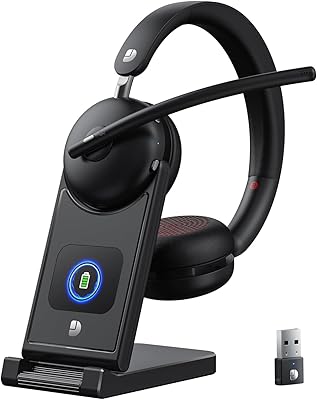
The Dytole DY106 enters the crowded sub-$60 work headset space with a straightforward pitch: reliable wireless audio for people who spend their days on calls. Dytole is a relatively new name, so there is no long track record to lean on — but the hardware specs tell a practical story. The dual-connection setup — Bluetooth 5.3 alongside a plug-and-play USB dongle — gives this wireless work headset broader reach than many competitors at the price. The on-ear form factor keeps things lightweight and portable, which matters if you move between a home desk and a shared office throughout the week.

Features & Benefits

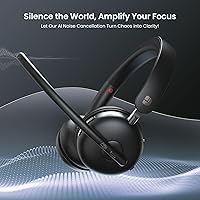
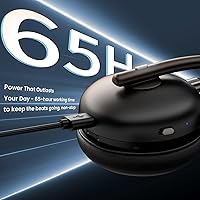
The AI noise-cancelling microphone is the headline feature here. It filters ambient sound from your voice feed, so colleagues hear you and not the café espresso machine behind you. Worth clarifying though: this is microphone-side filtering, not passive ear isolation — outside noise still reaches your ears. The battery life is genuinely impressive for this price tier; a full charge powers roughly eight full eight-hour workdays, meaning most users will rarely think about plugging in. The USB dongle is a quiet but practical inclusion, especially for office desktops where Bluetooth can be unreliable. A flexible mic arm and foldable earcups round out a sensibly designed package.

Best For

This on-ear headset hits a sweet spot for call center agents and work-from-home professionals who need dependable voice quality without overspending. If your day involves bouncing between a desktop PC and a smartphone — jumping from a Zoom call to a client phone call — the dual-connection options make that transition less clunky. It performs reasonably well in moderately noisy environments, like a home office with background TV noise. One honest caveat: if music quality matters to you, look elsewhere. This is a communication-first device. Buyers who prioritize all-day wearability and battery endurance over audiophile sound will find the most value here.

User Feedback

Buyers who have used the Dytole headset for extended shifts tend to highlight mic clarity on calls as a genuine strong point — callers on the other end reportedly have little trouble hearing them clearly. Easy pairing is another frequent compliment, with both connection methods taking only seconds to set up. On the downside, some users mention the on-ear design starts pressing uncomfortably after four or five continuous hours, worth factoring in for long workdays. Sound isolation in genuinely loud spaces is also limited. Build durability feedback remains thin given how new the brand is, and a handful of buyers have noted real-world battery life falling slightly short of the headline figure.

Pros

  • The AI mic filtering keeps your voice sounding clean and clear on calls, even with background household noise present.
  • Battery endurance is outstanding for this price tier — most users can work a full week without charging.
  • The USB dongle inclusion makes this wireless work headset genuinely plug-and-play on desktops that lack reliable Bluetooth.
  • Bluetooth 5.3 provides a stable, responsive connection within a comfortable range for moving around a home office.
  • Folding earcups make the headset compact enough to toss in a laptop bag without needing a dedicated case.
  • USB-C charging means you can top up with cables you already own — no proprietary connectors to track down.
  • The adjustable boom mic arm lets you dial in voice pickup positioning without fussing with complicated settings.
  • Pairing is consistently fast and uncomplicated across phones, tablets, and computers.

Cons

  • On-ear pressure becomes uncomfortable for many users after four or more continuous hours of wear.
  • Passive sound isolation is weak — surrounding noise reaches your ears freely in louder environments.
  • The mute button lacks clear tactile feedback, making it easy to stay unmuted on a call by mistake.
  • No carry pouch or protective case is included, which is a genuine oversight for a portable, foldable headset.
  • Real-world battery life can fall noticeably short of the headline figure at higher volume levels.
  • Switching between Bluetooth and dongle modes requires a manual step that interrupts workflow during the transition.
  • Brand support infrastructure is unproven — long-term warranty service and replacement part availability remain open questions.
  • Audio playback quality is flat and narrow, making it a poor fit for any listening beyond calls and spoken content.

Ratings

The scores below for the Dytole DY106 were generated by AI after analyzing verified buyer reviews from multiple global markets, with spam, incentivized, and bot-generated feedback actively filtered out. Every category reflects the honest spread of real user experiences — strengths are credited where earned, and recurring frustrations are not glossed over. The result is a balanced snapshot of what this wireless work headset actually delivers day to day.

Microphone Clarity
83%
Call center users and remote workers consistently report that colleagues can hear them clearly even in moderately busy home environments. The AI mic filtering does a solid job stripping out keyboard clatter and light background chatter during video calls and phone meetings.
In genuinely noisy settings — think a loud open-plan office or a coffee shop during peak hours — the mic filtering struggles to keep up. Some users note that ambient sound bleeds through noticeably when background noise gets intense.
Battery Life
88%
For most people working eight-hour days, a full charge realistically lasts well over a week before needing to plug in again. That kind of endurance takes battery anxiety completely off the table, which is a genuine relief for users who hate managing device charging schedules.
A handful of buyers report that real-world longevity falls short of the headline figure, particularly when using the headset at higher volumes or with active mic features running continuously. The gap is not dramatic, but worth noting if you rely on the maximum claim.
Comfort Over Long Sessions
71%
29%
Out of the box and through the first couple of hours, the faux leather earcups feel soft and the headband sits without obvious pressure points. Users doing two-to-three hour call blocks generally report no complaints, and the lightweight build helps during shorter stretches.
After four or five continuous hours, on-ear fatigue becomes a recurring theme in user feedback. The clamping force that feels fine initially starts to press noticeably by the end of a long shift, which is a real concern for full-time call center agents wearing this all day.
Wireless Connectivity
86%
The inclusion of both Bluetooth 5.3 and a USB dongle gives this headset genuine versatility that many rivals skip at the price. PC users in particular appreciate the dongle option, which sidesteps the unreliable Bluetooth stacks found on many corporate desktops and older laptops.
A small number of users report occasional dropout when moving to the far edge of the wireless range, particularly through walls. The stated 15-meter range holds up well in open spaces but should be treated as a best-case figure in typical indoor environments.
Value for Money
81%
19%
Stacking what this on-ear headset offers against its price bracket, the combination of dual connection options, strong battery endurance, and a functional noise-cancelling mic is hard to beat without spending significantly more. Budget-conscious buyers consistently flag this as a smart purchase for work use.
The value equation weakens slightly when compared against occasional sales pricing from more established brands. Buyers who caught a deal on a Jabra or Poly headset in the same range sometimes feel the Dytole falls a step behind in overall polish and software ecosystem.
Build Quality
74%
26%
The stainless steel headband reinforcement gives the frame a sturdier feel than pure plastic rivals at the same price. The adjustable joints move smoothly and the earcup hinges feel solid enough for daily folding and unfolding without loosening quickly.
Faux leather is a durability wildcard — early feedback is positive but there is not yet enough long-term data to say confidently how the earcup material holds up after a year of daily use. The brand is too new for meaningful wear-and-tear reviews to have accumulated.
Ease of Pairing
89%
Users across different device types — Windows PCs, iPhones, Android phones — consistently describe the pairing process as quick and trouble-free. The USB dongle in particular is genuinely plug-and-play, with no driver installation needed on most systems.
Switching between Bluetooth and dongle modes requires a manual step that a few buyers found slightly clunky when toggling mid-workday. It is a minor inconvenience rather than a deal-breaker, but multi-device jugglers may notice the friction.
Sound Isolation (Passive)
58%
42%
For quiet to moderate home office environments, the on-ear fit blocks out enough ambient sound to stay focused during calls and light music listening. Users in calm settings rarely complain about external noise bleeding in.
This is not an over-ear design, and it shows in louder environments. Open offices, coffee shops, and households with kids or TVs in the background push past what the earcups can passively block. Buyers who need strong isolation should look at over-ear alternatives.
Audio Playback Quality
63%
37%
For voice calls, podcasts, and background music during work sessions, the dynamic drivers deliver a clear and functional listening experience. Speech reproduction is well-tuned, which makes sense given the work-first design intent.
Music listeners will find the sound profile flat and lacking in bass depth or spatial detail. This headset was never designed to compete with dedicated audio gear, and buyers who expected richer playback from the specs came away disappointed.
Microphone Adjustability
79%
21%
The boom arm rotates through a wide range of positions, letting users place the mic close to their mouth without awkward repositioning. This matters on calls — better mic placement directly improves how you sound to the person on the other end.
The mic arm does not lock into precise angles, so it can drift slightly after repeated adjustment. Users with very specific positioning preferences may find themselves nudging it back into place more often than they would like.
Controls & Usability
77%
23%
The one-touch mute button is well-placed and responsive — a small but meaningful detail during live meetings when you need to drop off quickly. Volume and playback controls work reliably across paired devices without needing to touch the source device.
Button feedback is minimal, so in the heat of a busy call it is not always obvious whether mute has activated or not. A few users have accidentally stayed live on calls thinking they were muted, which underlines the need for a clearer tactile or audio confirmation.
Portability & Storage
82%
18%
The foldable earcups flatten the headset into a compact footprint that fits easily into a laptop bag or backpack side pocket. For hybrid workers who carry gear between locations, this is a genuinely useful design choice rather than just a box-tick feature.
No carry pouch or case is included in the box, which feels like an oversight for a headset marketed partly at people on the move. Tossing it loose in a bag without protection risks scratching the earcup surface over time.
Charge Speed & Convenience
85%
A two-hour charge to full is fast enough that topping up during a lunch break is a realistic option. USB-C charging means most users already have a compatible cable lying around, removing the frustration of proprietary connectors.
There is no fast-charge or pass-through functionality, so the headset is fully offline during charging. For users who let the battery drain completely, a two-hour dead window mid-workday could be inconvenient without a backup option.
Brand Credibility
61%
39%
Early adopters who took a chance on the Dytole headset generally report that the hardware delivers on its core promises. Positive word-of-mouth is beginning to build, and the product's ranking movement suggests growing buyer confidence.
Dytole simply does not have the track record or service infrastructure of established headset brands. Warranty support, long-term firmware updates, and replacement parts availability are all open questions that cautious buyers reasonably flag before committing.

Suitable for:

The Dytole DY106 is a practical choice for remote workers, hybrid employees, and call center agents who spend the bulk of their day on voice calls and virtual meetings rather than listening to music. If your setup involves switching between a desktop PC and a smartphone throughout the workday, the dual-connection design — Bluetooth plus a plug-and-play USB dongle — genuinely solves a real problem without requiring any technical fiddling. People working in moderately noisy environments, like a home office with background household noise or a semi-busy open-plan floor, will find the mic filtering handles those conditions reasonably well. The exceptional battery endurance means most users can go well over a week of full workdays without reaching for the charger, which removes one small but persistent stress from the day. It also suits budget-conscious buyers who want a capable, foldable, travel-friendly headset without locking into a long-term commitment to a premium brand.

Not suitable for:

Buyers who wear a headset for six or more continuous hours daily should think carefully before committing to the Dytole DY106, as the on-ear design starts creating noticeable pressure fatigue well before a full shift ends — an over-ear alternative would serve those users better. Anyone working in genuinely loud environments, like a busy warehouse, a noisy call floor, or a public space, should also reconsider: the mic filtering helps your outgoing voice, but passive sound isolation is limited, meaning surrounding noise still reaches your ears freely. Music lovers and audio-focused users will be underwhelmed by the playback quality, which is tuned for speech clarity rather than richness or depth. Those who need proven after-sales support, warranty reliability, or compatibility with enterprise device management systems may find the brand's limited track record a real concern. Finally, buyers who want seamless multi-device pairing with instant switching between three or more active devices will likely find the manual mode-switching process more friction than they want.

Specifications

  • Bluetooth Version: The headset uses Bluetooth 5.3, offering a stable and power-efficient wireless connection compared to older Bluetooth standards.
  • Wireless Range: The wireless connection is rated up to 15 meters in open space, giving users reasonable freedom to move around a home office or workspace during calls.
  • Battery Life: A full charge delivers up to 65 hours of use, which translates to roughly eight full eight-hour workdays before needing to recharge.
  • Charge Time: The headset charges from empty to full in approximately two hours via the included USB-C cable.
  • Charging Port: Charging is handled through a USB-C port, compatible with the vast majority of modern charging cables and adapters.
  • Connection Options: The headset supports both Bluetooth pairing and a plug-and-play USB dongle, allowing flexible connection to devices with or without native Bluetooth support.
  • Microphone: The boom arm microphone is adjustable up to 135 degrees and uses AI-based noise filtering to reduce background sounds from the outgoing audio signal.
  • Form Factor: This is an on-ear headset, meaning the earcups rest on the outer ear rather than surrounding it, resulting in a lighter and more compact design.
  • Driver Type: Audio is delivered through dynamic drivers, which are well-suited for voice reproduction and general-purpose listening at this price tier.
  • Impedance: The headset has an impedance rating of 32 Ohm, making it compatible with standard consumer audio outputs without requiring additional amplification.
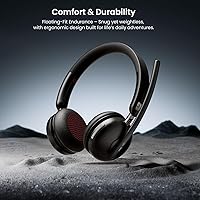
  • Materials: The earcups are covered in faux leather for comfort during extended wear, while the headband incorporates a stainless steel frame for structural durability.
  • Weight: The headset weighs approximately 0.37 kg (13.1 oz), sitting in a mid-range weight class that balances build solidity with wearability.
  • Compatible Devices: The headset is designed to work with smartphones, tablets, laptops, desktop computers, and landline telephones that support Bluetooth or USB connectivity.
  • Controls: Physical controls include push-button inputs for mute, playback management, and voice assistant activation, all operable without touching the connected device.
  • Water Resistance: The headset carries no official water resistance or ingress protection rating and should be kept away from moisture, rain, and wet environments.
  • Package Contents: The box includes the wireless headset, a USB dongle, a USB-C charging cable, and a printed user manual.
  • Earcup Design: The earcups are foldable and flatten for compact storage, making the headset easier to pack into a bag or store in a drawer when not in use.
  • Model Number: The official model designation is DY106, manufactured and sold under the Dytole brand.

Related Reviews
Dytole DY107
Dytole DY107
82%
93%
Battery Life
88%
Microphone Quality
74%
Comfort & Fit
91%
Sound Quality for Calls
86%
Connectivity & Range
More
Dytole TV001 Wireless Headphones for TV
86%
88%
Sound Quality
90%
Comfort & Fit
94%
Battery Life
85%
Ease of Setup
76%
Bluetooth Range
More

FAQ

Yes, the Dytole DY106 works with both platforms out of the box. Whether you connect via Bluetooth or the USB dongle, your computer will recognize it as a standard audio device, so Teams and Zoom will pick it up automatically in their audio settings without any driver installation.

Not simultaneously — the headset connects to one active audio source at a time. You can switch between the dongle connection on your PC and a Bluetooth connection on your phone, but you will need to manually toggle between them rather than having both live at once.

These are two separate things, and it is worth keeping them straight. The AI noise cancellation works on the microphone side, filtering background sounds out of what others hear when you speak. It does not block outside noise from reaching your ears while you listen — for that, you would need active noise cancellation on the speaker side or a more isolating over-ear design.

For the first few hours it is generally comfortable, and the faux leather earcups feel soft against the ears. The issue is the on-ear design — after about four to five hours of continuous wear, the pressure starts to build and most users find they need to take a break. If your entire day is back-to-back calls, an over-ear headset might serve you better for marathon sessions.

Yes, it pairs with both via standard Bluetooth. There are no brand-specific apps or proprietary pairing protocols involved, so the process is the same regardless of which phone you use — go to Bluetooth settings, search for the headset, and connect.

Given the large battery capacity, running it completely flat would take an unusually long stretch of continuous use. If you do catch it low, even a 30-minute charge should give you a meaningful amount of runtime to get through a meeting or call block while it continues charging.

In most cases, yes. The dongle is designed to be plug-and-play and does not require manual driver installation on modern operating systems, including recent versions of Chrome OS and Windows. If you are on a very old or locked-down corporate system, it is worth checking your IT policy on USB audio devices first.

For faux leather earcups, a soft damp cloth with a small amount of mild soap works well for wiping down the surface. Avoid soaking the material or using alcohol-based cleaners, which can cause the faux leather to dry out and crack faster. Regular light cleaning will help preserve the surface finish over long-term use.

This is one area where the headset gets mixed feedback. The button click itself is tactile, but there is no clear audio tone or LED indicator to confirm mute is active. A few users have caught themselves unmuted when they thought they were muted, so it is worth glancing at your meeting software to double-check the mute status until you get used to the feel.

Established brands carry the advantage of proven long-term durability, deeper software integration, and more reliable after-sales support — things that are hard to fully evaluate on a newer brand. In terms of raw hardware specs and day-to-day call performance, this on-ear headset holds up respectably. Where it may fall short is in the finer polish of controls, the quality of companion software, and the confidence that comes from an established warranty track record.