Overview

The Dish Hopper 3 4K HD DVR is Dish Network's most capable whole-home receiver, built for households that take TV seriously. Before anything else, one thing needs to be clear: this unit requires an active Dish subscription to function — it is not a standalone device you can simply plug in and use independently. It is also tightly tied to specific hardware. The Hybrid 1000.2 LNB and Hybrid Solo Hub are both mandatory; older LNBs and previous Solo Nodes will not work, full stop. This is a lease-or-buy option that operates entirely within Dish's ecosystem, and understanding that upfront saves a lot of frustration later.

Features & Benefits

The headline spec here is the 16 simultaneous tuners — which means a busy household could have five people each recording multiple different shows at the same time without a single scheduling conflict. That is a real, practical difference from older two- or four-tuner DVRs, not just a number on a spec sheet. Backing all of that is 2TB of internal storage, enough for up to 500 hours of HD content. The unit also supports 4K UHD output, SportsBar Mode for watching four live channels at once on a single screen, and up to six Joey client devices distributed across the home. Remote viewing through the Dish Anywhere app rounds the package out well.

Best For

This whole-home DVR is squarely aimed at large, busy households — think four or more people with genuinely different viewing schedules and zero interest in negotiating over the TV. Sports fans stand to gain a lot from SportsBar Mode, especially during weekends when several games overlap. It also makes a strong case for existing Dish subscribers upgrading from an older Hopper model who want more tuners and storage without changing providers. If you rely on Sling for remote viewing and want a deep DVR library waiting at home, this setup covers both angles well. Multi-TV homes planning to run Joey clients throughout will get the fullest return on the investment.

User Feedback

Owners who have lived with Dish's flagship receiver for a year or more tend to praise it most for ending the scheduling arguments that plague smaller DVR setups — no recording conflicts is a recurring and genuine highlight in long-term reviews. Storage depth also earns consistent appreciation from former users of older, smaller-capacity units. The criticism, though, splits into two distinct categories worth separating: frustration with the device itself — mainly the complicated initial setup and the surprise of discovering old LNB equipment is incompatible — and frustration with Dish's broader subscription costs, which is really a complaint about the service, not the hardware. Long-term reliability feedback leans positive, with customer support experiences being more mixed.

Pros

  • Recording 16 shows simultaneously eliminates scheduling conflicts entirely, even in the busiest households.
  • 2TB of storage means most families will go months without needing to delete anything.
  • SportsBar Mode is a genuine differentiator — watching four live channels at once on a single screen is hard to find elsewhere.
  • Up to 6 Joey clients let every TV in the house pull from the same DVR library without extra fees per room.
  • Long-term hardware reliability is strong; multi-year owners report very few physical failures.
  • The Dish Anywhere app gives real, functional remote access to your full DVR library while traveling.
  • 4K UHD output future-proofs the setup for compatible televisions and content.
  • Upgraders from older Hopper models notice an immediate and meaningful improvement in capacity and performance.

Cons

  • An active Dish Network subscription is non-negotiable — this hardware is completely non-functional without one.
  • Upgraders from older Hopper hardware face mandatory LNB and Solo Hub replacements, adding unexpected costs mid-installation.
  • The app experience on slow mobile connections is unreliable, with frequent buffering and resolution drops.
  • Native 4K satellite content through Dish remains limited, making the 4K feature less impactful day-to-day than it sounds.
  • The user interface feels noticeably dated compared to modern streaming device software.
  • Battery life on the included remote drains faster than expected under regular daily use.
  • Setup complexity catches many buyers off guard, particularly those attempting a self-install upgrade.
  • Customer support quality is inconsistent, especially when billing or unexpected hardware costs become a dispute.
  • The unit is physically large and heavy, which can be awkward to fit into smaller or tightly packed AV setups.
  • Solo or two-person households will almost certainly pay for far more tuner and storage capacity than they will ever use.

Ratings

The Dish Hopper 3 4K HD DVR has been put through its paces by thousands of verified buyers across the United States, and our AI has analyzed that feedback carefully — filtering out incentivized reviews, spam, and one-off outliers — to produce the honest scorecard below. Ratings reflect real household experiences across tuner performance, setup friction, long-term reliability, and ecosystem fit. Both the genuine strengths and the recurring frustrations are represented here without softening either side.
Tuner Capacity
96%
Households with four or more active viewers consistently report that scheduling conflicts simply stopped being a problem after switching to the Hopper 3. The ability to record 16 simultaneous channels means Sunday afternoons — NFL, soccer, NASCAR, and a kids show all at once — no longer require compromise or negotiation over the remote.
A small number of users in single or two-person households noted that 16 tuners is far more than they will ever realistically use, making the premium feel disproportionate to their needs. For lighter viewers, the tuner count alone does not justify the overall cost of entry into the Dish ecosystem.
Storage Capacity
91%
Two terabytes of onboard storage genuinely changes how people manage their DVR libraries. Reviewers who previously had to delete recorded content weekly to free up space describe the Hopper 3 as liberating — sports fans in particular appreciate being able to archive entire playoff runs without touching the delete button.
A handful of power users who record in 4K found that storage fills faster than expected with ultra-HD content. There is no straightforward external storage expansion path, which becomes a real limitation for anyone who records heavily across multiple genres over several months.
4K UHD Playback
78%
22%
On a compatible 4K television, the picture quality is noticeably sharp, and users upgrading from older Hopper models frequently mention the improvement as one of the most immediately visible differences. Live sports content in 4K, where available via Dish, draws particularly strong praise.
The 4K content library through Dish remains limited compared to streaming platforms, and several buyers expressed disappointment that native 4K satellite broadcasts are not as widely available as the feature implies. The upgrade feels more like future-proofing than a day-one benefit for most subscribers.
SportsBar Mode
82%
18%
Sports enthusiasts who discovered SportsBar Mode tend to become its loudest advocates. Watching four live games simultaneously on one screen — without switching inputs or managing multiple devices — is something reviewers describe as genuinely useful during busy weekend afternoons or playoff stretches.
Casual users and non-sports households find SportsBar Mode confusing and rarely touch it after the first few tries. The audio management between four simultaneous streams is also a consistent complaint, with users noting that switching active audio between channels is not as intuitive as it should be.
Whole-Home Joey Integration
84%
Families with TVs in multiple rooms consistently highlight the Joey client system as one of the Hopper 3's most practical advantages. Being able to watch or resume recorded content in the bedroom, kitchen, or basement — all from the same DVR library — without any extra subscription fee per room is genuinely appreciated.
Setup across multiple rooms requires professional installation for most users, and a few reviewers noted that Joey performance can degrade when the home network or satellite signal experiences any instability. The wired versus wireless Joey distinction also causes confusion during the purchasing process.
Remote Viewing via Dish Anywhere
74%
26%
Frequent travelers and commuters who use the Dish Anywhere app speak positively about being able to access their full DVR library from a smartphone or tablet. The Sling integration works reliably on strong Wi-Fi or LTE connections, and the app interface receives reasonable marks for being easy to navigate.
App performance on slower mobile connections is a repeated complaint, with buffering and resolution drops making it less dependable than dedicated streaming services. Several users also noted that the app has not kept pace with the hardware in terms of design polish and feature updates.
Setup & Installation Complexity
51%
49%
Users who went through a professional Dish installation report that once everything was running, the system worked exactly as advertised. For those starting fresh with a new Dish subscription, the technician-assisted setup removed most of the guesswork from the process.
Existing Dish subscribers upgrading from older Hopper models were frequently blindsided by the mandatory hardware swap — the Hybrid 1000.2 LNB and Hybrid Solo Hub are both required, and neither is cheap or simple to replace. Multiple reviewers described the compatibility wall as the most frustrating part of the entire experience, and it surfaces repeatedly in negative reviews.
Hardware Compatibility
47%
53%
For buyers setting up a brand-new Dish installation with all current equipment, compatibility is a non-issue. The system works cleanly with the correct Hybrid LNB and Solo Hub, and first-time Dish subscribers rarely encounter the hardware friction that upgrades create.
This is the most consistently flagged pain point in the entire review pool for this device. Upgraders from older Hopper systems frequently discover mid-installation that their existing LNB and Solo Node are incompatible, leading to unexpected additional hardware costs and delays. Dish's in-store and online listings do not always make this limitation prominent enough before purchase.
Build Quality & Physical Design
77%
23%
The unit feels substantial and well-constructed for a set-top device, and long-term owners report very few hardware failures over multi-year ownership periods. The black finish blends unobtrusively into most AV cabinet setups, and the physical footprint, while large, is manageable on a media shelf.
At over 8 pounds and measuring more than 16 inches in length, the Hopper 3 is noticeably bulkier than most competing streaming boxes. A few reviewers with smaller entertainment centers mentioned it being difficult to fit alongside other AV components without rearranging the entire setup.
Remote Control
69%
31%
The included remote is straightforward and functional, and most users report finding their way around it quickly. Voice search functionality, where supported, is called out as a useful addition that speeds up content navigation compared to typing titles letter by letter.
The remote runs on two AA batteries, and a recurring complaint is that battery life is shorter than expected under heavy daily use. Some reviewers also find the button layout dated compared to the sleek, minimal remotes that accompany newer streaming devices from competing platforms.
Value for Money
63%
37%
For households that are already committed Dish subscribers and genuinely need the multi-tuner capability, the Hopper 3 delivers strong hardware value relative to what it costs. The combination of DVR depth, whole-home distribution, and 4K output at a single hardware price point is competitive within the satellite receiver category.
The ongoing Dish subscription cost sits on top of the hardware expense, and when reviewers calculate the total monthly outlay, sentiment drops noticeably. Buyers comparing total cost of ownership against streaming-first setups often find the Dish ecosystem difficult to justify unless satellite TV is the only viable option in their area.
User Interface & Navigation
72%
28%
The Dish menu system is well-organized by satellite DVR standards, and long-time Dish users transitioning from older hardware describe the interface as a clear improvement. Predictive search and on-screen guide customization are features that power users appreciate after a short learning curve.
First-time Dish users coming from smart TV platforms or streaming devices often find the interface noticeably slower and more layered than what they are accustomed to. Menu load times draw occasional criticism, and the visual design feels several years behind the more modern interfaces found on competing devices.
Long-Term Reliability
81%
19%
Multi-year owners of the Hopper 3 frequently note that the hardware itself holds up well over time with no significant degradation in DVR performance or signal quality. Units that have been running continuously for three or more years without hardware failures are commonly referenced in verified long-term reviews.
A subset of users report software-side issues — occasional freezes, guide data errors, or unexpected reboots — that required either a manual restart or a call to Dish support. These are not universal, but they appear consistently enough in the feedback pool to be worth factoring into expectations.
Customer Support Experience
58%
42%
Reviewers who needed support for straightforward issues — signal troubleshooting, remote pairing, Joey setup — generally report that Dish's phone and chat support resolved their problems within a single interaction. Technician dispatch for hardware issues is also cited as reasonably prompt in most regions.
The most negative support feedback clusters around billing disputes and hardware upgrade situations, particularly when customers discover mid-installation that additional equipment is required and expected Dish to absorb the cost. Wait times during peak periods and inconsistent agent knowledge are recurring friction points in this area.

Suitable for:

The Dish Hopper 3 4K HD DVR is purpose-built for large, TV-heavy households where scheduling conflicts are a daily reality — families with four or more people who all want to watch or record different things at the same time will feel the difference immediately. Sports fans, in particular, get a setup that few other DVRs can match: the ability to monitor multiple live games simultaneously on a single screen is a real, practical feature, not a novelty. Existing Dish Network subscribers who have outgrown an older two- or four-tuner Hopper model will find the upgrade compelling, especially if they have already invested in multiple TVs and want to expand via Joey clients. Households in rural or semi-rural areas where satellite is the most reliable or only viable television option get the most natural fit here, since the subscription dependency is less of a trade-off and more of a given. If remote viewing through the Dish Anywhere app matters to you — frequent travelers, shift workers who miss live programming — the Sling integration adds a meaningful layer of flexibility that older Hopper models simply did not offer.

Not suitable for:

The Dish Hopper 3 4K HD DVR is a poor fit for anyone who is not already committed to a Dish Network subscription or who is hoping to use it as a standalone streaming device — it simply does not work that way, and buyers who overlook this consistently end up disappointed. Cord-cutters or people evaluating it as an alternative to streaming-first setups should look elsewhere; the ongoing subscription cost stacks on top of the hardware price and changes the value calculation entirely. Existing Dish subscribers with older equipment need to be aware that the Hybrid 1000.2 LNB and Hybrid Solo Hub are both mandatory replacements — your current LNB and Solo Node will not work, and that hardware swap carries a real added cost that is easy to miss before purchasing. Solo viewers or couples with simple, low-volume TV habits will find the 16-tuner capacity and 2TB library far more than they need, making the overall investment difficult to justify. Anyone prioritizing a clean, modern user interface or a device that integrates naturally with smart home ecosystems will likely find this whole-home DVR's software experience dated compared to current streaming hardware.

Specifications

  • Model Number: The official model identifier for this unit is Hopper3, as designated by Dish Network.
  • Tuner Count: The Hopper 3 includes 16 simultaneous tuners, allowing up to 16 different channels to be recorded at the same time.
  • Internal Storage: Onboard storage is 2TB, supporting up to 500 hours of HD recorded content without any external drive required.
  • Video Output: The unit supports 4K UHD video output for compatible 4K televisions and displays.
  • Client Devices: Up to 6 Joey client devices can be connected to extend DVR access to multiple televisions throughout the home.
  • Multi-View Mode: SportsBar Mode allows up to 4 different live channels to be displayed simultaneously on a single television screen.
  • Remote Streaming: Content can be accessed remotely via the Dish Anywhere app on smartphones, tablets, laptops, and desktop computers through Sling integration.
  • Required Hardware: The Hybrid 1000.2 LNB and Hybrid Solo Hub are both mandatory for operation; older LNB models and previous Solo Nodes are not compatible.
  • Connectivity: The unit connects via USB and is compatible with televisions, laptops, desktops, tablets, and smartphones.
  • Dimensions: The Hopper 3 measures 11.4 x 16 x 2.05 inches, making it a full-size set-top receiver rather than a compact streaming box.
  • Weight: The unit weighs 8 pounds, which is typical for a full-featured satellite DVR of this class.
  • Remote Batteries: The included remote control requires 2 AA batteries, which are not included in the box.
  • Brand & Manufacturer: The Hopper 3 is manufactured and sold by Dish Network, which also provides the required satellite subscription service.
  • Availability Date: This model was first made available in January 2016 and has not been discontinued by the manufacturer.
  • Subscription Requirement: An active Dish Network satellite television subscription is required for the device to function; it cannot operate independently.
  • Color & Finish: The unit ships in a matte black finish designed to blend into standard home entertainment cabinet setups.

Related Reviews
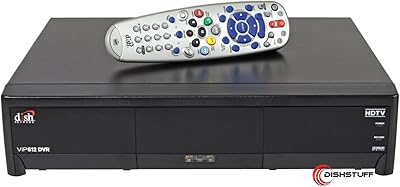
Dish Network ViP 612 HD-DVR Receiver
80%
87%
Value for Money
90%
Recording Quality
89%
Dual Tuner Performance
85%
HD/SD Compatibility
83%
Audio Quality
More
Dish Network VIP 722K Dual Tuner HD DVR 500GB
82%
88%
Dual Tuner Performance
91%
Storage Capacity
85%
Ease of Setup
86%
Recording Quality
72%
Reliability
More
Lorex D841A82B 4K HD 8-Channel DVR with 2TB HDD
86%
93%
Video Quality
85%
Remote Access and App Functionality
78%
Setup and Installation
88%
Smart Home Integration
90%
Storage and Expandability
More
Sony 43-Inch 4K Ultra HD BRAVIA 3 LED Smart TV
88%
94%
Picture Quality
89%
Gaming Performance (PS5)
91%
Streaming Experience
85%
Sound Quality
90%
Ease of Setup
More
Sony 75-Inch 4K Ultra HD BRAVIA 3 LED Smart TV (K-75S30)
88%
93%
Picture Quality
85%
Gaming Performance
88%
Sound Quality
76%
Ease of Setup
90%
Smart Features & Interface
More
AILVLVNG HDMI KVM Switch 2 Monitors 3 Computers 4K@60Hz USB 3.0
84%
91%
Ease of Setup
88%
Dual Monitor Functionality
87%
USB Port Performance
84%
Display Consistency (EDID Emulator)
80%
Switching Speed (Button vs Remote)
More
HOMPOW UHD 4K Smart Projector
76%
91%
Ease of Setup
88%
Built-in Streaming
76%
Image Clarity
57%
Brightness
86%
Portability
More
Minolta 4K Ultra HD Pocket Camcorder
84%
89%
Value for Money
92%
Portability & Size
87%
Video Quality
90%
Durability & Waterproofing
85%
Ease of Use
More
ANNKE 16CH 4K AI Security DVR
83%
93%
Video Quality
88%
AI Motion Detection
85%
Ease of Use (Mobile App)
72%
Setup and Installation
91%
Expandability (Storage Support)
More
Pace International DISH ViP 211z HD Satellite Receiver
71%
88%
Picture Quality
91%
Portability & Form Factor
93%
Tailgater & Antenna Compatibility
58%
DVR Capability
61%
OTA Tuner Integration
More

FAQ

You absolutely need an active Dish Network subscription — the Dish Hopper 3 4K HD DVR is not a standalone device. Without a live Dish account tied to it, the hardware will not function. Think of it as the receiver for your satellite service, not a self-contained streaming box.

Unfortunately, no — and this catches a lot of upgraders off guard. The Hopper 3 requires the Hybrid 1000.2 LNB and the Hybrid Solo Hub specifically. Your older LNB and Solo Node will not work with it, so a hardware upgrade on the dish side is also required. It is worth calling Dish directly before purchasing to confirm exactly what equipment you will need to replace and whether your plan covers those costs.

It means your household can record 16 completely different channels at the same time, with no conflicts. So if it is Sunday and someone wants to record football, another family member wants a cooking show, the kids want cartoons, and you want a documentary — all of that can happen simultaneously without anyone having to give anything up. For smaller households it is overkill, but for large or busy families it genuinely eliminates a common source of frustration.

The 2TB drive holds up to 500 hours of HD content, which is a substantial library for most households. In practice, a typical family recording several hours of TV per day could go several weeks to a couple of months before needing to manage storage. Keep in mind that 4K content takes up significantly more space per hour, so heavy 4K recorders may fill the drive faster.

SportsBar Mode splits your TV screen into up to four quadrants, each showing a different live channel simultaneously. You pick which channels fill each section, and you can toggle which feed's audio you are listening to at any given time. It is genuinely useful for sports fans tracking multiple games at once, though the audio switching between feeds takes a little getting used to.

Yes, through the Dish Anywhere app, which is available on iOS and Android as well as on laptops and desktops. The app lets you stream live TV and access your DVR library remotely. Performance is solid on strong Wi-Fi or LTE connections, but users on slower mobile data have reported buffering issues, so manage expectations for spotty network environments.

The Hopper 3 supports up to 6 Joey client devices, each connected to a separate television. The Joeys pull content from the main unit, so every TV in the house shares the same 2TB library and the same DVR recordings. Whether you need wired or wireless Joeys will depend on your home setup, and that distinction affects both the equipment you purchase and the installation requirements.

It is a bit of both, honestly. If you have a 4K television, the output quality is noticeably better for supported content. However, native 4K satellite broadcasts through Dish are still limited compared to what streaming platforms offer in 4K. For most subscribers today, it is more of a future-proofing feature than something you will use constantly from day one.

If you are starting fresh with a new Dish installation, a technician will typically handle the setup and it goes smoothly. The complexity spikes for existing Dish customers upgrading, since the new LNB and Hub requirements often mean a partial reinstallation of outdoor equipment. Self-installation is technically possible for experienced users, but most reviewers who tried it without a technician ran into unexpected complications, particularly with the satellite hardware side.

Once your Dish subscription is inactive, the receiver loses its ability to function, and access to your recordings goes with it. This is one of the core trade-offs of being locked into a single provider's ecosystem — the hardware and the service are inseparable. If you are considering canceling Dish and switching providers or going streaming-only, you will lose your DVR library, so plan accordingly.