Overview

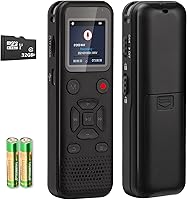
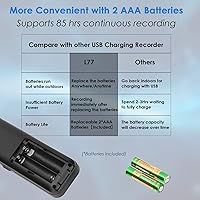
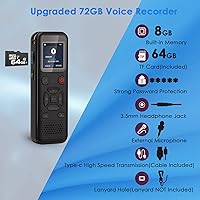
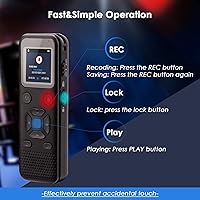
The dgtenk L77 Voice Recorder 72GB is a slim, no-fuss device that slips into a pocket and runs on two standard AAA batteries — no charging cables, no power banks required. That alone separates it from a crowded field of USB-rechargeable recorders. It ships with a 64GB TF card already included, giving it 72GB of storage that most similarly priced rivals simply can't match. Voice activation and a 4-digit password lock round out a feature set that punches well above its price point. For everyday recording needs, this little recorder covers a lot of ground without overcomplicating the experience.

Features & Benefits

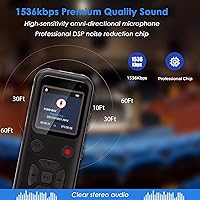
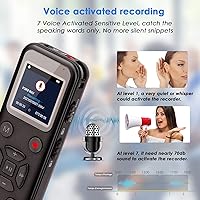
The L77 records at a high bitrate using a built-in omnidirectional mic paired with a DSP noise reduction chip — the result is noticeably cleaner audio than you'd expect at this price. That said, don't expect studio-level isolation; background noise in loud environments can still creep in. Voice-activated recording is a genuinely useful touch, trimming silence automatically so your files stay lean. The 1.33-inch screen is small but functional, showing battery level and recording status clearly. File transfers run over a Type-C USB connection, which keeps things fast and sidesteps the frustration of older micro-USB setups entirely.

Best For

This battery-powered recorder makes the most sense for students who need a reliable way to capture lectures without fumbling with phone apps or watching battery percentages drain. It also suits professionals who record meetings or interviews regularly and want a dedicated device that stays out of the way. Journalists working on location will appreciate the swappable AAA batteries — when power runs low mid-interview, swapping cells takes seconds rather than hunting for an outlet. The lack of a headphone jack is worth noting upfront, but for straightforward capture and transfer workflows, the L77 is hard to argue against.

User Feedback

Buyers consistently mention how refreshingly easy this little recorder is to set up — no apps, no pairing, no account creation needed. The AAA battery design draws particular praise from people who have been caught out by rechargeable recorders dying with no charger nearby. On the flip side, some users report that audio clarity suffers in noisier settings like busy offices or crowded cafes, which is fair criticism at this price tier. A handful of reviewers found the password navigation slightly awkward at first. Build quality gets mixed comments — it feels light, though most buyers accept that as a reasonable compact design trade-off.

Pros

  • Runs on standard AAA batteries — no charging cables, no dead device when an outlet is unavailable.
  • Ships with a 64GB TF card already installed, giving generous storage out of the box.
  • Voice activation trims silence automatically, keeping recordings clean and files manageable.
  • 4-digit password protection adds meaningful security for sensitive professional recordings.
  • Compact enough to fit in a shirt pocket without any noticeable bulk.
  • Type-C USB connection makes file transfers to Windows or Mac fast and straightforward.
  • No app or account required — ready to record within minutes of unboxing.
  • Line-in support expands recording options beyond simple voice capture.
  • Audio quality in quiet environments is noticeably cleaner than most recorders at this price point.
  • TF card slot accepts higher-capacity cards, giving room to grow as recording needs increase.

Cons

  • No headphone jack makes private on-device playback impossible without an adapter workaround.
  • Audio clarity drops noticeably in noisy environments like busy offices or crowded lecture halls.
  • Password menu navigation is unintuitive and frustrating until users spend time learning the button logic.
  • Build quality feels lightweight in ways that raise durability questions under daily wear.
  • Large-handed users may frequently mis-press buttons due to the compact control layout.
  • TF card must be formatted as FAT32, which requires extra steps on newer Windows systems.
  • No wireless transfer or companion app means physical connection is required every single time.
  • Battery drain during extended continuous recording sessions can be faster than expected.
  • Screen visibility in bright outdoor conditions is noticeably poor.
  • No password recovery option means a forgotten code can lock users out of their own files.

Ratings

The dgtenk L77 Voice Recorder 72GB has been scored by our AI system after processing verified buyer reviews from global markets, with spam, bot-generated, and incentivized feedback actively filtered out. The scores below reflect honest, real-world experiences — covering everything buyers love about this little recorder and the friction points that genuinely frustrated them. Both sides of the story are represented here, so you can make a confident, informed decision.

Ease of Setup
91%
Buyers are consistently relieved by how quickly this recorder is ready to use — no app downloads, no account creation, no pairing process. Students especially appreciate being able to drop it in a bag and start recording within minutes of unboxing.
A small number of users were initially confused by the TF card pre-installation and weren't sure whether to remove it before first use. The manual could do more to clarify default storage behavior.
Battery Convenience
93%
The AAA battery design earns genuine appreciation from people who have been burned by rechargeable recorders dying mid-meeting with no outlet nearby. Swapping cells in seconds is a real practical advantage that buyers frequently call out as a deciding factor.
Battery life duration in real-world use gets mixed reports — some users find a pair of batteries lasts impressively long, while others doing extended continuous recordings notice drain faster than expected. Rechargeable AAAs help offset ongoing costs.
Audio Recording Quality
71%
29%
In quiet environments like private offices, small classrooms, or solo dictation sessions, the audio clarity is noticeably better than competing recorders at this price. The high-bitrate capture means playback feels full rather than thin or tinny.
In noisier settings — busy meeting rooms, cafes, or lecture halls with poor acoustics — background noise bleeds through more than users hope. The DSP noise reduction helps but has clear limits, and buyers who expected studio-level isolation were disappointed.
Storage & Capacity
88%
Shipping with a 64GB TF card already installed is a meaningful differentiator. Most buyers never come close to filling it, and knowing they can swap in a different card later gives a sense of long-term flexibility that budget recorders rarely offer.
The card must be formatted as FAT32, which catches some Windows 10 and 11 users off guard since larger cards often default to exFAT. A few buyers had to look up reformatting instructions before the card was recognized properly.
Build Quality & Feel
62%
38%
The slim, lightweight form factor makes it easy to slip into a shirt pocket or the side pouch of a backpack without adding noticeable bulk. For a device in this price range, the plastic casing feels reasonably solid in the hand.
Long-term durability raises some concern. Several buyers noted the casing flexes slightly under pressure and a few reported minor scuffing after light daily carry. It does not feel like a device built to survive drops or rough handling.
Voice Activation Accuracy
74%
26%
When it works well, the voice-activated trigger is a genuine time-saver — recordings start cleanly when someone speaks and pause during silences, keeping files tight and reducing the hassle of editing out dead air later.
In environments with ambient noise like air conditioning hum or low background music, the trigger can activate unpredictably. Some users found they needed to adjust sensitivity expectations or simply switch to manual recording mode for reliability.
Password Protection
67%
33%
Having a 4-digit lock on a pocket recorder is genuinely useful for journalists, HR professionals, or anyone capturing sensitive conversations. Buyers in professional roles highlighted this as a feature they would not want to go without.
The interface for setting and entering the password is functional but not intuitive. Several users described it as fiddly, particularly for those who are not comfortable navigating small-screen menus. There is no password recovery option if the code is forgotten.
File Management & Transfer
78%
22%
Connecting via Type-C USB and having the device show up as a standard drive on Windows and Mac is straightforward. Renaming, organizing, and transferring files takes no specialist software, which buyers consistently appreciate.
There is no companion app and no wireless transfer option, so managing large numbers of files means connecting physically every time. For high-volume users who record daily, this becomes a minor but recurring inconvenience.
Screen & Interface
69%
31%
The 1.33-inch display shows the essentials clearly — battery level, recording mode, and file counter are all readable at a glance. For a device this small, the screen does its job without demanding attention.
In direct sunlight or bright outdoor conditions, screen visibility drops noticeably. The display resolution and brightness are acceptable indoors but feel underpowered when the recorder is used outside, such as during field interviews or outdoor events.
Portability & Size
94%
At roughly the dimensions of a thick USB drive, this battery-powered recorder is one of the most pocketable options in its category. Buyers who previously carried bulkier recorders consistently mention how little they notice the L77 in a pocket or bag.
The compact size, while a strength in most contexts, makes some physical controls feel cramped. Users with larger hands reported occasionally pressing the wrong button, especially when trying to navigate during active recording.
Value for Money
86%
Given the included TF card, voice activation, password lock, and Type-C connectivity, buyers broadly feel the price-to-feature ratio is strong. Repeat buyers and gift purchasers both note it compares favorably to pricier alternatives that offer fewer practical features.
Buyers expecting premium audio or durable construction relative to the asking price may feel the trade-offs are real. The value proposition holds best for casual to moderate users — power users or field professionals will likely outgrow it quickly.
Playback Experience
66%
34%
Playing back recordings directly on the device works well for quick review — the built-in speaker handles voice clarity adequately, and navigating between files is simple enough for everyday use without referring to the manual.
There is no headphone jack, which is a notable omission for anyone who wants private playback or needs to monitor audio in a noisy environment. Several buyers flagged this as a genuine limitation they only discovered after purchase.
Line-In Recording
61%
39%
The line-in input is a useful bonus for buyers who want to record directly from a mixer, PA system, or another audio source. It broadens the use cases beyond simple voice capture in ways that comparable budget recorders do not support.
Documentation around the line-in feature is sparse, and users who tried to use it without prior audio recording experience reported confusion about cable compatibility and input levels. It works, but requires some trial and error to get right.

Suitable for:

The dgtenk L77 Voice Recorder 72GB is a natural fit for students who need a reliable, low-maintenance device for capturing lectures without relying on a phone or worrying about battery life mid-class. It equally suits office professionals and managers who want a discreet, dedicated recorder for meetings, interviews, or verbal notes — especially those who handle sensitive conversations and appreciate the added layer of password protection. Journalists and field researchers will find real value in the swappable AAA battery design; when you are on location with no power source in sight, being able to drop in fresh cells and continue recording is a practical advantage that rechargeable rivals simply cannot match. It also works well as a reliable backup recorder for anyone who already uses a smartphone as their primary device but wants a dedicated fallback that will not eat into call time or storage. For casual users who want something simple, pocketable, and ready to go without any software setup, this little recorder delivers exactly that.

Not suitable for:

Buyers who need high-fidelity audio capture in challenging acoustic environments should look elsewhere — the L77 performs well in quiet, controlled settings, but its noise reduction has real limits in loud rooms, open-plan offices, or outdoor locations with ambient sound. Anyone who expects to monitor playback privately on the go will run into an immediate obstacle: there is no headphone jack, which is a genuine omission rather than a minor inconvenience. Power users who record extensively every day and need fast, wireless file syncing will find the physical Type-C transfer workflow repetitive over time, and the absence of any companion app means organization stays entirely manual. The plastic build, while acceptable for careful everyday use, is not suited to demanding field conditions or users who need something that can take a knock without concern. If premium construction, advanced noise isolation, or professional-grade audio fidelity are priorities, this battery-powered recorder sits below that threshold and buyers should budget accordingly for a step-up option.

Specifications

  • Dimensions: The recorder measures 0.59″ deep, 1.3″ wide, and 4″ tall — roughly the size of a thick USB drive.
  • Weight: At 5.6 oz with batteries installed, the device is light enough to carry all day without noticing it.
  • Built-In Memory: The device includes 8GB of internal storage, which is available immediately without any additional card.
  • Included TF Card: A 64GB TF card is included in the package, bringing the total usable storage to 72GB out of the box.
  • Audio Bitrate: Recordings are captured at 1536kbps, delivering noticeably richer audio detail than most entry-level recorders.
  • Microphone: A built-in omnidirectional microphone captures sound from all directions around the device simultaneously.
  • Noise Reduction: A DSP dynamic noise cancellation chip actively filters background interference during recording sessions.
  • Power Source: The recorder is powered by two standard AAA batteries, which are included in the box at purchase.
  • Connectivity: Files are transferred to a computer via a USB 3.1 Type-C port using the supplied cable.
  • Screen: A 1.33-inch display shows recording status, battery level, file count, and elapsed recording time.
  • Voice Activation: Built-in voice-activated recording (VOR) automatically starts and pauses the recorder based on detected sound.
  • Password Protection: A 4-digit numeric password can be set to restrict access to stored recordings on the device.
  • Line-In Support: A line-in input allows the recorder to capture audio directly from an external source such as a mixer or PA system.
  • Headphone Jack: The device does not include a headphone jack, so on-device private audio monitoring is not supported.
  • TF Card Format: Expandable storage requires a TF card formatted as FAT32; cards formatted as exFAT will not be recognized.
  • Max TF Capacity: The TF card slot supports expanded storage, with the included 64GB card representing the tested configuration.
  • Compatibility: The device is compatible with Windows and Mac computers and is recognized as a standard USB storage drive.
  • Model Number: The official model identifier for this recorder is L77, manufactured by dgtenk.

Related Reviews
Run_kkarrr 59-64 64GB Voice Recorder
73%
88%
Battery Life
91%
Storage Value
67%
Audio Clarity
63%
Voice-Activated Recording (VAR)
74%
Ease of Use
More
COHANA GL-37 128GB Voice Recorder
76%
74%
Audio Clarity
61%
Noise Cancellation Performance
88%
Magnetic Mount Usability
78%
Voice Activation Accuracy
93%
Storage & Capacity
More
Yegolito U46 64GB Voice Recorder
80%
83%
Audio Clarity (Quiet Environments)
67%
Noise Reduction Performance
89%
Battery Life
71%
VOR (Voice Activated Recording) Reliability
86%
Storage & File Management
More
G L87 136GB Digital Voice Recorder
77%
91%
Ease of Use
67%
Audio Quality
83%
Battery Life
93%
Storage & Memory
74%
Build Quality & Portability
More
ZIPCIDE 64GB Digital Voice Recorder
84%
85%
Audio Quality
92%
Battery Life
88%
Noise Reduction Effectiveness
90%
Portability
65%
Voice Activation Sensitivity
More
Powerextra AI Voice Recorder 64GB
82%
83%
Transcription Accuracy
94%
Battery Life
81%
Recording Quality
77%
AI Summary & Mind Map Quality
86%
Value for Money
More
Rpbznr AI Voice Recorder 80GB
75%
83%
Transcription Accuracy
78%
Microphone Performance
81%
AI Summary & Notes Generation
74%
Real-Time Translation
71%
Build Quality & Design
More
Olympus VN-702PC Voice Recorder
82%
88%
Value for Money
91%
Battery Life
75%
Recording Quality
89%
Portability
86%
Ease of Use
More
Amazebra AI Voice Recorder 64GB
86%
91%
Transcription Accuracy
88%
Real-Time Translation
93%
Battery Life
90%
Portability
92%
Data Security
More
TTQ Chime Note AI Voice Recorder 64GB
74%
78%
Transcription Accuracy
91%
Battery Life
74%
AI Summary Quality
58%
App Stability & Reliability
82%
Audio Recording Quality
More

FAQ

It comes fully ready to use. The dgtenk L77 Voice Recorder 72GB ships with a 64GB TF card already included, so you can start recording straight away without buying anything extra.

Yes, rechargeable AAA batteries work fine. This is actually a practical way to reduce ongoing running costs if you record frequently, since you can simply recharge and reuse the same set of batteries rather than buying disposables regularly.

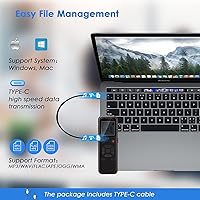
Connect the recorder to your PC or Mac using the included Type-C USB cable, and it will appear as a standard removable drive. From there you can drag and drop files, rename them, or delete them just like any USB storage device — no software installation needed.

In a reasonably quiet lecture hall with clear acoustics, the audio quality is solid and voices come through cleanly on playback. That said, if the lecturer is far from the recorder or the room has a lot of ambient noise, some clarity will be lost — placing the recorder as close to the speaker as possible makes a noticeable difference.

When voice activation is enabled, the recorder listens for sound above a set threshold and starts recording automatically when it detects speech or noise, then pauses again during silence. It is a useful way to keep file sizes down and avoid sorting through long stretches of dead air, though in noisy environments it can trigger unexpectedly.

Unfortunately there is no password recovery function on this little recorder. If the code is forgotten, accessing locked files becomes very difficult, so it is worth writing the password down somewhere safe when you first set it up.

The slot does support higher-capacity cards, but the card must be formatted as FAT32 before the recorder will recognize it. Larger cards sold today often come pre-formatted as exFAT, so you would need to reformat the card on your computer first — a quick process, but one worth knowing about in advance.

There is no headphone jack on the L77, which is a genuine limitation for private playback. You would need to transfer the file to a phone or computer to listen with headphones, which adds a step if quick on-the-go review is important to you.

Battery life varies depending on recording mode, bitrate, and whether voice activation is active. Light to moderate daily users generally report a reasonable run from a standard pair of alkaline AAAs, though intensive continuous recording sessions can drain them faster than expected. Keeping a spare pair on hand is a sensible habit.

The recorder is lightweight plastic, which keeps the weight down but does mean it is not built for rough handling or drops. For daily carry in a bag, pocket, or briefcase it holds up well under normal use, but buyers who need something ruggedized for fieldwork should manage their expectations accordingly.