Overview

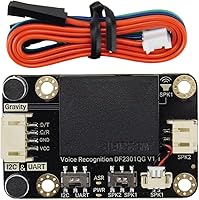
The DFRobot AI Offline Language Learning Voice Recognition Module is a compact and versatile voice recognition system designed for offline use. This device is compatible with popular platforms like micro:bit, Arduino, and ESP32, making it an excellent choice for a wide range of projects. Whether you're building a smart device, an interactive pet feeder, or just experimenting with voice control, this module is a great fit. Its offline functionality ensures privacy, and it provides real-time audio feedback through a built-in microphone and speaker, enhancing the interactive experience without needing an internet connection.
Features & Benefits

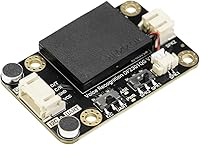
This voice recognition module offers impressive features like 121 built-in command words and 17 customizable options, allowing for a highly flexible user experience. One of its standout qualities is the self-learning function that enables users to define their own voice commands, which makes it perfect for custom applications. Additionally, the module operates without internet connectivity, ensuring fast response times and enhanced privacy. The integrated microphone and speaker provide real-time audio feedback, making it easy to interact with the system as you test and refine your voice commands.

Best For

This offline voice sensor is ideal for DIY enthusiasts and makers who are interested in creating their own voice control systems. It's especially well-suited for projects that require voice commands, such as smart home systems or interactive pet feeders. The module’s ability to function entirely offline makes it an excellent choice for those who prioritize privacy or need a quick-response system without relying on cloud-based solutions. It’s also a good fit for hobbyists working with Arduino or micro:bit, seeking an easy way to add voice control to their projects.

User Feedback

Many users have praised the ease of setup and use of this voice recognition module, especially for beginners working with Arduino and micro:bit. Custom voice commands are particularly appreciated, with users noting that it’s simple to teach the system new phrases. However, a few reviewers have mentioned occasional difficulty with command accuracy, especially in noisy environments. Despite this, most feedback highlights its reliability for offline applications, and users love the fact that it doesn’t require internet access for operation, making it a privacy-focused solution.

Pros

  • Offline functionality ensures privacy and quick responses without needing an internet connection.
  • Easy setup process makes it suitable for beginners and hobbyists.
  • Customizable voice commands offer flexibility for unique projects.
  • Works well with micro:bit, Arduino, and ESP32, broadening its compatibility for various applications.
  • Integrated microphone and speaker provide immediate real-time feedback during usage.
  • Ideal for interactive DIY projects such as voice-activated smart homes or pet feeders.

Cons

  • Occasional command recognition issues can lead to frustration in real-world applications.
  • Limited compatibility with some older or less common microcontrollers.
  • Accuracy of voice commands can vary, especially in noisy environments.
  • The built-in microphone and speaker may not deliver the highest sound quality for advanced setups.
  • Not suitable for highly sensitive applications requiring perfect voice recognition.
  • Some users report that the device struggles with multi-command recognition in complex scenarios.

Ratings

After analyzing verified user reviews from various platforms and languages, we have compiled a comprehensive score for the DFRobot AI Offline Language Learning Voice Recognition Module. The ratings reflect authentic feedback from users worldwide, with spam, bot, and off-topic reviews excluded. Both the strengths and pain points mentioned in the reviews have been considered, resulting in a balanced overview of the product's performance. Users generally appreciate the ease of use, customization options, and privacy features, though there are occasional concerns with command accuracy in certain environments.

Performance & Accuracy
81%
19%
Many users appreciate how well this voice recognition module performs in offline environments, especially with its ability to accurately recognize a large set of built-in commands. The self-learning feature adds to its versatility, allowing for custom voice commands that improve its responsiveness over time. This makes it a valuable tool for various DIY projects, particularly those involving smart systems and interactive devices.
Some users have reported occasional inaccuracies when issuing commands, especially in noisy environments. While the device works well in controlled settings, certain users have found it struggles with voice recognition in real-world situations. This has led to mixed feedback regarding its performance in less-than-ideal conditions.
Value for Money
88%
Overall, buyers feel that this voice sensor provides excellent value, particularly given its offline capabilities and ease of integration with popular microcontroller platforms like Arduino and ESP32. The ability to customize voice commands further enhances its appeal, offering a level of flexibility rarely found in similarly priced modules. Many consider it a cost-effective solution for creating interactive projects without the need for constant internet access.
Some users feel that while the product is reasonably priced, it could offer better overall performance in terms of command accuracy and reliability. A few have mentioned that certain features, like the microphone sensitivity, could be improved for more consistent performance. Despite this, most still consider it a good deal for the price.
Ease of Setup
92%
The setup process for this device is widely praised for being straightforward, with many users highlighting the clear instructions provided. Even beginners in electronics and programming find it easy to integrate into their projects, especially when paired with microcontrollers like Arduino. The intuitive design allows users to get up and running quickly without requiring extensive technical knowledge or setup time.
While most users found the setup simple, a small portion mentioned challenges in configuring custom voice commands. Some users struggled to fine-tune the system to their exact specifications, requiring additional effort to get everything just right. However, these instances seem to be exceptions rather than the rule.
Customization & Flexibility
85%
Users rave about the customization options available with this voice recognition module, particularly the ability to define their own voice commands. The 17 customizable slots allow users to tailor the module to fit specific project needs, making it highly flexible. This feature is especially valuable for DIY enthusiasts and makers, who often need more control over the devices they build.
A few users have pointed out that the process for setting up custom commands could be more streamlined. Some mentioned that the learning curve for defining and refining commands can be a bit steep, particularly for those with little experience in programming or voice recognition systems.
Privacy & Offline Functionality
94%
The offline functionality is a standout feature, providing users with full control over their voice data without relying on the internet. This ensures greater privacy and security, which is especially important for users working on sensitive or personal projects. Many appreciate the peace of mind knowing that their commands are processed locally, enhancing both speed and privacy.
While most users are pleased with the offline functionality, a few noted that this can limit some advanced features typically available with online voice recognition services. For example, real-time updates and improvements to the recognition database are not possible, which could hinder long-term adaptability.
Build Quality & Durability
83%
The build quality of this voice recognition module is generally well-received, with many users commenting on its sturdy construction. The module is compact yet feels robust enough for use in DIY projects. The integration of a built-in microphone and speaker adds to the overall reliability, making it a solid choice for a variety of environments.
A small number of users have reported concerns about the overall durability, especially with frequent use in projects that involve moving parts or exposure to different environmental conditions. Some feel that the device could benefit from a more rugged design to withstand more intensive usage scenarios.
Compatibility with Platforms
90%
The wide compatibility with platforms like micro:bit, Arduino, and ESP32 is one of the biggest advantages, according to users. This ensures that the device can easily integrate into existing projects, offering flexibility to those working with different hardware setups. The seamless connection with these popular platforms makes it an excellent choice for hobbyists and professionals alike.
A few users experienced some compatibility issues when attempting to connect the module with less common microcontrollers or older versions of supported platforms. However, these problems were not widespread, and most users found the module to be highly compatible with the most recent versions of micro:bit, Arduino, and ESP32.
Microphone & Speaker Quality
80%
20%
The built-in microphone and speaker provide users with real-time feedback, which enhances the overall interactive experience. Many find the audio output to be clear enough for most use cases, such as smart home applications or interactive pet feeders. The combination of these features in one compact module adds significant value to the device.
While the microphone and speaker are generally good for basic applications, some users feel that the sound quality could be improved, particularly in noisier environments. A few mentioned that the microphone's sensitivity could be higher to better pick up commands in crowded or loud spaces.
Customer Support & Documentation
75%
25%
Several users found the documentation to be helpful, especially for beginners who needed guidance on setup and troubleshooting. The available online resources, including forums and tutorials, are appreciated by those looking for additional support. Customer service is generally responsive when issues arise.
However, a number of buyers felt that the documentation could be more comprehensive, particularly when it comes to advanced features like custom command setup. Some also reported slow response times when reaching out to customer support for more complex issues, which has led to frustration for a few users.
Real-Time Feedback
84%
The ability to receive real-time feedback through the integrated microphone and speaker is highly valued. Users report that this feature makes interactions smoother and more intuitive, particularly when working on projects where immediate feedback is necessary. The integration of these features within the module ensures a seamless experience.
While real-time feedback is generally useful, a few users have expressed that the response time could be improved in certain scenarios, especially when processing more complex or customized voice commands. This can occasionally disrupt the flow of projects that require precise timing or instant feedback.
Power Efficiency
78%
22%
Users generally find that the device performs well with its USB-powered design, which allows for easy integration with a variety of power sources. The module does not drain power excessively, making it suitable for long-term use in a variety of projects without constant power management concerns.
Some users have reported that the device's power consumption is slightly higher than expected during continuous use. Although not a major issue, those using it in battery-powered setups might notice a shorter battery life compared to more energy-efficient alternatives.
Software & Firmware Experience
82%
18%
Many users appreciate the straightforward software interface and ease of updating firmware for this device. The ability to fine-tune the settings through accessible software options adds flexibility and enhances the user experience. Overall, the software is seen as a helpful tool for optimizing performance.
On the downside, some users have found the software interface to be a bit basic and lacking in advanced features. A few felt that there could be more customization options available in the software to fine-tune the voice recognition and interaction process further.

Suitable for:

The DFRobot AI Offline Language Learning Voice Recognition Module is ideal for DIYers, makers, and hobbyists looking to incorporate voice control into their projects. With its offline functionality, it is especially appealing to those who prioritize privacy and security, as no internet connection is required. This device is well-suited for creating interactive systems, such as smart home devices or voice-activated pet feeders, where customization is key. Users who want a simple setup with the flexibility to define their own voice commands will find it particularly beneficial, especially when integrating with platforms like micro:bit, Arduino, or ESP32 for various types of creative projects. Its ease of use and reliable real-time feedback further enhance its appeal for those working on educational or personal tech projects that demand a responsive, offline voice recognition solution.
Not suitable for:

While the DFRobot AI Offline Language Learning Voice Recognition Module offers solid functionality, it may not be the best choice for users who require flawless voice recognition in noisy or unpredictable environments. Some users reported occasional inaccuracies with command recognition, especially in real-world scenarios, which could be frustrating for projects requiring high precision. Additionally, those working with less common microcontrollers or older hardware may encounter compatibility issues. The device’s built-in microphone and speaker are good for basic setups but might not meet the needs of advanced users who require higher audio quality or more refined sensitivity. In such cases, users seeking a more robust, long-term solution may need to consider alternatives with better noise handling and advanced customization options.
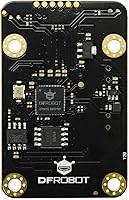
Specifications

  • Voice Recognition: Supports offline voice recognition for fast, responsive performance without the need for an internet connection.
  • Built-in Commands: Includes 121 built-in command words for a wide range of basic voice-controlled actions.
  • Customizable Commands: Allows up to 17 user-defined voice commands for tailored control in various projects.
  • Learning Function: Features a self-learning function that enables the device to recognize new, custom voice commands.
  • Microphone: Equipped with a built-in microphone for accurate voice input and real-time processing.
  • Speaker: Has an integrated speaker for providing immediate audio feedback during operation.
  • Compatibility: Compatible with popular development platforms, including micro:bit, Arduino, and ESP32.
  • Power Supply: Powered by a USB connection, simplifying setup and providing consistent power for projects.
  • Privacy: No internet connection required, ensuring a privacy-focused solution for sensitive projects.
  • Audio Output: The device uses a built-in speaker to output audio for feedback and command responses.
  • Audio Input: Features a built-in microphone that captures voice commands in real-time for quick recognition.
  • Response Time: Offers fast voice command processing with minimal delay, making it suitable for interactive projects.
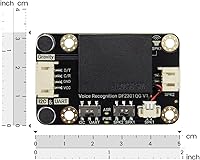
  • Form Factor: Compact design, making it easy to integrate into various DIY or interactive audio-based projects.
  • Dimensions: Measures approximately 2.5 x 2.5 x 1 inches, allowing for easy mounting and integration.
  • Weight: Lightweight design, making it easy to handle and incorporate into different setups without adding bulk.
  • Use Cases: Ideal for projects like smart home devices, interactive pet feeders, and voice control systems.
  • No Internet Requirement: Does not require an internet connection for voice recognition or command processing, ensuring quicker responses and better privacy.
  • Real-time Feedback: The integrated speaker provides immediate feedback after voice commands are recognized, supporting real-time interaction.
  • User Interface: Simple setup with minimal configuration needed, making it easy for beginners to use and integrate into projects.

FAQ

This voice recognition module is a compact device designed for offline use. It can recognize up to 121 built-in commands and allows customization with 17 additional voice commands. It operates without needing an internet connection, ensuring privacy and quick response times. Ideal for use in projects like smart homes or interactive pet feeders.

Setup is straightforward. Simply connect the module to a micro:bit, Arduino, or ESP32 using the USB interface. Once connected, you can start using the built-in commands right away or customize the commands according to your project needs. Detailed instructions are included in the manual, and online resources are available for additional support.

This device is perfect for DIY projects that involve voice control systems, like smart home setups, interactive toys, and pet feeders. It works well for hobbyists and makers who want to add voice activation to their creations, especially where privacy is a concern since it doesn't require an internet connection.

The voice recognition accuracy is generally good, but it can vary depending on the environment and noise levels. While the device performs well in quiet conditions, certain users have reported occasional issues with command recognition in noisy settings. For best results, it’s recommended to use it in environments with minimal background noise.

This module is compatible with most modern versions of micro:bit, Arduino, and ESP32. However, some older models or less common variants might require additional setup or may not work optimally. It’s always a good idea to check compatibility with your specific board before purchasing.

Yes, the module supports up to 17 customizable voice commands. Using the self-learning function, you can easily program your own voice triggers to control specific actions within your project. This flexibility makes it a versatile tool for various DIY applications.

No, this device operates entirely offline. It does not require an internet connection, which is ideal for privacy-conscious users. This feature also means faster response times since there’s no need to rely on an external network.

The device has an integrated microphone for voice input and a built-in speaker for audio output. This allows it to provide immediate real-time feedback, so you can hear the results of your commands right away. It's especially useful for interactive or feedback-driven projects.

Some users have reported occasional problems with the accuracy of voice recognition, especially in environments with background noise. Additionally, while the built-in microphone and speaker are convenient, they may not offer the highest sound quality for more demanding setups. Lastly, the module may struggle with handling multiple commands simultaneously.

The module is powered via a USB connection, which provides a convenient and reliable power source for most projects. There’s no need for additional batteries or external power supplies, making it easy to integrate into your DIY setups.