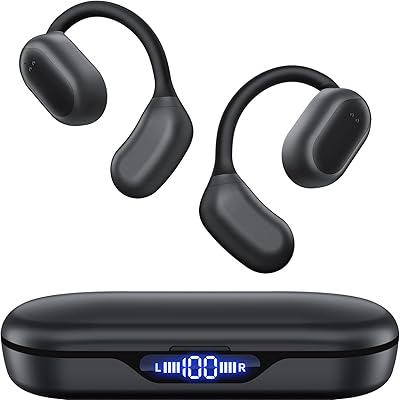
DEMICEA LibreFit B19 Open-Ear Wireless Earbuds
DEMICEA LibreFit B19 Open-Ear Wireless Earbuds — image 1

DEMICEA LibreFit B19 Open-Ear Wireless Earbuds — image 2
DEMICEA LibreFit B19 Open-Ear Wireless Earbuds — image 3
DEMICEA LibreFit B19 Open-Ear Wireless Earbuds — image 4

DEMICEA LibreFit B19 Open-Ear Wireless Earbuds — image 5
DEMICEA LibreFit B19 Open-Ear Wireless Earbuds — image 6
DEMICEA LibreFit B19 Open-Ear Wireless Earbuds — image 7

DEMICEA LibreFit B19 Open-Ear Wireless Earbuds — image 8
DEMICEA LibreFit B19 Open-Ear Wireless Earbuds — image 9
72%
28%

Overview

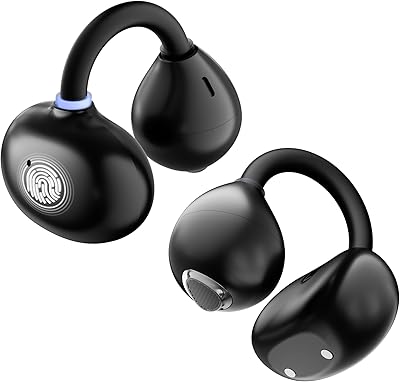
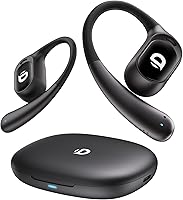
The DEMICEA LibreFit B19 Open-Ear Wireless Earbuds enter a crowded market with a clear focus: active users who want music without losing touch with their surroundings. Unlike traditional in-ear options that seal off the ear canal, these open-ear earbuds use air conduction to deliver sound while leaving your ears completely unobstructed — a genuinely different listening experience. DEMICEA is a relatively new name, so managing expectations around brand track record is fair. The earhook design works well for many, but ear shape varies, and some people simply won't get a secure fit. That 3.9-star average reflects a product with genuine strengths and real compromises worth examining.

Features & Benefits

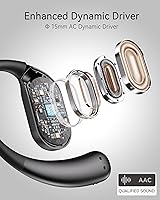
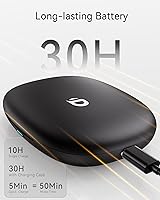
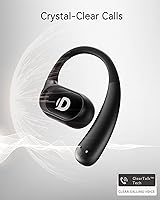
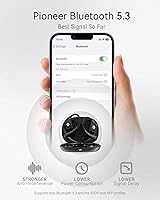
The 15mm oval drivers deliver clearer mids and decent highs, though anyone expecting bass-heavy sound from an open design will be disappointed — that's just physics. DEMICEA markets their audio tuning as AeroDirect and AeroBoost, which in practice means the focus is on vocal clarity and forward projection rather than raw punch. The dual MEMS microphones handle quieter call environments well enough, but noisy streets will still bleed through. Bluetooth 5.3 keeps connections stable with sub-60ms latency, handy for video calls or casual gaming. Battery life is a genuine strong point — ten hours per charge, thirty total with the case — and the IPX5 waterproofing covers sweat and light rain comfortably.

Best For

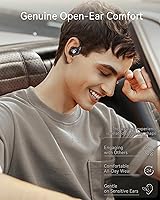
These open-ear earbuds make the most sense for runners, cyclists, and gym-goers who need music but genuinely can't afford to block out situational awareness — traffic, a trainer's cue, or another cyclist passing. The open design is also a real relief for people who struggle with in-ear fatigue, since there's no tip pressing into the canal or pressure building up after an extended session. Remote workers and commuters who take frequent calls will find the mic setup serviceable for everyday use. This air conduction headset fits particularly well into yoga, pilates, or a casual morning walk, where sweat resistance matters more than audiophile depth. Think of it as a capable workout-focused secondary pair rather than a do-everything daily driver.

User Feedback

Buyers who rated the LibreFit B19 highly tend to praise all-day comfort during runs and the genuine freedom of keeping ears open to their environment. Where things get mixed is fit — the earhook works for many shapes, but a meaningful portion of reviewers noted slippage during more dynamic movement, which the brand even acknowledges in its own documentation. Audio leakage at higher volumes comes up regularly, something inherent to any open-ear design and not a defect, just a tradeoff. Call quality feedback is split: some find it perfectly adequate for quick check-ins, others report that wind or street noise makes it unreliable outdoors. A few longer-term users also flagged connectivity drops after several months of regular use — not universal, but worth factoring in.

Pros

  • Keeps ears fully open so you can hear traffic, people, and surroundings during outdoor workouts.
  • The earhook and titanium frame feel surprisingly light at just 0.26 oz per earbud during long sessions.
  • Thirty hours of total battery with the case is generous and covers multiple days of moderate use.
  • IPX5 rating handles sweat and light rain reliably, making these genuinely gym-ready.
  • Bluetooth 5.3 delivers a stable connection with low latency suitable for video calls and casual gaming.
  • The open design eliminates in-ear pressure and fatigue, which is a real comfort advantage on long runs.
  • Dual MEMS microphones perform well in quiet indoor settings for everyday calls and voice chats.
  • Touch controls work without needing to fumble with your phone mid-workout.
  • The carrying case is compact enough to toss in a gym bag without adding noticeable bulk.

Cons

  • Earhook fit is not universal — some ear shapes simply will not get a secure hold, especially during dynamic movement.
  • Audio leaks noticeably at higher volumes, which can be awkward in quiet shared spaces like offices or libraries.
  • Bass response is thin by design; the air conduction format cannot reproduce low frequencies the way in-ear drivers can.
  • Call quality outdoors degrades quickly in windy or noisy conditions despite the dual-mic setup.
  • Only A2DP and HFP Bluetooth protocols are supported, locking out higher-quality audio codec options.
  • Some users have reported intermittent connectivity drops after several months of regular use.
  • The brand is relatively new with a limited support and warranty track record to judge.
  • Charging takes up to 2.5 hours, which is on the slower side compared to faster-charging competitors.
  • Not suitable for phone-free workouts — there is no onboard storage for offline music playback.

Ratings

The scores below reflect our AI-driven analysis of verified global buyer reviews for the DEMICEA LibreFit B19 Open-Ear Wireless Earbuds, with spam, bot-submitted, and incentivized feedback actively filtered out before scoring. Each category is weighted against real-world usage patterns reported by confirmed purchasers — not manufacturer claims — so both the standout strengths and the recurring frustrations are represented honestly. If a category scores low, there is a genuine pattern behind it.

Wearing Comfort
83%
Runners and yoga practitioners consistently praised how light these feel during hour-long sessions, with the titanium frame conforming naturally without the pressure buildup that plagues in-ear tips. For users prone to ear fatigue, the open design is a genuine relief over extended workouts.
The earhook fit is anatomy-dependent, and a meaningful segment of reviewers — particularly those with smaller ears — reported the hooks loosening or failing to stay secure during lateral or high-intensity movement. This is not a minor edge case; it surfaces frequently enough to be a real purchasing risk.
Audio Quality
67%
33%
Vocal clarity is the clear strong suit: podcasts, audiobooks, and voice-forward music tracks come through cleanly and with enough presence to be enjoyable at a moderate pace outdoors. The directional sound projection works better than expected for casual listening.
Bass response is noticeably thin, which is a structural limitation of air conduction rather than a tuning failure — but buyers expecting full-range sound will be disappointed. At higher volumes, sound quality also begins to soften, and audio leakage becomes a real concern in quiet shared spaces.
Fit & Stability
71%
29%
For the majority of users with average to larger ear shapes, the earhook holds through steady-state running, cycling, and gym circuits without constant readjustment. Several reviewers specifically noted they had tried clip-style earbuds before and found this design more dependable.
Users with narrower ear shapes or smaller heads reported consistent slippage, especially during direction changes or jump training. The brand acknowledges this variability in its own documentation, which is honest but does not resolve the issue for buyers who discover the poor fit after purchase.
Call Quality
63%
37%
In calm indoor environments — home offices, quiet cafes, indoor commutes — callers on the other end generally reported voices sounding clear and intelligible. The directional MEMS mic design does a reasonable job suppressing keyboard noise and low-level background hum.
Outdoor call performance is where the dual-mic promise falls apart for many users. Wind noise and street traffic bleed through noticeably, and several reviewers noted that call recipients struggled to hear them clearly when walking in urban environments. For a product marketed at active outdoor users, this is a meaningful gap.
Battery Life
88%
Ten hours per charge on the earbuds alone is a practical, real-world number that holds up at moderate listening volumes, and the case extending that to thirty hours total means most users only charge the case once or twice a week. Commuters and all-day gym users consistently highlighted battery as one of the strongest aspects.
The charge time of around 2.5 hours is on the slower end compared to competing earbuds in this tier that hit full charge closer to 90 minutes. There is also no quick-charge feature, so a flat battery before a morning run requires planning ahead.
Waterproofing
79%
21%
The IPX5 rating handles sweat-heavy training sessions and light rain reliably, and users who workout in humid gym environments reported no degradation in performance even after months of regular use. The nano-coated grille protection adds confidence for outdoor activity.
A handful of reviewers pushed the water resistance further than its rating — wearing these in heavy rain or near pool environments — and encountered issues. IPX5 is sweat-proof, not waterproof, and the product packaging could be clearer about where that boundary sits.
Bluetooth Connectivity
74%
26%
Initial pairing is quick and straightforward on both Android and iOS, and the Bluetooth 5.3 connection stays stable across typical distances — at a desk, on a treadmill, or moving around a home without the audio cutting out. Most users get reliable day-to-day performance.
A subset of longer-term reviewers flagged intermittent disconnection issues appearing after several months of use, suggesting the connection stability may degrade over time on some units. The protocol limitation to A2DP and HFP also rules out aptX or AAC quality for users on compatible devices.
Latency
77%
23%
The sub-60ms latency is adequate for video streaming and casual gaming where slight audio delay is tolerable, and most reviewers using these for workout video apps or YouTube reported no distracting lag during normal use.
For precision gaming or professional video editing where tight audio-visual sync matters, this latency is noticeable. The limited codec support also means there is no option to enable lower-latency modes that some competing earbuds offer through aptX Low Latency.
Touch Controls
68%
32%
The touch surface is responsive and reasonably accurate for basic functions — play, pause, and call answering work reliably without requiring the user to stop and look at the earbuds. Sweaty hands during a run do not noticeably interfere with detection.
Accidental triggers when adjusting the fit or brushing against clothing are a recurring complaint, and the controls are not customizable, which limits flexibility for users who want to remap functions. There is no companion app to address this gap.
Sound Leakage
54%
46%
At volumes below 60 to 65 percent, leakage is minimal and unlikely to disturb someone sitting beside you on a train or in a library. For outdoor use where ambient noise already masks minor leakage, most users found the experience perfectly acceptable.
Push the volume above 70 percent in a quiet room and the sound becomes clearly audible to people nearby — this is a fundamental physics tradeoff of open-ear design, but it limits use cases in shared or professional environments. Office workers using these at their desks received unsolicited feedback from colleagues.
Build Quality
72%
28%
The titanium alloy frame feels noticeably more premium than the price might suggest, and the silicone coating does not show wear or cracking after a few months of regular handling. Several reviewers commented that the earbuds felt durable and well-assembled out of the box.
The charging case is plastic and feels comparatively lightweight in a way that reads as fragile rather than portable-friendly. A few users also noted the earhook silicone showing minor deformation after prolonged compression in a tight gym bag over time.
Value for Money
69%
31%
For buyers who specifically need open-ear, earhook-style earbuds with solid battery life and IPX5 protection, the LibreFit B19 sits in a reasonable price-to-feature position within its niche. The battery capacity alone compares favorably to more established alternatives at a similar price.
Buyers who discover the fit does not work for their ear shape after purchase face a value problem that voids most of the proposition. The brand's limited track record also means warranty support and long-term parts availability carry more uncertainty than established competitors.
Ease of Setup
84%
First-time pairing is genuinely straightforward — remove from the case, open Bluetooth on your device, tap connect. The process takes under a minute for the vast majority of users across Android and iOS without any app download required.
Users with older Bluetooth-enabled devices occasionally reported the earbuds not being recognized, consistent with the A2DP and HFP protocol restriction the brand flags. No companion app means there is no alternate pairing path or firmware update option when issues arise.
Brand Reliability
58%
42%
Some early adopters reported prompt responses from customer support when raising issues, and the product documentation is unusually candid about limitations like fit variability — a sign the brand is not purely marketing-driven. This builds a modest degree of confidence.
DEMICEA is a relatively new entrant with a limited public track record, and there is not enough long-term buyer data to assess warranty follow-through or product longevity with confidence. Buyers who prioritize established brand accountability may find this an uncomfortable gap.

Suitable for:

The DEMICEA LibreFit B19 Open-Ear Wireless Earbuds are a practical fit for active people who genuinely need to stay aware of their environment while working out — think road runners, cyclists, or anyone training near traffic where tuning out the world entirely is a safety risk. If you have struggled with in-ear fatigue or simply hate the plugged-up feeling of traditional earbuds during a long session, the open-ear format removes that discomfort entirely. Yoga practitioners, walkers, and light gym users will find these a comfortable daily companion where sweat protection matters more than studio-grade sound. Remote workers and commuters who need a hands-free option for calls throughout the day will also find the mic setup serviceable for typical indoor environments. These work especially well as a dedicated second pair for someone who already owns quality headphones for focused listening but wants something lighter and safer for outdoor activity.

Not suitable for:

Anyone chasing rich bass, wide soundstage, or noise isolation should look elsewhere — the open-ear air conduction design makes those qualities physically impossible, and no amount of driver tuning changes that fundamental tradeoff. The DEMICEA LibreFit B19 Open-Ear Wireless Earbuds are also a poor match for people with narrower or unusually shaped ears, since the earhook fit is not universal and even the brand openly acknowledges this limitation. If you need a primary pair for commuting through loud environments, calls on busy streets, or detailed listening sessions, these will fall short. The protocol support is limited to A2DP and HFP, which means advanced audio codecs like aptX or AAC are off the table — a consideration if your device relies on them for better wireless quality. Those who prioritize long-term brand reliability or expect strong after-sales support may also want to wait for the brand to build a more established track record before committing.

Specifications

  • Form Factor: Open-ear design with a secure earhook, leaving the ear canal completely unobstructed during use.
  • Audio Technology: Air conduction via 15mm oval dynamic drivers, projecting sound toward the ear without direct canal contact.
  • Driver Size: Each earbud houses a 15mm oval dynamic driver tuned for vocal clarity and mid-range presence.
  • Earbud Weight: Each individual earbud weighs 0.26 oz, making them among the lighter options in the open-ear category.
  • Frame Material: The core frame is constructed from 0.77mm titanium alloy wrapped in a soft silicone shell for skin-safe contact.
  • Bluetooth Version: Bluetooth 5.3 is supported, limited to A2DP and HFP protocols; advanced codecs such as aptX or AAC are not available.
  • Latency: Wireless audio latency is rated at under 60ms, which is adequate for video calls and casual media playback.
  • Microphones: Dual MEMS microphones with directional sound pickup are built in, paired with ClearTalk noise-reduction processing for calls.
  • Battery Life: Each earbud provides up to 10 hours of playback on a single charge, with the charging case extending total runtime to 30 hours.
  • Charge Time: A full charge of the earbuds takes approximately 2 to 2.5 hours via USB-C connection.
  • Waterproofing: Rated IPX5, the earbuds can handle sweat and light rain but are not designed for submersion or heavy water exposure.
  • Impedance: Impedance is rated at 16 Ohm, which is standard for wireless consumer earbuds and easy to drive from any smartphone.
  • Sensitivity: Sensitivity is rated at 110 dB, indicating reasonably efficient sound output relative to input power.
  • Connectivity: Connection is wireless Bluetooth only; there is no 3.5mm audio jack or wired fallback option included.
  • Carrying Case: The included plastic charging case measures 9 x 7 x 2 cm and weighs 59 grams, compact enough for a gym bag or jacket pocket.
  • In Box: The package includes two earbuds, one charging case, one USB-A to USB-C charging cable, and a printed user guide.

Related Reviews
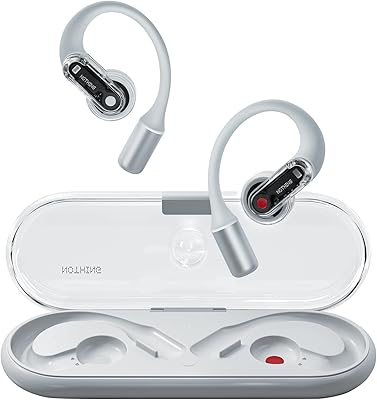
Nothing Ear (Open) Open-Ear Earbuds
79%
91%
Wearing Comfort
83%
Workout Stability
74%
Sound Quality
77%
Call Quality
49%
Sound Leakage
More
EarFun Clip Open-Ear Earbuds
75%
88%
Wearing Comfort
83%
Audio Quality
71%
Call Quality
74%
Fit Stability
91%
Battery Life
More
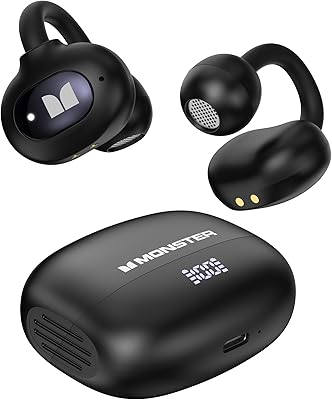
Monster AC338 Open-Ear Bluetooth Earbuds
75%
83%
Comfort & Fit
78%
Battery Life
61%
Audio Quality
86%
Water & Sweat Resistance
81%
Bluetooth Connectivity
More
Haowolf SP05 Open-Ear Bluetooth Sports Earbuds
80%
88%
Comfort & Wearability
83%
Fit & Stability
92%
Battery Life
67%
Sound Quality
71%
Call Quality
More
Htcmf O8 Open-Ear Wireless Earbuds
74%
88%
Wearing Comfort
83%
Earhook Stability
91%
Battery Life
67%
Sound Quality
93%
Ambient Awareness
More
Sennheiser ACCENTUM Open Wireless Earbuds
82%
88%
Comfort & Fit
80%
Sound Quality
93%
Battery Life
84%
Water Resistance
82%
Connectivity (Bluetooth)
More
Monster Open AC601 Clip-On Wireless Earbuds
73%
83%
Wearing Comfort
61%
Sound Quality
69%
Call Quality
74%
Fit & Stability
88%
Battery Life
More
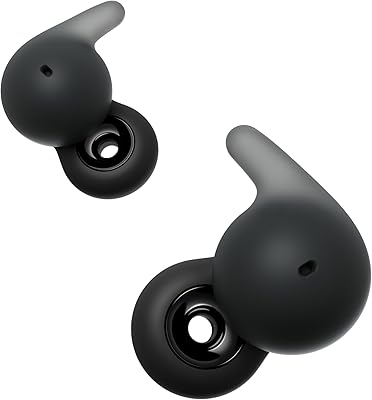
Sony LinkBuds Open True Wireless Earbuds
76%
67%
Sound Quality
91%
Ambient Awareness
73%
Comfort & Fit
82%
Call Quality
61%
Value for Money
More
SoundPEATS POP Clip Open-Ear Earbuds
79%
91%
Wearing Comfort
84%
Battery Life
67%
Sound Quality
71%
Call Quality
88%
Button Controls
More
PSIER EP20 Open-Ear Bluetooth Earbuds
78%
88%
Comfort & Fit
93%
Ambient Awareness
71%
Sound Quality
84%
Battery Life
86%
Value for Money
More

FAQ

For most people with average to larger ear shapes, the earhook design holds reasonably well during steady-state running and cycling. That said, the fit is not universal — the brand itself acknowledges this openly, and buyers with smaller or unusually shaped ears have reported slippage during high-intensity or lateral movement. If possible, try a similar earhook style in a store before committing.

Yes, the LibreFit B19 supports mono use, so you can run with a single earbud in while keeping the other in the case. This is actually a practical option for cyclists or runners who want one ear fully free for traffic awareness.

Air conduction works by projecting sound waves toward your ear from just outside the canal, rather than delivering them directly inside. The result is a lighter, more open sound with good clarity in the mids and highs, but noticeably less bass than in-ear drivers produce. If your listening habits lean toward podcasts, audiobooks, or vocal-heavy music, it works well. Heavy bass fans will find the experience thin.

At moderate volume levels, leakage is minimal and unlikely to bother anyone sitting a few feet away. Turn the volume up past roughly 70 to 80 percent and the sound becomes audible to people nearby — this is a fundamental characteristic of all open-ear designs, not a defect specific to this model. In quiet environments like offices or libraries, keep the volume conservative.

In a quiet room or a calm indoor environment, call quality is solid and voices come through clearly. Outdoors in wind or near traffic, the dual MEMS microphones struggle to fully isolate your voice from the background noise, which is a common limitation of this mic tier. If your calls mostly happen indoors, you will be satisfied; if you regularly take calls on a busy street, temper your expectations.

The IPX5 rating covers sweat and splashing water, but these are not swim-proof in any sense. Submerging them or wearing them in heavy downpour conditions risks water intrusion and damage. Treat the waterproofing as solid sweat protection for workouts, not aquatic activity clearance.

Touch controls are functional for basic tasks like play, pause, and call answering, and most users find them responsive enough for workout use. Accidental triggers during adjustment or pulling at clothing can happen occasionally, which is common across touch-controlled earbuds in this category. The controls are not customizable, so you are limited to the factory-assigned gestures.

Take the earbuds out of the charging case and they should automatically enter pairing mode — the LED indicator will typically flash to confirm. Open your phone's Bluetooth settings, look for the LibreFit B19 in the available devices list, and tap to connect. On most Android and iOS devices this takes under a minute. If they do not appear, hold the multifunction button for a few seconds to manually trigger pairing mode.

The 30-hour figure represents combined earbud and case capacity, not what the earbuds alone deliver. Each earbud provides around 10 hours on a single charge at moderate volume, which is the number that matters day to day. The case then provides roughly two additional full charges. At consistent volume and stable Bluetooth connection, that 10-hour per-charge figure is realistic and matches what most reviewers report.

These open-ear earbuds connect via standard Bluetooth and are compatible with virtually any smartphone, tablet, or laptop that supports Bluetooth with A2DP or HFP profiles — which covers practically all devices made in the last decade. One caveat: the product documentation notes that if your device's Bluetooth version or protocol does not match, it may not be recognized, so very old devices could theoretically have issues, though this is uncommon in practice.