Overview

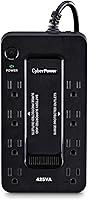
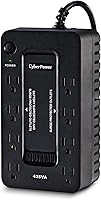
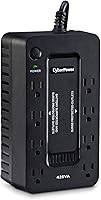
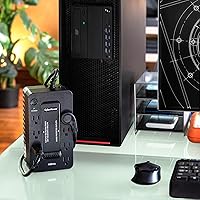
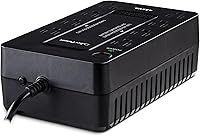
The CyberPower ST425 425VA Standby UPS is a no-frills battery backup unit built for home offices, routers, and light entertainment setups — not for running a server rack through a blackout. It sits squarely in the budget-to-mid-range tier and earns its place there with a compact form factor that tucks neatly under a desk or beside a modem without demanding attention. What's worth noting upfront: CyberPower backs this unit with a 3-year warranty that even covers the battery — uncommon at this price tier. Just go in with clear expectations: this is a device designed to give you enough time to save your work and shut down cleanly, not to keep things running indefinitely.

Features & Benefits

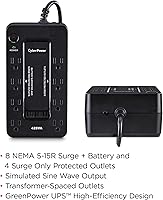
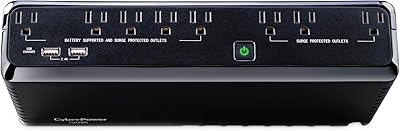
At 425VA and 260W, this standby UPS handles the typical home office load — a desktop, monitor, and router — without breaking a sweat. The outlet layout is practical: four outlets are battery-backed with surge protection, and four more offer surge protection only, giving you eight total connection points in a compact chassis. The transformer-spaced design means bulky power adapters won't crowd out neighboring slots. The unit's output uses a simulated sine wave, which works reliably with most consumer electronics, though it isn't the pure sine wave that some sensitive equipment demands. It also runs efficiently at idle, drawing less standby power than older UPS designs. A simple LED status indicator covers power status and wiring fault detection, and the 5-foot cord gives you real flexibility in placement.

Best For

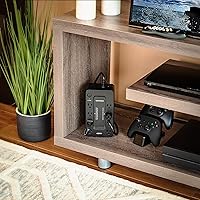
This battery backup unit makes the most sense for home office users who need a PC, a second monitor, and a broadband router covered during short power blips — the kind of interruptions that are more annoying than catastrophic. It's also a solid pick for gamers protecting a console and networking gear from surges and brownouts, where the goal is preventing data corruption rather than sustaining long play sessions. If you're in an area with occasional brief outages and simply need enough time to save files and power down safely, this fits the bill. It's one of the better entry-level options for anyone on a careful budget who wants surge and battery protection without overcomplicating things or giving up desk space.

User Feedback

Most owners find the ST425 easy to set up — plug it in, let it charge, and it's working within a few hours. Quiet operation gets consistent praise; you'll forget it's there. The surge protection holds up well, and the overall value for money lands positively for most buyers, particularly given the included equipment guarantee. That said, the most common criticism isn't surprising: runtime is genuinely short. At a full load, you're looking at roughly 90 seconds of backup time — enough to save and shut down, but nothing more. A smaller but real concern is battery longevity: lead acid cells typically need replacement after three to five years, and some users report degradation sooner with frequent power cycling.

Pros

  • Setup takes minutes — plug it in, let it charge, and it is ready to protect your gear.
  • Eight total outlets is generous for a unit this size, covering both backup and surge needs.
  • Transformer-spaced outlets mean bulky adapters will not block adjacent plugs.
  • Runs quietly enough that you will genuinely forget it is sitting under your desk.
  • The 3-year warranty covering the battery itself is rare and adds real long-term value.
  • A connected equipment guarantee provides meaningful financial peace of mind.
  • Compact dimensions make it easy to tuck behind a router or under a workstation.
  • Idle power draw is lower than older UPS designs, which adds up over years of use.
  • Reliable surge protection keeps gear safe even when the battery backup is not needed.

Cons

  • Runtime at full load is roughly 90 seconds — barely enough for a controlled shutdown.
  • The sealed lead acid battery typically needs replacement within three to five years.
  • Simulated sine wave output may cause compatibility issues with sensitive or medical equipment.
  • No USB charging ports means one less convenience compared to some competing units.
  • No monitoring software or management app leaves you without insight into power events.
  • Only four of the eight outlets are battery-backed, which can feel limiting in a busy setup.
  • Battery degradation can accelerate in environments with frequent short outages or power cycling.
  • No network card slot or remote shutdown capability rules it out for any IT or business use case.

Ratings

The scores below reflect an AI-driven analysis of thousands of verified global user reviews for the CyberPower ST425 425VA Standby UPS, with spam, bot-generated, and incentivized feedback actively filtered out before any scoring was applied. Every category — from battery runtime to long-term reliability — is scored based on what real buyers actually experienced, not what the spec sheet promises. Both the standout strengths and the recurring frustrations are transparently baked into each number.

Value for Money
88%
Most buyers feel they got more than their money's worth, especially once they factor in the 3-year warranty covering the battery — an inclusion that competitors at this tier often skip. The connected equipment guarantee adds a layer of financial reassurance that makes the purchase feel lower-risk.
A handful of users who upgraded from a surge protector without understanding UPS limitations felt the price was hard to justify once they realized how short the runtime actually is. For those who needed longer backup, the value proposition weakened considerably.
Battery Runtime
51%
49%
Users running a single router or a lightweight laptop setup report getting enough time to comfortably save work and power down, which is precisely what this unit is designed to deliver. For that narrow use case — graceful shutdowns during brief outages — it does its job.
This is the most polarizing category in the feedback pool. Anyone running a desktop, monitor, and peripherals together gets close to 90 seconds at best, which catches buyers off guard. The score reflects how frequently unmet runtime expectations show up as the primary source of disappointment.
Ease of Setup
93%
Reviewers across all technical skill levels consistently describe setup as plug-and-play — unbox, connect, charge for a few hours, and it's working. There are no software installations, no configuration menus, and no confusing indicator sequences to interpret during initial startup.
A small number of users noted the manual could be more explicit about the recommended initial charge time before first use, leading a few to deploy the unit before the battery was fully conditioned and then report shorter-than-expected runtime as a result.
Noise Level
91%
Under normal utility power, this battery backup unit runs in near-total silence, which home office users and light sleepers especially appreciate. It sits on a desk or floor without the fan hum that plagues larger UPS models, making it genuinely unobtrusive in quiet environments.
When the unit does switch to battery — particularly during longer or deeper voltage drops — the audible alarm beeping is noticeable and can be startling in a quiet room. A few users wished there was a way to mute or adjust the alarm tone.
Surge Protection
86%
Buyers in storm-prone areas and regions with unstable grids consistently report that connected devices have survived repeated surge events without damage. The full eight-outlet surge coverage — not just the battery-backed four — is appreciated by users who want whole-desk protection.
Because the unit provides no event logging or software feedback, users have no way to know how many surges have been absorbed over time or whether the protection circuitry is approaching its limits. That opacity makes it harder to know when replacement is warranted.
Battery Longevity
58%
42%
Under light cycling conditions — homes with infrequent outages where the battery rarely discharges — several users report the original battery lasting four or more years before any noticeable runtime degradation. The sealed lead acid chemistry is predictable and well-understood.
In areas with frequent short power interruptions, the battery can degrade noticeably within two years. The most common long-term complaint is diminished runtime well before the three-year warranty mark, and while the battery is replaceable, the cost and effort involved frustrates some owners.
Build Quality
74%
26%
The chassis feels solid for a unit at this price point, and the outlet spacing design in particular gets consistent praise for being practical rather than an afterthought. At 3.8 pounds it has enough heft to feel substantial without being awkward to move.
The overall plastic construction does not inspire the same confidence as pricier metal-chassis competitors. A portion of reviewers describe the housing as feeling somewhat lightweight relative to the internal components, and cosmetic scuffs appear with regular handling.
Outlet Layout
82%
18%
The transformer-spaced design earns genuine appreciation from users with large wall adapters that would otherwise block adjacent outlets on a standard power strip. Having eight outlets total — even split between battery and surge-only — gives solid flexibility for a typical desk setup.
The 4-and-4 split means users with more than four devices that need battery backup quickly hit a ceiling. A few buyers were surprised to discover that half their outlets offered no battery backup at all, pointing to a need for clearer labeling out of the box.
Form Factor
89%
The compact dimensions make it one of the easier UPS units to place in tight spots — behind a router, under a monitor stand, or on a crowded desk shelf. Users in small apartments or dorm rooms specifically call out the size as a deciding factor in their purchase.
The horizontal desktop orientation is the only option; there is no vertical stand or wall-mount possibility, which limits placement flexibility for users with very constrained desk space who were hoping to orient it differently.
Reliability
83%
The ST425 has a strong track record for switching to battery consistently and without hesitation during outages, which is ultimately the core job. Long-term owners across multiple years report few cases of the unit failing to respond when needed.
A minority of users report units that stopped functioning or failed to hold a charge within the first year, though these appear to be outlier cases rather than a systemic pattern. Reliability confidence does drop slightly among users in high-heat environments.
Warranty & Support
78%
22%
The 3-year warranty covering both unit and battery is a meaningful differentiator at this price tier, and buyers who have needed to use it generally describe CyberPower's support process as straightforward. The $75,000 equipment guarantee adds tangible post-purchase reassurance.
Some users report slower-than-expected response times when initiating warranty claims, and the documentation requirements for the equipment guarantee can feel burdensome in a stressful post-surge situation. A cleaner online claims process would improve satisfaction here.
Compatibility
71%
29%
Works without issue for the vast majority of home electronics — standard desktops, broadband routers, gaming consoles, and monitors all run cleanly on the simulated sine wave output during battery operation. Most buyers never encounter any compatibility friction.
Users with higher-end desktop workstations featuring active PFC power supplies occasionally report instability or shutdown behavior when the unit switches to battery. This is a known limitation of simulated sine wave output and affects a real, if small, segment of potential buyers.
Indicator & Feedback
53%
47%
The LED indicator handles the basics — confirming the unit is powered and flagging a wiring fault — which is enough for users who simply want a set-it-and-forget-it protection device without any dashboard to maintain.
There is no USB data port, no companion app, and no way to check battery health, remaining runtime, or historical power events. Users who want any visibility into what the unit is doing — especially over months or years — find the feedback severely limited compared to even slightly pricier alternatives.
Energy Efficiency
76%
24%
The GreenPower design does measurably reduce idle draw compared to older conventional UPS units, which adds up meaningfully when the device runs continuously for years. Budget-minded buyers who are also energy-conscious appreciate not adding a noticeable phantom load.
The efficiency gains, while real, are modest in absolute terms and unlikely to be perceptible on a monthly electricity bill for most households. Users expecting a significant reduction in standby energy consumption may find the improvement underwhelming in practice.

Suitable for:

The CyberPower ST425 425VA Standby UPS is a strong fit for home office workers who need their desktop, monitor, and router to stay alive just long enough to save files and shut down safely during an unexpected outage. It works equally well for remote workers whose broadband router dropping mid-call is a bigger problem than a full power failure — keeping that connection alive for a few critical minutes can make all the difference. Gamers protecting a console or networking switch from surges and brownouts will also find it does the job reliably without taking up much space. If you live somewhere with occasional brief power blips rather than prolonged outages, this battery backup unit is practically sized exactly for that reality. Budget-conscious buyers who want a credible first step into UPS protection — rather than no protection at all — will find it punches above its weight given the included warranty and equipment guarantee.

Not suitable for:

Anyone expecting the ST425 to serve as a serious backup power source will be let down fast — at a full load, you get roughly 90 seconds of runtime, which is enough to shut down gracefully but nothing more. If you run a NAS, workstation, or any equipment that needs to stay online through an outage lasting more than a few minutes, this unit simply is not the right tool. The CyberPower ST425 425VA Standby UPS also outputs a simulated sine wave rather than a pure sine wave, which can cause compatibility issues with certain power supplies, medical equipment, and sensitive electronics that specifically require clean, pure sine wave power. There are no USB charging ports, no monitoring software, and no network management features, so anyone who wants visibility into power events or remote shutdown control should look at a higher-tier model. Businesses or home users running equipment with high continuous wattage will quickly find the 260W ceiling too restrictive.

Specifications

  • Capacity: This unit provides 425VA and 260W of power capacity, suitable for a desktop computer, monitor, and broadband router running simultaneously.
  • Topology: Uses a standby topology, meaning the battery kicks in only when the utility power drops below acceptable levels.
  • Wave Form: Outputs a simulated sine wave during battery operation, which works reliably with most consumer electronics and common power supplies.
  • Total Outlets: Includes 8 NEMA 5-15R outlets arranged in a transformer-spaced layout to accommodate bulky wall adapters without blocking adjacent slots.
  • Battery Outlets: Four of the eight outlets provide both battery backup and surge protection, keeping connected devices running during a power interruption.
  • Surge Outlets: The remaining four outlets offer surge protection only, with no battery backup, suitable for printers, lamps, or other non-critical devices.
  • Runtime: Delivers approximately 6 minutes of runtime at half load (130W) and roughly 1.5 minutes at full load (260W), providing enough time for a controlled shutdown.
  • Battery Type: Powered by a sealed lead acid (SLA) battery at 12V, which is included in the box and typically lasts three to five years before needing replacement.
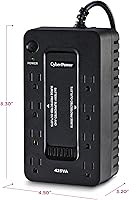
  • Dimensions: Measures 3.2″ deep, 8.3″ wide, and 4.5″ tall, making it compact enough to sit discreetly under a desk or beside a router.
  • Weight: Weighs 3.8 pounds, light enough to reposition easily but substantial enough to stay put once placed.
  • Power Cord: Comes with a 5-foot power cord terminating in a NEMA 5-15P plug, offering reasonable reach without requiring an extension cord in most setups.
  • Indicators: Features an LED status indicator that shows whether the unit is powered on and flags any wiring fault in the connected outlet.
  • USB Ports: Does not include any USB charging ports; all eight connection points are standard three-prong AC outlets.
  • Software: No management or monitoring software is included or compatible with this model, so there is no automatic shutdown or power event logging.
  • Warranty: Backed by a 3-year warranty that covers both the unit and the internal battery, which is notably comprehensive for this price tier.
  • Equipment Guarantee: Includes a connected equipment guarantee of up to $75,000 if surge-related damage occurs to properly connected devices during normal use.
  • Efficiency: The GreenPower design reduces idle power consumption by using a compact charger and inverter, drawing less standby energy than conventional UPS units.
  • Form Factor: Designed as a compact desktop unit, intended for placement on a desk surface or the floor beneath a workstation rather than in a rack enclosure.

Related Reviews
CyberPower SL700U 700VA Standby UPS
75%
93%
Ease of Setup
78%
Build Quality
54%
Battery Runtime
88%
Surge Protection
61%
Noise Level
More
CyberPower BRG1000AVRLCD 1000VA UPS System
75%
88%
Value for Money
54%
Battery Runtime
91%
Voltage Regulation (AVR)
93%
Ease of Setup
86%
LCD Display Usability
More
CyberPower EC650LCD 650VA Compact UPS System
79%
93%
Ease of Setup
84%
Battery Backup Reliability
58%
Runtime at Load
81%
ECO Mode Functionality
89%
LCD Display Usefulness
More
CyberPower OR1000PFCRT2U UPS System
85%
88%
Battery Life
91%
Ease of Setup
85%
Build Quality
93%
Flexibility (Rack/Tower Mount)
87%
Surge Protection
More
CyberPower OR1500PFCLCD UPS System
86%
92%
Performance During Power Outages
89%
Reliability of Surge Protection
81%
Ease of Setup
84%
Battery Runtime
88%
Build Quality
More
CyberPower AVRG900LCD 900VA UPS System
78%
93%
Voltage Regulation (AVR)
47%
Battery Runtime
96%
Ease of Setup
88%
LCD Display & Monitoring
83%
Outlet Layout & Capacity
More
CyberPower BRG1500AVRLCD2 UPS Battery Backup
86%
88%
Overall Performance
90%
Reliability
68%
Battery Runtime
94%
Ease of Setup
92%
Surge Protection
More
CyberPower AVRG750U AVR UPS System
82%
92%
Value for Money
85%
Setup & Installation
64%
Battery Runtime
88%
Surge Protection
80%
Design & Build Quality
More
CyberPower OR2200PFCRT2U 2000VA Sinewave UPS
76%
93%
Power Protection Quality
96%
Pure Sine Wave Output
67%
Battery Runtime
84%
Build & Physical Durability
58%
Installation & Setup
More
CyberPower CP900AVR UPS Battery Backup
78%
93%
Voltage Regulation (AVR)
91%
Power Protection Reliability
58%
Battery Runtime
84%
Outlet Layout & Flexibility
79%
Build Quality & Durability
More

FAQ

At a light load — say, just a router or a laptop charger — you might get around 6 minutes. Running a full desktop and monitor, expect closer to 90 seconds. The honest way to think about it: this battery backup unit is built to give you time to save your work and shut down properly, not to keep things running through a prolonged outage.

It can protect a gaming console plugged into one of the four battery-backed outlets, and it handles surge protection for everything connected. Just check your combined wattage doesn't exceed 260W. A TV, console, and receiver together can push close to or past that limit, so it's worth doing a quick load calculation before assuming full coverage.

During normal operation on utility power, it is essentially silent — most users forget it's there. You may hear a brief click or a soft alarm beep when it switches to battery mode, but day-to-day it sits quietly in the background.

Yes, the internal sealed lead acid battery is user-replaceable. You won't need a technician — the battery compartment is accessible, and compatible replacement batteries are available from CyberPower and third-party suppliers. Plan for replacement somewhere between the three- and five-year mark under normal use, though frequent outages can shorten that window.

When the unit runs on battery, it generates power in a stepped approximation of a smooth AC wave rather than a perfectly smooth curve. For most desktop computers, gaming consoles, routers, and monitors, this works fine. Where it can cause issues is with certain active power factor correction (PFC) power supplies found in some higher-end workstations, as well as sensitive medical devices or audio equipment. If your gear's manual specifically calls for a pure sine wave UPS, this unit is not the right match.

It's not a great idea. Laser printers draw a significant power spike when the fuser heats up, which can easily exceed this unit's capacity and trigger an overload. If you want to protect your printer from surges, use one of the four surge-only outlets instead — just know it won't stay on if the power cuts out.

Before putting it into service, charge it for at least eight hours with it plugged in. Batteries ship partially charged, and a full initial charge helps condition the battery and ensures you get the rated runtime from day one.

No, they split into two groups. Four outlets provide both battery backup and surge protection — these are the ones to use for your computer, monitor, or router. The other four are surge protection only, meaning they'll shield connected devices from voltage spikes but won't keep them powered during an outage. The outlets are spaced to accommodate larger wall adapters without blocking neighbors, which is a genuinely useful design detail.

CyberPower includes a connected equipment guarantee covering up to $75,000 in surge-related damage to devices properly connected to the unit. Keep your purchase receipt and register the product; you'll need documentation if a claim ever comes up. Always read the terms, as coverage applies to surge damage specifically and has conditions around proper connection and grounding.

Not with this unit. The ST425 has no companion software, no USB data port, and no network connectivity — the only feedback you get is the LED on the front panel, which shows power status and wiring faults. If you want automatic shutdown scripts, runtime reporting, or email alerts during outages, you would need to step up to a model with a USB data port and software support.

Where to Buy