Overview

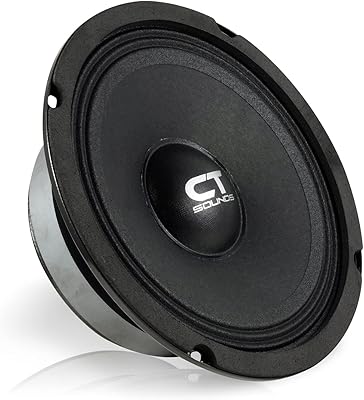
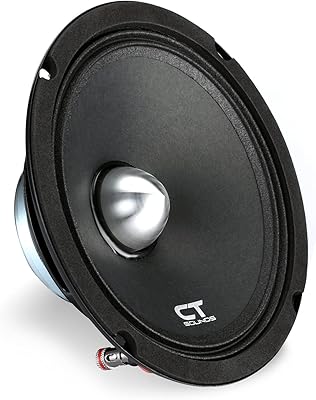
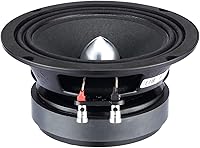
The CT Sounds MESO65-4 6.5″ Midrange Speaker sits in the middle of CT Sounds' driver lineup, slotting above the entry-level BIO65-4 and below the flagship NEO65-4. If you're coming from a set of full-range coaxials, this 6.5-inch midrange speaker represents a real step toward a purpose-built system — one where a dedicated subwoofer handles the low end and a tweeter takes the top. It is not a drop-in replacement for your existing speakers. Worth noting upfront: it's sold as a single unit, so plan your budget around a pair. Since its mid-2021 release, it has built a respectable review base for such a specialized component.
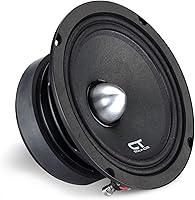
Features & Benefits

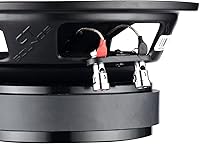
What separates this midrange driver from cheaper alternatives starts with the voice coil. CT Sounds uses a CCAW voice coil — copper-clad aluminum wire — which weighs less than solid copper, keeping moving mass low and efficiency high across the vocal and upper-bass frequencies this driver is designed to own. The motor pairs a Y35 ferrite magnet with an 8mm T-Yoke, supporting sustained power under hard driving without the thermal stress that plagues lighter-duty motors. The custom-tooled basket repositions the spider higher in the frame, reducing mechanical contact risk at high excursion. A 96 dB sensitivity rating means you won't need a massive amplifier to get strong output from this driver.

Best For

The MESO65-4 makes the most sense inside a dedicated 3-way system — where a subwoofer handles the lows, a tweeter covers the highs, and this 6.5-inch midrange speaker owns the critical vocal range in between. Builders who already run an amplifier and know how to configure a passive or active crossover will find it fits naturally into that workflow. SPL enthusiasts and competition-oriented installs benefit from the motor efficiency and power headroom. That said, if you're expecting to wire it up and run it full-range without a crossover, this is the wrong choice entirely. Think of it as a precision component for experienced builders rather than a general-purpose speaker upgrade.

User Feedback

Buyers generally come away satisfied, with the aggregate rating landing well above average for a niche component. The most consistent praise centers on vocal clarity and how cleanly this driver handles the upper-bass hand-off from a subwoofer — listeners report that voices and instruments carry a definition that same-price coaxials struggle to match. Build quality earns positive mentions too, with the basket and magnet assembly feeling substantial for the price tier. The friction points are predictable: buyers who skipped crossover planning express frustration with the limited frequency range. A handful of reviewers also flag minor unit-to-unit inconsistency and occasional shipping damage. Neither issue appears widespread, but both are worth keeping in mind before ordering.

Pros

  • CCAW voice coil keeps moving mass low, translating to noticeably better efficiency across vocal and upper-bass frequencies.
  • At 96 dB sensitivity, this midrange driver plays loud without demanding a high-wattage amplifier.
  • The Y35 ferrite magnet and 8mm T-Yoke give the motor structure real thermal headroom for sustained hard driving.
  • Custom-tooled basket design reduces mechanical contact risk at high excursion — a genuine engineering detail at this price tier.
  • Single 4-ohm impedance makes amplifier matching and wiring straightforward for most builds.
  • Vocal clarity and instrument separation consistently earn praise from buyers running active crossover setups.
  • Build quality feels more substantial than competing drivers in the same price range.
  • The 250W RMS power handling gives headroom for competition installs without requiring exotic amplification.
  • Sits at an accessible price point for enthusiasts stepping up from budget full-range coaxials.

Cons

  • Sold as a single unit — stereo pairs cost double, and that math catches some buyers off guard.
  • Requires an external crossover; running this 6.5-inch midrange speaker full-range produces poor results.
  • The 140 Hz to 6,000 Hz frequency window means you must already own, or plan to buy, a tweeter and subwoofer.
  • A handful of reviewers have flagged minor unit-to-unit consistency issues, suggesting occasional quality control variation.
  • Shipping damage has come up in a small but recurring portion of reviews — inspect carefully on arrival.
  • No waterproofing makes it unsuitable for any marine, convertible, or outdoor audio application.
  • New builders without crossover experience may need extra research time before this driver performs as expected.
  • Limited warranty coverage leaves some buyers uncertain about long-term support if a unit fails early.

Ratings

The CT Sounds MESO65-4 6.5″ Midrange Speaker scores below are generated by our AI engine after analyzing verified global buyer reviews, actively filtering out incentivized, bot-generated, and spam submissions to surface what real builders actually experience. This midrange driver earns strong marks in the areas that matter most to its target audience, while a few genuine friction points — particularly around setup expectations — are reflected honestly in the scores.
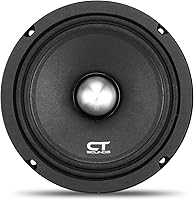
Sound Clarity
91%
Buyers consistently single out vocal reproduction as the standout quality of this driver — voices cut through cleanly whether you are sitting in traffic or pushing volume on the highway. The CCAW voice coil's low mass pays off here, delivering snappy transient response that makes instruments and dialogue feel present rather than smeared.
A small subset of reviewers note that clarity depends heavily on dialing in the crossover correctly; a poorly set high-pass point muddies the lower midrange and undermines the driver's natural strengths. Out-of-the-box results without crossover tuning can be underwhelming.
Build Quality
88%
Holding this 6.5-inch midrange speaker in hand, the basket feels rigid and the magnet assembly has real heft — buyers frequently compare it favorably to pricier competitors. The custom-tooled basket design, which raises the spider position, is a practical engineering detail that experienced builders recognize and appreciate.
A recurring note in reviews involves unit-to-unit consistency, with occasional reports of minor cosmetic or assembly variations between individual speakers in the same order. It is not a widespread defect, but quality control is not perfectly uniform across the production run.
Sensitivity & Efficiency
93%
At 96 dB, this midrange driver is genuinely easy to bring to life — builders running modest amplifier channels report strong output without needing to push gain into distortion territory. For daily commuters who want real volume from a compact amplifier setup, this efficiency advantage is a practical win.
High sensitivity also means the driver reveals noise floor issues in lower-quality amplifiers more readily than a less-efficient speaker would. Buyers pairing it with budget amplifiers have noted audible hiss at idle that would be masked by a less sensitive driver.
Power Handling
84%
The 250W RMS rating is credible for this price tier, and SPL-oriented builders report that the motor structure holds up under sustained hard driving without early thermal compression. Competition installers running active crossovers and dedicated amplifier channels have pushed the MESO65-4 confidently in demo environments.
The power handling spec is only meaningful when a crossover filters out sub-150 Hz content; buyers who run it without one report the driver struggling quickly under bass-heavy material. The 250W figure should not be taken at face value in a poorly planned system.
Value for Money
86%
For enthusiasts stepping up from full-range coaxials, the MESO65-4 punches noticeably above its price tier in terms of motor construction, sensitivity, and vocal performance. Experienced builders frequently describe it as one of the more honest value propositions in the 6.5-inch dedicated midrange category.
The value calculation changes for buyers who factor in the cost of a compatible amplifier channel, crossover hardware, and a second unit for stereo — the total system spend can surprise newcomers who anchored their expectations to the per-unit price alone.
Crossover Compatibility
78%
22%
The standard 4-ohm impedance and 140 Hz to 6,000 Hz operating band make it straightforward to integrate into both passive and active crossover setups. Builders running DSP-controlled systems report clean hand-offs to tweeters and subwoofers with minimal overlap artifacts.
The driver's narrow operating window demands accurate crossover configuration — buyers without prior experience setting high-pass and low-pass points have expressed frustration when the speaker sounds thin or harsh. There is no built-in guidance from CT Sounds on recommended crossover frequencies.
Installation Ease
74%
26%
The 6.5-inch footprint fits a widely standardized cutout size, and the 4-ohm single-voice-coil wiring is uncomplicated for anyone who has installed car speakers before. Experienced builders treat the physical installation as a non-event.
The 3.25-inch mounting depth is a real constraint in shallow factory door pockets, and some buyers have had to fabricate spacers or baffles to achieve proper clearance. Newcomers underestimate how much planning the crossover and amplifier integration adds to total installation time.
Frequency Accuracy
83%
Within its intended band, buyers describe the frequency response as even and predictable — the upper-bass hand-off from a subwoofer around 150 Hz blends naturally, and the top of the range transitions to a tweeter without an obvious gap when crossover points are properly set.
Measurements from hobbyist builders show some rolloff behavior near the edges of the rated range, particularly approaching 6,000 Hz, meaning the tweeter crossover point should be set conservatively below the upper limit to avoid a thin transition region.
Motor Design
89%
The combination of Y35 ferrite magnet and 8mm T-Yoke represents a well-considered motor specification for this price tier, and builders who have compared it side-by-side with competing drivers note the tighter gap geometry translates to more controlled cone movement at higher excursion levels.
Ferrite magnets, while cost-effective and reliable, are heavier than neodymium alternatives — buyers prioritizing minimal added weight in door installations may find the 2.06-pound unit weight a consideration when mounting in thin factory panels.
Shipping & Packaging
69%
31%
The majority of buyers report the driver arriving in good condition, with the packaging adequate for standard shipping conditions. Orders fulfilled through primary channels typically arrive without incident.
A recurring minority of reviews describes transit damage — dented baskets, loose magnet assemblies — suggesting the packaging does not consistently protect against rougher handling in the supply chain. Buyers are advised to inspect the unit thoroughly before installation and document any damage immediately.
Compatibility with Existing Systems
76%
24%
The standardized impedance and mounting format mean this driver can slot into a wide range of car audio architectures, from simple 2-channel amplifier builds to multi-channel DSP-controlled systems. Builders upgrading an existing 3-way setup find it integrates without significant rewiring.
Compatibility largely depends on what surrounds the driver — buyers attempting to integrate it with passive factory crossovers designed for full-range speakers will find the frequency balance severely compromised. It is only truly compatible when the surrounding system is built around its narrow operating band.
Longevity & Durability
79%
21%
Users who have run the MESO65-4 for a year or more in daily-driver setups report no mechanical degradation — the spider maintains its position, voice coil stays centered, and output remains consistent. The basket rigidity contributes to confidence in long-term reliability.
The limited warranty provides some baseline protection, but the specific terms and duration are not prominently communicated, leaving buyers uncertain about coverage if a unit fails after moderate use. No waterproofing means environmental exposure will shorten lifespan significantly.
Brand Reputation & Support
73%
27%
CT Sounds has built a credible following in the enthusiast car audio community, and the brand is generally regarded as delivering honest specs without the inflation common among budget-oriented competitors. The MESO65-4 fits consistently with that reputation.
Post-purchase support and warranty resolution have generated mixed feedback — some buyers report straightforward exchanges while others describe difficulty reaching customer service in a timely manner. The brand's support infrastructure does not yet match the quality of its hardware.

Suitable for:

The CT Sounds MESO65-4 6.5″ Midrange Speaker is purpose-built for car audio enthusiasts who are assembling or upgrading a dedicated 3-way component system — one where a subwoofer handles the low end, a tweeter takes the upper frequencies, and this driver owns the critical vocal midrange in between. If you already have an amplifier on hand and know how to set crossover points, this 6.5-inch midrange speaker slots into that workflow without friction. Its 96 dB sensitivity rating makes it genuinely easy to drive, so builders working with modest amplifier power won't be leaving output on the table. Competition-oriented installs and SPL builds benefit from the motor efficiency and sustained power handling, but it's equally at home in a well-tuned daily driver where vocal clarity matters as much as volume. DIYers who fabricate their own door panels or custom enclosures will appreciate the basket's structural rigidity and the standardized 4-ohm load.
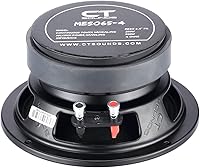
Not suitable for:

The CT Sounds MESO65-4 6.5″ Midrange Speaker is the wrong choice if you're looking for a straightforward coaxial swap — it has no tweeter, covers only 140 Hz to 6,000 Hz, and will sound thin and lifeless without a properly configured crossover filtering the signal before it hits the driver. Buyers who don't already own an external amplifier and a crossover network should budget for both before this driver makes any sense. It's also sold as a single unit, so if you're thinking about the purchase price as the full cost of a stereo upgrade, you're only halfway there. Anyone expecting plug-and-play convenience or compatibility with a factory head unit running passive, full-range output will likely be frustrated. Finally, if your environment exposes speakers to moisture or weather — open-air vehicles, marine applications — look elsewhere, as this driver carries no waterproofing whatsoever.
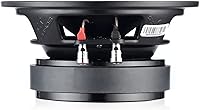
Specifications

  • Speaker Size: This driver measures 6.5 inches in diameter, fitting standard 6.5-inch mounting locations common in car doors and custom enclosures.
  • Power Handling: Rated at 250W RMS continuous and 500W MAX peak, requiring a properly matched amplifier and crossover to realize that headroom safely.
  • Sensitivity: A 96 dB sensitivity rating means the driver produces strong output per watt, reducing the amplifier power needed to reach listening volumes.
  • Frequency Response: Designed to operate between 140 Hz and 6,000 Hz, covering the critical vocal midrange band and requiring a crossover to filter signals outside this range.
  • Impedance: Single 4-ohm impedance load simplifies amplifier matching and keeps wiring calculations straightforward for most car audio setups.
  • Voice Coil: Built with a CCAW (copper-clad aluminum wire) voice coil that reduces moving mass compared to solid copper, improving efficiency at midrange frequencies.
  • Magnet Type: Uses a Y35 ferrite magnet, a grade known for consistent flux density and reliable performance under sustained high-power conditions.
  • Yoke: An 8mm T-Yoke works in tandem with the ferrite magnet to optimize the motor gap geometry and support higher continuous power handling.
  • Basket Design: The custom-tooled basket positions the spider higher inside the frame, reducing the chance of mechanical contact between the spider, lead wire, and front plate at high excursion.
  • Driver Type: Dynamic driver design using a moving-coil motor structure, the standard configuration for car audio midrange applications.
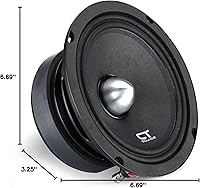
  • Dimensions: Overall unit dimensions are 6.69″ diameter by 3.25″ depth, which should be confirmed against available mounting depth before installation.
  • Weight: Each speaker weighs 2.06 pounds, reflecting the ferrite magnet assembly and steel basket construction.
  • Mounting Type: Designed for car mount installations, compatible with standard 6.5-inch cutout templates in door panels and custom fabricated baffles.
  • Unit Count: Sold as a single speaker unit; buyers building a stereo pair must purchase two separate units.
  • Waterproofing: This driver carries no waterproof or weather-resistance rating and is not suitable for marine, convertible, or outdoor audio environments.
  • Warranty: Covered by a limited warranty from CT Sounds; buyers should confirm specific terms and duration directly with the manufacturer before purchase.

Related Reviews

CT Sounds TROPO65-4 6.5″ Midrange Speaker
76%
87%
Sound Clarity
91%
Value for Money
88%
Fitment & Installation
72%
Build Quality
61%
Crossover Requirement
More
CT Sounds Meso-6.5-D4 6.5 Inch Dual 4 Ohm Car Subwoofer
83%
90%
Bass Performance
85%
Power Handling
88%
Build Quality
65%
Installation Ease
92%
Cooling System Effectiveness
More
CT Sounds NEO65-4 6.5″ Midrange Speaker
81%
93%
Sensitivity & Efficiency
89%
Magnet & Motor Quality
86%
Power Handling
84%
Midrange Clarity
88%
Value for Money
More
CT Sounds Meso 6.5″ Coaxial Car Speakers
79%
86%
Sound Clarity
71%
Bass Response
78%
Build Quality
91%
Ease of Installation
88%
Value for Money
More
CT Sounds TROPO-6.5-D2 6.5″ Car Subwoofer
77%
83%
Bass Output for Size
88%
Value for Money
79%
Build Quality
76%
Thermal Management
84%
Installation Ease
More
DS18 PRO-GM6.4 6.5″ Midrange Car Speaker
75%
91%
Vocal Clarity
87%
Build Quality
84%
Power Handling
89%
Midrange Presence
58%
Installation Experience
More
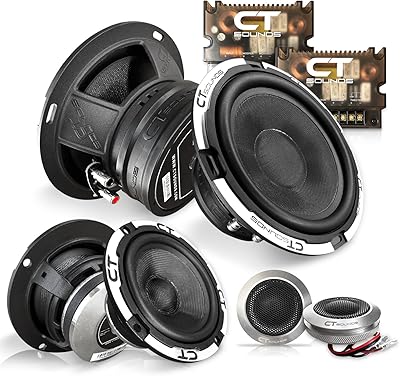
CT Sounds Meso 6.5″ 3-Way Component Speakers
76%
91%
Midrange Clarity
87%
Tweeter Performance
88%
Soundstage & Separation
63%
Bass Response
58%
Amplifier Dependency
More
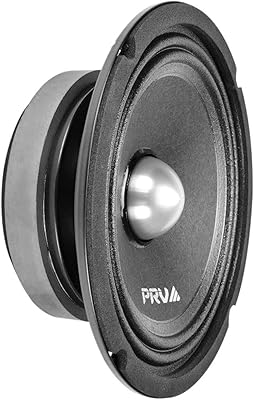
PRV Audio 6MR250B-4 Slim 6.5-inch Midrange Speaker
84%
91%
Sound Clarity
94%
Fitment & Depth
88%
Value for Money
79%
Installation Experience
74%
Build Quality
More
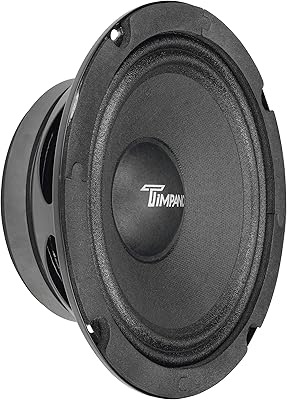
Timpano TPT-MR6-4 PRO 6.5 Inch Shallow Midrange Speaker
87%
88%
Audio Performance
90%
Ease of Installation
85%
Build Quality
92%
Midrange Clarity
87%
Power Handling
More
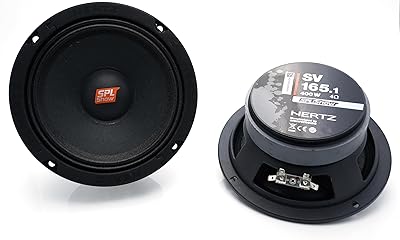
HERTZ SV-1651 6.5″ 4-Ohm SPL Midrange Speaker Drivers (Pair)
88%
92%
Sound Quality
88%
Performance at High Volume
90%
Build Quality
85%
Installation Ease
89%
Compatibility with Amplifiers
More

FAQ

Yes, absolutely. The MESO65-4 only covers 140 Hz to 6,000 Hz, so running it full-range will produce poor results and could damage the driver. You will need either a passive crossover network or an amplifier with built-in active crossover controls to filter the signal before it reaches this driver.

Not without additional components. The CT Sounds MESO65-4 6.5″ Midrange Speaker is a dedicated midrange driver, not a full-range coaxial. You would still need a tweeter, a subwoofer, and a crossover to build a complete system around it. Dropping it in as a swap for a factory speaker without those pieces will leave your system sounding incomplete.
It depends on your setup, but for a standard stereo build you need two. This midrange driver is sold as a single unit, so a stereo pair means two separate purchases. Factor that into your total budget when planning.

Given its 96 dB sensitivity, this driver is fairly easy to drive — you do not need a massive amplifier to get strong output. A channel rated between 75W and 250W RMS into 4 ohms is a reasonable target. More important than raw wattage is making sure the amplifier has stable crossover controls so you can filter out frequencies below 140 Hz before they reach the driver.

A good starting point is a high-pass crossover around 150 Hz to 200 Hz on the low end, and a low-pass cutoff somewhere between 3,500 Hz and 5,000 Hz on the top end to hand off cleanly to a tweeter. The exact points will depend on what tweeter and subwoofer you are pairing with it, and tuning by ear in your specific vehicle always helps.

Copper-clad aluminum wire is lighter than solid copper, which means the voice coil assembly has less mass to move. Less moving mass translates to faster transient response and better efficiency — the driver reaches its target frequency more quickly and wastes less power as heat. In practical terms, this contributes to the crisp vocal clarity that buyers consistently mention in reviews.

It fits a standard 6.5-inch cutout, but the mounting depth of 3.25 inches is something to check carefully before you commit. Some factory door pockets and inner panels do not have that much clearance, especially on compact vehicles. Measure your available depth with the door panel off before ordering.

No. This midrange driver has no waterproofing or moisture resistance of any kind. Exposure to rain, spray, or high humidity will damage it. If you need speakers for a boat, ATV, or open-air environment, look for drivers specifically rated for marine or outdoor use.

The MESO65-4 sits a step above the BIO65-4 in terms of power handling, sensitivity, and motor construction. The CCAW voice coil and the custom basket design in particular represent meaningful upgrades for buyers who push their systems hard or want more efficient output at lower amplifier power. The BIO65-4 is a reasonable entry point; this driver is for buyers ready to take the next step without spending significantly more.

Inspect the driver as soon as it arrives and document any damage with photos before doing anything else. A small number of buyers have flagged shipping damage in their reviews, so catching it early is important. Contact the seller or CT Sounds directly with your documentation to initiate a warranty or return claim before attempting to install a potentially compromised unit.

Where to Buy