Overview

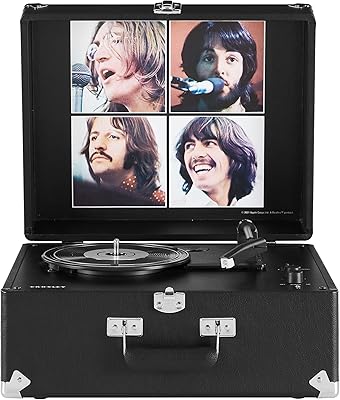
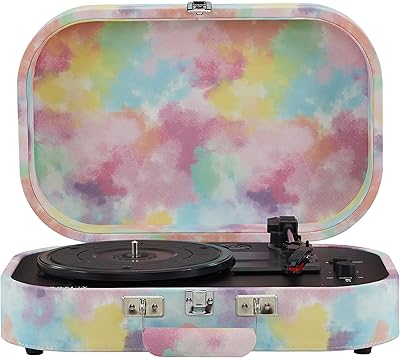
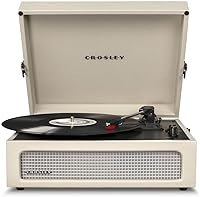
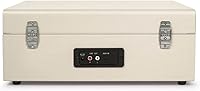
The Crosley Voyager Portable Vinyl Turntable is the kind of record player that wins you over with its looks before you even drop the needle. It arrives styled like a vintage travel suitcase, compact enough to sit on a nightstand or dorm shelf without demanding attention it hasn't earned. Crosley is a mass-market brand — not a name audiophiles whisper with reverence — and that context matters here. This portable turntable isn't chasing sonic perfection. It's chasing accessibility, charm, and a low barrier to entry for anyone curious about vinyl. Walk in with calibrated expectations and you'll very likely walk away happy.
Features & Benefits

The Voyager runs on a belt-driven mechanism and handles all three standard record speeds — 33 1/3, 45, and 78 RPM — so whether you're spinning a vintage shellac or a modern LP, it's covered. Built-in stereo speakers mean you can start listening straight out of the box, while the RCA outputs give you an easy path to a better external setup when you're ready. One point worth clarifying: the Bluetooth here is a receiver, not a transmitter. You can stream music from your phone to the Voyager's speakers, but you cannot wirelessly send audio out to a Bluetooth speaker. The auxiliary input and headphone jack add welcome flexibility.

Best For

This portable turntable is a natural fit for first-time vinyl buyers who want to explore the hobby without committing serious money or shelf space. It also makes a genuinely thoughtful gift — it looks good, sets up in minutes, and doesn't require the recipient to already own a stereo system. College apartments and small bedrooms are its real sweet spot. If you already have a dedicated turntable setup, this Crosley deck probably won't impress you. But if you mostly stream and just want a low-fuss way to occasionally play records, the Voyager slots into that lifestyle without any real friction.

User Feedback

Most buyers land somewhere around satisfied — the 4.1-star average reflects a crowd that largely got what the box promised. People consistently praise the easy setup and the retro styling. Complaints tend to cluster around two things: the built-in speakers, which get thin and slightly harsh at higher volumes, and the ceramic cartridge, which can be harder on record grooves than a moving-magnet stylus when used heavily and often. It's not a dealbreaker for casual listening, but worth knowing upfront. Build quality splits opinion too — the plastic body reads as impressively light to some buyers and a little cheap to others. Audio-focused users often connect it to external speakers early on.

Pros

  • Vintage suitcase design looks great on a shelf and doubles as room decor.
  • Plays all three record speeds — 33 1/3, 45, and 78 RPM — right out of the box.
  • Built-in stereo speakers mean no additional equipment is needed to start listening.
  • Bluetooth receiver lets you stream music from your phone directly to the onboard speakers.
  • RCA outputs make it easy to connect to a better external speaker or stereo when ready.
  • Lightweight at 5.5 pounds, making it genuinely portable and easy to move between rooms.
  • Headphone jack included for private listening without disturbing others.
  • Setup is straightforward enough for complete beginners with no prior turntable experience.
  • Auxiliary input adds flexibility for connecting other audio sources.
  • Adjustable pitch control offers basic speed fine-tuning beyond simple RPM switching.

Cons

  • Built-in speakers sound noticeably thin and harsh when pushed to higher volumes.
  • Ceramic cartridge can wear record grooves faster than higher-quality moving-magnet styli.
  • Bluetooth is input-only — you cannot stream audio out to a Bluetooth speaker or headphones.
  • All-plastic construction feels less durable and may feel cheap to some buyers.
  • No USB recording output, so digitizing vinyl is not possible with this deck.
  • Speaker quality rarely satisfies anyone with even modest expectations for audio fidelity.
  • Long-term heavy use may require needle replacement sooner than with premium cartridges.
  • Not well-suited for connecting to a proper phono preamp without an external workaround.

Ratings

Our score for the Crosley Voyager Portable Vinyl Turntable was built by an AI model trained to analyze thousands of verified global buyer reviews, actively filtering out incentivized, bot-generated, and spam submissions to surface genuine user sentiment. The ratings below reflect both what this portable turntable does well and where real-world buyers have run into consistent frustrations. Nothing has been softened — strong scores and weak ones are reported as the data shows them.
Design & Aesthetics
91%
The vintage suitcase look is the single most praised aspect across buyer reviews worldwide. People display it on shelves, dressers, and desks as much as they actually play records on it, and the compact footprint makes it an easy fit in small living spaces or dorm rooms.
A small segment of buyers found the plastic finish looks slightly less premium in person than in product photos, particularly around the lid clasps and corner trim. Color accuracy can also vary slightly by screen, leading to occasional disappointment at unboxing.
Ease of Setup
93%
Most buyers reported being up and playing records within ten minutes of opening the box, with no prior turntable experience needed. The plug-and-play nature is a consistent highlight in gift-recipient reviews, where ease of first use matters more than anything else.
A handful of users noted that the included instructions are sparse and assume some basic familiarity with turntables. Those who received it as a gift with no guidance occasionally struggled with attaching the stylus correctly on the first attempt.
Sound Quality
58%
42%
For quiet background listening in a small room, the built-in stereo speakers perform adequately and get the job done without any external equipment. Buyers who connected the Voyager to powered external speakers via the RCA outputs consistently reported a meaningful improvement in audio experience.
At higher volumes the onboard speakers become noticeably thin and slightly harsh, with limited bass response and a tendency to distort. Audio-conscious buyers are almost universally disappointed by the built-in speaker performance, and this is the most frequently cited complaint in critical reviews.
Build Quality
62%
38%
The unit holds up reasonably well for casual home use, and the lightweight plastic construction is genuinely appreciated by buyers who move it between rooms or bring it to gatherings. Most users who treat it as a lifestyle accessory rather than a workhorse report no structural issues over the first year.
The all-plastic body divides opinion sharply — a meaningful portion of buyers describe it as feeling cheap or flimsy, especially the tonearm and lid hinges. A small but notable number of reviews mention quality control inconsistencies, including tonearms that arrived misaligned or lids that do not close flush.
Bluetooth Functionality
69%
31%
The Bluetooth receiver feature is a genuine convenience for days when you want to play music from your phone through the turntable's speakers without putting on a record. Pairing is quick and reliable for most users, and the range is sufficient for typical room use.
A significant number of buyers purchase this expecting Bluetooth output — the ability to stream vinyl audio wirelessly to a Bluetooth speaker — only to discover the feature only works in reverse. This misunderstanding generates real frustration, and the marketing around this spec is widely considered unclear.
Record Compatibility
88%
Supporting all three standard speeds — 33 1/3, 45, and 78 RPM — means buyers can play virtually any record they own or find at a thrift store, including vintage shellac discs that many modern entry-level turntables skip entirely. This breadth of compatibility is a practical win for curious collectors.
The 78 RPM playback works functionally, but the ceramic cartridge is not ideally suited for shellac records, which are already more fragile. Purists who own original 78s and play them regularly may want a dedicated stylus for that format to avoid unnecessary wear.
Cartridge & Stylus
47%
53%
The ceramic cartridge is functional for casual listening and replacement needles are inexpensive and widely available online. For someone spinning records a few times a week on records they are not particularly precious about, it covers basic needs without any modifications.
The ceramic cartridge applies more tracking force than quality moving-magnet alternatives, which raises legitimate concern about gradual groove wear on frequently played or valuable records. This is the most technically criticized component of the Voyager and is frequently flagged by experienced vinyl listeners as the deck's biggest weakness.
Portability
84%
At 5.5 pounds with a suitcase latch design, the Voyager is easy to carry between rooms, pack into a car, or bring to a friend's place for a casual listening session. Its compact dimensions mean it stores away easily when not in use, unlike larger belt-drive decks.
It requires a constant power outlet, so true on-the-go portability — like outdoor or battery-powered use — is not an option. A few buyers expecting something closer to a truly mobile speaker were caught off guard by this limitation.
Value for Money
74%
26%
For buyers who want a stylish, all-in-one record player without needing a separate amplifier or speakers, the price feels fair given how much is packed into the package. As a gift, the perceived value is particularly high because of the strong visual presentation.
More discerning buyers note that for a modest additional investment, better-sounding and longer-lasting entry-level options from competing brands are available. If sound quality is a priority even at a casual level, the value proposition weakens noticeably.
Connectivity Options
77%
23%
The combination of RCA outputs, auxiliary input, and a headphone jack makes this deck more versatile than its size and price would suggest. Buyers who want to grow into a better audio setup can start with the built-in speakers and gradually upgrade by connecting to external equipment.
The absence of USB recording output is a real gap for anyone who wants to digitize their collection. Given that competing decks in this category increasingly include USB output, its omission feels like a missed opportunity for a product that otherwise tries to cover multiple use cases.
Pitch Control
66%
34%
Having any pitch adjustment at this price tier is a minor but appreciated bonus, letting users nudge playback speed when records sound slightly off. Buyers who play older records with variable pressing quality find it occasionally useful.
The pitch control range is limited and the adjustment lacks the precision of a proper strobe-based system. For casual listeners it is fine, but anyone expecting accurate speed calibration will find it falls short of being a reliable tool.
Noise & Vibration
63%
37%
The belt-driven mechanism keeps motor noise lower than direct-drive designs at a comparable price, and for casual background listening most users do not notice any intrusive hum or rumble during playback.
Because the unit sits on a lightweight plastic chassis with limited internal damping, external vibrations — like footsteps on a wooden floor or nearby bass from the speakers — can cause the needle to skip. This is a recurring complaint in apartment and dorm-setting reviews.
Gifting Appeal
92%
The Voyager consistently earns high marks as a gift in buyer reviews — the packaging looks intentional, the styling is immediately impressive, and the zero-setup-knowledge requirement means anyone can enjoy it. It photographs well and presents attractively, which matters a lot in gift contexts.
Recipients who are already familiar with vinyl and have higher audio expectations sometimes feel underwhelmed once the novelty wears off. As a gift for a true music enthusiast, it risks being outgrown quickly once the recipient learns what better turntables sound like.

Suitable for:

The Crosley Voyager Portable Vinyl Turntable is a strong match for anyone stepping into vinyl for the first time and wanting a low-commitment, low-complexity entry point. It works especially well as a gift — the suitcase styling makes it immediately presentable, and the plug-and-play setup means the recipient can be listening within minutes. Students furnishing a dorm or small apartment will appreciate that it pulls double duty as both a functional record player and a piece of room decor. Casual listeners who split their time between streaming and spinning records will find the built-in Bluetooth receiver genuinely useful for days when they just want to play music from their phone through the onboard speakers. If your priority is fun, convenience, and a retro aesthetic over audiophile-grade playback, this portable turntable delivers squarely on its promise.

Not suitable for:

The Crosley Voyager Portable Vinyl Turntable is not the right call for anyone who cares seriously about sound quality or the long-term condition of their record collection. The ceramic cartridge, while functional, applies more tracking force than higher-quality styli and can gradually wear grooves with frequent, repeated plays — a real concern if you own valuable or irreplaceable records. The built-in speakers are adequate at modest volumes but fall short at anything louder, producing a thin, slightly harsh sound that more discerning ears will notice quickly. Anyone already owning a proper turntable setup or a dedicated hi-fi system will find the Voyager underwhelming by comparison. It also lacks USB recording output, so buyers hoping to digitize their vinyl collection will need to look elsewhere.

Specifications

  • Brand: Manufactured by Crosley, a mass-market consumer audio brand based in the United States.
  • Model Number: The official model designation is CR8017A-DU, corresponding to the Dune color variant.
  • Drive Type: Belt-driven mechanism, which isolates the platter from motor vibration better than direct-drive designs at this price tier.
  • Speeds: Supports all three standard playback speeds: 33 1/3, 45, and 78 RPM.
  • Cartridge Style: Ceramic cartridge with a replaceable stylus; compatible replacement needle is the NP6.
  • Built-in Speakers: Full-range stereo speakers are integrated into the unit, requiring no external amplification for basic playback.
  • Bluetooth: Bluetooth receiver (input only) allows wireless audio streaming from a paired phone or tablet to the onboard speakers.
  • Outputs: Stereo RCA output enables connection to an external amplifier, receiver, or powered speaker system.
  • Inputs: One auxiliary input (3.5mm) allows playback from external audio sources such as a phone or media player.
  • Headphone Jack: A standard 3.5mm headphone jack is included for private listening without disturbing others.
  • Pitch Control: Adjustable pitch control allows minor manual speed correction beyond simple RPM switching.
  • USB Recording: No USB output is present; this unit does not support direct vinyl-to-digital recording.
  • Dimensions: Unit measures 14 x 10.5 x 4.63 inches when closed, making it compact enough for desks and small shelves.
  • Weight: The turntable weighs 5.5 pounds, keeping it light and genuinely portable for occasional repositioning.
  • Materials: Chassis and outer casing are constructed from plastic, contributing to its lightweight but reducing perceived premium feel.
  • Included Items: Package includes the Voyager turntable, an RCA-to-3.5mm cable, a warranty card, and a user manual.

Related Reviews

Crosley RSD3 Mini Turntable
75%
78%
Build Quality
54%
Sound Quality
91%
Portability
88%
Ease of Setup
43%
Format Compatibility
More
Fluance RT80
Fluance RT80
81%
83%
Sound Quality
79%
Build Quality
91%
Ease of Setup
88%
Value for Money
77%
Cartridge Performance
More
Crosley T150A
Crosley T150A
74%
91%
Ease of Setup
67%
Sound Quality
72%
Build Quality
83%
Tonearm & Tracking
78%
Bluetooth Performance
More
Crosley Anthology CR6253C-BB Suitcase Turntable
74%
71%
Sound Quality
78%
Cartridge & Stylus
83%
Bluetooth Performance
59%
Build Quality
91%
Ease of Setup
More
MYKESONIC YY1632 Automatic Bluetooth Vinyl Turntable
78%
91%
Ease of Setup
88%
Automatic Operation
86%
Cartridge & Tracking
83%
Bluetooth Functionality
61%
Built-in Speaker Quality
More
Crosley C62C
Crosley C62C
79%
78%
Sound Quality
84%
Build Quality
88%
Ease of Setup
86%
Cartridge & Stylus Performance
63%
Bluetooth Functionality
More
Crosley C100BT
Crosley C100BT
76%
76%
Sound Quality
63%
Build Quality
83%
Tonearm & Cartridge
58%
Bluetooth Connectivity
81%
Wired Connectivity & Preamp
More
Yamaha MusicCast Vinyl 500 Turntable
74%
91%
Wireless Ecosystem Integration
78%
Sound Quality
63%
Build Quality & Materials
88%
Streaming & Connectivity
84%
Ease of Setup
More
VINYLS LINK TE-106BU Bluetooth Turntable
80%
72%
Sound Quality
88%
Bluetooth Connectivity
76%
Build Quality
91%
Portability
85%
Ease of Setup
More
Audio-Technica AT-SB727
79%
93%
Portability & Form Factor
71%
Bluetooth Performance
68%
Sound Quality
67%
Battery Life
84%
Build Quality & Materials
More

FAQ

This is one of the most common concerns people raise, and it deserves a straight answer. The Crosley Voyager Portable Vinyl Turntable uses a ceramic cartridge, which generally applies more tracking force than higher-end moving-magnet styli. For casual, occasional listening it is unlikely to cause noticeable damage quickly, but if you plan to play valuable or irreplaceable records frequently, upgrading to a better stylus or a different deck is worth considering.
Not directly — and this trips up a lot of buyers. The Voyager's Bluetooth is a receiver, meaning you can stream music from your phone to its built-in speakers. You cannot send audio out from the turntable wirelessly to a Bluetooth speaker or headphones. For that, you would need to use the RCA outputs with a wired connection to an external speaker.

No, the Voyager has full-range stereo speakers built right in, so you can start playing records straight out of the box. That said, the onboard speakers have their limits — if you want noticeably better sound, connecting it to a powered speaker via the RCA outputs makes a real difference.

It handles all three standard vinyl formats: 33 1/3 RPM LPs, 45 RPM singles, and 78 RPM shellac records. You can switch speeds manually, so your entire collection should be compatible regardless of when the records were pressed.

Setup is about as simple as it gets. Take it out of the box, attach the stylus if it is not already in place, plug it in, and you are ready to go. Most people are playing their first record within ten minutes, which is part of what makes this deck popular as a gift.

Yes, and you should plan to eventually. The replacement stylus is the NP6, which is widely available online and is not expensive. Swapping it out yourself is straightforward — no tools required — and it is good practice to replace it every 500 to 1,000 hours of play depending on use.

Unfortunately no. The Voyager does not have a USB output, so there is no built-in path for digitizing records directly to a computer. If converting vinyl to digital files is important to you, you would need a turntable that specifically advertises USB recording capability.

No external phono preamp is required for basic use since the built-in speakers handle playback on their own. If you want to connect it to an older stereo receiver or amplifier that lacks a built-in phono stage, you may need a small external preamp — but for most casual setups with powered speakers, the RCA output works fine as-is.

It is genuinely portable in the casual sense — at 5.5 pounds with a suitcase-style latch, it is easy to carry between rooms or take to a friend's place. It is not designed for outdoor use or battery operation, though, so you will always need a power outlet nearby.

Honestly, there is a noticeable gap. The built-in speakers handle light background listening well enough, but they get thin at higher volumes and lack the depth you would get from a dedicated audio setup. For a first turntable or a casual lifestyle buy, that trade-off is reasonable. If sound quality is your main priority, investing in a better cartridge and external speakers — or stepping up to a different turntable — will serve you better in the long run.