Overview

The Cosmo MINI300 Document Copy Stand is a compact, American-made copy stand built for hobbyists who want a reliable way to digitize old photos, documents, slides, and negatives without investing in bulky professional gear. It works with both DSLR cameras and smartphones, making it genuinely versatile for the casual archivist. At its mid-range price, you get a purpose-built tool — not a luxury studio setup, and it doesn’t pretend to be one. It currently holds the #1 Best Seller rank in Photographic Studio Copying Equipment on Amazon, which says something about its appeal within a niche but real audience.
Features & Benefits

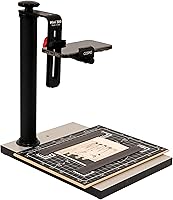
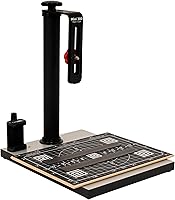
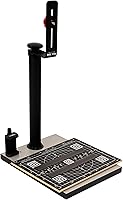
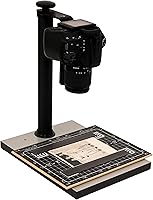
The build quality here is noticeably deliberate for a small-format stand. The steel column — 1.5-inch diameter, 12 inches tall, finished in black wrinkle powder coat — feels solid and resists flex during shooting. The reversible anodized aluminum L-bracket lets you position your camera anywhere between 7″ and 17″ above the board, with a secondary hole for lateral fine-tuning. The included Floating Magnetic Board is a genuine highlight: its 0.5″ precision grid and two magnetic strips keep documents flat and properly aligned, which matters a lot when shooting a stack of old family snapshots. A phone holder and dedicated side post hole round things out for smartphone users.

Best For

This copy stand is squarely aimed at home archivists and casual photographers, and it knows its audience. If you’ve got a box of faded family prints, old slides, or loose documents you’ve been meaning to digitize, this is exactly the kind of low-friction setup that gets the job done without a steep learning curve. DSLR shooters with lighter cameras will find the height range adequate for most document sizes. Smartphone users are especially well served — the side mounting hole centers the phone’s camera cleanly over the board. Those with limited desk space will also appreciate the compact footprint and how quickly the whole thing packs down.

User Feedback

With a 4.2-star average across roughly 90 ratings, this document digitizing stand sits in comfortable, if not unanimous, approval territory. Most buyers highlight quick assembly and the quality of the included Floating Magnetic Board as standout positives — neither of which is a given at this price tier. The criticisms that do surface tend to focus on height limitations for users with larger DSLR setups and some minor stability concerns when the bracket is extended to its upper range. The phone holder earns decent marks for convenience, though a few users feel it could be sturdier. Buyers with focused digitizing goals leave the most satisfied reviews; those expecting professional studio rigidity may come away wanting more.

Pros

  • Assembles in under a minute with no tools — genuinely fast and frustration-free setup
  • The included Floating Magnetic Board is a standout accessory that keeps originals flat and properly aligned
  • Entirely designed and manufactured in the USA, which matters to buyers who prioritize domestic craftsmanship
  • Works with both DSLR cameras and smartphones, covering two distinct user types with one purchase
  • The anodized aluminum L-bracket feels solid and is reversible, giving useful flexibility in positioning
  • Compact footprint makes it easy to store and practical for small desks or limited work areas
  • Magnetic strips included to hold documents in place — a small detail that makes repeated shooting much easier
  • The dedicated side post hole for smartphone users centers the camera accurately over the board
  • Macro focus range from under 10 cm to around 50 cm supports a wide variety of document and object sizes
  • At its price tier, the overall build quality consistently surprises buyers who expected less

Cons

  • Maximum column and bracket height may be insufficient for users with larger camera bodies or longer lenses
  • Minor wobble reported at the top of the bracket’s vertical range, which can affect image sharpness
  • The phone holder feels functional but basic — not confidence-inspiring for premium or larger smartphones
  • Only supports cameras up to 2 lbs, which rules out heavier DSLR and lens combinations entirely
  • The baseboard at 12″ x 9.5″ limits how large a document or object you can shoot in a single frame
  • No built-in lighting solution — buyers need to source and position their own lighting separately
  • The melamine baseboard surface, while practical, can show scratches over time with regular use
  • With only 90 ratings total, the review pool is still relatively small for high-confidence buying decisions
  • Users wanting to shoot beyond flat documents — product photography, varied still-life work — may find the platform too specialized

Ratings

Our AI scoring for the Cosmo MINI300 Document Copy Stand was built by analyzing verified buyer feedback from multiple global sources, with spam, bot-generated, and incentivized reviews actively filtered out before any scores were calculated. The result is a transparent, category-by-category breakdown that reflects both what this copy stand genuinely does well and where real buyers have run into frustration. No category has been softened — the scores reflect the full picture.
Build Quality
83%
The steel column and updated anodized aluminum L-bracket consistently earn praise from buyers who expected less at this price point. The black wrinkle powder coat finish on the column holds up well to regular handling, and the thicker bracket construction is noticeably more rigid than earlier iterations.
Some users report that the melamine baseboard shows surface scratches after extended use, and the bracket connection point can feel slightly less reassuring when the arm is pushed toward its upper travel limit. It’s solid for amateur use, but not without its physical limits.
Stability
71%
29%
At mid-range height settings — roughly the lower two-thirds of the bracket’s travel — the stand holds steady enough for document shooting without requiring a remote shutter. The weighted steel column provides a good base and doesn’t shift during normal tabletop use.
The recurring complaint across user feedback is wobble at or near the 17″ maximum extension, which introduces enough vibration to affect sharpness if you’re shooting with a camera and pressing the shutter directly. Users with heavier camera setups feel this limitation more acutely.
Ease of Assembly
94%
Assembly is one of the most universally praised aspects of this copy stand — buyers across skill levels consistently report being set up and ready to shoot within one to two minutes of opening the box. No tools are required, and the post-and-bracket system is intuitive even for first-time users.
A small number of users noted that the post fit in the baseboard hole felt slightly loose on arrival, requiring minor shimming or careful positioning to keep the column fully upright. This appears to be an occasional quality control variance rather than a systematic issue.
Height & Reach Range
62%
38%
For standard document and photo digitizing — letter-size prints, old snapshots, slides — the 7″ to 17″ vertical range covers the practical needs of most hobbyist archivists. Smartphone users in particular tend to find the range more than adequate for their setup.
DSLR users with longer focal length lenses frequently flag the height ceiling as a genuine limitation, especially when trying to fill the frame with larger documents or shoot at comfortable working distances. The range simply doesn’t leave much headroom for experimentation with heavier or bulkier camera rigs.
Floating Magnetic Board
88%
The included Floating Magnetic Board is consistently singled out as a standout inclusion — buyers digitizing warped or curled old prints appreciate how the magnetic strips hold materials genuinely flat, which has a direct and visible impact on image sharpness and consistency across a scanning session.
The board measures 10″ x 7.5″, which means anything larger than a standard photograph requires repositioning or multiple shots to capture fully. A few users also noted that the laminated grid surface can pick up fine scratches over time that occasionally catch light during shooting.
Smartphone Usability
79%
21%
The side post hole design is a thoughtful solution that positions most smartphones’ cameras directly over the center of the board, and buyers who use this stand primarily with their phone report a noticeably cleaner, more repeatable scanning experience compared to improvised handheld setups.
The phone holder itself is functional but basic — larger flagship phones with offset camera modules sometimes require extra adjustment to center properly, and a few users found the grip confidence of the holder lower than they’d like when working with premium devices.
Camera Compatibility
68%
32%
Entry-level DSLR bodies and most mirrorless cameras paired with pancake or standard kit lenses sit comfortably within the 2 lb weight limit, and buyers using these setups report a stable, usable experience for overhead document work and light macro photography.
The 2 lb ceiling excludes a meaningful portion of interchangeable-lens camera users who shoot with heavier zoom lenses or full-frame bodies, and the relatively modest height range compounds this by limiting how much distance experienced photographers can put between their lens and the subject.
Value for Money
76%
24%
For buyers specifically focused on document and photo digitizing at home, the combination of USA manufacturing, the included Floating Magnetic Board, and overall material quality represents a reasonable return on investment compared to cheaper imported alternatives that cut corners on hardware.
Buyers who discover the height or weight limitations after purchase tend to feel the pricing is harder to justify in retrospect, particularly if they end up needing a more capable stand for their workflow. The value case is strong only when the use-case fit is precise.
Portability
81%
19%
At 5.5 lbs and with a footprint that collapses to a manageable size, this copy stand travels reasonably well for a metal-framed unit — buyers who work across multiple locations or store it between uses appreciate that it doesn’t demand a permanent dedicated spot on their desk.
The baseboard, column, and bracket don’t consolidate into a single compact package, so transport requires a bag or box to keep components organized. It’s portable by copy stand standards, but not something you’d casually toss in a backpack.
Macro Photography Performance
67%
33%
The supported macro focus range — from under 10 cm out to roughly 50 cm — gives users working with capable camera lenses a workable shooting envelope for small objects, coins, stamps, and other flat collectibles beyond just documents.
Performance at the macro end is heavily dependent on the camera and lens combination the buyer brings to it; the stand itself provides no focusing assistance or lighting, and at maximum extension, the stability concerns compound the challenge of achieving sharp macro results.
Included Accessories
82%
18%
Beyond the Floating Magnetic Board, the inclusion of two magnetic strips and a phone holder means buyers get a reasonably complete package out of the box — particularly smartphone-focused users who need nothing additional to start digitizing immediately.
The accessory quality is uneven: the Floating Magnetic Board is a genuinely useful inclusion, while the phone holder feels like an afterthought by comparison. There is no lighting, no remote shutter, and no lens adapter included, which are all items buyers will likely need to source separately.
USA Manufacturing
87%
For buyers who actively seek domestically manufactured goods, the confirmed USA origin is a genuine differentiator in a product category largely dominated by overseas production. Material choices and construction consistency reflect the kind of quality control oversight that’s harder to maintain in mass-import manufacturing.
The USA origin does contribute to a higher price point than competing imported stands with similar or broader specifications, which means buyers primarily motivated by feature-per-dollar rather than origin may find the premium harder to justify on specs alone.
Adjustment Flexibility
66%
34%
The dual-hole horizontal adjustment system and reversible bracket give users a meaningful degree of fine-tuning capability, particularly useful when transitioning between camera and smartphone use or when centering oddly shaped subjects on the board.
Two fixed horizontal positions with 1″ spacing is a fairly coarse adjustment system — users who need precise horizontal micro-positioning, such as those matching a specific document edge to a grid line repeatedly, may find the options limiting compared to stands with continuous sliding tracks.
Surface & Baseboard Design
74%
26%
The gray melamine finish provides a neutral, non-reflective background that works well for most document subjects without introducing color casts, and the dual post holes are a thoughtful design detail that make switching between camera and smartphone setups straightforward.
The 12″ x 9.5″ surface area is sufficient for standard prints and documents but becomes constraining quickly when working with larger originals or when trying to include alignment references alongside the subject. Buyers digitizing large-format items will need to work in sections.

Suitable for:

The Cosmo MINI300 Document Copy Stand was clearly designed with a specific type of buyer in mind, and if you fit that profile, it delivers real value. Family archivists sitting on boxes of old prints, slides, or loose documents will find it purpose-built for exactly that kind of project — the included Floating Magnetic Board with precision grids keeps materials flat and aligned, which makes a noticeable difference in output quality. Smartphone users are particularly well served here: the dedicated side post hole centers your phone’s camera directly over the board, turning what might otherwise be a frustrating freehand process into something repeatable and consistent. Amateur photographers with lightweight DSLR bodies who want a stable overhead platform for macro work or document copying — without committing to expensive studio equipment — will also find this copy stand hits a practical sweet spot. If you value buying American-made gear and want something that assembles in under a minute and stores without taking over your workspace, this stand earns its place.
Not suitable for:

Buyers expecting professional-grade rigidity and range will likely find this copy stand falls short of their needs. The column height maxes out at 12 inches, and the L-bracket’s vertical travel tops at 17 inches from the baseboard — that’s workable for standard documents and most smartphones, but users with heavier DSLR setups or longer lenses may run out of room to achieve proper framing. At its maximum extension, some users report a degree of flex or wobble that can affect sharpness, which matters more if you’re shooting at high magnifications. The phone holder, while a welcome addition, is a functional rather than premium accessory — those using larger flagship phones with camera modules that sit off-center may need to experiment with positioning. General photographers looking for a flexible overhead rig for varied shooting scenarios beyond flat-lay document work may also find the design too narrow in scope to justify the investment.

Specifications

  • Baseboard Size: The melamine baseboard measures 12″ x 9.5″ x 0.75″ and features a gray finish that provides a neutral shooting surface.
  • Column Dimensions: The steel column has a 1.5″ diameter and stands 12″ tall, finished in a black wrinkle powder coat for durability and grip.
  • Bracket Range: The reversible anodized aluminum L-bracket travels vertically between 7″ and 17″, with two holes spaced 1″ apart for horizontal fine-tuning.
  • Camera Capacity: The stand supports cameras and attached lenses weighing up to 2 lbs, making it compatible with most mirrorless and entry-level DSLR bodies with standard lenses.
  • Phone Compatibility: The included phone holder accommodates smartphones with widths ranging from 2.25″ to 3.5″, covering the majority of current Android and iOS devices.
  • Floating Mag Board: The included Floating Magnetic Board measures 10″ x 7.5″ and is constructed from MDF with a rubber steel layer and a laminated printed film marked with 0.5″ precision grids.
  • Magnetic Strips: Two magnetic strips are included to hold documents, photos, or negatives flat against the Floating Magnetic Board during shooting.
  • Macro Focus Range: The stand supports a macro focus range of approximately less than 10 cm at the closest end to around 50 cm at the farthest, depending on lens and camera used.
  • Compatible Media: The stand is designed for use with negatives, photographic prints, and slides, as well as standard documents and small flat objects.
  • Exposure Modes: Compatible shooting modes include program, aperture-priority, shutter-priority, manual, and automatic, depending on the camera attached.
  • Product Dimensions: The assembled unit measures 11.5 x 9.5 x 14.5 inches, keeping the overall footprint compact enough for standard desks and small workspaces.
  • Item Weight: The complete stand weighs 5.5 lbs, making it substantial enough to resist shifting during use while still being portable.
  • Assembly Time: The stand is designed to be fully assembled in under one minute without tools, using a straightforward post-and-bracket system.
  • L-Bracket Material: The L-bracket is made from anodized aluminum with a harder and thicker construction compared to earlier versions, improving durability at the connection point.
  • Post Mount Options: The baseboard includes two post installation holes: a center hole for camera use and a side hole designed to align a smartphone’s camera lens directly over the board’s center.
  • Country of Origin: The stand is entirely designed and manufactured in the USA by International Stand Company Inc.
  • Phone Holder: A phone holder is included in the package, adding smartphone compatibility without requiring a separate purchase.
  • Model Number: The official model number is MINI300, and the ASIN for this product on Amazon is B07T2TMJZ6.

Related Reviews

VIVO STAND-SIT1KW Sit-Stand Wall Mount Workstation
72%
54%
Ease of Installation
78%
Height Adjustment
74%
Build Quality
83%
Monitor Arm Articulation
58%
Keyboard Tray Usability
More
VIVO STAND-TV65AW Easel TV Floor Stand
74%
91%
Aesthetic Design
74%
Build Quality
67%
Stability
78%
Ease of Assembly
82%
Height Adjustability
More
VIVO STAND-TV70A TV Stand with Adjustable Mount for 49–70-inch TVs
86%
85%
Ease of Assembly
91%
Stability
89%
Build Quality
87%
Adjustable Height Functionality
82%
Aesthetic Design
More
Giantex Record Player Stand
86%
87%
Assembly Ease
76%
Storage Capacity
93%
Design & Aesthetics
88%
Build Quality
84%
Mobility
More
Kunghei 20ftx10ft Backdrop Stand
85%
94%
Stability
91%
Ease of Setup
89%
Build Quality
70%
Portability
92%
Weight Support
More
EMART 10x20 Photography Backdrop Stand
78%
83%
Build Quality
76%
Stability at Full Extension
91%
Span and Size Versatility
78%
Rotating Connector Functionality
86%
Ease of Assembly
More
Hemmotop Backdrop Stand 10x8ft
85%
89%
Ease of Assembly
91%
Portability
76%
Stability
94%
Adjustability (Height and Width)
87%
Build Quality
More
EMART 20x7ft Backdrop Stand
75%
93%
Width Coverage
78%
Build Quality
71%
Stability
66%
Crossbar Performance
74%
Ease of Setup
More
MÜHLE Traditional Razor Stand
81%
93%
Build Quality
91%
Material Integrity
89%
Design & Aesthetics
62%
Razor Compatibility
67%
Counter Stability
More
Wokceer 8x8FT Square Backdrop Stand
74%
74%
Build Quality
83%
Ease of Assembly
69%
Stability
88%
Size Versatility
81%
Visual Appearance
More

FAQ

Assembly is genuinely straightforward — the whole thing goes together in under a minute without any tools. You essentially drop the column into the baseboard hole and attach the L-bracket with the provided hardware. Most buyers report being up and shooting within a few minutes of opening the box.

It works with both. The stand includes a phone holder and a dedicated side post hole that positions your smartphone’s camera directly over the center of the board. The holder fits phones between 2.25″ and 3.5″ wide, which covers most current iPhone and Samsung models — though the very largest flagship sizes might be a tight fit, so it’s worth measuring yours first.

The stand supports cameras up to 2 lbs, and a Canon Rebel body with a standard 18-55mm kit lens typically falls right around or just under that limit, so it should be fine. If you’re adding a heavier lens, weigh your setup before assuming it’s compatible.

For most standard documents up to letter size (8.5″ x 11″), the bracket’s range of 7″ to 17″ is workable, though how much of the document fills the frame depends on your lens and sensor size. With a smartphone or a wide-angle lens, covering a full letter-size sheet at the lower height settings is very achievable.

The Floating Magnetic Board is one of the more practical accessories included with this copy stand. It has a 0.5″ grid printed on its surface for alignment reference, and two magnetic strips hold your documents or photos flat against it — which prevents curled edges from casting shadows or going out of focus. For digitizing old prints that have warped over time, it makes a real difference.

No lighting is included. You’ll need to source and position your own light sources, which is pretty standard for copy stands at this price tier. Many users do well with two inexpensive daylight LED panels positioned at 45-degree angles on either side of the baseboard to minimize glare and shadows.

The Cosmo MINI300 Document Copy Stand is manufactured entirely in the USA, which explains part of the price difference compared to imported alternatives. The materials — the steel column, the anodized aluminum bracket, the included Floating Magnetic Board — are noticeably more considered than what you typically get from budget overseas options. Whether that gap justifies the cost depends on how much use you’ll get out of it.

It handles macro photography reasonably well within its focus range of roughly under 10 cm to around 50 cm, so small objects, jewelry, or collectibles are fair game. That said, the baseboard is 12″ x 9.5″, which limits how large your subject can be. It’s most at home shooting flat or near-flat subjects, but light macro work on small objects is definitely within its capability.

At or near the top of the bracket’s 17″ range, some users do report a small amount of flex — enough that it’s worth using a remote shutter release or your camera’s self-timer to avoid camera shake when shooting. At mid-range heights it’s noticeably more stable, so if you can work within the lower two-thirds of the bracket’s travel, you’ll get better results.

Yes — the stand lists negatives and slides as compatible media types. You’d typically use it in combination with a light pad or backlit surface placed on the baseboard to illuminate the negative from below, then shoot from above with your camera or phone. The magnetic strips help hold film strips flat, which is important for getting sharp results across the full frame.