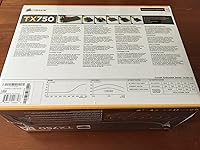
Overview

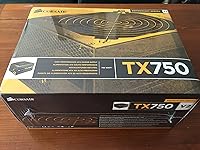
The Corsair TX750 750W ATX Power Supply sits comfortably in Corsair's TX V2 lineup — a series built for builders who want solid, dependable hardware without paying a premium for features they'll never use. At 750 watts, it covers the realistic demands of a single-GPU gaming rig or a moderately loaded workstation without much headroom to spare. Corsair has long been a trusted name in power delivery, and the TX750 reflects that reputation — it's a workhorse, not a showpiece. Released in 2011, this power supply is aging, but its core design remains sound, making it a reasonable pick in the used or refurbished market.

Features & Benefits

Where this Corsair unit earns its keep is in the details. The 80 PLUS Bronze rating means it converts power efficiently under typical real-world loads — not just in lab conditions — which translates to lower heat output and modest electricity savings over time. A single dedicated +12V rail keeps power delivery straightforward and broadly compatible with modern GPUs, avoiding the voltage balancing issues that multi-rail designs can introduce. The temperature-controlled fan, built with double ball bearings, stays nearly inaudible during light tasks and only ramps up when the system genuinely needs cooling. Japanese capacitors inside ensure stable voltage regulation over years of continuous use. Universal AC input is a quiet but practical bonus for anyone moving equipment internationally.

Best For

The TX750 fits best in the hands of a builder putting together a mid-range gaming PC — think a single GPU paired with a six- or eight-core CPU, where 750 watts provides ample headroom without excess. It's also a natural fit for anyone breathing new life into an older ATX system that's due for a PSU swap. If noise matters to you — whether you're working late or gaming in a shared space — the quiet fan behavior makes this power supply a comfortable choice. The five-year warranty provides real peace of mind, and Corsair's support track record is genuinely strong. For secondhand buyers, this Corsair unit has a well-established reliability record that reduces the typical risk of buying used.

User Feedback

With a 4.2-star average across over 200 ratings, the TX750 earns its marks mostly through consistency. Buyers frequently praise how quiet it runs — especially compared to other PSUs in its class — and many report years of trouble-free use in gaming and light rendering setups. Build quality draws positive comments too, with the unit feeling solid and well-constructed out of the box. That said, the lack of modular cables is a recurring gripe, particularly for those building in smaller cases where cable management matters. Some buyers also note that given its age, newer 80 PLUS Bronze options now offer comparable or better performance at similar price points. Overall, this power supply earns trust through longevity, not novelty.

Pros

  • Operates nearly silently under light to moderate loads — ideal for noise-sensitive environments.
  • Single +12V rail design simplifies power delivery and avoids compatibility headaches with modern GPUs.
  • Japanese capacitors contribute to voltage stability and long-term durability that budget PSUs rarely match.
  • Five-year warranty provides meaningful coverage for a component that's easy to overlook until it fails.
  • Universal AC input range removes the hassle of manual voltage switching for international use.
  • The TX750 has a well-documented reliability track record, reducing guesswork when buying secondhand.
  • 80 PLUS Bronze efficiency means less heat generated and slightly lower electricity costs over time.
  • Full suite of protections — including over-voltage, over-current, and short-circuit — safeguards connected components.
  • Backward compatibility with older ATX standards makes it a practical upgrade for legacy system refreshes.
  • Corsair's customer support is consistently rated as accessible and responsive by long-term owners.

Cons

  • No modular or semi-modular cable design makes clean builds in mid-tower cases noticeably more frustrating.
  • At 750W, headroom disappears quickly if you upgrade to a more power-hungry GPU later on.
  • The unit's 2011 design means newer PSU standards and connector types introduced since then are absent.
  • Fixed cable harness includes wires you may never use, adding clutter with no way to remove them.
  • Compared to current-market alternatives, the efficiency rating is no longer class-leading for the price tier.
  • Resale pricing can be inconsistent — easy to overpay for an aging unit if you don't shop carefully.
  • The physical weight and dimensions are unremarkable but worth double-checking against case clearance specs.
  • No RGB or aesthetic features, which matters to builders prioritizing a visually cohesive open-panel build.

Ratings

Our AI rating system analyzed verified global user reviews for the Corsair TX750 750W ATX Power Supply, actively filtering out incentivized, duplicate, and bot-generated submissions to surface what real builders actually experienced. The scores below reflect both the strengths that keep this Corsair unit earning recommendations years after launch and the honest trade-offs that matter when comparing it against current alternatives. Every category is scored transparently — strong where the hardware earns it, and critical where real buyers ran into friction.

Long-Term Reliability
91%
Buyers who have run the TX750 for three, four, even five or more years consistently report zero failures under normal gaming and office workloads. The Japanese capacitors appear to hold up well over extended continuous use, and voltage stability rarely draws complaints even from users running demanding setups.
A small but notable portion of users report issues surfacing after the three-year mark, particularly in high-ambient-temperature environments like poorly ventilated cases. Units purchased secondhand carry an unknown usage history, which introduces reliability uncertainty that new purchases avoid.
Noise Level
88%
The temperature-controlled double ball-bearing fan earns consistent praise from users building in shared spaces or quiet home offices. During typical gaming sessions or everyday computing, most owners describe the unit as nearly silent — a real differentiator compared to fixed-speed PSU fans that spin constantly at the same rate.
Under sustained heavy load — extended rendering sessions or stress testing — the fan ramps up audibly, which some users found jarring given how quiet it is the rest of the time. A handful of older units show bearing wear that introduces a faint hum, though this appears to be age-related rather than a design flaw.
Build Quality
86%
The TX750 feels substantial in hand, and that impression is backed up by user reports. The casing is rigid, connectors seat firmly without wobble, and nothing about the physical construction suggests corners were cut. Builders frequently note it feels more solid than similarly priced alternatives from lesser-known brands.
The unit's exterior finish shows scratches and scuffs more readily than matte alternatives, which matters in open-panel or showcase builds. Some users also noted that the fixed cable harness feels slightly stiff compared to newer PSU cables, making routing in tighter cases more physically demanding.
Cable Management
54%
46%
The cable lengths are generally adequate for mid-tower and full-tower builds, reaching most standard mounting points without requiring extensions. For straightforward builds where aesthetics are secondary, the included harness covers all the necessary connections without supplemental hardware.
The non-modular design is the TX750's most consistently criticized aspect — every cable is permanently attached, including peripheral connectors many builders never use. In windowed cases or compact mid-towers, managing the excess cable bulk behind the motherboard tray is a genuine headache, and it pushes some buyers toward modular alternatives at comparable prices.
Power Delivery Stability
89%
Single +12V rail power delivery gets specific praise from users running power-hungry GPUs, who report clean, stable power without the voltage sag or rail imbalance issues that can appear in multi-rail designs. Builders pairing this unit with demanding cards like older high-end AMD or Nvidia GPUs report consistent performance under gaming load.
At or near the 750W ceiling — which some dual-monitor, heavily peripheraled builds approach — a few users noted minor voltage fluctuations detected by monitoring software, though none escalated into system instability. The unit was not designed with the power delivery tolerances that newer ATX 3.0 builds may expect.
Efficiency Rating
74%
26%
The 80 PLUS Bronze certification means real-world efficiency is meaningfully better than uncertified or White-rated units, translating to less wasted heat and slightly lower electricity costs over months of daily use. For a unit of its age, hitting consistent Bronze numbers under varied loads holds up reasonably well.
By today's standards, Bronze is the entry tier of efficiency certification, and several current competitors offer Gold or even Platinum ratings at similar price points. Users who track electricity consumption or run their systems for long stretches daily may notice the efficiency gap adds up compared to what newer hardware could deliver.
Value for Money
67%
33%
When found secondhand at a fair price, the TX750 represents solid value — a known-reliable platform with Corsair's backing and a documented track record. For legacy system upgrades or budget-conscious builds where new high-end PSUs are out of reach, it remains a defensible choice.
At current new retail pricing, the value case weakens considerably. Comparable or superior units from modern production runs — with modular cables, higher efficiency, and updated connector support — compete directly at similar price points. Paying a premium for a 2011-era design is difficult to justify unless the price reflects its age.
Connector Compatibility
71%
29%
For builds using components from the last decade, the ATX and EPS connector set covers everything needed to get a system running without adapters. Backward compatibility with older ATX standards also makes this a practical drop-in replacement for aging system upgrades.
The TX750 predates modern connector standards like the 16-pin 12VHPWR used by current high-end GPUs, which means builders planning for newer flagship cards will need adapters or a different PSU entirely. The connector set is complete for its era but shows its age against current-generation hardware requirements.
Fan Longevity
78%
22%
Double ball-bearing fans are engineered for longer service life compared to the sleeve-bearing fans found in many budget power supplies, and real-world reports back this up — most users describe consistent, quiet fan behavior years into ownership under normal conditions.
Older units acquired used occasionally show early signs of bearing degradation, showing up as a faint intermittent rattle at specific RPM ranges. This is primarily a concern for secondhand buyers who cannot verify how many hours the fan has accumulated.
Thermal Management
81%
19%
The temperature-responsive fan control keeps internal temperatures well within safe operating ranges during typical single-GPU gaming loads. Users running the unit in reasonably ventilated cases report no thermal throttling or heat-related shutdowns, even during multi-hour sessions.
In poorly ventilated cases or high-ambient-temperature environments, the fan has to work harder to maintain safe internal temps, which increases noise and potentially accelerates component aging. The unit has no passive or hybrid cooling mode, so it always relies on the fan to manage heat.
Warranty & Support
84%
A five-year warranty is above average for the PSU category, and Corsair's support reputation is one of the better ones in PC hardware — users report relatively smooth warranty claim experiences when issues arise within the coverage window. Lifetime access to Corsair's technical support adds meaningful long-term value.
Warranty coverage is tied to the original purchase date, which complicates the used-market picture significantly. Buyers picking up a secondhand TX750 may find only a year or two of coverage remaining — or none at all — without any way to verify the unit's history before the claim process begins.
Installation Ease
83%
Standard ATX sizing and clearly labeled connectors make installation straightforward for first-time builders and experienced hands alike. The unit drops into any compatible case without adapter plates or special mounting hardware, and the connector labeling reduces the risk of misconnection during assembly.
The rigid, fixed cable harness makes routing noticeably more physically awkward than a modular setup, particularly when working in a tight case with limited clearance behind the motherboard tray. Builders with large hands or smaller cases may find the installation process more frustrating than the specs suggest.
Voltage Regulation
82%
18%
Under sustained gaming workloads, users report clean, stable readings on the +12V, +5V, and +3.3V rails — a direct benefit of the Japanese capacitor quality and single-rail architecture. Systems built around the TX750 rarely show voltage instability in typical monitoring software during gameplay.
Under extreme stress-test conditions at or near maximum rated load, minor deviations on secondary voltage rails have been noted by a subset of technically focused users. While these deviations fall within ATX specification tolerances, they are more pronounced than what newer high-end units deliver at idle.
Universality
79%
21%
The universal AC input range is a genuinely practical feature that most buyers underestimate until they need it — plugging into international outlets without flipping a voltage selector removes one potential point of failure for users who move equipment across regions.
Universal input aside, the unit's limited modern connector support and non-ATX 3.0 compliance mean it cannot be called truly universal for contemporary builds. Builders working with the latest generation of GPUs or planning a system around newer standards will quickly encounter its compatibility ceiling.

Suitable for:

The Corsair TX750 750W ATX Power Supply is a strong match for builders putting together a mid-range gaming PC around a single dedicated GPU and a mainstream multi-core processor — the kind of system where 750 watts covers real-world load comfortably without wasteful overhead. It's equally well-suited to anyone upgrading the power supply in an older ATX tower, since this Corsair unit supports backward compatibility with earlier ATX standards and won't require a full system overhaul to fit in. Home office builders and bedroom gamers who are sensitive to noise will appreciate how quietly this power supply operates under typical workloads. Secondhand buyers looking for a known-reliable platform from a reputable brand with verifiable long-term performance data will also find the TX750 a low-risk choice. The five-year warranty and Corsair's accessible support network add a meaningful safety net, particularly for first-time builders who may need guidance down the road.

Not suitable for:

Builders planning a high-end or dual-GPU workstation should look elsewhere — the Corsair TX750 750W ATX Power Supply simply doesn't offer the headroom that power-hungry flagship GPUs or heavily overclocked systems demand, and pushing a PSU close to its ceiling is never a good long-term strategy. Content creators or rendering professionals who run sustained, near-maximum loads for hours at a time will be better served by a higher-wattage unit with a Gold or Platinum efficiency rating, which keeps heat and power draw more manageable over time. Anyone building a compact or small-form-factor PC will also find this power supply a poor fit, as it uses a standard ATX chassis that simply won't physically fit in ITX or SFF cases. Cable management enthusiasts will likely find the fixed, non-modular cable harness frustrating in tighter builds where routing clean wiring matters. Finally, buyers comparing new units at current market prices should weigh the TX750 carefully against newer alternatives, since modern Bronze-rated PSUs at similar price points often ship with improved efficiency ratings, better cable flexibility, and updated connector support.

Specifications

  • Output Wattage: This power supply delivers a continuous 750 watts of power, suitable for mainstream single-GPU gaming and workstation builds.
  • Form Factor: Built to the standard ATX form factor, it fits the vast majority of mid-tower and full-tower PC cases on the market.
  • Efficiency Rating: Certified 80 PLUS Bronze, meaning it operates at up to roughly 85% efficiency under typical real-world load conditions.
  • Rail Configuration: Features a single dedicated +12V rail, which simplifies power delivery and ensures broad compatibility with modern high-draw components.
  • Fan Design: Cooling is handled by a double ball-bearing fan that adjusts its speed based on internal temperature, keeping noise low during light workloads.
  • Connector Types: Ships with ATX and EPS connectors, covering the primary power needs of modern motherboards and CPU sockets.
  • AC Input Range: Accepts universal AC input ranging from 90V to 264V, removing the need to manually toggle a voltage selector switch.
  • ATX Compliance: Meets ATX12V v2.31 and EPS 2.92 standards, while remaining backward compatible with older ATX12V 2.2 and 2.01 systems.
  • Capacitors: Internal capacitors are sourced from Japanese manufacturers, prioritizing long-term voltage stability and resistance to premature degradation.
  • Protections: Includes over-voltage, over-current, under-voltage, and short-circuit protection to guard connected components against electrical faults.
  • Dimensions: Measures 6.3″ long by 5.9″ wide by 3.4″ tall, consistent with standard ATX PSU sizing requirements.
  • Weight: The unit weighs 6 pounds, reflecting the solid internal construction typical of reliability-focused power supply designs.
  • Warranty: Backed by a five-year limited warranty along with lifetime access to Corsair technical support and customer service.
  • Model Number: The official model identifier is CMPSU-750TXV2, useful when searching for compatibility documentation or filing warranty claims.
  • Cable Management: Uses a fixed, non-modular cable harness, meaning all cables are permanently attached and cannot be removed when not in use.
  • Cooling Method: Relies entirely on air cooling via the internal temperature-controlled fan, with no passive or liquid cooling elements involved.
  • Brand: Manufactured by Corsair, a company with a longstanding presence in PC power delivery, memory, and cooling hardware.
  • Launch Date: First made available in early 2011, making it a mature product with a well-documented long-term reliability track record.

Related Reviews
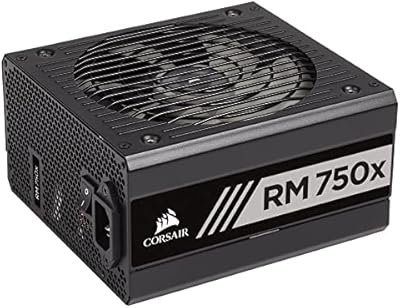
Corsair RM750x 750W Fully Modular Power Supply
86%
94%
Noise Level
91%
Build Quality
93%
Voltage Stability
88%
Cable Management
89%
Long-Term Reliability
More
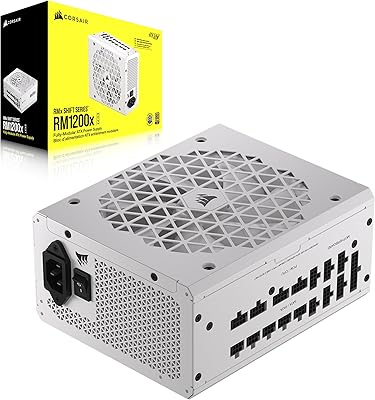
Corsair RM1200x Shift 1200W ATX Power Supply
84%
91%
Cable Management Design
88%
Build Quality & Materials
89%
Noise Level & Fan Behavior
92%
Power Delivery Stability
86%
PCIe 5.0 & ATX 3.1 Compatibility
More
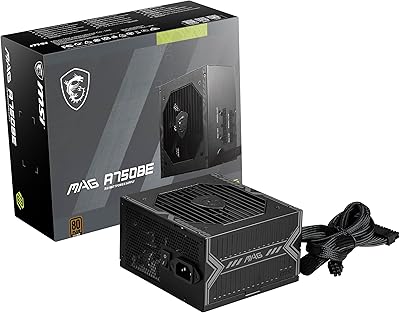
MSI MAG A750BE 750W ATX Power Supply
83%
88%
Build Quality
91%
Value for Money
86%
Noise Level
79%
Cable Management
87%
Voltage Stability
More
Corsair RM750e (2025)
86%
88%
Cable Management (Modular Design)
94%
Acoustic Performance (Noise Level)
92%
Future-Proofing (ATX 3.1 & PCIe 5.1)
85%
Installation Ease (Dimensions)
91%
Power Reliability & Stability
More
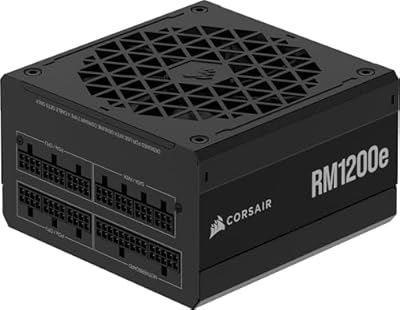
Corsair RM1200e 1200W Modular ATX Power Supply
85%
92%
Build Quality
89%
Noise Level
91%
Modular Cable System
88%
Efficiency & Heat Output
94%
ATX 3.1 & PCIe 5.1 Compliance
More
Corsair RM1000x Shift 1000W ATX Power Supply
83%
93%
Build Quality
81%
Side-Connector Design
91%
Noise Level
67%
Cable Quality & Flexibility
89%
Efficiency & Power Delivery
More
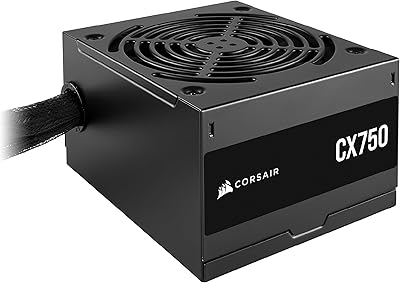
Corsair CX750 ATX Power Supply
82%
93%
Power Reliability
88%
Noise Level
91%
Value for Money
58%
Cable Management
84%
Build Quality
More
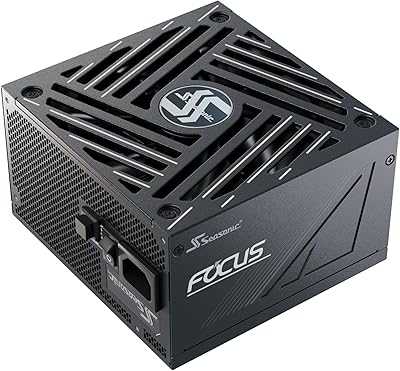
Seasonic Focus GX-750 750W Power Supply
87%
94%
Power Delivery Stability
92%
Build Quality
87%
Noise Level
88%
Efficiency (80 Plus Gold)
89%
Cable Management & Modularity
More
Corsair CX750M 750W 80 Plus Bronze Semi-Modular Power Supply
84%
89%
Performance & Efficiency
90%
Build Quality & Durability
85%
Noise & Cooling
80%
Cable Management
88%
Compatibility & Connectivity
More
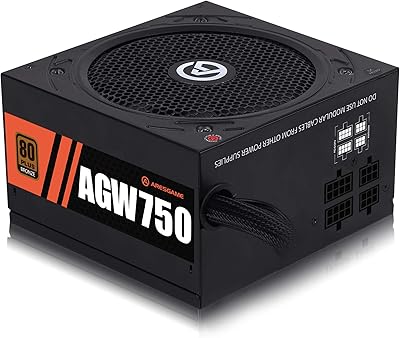
ARESGAME AGW750 750W Semi-Modular ATX Power Supply
81%
88%
Value for Money
83%
Power Delivery Stability
91%
Cable Management
86%
Noise Level
79%
Efficiency
More

FAQ

Honestly, it depends on context. As a new purchase at full retail, there are more modern options at similar price points with better efficiency ratings and modular cables. Where it still makes sense is the secondhand market — this unit has a strong reliability track record and a five-year warranty that may still have coverage remaining depending on the purchase date.

Yes, 750 watts is enough headroom for a mid-range GPU paired with a typical six- or eight-core CPU under normal gaming loads. You won't have tons of spare capacity, but you won't be running the unit near its limit either, which is exactly where PSUs operate most efficiently and quietly.

No. The TX750 predates the ATX 3.0 standard and the 12VHPWR connector used by newer high-end GPUs. If you're building around a card that requires that connector natively, you'll need a more modern PSU designed around the updated spec.

Under typical gaming or office workloads, the fan is very quiet — most users describe it as nearly inaudible at normal load levels. It only ramps up noticeably when the system is under sustained heavy load, like extended rendering sessions. For a bedroom or home office build, this Corsair unit is a comfortable choice.

No, this is a standard ATX-sized unit and physically won't fit in cases designed for SFX or SFX-L power supplies. Always check your case's PSU specification before purchasing.

It can be challenging in smaller or windowed cases where tidy routing matters. All cables are permanently attached, including ones you may not use, so you'll need to bundle and tuck the excess. In a full-tower with plenty of cable routing channels, it's manageable. In a compact mid-tower, expect to spend some extra time on it.

A single +12V rail delivers all available power from one source, which means you don't have to worry about balancing load across multiple rails or hitting per-rail current limits. For most single-GPU gaming builds, this is actually the simpler and more practical configuration.

The universal AC input range covers voltages from 90V to 264V, so it will handle both North American and European wall voltages without any manual switching. You may still need a physical plug adapter depending on the outlet type, but no internal adjustment is required.

Corsair's warranty is typically tied to the original purchase date, not the current owner. That means if you buy a used unit, you may have some warranty time remaining — but you'd want to verify the original purchase date and check Corsair's current warranty transfer policy directly with their support team, as terms can vary.

The TX750 includes over-voltage, over-current, under-voltage, and short-circuit protection. In practical terms, these safeguards are designed to shut the unit down or limit damage before a fault condition can harm your CPU, GPU, or motherboard — a meaningful layer of protection for any system running valuable components.

Where to Buy

Artisan Technology Group
In stock $150.00