Overview

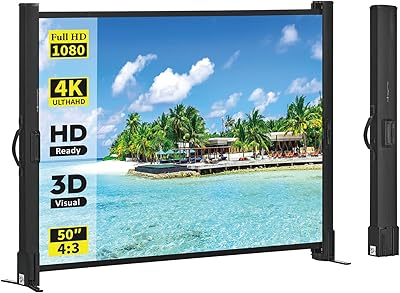
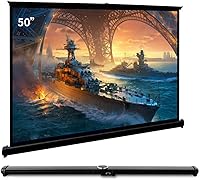
The Cocar P1-SN50 50-inch Portable Projection Screen is a compact, self-standing display built for people who need a real screen surface without the hassle of permanent installation. At 50 inches diagonal, it hits a practical balance — large enough for a comfortable viewing experience, small enough to carry between a spare bedroom, a conference room, or a campsite. The aluminum housing is a genuine surprise at this price tier; it feels more durable than the flimsy fabric-roll alternatives you often find in the same category. That said, keep expectations grounded: this is a portable convenience tool, not a substitute for a fixed home theater screen.
Features & Benefits

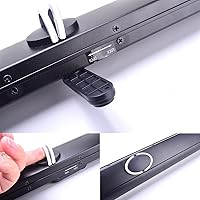
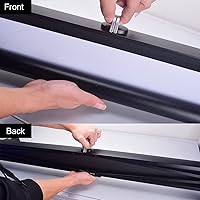
The pull-out retractable mechanism is probably the most appreciated aspect of this self-standing screen — you extend it, lock it, and you are ready to project in under a minute, no tools or hardware required. The reflective white surface does a solid job of boosting color contrast in dim or darkened rooms, though like any portable screen it will struggle against strong ambient light, so manage expectations there. Both 4:3 and 16:9 content work without awkward cropping or repositioning. At around 4.4 pounds, it is light enough to move around the house freely, and the built-in handle bar makes single-handed transport easy. The waterproofing is a real plus for outdoor setups.

Best For

This portable screen makes the most sense for a few specific types of buyers. If you are a teacher or small-office presenter who regularly moves equipment between rooms, the quick floor-standing setup alone makes it worth considering — no hunting for mounting hardware or clear wall space. It also works well for casual home users who want an actual screen for movie nights without committing to a wall-mounted installation. Outdoor enthusiasts will appreciate the waterproof build for backyard or camping screenings. Mini and pico projector owners benefit especially, since a dedicated reflective surface delivers noticeably sharper results than projecting onto a painted wall.

User Feedback

Buyers consistently praise the ease of setup — most report having it ready to use within seconds of unboxing, which holds up to the advertised pull-out design. The aluminum case earns appreciation for feeling sturdier than expected. On the flip side, some users note that the screen surface can develop minor wrinkles if stored improperly, and a handful report that the base wobbles on uneven or soft outdoor ground. Image quality feedback is largely positive in dark environments, but buyers using it outdoors in daylight are less impressed, which is honestly expected of any portable screen. Portability in practice gets good marks, though a carrying case would make transport noticeably more convenient.

Pros

  • Sets up in seconds with no tools, wall space, or tripod required, making it genuinely hassle-free.
  • The aluminum housing feels noticeably sturdier than similarly priced fabric-roll competitors.
  • At roughly 4.4 pounds, this self-standing screen is light enough to move between rooms without effort.
  • Supports both 4:3 and 16:9 formats, so it works with a wide range of projectors and content types.
  • Waterproof construction makes outdoor use at campsites or backyard events a realistic option.
  • The built-in handle bar and lifting ring make one-handed carrying practical without needing a separate bag.
  • Delivers noticeably better image quality than projecting onto a plain wall, especially in dim conditions.
  • Ranked among the top projection screens in its category, reflecting solid buyer satisfaction overall.
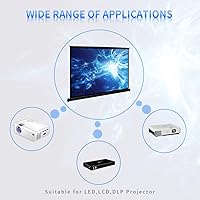
  • Compatible with mini, LED, LCD, and DLP projectors, so it pairs well with most consumer-grade devices.

Cons

  • The 50-inch diagonal viewing area may feel too small for group screenings or larger living rooms.
  • Screen surface can develop wrinkles or tension inconsistencies if stored incorrectly between uses.
  • Base stability becomes unreliable on soft, uneven, or outdoor terrain like grass or gravel.
  • Performance drops noticeably in rooms with strong ambient or natural light, limiting daytime usability.
  • No carrying case is included, which makes transport less convenient than it could be for a portable product.
  • Some buyers report minor discrepancies between the advertised dimensions and what they actually measure.
  • Aspect ratio cannot be physically adjusted on the fly, which may frustrate users switching between content formats frequently.
  • Long-term durability of the pull-out mechanism under heavy daily use remains a concern for some buyers.

Ratings

The scores below reflect our AI-powered analysis of verified global buyer reviews for the Cocar P1-SN50 50-inch Portable Projection Screen, with spam, bot-generated, and incentivized feedback actively filtered out before scoring. Each category captures what real users consistently praised or complained about across thousands of purchase experiences worldwide. Both the strengths and the genuine frustrations are represented transparently so you can make a confident, informed decision.

Ease of Setup
93%
This is where the pull-out projection screen earns its strongest praise by a wide margin. Buyers repeatedly describe deploying it in well under a minute — pull it up, lock it in place, and project. Teachers and presenters who set it up and pack it away multiple times a week are especially enthusiastic about how frictionless the process is.
A small number of users report that the locking mechanism can feel slightly stiff when the unit is brand new, requiring a bit of force on early deployments. This loosens with use, but it catches some buyers off guard during the first setup.
Portability
86%
At around 4.4 lbs housed in a compact aluminum case with a built-in handle bar, this self-standing screen travels between rooms, offices, and car trunks without much fuss. Campers and mobile presenters consistently confirm that the weight claim holds up in real-world use and that single-person transport is genuinely practical.
The aluminum case, while protective, is bulkier than rollable fabric alternatives, making true backpack-style travel difficult. Buyers who expected something closer to a poster-tube form factor tend to feel the portability is somewhat overstated for ultra-mobile scenarios.
Image Quality
74%
26%
In properly darkened rooms, the high-reflectivity white surface delivers a noticeably sharper, more color-saturated image than a plain painted wall — a difference that mini projector owners in particular find significant. For casual movie nights and classroom presentations in controlled lighting, buyers are generally satisfied with the visual output.
Performance drops considerably when ambient light enters the equation. Buyers who tested this outdoors during evening hours or in rooms with uncovered windows report washed-out images and reduced contrast, which is a realistic limitation of the screen material rather than a defect, but still a meaningful disappointment for some.
Build Quality
81%
19%
The aluminum housing genuinely surprises buyers who expect a flimsy plastic shell at this price point. Multiple reviewers describe it as feeling closer to professional presentation equipment than to a budget portable accessory, and the overall construction inspires confidence during regular handling and transport.
The pull-out mechanism and internal spring components draw some skepticism about long-term durability under heavy daily use. A subset of buyers who use it intensively — such as teachers deploying it every school day — express uncertainty about how the mechanism holds up beyond the first year.
Base Stability
67%
33%
On flat, hard indoor surfaces like classroom floors, office tile, or hardwood, the self-standing base performs reliably and holds the screen steady during presentations without tipping or wobbling under normal conditions. Most indoor buyers are satisfied with how solid it feels once positioned correctly.
On soft or uneven surfaces — carpet, grass, gravel, or packed dirt — the base becomes noticeably unreliable, with several outdoor buyers reporting minor toppling incidents in light wind. This is probably the single most common practical complaint, and it is worth planning around if outdoor use is a primary scenario.
Screen Surface Quality
71%
29%
Fresh out of the case, the screen surface is flat and smooth with good tension across the viewing area. The reflective material does its job well in controlled conditions, and buyers who store and handle it correctly report that it stays in good shape across many uses.
Improper storage — particularly leaving it partially extended or compressed under weight — can introduce wrinkles and surface tension inconsistencies that are difficult to reverse. A notable portion of longer-term owners mention surface quality degradation as the main reason their rating dropped after initial enthusiasm.
Aspect Ratio Versatility
69%
31%
Supporting both 4:3 and 16:9 content without requiring a physical screen swap is a practical advantage for buyers who mix presentation slides with widescreen video content. Classroom teachers who alternate between older slide formats and modern widescreen media find the dual compatibility genuinely useful.
There is no physical mechanism to switch or mask between ratios, so 16:9 content on the native 4:3 screen always results in visible black bars unless the projector handles the scaling. Buyers who expected a dual-ratio screen with adjustable masking are sometimes surprised by this limitation.
Value for Money
82%
18%
Relative to tripod-based or wall-mount screens in the same size range, this portable screen offers a compelling combination of convenience features — self-standing base, waterproofing, aluminum housing — at a price that does not require a significant budget commitment. Most buyers feel the cost-to-feature ratio is fair or better.
Buyers comparing it to entry-level fixed screens of similar size sometimes feel the price premium for portability is hard to justify if their use case is exclusively indoors in a single room. For purely stationary use, a basic fixed screen offers better image stability for the same or less investment.
Waterproofing
78%
22%
The waterproof construction holds up well in the light moisture conditions most outdoor buyers actually encounter — morning dew, light drizzle during a backyard event, or the occasional spill. Campers who have used it over multiple trips generally confirm it handles exposure without degrading the screen surface.
Nobody should test its limits in heavy rain, and a few buyers who assumed it was more weather-resistant than it actually is learned that lesson the hard way. The waterproofing is better described as moisture-resistant for incidental exposure rather than a full all-weather shield.
Compatibility
88%
Broad compatibility with LED, LCD, DLP, mini, and pocket projectors means this self-standing screen works as a drop-in solution for nearly any projector a buyer already owns. Users rarely report incompatibility issues, and the reflective surface performs consistently across different projector throw distances within the recommended range.
Buyers with ultra-short-throw projectors occasionally note that the screen angle and base positioning create minor hotspot reflections at extreme projection angles. This is not universal, but it affects a small segment of buyers with more advanced projector setups.
Carrying Design
76%
24%
The integrated handle bar and lifting ring are thoughtful additions that make one-handed transport genuinely comfortable for short-to-medium carry distances. Buyers who move it between floors of a building or load it into a vehicle regularly appreciate not needing a separate bag or case to handle it safely.
The absence of a dedicated carrying case is a recurring point of frustration, particularly for buyers who transport it frequently in dusty or dirty environments where the screen surface could get contaminated. Many end up sourcing a third-party case, which adds inconvenience and cost.
Size Accuracy
72%
28%
The majority of buyers find that the 50-inch diagonal measurement and the 40″ by 30″ viewing dimensions are accurate and match their pre-purchase expectations when set up in a real room. For most casual and semi-professional use cases, the size feels appropriately matched to the product description.
A minority of buyers report feeling that the usable image area is slightly smaller than anticipated, particularly when accounting for the screen border and frame edges. This occasionally creates frustration for buyers who planned their projector throw distance around the full 50-inch diagonal figure.
Cleaning & Maintenance
66%
34%
The smooth reflective surface can be wiped down with a damp microfiber cloth without damaging the material, which is sufficient for the light dust accumulation most indoor users deal with between sessions. Basic maintenance is genuinely low-effort.
The screen surface is sensitive to abrasive cleaning, and buyers who have attempted to remove fingerprints or smudges with anything rougher than a soft cloth report visible surface marring. There are also no manufacturer cleaning guidelines in the box, leaving buyers to figure out care routines on their own.
Storage Convenience
73%
27%
The retractable pull-out design means the screen collapses back into its aluminum case quickly, making post-use storage fast and tidy. Buyers who keep it in a closet or against a wall between uses find the compact case form factor easy to slot into tight storage spaces.
The case does not latch or seal with a closure mechanism, meaning the screen can partially extend during transport or storage if handled roughly. A few buyers have arrived at events to find the screen partially pulled out and the surface exposed, which is a minor but preventable design oversight.

Suitable for:

The Cocar P1-SN50 50-inch Portable Projection Screen is a practical choice for anyone whose primary need is flexibility rather than permanence. Teachers and corporate presenters who rotate between rooms or buildings will find the self-standing, no-hardware setup genuinely useful on a daily basis. Home users who want a dedicated screen surface for occasional movie nights or casual gaming — without drilling holes or buying a fixed mount — will get real value here. Outdoor enthusiasts, particularly campers and backyard entertainers, benefit from the waterproof build and lightweight frame that makes tossing it in a car trunk entirely reasonable. Mini and pico projector owners will also notice a meaningful image quality improvement over projecting onto walls or bedsheets, since the reflective surface handles contrast and color more consistently.

Not suitable for:

The Cocar P1-SN50 50-inch Portable Projection Screen is not the right call for buyers expecting a true home theater experience. At 50 inches diagonal, the viewing area is modest — anyone hosting group movie nights for more than a handful of people will likely find it underwhelming compared to an 80-inch or larger fixed screen. The self-standing base performs well on flat, hard surfaces, but buyers planning to use it regularly outdoors on grass, gravel, or uneven terrain may run into stability issues. Those in bright rooms or venues with significant ambient light should also reconsider, as the reflective surface performs best in controlled, dim lighting conditions. Finally, frequent travelers who need something truly ultraportable — like a rollable fabric screen that fits in a backpack — may find the aluminum case too bulky for that level of mobility.
Specifications

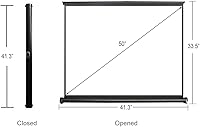
  • Screen Size: The viewing area measures 50 inches diagonally, with a usable display surface of 40″ wide by 30″ high.
  • Aspect Ratio: The native aspect ratio is 4:3, with full compatibility for 16:9 widescreen content without requiring physical adjustment.
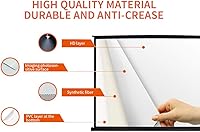
  • Screen Material: The projection surface is made from a high-reflectivity white material engineered to boost color vibrancy and reduce viewer eye fatigue during extended use.
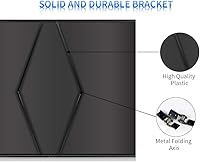
  • Housing Material: The outer casing and structural frame are constructed from lightweight aluminum, providing durability that is uncommon at this price tier.
  • Weight: The complete unit weighs approximately 4.41 lbs (roughly 2 kg), making it manageable for single-person transport between locations.
  • Setup Style: The screen uses a self-standing pull-out retractable mechanism that requires no wall mounting, tripod, or additional hardware to deploy.
  • Mounting Type: The unit is floor-standing with an integrated self-supporting base designed for use on flat, stable surfaces indoors or outdoors.
  • Carrying Features: A built-in handle bar and a lifting ring are included on the aluminum case to facilitate easy one-handed or two-handed transport without a separate bag.
  • Weatherproofing: The screen surface and housing carry a waterproof rating, making the unit suitable for outdoor use in light moisture conditions such as camping or backyard events.
  • Projector Compatibility: The screen is compatible with mini, pocket, LED, LCD, and DLP projectors from a wide range of consumer and professional brands.
  • Use Environment: Designed for both indoor settings such as homes, classrooms, and offices, and outdoor environments including campsites and open-air event spaces.
  • Model Number: The official manufacturer model number for this unit is P1-SN50, as listed by Cocar.
  • Brand: This screen is manufactured and sold under the Cocar brand.
  • Retail Category Rank: The unit holds a Best Sellers Rank of #263 in the Projection Screens category on Amazon at the time of listing.
  • Product Dimensions: The packaged aluminum case measures 40″ in width, housing the retractable screen mechanism and base within a single compact unit.

Related Reviews

Tecdigbo 50-Inch Retractable Tripod Projector Screen
74%
93%
Ease of Setup
91%
Portability
78%
Image Quality
61%
Stand Stability
67%
Screen Flatness
More
Tecdigbo 40-inch Portable Projection Screen
85%
91%
Portability
89%
Ease of Setup
87%
Image Quality
65%
Stand Stability
82%
Design and Build Quality
More
Pyle PRJTP53 50″ Portable Tripod Projector Screen
72%
93%
Ease of Assembly
91%
Portability & Weight
74%
Image Surface Quality
58%
Screen Size Accuracy
67%
Tripod Stability
More
excelimage 50-inch Portable Projector Screen with Stand
77%
91%
Ease of Setup
88%
Portability
79%
Image Quality
72%
Build Quality
84%
Screen Surface Flatness
More
Elite Screens Tripod Lite T50SW 50-Inch Projector Screen
85%
89%
Portability & Setup
85%
Viewing Angle
87%
Image Quality
81%
Build Quality
90%
Ease of Cleaning
More
Elite Screens Spectrum ELECTRIC150H2 150″
82%
88%
Screen Image Quality
91%
Build Quality & Materials
89%
Motorized Mechanism
86%
Installation Ease
83%
Remote & Control Options
More
Elite Screens Yard Master Sport 110-inch Screen
78%
88%
Ease of Setup
83%
Portability & Storage
79%
Image Clarity & Screen Performance
71%
Outdoor Stability
58%
Aspect Ratio Suitability
More
Elite Screens Aeon AUHD Series 150-inch 4K AcousticPro UHD Projection Screen
86%
92%
Image Quality
89%
Sound Transparency
85%
Installation Ease
88%
Build Quality
91%
Viewing Angle
More
SKERELL Portable Projector Screen 150-inch
87%
91%
Ease of Setup
87%
Portability
94%
Display Quality
80%
Durability
85%
Outdoor Performance
More
AODIOU 60-Inch Portable Projector Screen with Stand
76%
88%
Portability & Transport
91%
Ease of Assembly
73%
Image Clarity & Surface Quality
74%
Build Quality & Frame Durability
62%
Outdoor Wind Stability
More

FAQ

In practice, setup takes well under a minute. You place the base on a flat surface, pull the screen upward until it locks into position, and you are ready to project. There are no screws, brackets, or tripod legs to deal with, which is genuinely one of the more convenient parts of owning this self-standing screen.

It works with virtually any consumer projector, including mini and pico models that use LED, LCD, or DLP technology. The reflective white surface is designed to respond well to lower-lumen light sources, so mini projector owners often see a noticeable improvement over projecting onto a wall.

The waterproof construction is a legitimate feature rather than a hollow claim. The aluminum case and screen surface handle light moisture well, making it a reasonable choice for backyard screenings or camping trips. That said, you should avoid heavy rain exposure, and the base can become unstable on soft ground like grass, so a flat, firm surface is ideal outdoors.

The native ratio is 4:3, but 16:9 widescreen content is compatible and will display without awkward distortion. You will see narrow black bars at the top and bottom in some configurations depending on your projector settings, which is standard behavior for this type of screen.

This is one of the more common concerns from buyers. The surface generally stays smooth with regular use, but improper storage — particularly storing it partially extended or under pressure — can introduce wrinkles or tension inconsistencies over time. Retracting it fully and storing it upright in its case after each use helps maintain a flat surface.

On flat, hard indoor surfaces like tile, hardwood, or concrete, the base is quite stable. On soft or uneven surfaces like carpet, grass, or gravel, it can wobble noticeably. If you plan to use it outdoors regularly, having a flat board or mat underneath the base makes a real difference.

Yes, it is a solid fit for that use case. The pull-out mechanism means a teacher can set it up and put it away quickly between classes, and the floor-standing design removes any dependency on wall space or ceiling mounts. The 50-inch size works well for small to medium classrooms, though very large lecture halls would need a bigger screen.

No, a dedicated carrying case is not included in the box, which is probably the most frequently mentioned missing accessory in buyer feedback. The aluminum housing does protect the screen during transit, and the handle bar makes carrying it manageable, but if you plan to transport it frequently you may want to find a compatible bag or case separately.

The difference is noticeable, especially in terms of color saturation and contrast. The high-reflectivity surface returns more light back to the viewer than a typical painted wall, which translates to a sharper, more vibrant image. In a properly darkened room, the improvement is meaningful. In a bright room with ambient light, both options will struggle, but the screen still holds an edge over a plain wall.

At 4.41 lbs, this portable screen is light enough that most adults can carry it with one hand using the built-in handle bar, at least for short distances. It is not quite backpack-portable, but moving it between rooms in a house or loading it into a car is genuinely straightforward without needing a second person.