Overview

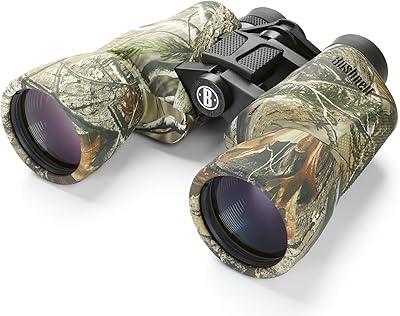
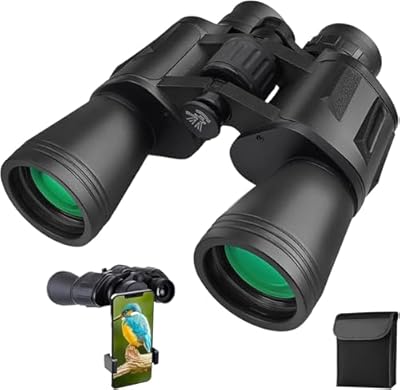
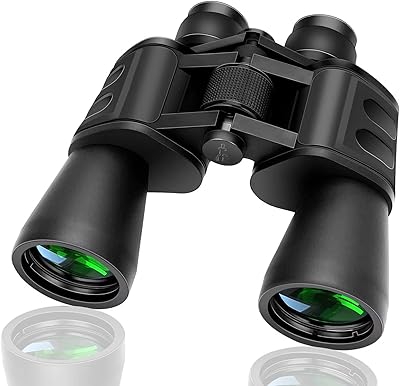
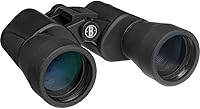
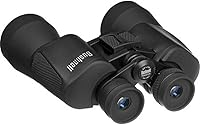
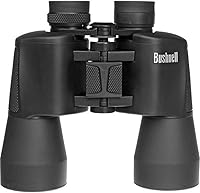
The Bushnell PowerView 20x50 Binoculars are a long-standing entry point into high-magnification optics for outdoor enthusiasts who want serious reach without a serious price tag. Built around a classic Porro-prism design, they pack 20x magnification and a 50mm objective lens into a rubber-armored body with a straightforward center-focus wheel. Bushnell has since discontinued this model, but it remains widely available and continues to attract buyers drawn to its value. Just go in with clear expectations — the optical reach is genuine, but keeping a 20x image steady in your hands is a real challenge.
Features & Benefits

At 20x magnification, these high-powered binoculars let you pull in distant subjects — birds perched in treetops, players across a stadium field, or boats on a wide bay — with surprising detail. The 50mm objective lens does solid work in good daylight, and the multicoated optics noticeably cut down on glare and haze compared to bare glass. That said, the 170-foot field of view at 1,000 yards is fairly narrow, which means tracking fast-moving subjects takes some practice. The rubber-armored housing adds grip and handles the odd knock without complaint, while the center-focus wheel is responsive and easy to adjust on the fly.

Best For

This Bushnell glass earns its place in the bag for anyone who needs long-range reach without spending big. Casual birdwatchers and nature observers who spend time in open terrain — meadows, wetlands, shorelines — will find the magnification genuinely useful. It also works well for airshows, motorsports, and stadium events where the action is far away and mostly stationary. Beginners curious about high-magnification optics can get a real hands-on feel before committing to pricier glass. One firm recommendation: bring a lightweight tripod or monopod if you plan extended sessions, because handheld viewing at 20x gets tiring fast.

User Feedback

Across more than 2,000 ratings, the PowerView 20x50 holds a strong 4.3-star average — honestly impressive for a budget optic. Buyers consistently praise the optical brightness and clarity for the money, and many mention the grip and build holding up well over years of casual use. The most common complaint, and it is worth taking seriously, is image shake at 20x. Handheld viewing produces noticeable wobble, and reviewers almost universally suggest tripod support for anything beyond a quick scan. Eyeglass wearers have also flagged limited eye relief as a comfort concern. The bundled strap and case are functional but basic — nobody is buying these for the accessories.

Pros

  • Impressive 20x magnification pulls in distant subjects with genuine detail in good daylight conditions.
  • Multicoated optics produce a noticeably bright, natural image for a binocular at this price tier.
  • Rubber-armored housing handles everyday knocks, drops, and damp hands without complaint.
  • Center-focus wheel is smooth and responsive, making quick adjustments easy in the field.
  • Light enough at under two pounds to wear around your neck for hours without fatigue.
  • Long-term owners consistently report the optics staying aligned and functional after years of casual use.
  • A practical starter pair for anyone wanting to explore high-magnification glass before spending more.
  • Holds a strong 4.3-star average across over 2,000 verified ratings — hard to argue with at this price.

Cons

  • Handheld image shake at 20x is persistent and makes extended freehand sessions genuinely frustrating.
  • Narrow 170-foot field of view makes tracking moving subjects slow and difficult.
  • Eye relief is short enough to disadvantage eyeglass wearers during normal use.
  • Edge sharpness drops off noticeably when viewing wider scenes or panning across landscapes.
  • Internal sealing is minimal — dust, humidity, and prolonged outdoor exposure can cause fogging over time.
  • The included neck strap is narrow and uncomfortable for any session longer than a quick scan.
  • Carrying case provides little real padding, leaving lenses more vulnerable than buyers might expect.
  • No waterproofing or fog-proofing means these high-powered binoculars are not suited to wet or cold environments.

Ratings

The Bushnell PowerView 20x50 Binoculars have accumulated over 2,000 verified ratings worldwide, and the scores below reflect what real buyers actually experienced — analyzed by AI after filtering out incentivized reviews, spam, and outlier feedback. From optical performance in the field to long-term durability, this breakdown captures both where these high-powered binoculars punch above their weight and where the compromises of a budget optic become impossible to ignore.
Optical Clarity
78%
22%
For a Porro-prism optic at this price tier, the image sharpness across the center of the field genuinely surprises first-time users. Birdwatchers scanning open meadows and spectators at outdoor airshows regularly note that fine detail — feather patterns, distant text, vehicle markings — comes through with respectable crispness in good daylight.
Edge sharpness drops off noticeably toward the periphery of the view, which bothers users who pan across landscapes or scan wide scenes. It is not a dealbreaker at this price, but buyers upgrading from higher-end glass will feel the difference immediately.
Magnification Performance
83%
Twenty-power reach is genuinely impressive for the money. Hunters glassing hillsides, coastal birdwatchers watching distant shorebirds, and motorsport fans tracking cars on a far straight all report that the magnification delivers the distant detail they were hoping for, especially when conditions are calm and bright.
The same 20x that makes these binoculars exciting also makes them unforgiving. Any hand tremor — from a pulse, a breeze, or simple fatigue — is amplified significantly, turning what should be a sharp view into a jittery one. Extended handheld use becomes genuinely tiring.
Image Stability
51%
49%
On a sturdy tripod or resting against a fence post or car roof, the PowerView 20x50 delivers a surprisingly steady, usable image that makes the magnification worthwhile. Users who planned ahead and paired these with even a basic travel tripod report a much more satisfying experience overall.
Handheld stability is the single most common complaint across all verified reviews. At 20x, hand-shake is not a minor inconvenience — it is a persistent, exhausting problem during any extended viewing session. Buyers who expect to use these freehand for more than a quick glance will likely walk away frustrated.
Light Gathering & Brightness
74%
26%
The 50mm objective lens and multicoated optics combine to produce a noticeably bright image in full daylight and overcast conditions. Buyers using these at outdoor sporting events and open nature reserves consistently report that colors look natural and the image stays punchy even on grey days.
As light drops — at dusk, under tree canopy, or in shaded stadium seating — the limits of the coating quality become apparent. These are not low-light binoculars, and users who push them into dim conditions will find the image darkens and loses contrast faster than expected.
Build Quality
81%
19%
The rubber-armored exterior holds up well to the kind of casual punishment that comes with outdoor use — being tossed in a backpack, set down on rocky surfaces, or handled with damp hands. Multiple long-term owners report their pair still functioning cleanly after years of intermittent use, which is a genuine testament to the housing construction.
The hinge and focus barrel feel plasticky under close inspection, and the barrels themselves do not feel as precisely aligned as mid-range or premium optics. A small number of users report barrel alignment drifting after significant knocks, leading to eye strain during use.
Field of View
62%
38%
For stationary subjects — a bird perched in a tree, a distant boat on calm water, or a vehicle at range — the 170-foot field of view at 1,000 yards is workable and gives enough context around the target to identify it clearly. Most casual users report no complaints when they are not chasing fast-moving subjects.
The narrow field of view is a real limitation compared to lower-magnification binoculars, and it catches new buyers off guard. Tracking a flying bird, a moving athlete, or a fast vehicle requires constant re-acquisition, which is slow and frustrating — especially for users without prior experience at high magnification.
Eye Relief & Comfort
57%
43%
For users with standard vision who do not wear glasses, the eyecups are adequate for short to medium viewing sessions. Some users note the eyecups fold down predictably and stay in position without wobbling, which is a small but appreciated detail.
Eyeglass wearers consistently flag this as a pain point. The eye relief is short enough that spectacle users struggle to see the full field of view without pressing uncomfortably close. Extended sessions without glasses, just to use the binoculars properly, defeats the purpose for many buyers.
Focus Mechanism
77%
23%
The center-focus wheel is smooth and offers enough resistance to prevent accidental movement when panning. Buyers scanning wildlife at varying distances appreciate how quickly they can rack focus from a close shrub to a distant treeline without overshooting the target.
The diopter adjustment on the right eyepiece is functional but imprecise — locking in a personalized setting takes some trial and error, and a few users report the diopter creeping out of position over time. It is a minor annoyance rather than a serious flaw.
Portability & Weight
72%
28%
At under two pounds, these binoculars are light enough to hang around your neck for a few hours without neck fatigue becoming an issue. They fit comfortably in a day pack and do not add meaningful bulk to a field kit, which casual users and spectators particularly appreciate.
The footprint — over eight inches wide — is bulkier than compact alternatives, which matters if pack space is limited. Travelers and hikers who prioritize a small kit may find the Porro-prism body shape less convenient than a roof-prism design of similar magnification.
Value for Money
86%
As a budget entry into high-magnification optics, the price-to-performance ratio consistently earns praise from buyers who were not expecting much and came away impressed. For someone testing the waters of 20x glass before committing to a premium optic, the cost of entry feels justified by what is delivered in good conditions.
Buyers who compare these against similarly priced mid-magnification binoculars sometimes feel the trade-offs — instability, narrow field, limited eye relief — outweigh the appeal of extra reach. The value equation depends heavily on whether the buyer actually needs 20x, and many discover post-purchase that they did not.
Accessories & Packaging
44%
56%
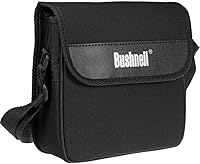
The binoculars do arrive with a carrying case, neck strap, and lens caps, so the basics are covered. For buyers who store these in a glovebox or boat compartment, the case is functional enough to keep dust and moisture off the lenses between uses.
The included accessories feel thin and utilitarian at best. The strap is narrow and uncomfortable for extended wear, the case offers minimal padding, and the lens caps are easy to lose. Most committed users end up replacing the strap and adding a proper padded case fairly quickly.
Ease of Use for Beginners
79%
21%
The uncomplicated design — one central focus wheel, two eyecups, no complex adjustments — means a first-time binocular buyer can be up and running within minutes. There is no learning curve around the basic mechanics, which makes these appealing as a starter pair for younger adults or gift recipients.
The challenge of handheld stability at 20x is a steep learning curve for true beginners who have never used high-magnification glass before. Many new users assume shake is a defect or eye issue, not a physics reality, which leads to frustration and early negative reviews.
Durability Over Time
82%
18%
Long-term owners consistently report that the optics stay aligned and the focus mechanism remains smooth after years of occasional use. The rubber housing resists peeling and cracking better than many budget alternatives, which is a meaningful advantage for buyers who want a pair that survives a drawer or bag for years.
The internal dust sealing is limited, and buyers who use these in sandy, dusty, or humid environments for extended periods report gradual internal fogging or debris appearing between elements. These are not sealed, waterproof binoculars, and outdoor exposure eventually takes a toll.
Eyecup Design
59%
41%
The fold-down rubber eyecups do their job reliably — they stay folded or extended without slipping, and they provide a consistent eye position that helps users center their field of view quickly. Buyers appreciate that the mechanics feel deliberate rather than flimsy.
There is no twist-up or click-stop adjustment, which limits how precisely users can fine-tune the eye-to-lens distance. For buyers with specific face or eye geometry, the fixed fold-down design can feel like a compromise, particularly during prolonged stationary use.

Suitable for:

The Bushnell PowerView 20x50 Binoculars are a smart pick for outdoor enthusiasts who want serious magnification reach without committing to a premium budget. Casual birdwatchers who spend time in open habitats — wetlands, meadows, coastal flats — will find the 20x reach genuinely useful for identifying distant species, especially when paired with a tripod or monopod for stability. Spectators at open-air events like airshows, car rallies, or large stadium venues get real mileage from the long-range pull, particularly when seating is far from the action. First-time buyers who are curious about high-magnification optics but are not yet ready to invest heavily will find these a practical way to learn whether 20x glass suits their habits before stepping up. Anyone who wants a rugged, low-stakes pair to stash in a glovebox, boat compartment, or hiking bag — ready for opportunistic use without anxiety about damage — will appreciate the rubber-armored build and no-fuss design.
Not suitable for:

Buyers who expect to use the Bushnell PowerView 20x50 Binoculars primarily handheld and for extended periods will likely find the experience more frustrating than rewarding — 20x magnification amplifies hand tremor significantly, and freehand sessions quickly become tiring and unproductive. This is not the right choice for fast-action observation: tracking birds in flight, following athletes mid-play, or panning across a moving subject at range is genuinely difficult with a narrow field of view and high magnification working against you simultaneously. Eyeglass wearers face a compounding disadvantage, as the limited eye relief makes it hard to see the full image comfortably without removing their glasses. Photographers or naturalists who need reliable low-light performance — at dusk, under dense canopy, or in shaded environments — will find the optical limits of this budget tier more apparent as conditions darken. And anyone already accustomed to the clarity and build refinement of mid-range or premium binoculars will notice the edge softness, plasticky barrel feel, and basic accessories almost immediately.
Specifications

  • Magnification: These binoculars offer 20x magnification, bringing distant subjects twenty times closer than the naked eye.
  • Objective Lens: The 50mm objective lens diameter supports solid light collection for daytime and overcast outdoor use.
  • Prism Type: A classic Porro-prism optical system is used, providing depth perception and a wide interpupillary range at a budget-friendly cost.
  • Field of View: The field of view measures 170 feet at 1,000 yards, which is narrower than lower-magnification models due to the high power setting.
  • Exit Pupil: The exit pupil diameter is 2.5mm, calculated from the 50mm objective divided by 20x magnification, suitable for bright daylight viewing.
  • Optics Coating: Lenses are multicoated to improve light transmission, reduce internal reflections, and maintain brightness across varying daylight conditions.
  • Focus System: A central focus wheel allows both eyes to be adjusted simultaneously, with a separate diopter ring on the right eyepiece for individual eye correction.
  • Body Material: The exterior is finished in rubber armor, providing a secure grip and basic resistance to knocks and surface impacts.
  • Dimensions: The unit measures 8.4″ x 8″ x 3.6″, reflecting the wider body profile typical of Porro-prism binocular designs.
  • Weight: At 1.88 pounds, the binoculars are light enough for casual carry but benefit from neck strap support during longer outings.
  • Tripod Compatibility: A standard tripod adapter thread is present, allowing the binoculars to be mounted on any compatible tripod or monopod for stable extended viewing.
  • Eye Relief: Eye relief is limited, making full field-of-view access challenging for eyeglass wearers without removing their spectacles.
  • Waterproofing: These binoculars are not waterproof or fog-proofed, and should be kept away from rain, submersion, and high-humidity environments.
  • Model Number: The manufacturer model number is BN132050, useful for identifying compatible accessories and locating authorized service information.
  • Manufacturer: Produced by Bushnell, a US-based optics brand with decades of experience in entry-level to mid-range sport and nature optics.
  • Discontinuation: This model has been discontinued by the manufacturer but remains available through third-party and secondary market sellers.
  • In-Box Contents: The package includes the binoculars, a soft carrying case, a neck strap, and protective lens caps for both objective and ocular lenses.
  • Target User: Designed for adults engaged in casual outdoor activities including birdwatching, sporting events, nature observation, and general surveillance use.
  • User Rating: The product holds an average rating of 4.3 out of 5 stars based on over 2,095 verified customer ratings on Amazon.
  • Country of Design: Bushnell is headquartered in the United States, though manufacturing for this product line is carried out overseas.

Related Reviews
Bushnell PowerView 10x50 Porro Prism Binoculars
74%
74%
Optical Clarity
78%
Light Gathering & Low-Light Performance
71%
Focus System & Speed
81%
Build Quality & Durability
83%
Ergonomics & Grip
More
Bushnell PowerView 12x25 Binoculars
82%
80%
Performance at Distance
91%
Portability/Size
83%
Magnification Clarity
88%
Ease of Use
85%
Build Quality/Durability
More
Bushnell BoneCollector Powerview 10x42
77%
74%
Optical Clarity
78%
Low-Light Performance
63%
Build Quality
86%
Grip & Ergonomics
84%
Focus Wheel Performance
More
Bushnell Powerview 2 8x21 Binoculars
74%
93%
Portability & Compact Design
81%
Build Quality & Durability
74%
Optical Clarity
58%
Low-Light Performance
52%
Eye Relief & Eyeglass Compatibility
More
ZIYOUHU 20x50 Binoculars
74%
74%
Optical Clarity
71%
Light Transmission
63%
Magnification Usability
69%
Build Quality
82%
Waterproofing & Fog Resistance
More
PISEZ 20x50 Binoculars
72%
72%
Optical Clarity
68%
Magnification Performance
74%
Low-Light Performance
71%
Build Quality & Durability
88%
Value for Money
More
BRESSER 20x50 Binoculars
83%
91%
Magnification Performance
88%
Build Quality & Durability
87%
Image Clarity & Brightness
82%
Portability & Design
89%
Waterproof & Shockproof Features
More
Allenjoy 20x50 Binoculars
78%
83%
Optical Clarity
78%
Magnification Performance
69%
Low-Light Performance
81%
Build Quality
88%
Ease of Focus
More
FoliumpX 20x50 Binoculars
87%
92%
Optical Performance
89%
Build Quality
81%
Portability
85%
Ease of Use
90%
Waterproof Durability
More
Bushnell H2O 8x42 Binoculars
80%
83%
Optical Clarity
91%
Waterproofing & Weather Resistance
88%
Fogproof Performance
79%
Build Quality & Durability
86%
Grip & Handling
More

FAQ

You can use them handheld for quick scans, but for anything longer than a minute or two, a tripod or monopod makes a significant difference. At 20x, even a slight pulse or hand tremor translates into noticeable image shake, which gets tiring fast. If you plan on birdwatching, stargazing, or watching events for extended periods, a basic travel tripod is genuinely worth it.

They work well for open-habitat birdwatching where subjects are perched or slow-moving — scanning a marsh, a field, or a shoreline for distant birds is where the 20x reach pays off. They are less practical for woodland birding or tracking birds in flight, where the narrow field of view and image shake make quick re-acquisition difficult. For a casual birder on a budget who mostly watches from a fixed spot, they are a solid starting point.

This is one of the more honest caveats about these binoculars: the eye relief is on the short side, and most eyeglass wearers find they cannot see the full field of view comfortably without removing their glasses. If you wear glasses full-time, it is worth trying them before committing or looking for a model with longer eye relief specifically listed as eyeglass-friendly.

No, they are not waterproofed or fog-proofed. They can handle brief light moisture — a light drizzle or damp hands — but you should keep them away from rain, splashing water, and high-humidity storage environments. If you need binoculars for boating or wet-weather use, a waterproof model with nitrogen purging would be a better fit.

Technically yes, but results will be modest. The 50mm objective gathers a decent amount of light, but the 2.5mm exit pupil and budget-tier multicoating limit low-light performance significantly compared to dedicated astronomy binoculars. For casual moon viewing or scanning bright star clusters from a dark location, they can be fun — but they will not reveal deep-sky objects the way a larger aperture would.

Start by closing your right eye and focusing on a stationary subject using only the center focus wheel with your left eye until it looks sharp. Then close your left eye, and use the diopter ring on the right eyepiece to fine-tune sharpness for your right eye only. Once set, leave the diopter ring alone and use the center focus wheel for all future adjustments — both eyes will stay in sync.

They accept a standard 1/4-inch-20 tripod thread, which is the universal size used by most consumer camera tripods and monopods. You may need a separate binocular tripod adapter bracket if one is not already included, but these are inexpensive and widely available.

It depends on the use case. As an introduction to high-magnification optics they are fine, but the image shake at 20x can be discouraging for a brand-new user who does not know that the wobble is normal and not a defect. A lower-magnification pair — something in the 8x or 10x range — might actually be more enjoyable and easier to learn with, unless they specifically want the extra reach.

Discontinuation just means Bushnell has stopped manufacturing new units, not that the product is flawed. Stock is still available through various retailers, and quality control on units currently in circulation should be consistent with the product as originally made. Just buy from a reputable seller with a clear return policy so you can exchange the unit if you receive one with optical alignment issues.

Use a soft lens brush or a puff of air to remove any loose dust or grit first — this is important because wiping debris directly can scratch the coating. Then use a proper lens cloth or optical tissue with a tiny drop of lens cleaning solution, and wipe gently in circular motions from the center outward. Avoid using paper towels, shirt fabric, or household glass cleaners, as these can damage the multicoated surfaces over time.