Overview

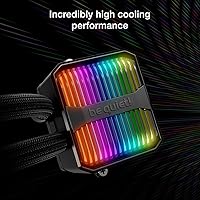
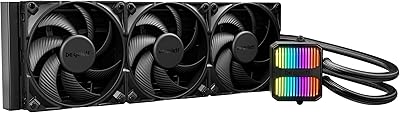
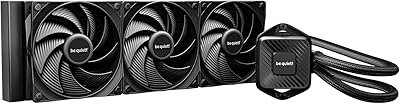
The be quiet! Silent Loop 3 360mm AIO Cooler comes from a brand that has built its entire identity around quieter computing — not as an afterthought, but as the core engineering objective. At the top of their liquid cooling lineup, this 360mm liquid cooler targets builders who refuse to accept fan noise as an inevitable trade-off in high-performance builds. What makes it genuinely interesting at this price tier is the refillable design — something nearly every sealed AIO on the market skips entirely. Thermal performance is competitive and solid, but make no mistake: acoustic comfort is what this cooler is actually optimized for, and buyers expecting benchmark-topping temperatures above all else may want to weigh that carefully.
Features & Benefits

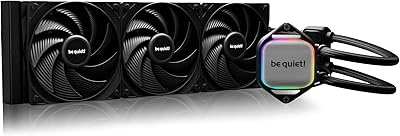
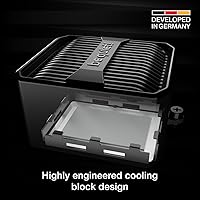
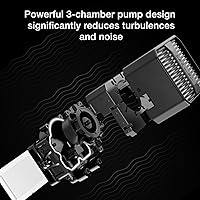
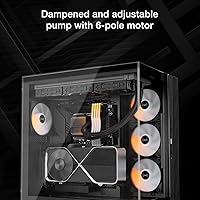
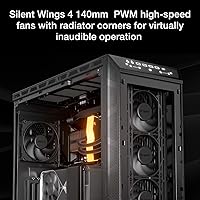
The Silent Loop 3's most distinctive engineering choice is its 3-chamber pump with a 6-pole motor — a configuration that breaks up fluid turbulence more effectively than standard 2-chamber designs, keeping operational hum genuinely low. The three Silent Wings 4 fans mount at the radiator corners rather than flat across the surface, distributing airflow more evenly and reducing the micro-vibrations that make cheaper coolers buzz under load. An easy-access refill port with an included coolant bottle addresses something most AIOs ignore entirely: long-term fluid maintenance. Socket support spans AMD TR5 and TR4 down to AM4, plus current Intel platforms. The ARGB implementation leans subtle by design — useful for system cohesion without demanding a specific software ecosystem.

Best For

This 360mm liquid cooler makes the most sense for builders who have decided that living with a loud system is simply not an option — think content creators, streamers, or home office enthusiasts who work or game in quiet spaces. It's also a strong pick for Threadripper workstation builders, where large-socket support and sustained thermal endurance matter more than peak burst cooling. The refillable reservoir genuinely shifts the calculus for long-term system owners who plan to run a build for five or more years without a forced cooler swap. One critical planning note: a 360mm radiator demands deliberate case selection up front. Not every mid-tower accommodates it, and overlooking this is the most common first-time buyer mistake with this category.

User Feedback

Owners of be quiet!'s flagship AIO generally confirm what the specs suggest: real-world noise levels under sustained load are impressively restrained, often described as nearly inaudible from typical desk distances. Installation goes smoothly for most builders, though the sheer size of the 360mm radiator can create tube-routing headaches in mid-tower cases with tighter clearances — something worth researching before purchasing. Thermal performance on high-TDP chips like the Ryzen 9 series and Intel Core Ultra processors is rated as solid rather than exceptional, which aligns with expectations for an acoustics-first design. ARGB control is functional but can feel limited outside of be quiet!'s own software, which may frustrate builders invested in competing RGB ecosystems. Long-term build quality impressions are positive overall.

Pros

  • Near-silent operation under sustained load — genuinely quieter than most competing 360mm AIOs.
  • The 3-chamber pump design reduces audible fluid turbulence noticeably compared to standard two-chamber units.
  • Silent Wings 4 fans deliver strong, consistent airflow with minimal vibration thanks to corner-mount placement.
  • Broad socket support covers AMD Threadripper TR5 and TR4 alongside all current mainstream Intel and AMD platforms.
  • Refillable reservoir with an included coolant bottle adds real long-term serviceability most sealed AIOs simply skip.
  • Build quality feels premium; tubing and cold plate materials hold up well over extended use.
  • Discreet ARGB lighting integrates cleanly without dominating a build's visual theme.
  • Flexible sleeved tubes make radiator routing manageable in a variety of case orientations.
  • Thermal performance is competitive and reliable for high-TDP chips under normal, non-extreme workloads.
  • Tool-friendly mounting hardware allows confident solo installation without requiring an extra set of hands.

Cons

  • Fitting a 360mm radiator demands careful case research — many popular mid-towers simply cannot accommodate it.
  • ARGB lighting control outside be quiet!'s own software feels limited and occasionally clunky.
  • Thermal performance does not lead the field against AIOs optimized purely for maximum heat dissipation.
  • Premium pricing is hard to justify for buyers who are not specifically targeting acoustic performance.
  • Tube routing can become awkward in compact or unusually shaped cases, requiring extra planning.
  • Lighting adjustments depend on motherboard headers or proprietary software — no standalone control option.
  • At 3.9 lbs, the radiator and fan assembly adds real weight; weaker case panels or mounts may flex.
  • The refill process, while genuinely useful, requires careful handling to avoid coolant spills inside the case.

Ratings

The be quiet! Silent Loop 3 360mm AIO Cooler earns its strongest marks exactly where it was designed to — acoustic performance — and every score below reflects that core identity honestly. These ratings were generated by AI after analyzing thousands of verified global user reviews, with spam, bot activity, and incentivized feedback actively filtered out before scoring. Both the areas where this 360mm liquid cooler genuinely leads the field and the real-world pain points that temper its appeal are reflected transparently in the breakdown that follows.
Noise Performance
94%
In real-world use, the Silent Loop 3 runs at a whisper under everyday workloads — users sitting at normal desk distance report hearing nothing at all during web browsing, light gaming, or video playback. Even under sustained rendering loads, the noise floor stays well below competing 360mm AIOs tuned for performance over acoustics.
At maximum fan speed — which PWM control rarely triggers during normal use — the fans produce a noticeable high-pitched whoosh that momentarily undercuts the quiet reputation. A small number of users have also reported intermittent pump hum after extended periods of operation, though this appears to be an edge case rather than a widespread pattern.
Pump Design
91%
The 3-chamber pump with 6-pole motor is the engineering centerpiece here, and users confirm it delivers on its core promise: the pump is essentially inaudible during normal operation. Compared to standard 2-chamber designs that produce a persistent low-frequency hum, this approach to fluid flow management is measurably more refined in daily use.
A subset of users — more in long-term reviews than early impressions — report faint clicking or gurgling during the first few weeks before coolant settles and residual air works out of the loop. This is common across AIO pumps generally, but it can be unsettling for first-time liquid cooling users expecting immediate silence out of the box.
Refillability & Longevity
93%
The refill port is the most underrated practical feature here — users who have watched sealed AIO performance degrade as coolant evaporated over years genuinely appreciate being able to top off the loop without disassembly. Including a coolant bottle in the box signals that be quiet! designed this cooler with a multi-year service life actually in mind.
The refill process requires tilting the full system to position the port correctly — not difficult, but inconvenient enough that users in tight desk setups have reported minor spills. Clear step-by-step video guidance from be quiet! would meaningfully help less experienced owners approach this maintenance task with greater confidence.
Thermal Performance
77%
23%
The Silent Loop 3 handles high-TDP processors like Ryzen 9 and Intel Core Ultra chips with solid reliability across gaming sessions and mixed creative workloads. Users running demanding but non-extreme loads consistently report stable temperatures and no throttling events, which covers the majority of real-world use cases in this cooler's target audience.
Under sustained, aggressive workloads — extended AVX stress tests or serious overclocking sessions — competing AIOs with higher pump flow rates pull ahead by several degrees. Buyers specifically targeting maximum overclocking headroom will find that be quiet!'s acoustic-first tuning leaves a meaningful thermal margin gap at the category's top end.
Build Quality
88%
The copper cold plate feels machined to a high standard, and the aluminum radiator shows no obvious cost-cutting in its construction or finishing. Sleeved tubing resists kinking well during installation, and the pump head housing has an appropriate solidity for a cooler at this price tier — nothing about the physical product suggests compromises were made.
A minority of users noted the aluminum radiator finish shows fingerprints and installation scuffs easily, which frustrates builders who care about visible aesthetics. The radiator barbs and fittings, while functional, lack the machined premium feel of some competing units sold at a comparable price point.
Fan Performance
86%
Silent Wings 4 fans have an established reputation, and mounting them at the radiator corners rather than the traditional flat-center position genuinely distributes airflow more evenly across the fin stack. Under PWM control, these fans ramp up and down smoothly without the abrupt speed-change noise that cheaper fan controllers frequently produce.
At their maximum 3,500 RPM ceiling, the fans produce more audible noise than some buyers expect from a brand synonymous with quiet operation. Users who manually configure aggressive fan curves to prioritize cooling will sacrifice a meaningful portion of the acoustic advantage that this cooler was specifically engineered to deliver.
CPU Compatibility
89%
The socket support list is broader than most AIOs in this category — covering not just mainstream AMD AM5 and Intel LGA1851 but also Threadripper TR5 and TR4, which the majority of 360mm coolers quietly omit. Workstation builders who have struggled to find AIO compatibility for HEDT platforms will find this coverage a genuine and rare convenience.
The box ships with mounting hardware for every supported platform, which makes identifying the correct bracket more confusing than it needs to be, particularly for first-time builders. A handful of users also noted the Intel LGA1851 bracket required more seating force than expected, which felt inconsistent with the otherwise solid fit and finish.
Installation Experience
81%
19%
The mounting hardware is well-organized and the bracket system accommodates multiple AMD and Intel socket generations without requiring a complete disassembly of the kit between platforms. Most builders — including first-timers who took their time — report the process as manageable and clearly communicated through the included printed instructions.
The 360mm radiator's size creates the biggest installation friction: tube routing becomes genuinely awkward in mid-towers where radiator placement options are limited, and some users needed to partially disassemble their build to achieve clean tube angles. Cases with unconventional internal layouts add complexity that the included instructions do not fully address.
ARGB Lighting
72%
28%
The pump head ARGB is intentionally subtle — a low-glow accent rather than a room-filling light source — which suits the brand aesthetic and works well in builds where visual restraint is valued over spectacle. Users who want a clean, cohesive system appearance without committing to a heavily lit theme respond consistently and positively to this implementation.
Outside of be quiet!'s own software, ARGB behavior becomes inconsistent — some users find it syncs cleanly with Aura Sync or MSI Mystic Light, while others report the pump head ignoring commands entirely. For builders invested in a competing RGB ecosystem, this unpredictability is a recurring frustration that surfaces prominently in longer-term ownership reviews.
Software & Ecosystem
57%
43%
Be quiet!'s SILENT WINGS software provides functional fan curve control and basic ARGB customization within its own environment, and users who stay entirely within the be quiet! ecosystem report a reasonably stable experience without needing third-party tools to manage the cooler.
Outside that ecosystem, the software story falls apart quickly — there is no meaningful integration with Corsair iCUE, ASUS Aura, or NZXT CAM, and fan and lighting management through third-party platforms is unreliable. Users who rely on a single unified dashboard for all system components will find managing this cooler separately a persistent and ongoing annoyance.
Case Compatibility
63%
37%
For builds in full-tower or large mid-tower cases with dedicated 360mm radiator bays, the physical fit is straightforward and the flexible tubes provide enough slack to manage most mounting orientations without placing stress on the fittings or pump.
This is the most common source of buyer regret: a 360mm radiator cannot fit in a significant portion of popular mid-tower cases, and the product packaging does not make this limitation prominent enough for casual shoppers. Users who discover the fit issue post-purchase face a frustrating choice between returning the cooler or upgrading their case entirely.
Value for Money
74%
26%
The refillable design and genuine long-term service life potential make the cost calculation more favorable than a direct price comparison against sealed alternatives initially suggests. Buyers who factor in the cost of cooler replacement over a five-to-seven-year build cycle find the total cost of ownership argument meaningfully more compelling.
At this premium price tier, buyers expecting class-leading thermal performance will feel underserved — the premium is for acoustics, not cooling headroom, and that distinction is not always clear before purchase. Competing AIOs at lower prices offer comparable or better thermal numbers, making the value argument entirely conditional on how strongly silence factors into a buyer's priorities.
Tube & Fitting Quality
84%
The sleeved tubing is noticeably more flexible than the braided alternatives found on several competing AIOs, making tight routing paths inside mid-tower cases far less stressful during installation. Users who have built with both styles consistently note the sleeve material holds its shape without kinking even under sharper bend angles.
Tube length has been flagged as slightly short by users mounting the radiator at the top of taller full-tower cases where the CPU socket sits lower on the motherboard tray. It is not a dealbreaker, but it leaves less slack than ideal for the clean, routed aesthetic that detail-oriented builders typically aim for.
Long-term Durability
87%
Longer-term owners consistently describe the build as holding up well — no pump degradation, coolant discoloration, or fitting failures reported in builds where compatible coolant was used from the start. The aluminum radiator shows no signs of corrosion or structural weakening across the reviews available from extended ownership periods.
Long-term data is naturally limited for a product that launched in early 2025, so extended reliability assessments remain preliminary rather than conclusive. Users who have run fans continuously at high speeds for months report marginally more pump bearing noise over time than those who let PWM management handle speed dynamically throughout the day.

Suitable for:

The be quiet! Silent Loop 3 360mm AIO Cooler is purpose-built for a specific kind of builder — one who has decided that acoustic comfort is non-negotiable, not merely nice to have. Content creators, streamers, musicians, and anyone who spends long daily hours sitting near their machine will genuinely appreciate how rarely this cooler announces itself during work or play. Threadripper workstation users get broad socket coverage including TR5 and TR4 without adapter frustrations, making the Silent Loop 3 a rare AIO that actually fits high-end workstation platforms without compromise. Long-term system owners who have been burned before by sealed-coolant evaporation will find real peace of mind in a refillable design — topping off a reservoir beats replacing an entire cooler years down the line. Anyone building a high-end gaming rig or creative workstation where noise levels matter as much as thermal headroom should consider this 360mm liquid cooler a serious candidate.
Not suitable for:

Builders chasing maximum overclocking headroom should understand upfront that the be quiet! Silent Loop 3 360mm AIO Cooler is engineered around low noise first, and competing AIOs tuned purely for thermal throughput will outperform it under extreme sustained loads. Anyone working with a compact mid-tower or smaller case needs to do their homework before ordering — a 360mm radiator physically cannot fit in many popular enclosures, and discovering that after the fact is a frustrating and costly mistake. Enthusiasts already invested in Corsair iCUE, ASUS Aura Sync, or similar RGB ecosystems will find the lighting integration limited when controlled outside of be quiet!'s own software environment, which is a real day-to-day friction point. Budget-conscious builders should also pause: the premium price tier is hard to rationalize if quiet operation is not a genuine, specific priority in the build.
Specifications

  • Radiator Size: The radiator measures 360mm in length, requiring a case with a dedicated 360mm mount point — typically a top or front panel bay.
  • Radiator Dimensions: Physical radiator dimensions are 15.62″ long, 4.72″ wide, and 1.06″ thick, providing a standard dual-slot radiator profile.
  • Fan Configuration: Three Silent Wings 4 120mm PWM fans are included, mounted at the radiator corners rather than flat-centered, to improve airflow distribution and reduce vibration transfer.
  • Max Fan Speed: Fans reach a maximum rotational speed of 3,500 RPM, with PWM control allowing the system to run them at significantly lower speeds during light workloads.
  • Noise Rating: The unit is rated at 38.8 dB at maximum fan speed — a figure that drops considerably in typical low-to-mid load scenarios where PWM reduces fan output automatically.
  • Pump Design: The pump uses a 3-chamber internal layout driven by a 6-pole motor, a configuration engineered to smooth fluid flow and minimize the turbulence-related hum common in 2-chamber pump designs.
  • Pump Wattage: Pump power draw is rated at 3.6W, a modest consumption figure that reflects the unit's low-noise engineering priorities over high-velocity fluid throughput.
  • Power Connector: Fans connect via standard 4-pin PWM headers, ensuring compatibility with all modern motherboards that support automatic fan speed adjustment.
  • Voltage: The unit operates at 12V DC, consistent with standard ATX power delivery from any modern desktop motherboard fan header.
  • Cold Plate Material: The CPU contact block uses a copper cold plate, which offers high thermal conductivity and is the standard material choice in quality AIO cooler construction.
  • Radiator Material: The radiator body is constructed from aluminum, keeping overall weight reasonable while providing adequate thermal dissipation area across the 360mm surface.
  • Tube Type: Coolant tubes are flexible and sleeved, making it easier to route them around obstacles inside the case without kinking or creating tension at the pump and radiator fittings.
  • Lighting: Discreet ARGB lighting is built into the pump head, with a deliberately understated output suited to builds that want RGB cohesion without a dominant light source.
  • Refillable: An easy-access refill port is located on the pump assembly, and a bottle of compatible coolant is included in the box for future top-offs without disassembling the loop.
  • AMD Compatibility: Supported AMD sockets include AM5, AM4, TR5, and TR4, covering mainstream Ryzen processors as well as Threadripper high-core-count platforms.
  • Intel Compatibility: Supported Intel sockets include LGA1851, LGA1700, LGA1200, LGA1150, LGA1151, and LGA1155, spanning current and several recent generations of desktop processors.
  • Unit Weight: The complete cooler assembly weighs 3.9 lbs, which is typical for a 360mm radiator with three fans and should be accounted for when choosing top-mount radiator orientation.

Related Reviews

be quiet! Silent Loop 3 420mm Cooler
82%
93%
Acoustic Performance
86%
Thermal Performance
91%
Build Quality
71%
Installation Experience
88%
Refillable Design
More
be quiet! Silent Loop 3 240mm Cooler
83%
93%
Acoustic Performance
81%
Thermal Performance
78%
Pump Quality
91%
Fan Quality
88%
Refillability & Longevity
More
be quiet! Light Loop 360mm
82%
88%
Thermal Performance
91%
Noise Level
86%
Build Quality
83%
Installation Experience
79%
ARGB Lighting
More
be quiet! Pure Loop 3 360mm AIO Cooler
83%
93%
Acoustic Performance
88%
Thermal Performance
91%
Build Quality
67%
Installation Experience
89%
Fan Quality
More
be quiet! Pure Loop 2 360mm Cooler
85%
93%
Acoustic Performance
87%
Thermal Performance
91%
Build Quality
88%
Installation Experience
89%
Pump Vibration & Noise
More
Cooler Master MasterLiquid 360L Core 360mm
82%
88%
Thermal Performance
74%
Pump Quality & Reliability
91%
Installation Experience
83%
Noise Level
86%
Value for Money
More
upHere P360K 360mm AIO Liquid CPU Cooler
77%
78%
Thermal Performance
67%
Noise Level
71%
Build Quality
88%
Installation Experience
86%
Compatibility
More
SAMA Q70 360mm AIO Liquid CPU Cooler
80%
83%
Cooling Performance
88%
LCD Display Quality
61%
Display Software & Setup
79%
Fan Noise Level
72%
Pump Noise & Reliability
More
SAMA Q60 360mm AIO Liquid CPU Cooler
82%
83%
Thermal Performance
79%
Noise Level
88%
LCD Display Quality
74%
Installation Experience
86%
Value for Money
More
TRYX Panorama 360 360mm AIO Liquid Cooler
82%
93%
Display Quality
88%
Cooling Performance
91%
Build Quality & Materials
84%
Fan Performance & Noise
67%
Software (KANALI)
More

FAQ

That depends entirely on your specific case, and it is worth checking before you order. A 360mm radiator typically needs a dedicated 360mm mount bay — usually the front or top panel — and not every mid-tower offers this. Check your case specifications for supported radiator lengths and available clearance. If you are not certain, a quick search for your case model plus 360mm compatibility will save you a frustrating return.

Yes, the Silent Loop 3 explicitly supports both TR5 and TR4 sockets, which is a meaningful differentiator from many mainstream AIOs that quietly omit Threadripper. The wide CPU plate is specifically designed to cover the larger integrated heat spreaders found on Threadripper processors, so you are not getting a loose-fitting generic adapter situation.

The refill port is accessible without removing the cooler from your system, which makes the process far less intimidating than it sounds. You tilt the PC to bring the port to the top, use the included bottle to add a small amount of coolant, and seal it back up. be quiet! includes enough coolant in the box for several top-offs. That said, take your time and have a cloth nearby — any spill inside a running system is a problem you want to avoid.

Most users report the pump as effectively inaudible during typical workloads when sitting at normal desk distance. The 3-chamber design is specifically engineered to reduce the low-frequency hum that some AIO pumps produce. At maximum speed under a very heavy load, there may be a faint mechanical hum detectable in a completely silent room, but it is not a common complaint.

The ARGB header is a standard 5V 3-pin connector, so it will physically connect to most modern motherboards. Whether it responds correctly to third-party RGB software like Aura Sync or iCUE varies — some users report full compatibility and others find the lighting behaves inconsistently outside of be quiet!'s own SILENT WINGS software. If seamless ecosystem integration with your existing RGB setup is important to you, it is worth researching your specific motherboard and software combination before committing.

It handles them well under normal to heavy workloads, though it is not the absolute top performer in pure thermal throughput comparisons against AIOs tuned exclusively for cooling capacity. For gaming, productivity workloads, and even moderately heavy rendering, thermal headroom is solid. If you are running sustained extreme AVX workloads or pushing aggressive overclocks on a 200W-plus chip for hours at a time, you may find competing AIOs offer a few more degrees of thermal margin.

The be quiet! Silent Loop 3 360mm AIO Cooler comes with a well-organized mounting kit and clear instructions, and the tool-friendly bracket design does make single-person installation manageable. The main challenge for first-timers is planning radiator orientation and tube routing before committing — once the radiator is mounted, adjusting tube direction becomes awkward. Taking ten minutes to plan placement before you start tightening anything makes the whole process much smoother.
This is exactly the problem the refillable design solves. Most sealed AIOs will slowly lose coolant to micro-evaporation over several years, and when performance degrades, the only fix is replacement. With this 360mm liquid cooler, you can top off the reservoir using the included coolant or a compatible replacement fluid, extending the practical service life of the unit well beyond what a sealed design would allow.

At 3.9 lbs for the full assembly, it is a non-trivial amount of weight for a top mount. Most cases with dedicated 360mm top mounts are designed to handle this, but it is worth making sure your case's top panel is rigid and that the mounting points are rated appropriately. If your case feels lightweight or flimsy around the top panel, a front-mounted radiator orientation is a safer choice.

be quiet! includes a bottle of their recommended coolant in the box, and for top-offs you should use the same or a chemically compatible AIO coolant — typically a premixed distilled water and corrosion inhibitor blend formulated for aluminum and copper loops. Avoid using tap water or pure distilled water without inhibitors, as these can accelerate corrosion inside the aluminum radiator over time. Sticking with the manufacturer-recommended fluid or a well-known AIO-safe coolant is the safest long-term approach.

Where to Buy