Overview

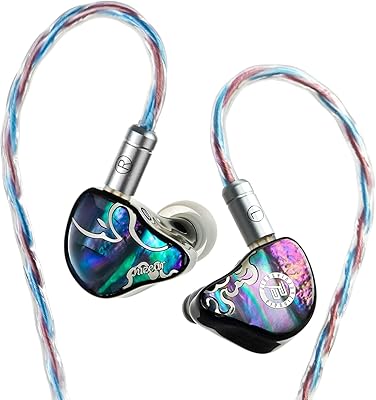
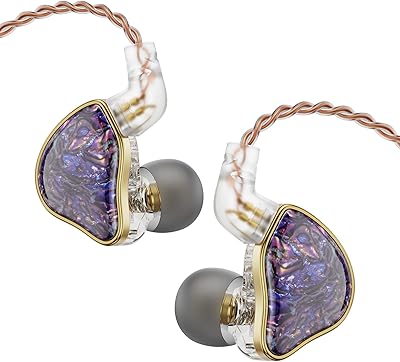
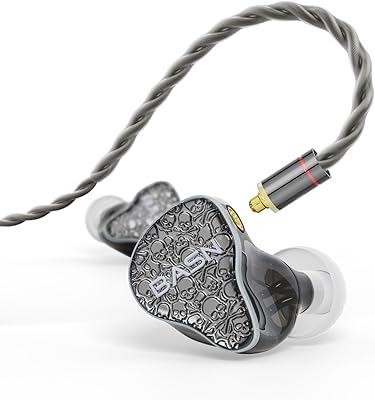
The BASN Bmaster Triple Driver IEM is built for working musicians and audio engineers who need honest, accurate sound — not the boosted bass that consumer earbuds typically push. Sitting in the mid-range IEM bracket, it covers useful ground between throwaway budget options and serious professional monitors. The triple dynamic driver configuration is notable at this price; most competitors at this tier ship a single driver. Expect a balanced, detailed signature — defined mids, controlled lows, and clean highs — rather than anything colored or exciting for casual playlist listening. The detachable 2-pin cable adds real-world durability that most users only appreciate after their first cable frays.
Features & Benefits

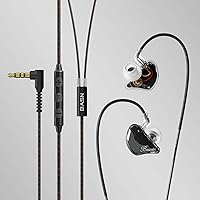
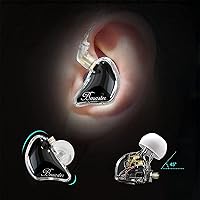
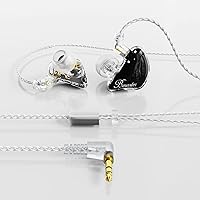
The triple dynamic driver setup is what gives these in-ear monitors their layered character — each frequency range gets dedicated handling, so bass does not muddy the mids during a busy mix. The gold-plated 2-pin connector uses a slot-lock design that physically prevents the pin from working loose over hundreds of cable swaps, a small detail that matters after six months of regular use. Over-ear earhooks keep the Bmaster planted during live performance, and the ergonomic shell fits a wide range of ear canals without requiring custom molds. Two cables ship in the box: a silver-plated OFC cable for critical listening and a second with an inline microphone — genuinely useful for calls or on-the-go recording.

Best For

These in-ear monitors are a natural fit for live stage performers who need consistent passive isolation from monitor bleed and crowd noise without managing a wireless system. Church sound engineers and livestream operators will appreciate the secure fit and reliable wired connection — no dropouts mid-service. Home studio producers monitoring on a tight budget find solid value here; the balanced signature does not flatter mistakes the way hyped consumer earphones can. Audiophiles upgrading from entry-level IEMs will notice a real step up in detail retrieval. One caveat: if you mostly use earphones for commuting or gym sessions, this wired IEM may feel over-specified for those scenarios.

User Feedback

Buyers consistently highlight sound clarity and balance as punching above expectations for the price, with particular praise for defined midrange performance during vocal monitoring. Comfort feedback is mostly positive for average-sized ear canals, though users with narrower canals note that switching to the included memory foam tips — rather than the default silicone — makes a real difference in both fit and isolation. On the downside, some report the stock cable feels stiff in cold conditions, and a few find the connector snug at first use. Compared to similarly priced rivals, most buyers recommend the Bmaster for stage and studio scenarios rather than casual daily listening, where the over-ear routing feels less convenient.

Pros

  • Triple dynamic drivers deliver genuinely layered sound — bass, mids, and highs each hold their own without bleeding into each other.
  • The slot-lock 2-pin connector prevents the pin loosening that kills most budget IEMs within a year of regular cable swaps.
  • Two cables in the box — a high-quality OFC cable and an inline mic cable — cover both critical listening and hands-free call scenarios.
  • Over-ear earhooks keep these in-ear monitors locked in place during active live performance without constant readjustment.
  • At 34 ohms, the Bmaster drives cleanly from a phone or laptop with no external amplifier needed.
  • Both silicone and memory foam eartips are included, giving users a real path to a custom-feeling fit without extra purchases.
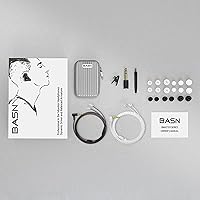
  • The fabric carry case, 6.3mm adapter, cable clip, and cleaning tool make this one of the more complete accessory bundles at this price tier.
  • Balanced, honest sound signature helps engineers catch mix issues that consumer-tuned earphones typically hide.
  • Detachable cable design means a worn-out cable is a cheap fix, not a reason to replace the entire unit.

Cons

  • The stock cable develops stiffness and memory kinks in cold environments, making early morning outdoor use noticeably awkward.
  • Fabric carry case offers minimal crush protection inside a packed gear bag or backpack.
  • Passive isolation has a real ceiling — high-SPL environments like loud drum rooms will push past its limits quickly.
  • The inline microphone cable picks up too much ambient noise for clean calls or recordings outside quiet settings.
  • Eartip sizes are not labeled, which turns what should be a quick fit test into an unnecessary guessing game.
  • The connector requires firm, deliberate engagement and can feel stiff or slightly gritty before it loosens with regular use.
  • Memory foam tips lose their expansion responsiveness after several months of daily compression inside the carry case.
  • Cable stiffness near the Y-split after coiled storage is a recurring complaint that affects drape and comfort during use.

Ratings

The BASN Bmaster Triple Driver IEM has been evaluated by our AI rating engine after processing verified buyer reviews from multiple global markets, with spam, incentivized, and bot-generated feedback actively filtered out. The scores below reflect an honest aggregation of real-world experiences — from church monitor rigs to home studio setups — capturing both what this wired IEM does well and where it falls short. Strengths and friction points are weighted equally, so you get a clear picture before buying.
Sound Balance & Accuracy
88%
Buyers working in live sound and home recording consistently praise the even-handed frequency response — vocals sit clearly in the mix without competing bass or brittle highs. Engineers monitoring a live stream or podcast track particularly appreciate how nothing feels artificially boosted, making honest mix decisions easier.
Listeners who prefer a V-shaped or bass-forward signature find the tuning underwhelming for casual music enjoyment. A few users transitioning from consumer earbuds describe the sound as flat or unexciting until they adjust their expectations toward accuracy over entertainment.
Driver Performance
83%
The triple dynamic driver configuration gives the Bmaster a sense of layering that single-driver competitors at this tier rarely achieve. Bass retains definition during complex passages, and the midrange — critical for vocal monitoring — stays present and readable even at lower listening volumes.
Some technically inclined users note that three dynamic drivers do not perform identically to a hybrid balanced-armature setup, and micro-detail retrieval in the upper frequencies is not on par with more expensive IEMs. Transient speed is adequate but not exceptional for fast acoustic material.
Build Quality
79%
21%
The shells feel solid for the price range, and the 2-pin connector housing shows no obvious flex or wobble after repeated cable swaps. Most users report the physical housing holding up well through regular gigging and rehearsal cycles without cosmetic damage.
The plastic construction does feel lightweight in a way that some associate with fragility, even if long-term reports are generally fine. A handful of buyers note minor finishing inconsistencies on the nozzle area, and the cable strain relief, while present, is not the most robust they have seen.
Detachable Cable System
86%
The slot-lock 2-pin design addresses one of the most common failure points in budget IEMs — pins that wobble loose over time. Users who have owned IEMs with standard 2-pin connections without locking mechanisms immediately recognize the practical value of the added retention.
The connector requires a firm, deliberate insertion and removal, which some users initially find awkward or stiff compared to magnetic cable systems. A small number report the lock mechanism feeling slightly gritty on early use, though this typically loosens after a break-in period.
Comfort & Ergonomics
77%
23%
The over-ear earhook keeps the monitors locked in place during movement-heavy performances, which stage musicians and worship band members consistently highlight as a genuine advantage over straight-down cable IEMs. Long rehearsal sessions of two to three hours are manageable for average-sized ear canals.
Users with narrower or shallower ear canals report that the default silicone tips do not create a reliable seal, which affects both comfort and passive isolation. Switching to the included memory foam tips resolves this for most, but it requires experimenting with sizes before finding a reliable fit.
Passive Sound Isolation
74%
26%
At moderate stage volumes, the passive isolation does a reasonable job of reducing bleed from floor monitors and crowd noise, letting performers hear their in-ear mix clearly enough to stay on pitch. Church sound operators in mid-sized venues report the isolation as sufficient for their typical monitoring needs.
In high-SPL environments — festival stages, loud drum rooms — the isolation ceiling is noticeably limited compared to custom molds or deep-insertion IEMs. Users expecting the kind of attenuation that sealed custom monitors provide will likely find these fall short in the noisiest real-world scenarios.
Accessory Bundle Value
91%
The inclusion of both a silver-plated OFC audio cable and an inline microphone cable is a standout element of the package — the mic cable turns the Bmaster into a functional headset for calls or on-the-go voice recording without any additional purchase. The fabric carry case, 6.3mm adapter, and cleaning tool round out a genuinely complete kit.
The carrying case, while useful for travel, is fabric rather than semi-rigid, offering minimal protection against crushing in a packed gear bag. The included cable clip is functional but basic, and some users wish the eartip selection were labeled by size to speed up the fitting process.
Eartip Selection
72%
28%
Shipping both silicone and memory foam tips in multiple sizes is a practical decision that acknowledges the variability in ear anatomy. Memory foam tips in particular get positive mentions for improving isolation and stability for users who found the default silicone tips too shallow.
The sizing increments between tips feel inconsistent to some users, with a noticeable gap between medium and large that leaves certain ear shapes without an ideal match. A few buyers note the foam tips compress more than expected and lose their expansion speed after several months of daily use.
Cable Quality
68%
32%
The silver-plated OFC cable has a noticeably cleaner aesthetic than the rubber cables common in budget IEMs, and conductivity-focused users appreciate the material choice for signal integrity over longer cable runs. Microphonics — the noise generated by cable movement rubbing against clothing — are relatively low with the over-ear routing.
In cold environments the cable stiffens considerably, making it less pliable and more prone to holding sharp bends. Some users report the cable developing a persistent memory kink near the Y-split after extended use coiled in the carry case, which affects how naturally it drapes during use.
Microphone (Inline Cable)
63%
37%
Having a dedicated microphone cable in the box is a feature many competitors omit, and for users who want to take calls or record quick voice memos without switching gear, it is a practical convenience. Clarity is sufficient for phone calls and basic voice capture in quiet settings.
In noisy environments the inline mic picks up considerable ambient sound, making it unsuitable for video calls in cafes or outdoor settings. The microphone placement on the cable is fixed and does not always land at an optimal position relative to the mouth depending on the wearer's torso length.
Stage Performance Reliability
81%
19%
Working musicians using the Bmaster in live church and small venue settings report consistent performance across multiple shows without connection failures or driver issues. The earhook design reduces the risk of the monitors being dislodged during active performance — a genuine practical advantage over straight-cable IEMs.
In high-sweat conditions, some performers note the ear hooks feel less comfortable over time as moisture accumulates around the over-ear section of the cable. A wired connection also inherently limits freedom of movement compared to a true wireless monitoring system, which matters for more physically active performers.
Value for Money
87%
Relative to comparably priced IEMs from competing brands, the combination of triple-driver architecture, detachable cables, dual cable options, and a full accessory set represents strong value for a working musician or entry-level engineer. Most buyers feel the performance justifies the outlay without hesitation.
Users who primarily want casual listening IEMs for commuting or gym use are unlikely to extract full value from features designed for professional monitoring contexts. At this price tier, a few competing single-driver IEMs offer more exciting tuning for entertainment, which makes the Bmaster feel less appealing for non-professional use cases.
Impedance & Source Compatibility
84%
At 34 ohms, the Bmaster drives cleanly from a smartphone, laptop, or tablet without requiring a dedicated headphone amplifier — a meaningful practical advantage for musicians who monitor directly from a laptop during recording or livestreaming. The 3.5mm connection ensures broad compatibility with standard audio interfaces.
Users connecting to lower-output sources like older smartphones may notice slightly reduced maximum volume headroom compared to lower-impedance consumer earbuds. The included 6.3mm adapter, while useful for mixing desks, adds a short stub of length that can feel unstable if the connected device is moved frequently.

Suitable for:

The BASN Bmaster Triple Driver IEM is purpose-built for working musicians, live sound engineers, and content creators who need accurate monitoring rather than entertainment-focused audio. Church musicians and worship band members will find the secure over-ear earhook design and passive isolation practical during services where stage volume is unpredictable. Podcasters and home studio producers on a tight budget benefit from the balanced signature, which makes it easier to catch mix problems that hyped consumer earbuds tend to mask. Live stream operators who need a reliable wired connection with no latency or dropout risk will appreciate the straightforward 3.5mm compatibility with laptops and audio interfaces. Audiophiles upgrading from single-driver entry-level IEMs will notice a genuine step up in layered frequency handling. Anyone who has lost an IEM to a frayed cable will also find real long-term value in the detachable 2-pin system, which allows cable replacement without retiring the entire unit.
Not suitable for:

Buyers looking for a casual everyday earphone for commuting, gym sessions, or relaxed playlist listening should look elsewhere — the BASN Bmaster Triple Driver IEM is tuned for accuracy, not excitement, and the over-ear cable routing feels unnecessarily fussy outside of a performance or studio context. If you prefer a bass-forward or V-shaped sound signature typical of popular consumer earbuds, the Bmaster will likely feel flat and unengaging by comparison. Listeners who need strong attenuation in genuinely loud environments — festival stages, high-SPL rehearsal rooms — may find the passive isolation insufficient compared to custom-molded monitors. The wired-only design is also a hard dealbreaker for performers who need freedom of movement on stage without cable management concerns. Users with narrower ear canals may need to invest time in eartip experimentation before achieving a reliable seal, which is an extra friction point some buyers are not willing to deal with. Finally, if you have no use for professional monitoring features and simply want a compact, hassle-free pair of earphones for daily life, the feature set here goes largely unused.
Specifications

  • Driver Type: Three dynamic drivers per earpiece handle low, mid, and high frequencies independently for layered audio reproduction.
  • Impedance: Rated at 34 ohms, allowing the monitors to be driven adequately by smartphones, laptops, and standard audio interfaces without a dedicated amplifier.
  • Connector: Gold-plated 2-pin detachable connector with a slot-lock retention mechanism to prevent accidental disconnection and reduce long-term pin wear.
  • Cable Options: Includes two detachable cables: a silver-plated OFC audio cable for critical listening and a second cable with an inline microphone for calls and voice recording.
  • Jack: Standard 3.5mm stereo jack with a 6.3mm adapter included for compatibility with professional mixing desks and audio interfaces.
  • Noise Control: Passive sound isolation through a sealed in-ear fit; no active noise cancellation circuitry is used.
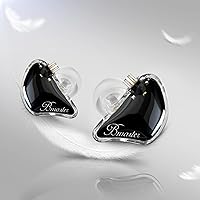
  • Ear Fit: Over-ear earhook cable routing combined with an ergonomic in-ear shell designed to accommodate a wide range of ear canal shapes.
  • Eartip Options: Multiple sizes of both silicone and memory foam eartips are included to allow personalized fit and isolation adjustment.
  • Wireless: Fully wired design with no Bluetooth or wireless transmission capability.
  • Carrying Case: Black fabric carrying case included for storage and travel protection of the earphones and accessories.
  • Weight: Total unit weight is 0.24 kg including cables and accessories as packaged.
  • Package Dimensions: Retail packaging measures 6.5 x 4.92 x 1.46 inches.
  • Compatibility: Works with smartphones, tablets, laptops, desktops, smart speakers, and standard music production equipment via the 3.5mm connection.
  • Included Accessories: Package contains one pair of earphones, two detachable cables, multiple eartips, a fabric carry case, a 6.3mm adapter, a cable clip, and a cleaning tool.
  • Recommended Use: Designed primarily for stage monitoring, studio tracking, live stream audio, and church in-ear monitor applications.
  • Shell Material: Earphone housings are constructed from lightweight plastic with a rounded tip and earhook form factor.
  • Control Type: Media control is available via the inline microphone cable, which includes a control element for compatible devices.
  • Age Range: Suitable for teens and adults; not designed or sized for young children.

Related Reviews
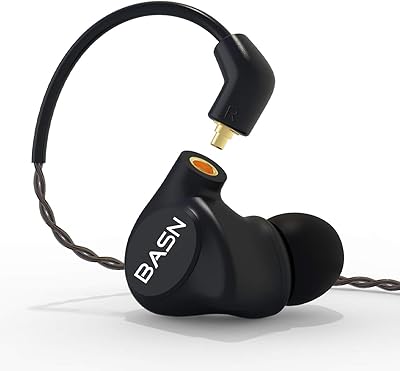
BASN MMCX Triple Driver IEM Earphones
84%
91%
Sound Quality
88%
Bass Response
85%
Comfort and Fit
89%
Noise Isolation
83%
Build Quality
More
1MORE Triple Driver In-Ear Headphones
86%
91%
Sound Quality
88%
Comfort and Fit
87%
Build Quality
85%
Noise Isolation
82%
In-Line Remote Functionality
More
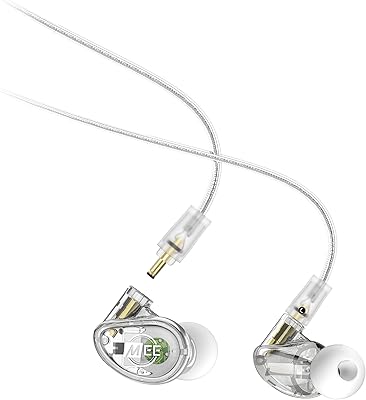
BASN Metalen In-Ear Monitors with Hybrid Drivers

82%
91%
Audio Quality
87%
Build Quality
75%
Comfort & Fit
88%
Sound Isolation
82%
Durability
More
Kiwi Ears Forteza
Kiwi Ears Forteza
87%
92%
Bass Impact
84%
Vocal Clarity
89%
Ergonomics & Fit
87%
Gaming Performance
91%
Build Quality
More
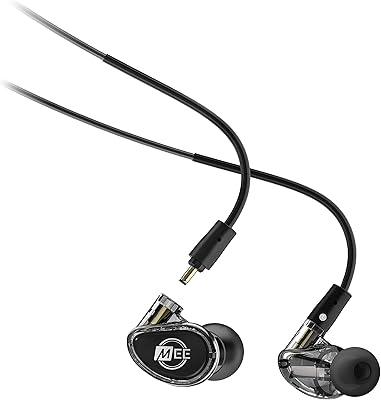
MEE audio MX2 PRO Dual-Driver Hybrid IEM
85%
91%
Sound Quality
94%
Bass Performance
86%
Fit and Comfort
89%
Build Quality
88%
Noise Isolation
More
MEE audio MX3 PRO Triple-Driver Hybrid In-Ear Monitors
87%
91%
Sound Quality
89%
Comfort & Fit
88%
Build Quality
85%
Noise Isolation
90%
Value for Money
More
Linsoul 7Hz Salnotes Zero HiFi 10mm Dynamic Driver IEM
83%
88%
Sound Quality
92%
Value for Money
85%
Comfort & Fit
83%
Build Quality
90%
Cable Quality
More
Juzear x Z Reviews Defiant
82%
88%
Sound Staging & Imaging
84%
Bass Performance
86%
Midrange Clarity
74%
Treble Tuning
89%
Build Quality
More
NICEHCK DB2 IEM Earphones
86%
89%
Sound Quality
91%
Bass Response
87%
Comfort & Fit
83%
Durability
85%
Build Quality
More
HiFiGo Kefine Delci IEMs
88%
89%
Sound Quality
93%
Comfort for Extended Use
87%
Bass Quality
84%
Build Quality
91%
Customization Options
More

FAQ

No, you do not. At 34 ohms, the Bmaster drives cleanly from a standard smartphone, laptop headphone jack, or audio interface output. You will reach adequate listening volume without any additional hardware, which is one of the practical advantages of this impedance rating for musicians working in mixed-device environments.

Yes, and that is one of the more useful design decisions here. The 2-pin detachable connector with its slot-lock design means a damaged cable is a straightforward, low-cost replacement rather than a reason to buy entirely new monitors. Aftermarket 2-pin cables from multiple brands are widely available.

For small to mid-sized venues — church stages, rehearsal rooms, local live events — they perform well in a real stage context. The over-ear earhook keeps them secure during movement, and the passive isolation handles moderate stage bleed. In very loud festival or arena environments, the isolation ceiling is limited, and custom-molded IEMs would serve better.

One cable is a pure silver-plated OFC audio cable intended for monitoring and listening without any microphone. The second cable includes an inline microphone and media control, making it useful for phone calls, voice memos, or scenarios where you need hands-free functionality. You can swap between them depending on the situation.

Start by switching from the default silicone tips to the included memory foam tips, which conform to the shape of your ear canal and typically provide a better seal for narrower or irregular ear shapes. If the medium size still feels too loose, try the small foam tips before assuming the fit will not work for you — most users resolve this with tip experimentation rather than returning the product.

If your iPhone has a 3.5mm headphone jack, it connects directly. For newer iPhone models without a headphone port, you will need a Lightning-to-3.5mm or USB-C-to-3.5mm adapter, which Apple and third-party brands sell separately. The monitors themselves are fully passive and do not require any special drivers or software.

The tuning is noticeably different from most consumer earbuds. These in-ear monitors are voiced for accuracy — the bass is present but controlled, the mids are clear, and the highs are detailed without harshness. If you are used to bass-boosted consumer earbuds, the Bmaster will initially sound flatter, but that neutrality is exactly what makes them useful for monitoring purposes.

Yes, though with some caveats. In a quiet room the inline microphone produces clear enough audio for video calls on Zoom, Teams, or similar platforms. In noisier environments — a cafe, a room with a running fan or AC — the mic picks up ambient sound noticeably, so it is not ideal for professional remote work in less controlled settings.

A cleaning tool is included in the accessory bundle for clearing debris from the nozzle. The eartips can be gently removed and wiped with a slightly damp cloth or a soft dry tissue. Avoid submerging any part of the earphones in water, and let eartips dry fully before reattaching. Periodic cleaning of the nozzle mesh prevents wax buildup from degrading sound quality over time.

Yes, with a small learning curve around fit. New IEM users sometimes find the over-ear cable routing unfamiliar, but it becomes natural quickly and does a better job of keeping the monitors in place than straight-down cable designs. The main adjustment is expectation setting around the balanced sound signature — if you approach these as a monitoring tool rather than an entertainment earphone, the experience is rewarding at this price tier.