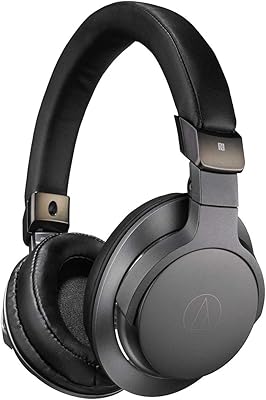
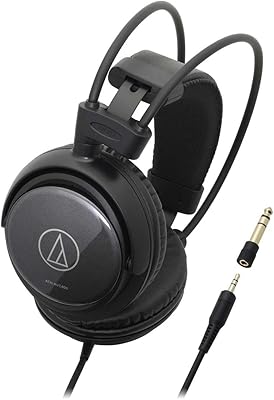
Audio-Technica ATH-DSR7BT Wireless Over-Ear Headphones
Audio-Technica ATH-DSR7BT Wireless Over-Ear Headphones — image 1
Audio-Technica ATH-DSR7BT Wireless Over-Ear Headphones — image 2
Audio-Technica ATH-DSR7BT Wireless Over-Ear Headphones — image 3

Audio-Technica ATH-DSR7BT Wireless Over-Ear Headphones — image 4
Audio-Technica ATH-DSR7BT Wireless Over-Ear Headphones — image 5
Audio-Technica ATH-DSR7BT Wireless Over-Ear Headphones — image 6
Audio-Technica ATH-DSR7BT Wireless Over-Ear Headphones — image 7
73%
27%

Overview

The Audio-Technica ATH-DSR7BT Wireless Over-Ear Headphones arrived in late 2016 with a genuinely unusual proposition: a fully digital signal path that skips the traditional digital-to-analog converter entirely. Most wireless headphones convert the signal to analog before it reaches the driver — Audio-Technica's Pure Digital Drive keeps it digital all the way through. That is not a minor footnote; it is the entire engineering philosophy behind these headphones. At this price point, they compete squarely with Sony, Sennheiser, and Bose. What separates them from that crowd is not noise cancellation or brand ubiquity — it is a commitment to signal purity that will either resonate with you completely or mean nothing at all.

Features & Benefits

The Pure Digital Drive system is the headlining feature: Audio-Technica's Dnote chipset controls the 45mm drivers directly with digital signals, theoretically eliminating conversion noise before it starts. Bluetooth 4.2 with aptX, AAC, and SBC codec support covers most modern devices well, and NFC touch-pairing makes connecting a phone genuinely quick. The dual-layer housing keeps electronics physically separated from the acoustic chamber, which improves phase accuracy on transient-heavy recordings. Comfort holds up well over a three-hour desk session thanks to the memory foam earpads and padded headband. There is also a 3.5mm wired fallback jack — something that matters more than people admit when the battery dies mid-flight.

Best For

The ATH-DSR7BT is built for a specific kind of listener: someone transitioning from a wired hi-fi setup who values sound accuracy over convenience features and does not need their headphones to cancel out a noisy train car. Audiophiles going wireless for the first time will find the compromise less painful here than with most competitors in this tier. It also works well for focused work-from-home sessions — clean audio, decent call quality, and enough comfort to wear for hours. That said, skip it if you need active noise cancellation, plan to use it at the gym, or want any water resistance. The bulky closed-back design simply is not built for that.

User Feedback

Long-term owners consistently highlight sound clarity and detail as the reason they stay loyal to this over-ear Bluetooth headphone — acoustic recordings, string instruments, and well-mastered electronic music reward close listening noticeably. The memory foam earpads earn strong marks for all-day wear, though several buyers note the clamping force feels tight during the first week before the headband breaks in. On the critical side, 15 hours of battery life was already modest at launch and looks short against today's competition. Touch controls get mixed reactions — fluid for most, but prone to accidental triggers during casual adjustments. A number of longer-term users have also flagged hinge durability as a concern after consistent daily use.

Pros

  • Pure Digital Drive bypasses the D/A converter entirely, producing noticeably cleaner audio on well-mastered recordings.
  • The 45mm True Motion drivers deliver strong detail retrieval, particularly on acoustic, classical, and dynamic music.
  • NFC touch-pairing is quick and convenient, and the ATH-DSR7BT stores up to 8 previously paired devices.
  • Memory foam earpads and headband padding remain comfortable through extended listening sessions of three hours or more.
  • aptX codec support gives Android users a meaningful Bluetooth audio quality step up over standard SBC connections.
  • The dual-layer housing keeps electronics isolated from the acoustic chamber, contributing to tighter transient response.
  • A 3.5mm wired fallback jack keeps these Audio-Technica wireless headphones usable even when the battery is fully drained.
  • The included fabric or leather carrying case offers practical everyday protection without an additional purchase.

Cons

  • At 15 hours, battery life trails most modern competitors that now offer 25 to 30 hours per charge.
  • Bluetooth 4.2 is showing its age — no multipoint connection, and stability can suffer in dense wireless environments.
  • Passive-only noise isolation will not satisfy buyers who need to block out a loud office, commute, or flight cabin.
  • Touch controls are prone to accidental activation, especially when adjusting fit or lifting the headphones off.
  • The clamping force feels uncomfortably tight straight out of the box and may take a week or two to loosen.
  • At 2.3 pounds, the ATH-DSR7BT is on the heavier side for daily wear, which adds up over longer commutes.
  • No water or sweat resistance rating makes these a risky choice near a gym, a trail, or unpredictable weather.
  • Several long-term owners have flagged hinge wear after sustained daily use, raising questions about multi-year durability.
  • The asking price is harder to defend today given how much the competition has advanced since this headphone launched.

Ratings

The scores below are generated by AI after analyzing thousands of verified buyer reviews worldwide, actively filtering out spam, incentivized submissions, and bot activity to surface what real owners genuinely think. The Audio-Technica ATH-DSR7BT Wireless Over-Ear Headphones earn strong marks where the engineering is exceptional and honest lower scores where the real-world trade-offs are hard to ignore. Both the standout strengths and the legitimate pain points are reflected transparently so you can make a confident, well-informed decision.

Sound Quality
91%
Among the most consistently praised aspects by long-term owners, the detail retrieval and tonal accuracy stand out on acoustic and classical recordings where subtleties matter most. Listeners transitioning from high-quality wired setups frequently note that the ATH-DSR7BT is one of the few wireless headphones that does not feel like a meaningful step down in fidelity.
Listeners who prefer a heavily colored or bass-boosted sound signature may find the tuning too neutral and analytical for casual pop and hip-hop listening. The sound quality advantage is also heavily source-dependent — low-bitrate streaming will not expose what these drivers are genuinely capable of delivering.
Driver Technology
88%
The Pure Digital Drive architecture is genuinely unusual in the consumer headphone market, and it shows in how cleanly the drivers handle transient-rich passages in live recordings and complex orchestral arrangements. Buyers with audio engineering backgrounds specifically call out the absence of conversion artifacts as a real, audible benefit during critical listening sessions.
The technology advantage is most noticeable in quiet, controlled listening environments — in a noisy commute or casual background listening scenario, the sonic difference over a well-tuned conventional headphone narrows considerably. The added engineering complexity could also complicate repairs if something goes wrong once the product is well outside its warranty period.
Comfort & Fit
76%
24%
The memory foam earpads earn consistent praise from owners who wear these for three or more hours at a desk, with most noting they do not create the hot, sweaty seal that plagues cheaper over-ear designs during long home listening sessions. The headband padding also holds its shape well over months of regular use.
The clamping force out of the box is a recurring complaint, particularly for buyers with wider heads who expect immediate comfort from day one. Several long-term reviewers also flag that 2.3 pounds adds up noticeably during extended commutes, with neck and ear fatigue setting in on journeys beyond 90 minutes.
Battery Life
58%
42%
For a straightforward daily routine — a morning commute, several hours of desk listening, and a short evening session — 15 hours of playback is just enough to get through a full day on a single charge. The rated 1,000-hour standby time also means leaving them uncharged for a few days between uses rarely causes problems.
By current standards, 15 hours is a weak number — direct competitors at the same price tier now routinely offer 25 to 30 hours per charge, making these Audio-Technica wireless headphones feel dated on this metric. Long-haul travelers and multi-day commuters who cannot guarantee daily charging access will find this ceiling genuinely limiting.
Value for Money
61%
39%
For buyers who specifically want a wireless headphone with a fully digital signal path and understand what that means, the engineering on offer is not available anywhere near this price in competing models. The included carrying case, NFC pairing, and wired fallback option add practical depth that makes the overall package feel thoughtfully assembled.
Released in 2016 and still priced at a premium, this over-ear Bluetooth headphone now faces stiff competition from newer models offering longer battery life, active noise cancellation, and more refined Bluetooth features for comparable or lower prices. Buyers without a strong preference for the digital signal architecture will likely find better overall value elsewhere on the market today.
Noise Isolation
63%
37%
The closed-back over-ear design and internal acoustic resistor do a respectable job of softening steady background sounds like office HVAC, light street noise, and low-frequency hum during seated commutes. For quiet work environments or focused home listening, the passive isolation is adequate and avoids the tonal side effects that some ANC circuits introduce.
Anyone expecting active noise cancellation-level performance will be genuinely disappointed — loud transportation, open-plan offices with active conversation, and airplane cabins bleed through noticeably. No amount of passive design refinement compensates for the absence of ANC circuitry when the surrounding environment is consistently loud and variable.
Wireless Connectivity
72%
28%
NFC touch-pairing makes connecting to a new device quick and painless for compatible Android users, and the 8-device memory means frequent switching between a phone, tablet, and laptop rarely requires a full re-pair sequence. Connection stability within the rated 10-meter range is generally consistent during everyday use.
Bluetooth 4.2 is showing its age — the absence of multipoint connection, which lets modern headphones stay paired to two devices simultaneously, is a noticeable gap compared to newer competitors at this tier. Signal stability can also degrade in environments dense with competing wireless networks, such as open-plan offices or crowded transit hubs.
Build Quality
74%
26%
The dual-layer housing construction feels intentional and solid, with the acoustic and electronic chambers physically separated in a way that communicates genuine engineering care rather than cost-cutting. For the first year of ownership under regular daily use, the overall fit and finish holds up consistently with what buyers expect from a premium Audio-Technica product.
A recurring concern among long-term owners is hinge durability — buyers who use these daily for one to two years report developing play or creaking in the hinge mechanism over time. The all-plastic construction, while keeping the headphone lightweight relative to its size, does not inspire the same long-term confidence as the metal-reinforced headbands found on some direct competitors.
Touch Controls
67%
33%
Once the gesture set becomes familiar — typically within the first few days of regular use — the earcup touch controls handle playback and volume without the mechanical wear that physical buttons accumulate over time. Users who take a few minutes to deliberately learn the layout tend to rate the experience positively once the learning curve is cleared.
Accidental activation is the most commonly reported frustration, particularly during natural actions like adjusting the fit, quickly removing the headphones, or brushing a hand past the earcup. Touch-based control lacks the tactile confirmation that physical buttons provide, making unintended inputs harder to catch and correct in real time.
Call Quality
73%
27%
The built-in microphone performs adequately for everyday work-from-home calls and commute conversations, with voice clarity that holds up well for standard video meetings and quick check-ins. The touch controls make answering and ending calls hands-free without reaching for a phone, which works smoothly during focused desk sessions.
Callers on the other end occasionally describe the microphone as sounding slightly distant or flat compared to a dedicated headset, particularly in reverberant rooms. There is no advanced background noise suppression, so keyboard noise, fan hum, and ambient office chatter are picked up during busy or noisy work sessions.
Codec Performance
84%
aptX support gives the ATH-DSR7BT a genuine audio quality advantage for Android users over standard SBC connections, with noticeably tighter dynamic range and lower latency on compatible devices. AAC handling for iOS users is also solid, keeping the wireless listening experience strong across both major mobile platforms under typical streaming conditions.
The codec advantage disappears entirely for users whose devices only support SBC, which limits the wireless audio quality to a more generic level that does not begin to showcase the Pure Digital Drive architecture. There is also no aptX HD or LDAC support, which newer competitors at comparable price points have since made standard.
Ease of Pairing
82%
18%
NFC touch-pairing genuinely simplifies first-time setup for compatible Android devices — a single tap handles the connection without navigating phone menus. The 8-device memory means regular users switching between familiar devices like a work laptop and personal phone rarely need to go through a re-pair sequence from scratch.
iOS users miss out on NFC pairing entirely and must use the standard Bluetooth pairing menu, which is a minor but noticeable step down in convenience. The lack of multipoint connection support also means actively switching between two live devices requires manually disconnecting one before the other will take over the audio stream.
Portability
62%
38%
The included carrying case provides practical everyday protection without an additional purchase, keeping the headphones safe from bag scratches and minor impacts during daily transport. The wired fallback option also means the headphone remains fully usable when packed away without a Bluetooth connection.
At 2.3 pounds, these headphones are noticeably heavier than many portable alternatives, adding real fatigue during extended carries in a shoulder bag or backpack. The bulk of the closed-back over-ear form factor also makes them less discreet than on-ear or in-ear alternatives in crowded urban commuting environments.
Long-term Durability
68%
32%
For users in the first year of ownership, the build holds together well under regular daily use — the earcup padding retains its shape and the headband adjustment stays firm without loosening prematurely. Audio-Technica's general reputation for craftsmanship gives most buyers reasonable confidence when first committing to the price.
Beyond the first year, the hinge mechanism becomes a documented concern based on multi-year owner feedback, with creaking and structural loosening reported after sustained daily use. Replacement part availability can also be inconsistent, which matters progressively more as the product ages further from its original 2016 release.

Suitable for:

The Audio-Technica ATH-DSR7BT Wireless Over-Ear Headphones are purpose-built for listeners who genuinely care about what happens inside the signal chain, not just how good the marketing sounds. If you have spent real time with a decent wired hi-fi setup and are reluctant to sacrifice sound fidelity just to cut the cord, these headphones make that transition considerably less painful than most wireless alternatives at this tier. They work particularly well for long home-listening sessions or focused desk work — the memory foam earpads hold up over three or more hours without the discomfort that comes with harder, cheaper cushions. Commuters and remote workers using aptX-capable Android devices will hear a real difference in Bluetooth audio quality compared to a standard SBC-only pair. Anyone who prioritizes accurate sound reproduction for music, and can live without active noise cancellation, will find this over-ear Bluetooth headphone genuinely rewarding.

Not suitable for:

The Audio-Technica ATH-DSR7BT Wireless Over-Ear Headphones have real limitations that rule them out for a meaningful segment of buyers, and it is worth being clear about those before committing. There is no active noise cancellation — the passive isolation from the closed-back design softens ambient sound, but it will not shut out a loud open-plan office or airplane cabin the way a Sony WH-1000XM or Bose QC series headphone will. The 15-hour battery life was acceptable at launch in 2016 but falls noticeably short of what current competitors offer, which is a practical problem for anyone who travels frequently or tends to forget to charge. The headphones are also bulky and carry absolutely no water or sweat resistance, making them a poor fit for the gym, outdoor runs, or any activity where moisture is a factor. Buyers who lean heavily on ANC, need rugged portability, or are simply looking for the best value the market offers today should probably look at newer options first.

Specifications

  • Driver Size: Each ear cup houses a 45mm True Motion dynamic driver with a bobbin-wound voice coil and a purpose-designed diaphragm for detailed audio reproduction.
  • Signal Path: The Pure Digital Drive system uses Audio-Technica's Dnote chipset to control driver amplitude directly with digital signals, removing the need for an internal digital-to-analog converter entirely.
  • Bluetooth Version: The headphones use Bluetooth 4.2, offering a stable wireless connection within a rated range of up to 10 meters in open, unobstructed conditions.
  • Codec Support: Wireless audio is transmitted via aptX, AAC, and SBC codecs, with aptX providing the highest quality option for compatible Android devices and AAC serving iOS users.
  • NFC Pairing: NFC touch-pairing lets compatible devices connect with a single tap, and the headphones retain pairing memory for up to 8 previously connected devices.
  • Battery Life: The internal lithium polymer battery delivers up to 15 hours of continuous wireless playback on a full charge, with standby time rated at approximately 1,000 hours.
  • Charge Time: A fully depleted battery reaches full capacity in approximately 4 hours via the included USB charging cable.
  • Wired Fallback: A 3.5mm headphone jack allows passive wired listening when the battery is depleted, ensuring the headphones remain usable without power.
  • Noise Isolation: Sound attenuation is passive only, relying on the closed-back over-ear design and an internal acoustic resistor to reduce ambient noise without any active noise cancellation circuitry.
  • Earcup Controls: Touch-sensitive controls built into the earcup manage playback, volume adjustment, call handling, and power functions without physical buttons.
  • Frequency Response: The drivers are rated for a frequency response extending up to 40,000 Hz, covering the full audible range and extending into the ultrasonic spectrum.
  • Impedance: At 35 ohms, the headphones are compatible with standard smartphone and portable device headphone outputs without requiring a dedicated amplifier.
  • Bluetooth Range: Wireless operation is rated at up to 10 meters (approximately 33 feet) under ideal line-of-sight conditions.
  • Weight: The headphones weigh 2.3 pounds, which is heavier than many competing over-ear wireless models and is a practical consideration for long mobile sessions.
  • Water Resistance: No water or sweat resistance rating is assigned to these headphones, making them unsuitable for outdoor exercise, rain exposure, or high-humidity environments.
  • Ear Placement: The closed-back, over-ear design positions the earcups fully around the ear to create a sealed acoustic environment and passive ambient noise reduction.
  • Carrying Case: A fabric or leather carrying case is included in the box for everyday storage and basic transport protection.

Related Reviews
Audio-Technica ATH-M20xBT Wireless Over-Ear Headphones
75%
94%
Battery Life
78%
Sound Quality
86%
Value for Money
47%
Wireless Range
68%
Noise Isolation
More
Audio-Technica ATH-SR30BTBK Wireless Over-Ear Headphones
79%
86%
Sound Quality
94%
Battery Life
71%
Comfort & Fit
67%
Noise Isolation
62%
Touch Controls
More
Audio-Technica ATH-CK200BT Wireless In-Ear Headphones
72%
73%
Sound Quality
84%
Bluetooth Stability
77%
Battery Life
81%
Comfort & Fit
62%
Design & Build
More
Audio-Technica ATH-SR6BTBK Over-Ear Bluetooth Headphones
78%
91%
Sound Quality
86%
Wireless Connectivity
82%
NFC Pairing
78%
Build Quality
74%
Comfort
More
Audio-Technica ATH-CKS5TWBK Wireless In-Ear Headphones
73%
91%
Bass & Low-End Performance
88%
Battery Life
62%
Fit & Stability
53%
Touch Controls
71%
Call Quality
More
Audio-Technica ATH-CLR100iS In-Ear Headphones
74%
83%
Sound Quality
91%
Value for Money
77%
Comfort & Fit
61%
Build Quality
68%
Microphone Quality
More
Audio-Technica ATH-MSR7BK Over-Ear Headphones
79%
88%
Sound Quality
91%
Build Quality
74%
Comfort & Fit
93%
Cable System
67%
Passive Isolation
More
Audio-Technica ATH-AVC200
74%
88%
Value for Money
84%
Comfort & Fit
76%
Sound Quality
61%
Build Quality
73%
Passive Noise Isolation
More
Audio-Technica ATH-MSR7b Over-Ear Headphones
80%
89%
Sound Quality
64%
Bass Response
93%
Midrange Clarity
87%
Treble & Detail
86%
Soundstage & Imaging
More
Audio-Technica ATH-AVC400 Over-Ear Headphones
75%
74%
Sound Quality
81%
Comfort & Fit
62%
Build Quality
83%
Value for Money
69%
Passive Noise Isolation
More

FAQ

It works fine with iPhone — you just will not get aptX, since Apple devices use AAC for Bluetooth audio rather than aptX. AAC still delivers solid sound quality on iOS, so it is not a dealbreaker. Android users with aptX-capable phones will simply get the most out of the wireless connection overall.

Pure Digital Drive means the audio signal stays fully digital from your source device all the way to the physical driver — there is no digital-to-analog conversion stage inside the headphone itself. The idea is that removing that conversion step eliminates a potential source of noise and distortion. Whether you notice it in practice depends on your ears and what you're listening to; on well-mastered recordings with strong dynamic range, the detail and clarity are genuinely impressive.

Honestly, it does not compete with active noise cancellation, and it is worth being straight about that. The closed-back over-ear design and acoustic resistor passively reduce ambient sound, which is enough to take the edge off a quiet office or mild background noise. For airplane cabins, loud open-plan offices, or busy commutes, you will need a headphone with dedicated ANC to get meaningful blocking — passive isolation alone will not cut it in those environments.

Yes. The 3.5mm jack lets you use the headphone in passive wired mode regardless of battery status, so you can plug in a cable and listen while it charges. Keep in mind that in wired passive mode the digital signal processing is bypassed, so you are hearing the drivers without the Pure Digital Drive system active.

Most users settle into them within a few days once the gestures become familiar. The more consistent complaint is accidental activation — taps that register when you are adjusting the fit, handling the headphone, or taking it off. It is not a constant annoyance for everyone, but it comes up often enough in long-term feedback that it is worth factoring in if precise control matters to you.

The initial fit can feel noticeably firm, especially on wider heads. The good news is that most owners find the headband eases up naturally over the first week or two of regular use. If you are particularly sensitive to clamping pressure, give it a proper break-in period before deciding whether it is a long-term comfort issue for you.

The Audio-Technica ATH-DSR7BT Wireless Over-Ear Headphones and the Sony WH-1000XM series are genuinely aimed at different priorities. Sony leads on active noise cancellation, battery life, modern Bluetooth features like multipoint connection, and overall convenience. The ATH-DSR7BT counters with its unique fully digital signal path, which produces a cleaner and more accurate sound signature that many critical listeners prefer. If blocking out the world is your primary need, Sony is the stronger choice; if wireless audio fidelity is what you are optimizing for, the Audio-Technica makes a compelling case.

They handle calls well enough for everyday use — there is a built-in microphone and the earcup touch controls let you answer and end calls without reaching for your phone. Call quality is functional and clear, though it is not the standout feature here. For work-from-home calls or the occasional conversation during a commute, they do the job comfortably.

For most day-to-day routines — a commute each way, a full desk session, or a few hours of home listening — 15 hours is workable. Where it starts to feel limiting is on long-haul travel or extended trips where charging opportunities are less predictable. Compared to newer competitors that routinely offer 25 to 30 hours per charge, the battery life is one of the weaker aspects of this particular headphone, and it is worth being honest about that.

Audio-Technica supports many of their headphone models with replacement parts and accessories through authorized dealers and their official service channels. For current earpad availability on this specific model, it is best to contact Audio-Technica directly or check with an authorized service center, since accessory stock and availability can change over time. It is a reasonable question to ask before committing to any headphone you plan to use long-term.

Where to Buy