Overview

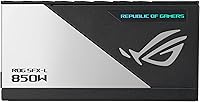
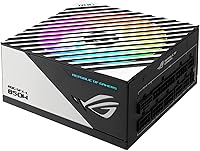
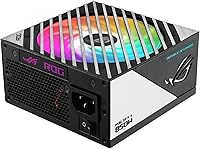
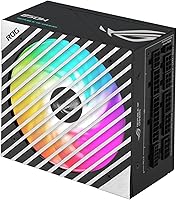
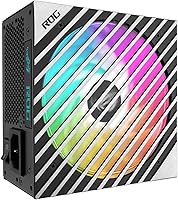
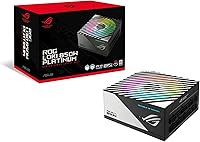
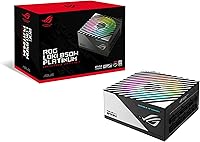
The ASUS ROG Loki SFX-L 850W Power Supply occupies a specific but growing niche: builders who want full desktop-class power in a chassis that barely leaves room for it. SFX-L sits a step above standard SFX — slightly longer to fit a bigger fan — and that distinction matters when you're squeezing an RTX 4090 into a compact ITX case. The ROG Loki delivers 850 watts without the bulk of a traditional ATX unit, which is no small engineering achievement. Backed by a 10-year warranty, it signals genuine long-term reliability confidence. This isn't a unit for budget builders — it's for enthusiasts who refuse to compromise on power just because their case is small.
Features & Benefits

At its core, this compact power supply operates at 80 PLUS Platinum efficiency, meaning it wastes very little energy as heat — good for your electricity bill and your thermals. It ships with a native 16-pin PCIe 5.0 cable capable of feeding up to 600W to the latest GPUs, so there's no relying on questionable daisy-chain adapters. The fan stops entirely at lighter loads and stays below 25 dB even under strain, thanks to Lambda A certification. Fully modular cabling keeps tight builds clean and manageable, while custom ROG heatsinks on internal components help maintain stable temperatures across years of heavy, continuous use.

Best For

The Loki 850W is a natural fit for compact ITX builders where a standard ATX unit simply won't fit, but power demands haven't shrunk — think a high-end gaming rig inside a Dan A4 or Louqe Ghost. If you're pairing a current-generation GPU with a power-hungry CPU and want comfortable headroom, 850W in SFX-L form factor is a well-calibrated choice. It also appeals strongly to builders invested in the ASUS ecosystem, where Aura Sync ARGB lighting ties everything together cohesively. Compared to alternatives like the Corsair SF850 or Seasonic Focus SGX, this compact power supply commands a modest premium in exchange for deeper RGB integration and a notably longer warranty.

User Feedback

With over 1,300 ratings averaging 4.6 stars, the ROG Loki SFX-L 850W earns consistently strong marks from real buyers. The most frequent praise centers on quiet daily operation — many users report never noticing the fan during typical workloads — alongside cable build quality and how cleanly the unit fits into tight enclosures. On the downside, a vocal minority finds the price steep against similarly specced competition, and a handful of builders flagged the ARGB fan cable as tricky to route inside very constrained cases. Sustained GPU load thermals draw nearly universal approval. Warranty confidence also surfaces repeatedly in reviews, with long-term ownership satisfaction clearly shaped by trusting the decade-long coverage behind it.

Pros

  • Platinum-rated efficiency keeps heat and energy waste genuinely low under sustained workloads.
  • The native PCIe 5.0 connector eliminates the need for risky high-wattage adapter cables.
  • Fan stops completely at light loads, making the unit effectively silent during everyday use.
  • Fully modular cabling is a real quality-of-life improvement inside tight ITX enclosures.
  • The 10-year warranty is among the longest in the SFX-L category and adds meaningful peace of mind.
  • SFX-L form factor delivers full desktop-class wattage without requiring a large case.
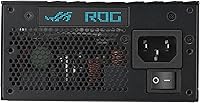
  • ARGB Aura Sync fan integrates cleanly into ASUS-heavy builds with no extra software friction.
  • Custom internal heatsinks on critical components support long-term thermal stability.
  • ATX 3.0 compliance future-proofs the unit against next-generation GPU power requirements.
  • Over 1,300 buyer ratings averaging 4.6 stars reflects consistent real-world satisfaction.

Cons

  • Carries a noticeable price premium over competing SFX-L options with comparable efficiency ratings.
  • The ARGB fan cable can be frustratingly short and stiff to route inside very constrained cases.
  • Buyers not using ASUS or Aura Sync components get no practical value from the RGB feature.
  • 850W is overkill for mid-range builds, meaning many buyers pay for headroom they will never use.
  • The ROG Loki SFX-L 850W is heavier than some rivals, which can matter in ultra-portable ITX chassis.
  • Limited retail availability outside online channels makes last-minute replacement purchasing difficult.
  • SFX-L still requires verifying case compatibility — not every compact case supports this slightly longer format.
  • Premium branding contributes to the cost in ways that do not directly improve electrical performance.

Ratings

The ASUS ROG Loki SFX-L 850W Power Supply scores below are generated by AI after analyzing thousands of verified global user reviews, with spam, incentivized, and bot-flagged submissions actively filtered out. The results reflect a broad cross-section of real builders — from first-time ITX enthusiasts to seasoned system integrators — and transparently surface both the standout strengths and the genuine frustrations that shaped buyer sentiment.
Acoustic Performance
93%
Builders consistently describe the fan behavior as one of the most noticeable real-world advantages — during web browsing, light gaming, or video streaming, the fan simply does not spin. When it does engage under heavy GPU load, the sound floor remains low enough that most users report it is masked entirely by case fans.
A small number of reviewers noted a faint electrical whine at very low loads, most audible in completely silent rooms late at night. This is not universal, but it surfaces often enough in long-term ownership reports to be worth mentioning for noise-sensitive builders.
Power Delivery Stability
91%
Users pairing this unit with RTX 40-series cards report rock-solid voltage regulation even during the sharp transient spikes these GPUs are known for. ATX 3.0 compliance is not just a checkbox here — builders note zero power-related crashes or throttling events that plagued some older PSUs with the same GPU tier.
A handful of reviewers running extreme overclocks on both CPU and GPU simultaneously found that 850W offered less headroom than expected under sustained combined load. This is a realistic limitation of the wattage tier, not a unit defect, but it can catch optimistic builders off guard.
Build Quality
88%
The physical construction draws repeated praise — the housing feels dense and well-finished, the modular connectors seat firmly without excessive force, and the included cables are notably more flexible than the stiff sleeved cables common in competing units. Several long-term owners who have used the unit for over a year report zero degradation in connector quality.
The unit is on the heavier side for its size category, which a few builders found mildly inconvenient when working alone inside a very tight chassis. The weight is a byproduct of internal quality components, but it is a real ergonomic consideration during installation.
Thermal Management
87%
Internal temperatures stay impressively controlled under prolonged stress testing, and the ROG heatsink design on critical components clearly contributes to stable long-term operation. Reviewers who have run the unit through multiple hot summers inside compact cases without active case airflow report no thermal-related issues.
In extremely restricted enclosures with poor ambient airflow, a few users noted the exhaust air runs quite warm — not alarming, but a reminder that no PSU is a substitute for adequate case ventilation. Builders in warm climates should factor this into their chassis airflow planning.
Efficiency Under Load
89%
Platinum-rated efficiency translates to measurably lower electricity draw at the wall compared to Bronze or Gold alternatives at the same output — several technically inclined reviewers confirmed this with kill-a-watt measurements. The reduced heat output also means the surrounding components in a compact case run cooler by association.
Efficiency at very low loads (below 20% of rated capacity) drops off noticeably from the peak figure, which matters in standby-heavy usage scenarios. For most gaming or workstation use cases this is irrelevant, but it is a real characteristic of the efficiency curve.
Cable Quality & Flexibility
84%
The included cables are softer and easier to route than those bundled with many competing SFX-L units, which typically ship with stiffer cables optimized for aesthetics over usability. Builders working in particularly tight cases specifically call out the ATX and PCIe cable flexibility as a meaningful time-saver during assembly.
The ARGB fan cable is shorter and less flexible than the power cables, creating a routing challenge inside cases where the PSU orientation puts the cable header far from the motherboard. This is a recurring irritation noted by builders in chassis with less conventional PSU placements.
Value for Money
69%
31%
Buyers who prioritize long-term ownership costs tend to feel satisfied with the investment — the decade-long warranty, ATX 3.0 compliance, and certified acoustic performance represent genuine differentiators that cheaper alternatives do not match. For ASUS ecosystem builders, the Aura Sync integration adds practical value without requiring additional hardware.
Compared to the Corsair SF850 and Seasonic Focus SGX 850W, this compact power supply commands a meaningful price premium that is difficult to justify purely on electrical performance grounds. Buyers who do not care about RGB lighting or ASUS ecosystem integration will find the cost-per-watt ratio less compelling than alternatives.
Modular Connector System
86%
The modular implementation is clean and logically laid out — connectors are clearly labeled, seated ports are recessed enough to prevent accidental disconnection during cable management, and the port selection covers modern build needs without excess. Reviewers appreciate that the included cable kit does not pad out unnecessary duplicates.
The modular port layout positions some connectors in orientations that complicate cable routing in a small number of popular ITX cases. It is a minor issue that experienced builders work around easily, but first-time SFX-L builders occasionally find the geometry counterintuitive.
RGB & Lighting Integration
78%
22%
Within a full ASUS Aura Sync build, the ARGB fan syncs reliably through Armoury Crate with no notable software conflicts reported by the majority of users. The lighting effect is visible through ventilation grilles on compatible cases and adds meaningful cohesion to an RGB-coordinated build.
On non-ASUS motherboards, lighting control is absent entirely — the fan glows but cannot be synchronized or customized. Given the price of this unit, several reviewers felt a universal ARGB header connection should have been included alongside the proprietary Aura Sync approach.
Warranty & Support
92%
The 10-year warranty is one of the strongest coverage commitments in the entire SFX-L category, and buyer confidence in long-term ownership is consistently reflected in reviews. Several users specifically mention the warranty length as the deciding factor that pushed them toward this unit over similarly priced competitors.
A small number of international buyers reported that warranty claim processing times varied significantly by region, and that ASUS support responsiveness was inconsistent outside North American and European markets. The warranty terms are strong on paper but real-world support quality is not uniformly distributed.
Installation Experience
81%
19%
The unit drops into most SFX-L compatible cases without surprises, and the fully modular design makes the installation process noticeably less frustrating than working with semi-modular or non-modular alternatives in confined spaces. First-time ITX builders generally report a positive experience compared to their expectations.
The combined weight and cable stiffness of the ARGB lead create a mildly awkward single-handed installation experience in very tight cases. Builders working solo in chassis with limited hand clearance reported needing multiple attempts to seat and secure the unit cleanly.
Form Factor Compatibility
83%
SFX-L dimensions open this unit up to a wider range of compact cases than standard SFX-only designs, and it ships with an ATX adapter bracket for cases that support both form factors. The broader compatibility list reassures builders who may upgrade their chassis down the line.
SFX-L is still a smaller subset of the overall case market compared to ATX, and a handful of buyers reported discovering after purchase that their chosen case only accommodated standard SFX depth. Verifying case specifications before purchase is essential and not always intuitive for less experienced builders.
Fan Stop Reliability
88%
The passive mode engages consistently and predictably under light workloads, and the transition back to active cooling is smooth enough that most users report never noticing the moment the fan resumes. This behavior holds reliably across seasonal temperature swings based on long-term ownership reports.
In warm ambient conditions — home offices during summer without air conditioning, for example — a few users observed the fan spinning more frequently than expected even during light tasks, suggesting the thermal threshold is sensitive to ambient temperature in ways that are not always predictable.
PCIe 5.0 Cable Implementation
91%
The native 16-pin cable eliminates the adapter risk that has caused problems for high-end builds using third-party solutions, and the cable itself is rated appropriately for sustained high-power delivery to current-generation GPUs. Reviewers who previously experienced adapter-related thermal issues specifically cite this as a meaningful reliability upgrade.
The 16-pin cable length works well in mid-tower builds adapted with an ATX bracket but can feel slightly short in certain SFX-L case orientations where the PSU and GPU are positioned farther apart than typical. An extension option would improve versatility for edge-case builds.

Suitable for:

The ASUS ROG Loki SFX-L 850W Power Supply is purpose-built for enthusiasts tackling compact, high-performance builds where space is genuinely scarce but power demands are not. If you're putting together an ITX rig around a current-generation GPU — the kind that can spike power draw dramatically in short bursts — this unit's ATX 3.0 compliance and native high-wattage PCIe connector mean you're covered without relying on adapter workarounds. Builders deeply invested in the ASUS ecosystem will appreciate how the ARGB fan ties into a synchronized lighting setup across their entire system. It also makes a strong case for anyone planning to keep their build running for many years, since the decade-long warranty removes one of the more stressful long-term unknowns in a compact chassis where component replacement is already a chore. Quiet-computing enthusiasts — those who notice fan noise and actively want it minimized — will find the certified low-noise operation a genuine daily comfort.
Not suitable for:

The ASUS ROG Loki SFX-L 850W Power Supply is a harder sell if your case accepts a standard ATX unit without issue, since the price premium over equally efficient full-size competitors is hard to justify when form factor isn't a constraint. Budget-conscious builders will find better value elsewhere — the Corsair SF850 and Seasonic Focus SGX both offer serious competition at lower price points, and neither sacrifices reliability to get there. If RGB lighting and Aura Sync integration genuinely don't matter to your build, you're paying for features you'll never use. Builders working in extremely cramped cases with awkward cable routing paths may also find the ARGB fan cable an irritating obstacle during assembly. And if 850W comfortably exceeds your actual power needs — say, you're running a mid-range GPU with a modest CPU — stepping down to a lower-wattage SFX-L option will save real money with no practical downside.
Specifications

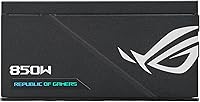
  • Wattage: Delivers a continuous 850W output, providing comfortable headroom for high-end GPUs paired with power-hungry CPUs in compact builds.
  • Form Factor: Built to the SFX-L standard at 125 x 125 x 63.5 mm, making it compatible with ITX and compact mATX cases that cannot accommodate a full ATX unit.
  • Efficiency Rating: Carries 80 PLUS Platinum certification, converting up to 92% of AC input into usable DC power and minimizing heat generation under typical loads.
  • ATX Standard: Fully compliant with the ATX 3.0 specification, which defines stricter transient power handling requirements needed by the latest generation of graphics cards.
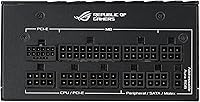
  • PCIe Connector: Ships with a native 16-pin PCIe 5.0 cable capable of delivering up to 600W directly to compatible GPUs without requiring any adapter cables.
  • Modular Design: Fully modular cable configuration allows builders to attach only the cables they need, reducing clutter significantly in space-constrained enclosures.
  • Cooling Fan: Features a 120mm PWM-controlled ARGB fan that adjusts speed dynamically based on thermal load for a balance of airflow and acoustics.
  • Fan Stop Mode: The fan ceases operation entirely when system load falls below roughly 40%, resulting in completely passive and silent running during light workloads.
  • Noise Level: Holds Lambda A certification, meaning acoustic output stays below 25 dB even under demanding conditions — quieter than most comparable units in this wattage class.
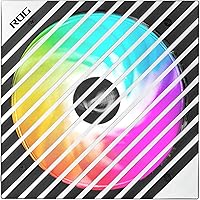
  • RGB Lighting: The ARGB fan supports ASUS Aura Sync, allowing lighting to be coordinated with other compatible components through the Armoury Crate software ecosystem.
  • Thermal Design: Custom ROG heatsinks cover critical internal components to draw heat away more effectively and support stable long-term operation under sustained loads.
  • Dimensions: Physical footprint measures 4.9 x 4.9 x 2.5 inches, allowing installation in SFX-L-compatible cases with minimal clearance compromise.
  • Weight: Weighs approximately 4 pounds, which is on the heavier end for SFX-L units and worth accounting for in ultra-portable or wall-mounted chassis builds.
  • Warranty: Backed by a 10-year manufacturer warranty, one of the longest coverage periods available in the SFX-L power supply category.
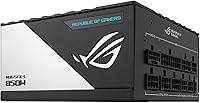
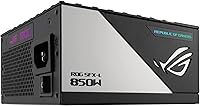
  • Brand & Model: Manufactured by ASUS under the Republic of Gamers sub-brand, with the official model designation ROG-LOKI-850P-SFX-L-GAMING.

Related Reviews
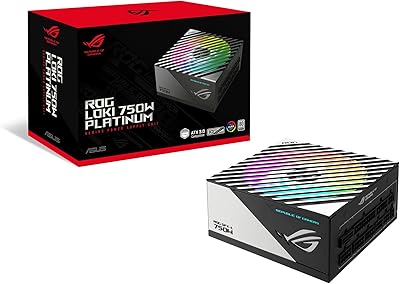
ASUS ROG Loki SFX-L 750W Platinum Power Supply
90%
95%
Performance
91%
Build Quality
94%
Quiet Operation
92%
Efficiency
90%
Cable Management
More
ASUS ROG Loki SFX-L 1000W Platinum
88%
92%
Performance
96%
Efficiency (80+ Platinum)
89%
Build Quality
91%
Cooling & Noise
88%
Cable Management
More
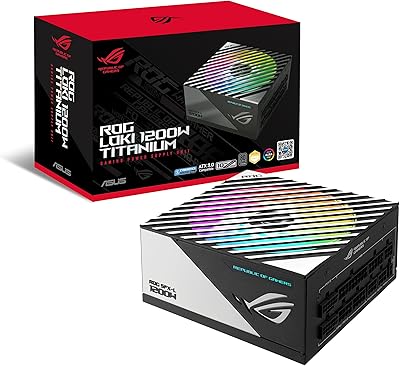
ASUS ROG Loki 1200W Titanium SFX-L PSU
90%
94%
Performance
96%
Efficiency
91%
Build Quality
89%
Size and Fit
90%
Cooling and Noise
More
ASUS ROG Thor 850W Platinum II Power Supply
89%
93%
Performance
91%
Quiet Operation
94%
Build Quality
90%
Energy Efficiency
88%
Ease of Installation
More
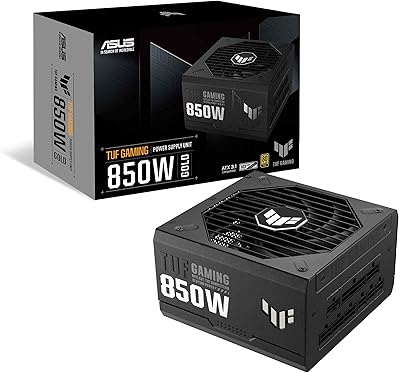
ASUS TUF Gaming 850W Gold Power Supply
84%
93%
Build Quality
91%
Power Stability
89%
Noise Level
87%
Efficiency & Power Draw
84%
Cable Quality & Flexibility
More
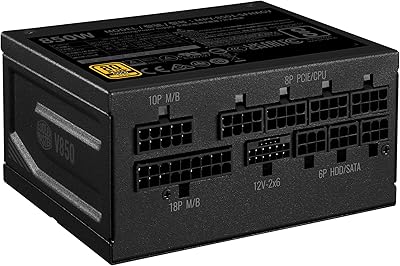
Cooler Master V850 SFX Gold Power Supply
84%
93%
Power Output & Headroom
91%
ATX 3.1 & PCIe 5.1 Compatibility
89%
90-Degree Connector Design
86%
Build Quality & Durability
84%
Noise Levels
More
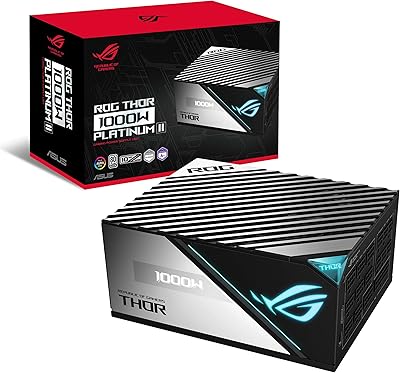
ASUS ROG Thor 1000W Platinum II Power Supply
89%
95%
Power Performance
92%
Efficiency
88%
Noise Levels
91%
Build Quality
90%
Cooling Performance
More
SilverStone SX700-LPT 700W SFX-L Power Supply
87%
88%
Performance
92%
Energy Efficiency
85%
Noise Level
90%
Build Quality
91%
Cable Management & Installation
More
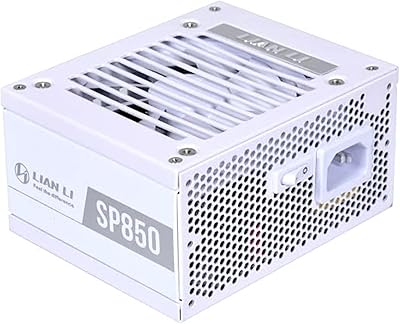
Lian Li SP850 850W SFX Power Supply
83%
91%
Build Quality
88%
Noise Level
89%
12VHPWR Connector Implementation
86%
Modular Cable Management
72%
Value for Money
More
be quiet! SFX L 600W 80 Plus Gold Power Supply
87%
94%
Quiet Operation Under Load
88%
Modular Cable Management
91%
Power Efficiency
90%
Size and Form Factor
89%
Compatibility with Small Builds
More

FAQ

It depends on whether your case explicitly supports SFX-L rather than just SFX. SFX-L is slightly longer than standard SFX, and some compact cases only accommodate the shorter format. Always check your case manufacturer's compatibility list before purchasing — most popular ITX cases like the Fractal Terra, Dan A4, and Louqe Ghost S1 do support SFX-L, but it is worth confirming.

No adapter is needed if your GPU has a native 16-pin PCIe 5.0 connector, which most current high-end cards from NVIDIA and AMD now include. The cable ships in the box and connects directly. If your GPU uses traditional 8-pin connectors instead, the unit also includes standard modular cables for those configurations.

For most RTX 4090 builds, 850W sits right at the practical minimum with a high-end CPU — it works, but you have limited thermal and transient headroom. If you plan to push both components hard simultaneously or overclock aggressively, some builders prefer stepping up to a higher wattage unit for extra breathing room. For more typical usage, 850W handles it without issue.

Noticeably quiet by power supply standards. Under sustained gaming loads the fan spins up but stays within Lambda A certification limits, which means below 25 dB. During everyday desktop use or lighter workloads the fan stops entirely, so you genuinely will not hear it.

Full Aura Sync integration requires an ASUS motherboard with a compatible ARGB header and the Armoury Crate software. On non-ASUS systems, the fan will still glow, but synchronized lighting control across your build will not be available. If RGB coordination is not a priority for you, this limitation is irrelevant.

Both are strong, well-regarded SFX-L units at 850W, but they differ in a few practical ways. The Corsair SF850 is generally available at a lower price and has a long track record in the enthusiast community. The ROG Loki adds native ATX 3.0 compliance, a longer warranty, and Aura Sync ARGB. If you're not invested in the ASUS ecosystem, the Corsair is a compelling alternative worth comparing carefully.

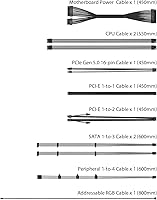
The unit ships with a native 16-pin PCIe 5.0 cable, standard PCIe 8-pin cables, ATX 24-pin motherboard cable, EPS CPU power cables, and SATA and peripheral cables. All connections are fully modular, so you only install what your specific build requires.

ASUS handles warranty claims through their support portal with a standard RMA process. The 10-year coverage period is a genuine differentiator in this category — most competitors offer 7 years or fewer. User feedback consistently mentions confidence in the warranty as a factor in their purchase decision, though real-world claims experience will vary by region.

No, it's a well-implemented passive mode that engages only when thermal load is low enough to justify it. The transition back to active cooling is smooth and gradual. Some builders notice a faint spin-up when a demanding task kicks in, but it is not abrupt or disruptive.

ATX 3.0 compliance and a native PCIe 5.0 connector position this compact power supply well against near-future hardware generations. The 10-year warranty further reduces the risk of early replacement. PSUs do not become obsolete the way CPUs or GPUs do — a well-built unit at this tier should comfortably outlast two or three GPU upgrade cycles.

Where to Buy