Overview

The ASA CP-RLX Ultimate Rotating Flight Plotter has been a go-to instrument for VFR cross-country planning since it first appeared in 2007 — and it remains relevant today despite the proliferation of EFB apps like ForeFlight. This is an analog tool, full stop. It does not replace GPS or digital navigation; it complements them. What sets it apart from cheaper alternatives is its polycarbonate construction, rated at 8H hardness and built to resist the warping that happens when a flight bag bakes in a hot car. ASA backs it with a lifetime warranty, a meaningful commitment for a mid-range instrument that students and working pilots are likely to use for years.
Features & Benefits

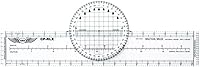
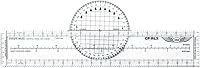
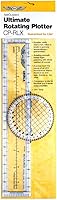
The rotating azimuth ring is the centerpiece here. It grips the sectional without slipping, which matters more than it sounds when you are trying to plot a heading quickly during preflight with a busy FBO around you. Flip the ASA plotter over and you have statute miles; keep it face up for nautical — eight scales total covering every VFR aeronautical chart you are likely to encounter. There is also a built-in nautical-to-statute conversion scale that saves the mental arithmetic most pilots would rather skip. At 2.4 oz, it slides into a kneeboard pocket without adding bulk, and the matte scale surface keeps glare from washing out the markings under bright cockpit lighting.

Best For

This flight navigation tool is essentially a must-have for student pilots working toward their private certificate — the FAA written exam requires a physical plotter, and arriving without one is not a great way to start. CFIs who run ground school sessions also tend to reach for this one repeatedly because it holds up to daily handling. If you fly in less-covered airspace and still carry paper sectionals as a backup to your glass panel or EFB, this rotating plotter earns its place in the bag. It is not aimed at pilots who never leave the cockpit display; it is for those who still value planning a cross-country the old way.

User Feedback

Across roughly 275 ratings, the ASA plotter sits at 4.5 stars, and buyer commentary is largely consistent: people appreciate the solid build quality and say it feels noticeably sturdier than less expensive plastic plotters. The azimuth rotates cleanly and the scales are legible without squinting. The more measured criticism tends to come from first-time plotter users who find it a bit unintuitive out of the box — not a flaw in the instrument, but worth knowing before you unwrap it. Long-term buyers report it holding up well through training and beyond. Compared to Jeppesen or Weems & Plath alternatives, most reviewers consider this one comparable in accuracy while citing the warranty as a meaningful differentiator.

Pros

  • The nonslip azimuth ring rotates smoothly and holds its position reliably on sectional charts during preflight planning.
  • Eight VFR aeronautical scales cover every chart type a general aviation pilot is likely to use.
  • Built-in nautical-to-statute mile conversion removes a small but annoying mental math step from cross-country prep.
  • Polycarbonate construction at 8H hardness resists cracking, warping, and heat damage inside a parked car or hot cockpit.
  • At just 2.4 oz, the ASA plotter adds almost no weight to a kneeboard or flight bag.
  • The matte scale surface reduces glare, keeping markings readable under bright cockpit or ramp lighting.
  • A lifetime warranty backs the build quality in a way that cheaper competing plotters simply do not offer.
  • Buyers consistently report the tool holding up through full training programs and years of use without degradation.
  • Dual-sided scale layout means one instrument handles both nautical and statute navigation without needing a second tool.

Cons

  • First-time plotter users face a noticeable learning curve that the instrument itself does nothing to address.
  • At 13.25 inches, this flight navigation tool is too large to pocket and requires dedicated bag space.
  • Pilots who rely entirely on EFB apps will have little practical use for an analog plotting instrument.
  • No digital integration whatsoever — there is no companion app, Bluetooth pairing, or screen overlay capability.
  • The glossy body finish can catch reflections under direct sunlight, which is mildly distracting during outdoor preflight work.
  • Buyers seeking only a single-use exam tool may find the price hard to justify against cheaper short-term alternatives.
  • Scale markings, while clear, require decent close-up vision — pilots who need reading glasses must remember to bring them.
  • It is sold as a single unit with no carrying case or protective sleeve included, leaving storage to the buyer.

Ratings

The ASA CP-RLX Ultimate Rotating Flight Plotter earned its scores through AI-assisted analysis of verified buyer reviews worldwide, with spam, bot-generated feedback, and incentivized posts actively filtered out before scoring. Ratings reflect the full spectrum of real user experience — from student pilots logging their first cross-country hours to seasoned CFIs who reach for this tool daily — so both standout strengths and genuine frustrations are represented transparently.
Build Quality
91%
Pilots who have carried this rotating plotter through full training programs consistently note that it survives the kind of daily abuse a flight bag dishes out — tossed in alongside headsets, kneeboard clips, and chart booklets — without cracking or warping. The 8H polycarbonate construction earns genuine respect from buyers who have snapped cheaper plotters mid-checkride prep.
A small number of buyers reported minor surface scuffing on the glossy body after extended kneeboard use, though this appears cosmetic rather than functional. The matte scale surface, while glare-resistant, can show light wear marks over years of pencil-and-plotter work if not occasionally cleaned.
Scale Accuracy
89%
The eight VFR chart scales are printed with enough precision that pilots routinely trust them for FAA knowledge exam work and real preflight planning without second-guessing the measurements. Buyers who cross-reference against digital tools find the results consistently close, which matters when you are calculating fuel stops on a long cross-country.
A handful of detail-oriented users noted that reading the finer scale gradations requires good close-up vision and decent lighting — under dim cockpit conditions or without reading glasses, the smaller markings can be harder to resolve cleanly. This is more a user-environment issue than a manufacturing defect, but it is worth knowing.
Azimuth Ring Usability
88%
The nonslip rotating azimuth is the feature buyers mention most positively — it stays exactly where you set it on a paper sectional without drifting, which makes quick course measurements during preflight feel reliable rather than fussy. CFIs who use plotters across multiple student sessions in a day particularly appreciate that the ring does not loosen or develop slop over time.
First-time plotter users occasionally find the azimuth ring confusing to orient correctly until they have had some instruction, and the instrument provides no built-in guidance for that learning process. A few buyers also noted the ring requires deliberate pressure to rotate, which is intentional for stability but can feel stiff to those accustomed to looser instruments.
Ease of Use
71%
29%
For pilots who already understand manual VFR navigation, the ASA plotter is intuitive and fast — the dual-sided layout and clear scale labeling mean you spend less time hunting for the right scale and more time actually plotting. Experienced users describe it as one of the smoother-operating plotters in the mid-range category.
Buyers who are brand new to analog plotting fairly consistently flag a real learning curve, noting the instrument assumes prior knowledge and includes no instructional material in the packaging. Without guidance from an instructor or a dedicated textbook, first-time users can spend a frustrating hour just figuring out which scale to use for which chart.
Durability Over Time
87%
Longevity is one of the stronger themes in buyer feedback — multiple reviewers specifically mention owning this flight navigation tool for several years of active flying without degradation in the scales or structural integrity. For pilots who hate replacing equipment, the long service life makes the mid-range price feel well-justified.
A small percentage of long-term users noted that the printed scale markings can show faint signs of wear after years of heavy pencil friction, particularly on the most frequently used scales. This does not affect accuracy materially for most users, but it is a realistic expectation for a heavily used paper-plotting instrument.
Value for Money
83%
Relative to cheaper plastic alternatives that pilots often replace after a season, the ASA plotter's build quality and lifetime warranty make the price differential feel reasonable over a multi-year ownership horizon. Buyers who have previously purchased budget plotters tend to rate the value higher than first-time buyers who lack that comparison point.
Pilots purchasing solely for a single FAA exam with no ongoing flying plans may reasonably feel the price is more than they need to spend, since basic plastic plotters fulfill that narrow one-time use case at lower cost. The value equation is strongest for frequent fliers, less compelling for occasional or one-off buyers.
Portability & Size
74%
26%
At 2.4 oz, the weight is genuinely negligible inside a kneeboard or flight bag, and the slim 0.1-inch profile means it lays flat without creating bulk. Pilots who carry full chart kits appreciate that it does not add meaningfully to the load.
The 13.25-inch length is a fixed physical constraint that a handful of buyers underestimate before purchasing — it does not fit in a standard shirt or pants pocket, and smaller kneeboard designs may not accommodate it without folding or awkward positioning. It is not a compact backup in the way a small electronic device would be.
Heat & Temperature Resistance
86%
Multiple buyers in warm-climate regions specifically called out the plotter surviving summers in parked aircraft and hot cars without any warping or scale distortion, which is a genuine failure mode on cheaper polystyrene instruments. This durability under heat is a quiet but meaningful advantage for pilots who fly in the American Southwest or similar climates.
No significant negative feedback was noted for temperature resistance specifically, though buyers in extremely cold environments occasionally noted that very cold polycarbonate can feel slightly more brittle to the touch — nothing that caused damage, but a minor tactile observation for winter fliers.
Scale Readability
82%
18%
The matte scale surface does its job well — buyers working under direct ramp sunlight or bright classroom lighting note that glare is not the readability problem it can be on fully glossy instruments. The contrast between the scale markings and background is consistently rated as clear and legible under normal conditions.
Under low-light conditions such as a dimly lit cockpit during dawn or dusk preflight, some users find the finer scale divisions harder to read without a dedicated light source. Pilots who do a lot of night or low-light preflight planning may want to keep a small flashlight handy.
Chart Compatibility
93%
Covering all standard FAA and NOAA VFR chart types in a single instrument is a practical win — pilots transitioning between sectionals, terminal area charts, and world aeronautical charts do not need to switch tools or carry multiple plotters. This breadth of compatibility is one of the most frequently praised functional attributes across buyer feedback.
The plotter is designed exclusively for VFR aeronautical charts, so IFR en-route charts or approach plates are outside its intended scope. Pilots whose flying spans both VFR and IFR navigation will need additional instruments beyond this one.
Nautical-to-Statute Conversion
79%
21%
Having the conversion scale physically printed on the instrument means one less step during preflight — buyers who regularly navigate across the nautical and statute divide appreciate not having to reach for a separate reference card or do the arithmetic mentally while under time pressure. It is a small feature that gets genuine appreciation in reviews.
The conversion scale is a static reference rather than a dynamic calculating tool, so it only covers common fixed values rather than arbitrary inputs. Pilots needing precise conversions for non-standard distances will still need a calculator or E6B for those edge cases.
Warranty & Brand Support
88%
ASA's lifetime warranty is a meaningful differentiator that buyers call out explicitly when comparing this plotter to competitors — it signals manufacturer confidence in a way that one-year or no-warranty instruments simply cannot. ASA's established reputation in the aviation training market also gives buyers confidence that warranty claims will be honored.
Feedback on the actual warranty claim process is sparse in available reviews, meaning it is harder to assess how straightforward redemption is in practice. Buyers who have never needed to invoke the warranty cannot speak to claim turnaround times or process ease from direct experience.
Packaging & Presentation
58%
42%
The plotter arrives well-protected and undamaged in transit, which matters for an instrument with printed scales — buyers rarely report receiving a damaged or misaligned unit, suggesting adequate protective packaging for shipping purposes.
Beyond basic transit protection, the packaging is minimal — no carrying case, no protective sleeve, and no instructional insert are included. For a mid-range instrument with a premium warranty, several buyers expressed mild disappointment at the bare-bones unboxing experience relative to what the price point might suggest.
Competitor Comparison
81%
19%
Buyers who explicitly compare the ASA plotter to Jeppesen and Weems and Plath alternatives generally land on this one as comparable in plotting accuracy while citing the build feel and lifetime warranty as slight advantages. For pilots who have used all three, the choice often comes down to personal handling preference rather than a clear functional winner.
Some experienced pilots accustomed to Weems and Plath instruments note minor ergonomic differences in how the azimuth ring feels to rotate — not objectively better or worse, but different enough that long-time users of competing brands occasionally need an adjustment period before feeling fully comfortable with this one.

Suitable for:

The ASA CP-RLX Ultimate Rotating Flight Plotter is built for pilots who still do their cross-country planning the right way — with a sectional chart spread out in front of them. Student pilots working toward their private certificate will find it especially useful, since the FAA knowledge exam requires a physical plotter and this one covers every scale they will encounter. CFIs and ground school instructors who work through navigation problems daily will appreciate how well it holds up to repeated handling without the scales fading or the azimuth ring loosening over time. Pilots who fly in remote or less-digitized airspace and carry paper charts as a backup to their EFB or glass panel will also get real value from this rotating plotter. Anyone who takes preflight planning seriously and wants a durable, warranted instrument in their flight bag rather than a flimsy plastic throwaway will find this a reliable long-term tool.
Not suitable for:

If your cockpit is fully glass and you plan every flight through ForeFlight or Garmin Pilot without ever unfolding a paper sectional, the ASA CP-RLX Ultimate Rotating Flight Plotter will likely collect dust. Pilots who need digital integration, screen overlays, or automated course calculations will not find any of that here — this is a strictly analog instrument, and that is by design. At 13.25 inches across, it is also not a compact backup you can tuck into a shirt pocket; it needs a kneeboard or a dedicated bag pocket to travel well. First-time plotter users should know there is a real learning curve involved, and the tool itself offers no guidance — you need to know how to use a plotter before it becomes intuitive. If you are only buying it for a single FAA exam and have no ongoing use planned, a less expensive plastic alternative might honestly serve that narrow purpose just as well.

Specifications

  • Brand: Manufactured by ASA (Aviation Supplies & Academics), a well-established publisher and equipment maker in the general aviation training market.
  • Model Number: The model identifier for this instrument is ASA-CP-RLX.
  • Material: Constructed from polycarbonate resin, a high-impact thermoplastic rated at 8H hardness that resists cracking and deformation under stress.
  • Dimensions: The plotter measures 13.25″ in length, 4.25″ in width, and 0.1″ in thickness, making it compatible with standard kneeboard pockets.
  • Weight: The complete instrument weighs 2.4 oz, adding minimal load to a flight bag or kneeboard.
  • Scale Count: Includes eight separate scales formatted for use with all VFR aeronautical charts issued by the FAA and NOAA.
  • Scale Sides: The front face of the plotter carries nautical mile scales; the reverse side carries the equivalent statute mile scales for the same chart types.
  • Azimuth Ring: Features a full 360-degree rotating azimuth ring with a nonslip grip surface designed to stay positioned accurately on paper sectional charts.
  • Conversion Scale: A built-in nautical-to-statute mile conversion reference is printed directly on the instrument body for quick lookup during preflight planning.
  • Finish: The body carries a glossy finish while the scale-printed surface uses a matte treatment to reduce glare and improve readability in varied lighting conditions.
  • Temperature Resistance: The polycarbonate material is rated to withstand elevated temperatures without warping, melting, or distorting the printed scales — a practical advantage in hot cockpits or parked vehicles.
  • Warranty: ASA provides a lifetime warranty on this instrument, covering defects in materials and workmanship for the life of the product.
  • Compatibility: Designed for use with standard VFR sectional charts, terminal area charts, and world aeronautical charts used in FAA-regulated general aviation navigation.
  • Unit Count: Each purchase includes one plotter; no carrying case, protective sleeve, or additional accessories are included in the box.
  • ASIN: The Amazon catalog identifier for this item is B003VSAEWW.
  • Availability: First listed in August 2007 and confirmed as not discontinued by the manufacturer, indicating ongoing production and parts support.

Related Reviews
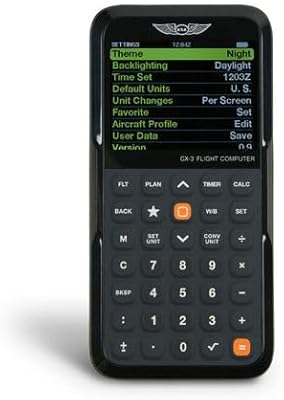
ASA CX-3 Electronic Flight Computer
82%
93%
Calculation Accuracy
91%
Exam Readiness
88%
Menu & Navigation
86%
Screen Readability
89%
Portability & Form Factor
More
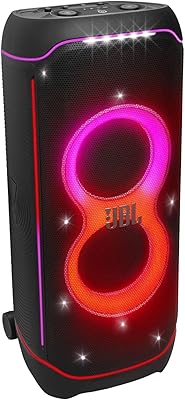
JBL PartyBox Ultimate Party Speaker

80%
96%
Sound Output Power
91%
Sound Clarity
93%
Bass Performance
89%
Lightshow Quality
88%
Connectivity
More
Ultimate Ears WONDERBOOM Speaker
87%
88%
Sound Quality
85%
Battery Life
93%
Durability
90%
Portability
80%
Bluetooth Range
More
Power Acoustik CP-650 6.5″ Car Stereo Receiver
68%
83%
Value for Money
79%
Apple CarPlay Performance
64%
Touchscreen Responsiveness
74%
Bluetooth Reliability
77%
Installation Experience
More
Youngblood Ultimate Concealer, Fair
87%
91%
Effectiveness for Dark Circles
88%
Smooth Application
85%
Coverage Consistency
90%
Blendability
89%
Skin Hydration & Comfort
More
Famitree Rotating Makeup Organizer
88%
88%
Ease of Use
91%
Organization & Storage Efficiency
94%
Build Quality (Acrylic Durability)
87%
Design & Space-Saving
90%
Rotation Smoothness
More
HoomBand Ultimate Sleep Headphones
88%
94%
Comfort for Side Sleepers
89%
Sound Quality
85%
Battery Life
90%
Ease of Use & Setup
88%
Noise Blocking/Blackout Mask
More
Supersmile Ultimate Lip Treatment
87%
94%
Hydration Effectiveness
88%
Plumping & Anti-Aging Effects
90%
Texture & Absorption
85%
Scent & Fragrance
92%
Long-lasting Hydration
More
Ultimate Ears MEGABOOM 3
86%
94%
Sound Quality
91%
Battery Life
88%
Durability
76%
Portability
85%
Ease of Use
More
Booklov Rotating Makeup Organizer
88%
94%
Rotating Functionality
89%
Storage Capacity
91%
Ease of Use
88%
Aesthetic Appeal
92%
Material Quality
More

FAQ

Yes, physical plotters are required for the FAA private pilot written exam, and the ASA CP-RLX Ultimate Rotating Flight Plotter is an accepted instrument at testing centers. Just confirm with your specific testing provider that no restrictions have changed locally, but this tool is standard in the training community for exactly that purpose.

Yes. The eight scales printed on this rotating plotter are sized to cover all standard VFR aeronautical charts, including sectionals, terminal area charts (TACs), and world aeronautical charts. Both nautical and statute mile versions are included on opposite sides of the instrument.

If you fly under VFR and are working toward a certificate or rating, yes — the FAA written exam still requires manual plotting and you cannot use a tablet during the test. Beyond that, many instructors require students to demonstrate manual cross-country planning before leaning on digital tools. The ASA plotter is a smart backup to have even if your primary navigation is digital.

The ring is designed with a nonslip texture that creates enough friction to hold its position on a paper chart while still rotating freely when you move it intentionally. If you are finding it slips, make sure the chart is flat on a hard surface rather than trying to plot on a soft or uneven background.

The polycarbonate material is specifically chosen for temperature resilience, and the manufacturer states it will not melt, warp, or break under extreme temperatures. That said, leaving any precision instrument in direct sunlight in a parked car for extended periods is never ideal — but short-term heat exposure should not damage this one.

All three are well-regarded in the training community and perform comparably in day-to-day use. The ASA plotter tends to get credit for its build quality relative to price, and the lifetime warranty is a concrete differentiator that the others do not always match. Pilots who have used all three generally consider the choice a matter of personal preference rather than meaningful performance differences.

Honestly, yes. If you have never plotted a course manually, the instrument itself will not teach you how — you need to learn the technique from a textbook, an instructor, or a tutorial first. Once you understand the method, using this flight navigation tool becomes straightforward and quick. Most student pilots get comfortable with it within a few practice sessions.

The polycarbonate body is rated at 8H hardness, which puts it well above most everyday materials that could scratch it during normal handling. Buyers who have used the ASA plotter over extended training programs generally report the scales remaining legible over years of use, though keeping sharp objects away from the surface is always sensible.

No, the plotter ships as a standalone instrument without a case or sleeve. Most pilots slip it into a dedicated pocket in their kneeboard or use a simple flat document sleeve. If you plan to carry it loose in a bag alongside other gear, a basic sleeve is worth picking up separately to protect the scale surfaces.

ASA's lifetime warranty covers defects in materials and workmanship for the life of the product. For a claim, you would contact ASA directly through their customer support channels — their contact information is on the ASA website. It is worth keeping your purchase receipt or order confirmation on file in case it is needed to verify the original purchase.

Where to Buy