Overview

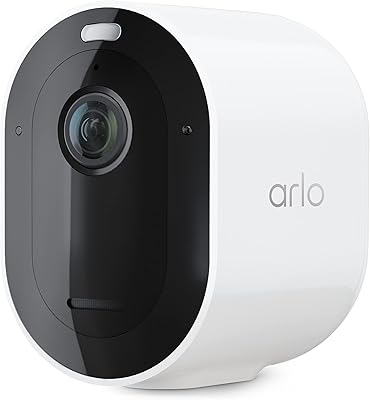
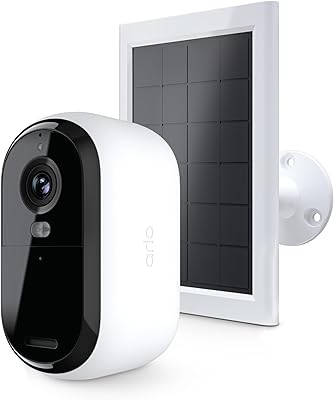
The Arlo Go 2 Cellular Security Camera is built for one specific problem: monitoring places where Wi-Fi doesn't reach and grid power isn't an option. That dual 4G LTE and Wi-Fi connectivity is what sets it apart from the flood of standard outdoor cameras. You're paying a premium here, and that price buys real capability — but also a degree of commitment. Several of the most useful features, including person and vehicle recognition, sit behind a paid Arlo Secure subscription. That's not a hidden catch so much as a reality worth knowing upfront. Budget for the plan alongside the hardware if you want the full experience.
Features & Benefits

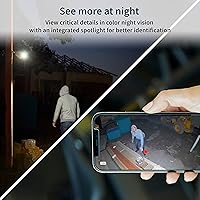
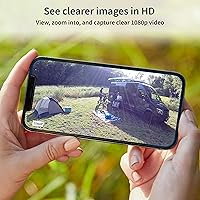
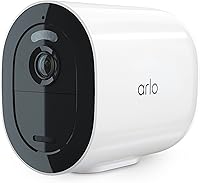
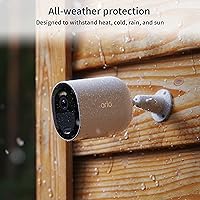
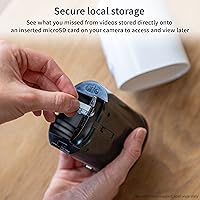
The standout here is obvious: 4G LTE connectivity keeps this camera live even when the power goes out or your cabin's internet goes down. The 13,000 mAh rechargeable battery can run for weeks in Wi-Fi mode, though expect that window to shrink noticeably when LTE carries the full load. Picture quality holds up well — 1080p footage across a 130-degree field covers a wide scene, and the color night vision up to 25 feet is genuinely useful rather than just a spec-sheet line item. A built-in microSD slot lets you record locally without any cloud plan, and the IP65 weather rating means rain and dust simply aren't concerns.

Best For

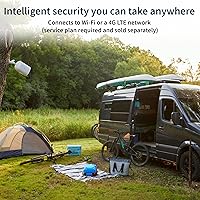
This LTE-enabled outdoor camera earns its place in very specific scenarios. Think vacation cabins, RVs, boats, and construction sites — anywhere sitting outside your home network's reach. It's also a natural fit for existing Arlo users who want to expand coverage without running new wiring. Off-grid setups get a real boost from the optional solar panel add-on, which can keep the battery topped up in consistently sunny climates. Trail and wildlife monitoring is another strong use case, given the built-in animal detection alerts. That said, if your backyard has solid Wi-Fi nearby, this is likely more hardware than you need.

User Feedback

Across 264 ratings, the Arlo Go 2 averages 3.7 out of 5 — below typical for its category, and worth unpacking rather than glossing over. Buyers who deployed it correctly at remote locations tend to be satisfied; LTE reliability is the consistent bright spot. The frustrations, however, are real. Many were caught off guard by the missing SIM card — carrier compatibility isn't automatic, and that friction lands early. Battery drain on LTE-only connections is a recurring complaint. The subscription paywall for smart detection features draws criticism at this price tier. App stability also surfaces as inconsistent, with some users reporting delayed or missed notifications.

Pros

  • Stays fully operational during Wi-Fi outages or at locations with no internet infrastructure at all.
  • Built-in GPS tracking adds a theft-recovery layer that most outdoor cameras simply do not offer.
  • IP65 weather resistance handles rain, dust, and year-round outdoor conditions without issue.
  • Color night vision up to 25 feet delivers recognizable footage in genuinely dark environments.
  • The microSD card slot allows local recording with zero cloud subscription required.
  • Optional solar panel compatibility makes truly off-grid, maintenance-free deployment realistic in sunny climates.
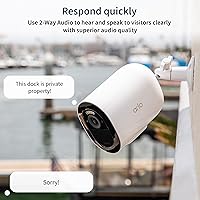
  • Two-way audio and remote siren activation give users a real deterrence tool, not just passive recording.
  • Works within the broader Arlo ecosystem, making it easy to add alongside existing Arlo hardware.
  • The 130-degree field of view covers wide outdoor areas without requiring multiple camera angles.

Cons

  • SIM card is not included, and figuring out compatible carriers adds friction right out of the box.
  • Battery drains significantly faster when running on LTE versus Wi-Fi — a critical gap many buyers miss.
  • Person detection, vehicle alerts, and cloud storage all require a paid subscription at this price tier.
  • App notification delays reported by multiple users undermine the real-time security promise.
  • Video resolution tops out at 1080p while competing cameras in the same price range offer sharper output.
  • Carrier compatibility is not universally clear, and some buyers discover incompatibility only after purchase.
  • The total cost of ownership — hardware plus SIM plan plus Arlo Secure subscription — adds up quickly.
  • Below-average overall rating across verified reviews signals a polarized buyer experience worth taking seriously.
  • Limited mounting angle adjustment range requires more precise installation planning than more flexible competitors.

Ratings

The Arlo Go 2 Cellular Security Camera was evaluated by our AI rating system after analyzing verified buyer reviews from global markets, with spam, bot-generated, and incentivized feedback actively filtered out. Scores reflect the honest spread of real-world experiences — from users monitoring remote cabins and construction sites to those frustrated by subscription walls and SIM card confusion. Both the genuine strengths and the recurring friction points are weighted transparently in every category below.
LTE Connectivity Reliability
83%
For buyers deploying this camera at a lake house, remote construction site, or aboard a boat, the 4G LTE connection is the whole reason to choose this over any standard outdoor camera. Users consistently report it staying online through power outages and rural dead zones where Wi-Fi simply cannot reach.
Carrier compatibility is not automatic, and several buyers discovered their chosen SIM did not play nicely with the hardware after purchase. Coverage quality also varies heavily by region, meaning LTE performance in one location can be dramatically different from another just a few miles away.
Battery Life
61%
39%
On Wi-Fi, the 13,000 mAh battery genuinely impresses — users running the camera in low-traffic areas report multi-week runtimes without needing a recharge. The optional solar panel add-on transforms it into a viable off-grid solution for sunny climates, which is a meaningful advantage for RV and cabin deployments.
Switch to LTE as the primary connection and battery life drops noticeably — sometimes to just a few days under heavy activity. This is a critical nuance that catches buyers off guard, since the marketed runtime assumes more favorable conditions than many remote-use scenarios actually deliver.
Video Quality
76%
24%
The 1080p footage at 24 fps covers a wide 130-degree field, which holds up well for monitoring driveways, entry points, and open outdoor areas. Color night vision up to 25 feet produces recognizable detail in low-light conditions, a step above the washed-out infrared imagery common at this category.
At this price tier, some buyers expected sharper resolution — 2K or 4K options exist from competitors. Digital zoom degrades quickly, so identifying fine details at distance requires the camera to be positioned closer than users sometimes anticipate when first installing it.
Weather & Build Durability
81%
19%
IP65 certification means this camera handles rain, dust, and general outdoor exposure without issue across all four seasons. Users in wet climates report no seal failures or fogging after extended outdoor mounting, and the plastic housing holds up better than its modest weight might suggest.
The plastic construction does feel less premium than the price would imply when held in hand. A small number of buyers in extremely cold climates noted battery performance degradation during winter months, which is a physics limitation rather than a build defect but worth factoring in for northern deployments.
Setup & Ease of Use
54%
46%
For existing Arlo ecosystem users, adding the Go 2 to an established setup is relatively painless — the app recognizes the device quickly and the mounting hardware is straightforward. Those already familiar with SIM-based devices also tend to breeze through the cellular configuration without friction.
First-time buyers without cellular device experience frequently hit a wall during setup. The SIM card is not included, carrier selection guidance is minimal, and some compatible carriers are not clearly listed. Multiple reviews cite a frustrating first hour trying to get LTE activated before the camera functions as expected.
Subscription Value
47%
53%
The free tier does provide basic live viewing and motion alerts, which at minimum confirms the hardware functions. Local microSD recording also works without any plan, giving buyers a genuine fallback option if they want to avoid recurring costs entirely.
Person detection, vehicle recognition, animal alerts, package detection, and extended cloud storage all sit behind the paid Arlo Secure plan. At this hardware price, buyers reasonably expect more capability out of the box — the paywall lands especially hard when competing products include more features in their free tiers.
App Performance
58%
42%
When the app works smoothly, the live stream loads quickly and two-way audio functions without noticeable lag. Remote siren activation and real-time alerts give users genuine control over a camera that may be hundreds of miles from their home.
Notification delays are a recurring theme in user feedback — some report alerts arriving minutes after an event, which undermines the real-time promise for security use cases. App crashes and connectivity drop warnings appear with enough frequency across reviews to suggest inconsistency rather than isolated incidents.
Night Vision Performance
73%
27%
Color night vision up to 25 feet is a meaningful upgrade over monochrome infrared, and the built-in spotlight activates on demand to illuminate a scene clearly. For monitoring entry points or parking areas, the low-light footage is detailed enough to be genuinely useful.
The 25-foot effective range is the honest ceiling — beyond that, detail drops off and identification becomes difficult. In areas with zero ambient light and no spotlight activation, footage quality regresses to a level that feels inconsistent with the overall hardware investment.
GPS & Camera Recovery
77%
23%
Built-in GPS tracking is a feature few competitors offer, and for a camera installed on a boat, trailer, or construction site, it adds a layer of theft deterrence that goes beyond recording. Users who have tested location tracking via the Arlo app report reasonably accurate positioning.
GPS functionality is tied to the app and cellular connection, so a stolen camera with a removed SIM becomes harder to track. The feature is genuinely useful but not foolproof, and some buyers overestimate its recovery capabilities without understanding those dependencies.
Local Storage (microSD)
78%
22%
Having a built-in microSD slot is a practical win for users who want continuous local recording without a cloud subscription. For remote deployments where reviewing footage periodically is acceptable, this makes the camera viable without any recurring plan cost.
The slot is present but microSD card is not included, adding another out-of-box purchase to the list. There are also capacity limits and no automatic backup, meaning if the card fills up or is physically compromised, footage is simply gone with no cloud fallback unless subscribed.
Two-Way Audio
69%
31%
Two-way audio works well enough for basic communication — deterring a trespasser verbally or checking in with a delivery driver is achievable from the app. The remote siren feature adds a practical deterrence layer beyond voice alone.
Audio quality is serviceable rather than crisp, and latency over LTE connections makes natural back-and-forth conversation stilted. Users monitoring remote sites primarily use it for deterrence rather than actual conversation, which is a reasonable expectation to set.
Smart Home Integration
66%
34%
Alexa, Google Assistant, and IFTTT support means the camera fits into existing smart home setups without requiring a platform switch. Alexa Show users can pull up a live feed by voice, which is a convenience that matters for users who have already committed to one of those ecosystems.
Integration depth is limited — voice commands trigger live views but do not unlock the full feature set. IFTTT automations require some technical comfort to configure, and users expecting rich native smart home behavior comparable to Nest or Ring may find the integrations feel surface-level.
Value for Money
52%
48%
For a genuine off-grid or cellular-dependent deployment, there are very few direct competitors that match the combination of LTE, GPS, color night vision, and local storage in a single weatherproof unit. In that narrow use case, the hardware cost is justifiable.
For any buyer with reliable Wi-Fi nearby, the premium price is hard to defend against cameras that offer comparable or superior video quality at a fraction of the cost. Add the subscription requirement for key features and the total cost of ownership climbs well above what the base price implies.
Installation & Mounting
72%
28%
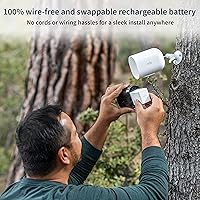
The included mounting hardware covers standard wall and surface installations without additional purchases. The compact bullet-dome form factor at under 5 inches tall makes positioning flexible, and the screw-in mount holds the camera securely once properly anchored.
Running the camera in truly hidden or discreet positions is challenging given the dome-bullet hybrid shape. Some users also note that the mounting angle adjustment range is narrower than expected, requiring more careful pre-planning of install location than with more adjustable competitors.

Suitable for:

The Arlo Go 2 Cellular Security Camera was built for a specific kind of buyer, and that buyer knows exactly who they are: someone who needs to monitor a location where Wi-Fi is unavailable, unreliable, or simply not worth running. Think vacation cabin owners who visit infrequently but want to know if someone is poking around, RV travelers who park in remote campgrounds, boat owners at a marina, or contractors keeping tabs on unoccupied job sites overnight. It also makes strong sense as a backup camera for properties that experience frequent power or internet outages, since the LTE connection keeps it live when everything else goes dark. Wildlife enthusiasts and trail cam users will appreciate the animal detection alerts and the rugged IP65 rating that handles whatever the outdoors throws at it. Existing Arlo users looking to extend coverage into a dead zone without rewiring anything will find the integration straightforward and familiar.
Not suitable for:

If your home or property already has solid Wi-Fi coverage, the Arlo Go 2 Cellular Security Camera is likely far more hardware than your situation calls for, and you would be paying a significant premium for a cellular capability you will rarely use. Budget-conscious buyers should also think carefully before purchasing — the SIM card is not included, carrier compatibility requires independent research before buying, and the most useful smart detection features sit behind a paid Arlo Secure subscription that adds to the long-term cost. Buyers expecting a plug-and-play experience will likely hit friction early, particularly during SIM activation. Those who want 2K or 4K resolution will find the 1080p output underwhelming compared to what competing cameras offer at similar or lower price points. And if app reliability is a non-negotiable for you — such as for monitoring a child's safety or a high-risk property — the reported notification delays and occasional connectivity drops may introduce more anxiety than reassurance.
Specifications

  • Video Resolution: Records at 1080p Full HD at 24 frames per second for clear, detailed footage of monitored areas.
  • Field of View: Wide 130-degree viewing angle captures broad outdoor scenes without requiring multiple camera positions.
  • Connectivity: Supports dual-mode operation via 4G LTE cellular network and standard Wi-Fi, automatically maintaining coverage when one connection drops.
  • Battery Capacity: Built-in rechargeable 13,000 mAh battery provides extended runtimes, with duration varying significantly based on whether Wi-Fi or LTE is the active connection.
  • Weather Resistance: IP65-rated enclosure protects against rain, dust ingress, and general outdoor exposure across all seasons.
  • Night Vision: Color night vision with built-in spotlight delivers visible, colorized footage in low-light conditions up to 25 feet.
  • Local Storage: Built-in microSD card slot supports local on-device recording independent of any cloud subscription plan.
  • Audio: Two-way audio with built-in microphone and speaker enables live communication, plus a remotely activated siren for deterrence.
  • GPS Tracking: Integrated GPS module allows real-time camera location tracking via the Arlo Secure app and standard smartphone map applications.
  • Dimensions: Measures 3.38 x 2.53 x 4.72 inches, making it compact enough for discreet mounting on walls, posts, or eaves.
  • Weight: Weighs 1.68 pounds fully assembled, which is manageable for standard wall or surface mount installation.
  • Form Factor: Bullet-style dome hybrid design ships with a screw-in wall mount and all required mounting hardware included in the box.
  • Smart Integrations: Compatible with Amazon Alexa, Google Assistant, and IFTTT for voice control and automation workflow support.
  • SIM Card: SIM card is not included and must be purchased separately; carrier compatibility should be verified before purchase.
  • Water Resistance: Rated water resistant under IP65 standards, protecting against sustained low-pressure water jets from any direction.
  • Video Encoding: Footage is encoded in MPEG-4 format and saved as MP4 files for broad compatibility with standard video players and software.
  • Cellular Technology: Operates on single-band 4G LTE networks; 5G is not supported, and performance depends on local carrier signal strength.
  • Power Source: Battery-powered with included charging cable and power adapter; an optional Arlo-certified solar panel accessory is available for off-grid continuous charging.
  • IR LEDs: Equipped with 2 infrared LEDs to support low-light detection and augment the color night vision system in complete darkness.
  • Cloud Plan: A paid Arlo Secure subscription is required to access person, vehicle, animal, and package detection alerts, as well as cloud video storage beyond basic viewing.

Related Reviews

Reolink Go PT Ultra 4G Solar Security Camera
73%
88%
Image Quality
83%
Night Vision Performance
67%
Solar Charging Reliability
74%
4G Connectivity & Signal
58%
4G Data Consumption
More
Hiseeu WK-3C70 4G LTE Solar Security Camera
71%
83%
Ease of Setup
71%
Cellular Connectivity Reliability
62%
Solar Performance
48%
Subscription Model & Cost Transparency
79%
Image & Video Quality
More
VIMTAG 847 2.5K Security Camera 2-Pack
77%
88%
Value for Money
84%
Night Vision Quality
81%
Image & Video Clarity
73%
PTZ Performance
86%
Weather Resistance
More
SimpliSafe Outdoor Camera Series 2 Security Camera
76%
84%
Video Quality
88%
Night Vision
81%
Active Guard Monitoring
73%
AI Threat Detection
86%
Siren & Audio Deterrence
More
Polaroid Go Gen 2
Polaroid Go Gen 2
75%
72%
Image Quality
93%
Portability & Size
89%
Ease of Use
51%
Film Cost & Availability
84%
Battery Life & Charging
More
HUEVUE 4G LTE Cellular Security Camera
83%
85%
Ease of Setup
91%
Battery Life
88%
Video Quality (2K Resolution)
82%
Motion Detection Performance
84%
Solar Charging Efficiency
More
Arlo Pro 3 Floodlight Security Camera
78%
88%
Video Quality
91%
Night Vision
61%
Battery Life
93%
Installation & Setup
69%
App Experience
More
Arlo Pro 5S 2K Spotlight Security Camera
76%
88%
Video Quality
71%
Night Vision Performance
63%
Battery Life
91%
Setup & Installation
83%
App & Notifications
More
Arlo Ultra 2 Spotlight 4K Security Camera
72%
91%
Video Quality
87%
Night Vision & Low-Light Performance
89%
Field of View
61%
Battery Life
78%
Installation & Setup
More
Ebitcam S40 4G LTE Cellular Security Camera
85%
91%
Value for Money
88%
Ease of Installation
85%
Battery Life
90%
Video Quality
80%
App Experience
More

FAQ

No, the SIM card is sold separately and is not included in the box. You will need to source a compatible nano-SIM from a carrier that supports the camera's 4G LTE band. It is worth confirming compatibility with your chosen carrier before purchasing, as this is one of the more common frustrations buyers run into during setup.

The Arlo Go 2 Cellular Security Camera supports 4G LTE networks, but compatibility varies by region and carrier. In the US, carriers like AT&T and T-Mobile have been commonly used, but you should check the Arlo support site directly for an up-to-date compatibility list before committing to a plan, since not all carriers work out of the box.
That depends heavily on how the camera is connected. On Wi-Fi with moderate activity, users report multi-week runtimes. Switch to LTE as the primary connection and expect that window to shrink considerably — sometimes to just a few days in high-traffic scenarios. If you are deploying this in a location with no Wi-Fi, factor in more frequent recharging or seriously consider the optional solar panel accessory.

Yes. The built-in microSD card slot lets you record footage locally without any cloud plan. You can also view a live stream and receive basic motion alerts on the free tier. That said, smarter features like person detection, vehicle recognition, animal alerts, and extended cloud video storage all require a paid Arlo Secure plan.

It carries an IP65 rating, which means it is fully protected against dust and can handle sustained water jets from any direction — so heavy rain and outdoor humidity are not a concern. It is not rated for submersion, so do not mount it where it could be submerged in standing water, but for any typical outdoor installation it holds up well in all seasons.

Yes, and this is precisely the scenario this camera was designed for. As long as there is 4G LTE signal in the area and the battery still has charge, the camera stays operational and continues recording and sending alerts. This makes it genuinely valuable for locations prone to outages or remote properties where infrastructure is unreliable.

It runs entirely on its built-in rechargeable battery — no power cable is needed during normal use. You charge it periodically using the included cable and adapter. If you want to minimize how often you recharge, Arlo sells a compatible solar panel accessory that keeps the battery topped up in locations with decent sunlight exposure.

Technically it can be used indoors, but the hardware is really optimized for outdoor remote deployments. The IP65 weather resistance and LTE connectivity are overkill for a typical indoor setup, and you would be paying a premium for features you would not use. For indoor monitoring with solid Wi-Fi, a standard Arlo indoor camera would serve you better and cost less.

The GPS location is transmitted through the cellular connection and visible in the Arlo app as a map pin. If the camera is stolen and the SIM is still active, you can track its approximate location in real time. The limitation is that if a thief removes or swaps the SIM, tracking stops — so it is a useful deterrence and recovery tool, but not an infallible one.

In ideal conditions with a strong LTE or Wi-Fi signal and a stable app connection, alerts arrive quickly. However, a notable portion of user reviews mention delayed notifications — sometimes by several minutes — particularly when LTE is the primary connection or during periods of app instability. If real-time alerting is critical for your use case, this is something to weigh seriously before purchasing.

Where to Buy