Overview

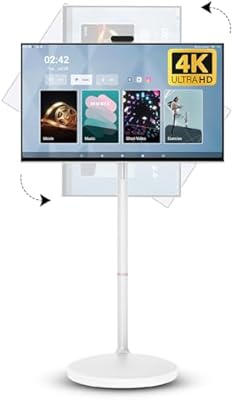
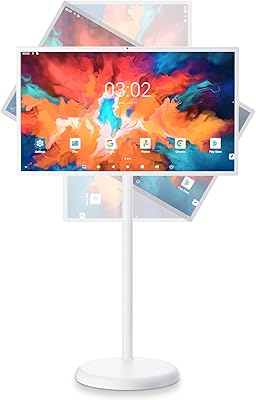
The ApoloSign Gen2 32-inch Portable Smart TV is a genuinely interesting hybrid — part full-featured Android smart TV, part wheeled room companion. ApoloSign is a relatively new brand, but the Gen2 carries Google certification, which matters for app access and long-term OS reliability. This generation adds Android 15, expanded storage, and a refined stand design over its predecessor. At its premium price point, it sits near the top of the portable TV category — expectations should be calibrated accordingly. What sets it apart from standard smart TVs is the combination of a built-in battery, a responsive touchscreen, and a rolling wheeled stand, a trio you rarely find together in one consumer display.
Features & Benefits

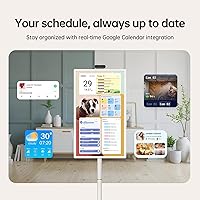
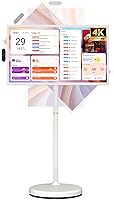
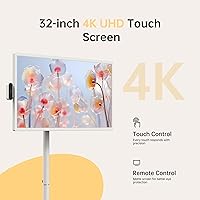
The 32-inch 4K LCD panel delivers noticeably sharp images — at this resolution, pixel density is generous, and text and UI elements look crisp enough that using it as an Android display feels natural. The touchscreen is solid for a TV-class panel, though fast swipe gestures won't feel as instant as on a tablet. Android 15 with Google Play opens the full app ecosystem, and the calendar widget works well as a home-hub screen. The 256GB of storage is a genuine comfort, and the split RAM setup — 8GB active, 8GB extended — handles streaming and light multitasking without obvious hiccups. Bluetooth 5.3, HDMI 4K out, and wired casting cover most connection needs.

Best For

This portable touchscreen TV makes the most sense for people who genuinely move a screen around the home — rolling it from the kitchen in the morning to the bedroom at night. It is also a solid fit for home-office users who want a large Android display that handles video calls, calendar management, and streaming on one screen. Gamers looking for a secondary 4K display without buying a separate streaming stick will appreciate the built-in app support. The voice remote and touch controls make this rolling smart TV a natural choice in assisted living or home-care settings. It is emphatically not for anyone expecting an easy-carry travel screen — nearly 49 lbs is a firm reality check.

User Feedback

Early buyers have largely praised the picture quality and the convenience of having a fully capable Android TV that rolls wherever they need it — the app ecosystem gets consistent positive mentions. Where people push back is predictable: the weight surprises buyers who expected something marketed as portable to be easier to carry. Battery life reports are mixed; some users get close to the claimed 8 hours at moderate brightness, while others see shorter runtimes during heavy streaming. Stand stability on uneven floors has come up occasionally. Given the limited early-adopter sample size, this is still a first-wave Gen2 purchase, and a degree of uncertainty comes with that territory.

Pros

  • Rolls freely between rooms with no reinstallation — genuine day-to-day flexibility for open-plan living.
  • Full Google Play access on Android 15 means no workarounds for your favorite streaming or productivity apps.
  • 256GB of internal storage is unusually generous for a device in this category.
  • The built-in battery removes the need for a nearby outlet, making outdoor or garage use actually practical.
  • Voice remote reduces the friction of navigating a large touchscreen from across the room.
  • 4K resolution on a 32-inch panel delivers sharp, detailed images that hold up well for both video and text.
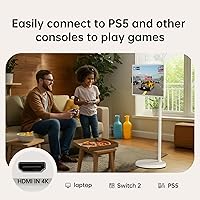
  • HDMI 4K output lets you connect a gaming console without needing a separate display.
  • The swivel and tilt stand means you can dial in a comfortable viewing angle whether you are seated, standing, or lying down.
  • Google certification adds a layer of credibility to the software ecosystem that unbranded Android TV units cannot match.
  • The calendar widget and Google Calendar sync make this a surprisingly practical home-hub display for busy households.

Cons

  • At nearly 49 lbs, moving it between floors or outside requires real effort — wheels only help on flat surfaces.
  • Battery life under heavy streaming conditions falls short of the advertised 8-hour ceiling for many users.
  • The split RAM configuration performs adequately for everyday tasks but can show strain under sustained heavy multitasking.
  • Touchscreen responsiveness is competent but noticeably behind a tablet — fast, precise gestures can feel laggy.
  • Stand stability on uneven or soft flooring has drawn concern, and fully extended height adds to wobble risk.
  • ApoloSign has a limited brand track record, making long-term reliability and customer support harder to predict.
  • The 60Hz refresh rate is a real limitation for fast-motion content and rules it out for competitive gaming.
  • As a recently launched Gen2 product, independent long-term durability data is essentially nonexistent.
  • The premium price is difficult to justify for buyers whose use case could be served by a simpler stationary smart TV.
  • Recharge time for the large 15000mAh battery can be lengthy, limiting flexibility if the battery runs low mid-day.

Ratings

Our editorial team trained an AI model on verified global buyer reviews for the ApoloSign Gen2 32-inch Portable Smart TV, actively filtering out incentivized, bot-generated, and suspiciously brief submissions to surface what real owners consistently experienced. The scores below reflect both the genuine strengths that earned repeat praise and the friction points that buyers flagged after weeks of daily use — nothing is glossed over. This rolling smart TV earned notably high marks for its concept and display quality, while battery longevity and weight transparency pulled several scores toward the middle of the range.

Picture Quality
84%
The 4K LCD panel consistently impressed users who moved it into bright living rooms or kitchens — streaming Netflix and YouTube at full resolution looked genuinely sharp for a portable-category display. Text legibility in productivity apps and calendar widgets was frequently praised, which matters for users treating this as a home-office hub.
A handful of buyers noted that off-angle viewing introduced visible color shift, which is typical of LCD panels in this size class but disappointing at a premium price. HDR content looked adequate rather than spectacular, with some users noting the panel struggled to produce deep blacks compared to OLED alternatives.
Portability & Mobility
71%
29%
For room-to-room movement on smooth flooring, the wheeled base works well — users frequently described rolling it from the kitchen to the living room as effortless and appreciated not needing to reinstall anything. The concept of a screen that genuinely follows you around the home resonated strongly with buyers in open-plan households.
Nearly 49 lbs is a recurring shock for buyers who pictured something closer to a large tablet on a stand. Carpet, doorway thresholds, and stairs all create friction that owners did not anticipate, and several reviewers explicitly warned others to adjust expectations before purchasing.
Battery Life
63%
37%
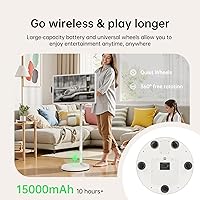
The built-in 15000mAh battery genuinely removes the outlet dependency that defines most TV setups, and buyers who used it at moderate brightness for background viewing found it serviceable for a full afternoon session without hunting for a plug. The freedom to place the screen in a room without convenient outlet access was a real quality-of-life improvement for many owners.
The 8-hour advertised ceiling proved hard to reach in practice — users streaming at full brightness with Wi-Fi active typically reported 5 to 6 hours before needing a charge. Recharge time for a battery this size is lengthy, meaning a depleted unit mid-evening requires planning ahead rather than a quick top-up.
Software & App Ecosystem
88%
Android 15 with full Google certification meant buyers could install virtually any app without workarounds — Spotify, Netflix, Disney+, and even niche productivity tools all installed and ran without issue. The Google Calendar widget integration was highlighted repeatedly as a standout feature that turned this into a functional daily planner rather than just a passive screen.
A small number of users reported occasional app crashes after extended use, likely related to the split RAM configuration running out of headroom during heavy multitasking. The Android TV launcher interface was described as slightly unfamiliar for users coming from Roku or Fire TV environments, with a modest learning curve in the first week.
Touchscreen Responsiveness
67%
33%
For navigating menus, tapping into apps, and interacting with the calendar widget, the touchscreen proved genuinely useful — buyers appreciated having an alternative to the remote when the TV was within arm's reach. Users who positioned it as a kitchen display especially liked being able to tap through recipes with a quick gesture.
Fast swipe gestures and multi-touch inputs occasionally lagged, which drew comparisons to mid-range Android tablets rather than flagship touchscreens. Users expecting snappy, tablet-grade responsiveness across all interactions were consistently underwhelmed, particularly when navigating quickly between apps.
Stand Stability
61%
39%
At lower height settings on hard, level flooring, the stand felt solid and buyers had no issues with the unit staying put during regular viewing. The swivel and tilt adjustments were praised for being smooth and locking into position reliably once set.
At full extension, multiple users noted a perceptible wobble — particularly when adjusting the screen angle or bumping the stand accidentally. On carpet or slightly uneven floors the issue was more pronounced, and a few buyers with young children expressed genuine concern about tip-over risk at maximum height.
Storage & Performance
82%
18%
256GB of internal storage received consistent praise — buyers who downloaded offline content, installed a dozen or more apps, and cached media simultaneously had no storage anxiety whatsoever. Everyday performance for streaming, browsing, and switching between apps was described as smooth and responsive for the vast majority of users.
The split RAM architecture showed its limits during heavier workloads, such as running a video call while managing background app refreshes. A smaller subset of tech-savvy buyers flagged that extended RAM is slower than physical RAM and contributes to occasional hesitation during true multitasking scenarios.
Connectivity Options
83%
Bluetooth 5.3 pairing with soundbars and headphones was described as fast and stable, and the HDMI 4K output allowed buyers to connect gaming consoles without any additional adapters. Wireless casting from phones and tablets worked reliably across both Android and iOS devices, which eliminated a common pain point seen in cheaper portable displays.
A few buyers wanted more than one HDMI port for connecting multiple devices simultaneously, and the absence of a USB-A port for direct media playback frustrated users who rely on thumb drives for offline content. Wi-Fi connectivity was generally solid, though some users in environments with congested 2.4GHz networks reported intermittent dropouts.
Voice Remote
76%
24%
The voice remote was well-received by users who adopted it as their primary navigation method — launching apps, searching for content, and adjusting volume all worked accurately enough for everyday use. Buyers in home-care or accessibility-focused scenarios specifically called it out as a meaningful convenience.
Voice recognition accuracy dipped in noisier environments like kitchens with background appliance noise, leading some users to fall back on manual navigation more than expected. The remote itself was described as feeling lightweight in the hand, with a few buyers questioning its durability over time.
Built-in Camera
58%
42%
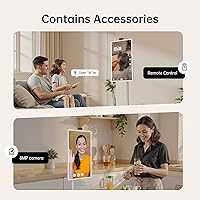
Having an 8MP camera built directly into the display removed the need for an external webcam entirely, which buyers doing video calls from the kitchen or bedroom found genuinely convenient. For casual Google Meet or Zoom calls, the image quality was considered acceptable.
At 8MP on a screen this size, camera quality did not meet the bar that users familiar with laptop webcam standards were expecting — low-light performance was notably weak and backgrounds looked muddy in less-than-ideal lighting. Serious video callers or content creators would likely need an external USB camera to be satisfied.
Setup & Ease of Use
79%
21%
Most buyers reported that the initial setup — assembling the stand, connecting to Wi-Fi, and logging into a Google account — took under 30 minutes and was straightforward even for less tech-savvy users. The familiar Android interface lowered the learning curve considerably for existing Android phone users.
The stand assembly instructions were described by several buyers as vague, with a few requiring third-party video tutorials to complete it confidently. Users migrating from Roku or Apple TV ecosystems noted an adjustment period before the Android TV interface felt intuitive.
Value for Money
66%
34%
For buyers who genuinely needed everything this unit offers — mobility, 4K display, Android OS, and built-in battery — the bundled value held up well and the premium price felt more justified against the cost of buying each component separately. Early adopters who found a practical use case reported high satisfaction with their investment.
Buyers who overestimated their need for room-to-room mobility frequently questioned whether the premium was warranted compared to a conventional smart TV plus a streaming stick. The emerging-brand risk at this price tier was a recurring concern, with several users noting that after-sales support responsiveness is still unproven at scale.
Build Quality
73%
27%
The overall construction felt solid to most buyers at first interaction — the display housing was described as premium in appearance, and the stand mechanism showed no wobble or creaking during height and swivel adjustments in normal use. The rolling wheels felt durable enough for daily floor movement on hard surfaces.
A minority of buyers raised concerns about whether the plastics and stand joints would hold up past the first year of daily rolling and repositioning, given the mechanical stress involved. At close to 49 lbs, the structural demands on the wheel assembly and stand pivot points are higher than for a stationary TV of equivalent size.
Brand Trust & Support
54%
46%
The Google certification on Android 15 provided buyers with a meaningful baseline of software quality assurance that unbranded Android TV units cannot offer. Some buyers who contacted ApoloSign support reported prompt responses and found the warranty claim process manageable.
ApoloSign is a new entrant in a market where longevity matters — long-term software update commitments, spare parts availability, and support infrastructure are all untested over a multi-year horizon. Buyers purchasing in the first wave of the Gen2 launch are accepting a degree of brand-maturity risk that more established TV manufacturers do not carry.

Suitable for:

The ApoloSign Gen2 32-inch Portable Smart TV was clearly designed for households where a fixed wall-mounted screen simply does not cut it — people who genuinely want to roll their display from the kitchen counter to the living room couch to the backyard patio without reinstalling anything. Remote workers who want a large Android display that handles calendar management, video calls, and streaming on a single screen will find the productivity angle genuinely useful, not just a marketing add-on. It is also a strong match for caregivers and assisted-living environments where a voice-controlled, easily repositioned screen makes a real difference in daily comfort. Families with open-plan homes who rotate where they spend time throughout the day, and secondary-room streamers who want a full 4K smart TV experience without buying a separate media stick, both get solid value here. If you have been putting off getting a screen for a specific room because mounting feels like a commitment, this rolling smart TV removes that barrier entirely.
Not suitable for:

Anyone expecting a lightweight, carry-anywhere device should stop and reconsider — at nearly 49 lbs, the ApoloSign Gen2 32-inch Portable Smart TV moves on wheels, not in your hands, and taking it beyond your home is a logistical effort rather than a casual convenience. If you are a home theater purist chasing the best possible LCD picture quality or a high refresh rate for competitive gaming, this display will feel like a compromise at 60Hz and a panel optimized for versatility rather than peak visual performance. Budget-conscious buyers will find the premium price tier difficult to justify if they only need a basic bedroom TV, since a conventional wall-mount smart TV at a fraction of the cost covers those needs with less friction. Early adopters should also weigh the reality that this is a Gen2 product with a short track record — long-term durability data and software support history simply do not exist yet. If software reliability and proven after-sales support are top priorities, waiting for the review pool to mature is the more cautious path.
Specifications

  • Screen Size: The display measures 32 inches diagonally, with a 16:9 aspect ratio suited to widescreen streaming and video content.
  • Resolution: The LCD panel renders at 4K UHD (3840x2160 pixels), delivering high pixel density for sharp images and legible on-screen text.
  • Refresh Rate: The screen operates at a 60Hz refresh rate, appropriate for standard streaming and casual use but not optimized for high-frame-rate gaming.
  • Display Type: The panel uses LCD technology with an integrated touchscreen layer, allowing direct on-screen interaction without a separate input device.
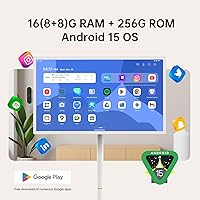
  • Operating System: The device runs Android 15, certified by Google, providing access to the full Google Play Store and native Google services.
  • RAM: The unit uses a split 8GB active plus 8GB extended RAM configuration, totaling 16GB, which supports multitasking across streaming and productivity apps.
  • Storage: 256GB of internal storage is built in, giving ample space for downloaded apps, offline media, and cached content without relying on external drives.
  • Battery: A built-in 15000mAh lithium battery provides up to 8 hours of claimed runtime per charge, with actual duration varying by screen brightness and workload.
  • Weight: The fully assembled unit weighs 48.6 lbs, making it a room-to-room rolling device rather than a carry-anywhere portable screen.
  • Dimensions: The assembled unit measures 16.14″ deep, 28.87″ wide, and 60.26″ tall, occupying a footprint similar to a compact floor lamp stand.
  • Connectivity: The device supports Bluetooth 5.3, HDMI 4K output, wireless screen casting, and wired casting, covering most common content-sharing and peripheral use cases.
  • Camera: An 8MP camera is built into the display frame, enabling video calls and camera-dependent applications without an external webcam.
  • Remote Control: A voice-activated remote is included, allowing hands-free navigation, app launching, and volume control from across the room.
  • Stand Design: The wheeled rolling base supports full left-right swivel, forward-back tilt, and up-down height adjustment for flexible positioning in different rooms.
  • Voltage: The unit operates at 14.8 volts and requires one 12V battery for the remote, which is included in the box.
  • Model Number: The official model identifier is SW3299T-4K, which can be used when contacting support or searching for compatible accessories.
  • Streaming Services: Netflix, Hulu, Amazon Prime Video, YouTube, and Google Play Movies are among the pre-supported streaming platforms available directly via the app ecosystem.

Related Reviews
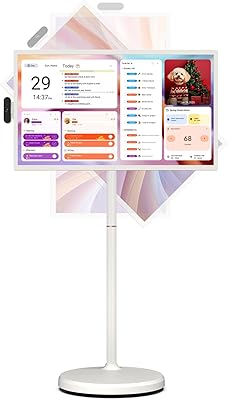
ApoloSign 32-inch FHD Smart Portable TV Gen2
83%
94%
Portability & Mobility
84%
Display Quality
68%
Battery Life
88%
Android OS & App Access
80%
Voice-Activated Remote
More
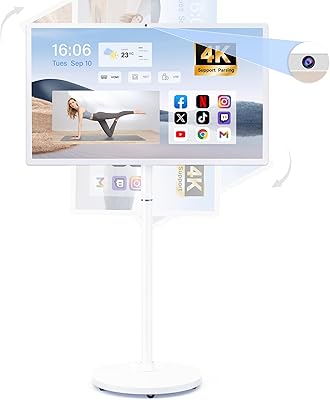
Kumezo 32-Inch Portable Battery-Powered Smart TV
70%
74%
Portability & Mobility
83%
Battery Life
58%
Picture Quality
61%
Portability vs. Weight Trade-off
71%
Webcam Performance
More
Bisprico DY-MoveView 32-Inch Portable Smart TV
81%
92%
Portability & Mobility
68%
Battery Life
85%
Display Quality
80%
Sound Quality
90%
Ease of Setup
More
Westinghouse 32-inch Xumo Smart TV
76%
88%
Value for Money
71%
Picture Quality
74%
Smart Platform (Xumo TV)
91%
Ease of Setup
83%
Voice Remote
More
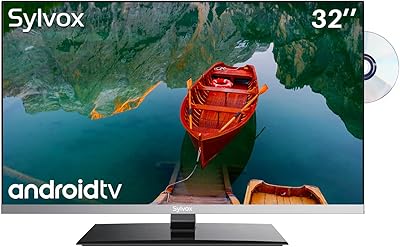
SYLVOX 32-Inch 12V Smart TV
83%
88%
Picture Quality
91%
Portability
85%
Build Quality
56%
Sound Quality
90%
Ease of Setup
More
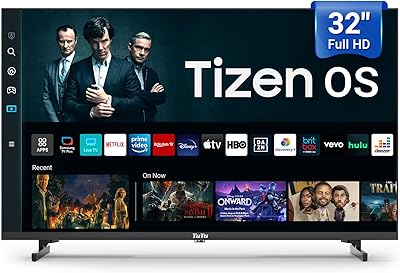
TuTu 32Q1 32-Inch Tizen Smart TV
70%
83%
Value for Money
71%
Picture Quality
81%
Smart OS Experience
58%
Setup Experience
63%
Audio Quality
More
VIZIO VFD32M 32-inch 1080p Smart TV
75%
74%
Picture Quality
81%
Smart Platform
88%
Connectivity
63%
Gaming Performance
61%
Audio Quality
More
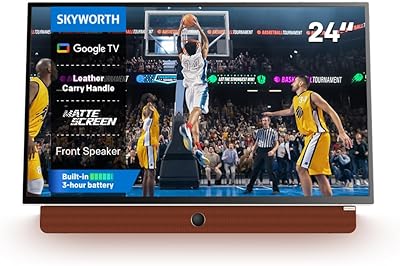
Skyworth 24P100 24-Inch Portable Smart TV
76%
73%
Battery Life
78%
Portability
76%
Picture Quality
88%
Smart TV Software
67%
Audio Performance
More
Fiteye Besties Screen 32-Inch Portable TV
85%
81%
Display Quality
88%
Battery Life
93%
Portability
85%
Ease of Use
80%
Build Quality
More
OFD D01 22-inch Portable Smart TV
71%
88%
Mobility & Portability
83%
Display Quality
58%
Battery Life
86%
Android OS & App Experience
91%
Setup & Assembly
More

FAQ

Not in the traditional carry sense — the unit weighs close to 49 lbs, so lifting and carrying it up stairs is a two-person job at minimum. On a single floor with smooth surfaces, the wheeled stand rolls easily, but think of it as room-to-room mobile rather than truly portable.

The 8-hour figure is a best-case number at reduced brightness. In practice, users streaming at full brightness with Wi-Fi active tend to see somewhere closer to 5 to 6 hours. If you plan to use it unplugged for long stretches, keeping brightness dialed back will help considerably.

Since it runs a Google-certified version of Android 15, sideloading APK files is technically possible, but ApoloSign does not officially support or guarantee compatibility for apps installed outside the Play Store. For most users, the Play Store catalog will cover every streaming and productivity need without any workarounds.

It works well enough for navigating menus, scrolling through apps, and casual interaction. It is not going to feel as responsive as a tablet display, and fast multi-touch gestures can lag slightly. For everyday use — tapping apps, adjusting settings, interacting with the calendar widget — it is genuinely practical.

At full extension, the center of gravity is naturally higher, so the unit is less stable than when lowered. On smooth, level flooring it holds well, but on carpet or uneven surfaces some users have noted wobble. If you have young children in the home, keeping it at a lower height setting and away from high-traffic corridors is a sensible precaution.

Yes — the HDMI port supports 4K input and output, so connecting a gaming console is straightforward. Keep in mind the panel is a 60Hz display, which means features like 120fps gaming modes on newer consoles will not be utilized. For casual gaming at standard frame rates, it works fine.

The core difference is the all-in-one mobility — no wall mount, no outlet dependency, and no separate device to manage. A conventional TV plus a streaming stick will almost certainly cost less and may deliver better panel performance, but you lose the battery, the wheels, the touchscreen, and the flexibility. It really comes down to whether room-to-room movement is a genuine daily need or just a nice-to-have.

For most users it works as expected — syncing with Google Calendar, Google Tasks, and apps connected via Google Calendar integration. It is not a dedicated smart home hub, so expectations should be set around it being a useful supplemental display for schedules rather than a replacement for a dedicated home assistant device.

ApoloSign has not published an official recharge time, and user reports vary. Given the 15000mAh capacity, expect a full charge to take several hours — likely in the range of 4 to 6 hours depending on the charger output. Planning overnight charges when battery-heavy days are expected is a practical habit.

ApoloSign is a relatively young brand, and that is worth acknowledging honestly. The Google certification on the software side is a meaningful quality signal, but long-term hardware reliability and after-sales support track records are still being established. If buying from an emerging brand feels risky for a premium-priced purchase, waiting six to twelve months for a larger independent review pool to form is a reasonable approach.