
Overview

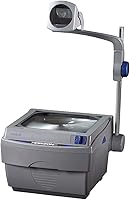
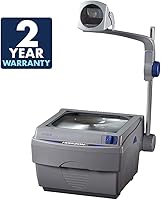
The Apollo Horizon 2 Overhead Projector is a straightforward, no-frills transparency projector built specifically for classroom instruction. Yes, overhead projectors still exist — and in many schools, particularly those working with limited budgets or legacy teaching materials, they remain a genuinely practical tool. Apollo, manufactured by ACCO Brands, has been supplying educational AV equipment for decades, so there is real institutional pedigree behind this unit. At its price point, buyers should expect solid build quality and reliable performance, not cutting-edge optics. Analog by design, this classroom projector makes no pretense of competing with digital displays — and that is entirely the point.

Features & Benefits

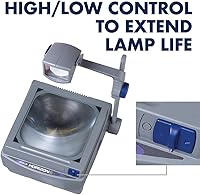
The closed-head design is probably the most practically valuable feature here. Rather than leaving the double fresnel lens exposed to dust and classroom debris, the sealed head keeps the optics clean over years of use — which directly translates to sharper, brighter projected images long-term. The 10″ x 10″ stage fits standard transparency sheets without any cropping. At 2000 lumens, this overhead projector performs well in partially darkened rooms, though fully lit spaces will wash out the image. A high/low lamp switch lets you dial back intensity when full brightness is not needed, stretching bulb life considerably. The thermal shutoff is a quiet safety net most users will never notice — until they need it.

Best For

This classroom projector is genuinely suited for a narrow but real audience. K-12 schools and community colleges that still maintain transparency film libraries will find it a reliable workhorse. Teachers who rotate between multiple rooms appreciate the dual carry handles and manageable weight — moving it between classes does not require a cart. It also makes a practical backup unit for schools where digital projectors occasionally fail mid-lesson. If your institution has invested in overhead transparency materials over the years and is not ready to abandon them, this overhead projector offers a durable, low-maintenance way to keep using what you already have.

User Feedback

Buyers who have used this overhead projector in real classroom settings tend to praise its solid construction and the quality of the projected image, particularly the lens clarity that the closed-head design helps preserve over time. Setup is described as quick — unbox, plug in, and you are presenting. On the downside, replacement lamps can become an ongoing expense, and several users note that brightness does not hold up well in rooms with large windows or strong overhead lighting. Customer support experiences have been mixed, though the two-year warranty does provide some institutional peace of mind. Overall, it is a dependable piece of equipment for those who genuinely need it.

Pros

  • The closed-head lens design keeps dust out, preserving image sharpness over years of heavy classroom use.
  • A 10″ x 10″ stage fits standard transparency sheets perfectly — no cropping, no workarounds.
  • The high/low lamp switch meaningfully extends bulb life, reducing how often you need to source replacements.
  • Built-in thermal shutoff adds a layer of safety during long, continuous teaching sessions.
  • Dual carry handles make moving this classroom projector between rooms a one-person job.
  • Setup is genuinely fast — no software, no drivers, no calibration required.
  • The Kensington Security Slot is a practical feature for shared school environments prone to theft.
  • A two-year warranty provides real institutional reassurance for bulk or school board purchases.
  • Apollo's long track record in educational AV means parts and support channels are relatively accessible.
  • The alloy steel build feels durable and well-suited to the wear of daily institutional use.

Cons

  • Replacement lamps can be expensive and are not always easy to find at short notice.
  • Performance drops noticeably in fully lit rooms — this overhead projector needs dimmed conditions to shine.
  • The actual shipping weight exceeds the advertised portability figure, which can surprise first-time buyers.
  • Transparency film must be purchased separately, adding recurring cost on top of the unit price.
  • Customer support experiences have been inconsistent, with some buyers reporting slow warranty resolution.
  • The unit is bulky relative to modern compact digital projectors, making storage a consideration in smaller classrooms.
  • No digital input options whatsoever — entirely dependent on printed transparency materials.
  • Image quality, while solid for analog, will never match the resolution of even a budget digital projector.
  • The gray plastic casing shows scuffs and wear relatively quickly under daily school conditions.
  • Teachers unfamiliar with overhead projectors may find the lens focus adjustment fiddly at first.

Ratings

The scores below reflect an AI-driven analysis of verified buyer reviews for the Apollo Horizon 2 Overhead Projector, sourced globally and filtered to exclude incentivized, spam, and bot-generated submissions. Each category is scored to give school administrators, teachers, and institutional buyers an honest, data-backed picture of where this classroom projector genuinely delivers — and where it falls short. Both the praise and the frustrations are represented here without softening.

Image Clarity
83%
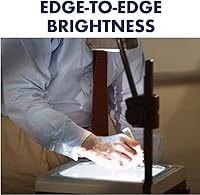
The closed-head double fresnel lens is consistently praised for producing sharp, edge-to-edge images on transparency film. Teachers who use it daily note that image quality holds up noticeably better over time compared to open-head alternatives they have used previously in the same classrooms.
A portion of buyers report that focus consistency varies slightly depending on how the transparency is positioned on the stage. In rooms with uneven lighting, contrast can look flatter than expected, which makes fine printed text harder to read from the back of a larger classroom.
Brightness
67%
33%
At 2000 lumens, the projector performs well in controlled lighting conditions — dimmed classrooms or rooms with blinds drawn report satisfying visibility. Several buyers specifically chose this unit for after-hours or evening classes where ambient light is easier to manage.
In standard daytime classroom conditions with overhead fluorescents on or windows uncovered, the image washes out to the point of being difficult to read. This is one of the most frequently cited complaints, and it is a genuine limitation that buyers in bright environments should take seriously before purchasing.
Build Quality
88%
The alloy steel chassis feels solid and institutional-grade — buyers who have owned cheaper overhead projectors consistently comment on how much sturdier this classroom projector feels in hand. The glass stage surface resists scratching under daily use, and the overall construction inspires confidence for shared-use environments.
The gray plastic trim panels on the exterior show scuffs and surface wear relatively quickly in high-traffic settings. A few buyers noted that after a year of being moved between classrooms daily, the cosmetic finish looks noticeably tired even if the core unit functions perfectly.
Portability
72%
28%
The dual carry handles are well-positioned and make single-person transport between adjacent classrooms genuinely practical. Teachers who move the unit two or three times a week describe the process as manageable without needing assistance or a cart.
The real-world weight of over 16 pounds is meaningfully heavier than the advertised portability figure implies, and buyers who expected something lighter have expressed frustration. For teachers doing multiple trips per day across longer distances, the cumulative physical effort adds up quickly.
Lamp Longevity
71%
29%
The high/low lamp control is a genuinely useful feature that buyers in low-demand settings take advantage of to stretch bulb life considerably. Schools that only use the projector a few times per week report going well over a year before needing a replacement lamp.
Heavy daily users burn through lamps faster than expected, and sourcing a compatible replacement is not always straightforward. The cost of replacement bulbs is a recurring complaint, particularly from buyers who did not factor ongoing consumable costs into their initial purchasing decision.
Ease of Setup
93%
Nearly every buyer who comments on setup describes it as effortless — unbox, plug in, place a transparency on the stage, and the projector is ready to use within minutes. There are no drivers, no apps, and no configuration menus, which is exactly what time-pressed teachers need.
The only setup friction reported is fine-tuning the focus arm to get a sharp image, which can require a few adjustments for first-time users unfamiliar with overhead projectors. This is a minor learning curve rather than a design flaw, but it catches a handful of buyers off guard.
Cooling Performance
81%
19%
The built-in cooling system handles extended teaching sessions well, and buyers who run the projector for two or more consecutive hours report no significant heat-related issues. The thermal shutoff provides a reliable safety backstop that adds peace of mind in unsupervised or shared spaces.
The cooling fan produces an audible hum that some users find distracting during quiet instructional moments or audio-accompanied presentations. It is not excessively loud, but in smaller or quieter classrooms it is noticeable enough that a few buyers mentioned it unprompted.
Transparency Compatibility
78%
22%
Standard transparency film from most major suppliers fits the 10″ x 10″ stage without any cropping or repositioning, which buyers with existing film libraries appreciate enormously. The stage glass surface is smooth and makes sliding and aligning sheets easy during live presentations.
Apollo recommends using their own branded transparency film for optimal results, and a subset of buyers using generic or off-brand film report slightly reduced contrast and occasional smearing on the lens surface. The added cost of sourcing recommended film is a minor but real ongoing consideration.
Value for Money
63%
37%
For institutions that genuinely need an analog overhead projector — particularly those with established transparency libraries — the Apollo Horizon 2 offers a durable, warrantied solution from a credible manufacturer. Buyers with a clear, specific use case tend to feel the investment is justified.
For buyers who are on the fence about the technology or purchasing speculatively, the price point is difficult to justify given how narrowly applicable overhead projection has become. Add in ongoing lamp and film costs, and the total cost of ownership over two or three years is higher than it first appears.
Security Features
76%
24%
The Kensington Security Slot is a thoughtful inclusion for shared institutional environments, and school administrators who manage shared AV equipment specifically called it out as a deciding factor. It works with any standard Kensington-compatible lock cable, which most schools already have on hand.
Beyond the Kensington slot, there are no additional security or asset-management features such as labeling provisions or tamper-evident design elements. Buyers expecting more comprehensive anti-theft infrastructure beyond a single cable anchor point may find the offering somewhat limited.
Noise Level
64%
36%
At normal operating volume, the fan noise is low enough that most classroom discussions and teacher narration are unaffected. Buyers in large lecture hall settings report that it is essentially inaudible past the first few rows.
In small, quiet classrooms — particularly those used for testing, reading periods, or audio-paired lessons — the fan hum is consistently described as a minor but persistent background distraction. It is not a dealbreaker for most, but it is something buyers in noise-sensitive environments should be aware of.
Warranty & Support
58%
42%
A two-year manufacturer warranty is a meaningful commitment for institutional buyers, and ACCO Brands does have established support infrastructure that larger organizations can work with. The warranty provides documented coverage that helps when making the case for purchase through formal school procurement channels.
Actual warranty claim experiences reported by buyers are inconsistent — resolution times vary considerably, and some users describe difficulty reaching responsive support. The gap between the warranty promise on paper and the real-world support experience is notable enough to temper expectations.
Storage & Footprint
69%
31%
The projector folds down into a reasonably compact footprint when not in use, and buyers who store it in a cabinet or on a shelf between classes find it does not dominate the space. Its upright storage posture means it fits on standard AV shelving without awkward repositioning.
At over 23 inches in its longest dimension, it is not a small piece of equipment, and classrooms with limited storage space have to plan around it. A few buyers noted it does not come with a carrying case or storage bag, which would make both transport and storage considerably more practical.

Suitable for:

The Apollo Horizon 2 Overhead Projector is the right call for schools and educational institutions that still actively use transparency film as part of their curriculum. If you are a teacher who carries a projector between multiple classrooms, the dual handles and manageable footprint make that a realistic daily routine rather than a chore. Community colleges, adult education centers, and training facilities that have accumulated years of printed transparency materials will find this a cost-effective way to keep those resources in play without converting everything to digital. It also works well as a dedicated backup unit for schools where digital AV equipment goes down mid-semester and leaving teachers without a display option is not acceptable. For any institution that needs a durable, no-software, plug-and-present display tool with genuine brand accountability behind it, this classroom projector delivers exactly what it promises.

Not suitable for:

The Apollo Horizon 2 Overhead Projector is a poor fit for anyone hoping to replace or supplement a modern digital projector setup. If your school or office has already moved fully to digital presentations, PowerPoint slides, or screen mirroring, this unit offers nothing useful — it cannot display anything that is not printed on a transparency sheet. Buyers expecting strong performance in brightly lit rooms will be disappointed; 2000 lumens is adequate in a dimmed space but struggles against natural light or strong overhead fluorescents. This overhead projector is also not a smart investment for individuals or small businesses looking for a general-purpose display device, since the ongoing cost of replacement lamps and transparency film adds up quickly for low-volume users. Anyone unfamiliar with sourcing compatible bulbs and film should factor that ongoing maintenance into their decision before purchasing.

Specifications

  • Brightness: The projector delivers a 2000-lumen light output, suitable for use in partially dimmed classroom environments.
  • Stage Size: The glass stage surface measures 10″ x 10″, accommodating standard transparency sheets without any cropping or repositioning.
  • Lens Type: A double fresnel lens is housed within a closed-head design that shields the optics from dust and debris over time.
  • Dimensions: The unit measures 23.23 x 19.45 x 15.98 inches, making it a moderately sized table-mounted display device.
  • Weight: The projector weighs 16.25 pounds as shipped, though Apollo lists the operational portability weight at approximately 12 pounds.
  • Mounting Type: This is a table-mount projector designed to sit on a flat surface such as a desk or AV cart.
  • Materials: The chassis is constructed from alloy steel, with a glass stage surface for durability under regular institutional use.
  • Cooling System: A built-in high-efficiency cooling system keeps internal temperatures in check, supported by an automatic thermal shutoff switch for safety.
  • Lamp Control: A high/low lamp setting allows users to reduce output intensity when full brightness is unnecessary, extending overall bulb lifespan.
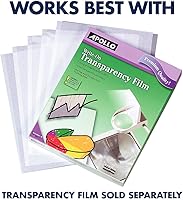
  • Compatibility: The projector is designed for use with standard transparency film sheets; Apollo-branded transparency film is recommended for optimal results.
  • Security: A locking Kensington Security Slot is built into the unit, providing a standard anti-theft anchor point for shared institutional environments.
  • Warranty: Apollo covers this projector with a two-year manufacturer warranty against defects in materials and workmanship.
  • Color: The unit is finished in gray, consistent with Apollo's standard educational AV equipment aesthetic.
  • Included Accessories: The projector ships with a lamp changer tool included in the box, simplifying bulb replacement in the field.
  • Manufacturer: The Apollo Horizon 2 is manufactured and warranted by ACCO Brands, a long-established supplier of educational and office equipment.
  • Model Number: The official manufacturer part number and item model number is V16002M, useful when sourcing compatible lamps or accessories.
  • Discontinued Status: As of the available product data, this model has not been discontinued by the manufacturer and remains an active listing.

Related Reviews
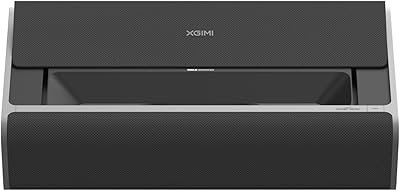
XGIMI Horizon 1080p Home Theater Projector
78%
83%
Image Quality
67%
Brightness
93%
Setup Experience
88%
Audio Performance
74%
Smart TV & App Ecosystem
More
XGIMI Horizon Pro 4K Home Theater Projector
75%
91%
Picture Quality
67%
Brightness & Ambient Light Performance
88%
Auto-Setup & Keystone Correction
79%
Built-in Audio Quality
82%
App Ecosystem & Smart TV Experience
More
XGIMI HORIZON Ultra 4K Projector
78%
91%
Image Quality
67%
Brightness & Ambient Light Performance
88%
Color Accuracy & HDR Support
78%
Built-in Audio
82%
Auto Setup & Calibration
More
GSOW PSTAND-2S 2-Shelf Mobile Projector Stand
86%
88%
Build Quality
93%
Ease of Assembly
82%
Stability at Max Height
86%
Mobility & Casters
89%
Thermal Management
More
XGIMI AURA 2 UST Laser Projector
76%
91%
Image Quality
67%
Brightness & Ambient Light Performance
88%
Ultra-Short-Throw Convenience
86%
Smart TV Platform (Google TV)
74%
Built-in Audio (Harman Kardon)
More
XGIMI Horizon S Max 4K Projector
79%
91%
Picture Quality
88%
Brightness & Ambient Light Performance
93%
Auto Alignment & Smart Setup
78%
Built-in Audio
84%
Build Quality & Design
More
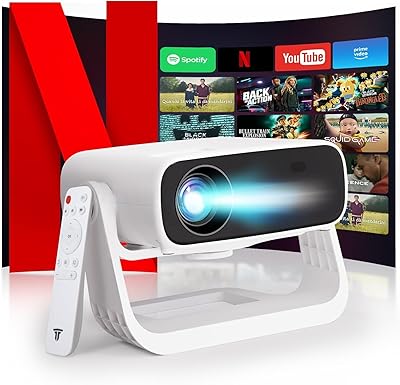
XGIMI MoGo 2 Pro 1080P Portable Projector
86%
94%
Portability & Size
90%
Ease of Setup
88%
Image Quality
78%
Sound Quality
85%
Connectivity Options
More
ULTIMEA Apollo S40 2.2ch Soundbar
80%
78%
Sound Quality
63%
Bass Performance
88%
Detachable Split Design
84%
App & EQ Control
86%
Dialogue Clarity
More
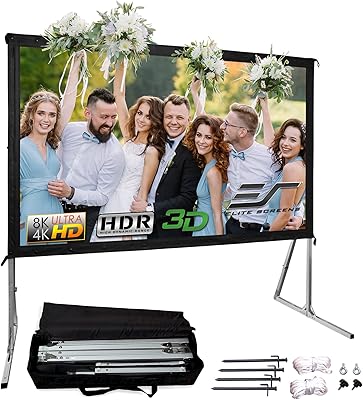
Elite Screens Yard Master 2 90-inch Screen
78%
83%
Image Quality
78%
Build Quality
88%
Ease of Assembly
86%
Portability
72%
Screen Tension & Flatness
More
Elite Screens Yard Master 2 120-inch Outdoor Projector Screen
84%
94%
Portability
91%
Setup Ease
85%
Build Quality
89%
Picture Quality
74%
Weather Resistance
More

FAQ

It is compatible with standard transparency film sheets, so most brands will work in terms of physical fit. That said, Apollo recommends using their own transparency film for the best image quality, as the lens is optimized around that material's thickness and coating. Generic film usually works fine for everyday use.

Honestly, 2000 lumens is enough for a dimmed room but it will struggle in a fully lit classroom, especially one with large windows. If you cannot control ambient light, the projected image will appear washed out. For best results, close the blinds or dim the overhead lights before presenting.

Yes, setup is about as simple as it gets. There is no software to install, no Wi-Fi to configure, and no driver issues to troubleshoot. You plug it in, place a transparency on the stage, switch it on, and adjust the focus arm. Most people are up and running within a few minutes.

It is straightforward — the unit includes a lamp changer tool specifically for this purpose, so you do not need to handle the bulb with bare hands. The trickier part is sourcing a compatible replacement lamp; make sure to note the model number V16002M when ordering, as not all overhead projector bulbs are interchangeable.

No. This is a purely analog overhead projector with no digital inputs of any kind. It only displays content that is physically placed on the stage as a printed transparency. If you need to project digital content, you will need a separate digital projector.

One person can move it, but it is not especially light — the actual weight is closer to 16 pounds, which is a bit heavier than the advertised portability figure suggests. The dual carry handles do make it manageable for short distances, like moving between adjacent classrooms. For longer hauls or daily multi-room use, a small AV cart would make life easier.

The unit has a built-in thermal shutoff switch that will automatically cut power if the internal temperature gets too high. This protects the lamp and internal components from heat damage. If it shuts off mid-session, give it five to ten minutes to cool down before restarting, and make sure the ventilation areas are not blocked.

For long-term use, yes. An open lens accumulates dust over time, which gradually degrades image sharpness and brightness. The closed-head design on this classroom projector keeps the fresnel lens clean between uses, so you are less likely to notice image quality declining after a year or two of regular use. It also means less cleaning maintenance overall.

It is a standardized locking port that accepts a Kensington-compatible cable lock, similar to what many laptops use. You thread the cable through a fixed object like a desk leg and lock it in place, making the projector much harder to walk off with. For shared school environments or media rooms, it is a practical feature that many buyers overlook until something goes missing.

The warranty covers manufacturing defects for two years from purchase and is backed by ACCO Brands. Experiences with the claims process have been mixed among buyers — some report smooth resolutions, while others have found response times slow. Keeping your purchase receipt and original packaging is strongly recommended if you anticipate needing to use the warranty.

Where to Buy