Overview

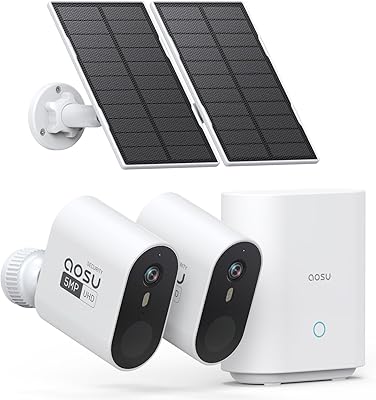
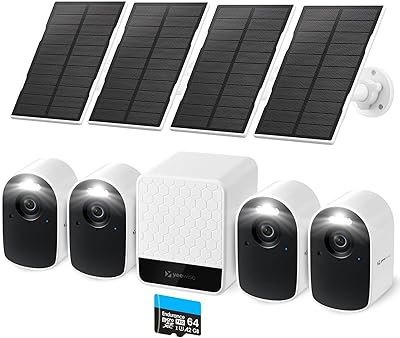
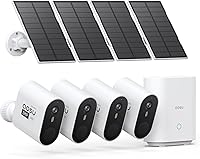
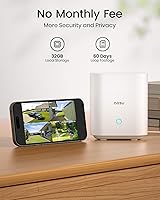
The aosu SolarCam Max 4-Cam Security System enters a crowded market with a straightforward pitch: four solar-powered outdoor cameras, a centralized HomeBase hub, and no subscription ever. Unlike Ring or Arlo, which nudge you toward monthly cloud plans, this solar camera kit stores everything locally on 32GB of encrypted storage built into the hub. That hub-based architecture — cameras talk to the HomeBase, which then connects to your router via Ethernet — shapes both setup and range, so placement near the hub genuinely matters. For homeowners who want a self-contained security setup without ongoing fees, that tradeoff is often worth it.
Features & Benefits

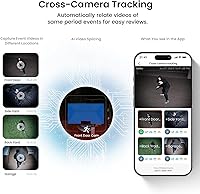
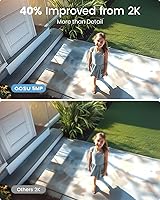
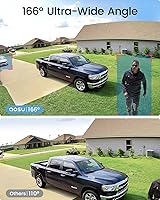
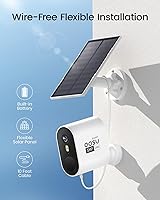
At 5MP, the footage this solar camera kit captures is noticeably sharper than what most 2K systems produce — you can actually read a license plate from across a driveway, which matters when something goes wrong. The 166-degree wide-angle view is broad enough to cover an entire garage front or backyard corner from a single mount, and built-in distortion correction keeps straight lines looking straight. The Camera-to-Camera Sync feature is genuinely useful: when motion triggers two cameras at once, the app links those clips for streamlined review. The flexible solar panel design lets you mount the camera in shade while positioning the panel in sunlight — a practical detail most competitors skip.

Best For

This wire-free security setup works best for homeowners with larger properties — think multiple entry points, a long driveway, or a detached garage — where running wired cameras is simply impractical. It is also a natural fit for privacy-conscious buyers who want footage stored on their own hardware, not on someone else's server. Renters benefit too, since installation requires just a few screws and no professional help. That said, solar reliability depends heavily on your location. Buyers in northern climates or heavily shaded yards should know the backup battery may carry more load than the panel during winter months. Built-in Alexa and Google compatibility is a genuine bonus for smart home households.

User Feedback

Buyers consistently highlight image clarity and hassle-free setup as standout positives — many report having all four cameras running within an hour. The no-fee storage model draws particular appreciation from users who have grown tired of subscription creep on competing platforms. On the critical side, the 15fps frame rate is a recurring complaint; motion can look slightly choppy compared to 30fps systems, which is worth factoring in before you commit. The HomeBase hub draws mixed reactions — great for local storage, but if it loses power or Ethernet drops, all four cameras go offline at once. App performance earns decent marks overall, though some users flag delayed push alerts during high-traffic periods.

Pros

  • Sharp 5MP footage lets you actually identify faces and read plates — not just confirm someone was there.
  • No monthly fees ever; all footage stays encrypted on your own hardware from day one.
  • The flexible solar panel mount means you can shade the camera while still catching full sun on the panel.
  • A 166-degree field of view covers entire driveways or backyards from a single well-placed mount.
  • Full-color night vision replaces the grainy grayscale most budget cameras still deliver after dark.
  • Four cameras install in roughly an hour without tools, wiring, or professional help.
  • Camera-to-Camera Sync automatically links simultaneous multi-angle clips, making incident review much faster.
  • IP66 weatherproofing holds up through heavy rain and coastal humidity according to long-term users.
  • Alexa and Google Assistant integration lets you pull up live feeds on a smart display with a voice command.
  • The wide field of view significantly reduces the number of cameras needed to cover a typical property perimeter.

Cons

  • At 15fps, fast-moving subjects like cars or running figures can appear choppy or blurred in recorded clips.
  • If the HomeBase hub loses power or Ethernet, all four cameras go offline simultaneously — no fallback.
  • Solar output in winter months or shaded yards often forces heavy reliance on the backup battery alone.
  • Push notifications can lag by 20 to 40 seconds, which undercuts the real-time alert value.
  • Bulk clip export from the HomeBase is cumbersome, making evidence retrieval slower than it should be.
  • The instruction manual is thin, leaving users with non-standard network setups to troubleshoot on their own.
  • Motion sensitivity tuning requires repeated trial-and-error before false alerts from pets or shadows settle down.
  • The four-camera bundle format means buyers who only need two cameras still pay for hardware they may not use.
  • Advanced smart home automation triggers are limited compared to systems compatible with HomeKit or SmartThings.
  • Edge distortion at the far corners of the ultra-wide frame makes precise distance or position judgment unreliable.

Ratings

The aosu SolarCam Max 4-Cam Security System earned these scores after our AI analyzed thousands of verified global buyer reviews, actively filtering out incentivized, repeated, and bot-generated submissions. The ratings reflect the full picture — what genuinely impresses real homeowners day-to-day and where the system falls noticeably short. Both the strengths and the friction points are represented honestly, so you can make a confident call before spending.
Video Clarity
88%
Buyers regularly mention being able to identify faces and read license plates from across a driveway — something their previous 1080p cameras simply could not do. The 5MP sensor delivers footage that holds up even when you zoom in after the fact to review an incident.
A handful of users note that the 15fps frame rate introduces slight choppiness during fast motion, like a car pulling quickly out of the driveway. Compared to 30fps competitors, moving subjects can look blurred or stuttered in clips.
Night Vision Performance
83%
Full-color night vision is a real differentiator here — reviewers are pleasantly surprised to see clearly colored footage of their yards at night rather than the washed-out grayscale typical of older IR systems. The built-in spotlight activating on motion adds useful, immediate illumination.
The effective color range is roughly 30 feet, and beyond that, detail degrades noticeably. Users in larger yards or those monitoring long driveways report that the far edges of the frame become murky after dark, which limits after-hours confidence at distance.
Solar Charging Reliability
71%
29%
In sunbelt states and temperate climates, buyers report running the system for months without ever reaching for a charging cable. The flexible panel-camera split mount is frequently praised — being able to put the panel in direct sun while tucking the camera under an eave is a smart design choice.
Winter performance in northern climates draws consistent complaints. Users in the Pacific Northwest, Canada, and Northern Europe report that the battery carries most of the load for weeks at a time, and a few experienced cameras going offline during consecutive cloudy stretches. Heavily shaded yards face similar struggles year-round.
Local Storage & Privacy
91%
The 32GB onboard HomeBase storage resonates deeply with buyers who have grown frustrated paying cloud subscription fees elsewhere. Knowing footage is encrypted and physically on-site — not on a third-party server — is a genuine selling point that comes up repeatedly in long-form verified reviews.
The storage ceiling of around 120 days sounds generous, but with four cameras running, heavy motion activity can fill the buffer faster than expected and begin overwriting older footage. There is also no simple way to export clips in bulk, which some power users find limiting.
Motion Detection Accuracy
74%
26%
PIR-based human detection performs well in controlled environments — cameras mounted on a front porch or garage wall with a clear sightline generate accurate alerts most of the time. The system correctly filters out trees and ambient light shifts that plague purely pixel-based detection systems.
False alerts from pets, passing vehicles at an angle, and strong shadows still appear more often than users would like. Several reviewers mention adjusting the sensitivity multiple times before settling on a workable balance, and even then, the occasional nuisance alert makes it through.
HomeBase Hub Architecture
69%
31%
The hub approach keeps camera setup simple — no individual Wi-Fi pairing for each device — and enables the Camera-to-Camera Sync feature, which is genuinely useful when reviewing a multi-angle incident. It also isolates the cameras from your main network, which some privacy-focused buyers appreciate.
The HomeBase is a single point of failure. If the hub loses power or the Ethernet connection drops, all four cameras go dark simultaneously. Buyers who have experienced a power outage or router issue know exactly how disruptive this dependency can be compared to cameras that store clips locally on an SD card.
Installation Experience
86%
Most reviewers complete the full four-camera install in under an hour without calling for help. The mounting hardware is straightforward, the app walks through placement step by step, and the lack of wiring removes the biggest pain point of traditional camera installs entirely.
A few buyers with older routers or complex network setups report the HomeBase Ethernet pairing causing unexpected hiccups during initial configuration. The instruction manual is also criticized for being thin on troubleshooting detail when things do not connect first try.
App Usability
72%
28%
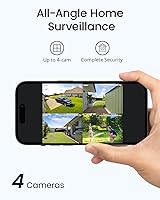
Day-to-day navigation is considered clean and manageable by most users — viewing live feeds across all four cameras, reviewing flagged clips, and adjusting sensitivity settings are all accessible without digging through buried menus. The Camera-to-Camera Sync replay view within the app is a standout feature for incident review.
Push notification delays are the most common app complaint, with some users reporting alerts arriving 20 to 40 seconds after the motion event — long enough to miss a porch package theft in real time. Live view loading also lags for some users on slower home networks.
Build Quality & Weatherproofing
81%
19%
The IP66 rating holds up in practice according to buyers who have run these cameras through heavy rain, coastal humidity, and temperature swings. The housing feels solid rather than hollow plastic, and the mounting brackets stay secure after months of outdoor exposure without visible rust or loosening.
A small percentage of buyers report condensation forming inside the lens housing after extended exposure to very high humidity or temperature cycling between cold nights and warm days. It is not a widespread issue, but it is worth noting for installations in coastal or high-humidity climates.
Field of View Coverage
84%
Covering a two-car garage front, full front porch width, or an entire backyard perimeter with a single camera is legitimately achievable with this field of view. Reviewers consistently note fewer blind spots compared to typical 110-degree to 130-degree cameras they have used before.
The wide-angle correction is good but not perfect — objects near the far edges of the frame can appear slightly distorted or compressed, which makes precise distance judgment harder in those zones. It is a physics tradeoff that comes with any ultra-wide optical system.
Smart Home Integration
76%
24%
Alexa and Google Assistant compatibility works reliably for basic commands — pulling up a live camera view on an Echo Show or Nest Hub is a feature that smart home users genuinely value. The integration feels native rather than bolted on.
Advanced automation options, like triggering other smart devices based on camera detection events, are limited compared to what platforms like HomeKit or SmartThings users might expect. The integration depth is sufficient for casual users but thin for dedicated home automation enthusiasts.
Value Without Subscription
89%
When buyers calculate the three-year cost of ownership against subscription-based competitors, this wire-free security setup consistently wins on paper and in practice. The absence of recurring fees is arguably the most emotionally satisfying aspect of ownership for verified long-term reviewers.
The upfront cost is substantial for budget-conscious buyers comparing entry-level single-camera options. Those who only need one or two cameras may find the four-camera kit format forces them to buy more hardware than their property actually requires.
Camera-to-Camera Sync
78%
22%
When an incident triggers multiple cameras simultaneously, having those clips automatically linked in the app for side-by-side review is a practical time-saver. Buyers who have had to manually scrub through footage across separate devices on older systems find this feature immediately appreciated.
The sync feature requires all cameras to be within the HomeBase network, and if one camera misses a trigger event due to sensitivity settings or positioning, the linked review is incomplete. It works best when cameras are well-positioned with overlapping zones, which requires thoughtful initial placement.
Frame Rate & Motion Smoothness
58%
42%
For monitoring slow or stationary scenarios — checking who is at the front door, verifying a package was delivered, or confirming a gate is closed — 15fps is entirely functional and most users never notice the limitation in these contexts.
Anyone who has used a 30fps security camera will immediately notice the difference when reviewing footage of a moving car, running child, or fast-moving intruder. The reduced frame rate is arguably the single most cited technical disappointment among buyers who researched alternatives before purchasing.

Suitable for:

The aosu SolarCam Max 4-Cam Security System is built for homeowners who want meaningful outdoor coverage without the hassle of running cable or committing to a monthly cloud fee. If you own a mid-size to large property — a house with a driveway, backyard, side gate, and garage, for instance — having four cameras that can be positioned independently without a single wire is a genuine convenience. Privacy-minded buyers who are uncomfortable with footage living on a third-party server will find the encrypted, on-site 32GB storage a compelling reason to choose this over Ring or Arlo. Renters also stand to benefit: installation involves only a few screws, and the whole system can be taken down and reinstalled in a new place without leaving a trace. Anyone already running Alexa or Google Home will appreciate the native compatibility, which makes pulling up a live camera feed on a smart display feel natural rather than forced. For buyers in the Sun Belt or temperate climates where consistent sunlight is a reasonable expectation most of the year, the solar charging model works reliably enough to justify the wire-free promise.
Not suitable for:

The aosu SolarCam Max 4-Cam Security System is a harder sell for buyers in northern climates, heavily wooded properties, or any situation where the solar panels cannot reliably capture a few hours of direct sun each day. In those conditions, the backup battery ends up doing most of the work for stretches at a time, and a system marketed as solar-powered starts to feel like a battery-powered camera with an unreliable top-up. Buyers who prioritize smooth, broadcast-quality motion footage should also look elsewhere — the 15fps frame rate is functional for static or slow-moving scenes, but it will frustrate anyone accustomed to 30fps systems when reviewing footage of a moving vehicle or fast-walking intruder. The HomeBase hub dependency is another consideration worth taking seriously: if you want cameras that continue recording locally even when your router or power goes down, this architecture has a meaningful weak point. Anyone who needs more than four cameras, wants deep smart home automation triggers, or prefers a system without a central hub they need to place and protect should weigh those gaps carefully before committing.
Specifications

  • Resolution: Each camera captures video at 3K / 5MP (2560x1920), delivering noticeably sharper detail than standard 2K or 1080p systems.
  • Field of View: The seven-lens array provides a 166-degree ultra-wide angle with built-in distortion correction for accurate edge-to-edge coverage.
  • Frame Rate: Video is recorded at 15 frames per second, which is functional for most monitoring tasks but visibly smoother motion than 30fps alternatives.
  • Night Vision: Full-color night vision is supported up to 33 feet using LED illumination, with no switch to grayscale in low-light conditions.
  • Power Source: Each camera runs on a built-in rechargeable battery continuously topped up by a dedicated flexible solar panel included per camera.
  • Solar Panel: The solar panel and camera body can be mounted separately, allowing the panel to face direct sunlight while the camera is installed in a sheltered position.
  • Local Storage: The HomeBase hub includes 32GB of built-in encrypted storage, supporting up to approximately 120 days of recorded footage with no cloud subscription required.
  • Weather Rating: All four cameras carry an IP66 waterproof rating, making them resistant to heavy rain, dust ingress, and sustained outdoor exposure.
  • Connectivity: The HomeBase connects to your router via Ethernet cable, and cameras communicate wirelessly with the hub over a dedicated 2.4GHz or 5GHz Wi-Fi band.
  • Detection Type: Motion detection uses passive infrared (PIR) sensing tuned for human body heat signatures, which reduces false triggers from animals, vehicles, and environmental changes.
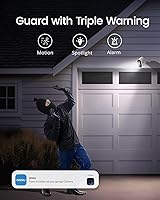
  • Alert Methods: On detection, the system can trigger a built-in spotlight, sound a siren, and push a notification to the companion app on your smartphone.
  • Smart Home: The system is compatible with Amazon Alexa and Google Assistant, allowing live camera feeds to be displayed on supported smart displays via voice command.
  • Max Camera Support: A single HomeBase unit supports up to four cameras simultaneously, and the kit ships with all four cameras and panels included.
  • Digital Zoom: Each camera supports up to 6x digital zoom for post-capture or live-view close inspection of recorded footage.
  • Cam Sync Feature: The Camera-to-Camera Sync function automatically links clips from multiple cameras that recorded during the same motion event for streamlined incident review.
  • App Control: The system is managed through the Aosu app, available on iOS and Android, with support for live view, clip review, sensitivity adjustment, and alert configuration.
  • Installation Type: Cameras are wire-free and wall-mounted using a screw-in bracket; no drilling for conduit or wiring is required, and the full kit can typically be installed in under two hours.
  • Box Contents: The kit includes four cameras, four solar panels, one HomeBase, one Ethernet cable, four charging cables, eight mounting brackets, eight screw packs, one power adaptor, and a manual.
  • Item Weight: The complete kit weighs approximately 5.15 pounds (2.34 kg) including all cameras, panels, and the HomeBase unit.
  • Video Encoding: Footage is encoded in MPEG-4 format and stored locally on the HomeBase, with encrypted access managed through the Aosu app.

Related Reviews

AOSU SolarCam Max 3K/5MP Wireless Security Camera System
87%
91%
Value for Money
88%
Image Quality
94%
Night Vision Performance
87%
Ease of Setup
92%
Solar Efficiency
More
AOSU WirelessCam Pro 4-Camera Outdoor Security System
76%
91%
Ease of Installation
84%
Video Image Quality
78%
Night Vision Performance
61%
Battery Life
72%
Motion Detection Accuracy
More
MUBILIFE M802 4K Security Camera System 4 Cam-Kit
86%
91%
Value for Money
88%
Ease of Setup
90%
Video Quality
85%
AI Motion Detection
80%
Solar Charging Efficiency
More
eufy eufyCam S330 4-Cam Wireless Security System
80%
93%
Video Clarity
89%
Night Vision Performance
84%
Solar Charging Reliability
71%
AI Detection Accuracy
88%
Local Storage & Privacy
More
aosu WirelessCam Pro 2-Cam Security Camera System
80%
88%
Video Clarity
91%
Night Vision Quality
62%
Battery Life
71%
Motion Detection Accuracy
93%
Local Storage & Privacy
More
Abode 4-Piece Wireless Smart Security System
79%
93%
Smart Home Integration
89%
Ease of Installation
82%
App Experience
61%
Starter Kit Coverage
78%
Value for Money
More
eufy Security eufyCam 2C Pro 4-Cam Kit
87%
92%
Video Clarity
89%
Ease of Setup
91%
Battery Life
85%
Night Vision
74%
Motion Detection Accuracy
More
5iktery PoE-4C-01 4-Camera NVR Security Kit
73%
84%
Image Quality
79%
Night Vision
71%
AI Motion Detection
76%
Ease of Installation
88%
Value for Money
More
AOSU SolarCam D1 SE 5MP Wireless Security Camera
85%
85%
Overall Performance
90%
Video Quality
88%
Ease of Setup
80%
Motion Detection Accuracy
87%
Night Vision Quality
More
WESECUU 4CAM 4K POE Security Camera System
71%
83%
Image Clarity
78%
Night Vision Performance
71%
AI Detection Accuracy
54%
Mobile App Experience
76%
Setup & Installation
More

FAQ

No, there are no subscription fees at all. The aosu SolarCam Max 4-Cam Security System stores all footage locally on the built-in 32GB HomeBase hub, so everything is self-contained from day one. You own the hardware, you own the footage, and nothing is gated behind a recurring plan.
In practice, it depends heavily on your location and how much direct sunlight the panels receive each day. In sunny climates with good panel placement, many users go months without needing to manually charge the batteries. In northern regions, heavily shaded yards, or during winter months with limited daylight, the built-in backup battery takes over more of the load, and you may occasionally need to plug in a charging cable to top things up.

Yes, and this is one of the more practical design choices in this kit. The panel and camera are connected by a cable, so you can mount the camera under an eave or overhang for protection while positioning the panel on a sunlit wall or fence nearby. The cable length limits how far apart they can go, so plan your mounting spots with that in mind.

Partially. The cameras connect to the HomeBase hub wirelessly, and the hub connects to your router via Ethernet. If your internet drops but your local network stays up, the cameras can still record to the HomeBase. However, you will lose remote access, push notifications, and live viewing through the app until your connection is restored.

Unfortunately, yes. The HomeBase is the central brain of the system, and if it goes offline — whether from a power cut or a disconnected Ethernet cable — all four cameras lose their ability to record and send alerts simultaneously. This is the most significant architectural trade-off to understand before buying. Some users add a small UPS battery backup to the HomeBase outlet to mitigate this risk.

For most standard residential driveways, yes. The 166-degree field of view is wide enough to cover a two-car garage front and the approach area from a single corner or overhead mount. The built-in distortion correction keeps the image looking natural rather than heavily fish-eyed. Objects at the very edges of the frame can appear slightly compressed, but the coverage area itself is genuinely broad.

It stays in full color throughout the night, up to about 33 feet from the camera. This is because the system uses LED spotlight illumination rather than traditional infrared, which is what produces the classic grayscale look. The color footage at night is noticeably more useful for identifying clothing, vehicle color, or other distinguishing details compared to standard IR cameras.

It depends on what you are monitoring. For a front door, a parked car, or a static gate area, 15fps is entirely adequate and most people would never think twice about it. Where it becomes more obvious is when something moves quickly through the frame — a car pulling out fast, someone running, or a dog darting across the yard can look slightly choppy or stuttery compared to 30fps footage. If you are coming from a 30fps system, the difference will be immediately apparent.

The HomeBase unit in this kit supports up to four cameras maximum, and the kit already ships with four. If you want to expand beyond four cameras, you would need to purchase an additional HomeBase hub and manage it as a separate system within the app. There is no true multi-hub expansion mode that unifies everything into a single seamless view beyond the four-camera limit.

The PIR sensor does a reasonable job of filtering out environmental noise like blowing trees, ambient light changes, and distant vehicles. That said, it is not perfect — pets moving through the frame and vehicles passing at certain angles close to the camera can still trigger alerts. Most users find that spending time adjusting the sensitivity setting and refining detection zones in the app brings false alerts down to a manageable level, but expect some tuning time in the first week or two of use.