aosu SolarCam Max 2-Cam Security Camera System

Overview
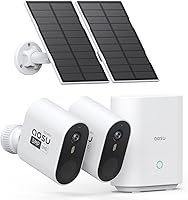
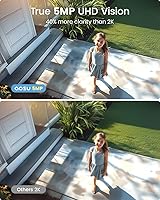
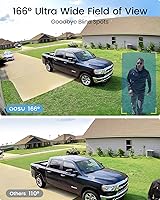
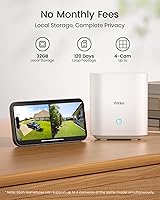
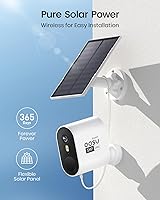
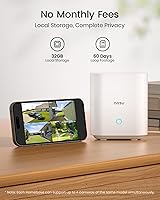
The aosu SolarCam Max 2-Cam Security Camera System is built around a simple idea: two cameras, one hub, and no monthly bill standing between you and your footage. At the center sits a HomeBase unit that handles local storage, so everything captured stays on a 32GB drive instead of routing through someone else's server. Each camera shoots in 3K/5MP resolution and pairs that with a 166° lens wide enough to cover most of a yard in a single frame. The two solar panels mount independently from the cameras themselves, which matters more than it sounds — you can tuck a camera under an eave for protection while the panel soaks up sun a few feet away. It's a setup that leans premium, and the price reflects a kit built for whole-property coverage rather than a single doorway.
Features & Benefits
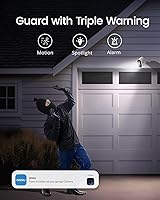
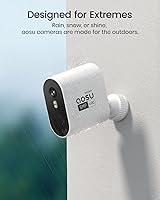
What stands out with this solar camera system is how the two cameras work together rather than as separate units. The cam-to-cam tracking hands motion off from one camera to the next, so a person walking from the driveway toward the back door shows up as one continuous event instead of two disconnected clips. Night footage holds up well too, with color night vision and a built-in spotlight that adds real detail instead of a grainy gray blob. Motion detection relies on PIR sensing, which tends to ignore swaying branches and passing cars better than software-only systems. Two-way audio comes through clearly thanks to noise reduction, and the HomeBase connects via ethernet while the cameras themselves run on dual-band WiFi, giving the whole setup a steadier connection. An IP66 rating means it shrugs off rain and snow without complaint.
Best For
This two-camera security kit makes the most sense for anyone who needs to watch more than one spot at once — think a driveway, a backyard gate, and a garage door that all deserve their own eyes. Because everything mounts wirelessly, it suits homeowners who don't want to deal with running cable through walls or hiring an installer for a wall-mounted setup. The solar charging is a real perk if your property gets consistent daily sun, letting the cameras run indefinitely without battery swaps. It's also a good fit for anyone tired of paying recurring fees just to keep clips on a server, since local storage handles that here. Renters and homeowners alike can get it running in an afternoon without any wiring.
User Feedback
Owner impressions of this outdoor camera setup tend to split along a few predictable lines. Most people are happy with how smoothly the cameras hand off tracking between each other, saying it actually works as advertised rather than just sounding good on paper. The bigger debate centers on solar performance in winter or in shaded yards, where charging slows down enough that some owners top off the battery manually every so often. App responsiveness gets mixed marks too; alerts usually arrive quickly, but a handful of users report occasional lag during setup or after a WiFi dropout. Night vision clarity earns consistent praise, especially compared to older grayscale cameras. Overall sentiment leans positive, with the main caveats tied to sunlight availability rather than the cameras themselves.
Pros
- Cam-to-cam tracking genuinely follows movement across the property instead of capturing disconnected clips
- No monthly fee is required since footage saves locally on the 32GB HomeBase drive
- Color night vision combined with the spotlight makes after-dark footage noticeably more detailed
- The 166° lens covers wide stretches of yard, cutting down on awkward blind spots
- Solar panels mount separately from the cameras, so you can shade one and sun the other
- PIR-based detection cuts down on false alerts from branches, shadows, or small animals
- Two-way audio with noise reduction makes conversations through the camera easier to hear clearly
- IP66 weatherproofing means the cameras keep working through rain, snow, and humidity
- Wireless, wall-mounted setup skips the hassle and cost of professional installation
Cons
- Solar charging slows down noticeably during winter or in yards with heavy shade
- Smart home support is limited mainly to Alexa and Google Home, leaving out other ecosystems
- App responsiveness can lag occasionally, especially right after a WiFi dropout
- Cloud backup is sold separately, so local storage is the only included option
- Setting up the HomeBase and getting a stable WiFi connection takes a bit more patience than plug-and-play cameras
- Two cameras may be more coverage and cost than buyers with a single entry point actually need
- Battery life leans heavily on consistent sunlight, so manual top-offs are sometimes necessary
- The system adds a central hub to manage, which is one more device that can run into connectivity hiccups
Ratings
These ratings for the aosu SolarCan Max 2-Cam Security Camera System were generated by AI after analyzing thousands of verified buyer reviews from around the world, filtering out spam, bot activity, and incentivized feedback along the way. The scores below reflect what real owners consistently praised and where they ran into friction, so you get an honest snapshot rather than a marketing pitch.
Video Resolution & Clarity
Night Vision Performance
Field of View Coverage
Cam-to-Cam Tracking
Motion Detection Accuracy
Solar Charging Reliability
Battery Performance
App Experience & Notifications
WiFi & HomeBase Connectivity
Installation Ease
Build Quality & Weatherproofing
Two-Way Audio Quality
Local Storage & No-Subscription Value
Smart Home Integration
Value for Money
Suitable for:
The aosu SolarCam Max 2-Cam Security Camera System makes the most sense for homeowners trying to cover several blind spots at once rather than just a front porch. If you have a driveway, a side gate, and a backyard that all need watching, having two cameras hand off tracking between each other is genuinely useful instead of just a marketing line. It also fits anyone who wants to stop paying a monthly fee just to keep footage saved, since the local HomeBase storage handles that without a subscription. People whose yard gets decent sun for most of the day will get the most consistent performance out of the solar charging. It's a solid pick for renters too, since the wireless, wall-mounted install means nothing has to be hardwired or left behind when you move.
Not suitable for:
This two-camera security kit isn't a great match for anyone living somewhere with long stretches of overcast weather or heavily shaded yards, since solar reliability really does depend on consistent sunlight. Apartment dwellers with only one entry point to watch are probably paying for more coverage than they'll ever use, since the whole appeal of the aosu SolarCam Max 2-Cam Security Camera System is splitting attention across multiple zones. Anyone who wants tight integration with a broader smart home ecosystem beyond Alexa and Google Home may find the compatibility list a bit narrow. Buyers expecting cloud backup as a built-in feature should know that's an optional add-on, not something bundled in for free. And if you're not comfortable occasionally checking on a HomeBase connection or troubleshooting WiFi, the setup might feel like more upkeep than a simpler single-camera option.
Specifications
- Resolution: Each camera records at 3K/5MP resolution, equivalent to 2560 x 1920 pixels, for sharper detail than standard 1080p cameras.
- Field of View: A 166° ultra-wide lens captures a broader scene per camera, reducing the number of blind spots around a property.
- Night Vision Range: Full-color night vision extends up to 33 feet, supplemented by a built-in spotlight for added clarity after dark.
- Power Source: Cameras run on a built-in rechargeable battery topped up by an included flexible solar panel.
- Local Storage: A 32GB HomeBase hub stores footage locally, eliminating the need for a paid cloud subscription.
- Playback Window: Local storage supports video playback and downloads for up to 120 days of recorded footage.
- Connectivity: Cameras connect over 2.4GHz or 5GHz WiFi, while the HomeBase links to a router via an included ethernet cable.
- Weatherproofing: The cameras carry an IP66 rating, meaning they are sealed against dust and resistant to heavy rain.
- Motion Detection: Detection relies on PIR sensors tuned to recognize human movement rather than general motion.
- Audio: Built-in two-way audio includes noise reduction for clearer communication through the camera speaker and microphone.
- Zoom: Cameras include both optical and digital zoom for closer inspection of recorded footage.
- Frame Rate: Video is captured at 15 frames per second.
- Camera Weight: Each camera unit weighs approximately 1.38 kilograms (3.03 pounds).
- Package Dimensions: The retail package measures 8.31 x 8.07 x 6.06 inches.
- Smart Home Support: The system integrates with Amazon Alexa and Google Home for voice-based monitoring commands.
- Max Camera Capacity: A single HomeBase hub can support up to four connected cameras.
- Included Components: The kit ships with two cameras, two solar panels, one HomeBase, mounting brackets, screws, charging cables, an ethernet cable, and an adaptor.
- Installation Type: Cameras and panels mount via screw-in wall brackets, requiring no electrical wiring.
- Power Specifications: The system operates at 5 volts with a power draw of 5 watt-hours.
- Video Format: Footage is recorded and saved using MPEG-4 video encoding.
Related Reviews
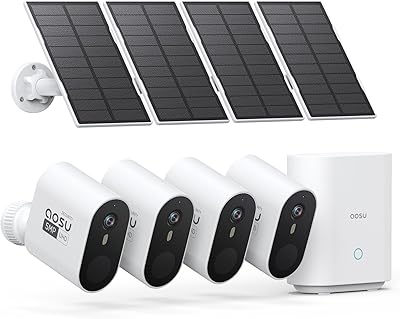
aosu SolarCam Max 4-Cam Security System
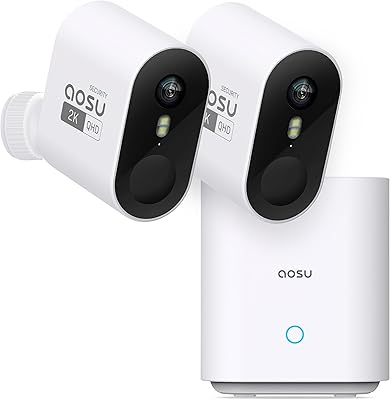
aosu WirelessCam Pro 2-Cam Security Camera System
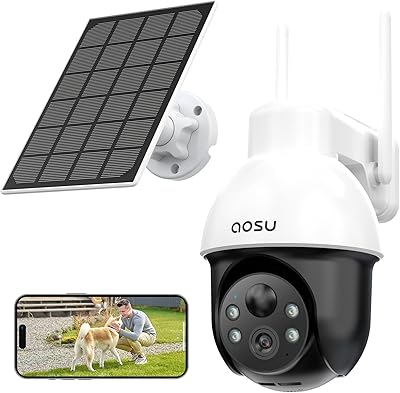
AOSU SolarCam D1 SE PTZ Security Camera
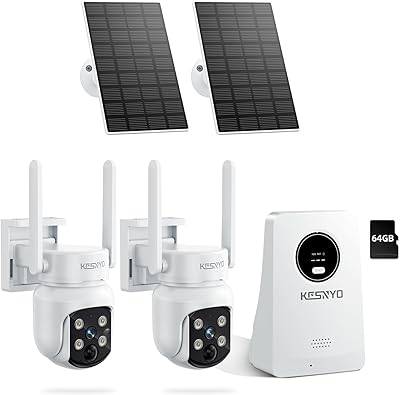
KCSNYO 4MP Wireless Solar Security Camera Kit
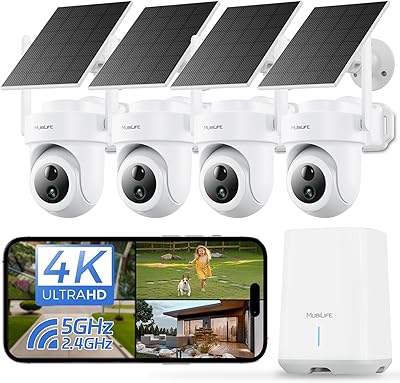
MUBILIFE M802 Solar 4K Security Camera System
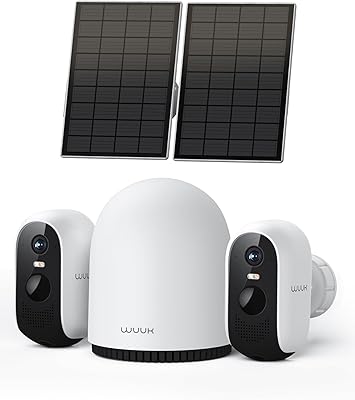
WUUK Y0410 2K Solar Security Camera System
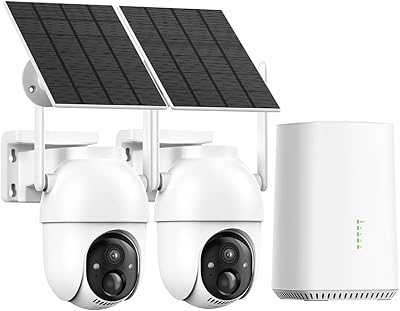
Aume JA-D300 2-Cam Solar Security Camera System
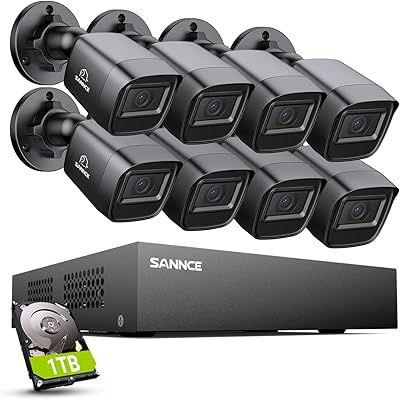
SANNCE DVR-100 1TB 8CH Security Camera System
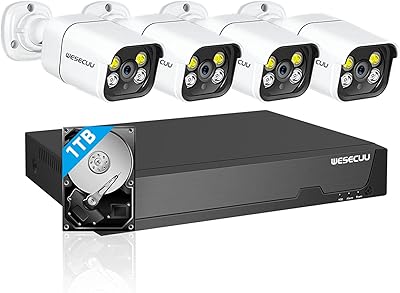
WESECUU 4CAM 4K POE Security Camera System