Overview

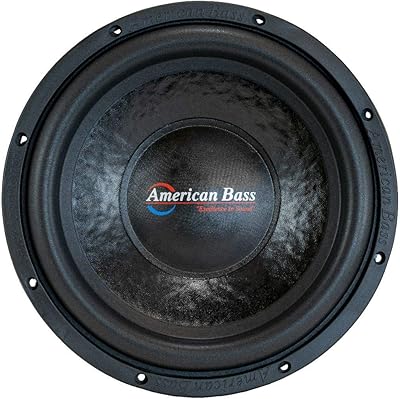
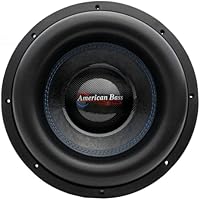
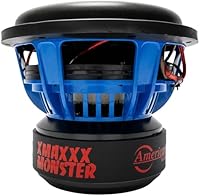
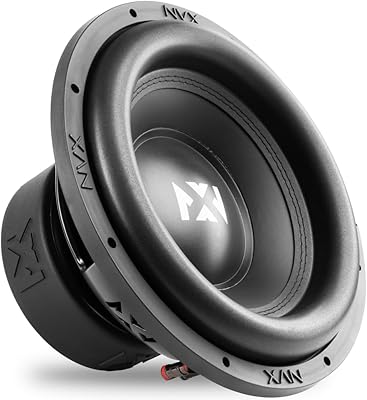
The American Bass XMAXXX 12″ 2-Ohm Car Subwoofer is not built for someone who just wants a little more thump on the commute — this is a competition-grade SPL driver designed for builders who take their bass seriously. American Bass is a niche brand with deep roots in sound pressure level competition, so it occupies a very different space from household names like JL Audio or Rockford Fosgate. At nearly 65 pounds, with a 9.17-inch mounting depth, this American Bass driver demands a purpose-built enclosure and some serious planning before you ever connect a wire. The price reflects a premium tier, and the expectations that come with it.
Features & Benefits

The most important spec to understand here is the distinction between RMS and peak power. The XMAXXX is rated at 3000W RMS continuous, meaning that is the power level it can handle day in and day out — the 6000W peak figure covers brief transient bursts only. Backing that power handling is a massive 321 oz magnet assembly, which gives the motor strong control over cone movement at low frequencies. The 3.5-inch voice coil helps manage heat during sustained high-power runs. The dual 2-ohm voice coils give installers real flexibility: wire them in parallel for a 1-ohm load or in series for 4 ohms, depending on what your amplifier handles best. The 30.7 Hz frequency response is genuinely low, covering infrasonic territory most subwoofers can't reach.

Best For

This 12-inch SPL subwoofer is purpose-built for a specific kind of installer, and being honest about that saves you money and frustration. It belongs in SPL competition builds, dedicated demo vehicles, or any setup where maximum output is the goal and flat frequency response is secondary. You should already own a high-powered amplifier capable of delivering at least 2000W RMS before considering this driver — the XMAXXX will not perform well when underpowered, and it will not forgive a weak electrical system. You also need sufficient enclosure space; the 9.17-inch mounting depth rules out most shallow or off-the-shelf boxes. First-time installers or anyone looking for a daily-driver upgrade without custom fabrication should look elsewhere. This is a builder's tool, not a drop-in solution.

User Feedback

With 69 ratings and a 3.9 out of 5 average, the XMAXXX sits in a position that reflects genuine mixed experience. Buyers who went in prepared — with the right amplifier, a tuned ported enclosure, and a solid electrical setup — tend to praise the raw output levels and the build quality, particularly the magnet size and coil construction. On the other side, a number of lower ratings trace back to underpowered pairings, installation mistakes, or shipping damage during delivery. That last point has come up more than once and is worth noting when ordering. Long-term support is a reasonable concern with a niche brand, and the limited warranty offers only a baseline level of coverage. Go in informed, and the driver can deliver; go in unprepared, and it will disappoint.

Pros

  • Massive 321 oz magnet delivers exceptional motor strength and tight cone control deep into sub-bass frequencies.
  • Genuine 3000W RMS continuous power handling matches serious competition-grade amplifiers without breaking a sweat.
  • Dual voice coil design gives installers the flexibility to wire for 1-ohm or 4-ohm final impedance.
  • Frequency response reaching 30.7 Hz covers deep infrasonic territory that most 12-inch drivers cannot reproduce.
  • The 3.5-inch voice coil manages heat more effectively during extended high-power runs than smaller alternatives.
  • Raw SPL output is the clear standout strength; prepared buyers consistently report impressive, head-turning volume levels.
  • Build quality draws regular praise from experienced installers, especially the heavy-duty magnet and coil construction.
  • Rewards builders who invest time in proper enclosure tuning with noticeably stronger and tighter low-end output.

Cons

  • At nearly 65 pounds with over 9 inches of mounting depth, this is not a casual weekend installation.
  • Requires a high-powered amplifier of at least 2000W RMS — buyers without one face steep additional costs immediately.
  • Multiple reviewers report shipping damage on arrival, suggesting the packaging does not consistently protect this heavy driver.
  • Limited warranty and niche brand status mean after-sale support is thinner than buyers may expect at this price.
  • Only 69 ratings exist to date, making it difficult to draw firm conclusions about long-term reliability.
  • Highly sensitive to enclosure design; a poorly tuned box will noticeably hurt output and can stress the driver over time.
  • Total system cost climbs fast once you account for a compatible amplifier, upgraded electrical, and a custom-built box.
  • Underpowering or incorrect impedance wiring — a common beginner mistake — can permanently damage the driver with no recourse.

Ratings

The ratings below for the American Bass XMAXXX 12″ 2-Ohm Car Subwoofer are generated by our AI engine after analyzing verified buyer reviews from around the world, with spam, bot-generated feedback, and incentivized posts actively filtered out before any score was calculated. Each number reflects a calibrated synthesis of real installer experiences — the wins, the frustrations, and everything in between. Both the standout strengths and the recurring pain points that matter to serious buyers are represented here without softening.
SPL Output
93%
Buyers who built proper ported enclosures and paired this driver with a high-powered amplifier consistently report output levels that turn heads at competitions and shows. The 321 oz magnet gives the motor serious authority, and the payoff at full tilt is exactly the kind of floor-shaking pressure SPL enthusiasts come looking for.
That same focus on peak output means nuance and tonal balance take a back seat — this driver pushes hard but does not play evenly across the full frequency range. Casual listeners who want tight, punchy bass rather than raw volume may find the character too aggressive for everyday music.
Magnet & Motor Strength
91%
The 321 oz magnet is a standout specification even within the SPL competition segment — it provides the kind of motor force that keeps cone movement controlled and precise even when the driver is being pushed hard. Installers with experience across multiple high-output subwoofer brands consistently identify this as one of the driver's clearest competitive advantages.
The heavy magnet is also responsible for the driver's substantial overall weight, which complicates handling, mounting, and the structural demands placed on the enclosure baffle. In vehicles where weight distribution matters — smaller competition builds or class-restricted cars — the 64.9-pound total weight becomes a real practical constraint.
Power Handling
88%
At 3000W RMS continuous, this driver genuinely belongs in the same conversation as competition-grade components — not as a marketing claim but as a functional reality when paired correctly. Buyers running properly matched amplifiers report that the driver handles sustained high-power sessions without thermal shutdown or voice coil distress.
The flip side of that power ceiling is the strict requirement it places on the amplifier side of the equation. Users who paired the XMAXXX with amplifiers rated below the RMS threshold report underwhelming performance and, in some cases, premature damage that the limited warranty does not always resolve cleanly.
Low-Frequency Extension
86%
A frequency response reaching down to 30.7 Hz gives this driver access to sub-bass territory that most 12-inch subwoofers can only approximate. In properly tuned ported builds, users describe a physical, pressurized low-end sensation that is genuinely hard to replicate with more conventional drivers at any price point.
Accessing that deep extension in practice requires a carefully designed enclosure with precise port tuning — in a mismatched or undersized box, the low-end capability collapses noticeably. Buyers who underestimate the enclosure design requirements often end up with a driver that sounds boomy and uncontrolled rather than deep and authoritative.
Build Quality
84%
The physical construction draws consistent praise from experienced installers, particularly the imposing magnet assembly and the robust coil construction. Buyers who handle car audio hardware regularly note that this driver feels overbuilt in a reassuring way — the kind of component that looks like it can take real punishment.
A handful of buyers report build inconsistencies between units, and the limited review pool makes it genuinely difficult to assess how widespread those issues are. For a driver at this price tier, tighter quality control consistency across production runs would reinforce the confidence the specifications alone create.
Wiring Flexibility
82%
18%
The dual voice coil configuration is genuinely useful for experienced installers, offering the ability to wire for 1-ohm or 4-ohm final impedance depending on what the amplifier demands. That kind of flexibility can mean the difference between a good amplifier pairing and a great one in a serious high-powered build.
The flexibility only benefits buyers who already understand impedance concepts and can follow a wiring diagram correctly. For less experienced installers, the dual coil setup adds a layer of complexity that has led to incorrect wiring, underperformance, and in some cases driver damage that reviewers attribute to user error rather than a product defect.
Thermal Performance
79%
21%
The 3.5-inch voice coil is a meaningful upgrade over the smaller coils found in most competing 12-inch subwoofers, and buyers running extended high-power sessions report that the driver holds up better thermally than they expected. Heat management during competition-style playback is notably more stable than comparable drivers in this output class.
Even with the larger coil, sustained operation at or near peak power in a poorly ventilated enclosure can still push thermal limits over time. A few buyers report gradual performance degradation during very long high-power sessions, suggesting that enclosure airflow and amplifier gain structure deserve as much attention as the driver's built-in thermal capacity.
Amplifier Matching
72%
28%
The dual 2-ohm voice coil design offers more amplifier compatibility options than a fixed-impedance driver, since buyers can choose between 1-ohm and 4-ohm final loads to match their existing setup. For builders who know their amplifier's optimal impedance load, that flexibility is genuinely practical and appreciated in a high-stakes build.
That flexibility has a hard floor — the driver needs a genuinely high-powered amplifier to perform, and many buyers underestimate exactly how high that bar is. Lower-powered pairings produce disappointing results at best and driver stress at worst, and that mismatch accounts for a disproportionate share of the negative reviews in the pool.
Value for Money
67%
33%
For competition builders or enthusiasts who already have the amplifier, enclosure, and electrical infrastructure in place, the driver delivers genuine SPL performance that competes with alternatives costing significantly more. In the right hands and the right build, the performance-per-dollar ratio holds up reasonably well against the premium price.
For anyone without the supporting hardware already in hand, the total cost of ownership climbs steeply — a compatible high-powered amplifier, custom enclosure, and electrical upgrades can easily double the initial outlay. First-time buyers who overlooked those requirements frequently describe the overall purchase as poor value in hindsight.
Enclosure Compatibility
61%
39%
When paired with a properly designed ported enclosure built specifically to the driver's parameters, the performance rewards are real and measurable. Experienced builders who take the time to calculate the right box volume and port tuning consistently report output that outperforms drivers designed for more flexible, forgiving enclosure options.
The compatibility window is narrow — this driver is highly sensitive to enclosure design, and off-the-shelf boxes simply will not work given the 9.17-inch mounting depth requirement alone. Buyers without the skills or tools to build a custom enclosure will hit a hard wall before they ever hear this driver perform the way it was designed to.
Long-Term Reliability
63%
37%
Buyers who installed this driver correctly and gave it the amplifier and enclosure it needs generally report stable, consistent performance over time. No widespread pattern of premature mechanical failure — surround separation, spider fatigue, or coil burnout — surfaces from correctly installed units operating within rated parameters.
The relatively small review pool of 69 ratings limits confidence in any long-term reliability assessment, and the niche brand status means independent testing data is scarce. A few buyers report unexplained performance decline over time, though it remains unclear whether those cases reflect installation issues or genuine component degradation.
Brand Support
58%
42%
American Bass has an established presence in the SPL competition community and is not an unknown entity — experienced competitors recognize the brand and trust its engineering credentials within that specific niche. For buyers already embedded in the car audio community, peer guidance and shared build knowledge are relatively easy to access.
Beyond the community, formal after-sale support is thin. The limited warranty lacks clearly published terms, and the brand does not have the customer service infrastructure of mainstream audio manufacturers. Several buyers report difficulty getting clear resolution after receiving damaged or underperforming units, which compounds the risk at this price point.
Shipping & Packaging
53%
47%
When orders arrive intact, buyers note that the driver itself is well-constructed and shows no signs of manufacturing carelessness. The core product quality is not in question — the concern sits squarely with how it survives transit rather than how it leaves the factory.
Shipping damage is one of the most consistently flagged complaints across verified reviews, with multiple buyers reporting cracked baskets, dented surrounds, or damaged coil assemblies on arrival. A driver this heavy demands substantially more protective packaging than it apparently receives, and the delivery failure rate represents a genuine purchasing risk worth planning around.
Installation Complexity
44%
56%
For the experienced installer who has completed high-power builds before, the process is manageable — the terminal connections are standard, and the dual coil layout follows conventional DVC wiring conventions that any seasoned builder will recognize and navigate without difficulty.
For anyone else, this ranks among the most demanding subwoofer installations in its class. The extreme weight, strict mounting depth, custom enclosure requirements, and precise amplifier matching all compound together into a project that has defeated a meaningful number of buyers, with several negative reviews tracing directly back to installation failures.
Daily Driver Suitability
47%
53%
Some owners do run this driver in daily builds successfully — specifically those with custom vehicles already equipped with high-powered audio systems, upgraded electrical, and purpose-built enclosures. In those specific setups, it can deliver a daily listening experience that conventional consumer-grade subwoofers simply cannot approach.
For the average car owner, this is the wrong tool for everyday use — the output character favors sheer pressure over musical balance, and the installation demands make casual ownership genuinely impractical. Buyers who purchased it expecting a straightforward daily driver upgrade report regret at a notably high rate compared to the overall rating pool.

Suitable for:

The American Bass XMAXXX 12″ 2-Ohm Car Subwoofer is built for a narrow but passionate slice of the car audio world — specifically, experienced enthusiasts pursuing serious SPL output rather than balanced, casual listening. If you are building a competition vehicle, a dedicated bass demo car, or a high-powered street build where maximum sound pressure is the entire point, this driver fits the mission well. It is equally well-matched to installers who already own a capable amplifier delivering 2000W RMS or more and need a driver that can actually absorb that power without flinching. The dual voice coil design gives experienced builders genuine wiring flexibility, letting them dial in a 1-ohm or 4-ohm final impedance load to match their amplifier's sweet spot. You also need to bring sufficient enclosure space to the table — a properly designed ported or custom box that accommodates nearly 9.2 inches of mounting depth is not optional here. This is a tool for people who treat car audio as a craft and go into every build with a detailed plan.
Not suitable for:

Anyone expecting a straightforward drop-in upgrade should steer clear of the American Bass XMAXXX 12″ 2-Ohm Car Subwoofer from the start. If your goal is simply adding more bass to a daily driver or family car without custom fabrication, high-power amplifiers, and electrical system upgrades, this driver will cause more frustration than it delivers enjoyment. At nearly 65 pounds with a mounting depth exceeding 9 inches, it physically will not fit in most stock or off-the-shelf enclosures without serious modification. Beginners unfamiliar with impedance wiring, amplifier matching, or ported box design are at real risk of either damaging the driver or simply never getting it to perform the way it should. The limited warranty and relatively small review base mean after-sale support options are thinner than what established mainstream brands typically provide. Budget-conscious buyers also need to factor in the full system cost — a compatible high-powered amplifier, upgraded wiring, and a custom enclosure can push the total investment considerably higher than the driver's price tag alone.

Specifications

  • Driver Diameter: The cone measures 12 inches in diameter, placing this driver in the large-format subwoofer class used in high-output car audio and SPL competition builds.
  • RMS Power: Continuous RMS power handling is rated at 3000W, representing the steady power load the driver can sustain without thermal damage during normal operation.
  • Peak Power: Peak power handling reaches 6000W, covering brief momentary transient bursts at maximum amplifier output rather than sustained, continuous use.
  • Voice Coil Type: Dual Voice Coil (DVC) configuration provides wiring flexibility, allowing the installer to achieve different final impedance loads to match a specific amplifier pairing.
  • Impedance: Each voice coil is rated at 2 ohms, enabling a final wired impedance of 1 ohm when wired in parallel or 4 ohms when wired in series.
  • Magnet Weight: The motor assembly uses a 321 oz magnet, delivering strong magnetic force for precise cone control and authority at low frequencies.
  • Voice Coil Size: The voice coil measures 3.5 inches in diameter, improving thermal management and heat dissipation during extended high-power operation.
  • Mounting Depth: Required mounting depth is 9.17 inches, making a purpose-built or deep-cavity custom enclosure a non-negotiable part of any installation.
  • Cutout Size: The required baffle cutout diameter for installation is 11.4 inches.
  • Product Weight: The complete driver weighs 64.9 lbs, requiring at minimum two people and heavy-duty mounting hardware for safe and secure installation.
  • Frequency Response: Low-frequency extension is specified down to 30.7 Hz, enabling reproduction of deep sub-bass content well below typical listening thresholds.
  • SNR: The signal-to-noise ratio is rated at 85.9 dB, indicating relatively clean output relative to background noise at rated operating power levels.
  • Enclosure Type: This driver is designed for ported or vented enclosure mounting; sealed box applications are not the intended or recommended use case.
  • Connectivity: Uses standard wired, corded electric connections compatible with conventional car audio amplifier output terminals.
  • Warranty: Covered by a limited manufacturer warranty; buyers should confirm specific terms and duration directly with American Bass prior to purchase.

Related Reviews
American Bass XFL 12″ 4 Ohm Car Subwoofer
84%
92%
Bass Performance
90%
Power Handling Capacity
88%
Build Quality
85%
Value for Money
87%
Durability
More
American Bass VFL 8″ 2 Ohm 1200W Car Subwoofer
84%
91%
Bass Performance
89%
Power Handling
62%
Installation Ease
87%
Build Quality
92%
Value for Money
More
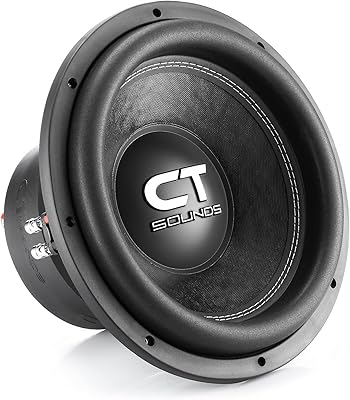
CT Sounds STRATO-12-D2 12 Inch Dual 2 Ohm Car Subwoofer
86%
93%
Bass Performance
89%
Durability
91%
Power Handling
88%
Sound Clarity
84%
Ease of Installation
More
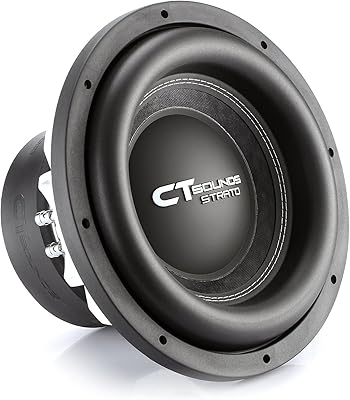
CT Sounds TROPO-XL-12-D2 12-Inch Car Subwoofer
80%
88%
Bass Output & SPL
84%
Bass Accuracy & Tightness
91%
Build Quality
83%
Thermal Management
89%
Value for Money
More
Rockville W12T4S2 12″ 2-Ohm Car Subwoofer
84%
88%
Bass Performance
90%
Ease of Installation
85%
Sound Clarity
80%
Build Quality
92%
Size and Fit in Compact Spaces
More
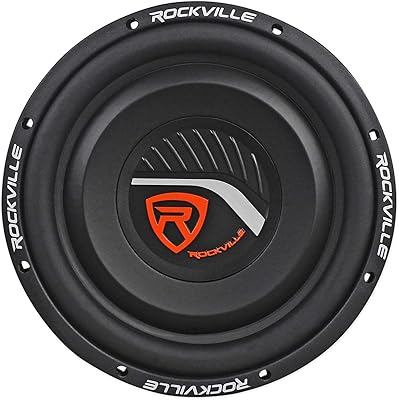
American Bass XO 12″ 600W Car Subwoofer
85%
90%
Bass Performance
88%
Build Quality
84%
Ease of Installation
92%
Value for Money
86%
Sound Clarity
More
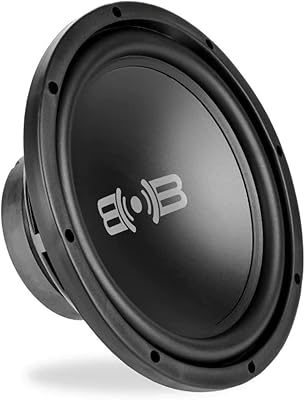
Rockville W12K9D2 12″ Car Subwoofer
73%
88%
Bass Output
91%
Excursion Performance
84%
Value for Money
64%
Amplifier Compatibility
54%
Power Handling Accuracy
More
Rockville K5 W12K5S2 12″ 2-Ohm Car Audio Subwoofer
86%
94%
Bass Performance
91%
Power Output
88%
Build Quality
82%
Installation Ease
89%
Durability
More
CT Sounds Hydro 12″ Dual 2-Ohm Shallow-Mount Car Subwoofer
85%
88%
Sound Performance
91%
Bass Quality
75%
Installation Ease
84%
Build Quality
89%
Power Handling
More
Belva BPKGW122 12-inch Car Subwoofer
72%
88%
Value for Money
76%
Bass Output Quality
91%
Ease of Installation
73%
Build Quality
47%
Power Handling Accuracy
More

FAQ

The American Bass XMAXXX 12″ 2-Ohm Car Subwoofer needs an amplifier capable of delivering at least 2000W RMS at your chosen final impedance — ideally closer to 3000W RMS to get the full potential out of the driver. Running it underpowered is the most common mistake buyers in this category make, leading to poor performance and eventual driver failure. Always match amplifiers by the RMS figures, not the peak numbers on the box.

Yes, wiring both 2-ohm coils in parallel gives you a 1-ohm final load, which many high-powered mono amplifiers are specifically built to handle efficiently. Alternatively, wiring them in series gives you 4 ohms, which suits amplifiers that deliver their best output at higher impedance. Neither is universally the right choice — it depends entirely on what your specific amplifier does at each load. Check your amplifier's rated output at both impedances before committing to a wiring configuration.

This driver is built for ported enclosures, which allow it to move more air and reach higher SPL levels than a sealed box would permit. A common starting range for a ported build in this class runs around 2 to 3 cubic feet of net internal volume, tuned roughly between 30 and 38 Hz, though your specific setup may call for different parameters. Sealed boxes are not recommended here — you will leave a significant amount of output on the table going that route.

It is primarily engineered around maximum SPL output, so competition builds and dedicated demo vehicles are genuinely where it shines. Some enthusiasts do run this American Bass driver daily, but only when they have the enclosure space, a properly matched amplifier, and the electrical system to back it up. If balanced, reference-quality bass for everyday listening is the goal rather than sheer volume, this is likely more driver than the job calls for.

RMS is the number that matters for real use — it is the continuous power level the driver handles steadily over time without risking thermal damage. Peak power covers very brief momentary bursts, like a sharp bass transient, that the driver can absorb for a fraction of a second before settling back to normal. When shopping for a matching amplifier, match to the RMS rating and treat the peak figure as background noise.

It has come up consistently enough across the review pool to take seriously. At nearly 65 pounds, this is a heavy driver, and rough handling during transit can cause real damage to the motor assembly or cone. Before signing for delivery, inspect the outer packaging thoroughly and photograph any visible damage immediately. If anything looks compromised, notify the seller the same day and hold onto the packaging material until the matter is resolved.

Almost certainly not. The 9.17-inch mounting depth alone rules out the vast majority of off-the-shelf enclosures, and the 11.4-inch cutout requirement narrows it further. This driver needs a custom-built ported enclosure designed specifically around its parameters. Forcing it into a generic box will compromise output noticeably and may place undue stress on the driver over time.

American Bass has a legitimate reputation in SPL competition circles and has been around long enough to earn credibility with serious builders, but it operates as a niche player without the broad consumer support infrastructure of mainstream car audio brands. The warranty is described as limited, and the listing does not spell out the specific terms or duration. It is worth reaching out to American Bass directly before purchasing to get those details clearly confirmed — at this price point, knowing your coverage ahead of time is a reasonable precaution.

Yes, almost certainly. A subwoofer pulling this much continuous power places serious demand on your alternator and battery. Most experienced builders pair a high-output build like this with a high-output alternator, a dedicated secondary battery, and appropriately rated power and ground cabling — typically 0-gauge or 1/0-gauge runs. Skipping the electrical upgrade is a reliable path to voltage drop, amplifier clipping, and eventual component damage.

Honestly, no. This driver assumes you already understand impedance wiring, ported enclosure design, amplifier matching, and electrical system planning — it leaves very little margin for beginner mistakes. Getting any of those elements wrong can mean a damaged driver with limited warranty recourse. If you are just starting out, there are far more forgiving subwoofers at lower price points that will still sound impressive and help you build the experience needed before stepping up to something this demanding.

Where to Buy