Overview

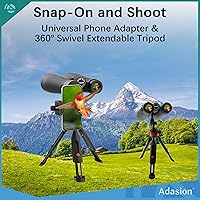
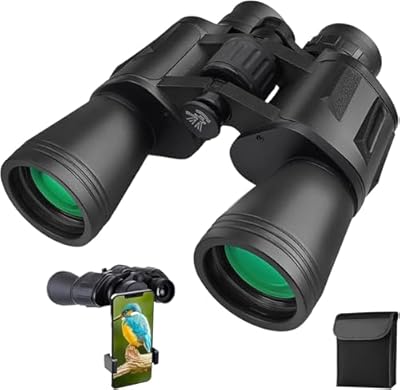
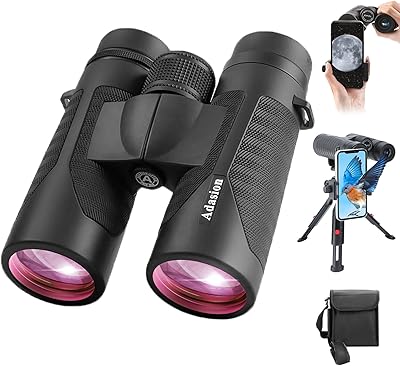
The Adasion 15x56 Binoculars sit in an interesting spot in the market — serious magnification and a large objective lens without the price tag that typically comes with that combination. Most binoculars in this category top out at 10x42, so stepping up to this power level is a genuine leap for anyone who regularly watches distant subjects. The package includes a phone adapter and extendable tripod, which adds real utility for casual photographers in the field. That said, close to three pounds is heavy to hold for extended periods, and the overall size directly reflects the large front lens. Know what you are getting into physically before you buy.
Features & Benefits

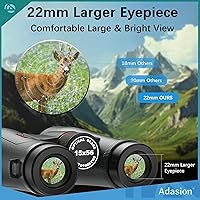
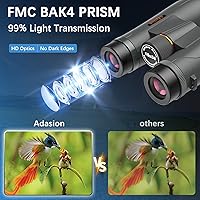
The optics are built around BAK4 prism glass with a dielectric coating, which matters most when the light gets thin — think early morning deer hunting or watching shorebirds at dusk. That extra light-gathering capacity makes a real difference compared to cheaper glass. The enlarged eyepiece gives a noticeably wider view than most competing models, and the adjustable eye relief makes it comfortable whether you wear glasses or not. The rubber-armored exterior handles rough field conditions well, and genuine IPX7 waterproofing means rain is not a concern. One honest caveat: at this magnification, tracking a fast-moving bird demands real practice with the focus knob.

Best For

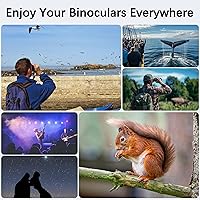
This 15x56 model makes the most sense for buyers who already know they need more reach than a standard binocular provides. Hunters scanning open fields at first light will appreciate the light-gathering ability of the large objective lens. Casual stargazers can get surprisingly satisfying views of the moon and bright star clusters without needing a telescope. Open-country birders who prioritize distant detail over portability will find these high-powered binoculars well-suited to their style of watching. Safari travelers and hikers wanting a single optic that also captures smartphone photos will value the included accessories. Not the right pick for concerts or stadium use.

User Feedback

Buyers who have used the Adasion binos in daylight consistently praise the image sharpness and overall build quality, which feels more solid than the price suggests. Glasses wearers also tend to report comfortable viewing, thanks to the twist-up eyecups. The honest downside: any hand tremor gets amplified noticeably at this magnification level, and several reviewers treat the included tripod as a necessity rather than a bonus. The phone adapter earns mixed marks — it works, but precise alignment takes patience. A small number of buyers have flagged minor quality control inconsistencies between units. Overall sentiment leans positive, with most feeling they received strong value for the category.

Pros

  • BAK4 dielectric-coated optics deliver sharp, detailed images in daylight that outperform most rivals at this price.
  • The large objective lens provides noticeably brighter views at dawn and dusk compared to smaller-aperture alternatives.
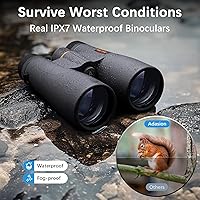
  • IPX7 waterproofing with argon purging holds up reliably in rain and humid field conditions.
  • Adjustable eyecups make these high-powered binoculars genuinely comfortable for glasses wearers without vignetting.
  • The enlarged eyepiece reduces eye fatigue during extended observation sessions on stationary subjects.
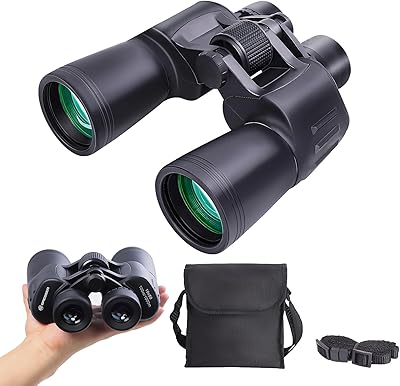
  • Bundle includes a phone adapter, extendable tripod, carry case, and cleaning cloth — a complete starter kit.
  • Rubber-armored exterior feels solid and handles field knocks without obvious damage.
  • Casual stargazers can get impressive lunar and star cluster views without buying a separate telescope.
  • Build quality consistently feels more substantial than the price point would suggest, according to most buyers.
  • Open-country birders get real long-range resolving power that standard 10x models simply cannot match.

Cons

  • Hand shake at maximum magnification makes a tripod effectively mandatory for usable images, not optional.
  • The included tripod is too lightweight for windy conditions or uneven terrain, often requiring an upgrade.
  • Phone adapter alignment is fiddly and time-consuming, especially for first-time users attempting afocal photography.
  • At nearly three pounds, arm and neck fatigue sets in quickly during handheld use over extended periods.
  • Minor quality control inconsistencies between units — loose focus knobs, slight barrel misalignment — have been reported.
  • The carry case is poorly padded and offers insufficient protection for transporting the Adasion binos in a bag or vehicle.
  • Chromatic fringing appears at the edges of the field of view against high-contrast subjects.
  • Tracking fast-moving subjects demands practice due to the focus mechanism speed at this magnification.
  • The physical bulk makes spontaneous one-handed or casual use impractical in everyday carry situations.
  • Deep dusk performance drops off faster than the large aperture alone might lead buyers to expect.

Ratings

The scores below for the Adasion 15x56 Binoculars were generated by our AI engine after processing verified purchase reviews from buyers worldwide, with spam, incentivized, and bot-flagged submissions actively filtered out before analysis. The result is an honest, data-driven snapshot that reflects where these high-powered binoculars genuinely deliver and where real-world use reveals friction. Both the strengths and the recurring pain points are weighted transparently in every category score.
Optical Clarity
83%
Daylight sharpness consistently earns praise from hunters and birders who use these high-powered binoculars in open terrain. The BAK4 dielectric-coated prisms resolve fine detail at distance — feather patterns on distant raptors, for instance — better than most competing models at this price tier.
At the edges of the field of view, some chromatic fringing becomes visible, particularly against high-contrast subjects like bright sky behind dark branches. It is not a dealbreaker, but buyers expecting premium edge-to-edge sharpness will notice it.
Low-Light Performance
77%
23%
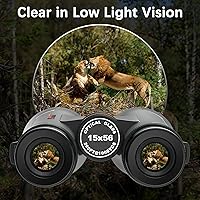
The large 56mm objective lens gathers a meaningful amount of light, making this 15x56 model noticeably more capable than smaller-aperture alternatives during the golden hour. Hunters glassing fields at first and last light report usable, reasonably bright images when comparable 42mm models have already gone dim.
The high magnification amplifies any optical degradation as light fades, so true low-light performance drops off faster than the aperture alone would suggest. Deep dusk or heavily overcast conditions push the limits of what the glass can realistically deliver.
Magnification Usability
61%
39%
For stationary subjects — a perched raptor, a distant mountain ridge, the lunar surface — the 15x reach is genuinely impressive and gives the Adasion binos a clear advantage over standard 8x or 10x models in open-country scenarios.
Hand shake at this magnification level is the single most-mentioned complaint in user feedback. Without a tripod or solid rest, the image wobbles enough to cause fatigue and missed detail quickly. This is physics, not a defect, but buyers must go in with realistic expectations.
Build Quality & Durability
81%
19%
The rubber-armored body feels substantive and well-assembled out of the box, and most users report that it holds up to regular field use including knocks, drops onto soft ground, and extended outdoor exposure. The overall impression is of a product built beyond its price point.
A minority of buyers have flagged inconsistencies between units — loose focus knobs, slightly misaligned barrels, or play in the eyecup mechanism. Quality control appears generally solid but not perfectly uniform, which is worth noting for gift buyers who cannot inspect the unit beforehand.
Waterproofing & Weather Resistance
88%
IPX7-rated waterproofing with argon purging and O-ring seals means these high-powered binoculars can handle genuine rain, humidity, and brief submersion without fogging internally. Field users in coastal environments and rainy climates have reported sustained reliable performance over months of use.
A small number of users in extreme cold reported minor internal fogging over prolonged exposure, suggesting the seals may degrade slightly under sustained temperature stress. For most conditions, though, weather resistance holds up well.
Ergonomics & Handling
64%
36%
The rubber grip texture gives confident purchase even with wet or cold hands, and the overall shape sits reasonably well in larger hands during short observation sessions. The hinge adjusts smoothly to different interpupillary distances.
At close to three pounds, fatigue sets in faster than users expect, especially when handheld at high magnification. Extended safari drives or multi-hour birding sessions without a neck strap or tripod become uncomfortable, and the bulk makes pocket carry or casual one-hand use impractical.
Focus Mechanism
72%
28%
The central focus knob turns smoothly through its range and provides reasonably precise control for static or slow-moving subjects. Birders watching perched or wading species generally find it responsive enough for practical field use.
Tracking fast-moving subjects — flushing birds or running deer — exposes the focus wheel as slightly slow for the magnification level. Users accustomed to faster-focusing binoculars will feel the lag, and it takes deliberate practice to get reliable focus during action moments.
Eye Relief & Comfort for Glasses Wearers
79%
21%
The adjustable eye relief range and twist-up eyecups are a genuine advantage for glasses wearers, who often report no vignetting or clipping when the cups are set correctly. This detail matters more than buyers often realize until they have struggled with a pair that does not accommodate spectacles properly.
The eyecup mechanism on some units has been described as stiff initially, requiring a breaking-in period. A few glasses-wearing users also noted that at the minimum eye relief setting, the field of view is slightly narrower than advertised, requiring some positioning adjustment.
Phone Adapter Usability
58%
42%
The included adapter does allow genuine afocal smartphone photography, and for stationary subjects like the moon or a distant landscape, users have captured shareable images. The 360-degree swivel adds flexibility when aligning a phone to the eyepiece.
Alignment between phone lens and eyepiece is tedious and demands patience, particularly with smaller smartphones. Multiple users describe a trial-and-error process each time they set up, and the resulting photos often require cropping to remove vignetting. It works, but it is not a polished experience.
Tripod Stability
63%
37%
The extendable tripod included in the bundle is a meaningful addition that makes stationary observation — stargazing, long-range wildlife watching — genuinely more comfortable. Having it in the box means buyers do not need to immediately source a separate solution.
The tripod is lightweight by design, which limits stability in wind or on uneven ground. Several reviewers describe it as adequate for calm-night stargazing but insufficient for daytime field use where vibration and ground conditions vary. A sturdier aftermarket tripod is worth considering for serious use.
Value for Money
86%
The combination of BAK4 optics, IPX7 waterproofing, a phone adapter, and a tripod in a single bundle at this price tier is difficult to match from competing brands. Buyers comparing the Adasion binos against similarly priced alternatives consistently rate the overall package as strong value.
The value calculation changes if a buyer needs to immediately supplement the bundle — replacing the basic tripod, buying a better neck strap, or returning a unit with quality control issues. Factor in those potential additions and the price advantage narrows somewhat.
Accessories & Bundle Completeness
74%
26%
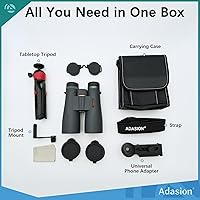
The box contains a functional ecosystem: lens caps, a carry case, cleaning cloth, neck strap, tripod, and phone adapter. For a buyer gifting these to someone new to optics, or setting up a first outdoor kit, the completeness reduces initial friction considerably.
The carry case is described by multiple users as flimsy and poorly padded for protecting optics in a bag or vehicle. The neck strap is functional but basic. These are minor complaints, but buyers who plan to travel with the kit should consider upgrading the case independently.
Setup & Ease of Use
82%
18%
Out of the box, initial setup is straightforward — diopter adjustment and interpupillary width are easy to dial in, and new users without optics experience report getting a usable image quickly. The controls are intuitive and well-positioned.
The phone adapter setup introduces complexity that can frustrate first-time users, particularly older buyers or those unfamiliar with afocal photography. The instructions included are functional but lean toward brief, and some trial-and-error is required before confident use.
Portability & Travel Friendliness
55%
45%
For its optical specification, the size-to-performance ratio is reasonable, and hikers who specifically chose this model for its reach report accepting the bulk as a deliberate trade-off. It fits in a large daypack without dominating the space.
Three pounds is heavy for hiking or travel use compared to compact alternatives, and the physical dimensions make it unwieldy for casual carry. Buyers who prioritize light packing for backpacking or air travel will find this 15x56 model a poor fit for their typical use case.

Suitable for:

The Adasion 15x56 Binoculars are a strong fit for outdoor enthusiasts who need serious reach without committing to a high-end optics budget. Hunters who spend early mornings glassing open fields will benefit most — the large objective lens gathers meaningful light during the low-light windows when game is most active. Open-country birders who prioritize resolving distant detail over carrying a lightweight kit will also find this 15x56 model well-matched to their style of watching. Casual stargazers who want to explore the moon's surface, spot star clusters, or track bright planets without investing in a telescope will get genuinely satisfying views, especially from a stable tripod. Safari travelers and hikers who want one optic that can also capture smartphone photos will appreciate the bundled adapter and tripod. Glasses wearers are well-served by the adjustable eyecup design, which accommodates a wide range of eye relief needs without sacrificing comfort during long sessions. Gift buyers looking for a complete, ready-to-use outdoor optics kit will find the bundle packaging covers most bases right out of the box.
Not suitable for:

Buyers who need a light, packable binocular for backpacking, air travel, or casual concert and stadium use should look elsewhere — the Adasion 15x56 Binoculars are simply too large and heavy for those contexts. Anyone planning to handheld these high-powered binoculars for extended periods without a tripod or solid rest will find the image shake frustrating and tiring; at this magnification level, hand tremor is genuinely problematic, not just a minor annoyance. Fast-action birders who need to track flushing birds or moving flocks through dense cover will find the focus speed and image stability insufficient for that style of watching. Buyers expecting professional-grade edge-to-edge sharpness or the optical consistency of established premium brands will likely be disappointed — minor chromatic fringing and occasional quality control variation are real factors at this price tier. Anyone who needs a dedicated compact or mid-size binocular for everyday carry, travel photography, or urban use will find this 15x56 model oversized and impractical for those scenarios.
Specifications

  • Magnification: These binoculars provide 15x magnification, bringing distant subjects significantly closer than standard 8x or 10x models.
  • Objective Lens: The 56mm objective lens diameter maximizes light intake, supporting brighter images during low-light outdoor conditions.
  • Prism Type: BAK4 dielectric-coated prisms are used internally, improving light transmission and contrast compared to standard BK7 prism glass.
  • Eyepiece Diameter: The 22mm eyepiece is wider than the typical 18–20mm found on competing models, contributing to a broader apparent field of view.
  • Eye Relief: Eye relief is adjustable across a 13–19mm range via twist-up eyecups, accommodating both glasses wearers and bare-eye users.
  • Waterproofing: The unit carries an IPX7 waterproof rating, meaning it can withstand temporary immersion in up to 1 meter of water for 30 minutes.
  • Fog Resistance: Internal argon gas purging combined with O-ring seals prevents internal fogging caused by rapid temperature shifts or high humidity.
  • Exterior Material: The body is wrapped in rubber armor that provides a non-slip grip surface and absorbs minor impact from drops or knocks in the field.
  • Item Weight: The unit weighs 2.99 pounds, which is heavier than compact or mid-size binoculars and should be considered for extended handheld use.
  • Dimensions: Packaged dimensions measure 8.82 x 8.03 x 3.46 inches, reflecting the bulkier physical profile of a large-aperture high-magnification design.
  • Tripod Included: A 2.2-inch extendable tabletop tripod is included in the box, with a metal adapter mount compatible with standard tripod threads.
  • Phone Adapter: A universal smartphone adapter with 360-degree swivel is included, enabling afocal photography through the eyepiece with most modern smartphones.
  • Model Number: The official model number is ADA004, manufactured by Adasion and first listed for sale in September 2024.
  • Focus System: A central focus knob controls both barrels simultaneously, with a separate diopter ring allowing independent right-eye calibration.
  • Exit Pupil: The exit pupil diameter is approximately 3.7mm, calculated from the 56mm objective divided by 15x magnification, which is adequate for daylight use.
  • Field of View: The field of view at 1,000 yards is approximately 236 feet, which is narrower than lower-magnification binoculars due to the high power level.
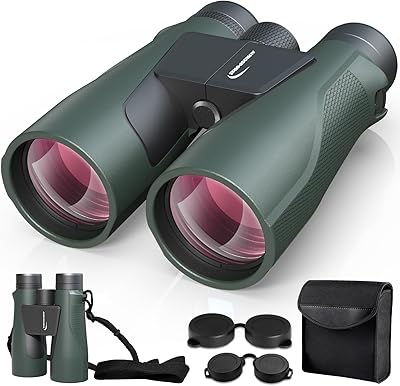
  • Accessories Included: The full package includes lens caps, a padded carry case, a cleaning cloth, a neck strap, the phone adapter, and the extendable tripod.
  • Warranty: Adasion offers a manufacturer warranty on this model; buyers should confirm current warranty terms directly with the seller at time of purchase.

Related Reviews
Aurosports 15x56 Binoculars
77%
83%
Optical Clarity
71%
Low-Light Performance
67%
Magnification Usability
76%
Build Quality
88%
Value for Money
More
Adasion 12x42 Binoculars
80%
86%
Optical Clarity
74%
Low-Light Performance
81%
Build Quality & Durability
88%
Waterproofing & Weather Resistance
91%
Ease of Focus
More
Vortex Optics Diamondback HD 15x56 Binoculars
89%
92%
Optical Performance
89%
Build Quality & Durability
94%
Magnification & Clarity
84%
Comfort & Ergonomics
91%
Weather Resistance (Waterproof, Fogproof, Shockproof)
More
Vortex Optics Vulture HD 15x56 Binoculars
86%
94%
Optical Clarity
92%
Build Quality
90%
Waterproof & Fogproof Performance
88%
Comfort for Glasses Wearers
85%
Magnification and Field of View
More
Gaterda 22x50 Binoculars
84%
88%
Image Clarity
84%
Field of View
82%
Portability
90%
Build Quality
91%
Waterproof & Durability
More
Deesoo 20x52 Binoculars
73%
74%
Optical Clarity
81%
Magnification Performance
69%
Build Quality
62%
Low-Light Capability
53%
Image Stability
More
ZIYOUHU 20x50 Binoculars
74%
74%
Optical Clarity
71%
Light Transmission
63%
Magnification Usability
69%
Build Quality
82%
Waterproofing & Fog Resistance
More
Aurosports 20x70 Binoculars
83%
91%
Magnification & Clarity
85%
Low Light Performance
88%
Build Quality & Durability
78%
Portability & Comfort
84%
Accessories in Box
More
Hontry 8x42 Binoculars
79%
83%
Optical Clarity
91%
Waterproof Performance
88%
Floating Capability
77%
Build Quality
81%
Comfort & Ergonomics
More
Retulgie 12x25 Compact Binoculars
75%
74%
Optical Clarity
58%
Low-Light Performance
63%
Build Quality
91%
Portability & Size
78%
Comfort & Ergonomics
More

FAQ

Technically you can handheld them, but at 15x magnification, any hand tremor gets amplified considerably and makes the image feel unstable. Most users find that a tripod or solid rest is effectively necessary for comfortable, usable viewing, especially over long sessions. The included tabletop tripod works for calm conditions, though a sturdier full-height tripod is a worthwhile upgrade if you plan serious use.

Yes, the adjustable eyecups are specifically designed to accommodate glasses wearers. You twist them down to their lowest position and look through with your glasses on — at the correct setting, most users report a full field of view without vignetting or clipping. The eye relief range is generous enough that glasses wearers are not disadvantaged compared to bare-eye users.

Better than most comparably priced binoculars with smaller objective lenses, but not without limits. The large front glass gathers more light than a 42mm model, giving you usable images a bit longer into the evening. Once the light drops significantly, the high magnification starts to work against you — any optical degradation becomes more visible, so do not expect performance equivalent to a premium low-light optic.

The IPX7 rating is a recognized standard, not a vague marketing description, meaning the unit has been tested to withstand temporary water immersion. Field users in rainy climates and coastal environments have reported sustained reliable performance. That said, prolonged submersion or extremely cold conditions over time may stress the seals, so treat it as field-weather-ready rather than truly dive-proof.

The adapter is designed to be universal and fits most standard smartphones currently on the market. The setup requires some patience — you need to carefully align the phone camera lens with the binocular eyepiece, and the process involves trial and error the first few times. Once aligned, it holds position reasonably well for stationary subjects like the moon or a distant landscape.

The main differences are reach and bulk. You get meaningfully more magnification and more light-gathering capacity, at the cost of added weight, size, and much greater sensitivity to hand shake. A 10x42 is easier to handheld, more portable, and better for fast-moving subjects. This 15x56 model makes more sense if you specifically need long-range detail and are willing to use a tripod regularly.

It is adequate for light storage at home or in a vehicle, but multiple buyers describe the padding as thin and the overall construction as basic. If you are planning to pack these in a bag for hiking, travel, or any situation where they might get jostled, investing in a separate padded hard case or a quality neoprene sleeve is worth considering.

For casual stargazing, these high-powered binoculars perform quite well. The moon is a standout target — you can see craters and surface detail clearly. Bright star clusters like the Pleiades and open clusters in Orion look impressive. Planets will show as small but resolved discs. Deep sky nebulae and faint galaxies are generally too dim for a binocular at this aperture, but for a beginner or casual observer, the views are genuinely rewarding.

Use only the included cleaning cloth or a purpose-made optical microfiber cloth — never paper towels, tissues, or clothing. For dust, a soft brush or air blower should be your first step before any contact. If there is a smudge, breathe lightly on the lens and wipe in gentle circular motions from the center outward. Avoid pressing hard or using household glass cleaners, as these can damage lens coatings.

For open-country birding where birds are typically perched or moving slowly — shorebirds, raptors on a post, waterfowl on a lake — the focus knob is responsive enough. Where it shows limitations is with fast-flushing or fast-flying birds in dense cover. If you regularly do woodland birding or need to track birds in flight, the combination of high magnification and moderately-paced focus will feel slower than dedicated birding binoculars at lower power.