Overview

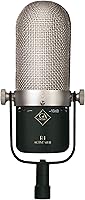
The Golden Age Project R1 Active MKIII Microphone occupies an interesting spot in the ribbon mic world — it carries the warm, rounded character that ribbon lovers chase, but with active electronics that make it far easier to actually use in a real session. Passive ribbons often demand high-gain preamps and careful impedance matching; this active ribbon mic sidesteps most of that friction. It has been on the market since 2012, which says something — products that do not deliver tend to disappear. It ships with a padded case and removable cable, practical touches worth noting. That said, if you need a versatile workhorse for everything, look elsewhere. This is a specialist tool.
Features & Benefits

The heart of this active ribbon mic is its discrete FET amplifier, which lifts the output to a usable level without the coloration a transformer might add. It runs on standard 48V phantom power — no special power supply required — which removes one of the biggest real-world barriers to owning a ribbon. The switchable -10dB pad is genuinely useful when pointing the mic at a loud guitar amp or brass instrument; the ribbon element stays protected and the signal stays clean. A 100Hz low-cut filter helps tame low-end buildup, especially in smaller rooms or close-mic situations. The removable cable is a small but smart design choice that extends the mic's practical lifespan considerably.

Best For

Golden Age Project's ribbon offering was built with a specific type of recordist in mind. Vocalists and voice-over artists who find condensers too bright or clinical will likely appreciate its smooth top end. Home studio owners benefit most — the active circuit means even a modest preamp can drive this mic effectively, no exotic gear required. It works well on brass and string instruments where you want body and warmth rather than sharp transient detail. Podcasters and broadcasters recording speech will find the midrange character flattering. The figure-8 polar pattern captures audio from both front and back, which opens up room-mic possibilities but also means being mindful of what sits behind it during a live session.

User Feedback

The R1 Active MKIII holds a 4.4-star average across 47 ratings — a solid community consensus for a niche product. The most consistent praise centers on tonal character: warm, musical, and noticeably different from the typical condenser sound. Where opinions split is on durability; ribbon elements are inherently more delicate than dynamic capsules, and a handful of buyers have flagged concerns about long-term handling. Output level draws occasional comment too — the active circuit helps, but some users expect even more headroom. Build quality and the included case are generally well-received. The low-cut filter and pad get mixed mentions, useful in the right context but not features every buyer reaches for in daily use.

Pros

  • Active FET circuit means you can drive it with a standard preamp — no specialist gear needed.
  • Warm, natural ribbon tone that flatters vocals and spoken word without heavy post-processing.
  • Standard 48V phantom power compatibility removes a major practical hurdle for most users.
  • The switchable -10dB pad protects the ribbon and keeps signals clean on louder sources.
  • Removable cable design reduces wear points and makes the mic easier to maintain long-term.
  • Padded carrying case included — practical protection that extends the mic's usable life.
  • Ranked in the top 10 ribbon microphones on Amazon, reflecting consistent buyer satisfaction.
  • 100Hz low-cut filter helps control proximity effect and room rumble in real recording scenarios.
  • Has maintained market presence since 2012, a quiet indicator of reliable, repeatable performance.
  • 4.4-star average across dozens of verified buyers reflects steady, dependable community approval.

Cons

  • Ribbon elements are inherently more fragile than dynamic capsules and demand careful handling.
  • The figure-8 pattern captures audio from both sides, making room treatment and placement critical.
  • Some buyers report output level still falls short of their expectations, even with active electronics.
  • Not a versatile all-rounder — it is a tonal specialist that rewards deliberate, considered use.
  • Relatively heavy at 3.24 pounds, which can stress lighter mic stands or boom arms over time.
  • The low-cut filter and pad are not universally praised — some users find limited need for them.
  • Buyers unfamiliar with figure-8 mics may face a learning curve before getting consistent results.
  • Long-term durability of the ribbon element under regular live-use conditions remains a buyer concern.

Ratings

The scores below reflect an AI-driven analysis of verified buyer reviews for the Golden Age Project R1 Active MKIII Microphone, sourced globally and filtered to remove spam, bot activity, and incentivized feedback. Each category is scored independently, balancing genuine praise against real frustrations that surfaced repeatedly across the review pool. Both the strengths that keep buyers recommending this active ribbon mic and the friction points that cause hesitation are transparently represented.

Tonal Character
93%
The warm, mellow sound signature is the single most praised quality across the review pool. Buyers recording vocals, voice-over work, and brass instruments consistently describe the top end as smooth and musical without ever feeling dull or lifeless. It is the core reason most people choose this over a condenser in the first place.
A minority of buyers who primarily record acoustic guitar or detailed percussion find the warmth tips slightly too far into softness for their taste. Those who need hyper-accurate, analytical reproduction of transients tend to feel the character works against them rather than for them.
Preamp Compatibility
88%
The active FET circuit is a genuine differentiator — buyers report successfully driving the R1 Active MKIII from entry-level audio interfaces without needing dedicated high-gain preamps. Home studio owners with modest signal chains appreciate that this ribbon fits into their existing setup without forcing an equipment upgrade.
Some buyers still find the output level tighter than expected when compared to condenser mics at similar gain settings. A handful of reviewers with particularly low-gain interfaces noted they were pushing their preamps closer to maximum than felt comfortable.
Build Quality
76%
24%
The physical construction feels solid for the category, with a reassuring heft that makes it feel like a serious piece of studio equipment rather than a budget compromise. The removable cable connection is a thoughtful detail that buyers note adds meaningful longevity to the overall package.
Several buyers raised concerns about long-term ribbon element durability under regular handling, particularly for those who transport it frequently to sessions. The build inspires reasonable confidence for studio-based use but leaves some uncertainty among users who need a road-ready workhorse.
Phantom Power Integration
91%
Running cleanly on standard 48V phantom power is a practical win that buyers mention repeatedly as a key reason they chose this active ribbon mic over passive alternatives. It slots into any standard recording rig without adapter boxes, external supplies, or compatibility anxiety — a meaningful real-world convenience.
There is very little negative feedback specific to phantom power operation, though a small number of buyers accustomed to passive ribbon behavior expressed initial confusion about why phantom power was required at all, which speaks more to user expectation than any design flaw.
Noise Floor
82%
18%
The discrete Bipolar/FET amplifier circuit keeps self-noise at a level that buyers find acceptable for vocal recording, speech, and most instrument tracking applications. Users recording voice-over in treated home booths report clean, quiet results with no noticeable hiss intruding on quiet passages.
Buyers attempting to capture very quiet acoustic sources — delicate fingerpicking, whispered narration, or ambient room recordings — note that the noise floor becomes perceptible at the highest preamp gain settings. It is not a clinical studio problem, but it is real for specific use cases.
Figure-8 Pattern Usability
79%
21%
Experienced recordists praise the figure-8 polar pattern for its natural room ambience pickup and its versatility in interview, mid-side, and stereo recording configurations. The even front-to-back response is noticeably consistent, which buyers appreciate when using it as a secondary room or ambience mic.
Less experienced buyers consistently underestimate the implications of bidirectional pickup until they hear unwanted reflections or background noise bleed in from behind the mic. The learning curve around proper placement is real, and a few reviews reflect frustration from users who did not anticipate this behavior.
Switchable -10dB Pad
72%
28%
For buyers who use this active ribbon mic in front of loud guitar amplifiers or brass instruments at close range, the pad delivers meaningful headroom and prevents signal clipping at the preamp input. Those who regularly work with high-SPL sources consider it a thoughtful inclusion.
A notable segment of buyers recording primarily vocals, speech, or acoustic instruments rarely engage the pad at all, considering it a non-factor for their workflow. The mixed utility across different use cases reflects in lukewarm feedback — valued by some, ignored by many.
100Hz Low-Cut Filter
69%
31%
Buyers recording in untreated rooms or dealing with HVAC rumble find the low-cut filter a useful quick fix that saves time in post-production. Close-mic vocal sessions where proximity effect builds up low-end weight also benefit noticeably from engaging the filter.
Buyer opinion on this feature is among the most divided in the review set. Many users report never activating it, either because their recording environment does not require it or because they prefer managing low-frequency content in their DAW rather than at the source. Its execution is functional but unremarkable.
Output Level
67%
33%
Relative to passive ribbon microphones, the active circuit provides a meaningful output level improvement that makes the R1 Active MKIII accessible to a much wider range of recording setups. Buyers comparing it directly against passive ribbon options in the category consistently note the difference as genuinely useful.
Measured against condenser microphones — the most common point of comparison for buyers new to ribbons — the output level still trails, and several reviewers express surprise or mild disappointment. Expectations set by condenser ownership can make the output feel underwhelming on first use.
Included Accessories
81%
19%
The padded carrying case receives consistent positive mentions — buyers appreciate having proper protection included rather than being forced to source a case separately. The removable cable is seen as a practical inclusion that distinguishes this package from competitors that bundle less thoughtfully.
A few buyers felt the included cable was average in quality and swapped it out for a higher-grade alternative. The case does the job well for storage and home studio movement but is not rugged enough to inspire confidence in buyers who regularly transport gear to external sessions.
Vocal Performance
89%
Voice-over artists and singers who have specifically purchased this active ribbon mic for vocal work are among the most consistently satisfied buyers in the review set. The combination of smooth high-frequency roll-off and midrange warmth produces recordings that require less corrective EQ work than many condenser alternatives.
Buyers with naturally warm or darker vocal tones occasionally find that the mic's inherent character doubles down on warmth in a way that requires compensatory brightening in the mix. It is a tonal pairing issue rather than a flaw, but it surfaces as a frustration for a small group of reviewers.
Ribbon Durability
61%
39%
For studio-based users who handle the mic carefully and store it in the included case, long-term durability feedback is largely positive. Buyers who have owned the R1 Active MKIII for multiple years without incident attribute that to simply understanding how ribbon mics behave and treating the element with appropriate care.
Ribbon fragility is the most frequently cited concern in negative and mixed reviews. Buyers who accidentally dropped the mic, exposed it to sudden loud transients at close range, or transported it without adequate protection reported ribbon damage. The category carries inherent fragility risk, and this mic is not immune to it.
Value Proposition
83%
Buyers who specifically wanted ribbon tone without investing in a passive ribbon plus a high-end preamp consider the overall package a smart use of their budget. The combination of active electronics, practical controls, and included accessories positions Golden Age Project's ribbon offering well within its market tier.
Buyers who compare this mic purely on output specifications against condenser options at similar price points sometimes feel the trade-offs are not worth it for their needs. The value proposition is strongest for those who specifically need what a ribbon delivers — it weakens for undecided buyers who are not yet committed to the ribbon sound.
Long-Term Market Trust
86%
A product that has remained in continuous production since 2012 without being discontinued carries implicit credibility in a category where many options come and go. Buyers note that Golden Age Project's sustained presence in the ribbon mic space lends confidence to a purchase decision that might otherwise feel risky for a less established brand.
With only 47 verified ratings across over a decade of availability, the review volume is thin relative to how long the mic has been on the market. This limits statistical confidence in the overall score and means outlier experiences — both positive and negative — carry disproportionate weight in the aggregate rating.

Suitable for:

The Golden Age Project R1 Active MKIII Microphone is a strong match for anyone who wants genuine ribbon tone without building their entire signal chain around it. Home studio owners running modest preamps will find it accessible in a way that passive ribbons simply are not — the active circuit does the heavy lifting. Voice-over artists and podcasters who record speech daily will appreciate the natural midrange and smooth top end that makes vocal recordings feel effortless to listen to. It also earns its place in front of instruments like brass, strings, or electric guitar cabinets, where a condenser might capture too much edge and harshness. Live sound engineers who work in phantom-powered environments can use this active ribbon mic with confidence, knowing the circuit is designed to handle that setup safely. If your priority is character and warmth over clinical accuracy, this mic consistently delivers.

Not suitable for:

The Golden Age Project R1 Active MKIII Microphone is not the right call for buyers expecting a do-everything microphone for varied recording situations. The figure-8 polar pattern picks up sound from both front and back, which means untreated rooms, noisy environments, or busy live stages can cause real problems unless you are deliberate about placement. Ribbon elements, even in well-built active designs, require more careful handling than a dynamic or condenser — dropping it or blasting it with a sudden loud transient at close range is a real risk worth understanding before you buy. If you need high output levels for very quiet sources like acoustic fingerpicking in a live context, you may still find the gain requirements tighter than expected. Buyers who primarily need a versatile workhorse for tracking a wide variety of sources in unpredictable environments would be better served by a more forgiving condenser or dynamic option.

Specifications

  • Microphone Type: Active ribbon microphone using a classic bidirectional ribbon transducer design combined with an onboard active amplifier stage.
  • Polar Pattern: Bidirectional (figure-8), capturing sound equally from the front and rear of the microphone while rejecting audio from the sides.
  • Electronics: Discrete Bipolar/FET low-noise amplifier circuit providing signal gain and isolation without the coloration of a traditional transformer output stage.
  • Output Type: Transformerless, low-impedance balanced output designed for compatibility with standard microphone preamp inputs.
  • Power Requirement: Requires standard 48V phantom power supplied by a preamp, audio interface, or mixing console.
  • Pad Switch: Switchable -10dB pad reduces the output signal level to prevent clipping when recording loud sources such as brass instruments or guitar amplifiers.
  • High-pass Filter: Switchable 100Hz low-cut filter attenuates low-frequency content to reduce proximity effect, handling noise, and room rumble.
  • Cable Design: Features a removable, detachable microphone cable rather than a hardwired connection, improving long-term serviceability and flexibility.
  • Included Accessories: Ships with a padded protective carrying case and a removable microphone cable as standard accessories.
  • Dimensions: Physical dimensions measure 14.69 x 8.31 x 5.59 inches including packaging.
  • Weight: The microphone weighs 3.24 pounds, which is notable for stand and boom arm compatibility planning.
  • Model Number: Official model designation is R1ACTIVEMK3, corresponding to the third-generation active variant in the R1 product line.
  • Manufacturer: Designed and produced by Golden Age Project, a Swedish brand focused on studio-grade audio equipment with vintage-inspired character.
  • Market Availability: First made available in July 2012 and has remained in continuous production without discontinuation since that date.
  • Category Ranking: Holds a ranking of approximately #8 in the Ribbon Microphones category on Amazon at the time of evaluation.
  • User Rating: Carries a 4.4 out of 5 star average rating based on 47 verified buyer ratings on Amazon.

Related Reviews
Golden Age Project R1 MKII Ribbon Microphone
72%
84%
Tonal Character
78%
Build Quality
52%
Preamp Compatibility
81%
Value for Money
83%
Polar Pattern Versatility
More
Studio Projects C1 Large-Diaphragm Condenser Microphone

80%
91%
Sound Quality
89%
Capsule Performance
88%
Build Quality
86%
Value for Money
47%
Accessories Included
More
Onekind Golden State Anti-Aging Face Oil, 1oz

87%
92%
Hydration Effectiveness
88%
Anti-Aging Benefits
91%
Skin Sensitivity Compatibility
85%
Texture & Feel
79%
Absorption Speed
More
Project E Beauty Hyaluronic Acid Activating Serum 50ml
88%
92%
Effectiveness for Hydration
85%
Anti-Aging Performance
90%
Skin Sensitivity & Tolerance
87%
Texture and Absorption
89%
Non-Greasy Finish
More
Studio Projects C4 Small-diaphragm Condenser Microphone Pair
76%
83%
Sound Quality
81%
Stereo Matching
74%
Capsule System
78%
Build Quality
79%
Value for Money
More
H&B Multi-Active Night Cream Anti-Aging Face Moisturizer 50mL
84%
88%
Effectiveness in Reducing Fine Lines
93%
Hydration Performance
70%
Skin Sensitivity Compatibility
91%
Absorption Speed
85%
Texture and Feel
More
Aston Microphones Stealth Condenser Microphone
79%
88%
Sound Quality
84%
Voice Mode Versatility
86%
Built-in Preamp
91%
Build Quality
83%
Value for Money
More
Blue Blueberry Cardioid Condenser Microphone
79%
93%
Tonal Character
91%
Vocal Performance
89%
Build Quality
94%
Capsule Quality
71%
Preamp Compatibility
More
AMT M40 Piano Condenser Microphone
76%
88%
Sound Quality
91%
Ease of Setup
84%
Build Quality
67%
Value for Money
86%
Live Performance Reliability
More
Neat Microphones Skyline USB Desktop Condenser Microphone
89%
94%
Audio Quality
91%
Ease of Use
89%
Build Quality
90%
Mute Button Functionality
92%
Value for Money
More

FAQ

A standard audio interface is generally fine. The active circuit inside the R1 Active MKIII significantly boosts the output compared to a passive ribbon, so you will not need the kind of ultra-high-gain preamps that passive ribbons often demand. Most decent home studio interfaces will drive it without issue.

Yes, and that is actually one of the key practical advantages of this active ribbon mic. The onboard active circuit is specifically designed to run on 48V phantom power, so unlike some passive ribbons, there is no risk of damage from standard phantom power connections. Just make sure your cable is properly connected before engaging phantom power, as a general best practice.

It means the microphone picks up sound from both the front and the back, while rejecting sound coming in from the sides. In practice, this is great for capturing a natural sense of room ambience or for interview-style setups where two people face each other across a single mic. The trade-off is that you need to be aware of what is behind the mic, since it will pick that up too.

Ribbon elements do require more care than a dynamic mic capsule — that is just the nature of the technology. You should avoid dropping it, blasting it with a sudden gust of air at close range, or storing it pointing downward for extended periods. That said, the Golden Age Project R1 Active MKIII Microphone is not unusually delicate for the category, and the included padded case helps with safe transport and storage. Treat it with reasonable care and it holds up well for regular studio use.

Yes, noticeably so. Without the pad, a very loud amp placed close to the mic can push the signal into clipping territory at the preamp input. Engaging the pad brings the level down enough to keep the signal clean and give you proper headroom to work with. Most users recording loud sources at close range will want to reach for it.

It is most useful in a few specific situations: when you have placed the mic very close to a source and are getting excessive proximity-effect bass buildup, when recording in a room with low-frequency rumble from HVAC or traffic, or when the source itself simply has more low end than you need. For most vocal and speech recording, engaging it gives a cleaner, more focused sound without losing warmth in the important midrange frequencies.

It is genuinely usable in live sound situations, which is not something you can say about every ribbon mic. The active circuit and phantom power compatibility make it more practical on stage than a passive ribbon would be. That said, live environments carry more physical risk — accidental knocks, vibration, and unpredictable placement challenges — so you need to be deliberate about how you use and position it.

Brass instruments benefit significantly from the smooth top-end character, reducing the harshness that condensers can sometimes emphasize. String instruments, acoustic guitar recorded with some room, and electric guitar amplifiers are all well-suited applications. It also works nicely as a room mic or mid-side recording partner, given its figure-8 pattern.

A removable cable is a practical long-term advantage. Cables take wear and tear over time, and on a hardwired mic, a damaged cable can mean the entire unit needs repair. With a detachable design, you simply replace the cable if it develops a fault. It also gives you some flexibility in choosing cable length for different setups.

The R1 Active MKIII sits in a competitive space, but it distinguishes itself through the active electronics and the practical feature set — the pad, the filter, the removable cable — rather than relying purely on tone alone. Buyers who have tried passive ribbons in a similar price range often find this one significantly more practical to integrate into an existing setup without additional investment in specialized preamps.

Where to Buy