Overview

The Deity Connect Dual-Channel Wireless Lavalier Microphone entered the market in May 2020, carving out a niche among indie filmmakers and run-and-gun videographers who wanted pro-level wireless audio without the headaches of a traditional UHF rig. The defining pitch is straightforward: one receiver, two transmitters, giving you simultaneous dual-mic coverage straight out of the box. The 2.4GHz band also removes broadcast licensing concerns and makes frequency coordination far less painful. The Deity Connect system currently holds a 4.4-star average, which is encouraging — though with a limited number of ratings, a few polarized opinions can shift that number more than they should.
Features & Benefits

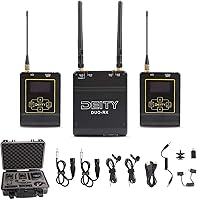
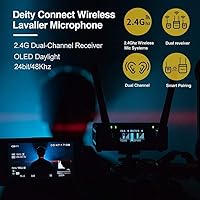
What makes the Deity Connect system worth a closer look starts with its dual true diversity design. Each channel uses two antennas simultaneously and picks whichever delivers the cleaner signal — so your audio stays solid even if a subject moves behind a wall or turns away from the receiver. Transmission is 24-bit uncompressed at 48kHz, clean enough to survive heavy post-production without artifacts creeping in. The OLED display reads clearly in direct sunlight, and the receiver attaches to a camera cage or cold shoe via standard tapped mounting holes. Each transmitter runs a full ten hours on a charge and tops back up in under an hour.

Best For

The Deity Connect wireless mic works especially well in situations where you need two independent audio feeds running simultaneously. Solo videographers doing sit-down interviews can mic both themselves and their subject without a mixer or a second rented system. Event and wedding videographers will appreciate the compact transmitters, which tuck neatly under clothing for hours without needing attention. Podcasters and online educators who shoot in varied locations also get dependable audio pickup without the cable management headaches. And if you have been using a basic consumer wireless kit and are ready for proper features — input gain, analog limiter, balanced XLR output — this dual-channel wireless lav kit offers a credible step up without requiring a broadcast-tier investment.

User Feedback

Early buyers of this dual-channel wireless lav kit generally praise the audio clarity and how consistent the signal holds up in typical indoor environments like offices and meeting rooms. Outdoor performance gets positive marks too, though a handful of users report some signal degradation in venues packed with competing 2.4GHz devices — worth keeping in mind if you work frequently at busy events. The metal build earns consistent approval; it does not feel like something that will crack in a gear bag. On the downside, some buyers find the OLED menu system has a noticeable learning curve, and a few note that the included accessories feel sparse compared to what rival kits bundle at a similar price. As noted, the review base is small, so treat current scores as early signal rather than settled consensus.

Pros

  • Dual-channel coverage from a single receiver lets you mic two subjects simultaneously without extra hardware.
  • The 2.4GHz band requires no broadcast license and pairs faster than traditional UHF systems.
  • True diversity design on each channel keeps audio stable even when subjects move or block line of sight.
  • Uncompressed 24-bit / 48kHz audio holds up cleanly through even demanding post-production workflows.
  • The OLED display is genuinely readable outdoors, removing guesswork around signal strength and battery levels.
  • Ten hours of transmitter battery life easily covers a full wedding, event, or corporate shoot day.
  • Metal construction gives this dual-channel wireless lav kit a durability that plastic wireless systems cannot match.
  • XLR and 3.5mm output options make it compatible with most DSLR and mirrorless camera setups without adapters.
  • Recharge time under an hour means a short break between shoots can top the transmitters back up fully.
  • Tapped mounting holes and a detachable Velcro strap allow flexible receiver attachment to cages, cold shoes, or bags.

Cons

  • Signal stability can degrade noticeably in crowded 2.4GHz environments like convention halls or busy event venues.
  • The OLED menu system has a real learning curve that can slow down new users on an active set.
  • Included accessories feel minimal — buyers report the bundle lacks a proper carry case and adequate wind protection.
  • With fewer than ten ratings at time of writing, there is not enough user data to assess long-term reliability.
  • Single-mic users gain nothing from the dual-transmitter design and end up paying for unused capacity.
  • Button ergonomics on the transmitters have drawn criticism for being fiddly, especially when worn under clothing.
  • The 2.4GHz band offers a shorter effective range than UHF alternatives, limiting use across large open spaces.
  • No built-in timecode support means extra steps for multi-camera productions requiring frame-accurate audio sync.

Ratings

Our scores for the Deity Connect Dual-Channel Wireless Lavalier Microphone were generated by AI after systematically analyzing verified buyer reviews from global markets, with spam, bot-submitted, and incentivized feedback actively filtered out before any scoring was applied. Each category reflects both the genuine strengths that keep buyers recommending this dual-channel wireless lav kit and the real-world frustrations that temper enthusiasm — nothing has been smoothed over. The result is a transparent, balanced picture of where this system earns its marks and where buyers should manage expectations carefully.

Audio Quality
88%
Users consistently praise the clarity and warmth of recordings made with this system, particularly in sit-down interviews and controlled indoor environments. The 24-bit uncompressed transmission means what you capture is what you hear in post — no compression artifacts muddying dialogue or creating headaches during audio editing.
A small number of buyers noted that in very noisy outdoor locations, handling noise from the body-worn transmitter can bleed into recordings if the clip is not secured firmly. The lav capsule itself, while capable, may not fully satisfy users accustomed to high-end broadcast lavalier microphones.
Signal Stability
76%
24%
In typical indoor environments — offices, living rooms, small event spaces — the dual true diversity design holds the connection impressively steady, even when subjects turn away or move around a moderate-sized room. Most buyers report clean, uninterrupted audio across standard shooting scenarios.
The 2.4GHz band is increasingly congested in dense urban environments and busy venues packed with Wi-Fi networks, and this system is not immune to that interference. Several users flagged occasional dropouts when shooting at crowded events where dozens of wireless networks competed for the same frequency space.
Dual-Channel Performance
89%
Running two independent microphones through a single receiver without any additional hardware is the defining strength of this system, and buyers consistently report that it performs exactly as advertised in interview and event contexts. Each channel maintains its own independent gain settings, which adds useful flexibility during two-person recording.
A subset of users noted that managing two active channels simultaneously takes more attention during fast-moving shoots, particularly when input levels need individual adjusting mid-session. For operators used to simpler single-channel systems, the added workflow demands a brief adjustment period before it becomes second nature.
Ease of Use
67%
33%
Initial pairing between the transmitters and receiver is generally quick and straightforward — most users report being connected and ready to record within a few minutes of unboxing. The automatic input-matching feature also removes one setup variable when connecting to different cameras.
The OLED menu system requires navigating multiple layers to access settings like input gain or recording mode, which newer users find disorienting on active sets. Button ergonomics on the transmitters compound the issue — making on-the-fly adjustments during a live shoot is harder than it should be.
Value for Money
78%
22%
For creators who specifically need dual-channel wireless audio, the value proposition is hard to argue with — two transmitters, true diversity on each channel, and uncompressed 24-bit audio in a single purchase is competitive for the price tier. Most buyers who use both transmitters regularly report the kit pays for itself quickly relative to building a similar rig piece by piece.
Buyers who only need a single lavalier microphone will find the pricing harder to justify, since they are paying for a second transmitter they may rarely use. The thin accessory bundle — no dedicated carry case, minimal wind protection — also means additional spending to arrive at a complete, field-ready setup.
Build Quality
84%
The all-metal housing on both the transmitters and receiver stands out among kits at this price tier, where plastic shells are the norm. Buyers who have knocked gear around in bags or on-location shoots report the system holds up without creaks, loose panels, or premature wear.
While the metal construction is a genuine positive, some buyers found the overall form factor of the receiver slightly bulky compared to newer ultra-compact wireless systems entering the market. Button feedback on the transmitters has also drawn occasional criticism for feeling imprecise under pressure.
Battery Life
91%
Ten hours of runtime per transmitter is more than enough for a full wedding, corporate event, or documentary shoot day without reaching for a charger mid-session. Buyers who work long shoots consistently highlight battery life as one of the standout practical strengths of this system.
There is no way to hot-swap batteries in the field since the transmitters use built-in lithium-ion cells rather than replaceable AA or AAA batteries. If you drain them completely during an unusually long shoot day, you are waiting for a USB charge rather than swapping in fresh cells.
Range Performance
63%
37%
In line-of-sight or open-plan indoor conditions, the system maintains a reliable connection across distances comfortable for most standard interview and documentary setups. For controlled environments — small studios, conference rooms, intimate event spaces — the range is more than adequate.
Buyers working in large open venues or buildings with dense Wi-Fi coverage have reported meaningful signal degradation, with some describing dropouts that required repositioning the receiver significantly closer to the transmitter. The 2.4GHz band's inherent limitations become very apparent in environments not designed with wireless audio in mind.
Display & Interface
72%
28%
The OLED screen is a practical win on outdoor shoots where cheaper LCD displays wash out completely in bright sunlight. Being able to read signal strength and battery levels at a glance without shading the receiver with your hand is a small but meaningful improvement over competing systems.
Despite the screen's readability, the menu system behind it has drawn consistent criticism for being unintuitive to navigate without consulting the manual. New users frequently report spending more time than expected working through menus to find basic settings — a friction point that veterans of simpler wireless systems feel especially acutely.
Connectivity
86%
Offering both XLR and 3.5mm outputs from a single receiver means this kit works directly with the vast majority of DSLR cameras, mirrorless bodies, field recorders, and laptops without requiring additional adapters. That flexibility alone saves money and reduces cable-related frustration on location.
While the connectivity options cover most shooting scenarios, buyers using older camcorders or less common audio interfaces may still encounter compatibility gaps that require third-party adapters. There is also no built-in headphone monitoring output on the receiver, which limits real-time audio checking without a separate monitoring device.
Mounting & Portability
83%
The receiver's combination of tapped mounting holes and a detachable Velcro strap gives shooters real flexibility — it sits cleanly on a camera cage, cold shoe, or sound bag strap without looking improvised. The compact transmitter size also makes concealing mics under clothing relatively straightforward.
The receiver, while reasonably sized, is not as ultracompact as some newer 2.4GHz competitors, which can feel like a bulk trade-off on minimal rigs or gimbal setups where every gram matters. A dedicated carrying case or pouch for the full kit is not included, leaving buyers to source their own storage solution.
Accessories & Packaging
57%
43%
The kit does arrive with the core components needed to start recording immediately — transmitters, receiver, and the necessary output cables are all present. For buyers who just need to get up and running without extras, the basics are covered straight out of the box.
Buyers coming from competing kits at a similar price point are frequently disappointed by the absence of a dedicated carry case, quality windshields for the lav capsules, or spare clothing clips. Several user reviews specifically call out the included accessories as the weakest aspect of the overall package.
Recharge Speed
92%
Charging both transmitters from flat to full in under an hour makes a real difference in the field — a lunch break or a gap between shooting locations is all it takes to restore full runtime. Very few wireless systems at this price tier match that turnaround speed.
Since charging is done via USB rather than through a dedicated multi-unit dock, users with both transmitters depleted simultaneously need to charge them sequentially if only one cable and power source is available. A purpose-built charging dock would make fleet management significantly more practical for busy production schedules.
Encryption & Security
85%
The encrypted wireless transmission is a practical assurance for documentary filmmakers, journalists, and corporate video producers who record sensitive conversations. Knowing the audio signal is not broadcast openly removes a real security concern that unencrypted 2.4GHz systems leave unaddressed.
Encryption is standard for professional-grade wireless audio, and while this system delivers it, the specific protocol used is not prominently documented in accessible product materials. Security-conscious buyers may want to contact Deity directly to confirm the implementation before relying on this kit for highly sensitive recordings.
Compatibility
81%
19%
The combination of 3.5mm and XLR outputs covers a wide range of recording devices — from entry-level DSLRs and mirrorless cameras to dedicated field recorders and laptops. Most buyers find the system connects to their existing gear without sourcing additional adapters.
Users with devices that accept only USB audio input or rely on proprietary connector formats may hit compatibility walls without third-party adapters. The MIC/line-in auto-matching feature, while convenient, has been reported by some users to occasionally select the wrong input level when connected to atypical devices.

Suitable for:

The Deity Connect Dual-Channel Wireless Lavalier Microphone is built for indie filmmakers, documentary shooters, and content creators who regularly need two microphones running at the same time without dragging a mixer into the field. If you are a solo videographer covering interviews, a wedding or event shooter who needs to mic multiple subjects discreetly, or a podcaster who records outside a fixed studio, this dual-channel setup removes a lot of logistical friction. DSLR and mirrorless camera operators will find the XLR and 3.5mm output options cover most rigs without additional adapters. The compact, body-worn transmitters are small enough to clip under a jacket or tuck into a collar — a genuine advantage when on-screen appearance matters. Online educators and corporate video producers who move between locations frequently will also get strong mileage here, particularly given the ten-hour battery life that comfortably outlasts most shooting days.
Not suitable for:

The Deity Connect Dual-Channel Wireless Lavalier Microphone will frustrate buyers who need to operate in dense radio frequency environments, such as large concert venues or convention halls packed with competing 2.4GHz networks — the system can experience signal dropouts under those conditions. If you only need a single lavalier and have no use for dual-channel coverage, you are effectively paying for hardware that will sit idle. Broadcast journalists and professional audio engineers who require true UHF range, multi-channel scalability, or rack-mounted receiver setups should look elsewhere; this kit is simply not built for that tier. Buyers expecting a comprehensive accessory bundle — a quality carry case, spare clips, or proper wind protection — may also feel shortchanged compared to similarly priced alternatives. Finally, if multi-mode switching and menu navigation sound like a setup burden rather than a useful feature, this is not the most straightforward plug-and-play option on the market.

Specifications

  • Wireless Band: The system operates on the 2.4GHz frequency band, requiring no broadcast license and eliminating the frequency-coordination overhead associated with traditional UHF systems.
  • Audio Resolution: Audio is transmitted at 24-bit / 48kHz uncompressed, exceeding standard CD resolution and preserving the full signal integrity needed for demanding post-production workflows.
  • Channels: The receiver supports two independent channels simultaneously, allowing both transmitters to operate and be monitored through a single unit at the same time.
  • Transmitters: The kit includes two body-worn BP-TX transmitters, each designed to clip discreetly onto clothing or be concealed beneath an outfit during recording.
  • Battery Life: Each transmitter delivers up to 10 hours of runtime at 100mW output from its built-in rechargeable lithium-ion battery.
  • Recharge Time: The transmitter batteries recharge via USB in under one hour, making it practical to top up during short breaks between setups.
  • Display: The receiver features an OLED screen that remains legible in direct daylight, showing battery level, signal strength, and active function icons.
  • Connectivity: The receiver outputs audio via a 3.5mm jack and XLR connection, with USB provided for battery charging and firmware updates.
  • Mounting: The DUO-RX receiver includes 3/8-inch and 1/4-inch tapped mounting holes plus a detachable Velcro strap for attachment to a camera cage or cold shoe.
  • Mic Form Factor: Both transmitters use a lavalier microphone design intended for body-worn placement, positioned close to the speaker for clean and direct vocal pickup.
  • Recording Modes: The system supports RECORD, DSLR, and HOP application modes — with an optional automatic detection mode — along with mono and stereo dual-channel recording options.
  • Polar Pattern: The microphone capsule features a bidirectional polar pattern as specified in the manufacturer's product documentation.
  • Signal Design: Each channel employs dual true diversity technology, using two antennas per channel to continuously select the stronger signal path in real time.
  • Encryption: Audio transmission is encrypted, preventing unauthorized interception of the wireless signal during recording sessions.
  • Housing Material: Both the transmitters and receiver are housed in metal construction, offering greater durability than plastic-bodied wireless systems for field and event use.
  • Power Source: Both transmitters run on built-in rechargeable lithium-ion batteries that are included in the kit and charged via USB.

Related Reviews

Saramonic Blink500 Pro B3 Wireless Lavalier Microphone
69%
83%
Ease of Setup
67%
Audio Quality
41%
Device Compatibility
44%
App Compatibility
81%
Battery Life
More
RØDE Wireless GO II
RØDE Wireless GO II
84%
92%
Audio Clarity
86%
Signal Reliability
97%
Internal Backup Recording
94%
Portability & Weight
91%
Setup Speed & Ease of Use
More
Comica Vimo Q 4-Channel Wireless Lavalier Microphone System
84%
92%
Sound Quality
89%
Ease of Setup
85%
Battery Life
80%
Range and Performance
75%
Portability
More
VEZQUA USB-C Wireless Lavalier Microphone
75%
93%
Ease of Setup
81%
Audio Clarity
74%
Noise Cancellation
72%
Battery Life
83%
Wireless Stability
More
iyes.top YE0-002 Wireless Lavalier Microphone
75%
91%
Ease of Setup
74%
Audio Clarity
68%
Wireless Range
59%
Build Quality
83%
Battery Life
More
Lincisoonic A6 Wireless Lavalier Microphone
86%
91%
Wireless Range
89%
Battery Life
94%
Ease of Setup
87%
Sound Quality
90%
Noise Cancellation
More
Audio-Technica AT831CW
85%
92%
Vocal Clarity
96%
Feedback Rejection
88%
Acoustic Instrument Miking
94%
Connector Reliability
89%
Form Factor & Concealment
More
Godox Magic XT1
Godox Magic XT1
86%
89%
Audio Fidelity
92%
User Interface
91%
Battery Endurance
94%
Form Factor
88%
Safety Features
More
GODOX WES2 Kit2 Wireless Lavalier Microphone
87%
89%
Sound Quality
92%
Ease of Use
94%
Transmission Range
85%
Noise Cancellation
70%
Battery Life
More
DJI Mic Dual-Channel Wireless Recorder
83%
92%
Battery Life
89%
Sound Quality
88%
Range/Connectivity
91%
Portability
85%
Ease of Use
More

FAQ

No — the kit ships with one receiver and two transmitters, along with the cables needed to connect to your camera or recorder. You should be ready to run both microphones simultaneously straight out of the box without any additional accessories required.

Most DSLR and mirrorless cameras are compatible. The receiver outputs via a standard 3.5mm jack for cameras with a mic input, or via XLR for cameras or external recorders that support balanced audio. Before you buy, just confirm which input your specific camera body uses so you are connecting through the right port from day one.

Range on 2.4GHz wireless systems is highly dependent on the environment. In open, interference-free conditions you can work at comfortable distances, but performance can degrade noticeably in spaces crowded with competing 2.4GHz traffic — active Wi-Fi networks, smartphones, and other wireless gear all share the same band. In busy event venues, keeping transmitters and receiver in closer proximity is the safer approach for any critical recording.

Yes, you can power on only one transmitter and leave the second switched off. The dual-channel design does not require both transmitters to be active simultaneously, so single-mic setups are perfectly supported.

There is a real learning curve involved. The OLED menu gives access to settings like input gain, recording mode, and low-cut filter, which is genuinely useful but takes some time to navigate with confidence. Some users also find the physical buttons on the transmitters a little fiddly, particularly when a unit is clipped under clothing. Running through the menus in a low-stakes environment before a critical shoot is strongly advisable.

Yes, the system uses encrypted audio transmission, meaning the signal is not broadcast openly for anyone nearby to pick up. That is a meaningful reassurance if you are recording sensitive interviews, legal depositions, or private sessions where confidentiality matters.

The system is designed for real-time wireless transmission only — audio streams live from each transmitter to the receiver, which then feeds your recording device. There is no onboard storage in the transmitters, so a connected camera, audio recorder, or laptop capturing the receiver output is always required.

The primary differentiator is the dual true diversity design on each channel, which means two antennas per channel are active simultaneously, always picking the cleaner signal path rather than depending on a single antenna. That translates into noticeably fewer dropouts compared to basic single-antenna systems in real-world conditions. Layered on top of that are uncompressed 24-bit audio, an analog limiter, and balanced XLR output — features that push this kit well above the typical consumer wireless tier without reaching broadcast-level pricing.

Both transmitters charge via USB and reach a full charge in under one hour. A short lunch break or a gap between setups is typically enough to restore them fully, which makes mid-day charging a realistic option for longer shooting days.

Deity is a well-regarded audio brand with a solid reputation for customer support within the filmmaking and content creation community. Specific warranty terms can change over time, so it is worth checking directly on Deity's official website or confirming with your retailer before purchasing to get the most current coverage details.

Where to Buy