Overview

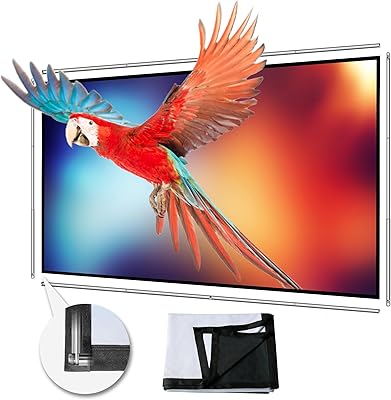
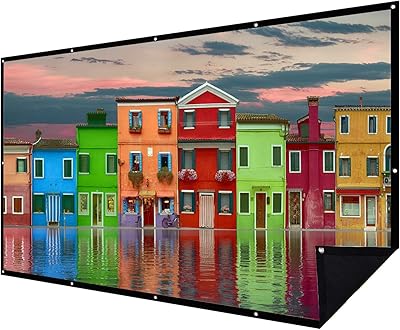
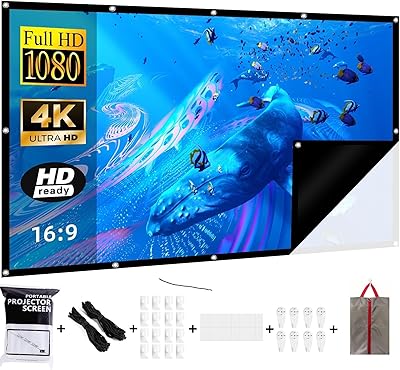
The Yandood 105×59 DIY Projection Screen Fabric is an honest, no-frills option for anyone willing to build their own fixed-frame screen rather than paying a premium for a pre-assembled kit. This screen fabric covers up to a 130-inch diagonal display at a 16:9 aspect ratio — that is genuinely large for a home theater. Yandood is not a household name, but it holds a solid ranking among projection screens on Amazon, which says something about repeat buyer satisfaction. Worth noting upfront: this material ships folded, and it requires you to build or source a wooden stretcher frame yourself. If you are expecting a plug-and-play setup, this simply is not it.
Features & Benefits

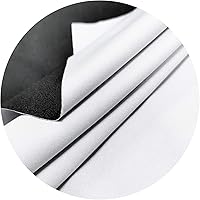
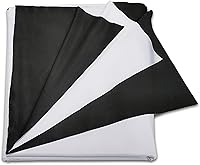
The silver-gray surface does real work here — it is specifically designed to improve contrast and hold up reasonably well in rooms that are not completely dark. The wide viewing angle, claimed at over 160 degrees, means guests sitting off to either side will not lose much image quality. Behind the surface, a black backing layer cuts down on light bleeding through from behind, which noticeably reduces washed-out edges. The polyester construction handles practical life well: it is machine-washable and can take a low-heat iron before mounting, which matters because the fabric arrives with fold creases. It also transmits sound, so positioning speakers directly behind it is entirely viable.

Best For

This projection material is squarely aimed at DIY home theater builders — people comfortable with basic woodworking who want a large-format screen without paying for a complete pre-built frame kit. It is a natural fit for basement or apartment setups where budget matters but screen size still does too. Anyone running a 4K or standard HD front projector will find the neutral gray surface holds color reproduction well without introducing major tint shifts. The washable, lightweight polyester also makes it appealing to renters or anyone who might need to take the screen down, store it, and reinstall it later without replacing the material entirely.

User Feedback

Buyers consistently point to the value-to-size ratio as the standout — getting a material this large, with room to support a 130-inch image, is hard to argue with at this price point. Stretching it onto a frame gets favorable marks for being straightforward once the frame itself is built. The recurring concern is creasing: the fabric ships folded, and while ironing helps, some buyers needed multiple passes before the surface looked truly flat. A few longer-term users raised questions about material durability over extended use. Those comparing this to commercial-grade screens generally acknowledge the trade-off — image quality will not match higher-end options, but most found it a capable, honest performer.

Pros

  • Supports up to a 130-inch diagonal image — exceptional coverage for the price point.
  • The silver-gray surface meaningfully improves contrast in rooms with some ambient light present.
  • Black backing layer cuts light bleed-through substantially, keeping image edges clean and well-defined.
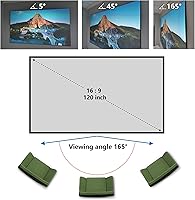
  • Viewing angle exceeds 160 degrees, so off-axis seating stays usable without major brightness drop-off.
  • Sound-transmissive weave lets you hide speakers cleanly behind the screen without audible muffling.
  • Polyester construction is machine-washable — practical for long-term maintenance or seasonal storage.
  • Lightweight at under two pounds, making solo handling during the build straightforward.
  • Fabric stretches evenly under tension, reducing puckering when mounted carefully onto a well-built frame.
  • Holds up well with both 1080p and 4K front projectors without introducing obvious tint shifts.
  • Washable and reusable — a meaningful advantage if you ever need to relocate or rebuild the setup.

Cons

  • Ships folded, not rolled — crease lines are guaranteed and can require multiple ironing sessions to fully resolve.
  • Requires a separately built wooden frame; tools, lumber, and labor costs are entirely outside this purchase.
  • Image quality noticeably lags behind commercial-grade optical screens, particularly on white levels and fine shadow detail.
  • Not compatible with rear projection setups under any circumstances — a hard limitation with no workaround.
  • Material thickness feels lighter than some buyers expect, raising reasonable questions about very long-term durability.
  • Color purists running high-brightness projectors may notice a residual gray cast affecting perceived white balance.
  • Corner tension during mounting requires patience; rushing the install often results in visible edge wrinkles under projection.
  • No frame, no hardware, and no installation guide are included — first-time builders may underestimate the full project scope.
  • Long-term performance data is limited given the product has only been available since mid-2023.
  • Performs best in controlled dark or dim rooms; mixed-light environments expose the surface limitations more readily.

Ratings

The scores below for the Yandood 105×59 DIY Projection Screen Fabric were generated by AI after systematically analyzing verified buyer reviews from global markets, with spam, bot-submitted, and incentivized feedback actively filtered out. This screen fabric attracted a notably practical buyer base — mostly DIY home theater builders — which means the feedback is unusually candid and detail-oriented. Both the genuine strengths and the real frustrations are reflected here without softening either side.
Value for Money
91%
Buyers consistently treat the price-to-size ratio as the headline win here. Getting enough material to support a 130-inch image for what amounts to a fraction of a commercial screen kit is the core reason most people pull the trigger, and the majority feel that expectation was met or exceeded.
A handful of buyers felt the savings came with trade-offs they did not fully anticipate — particularly around setup time and the effort needed to remove creases. Those who expected ready-to-use quality straight out of the packaging occasionally revised their value assessment downward.
Image Quality & Surface Performance
74%
26%
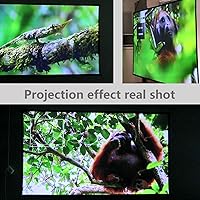
The silver-gray surface does a credible job of holding contrast in moderately lit rooms, and most buyers running HD or 4K projectors reported that colors came through without heavy tinting or hotspots. For a budget-tier material, the diffuse reflection keeps the image readable from a wide range of seating positions.
This projection material is not competing with purpose-engineered optical screens. In side-by-side comparisons with higher-end fabrics, users noted slightly softer whites and a marginal gray shift that bothered perfectionists more than casual viewers. Dark room performance is better than mixed-light performance.
Crease & Wrinkle Removal
58%
42%
The polyester construction does respond to a low-heat iron and light tension once stretched onto a frame. Buyers who gave it time — stretching the fabric, ironing it methodically before mounting, then letting it settle — generally reported a flat, usable surface within a reasonable prep window.
This is the most consistently flagged frustration across reviews. The fabric ships tightly folded, and the crease lines can be stubborn. Several buyers needed two or three ironing sessions combined with firm frame tension before the surface looked truly smooth under projection, which surprised those who expected a quick install.
Black Backing Effectiveness
83%
The black backing layer earns real praise from buyers who care about controlled viewing environments. It cuts light bleed-through substantially, which means the image stays cleaner at the edges and there is no halo effect bleeding onto a wall behind the screen — a common problem with thinner single-layer fabrics.
A small number of buyers working in rooms with strong backlighting reported that the backing reduced but did not eliminate all light interference. It performs best when the area behind the screen is dark or covered, so installation context matters more than the material alone.
DIY Installation Experience
69%
31%
For buyers who came in with basic woodworking skills and a plan, the stretching and stapling process was described as intuitive. The fabric has enough give to pull tight without tearing, and it holds tension consistently along all four sides once properly secured to a wooden frame.
The DIY requirement itself is a polarizing factor. Buyers who underestimated the frame-building step left frustrated reviews, not because the fabric failed, but because the setup demands tools, materials, and time that are entirely separate from this purchase. It is genuinely not suitable for someone wanting a fast, tool-free setup.
Material Build & Durability
67%
33%
The polyester weave feels reasonably substantial for its weight class, and buyers who have had theirs installed for extended periods generally report no sagging, fraying, or surface degradation. The machine-washable characteristic adds practical longevity for those who might need to clean or re-use it.
Long-term durability data is still limited given the product's relatively recent availability. A few buyers noted the fabric felt thinner than expected upon handling, raising questions about how it might hold up in high-humidity environments like basements over multiple years of use.
Viewing Angle Performance
82%
18%
The wide viewing angle is a genuine functional strength. Buyers with longer rooms or unconventional seating arrangements — L-shaped sofas, side chairs, elevated rows — consistently noted that image brightness and color held up well without significant roll-off toward the edges of the viewing cone.
At extreme angles beyond roughly 70 degrees off-axis, some brightness drop-off does occur, as it does with virtually all diffuse-reflection surfaces. This is rarely a dealbreaker but worth knowing for very wide rooms where seating extends nearly parallel to the screen face.
Sound Transparency
78%
22%
Buyers who placed center-channel or satellite speakers directly behind the screen reported no perceptible muffling or high-frequency loss. This is a meaningful practical benefit for clean home theater builds where hiding speakers behind the screen is part of the aesthetic plan.
No independent acoustic measurements were cited in buyer reviews, so the sound transparency claim is based on subjective listening impressions rather than measured data. Audiophiles running high-resolution speaker systems may want to test this more critically before committing to a behind-screen placement.
Packaging & Delivery Condition
61%
39%
The fabric itself arrived undamaged for the vast majority of buyers, with no reports of tears, stains, or surface defects fresh out of the package. Dimensions matched what was advertised, which matters a lot when buyers are cutting or building frames to spec.
The folded packaging format is the root cause of the crease problem that defines so many mixed reviews. Buyers in warmer or more humid climates noted the fold lines were slightly more pronounced, suggesting storage and shipping conditions can influence how much prep work is needed before installation.
Compatibility with Projector Types
79%
21%
The screen fabric works with a broad range of standard front-projection setups — short-throw, standard-throw, 4K, and 1080p projectors all perform well on the silver-gray surface based on buyer reports. The neutral tone avoids the warm or cool color casts that some tinted screens introduce.
Rear projection is explicitly not supported, and buyers who missed that detail in the product listing and attempted it reported disappointing results. The material is also not suitable for ultra-short-throw projectors placed very close to the screen surface, where hotspots may become visible.
Weight & Portability
84%
At under two pounds, the fabric itself is easy to handle solo during a build, store flat between uses, or transport if needed. Buyers who built temporary or seasonal setups appreciated that the material component of the screen is genuinely lightweight and compact when rolled rather than folded.
The portability benefit only applies to the fabric itself — the wooden frame it requires is obviously a fixed installation. Buyers looking for a portable or roll-up solution will find this screen material is really only practical as part of a permanent or semi-permanent build.
Color Accuracy & Tint Neutrality
72%
28%
Most buyers reported that the silver-gray surface delivered accurate enough color reproduction for casual movie watching and gaming. With a well-calibrated projector, the surface did not introduce heavy color shifts, and skin tones in particular came through reasonably naturally under standard projection settings.
Color purists and those running very bright projectors in bright rooms noted a slight gray cast that affected perceived white levels. This is a known characteristic of gain-neutral gray surfaces and is not unique to this product, but buyers expecting a bright-white surface finish will be disappointed.
Edge Finishing & Stretch Consistency
71%
29%
The fabric stretches evenly across the weave, which helps maintain a flat surface tension once mounted. Buyers who took care during the stapling or clamping process reported minimal puckering at the corners, and the material did not show signs of pulling or distorting after tension was applied.
Corner management during installation requires patience. A few buyers reported minor gathering or uneven tension at the corners when they rushed the mounting process, resulting in subtle wrinkles near the frame edges that were visible under projection. Taking time at the corners significantly affects the final result.

Suitable for:

The Yandood 105×59 DIY Projection Screen Fabric is purpose-built for hands-on home theater enthusiasts who are already planning to construct their own fixed-frame screen and want a large-format surface without absorbing the cost of a complete commercial kit. If you are comfortable cutting lumber, building a simple rectangular stretcher frame, and taking the time to tension fabric evenly across all four sides, this material rewards that effort with a genuinely capable viewing surface at a fraction of what pre-built screens cost. It works well in dedicated basement setups or spare rooms where ambient light can be reasonably managed, and the silver-gray surface handles a calibrated HD or 4K front projector without introducing obvious color shifts. The sound-transmissive weave makes it a practical pick for anyone planning to mount center-channel or surround speakers directly behind the screen for a cleaner aesthetic. Renters or buyers who anticipate moving also benefit from the lightweight polyester, which can be removed, stored, and reinstalled without degrading the material.
Not suitable for:

The Yandood 105×59 DIY Projection Screen Fabric is a poor fit for anyone expecting a ready-to-hang, tool-free solution — the fabric is only one component of a build that also requires a separately sourced wooden frame, basic tools, and a willingness to spend real time on installation. Buyers who prioritize pristine out-of-box presentation will be put off immediately, as the material ships tightly folded and arrives with visible crease lines that require ironing and frame tension to resolve, sometimes across multiple sessions. It is also not the right call for color-critical applications or dedicated home cinema rooms where image accuracy is non-negotiable, since this is genuinely a budget-tier surface and higher-end optical fabrics will outperform it on white levels and fine contrast. Rear projection setups are flatly incompatible with this material, so if your projector sits behind the screen, look elsewhere. Anyone without basic woodworking experience or the tools to build a sturdy frame may end up with a frustrating, uneven result that reflects poorly on the fabric itself rather than the installation.
Specifications

  • Brand: Manufactured and sold under the Yandood brand, ranked #208 in the Projection Screens category on Amazon.
  • Material: Constructed from woven polyester textile with a light silver-gray front surface and a black light-blocking backing layer.
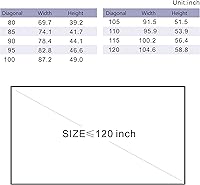
  • Fabric Dimensions: The physical fabric measures 105″ wide by 59″ tall, providing sufficient material to stretch over a standard fixed frame.
  • Max Screen Size: Supports a maximum projected image of 130 inches measured diagonally when properly tensioned onto a fixed frame.
  • Aspect Ratio: Designed specifically for 16:9 widescreen content, matching the native output of most modern HD and 4K projectors.
  • Surface Color: The front projection surface is a neutral light silver-gray tone intended to improve contrast without introducing a strong color cast.
  • Viewing Angle: Diffuse reflection surface provides a usable viewing angle greater than 160 degrees, supporting wide or irregular room seating arrangements.
  • Black Backing: The reverse side features a black backing layer rated to block more than 90% of transmitted light, reducing rear reflection interference.
  • Sound Transmission: The woven polyester construction is sound-transmissive, allowing audio from speakers placed directly behind the screen to pass through without significant muffling.
  • Rear Projection: This material is not compatible with rear projection setups and is designed exclusively for standard front-projection use.
  • Mounting Type: Intended for DIY wall-mount fixed-frame installation; no frame, hardware, or mounting components are included with the fabric.
  • Item Weight: The fabric weighs 1.9 pounds, making it lightweight enough for single-person handling during the frame-building and stretching process.
  • Machine Washable: The polyester fabric is machine washable, allowing for periodic cleaning or freshening without damaging the surface or backing layer.
  • Iron Safe: Can be ironed at a low temperature setting prior to installation to help relax fold creases acquired during packaged shipping.
  • Packaging Format: The fabric is folded rather than rolled for packaging, meaning visible crease lines should be expected upon opening and will require pre-installation treatment.
  • Projector Compatibility: Compatible with standard-throw and short-throw front projectors outputting HD, 4K, or standard-definition content from any common consumer or prosumer device.
  • Care Instructions: Machine wash on a gentle cycle, iron at low heat before mounting, and allow the fabric to settle under frame tension for best surface flatness.
  • First Available: This product was first listed for sale on Amazon in July 2023, making long-term independent durability data relatively limited at this time.

Related Reviews

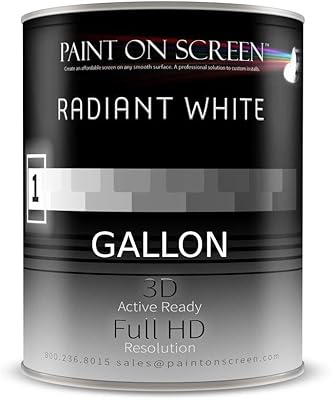
Paint on Screen 1-Gallon Projection Screen Paint
77%
91%
Image Quality Improvement
58%
Surface Preparation Sensitivity
63%
Ambient Light Rejection
84%
Application Ease
88%
4K and HD Clarity
More
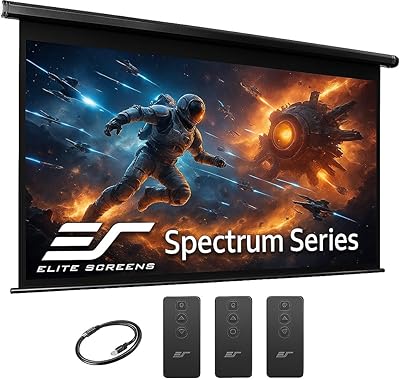
Elite Screens Spectrum ELECTRIC150H2 150″
82%
88%
Screen Image Quality
91%
Build Quality & Materials
89%
Motorized Mechanism
86%
Installation Ease
83%
Remote & Control Options
More
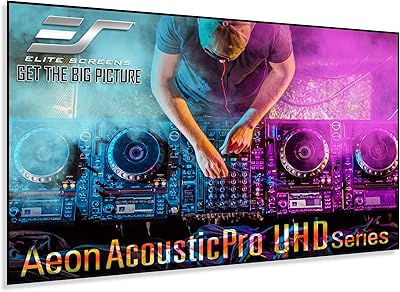
Elite Screens Aeon AUHD Series 150-inch 4K AcousticPro UHD Projection Screen
86%
92%
Image Quality
89%
Sound Transparency
85%
Installation Ease
88%
Build Quality
91%
Viewing Angle
More
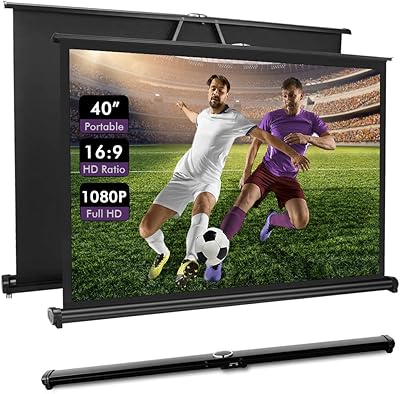
Tecdigbo 40-inch Portable Projection Screen
85%
91%
Portability
89%
Ease of Setup
87%
Image Quality
65%
Stand Stability
82%
Design and Build Quality
More
Yandood 70″ Foldable Projector Screen
75%
93%
Portability & Weight
88%
Ease of Setup
61%
Screen Flatness
74%
Image Quality
67%
Wrinkle Resistance
More
NIERBO 100-inch Portable Projector Screen
75%
91%
Value for Money
88%
Portability
74%
Image Quality (Screen Surface)
58%
Ambient Light Rejection
63%
Crease Recovery
More
Silver Ticket Products STR 120″ Fixed Frame Projection Screen (Woven Acoustic)
82%
93%
Image Flatness & Surface Uniformity
81%
Acoustic Transparency
89%
Build Quality & Frame Construction
88%
Installation & Assembly
71%
Projector Compatibility
More
VerCorkin 120-inch Portable Projection Screen
76%
88%
Value for Money
91%
Portability & Storage
84%
Setup & Installation
79%
Image Contrast & Backing
62%
Screen Flatness
More
SUPER DEAL 80″ 16:9 HD Projection Screen
86%
91%
Value for Money
94%
Setup & Installation
88%
Portability & Storage
89%
Image Clarity
82%
Durability
More
SUPER DEAL 72" 4:3 HD Projection Screen
86%
88%
Ease of Setup
91%
Image Quality
85%
Build Quality
89%
Height Adjustability
90%
Viewing Angle
More

FAQ

No frame is included. The Yandood 105×59 DIY Projection Screen Fabric is fabric only — you will need to build or source a separate wooden fixed frame, then stretch and staple or clamp the material across it. That is the core DIY requirement, so go in with that expectation.
They will improve once the fabric is stretched under tension on a frame, but for best results, iron the fabric at a low heat setting before mounting. Some buyers need to do this in sections and then allow the mounted fabric a day or two to fully settle. Rushing this step tends to leave faint lines visible under projection.

This screen fabric is designed for standard and short-throw front projectors, but ultra-short-throw models placed very close to the screen surface can create hotspots or uneven brightness on diffuse-reflection materials like this one. If your UST projector is rated for use with standard gain fabrics, it may work, but results can vary — it is worth testing before committing to a permanent install.

Not noticeably, for most setups. The silver-gray tone is designed to absorb ambient light rather than reflect it back into the image, which actually improves perceived contrast compared to a bright-white surface in typical room lighting. Colors still come through accurately under a well-calibrated projector, though in a pitch-dark room a pure white surface might yield slightly brighter whites.

The polyester weave is sound-transmissive, meaning it allows audio to pass through without significant blocking or high-frequency loss. Most buyers who positioned center-channel or satellite speakers directly behind the fabric reported no perceptible change in audio quality during normal listening.

A simple rectangular wooden stretcher frame — typically built from 1×3 or 1×4 lumber — is the standard approach. You build a frame sized to your desired screen dimensions, then stretch the fabric tight across it and staple or clamp it at the back edges. There are plenty of DIY fixed-frame screen build guides online that walk through the frame construction in detail.

Yes, the polyester fabric is machine washable on a gentle cycle. Let it air dry fully before re-stretching onto the frame, and iron at low heat if any wrinkles reappear after washing. Avoid harsh detergents or high-heat drying, which could affect the surface coating or backing layer.

It handles moderate ambient light better than a pure white screen would, thanks to the silver-gray surface and the black backing that prevents backlit bleed. That said, strong direct sunlight hitting the screen will still reduce perceived contrast and color saturation noticeably. Blackout curtains make a significant difference if daytime use is important to you.

The 105×59-inch measurement refers to the full fabric dimensions, which are sized to give you enough material to wrap around and secure to the back of a frame. Your actual projected image on a 130-inch diagonal 16:9 screen would measure approximately 113×64 inches, so the fabric is slightly smaller than the maximum claim — the 130-inch figure assumes some of the fabric edge is used for mounting overlap rather than image area.

The main trade-off is time and effort versus cost. A pre-built fixed-frame screen at this diagonal size from a reputable brand will cost significantly more but arrives ready to assemble in minutes with a finished frame, border, and tensioned surface. This projection material asks you to invest your own labor in exchange for meaningful savings on the material itself. If you are comfortable with a basic DIY build, the results can look surprisingly comparable — but if your time has high value or you lack the tools and space, a pre-built option may be the smarter overall spend.