Overview

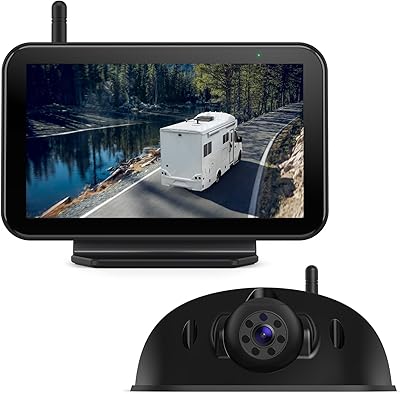
The Wkzay R73 Dual Wireless RV Backup Camera arrived quietly in early 2025 and quickly found itself among the top-selling vehicle backup cameras on Amazon — not through marketing muscle, but because it fills a real gap. Most wired systems require drilling, routing cable through walls, and at least a few hours of frustration. This wireless RV camera kit skips all of that, relying on a magnetic tool-free mount that takes minutes to attach and just as quickly comes off when you switch rigs. The solar panel helps sustain the battery during sunny drives, though it works as a supplement, not a replacement for charging.
Features & Benefits

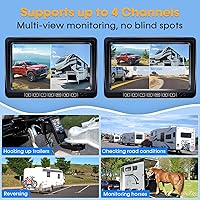
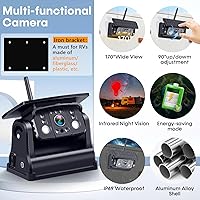
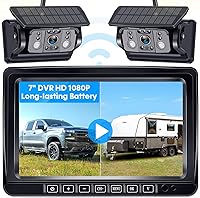
The image quality is where this solar backup camera setup earns its keep. A wide 170-degree field of view means you actually see the full width of a trailer when reversing, not just a narrow slice. The infrared sensor handles low-light reversing better than you might expect at this price tier, producing usable images in dim campsite conditions. Battery runtime stretches well into a full day of driving on a charge, with the 3W solar panel adding meaningful top-up during daylight hours. The 7-inch LCD can display up to four camera feeds simultaneously, and switching between views is straightforward with no buried menu navigation.

Best For

This wireless RV camera kit makes the most sense for owners who move between vehicles or swap trailers regularly. If you are running a fifth wheel one weekend and a flatbed the next, the magnetic mount means repositioning takes under five minutes. It is also a strong fit for extended off-grid trips where plugging in a charger is inconvenient and the solar supplementation becomes genuinely useful. Drivers managing longer rigs will appreciate having both a rear and a side angle visible on one screen. It is less ideal for anyone wanting a permanently fixed, hardwired system built into their vehicle.

User Feedback

Buyers consistently praise how quickly the Wkzay dual-camera system goes from box to road-ready, with many noting they had it running before finishing their pre-trip checklist. The dual-camera coverage gets positive marks from trailer towers who say it meaningfully reduces guesswork during hitching. That said, a few users flag that signal consistency drops in densely wooded campgrounds or busy parking areas — a known limitation of the 2.4GHz band when competing frequencies crowd the spectrum. Screen brightness in direct afternoon sun draws mixed opinions. On battery life, most buyers find the real-world runtime tracks closely with the stated figure, though heavy overnight use without solar input will require a wired charge.

Pros

  • Magnetic tool-free mount installs in minutes and transfers between rigs just as fast.
  • No drilling or cable routing required — a genuine advantage for RV owners who rent or lease.
  • Dual-camera split-screen gives trailer towers meaningful blind-spot coverage during reversing.
  • Battery life holds up through a full day of driving without needing a wired top-up.
  • IP69K-rated aluminum camera bodies handle rain, road spray, and high-pressure wash-downs confidently.
  • The 7-inch monitor is large enough to read both feeds clearly without squinting.
  • Wide 170-degree field of view captures trailer corners and road edges simultaneously.
  • Infrared sensor provides usable night vision in low-light campsite conditions.
  • This solar backup camera setup works out of the box with no app or account setup required.
  • A competitive price point undercuts professional installation costs while delivering comparable core functionality.

Cons

  • 2.4GHz signal interference in crowded RV parks and wooded areas causes documented flickering and brief dropouts.
  • Solar panel is not powerful enough to sustain the system independently — cloudy days require wired charging.
  • Monitor glare in direct afternoon sunlight makes the screen difficult to read without shading it manually.
  • The monitor housing feels noticeably less solid than the cameras, with some flex in the plastic casing.
  • Magnetic grip on curved or non-flat body panels can feel less secure without careful bracket placement.
  • Troubleshooting guidance in the manual is thin, and brand support resources online are limited.
  • Two cameras do not equal full surround coverage — buyers expecting 360-degree protection will be underwhelmed.
  • Battery drains faster during stationary overnight use than solar can replenish, requiring an external charge.
  • Long-term durability across multiple seasons of UV and heat exposure is still unproven given the early 2025 launch date.
  • Monitor mounting arm does not fully resist vibration on rough roads, causing occasional image shake.

Ratings

The Wkzay R73 Dual Wireless RV Backup Camera scores below are generated by AI after analyzing verified buyer reviews from multiple global markets, with spam, incentivized posts, and bot-generated feedback actively filtered out. Ratings reflect the honest balance of what real owners praised and where they ran into friction — nothing is smoothed over to make the product look better than it is.
Ease of Installation
93%
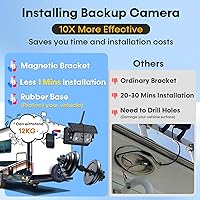
The magnetic mount is the single most praised feature across buyer reviews. Owners of multiple trailers say they can pull the cameras off one rig and stick them to another in under five minutes, with zero tools and no drilling into expensive exterior panels.
A small number of buyers on older aluminum or fiberglass surfaces found the magnetic hold less confident than expected, particularly on curved body panels. The iron sheet brackets included help, but surface prep matters more than the instructions acknowledge.
Video Image Quality
78%
22%
In typical daytime driving conditions, the wide-angle HD image gives a genuinely useful rear view — wide enough to see trailer corners and road markings simultaneously. Most reviewers found it a clear step up from older analog camera systems they had used before.
In overcast or heavily shaded environments the image can look slightly washed out, and fine detail at longer distances softens noticeably. It performs well enough for safe maneuvering but will not satisfy anyone expecting dashcam-grade sharpness.
Night Vision Performance
71%
29%
The infrared sensor does its job adequately in low-light campsite conditions, giving drivers enough visibility to reverse into a dark spot without relying on a spotter. Several buyers specifically called it out as better than expected for the price tier.
True darkness — think unlit rural rest stops with no ambient light — pushes the infrared to its limits, producing a grainy, flat image. It handles dusk and partial lighting well, but deep-night performance is functional rather than impressive.
Wireless Signal Stability
67%
33%
In open rural environments, the dual-antenna 2.4GHz connection holds up solidly across the claimed range, with no reported dropouts during highway driving or open-field campground use. Most long-haul truck and fifth-wheel users reported consistent feeds throughout their trips.
The 2.4GHz band is notoriously congested in busy campgrounds, RV parks, and urban environments. Several reviewers noted signal flickering or brief freezes in these settings, which is a real concern given that many of the target buyers spend time in exactly those locations.
Battery Life
82%
18%
Real-world battery runtime tracks closely with the advertised figure for most buyers under normal daytime use. Owners on multi-day off-grid trips found the system lasting through full driving days without needing a wired charge, which is the core use case it was built for.
Heavy overnight use — running cameras while stationary at a campsite, for instance — drains the battery faster than solar can replenish it. In those scenarios, users found themselves reaching for the included charger more often than the product marketing implies.
Solar Charging Effectiveness
61%
39%
On sunny travel days the solar panel provides a meaningful top-up that visibly extends the time between wired charges. Buyers in consistently sunny climates like the Southwest U.S. reported the panel kept the system comfortably topped up across weekend trips.
Cloudy days, shaded campsites, and north-facing camera orientations render the solar panel largely ineffective. Multiple reviewers emphasized that treating solar as a genuine power source rather than a supplemental one leads to disappointment — a framing the product marketing does not always make clear.
Monitor Screen Quality
74%
26%
The 7-inch display is large enough to clearly distinguish both camera feeds side by side without squinting, and the split-screen switching is quick and intuitive. Buyers appreciated not having to navigate menus to toggle between views during active towing.
Direct afternoon sunlight is the monitor's weak point — glare washes out the image enough that some drivers had to cup a hand around the screen to read it clearly. Brightness maxes out at a level that works indoors or in shade but struggles in harsh sun conditions.
Build Quality & Durability
86%
The aluminum alloy camera bodies feel noticeably more solid than plastic-shelled competitors in the same price range, and the IP69K rating gives genuine confidence in wet conditions. Several buyers reported the cameras surviving full rainstorms and high-pressure wash-downs without issue.
The monitor housing feels slightly less premium than the cameras themselves — the plastic casing has some flex to it that does not inspire full confidence over long-term daily vibration. No major failures reported, but it is worth noting the build consistency between components.
Dual-Camera Coverage
79%
21%
For trailer towing specifically, having a dedicated rear camera and a second angle for a side blind spot proved genuinely useful in buyer accounts. Several owners who upgraded from single-camera systems said backing into tight sites felt meaningfully less stressful.
It is worth being clear that two cameras do not create true surround coverage — you are covering rear and one additional angle, not all four sides. Buyers expecting a comprehensive around-the-vehicle view from this setup will find the reality more limited than the marketing implies.
Monitor Mounting & Placement
72%
28%
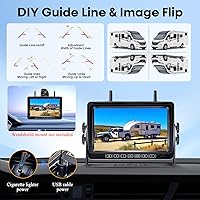
The dashboard and surface mount options give reasonable flexibility for cab layout, and the monitor size is large enough to be genuinely useful without dominating the windshield area. Most buyers found a workable placement without much trial and error.
The mounting arm options feel somewhat basic, and in cabs with limited dash real estate the monitor can feel crowded. A few buyers noted the mount does not hold the monitor perfectly rigid over rough roads, leading to occasional slight vibration in the image.
Setup & Configuration
88%
Out of the box, the system pairs and displays within minutes — no app, no account, no firmware updates required on first use. Buyers with no prior camera system experience consistently reported getting both feeds live before leaving their driveway.
The included manual is thin on troubleshooting detail. If the cameras do not pair immediately — which happens occasionally — there is not much guidance beyond power-cycling, and online support resources for the brand are limited.
Value for Money
81%
19%
Compared to hardwired dual-camera systems that require professional installation, this wireless RV camera kit delivers comparable core functionality at a fraction of the total cost when installation labor is factored in. For occasional-use or multi-vehicle owners, the math is straightforward.
Buyers who want a set-and-forget permanent solution may find the value equation less clear, since a wired system installed once often proves more reliable long-term. At this price, the trade-off between convenience and signal consistency is real and worth weighing carefully.
Weather & Environmental Resistance
89%
Rain, road spray, and dusty unpaved trails have not caused reported hardware issues for most buyers. The IP69K rating appears to reflect genuine engineering rather than a paper spec — multiple reviewers described the cameras surviving conditions that killed previous non-rated units.
Extended exposure to intense direct sun raises some temperature questions that reviewers have not fully stress-tested yet. The product is relatively new to market, so long-term UV and heat durability over multiple seasons remains an open question.
Range & Portability Between Vehicles
84%
For owners who rotate the system between a truck, a camper, and a trailer, the magnetic design and wireless architecture make this genuinely portable in a way that no wired system can match. The cameras can live in a bag and be deployed as needed.
Each vehicle or trailer surface needs the iron sheet bracket pre-attached for the magnet to grip reliably, which means a small amount of surface prep is still required on each new rig. It is a minor issue, but it does add a step to the otherwise quick setup.

Suitable for:

The Wkzay R73 Dual Wireless RV Backup Camera is built for a very specific type of driver, and it genuinely delivers for them. If you own an RV, fifth wheel, or trailer and have been putting off adding a backup camera because you dreaded drilling holes or routing wires, the magnetic tool-free mount removes that barrier entirely. It is equally well-suited for people who tow with multiple vehicles or rotate between different trailers throughout the season — the ability to pull the cameras off one rig and stick them to another in minutes is a real practical advantage that no wired system can match. Campers who regularly head off-grid and cannot rely on shore power will also appreciate the large onboard battery that sustains the system through a full day of driving, with the solar panel adding a helpful top-up on sunny stretches. Drivers managing longer rigs who want both a rear view and a supplemental side angle on a single monitor will find the dual-camera split-screen layout directly useful during hitching and tight maneuvering.
Not suitable for:

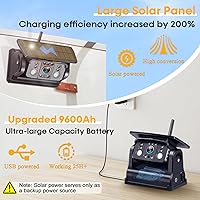
The Wkzay R73 Dual Wireless RV Backup Camera is not the right choice for everyone, and it is worth being honest about where it falls short. If you want a permanent, hardwired system that powers on automatically with your ignition and never needs battery management, this wireless setup will feel like a compromise rather than a solution. Buyers who spend most of their time parked in busy RV parks, wooded campgrounds, or urban areas should be aware that the 2.4GHz wireless band is prone to interference in those environments, and signal flickering is a documented real-world issue rather than a rare edge case. Anyone expecting the solar panel to fully sustain the system without ever plugging in will be disappointed — it works as a supplement on sunny days, not as a standalone power source during cloudy stretches or stationary overnight use. Drivers who want true surround-view coverage of their entire vehicle should also look elsewhere, since two cameras cover rear and one additional angle, not all four sides. Finally, buyers who prioritize long-term set-and-forget reliability over flexibility may find that a professionally installed wired system, despite the higher upfront cost, better fits their needs.
Specifications

  • Brand & Model: Manufactured by Wkzay (Shenzhen Yuweixin Electronic Co., Ltd) under model number R73.
  • Resolution: Both cameras capture footage at 1080P HD, delivering clear detail for reversing and lane-change monitoring.
  • Viewing Angle: Each camera uses a fixed wide-angle lens with a 170-degree real angle of view to minimize blind spots.
  • Optical Sensor: A 1/3-inch CMOS sensor with built-in infrared capability provides both daytime clarity and low-light night vision.
  • Wireless Frequency: The system transmits over a 2.4GHz band using dual antennas for improved signal stability.
  • Wireless Range: Stable wireless connection is maintained up to approximately 328 feet in open, unobstructed environments.
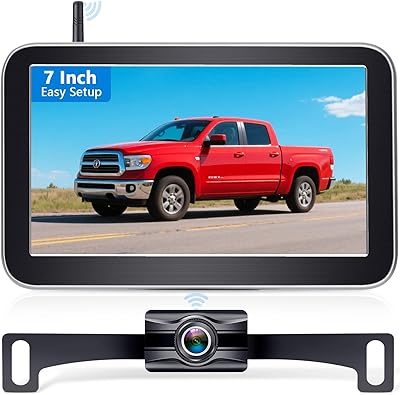
  • Monitor Size: The included LCD display measures 7 inches and supports up to four simultaneous camera feeds in split-screen mode.
  • Battery Capacity: The onboard battery holds 15000mAh and is rated for up to 25 hours of continuous use on a full charge.
  • Solar Panel: A 3W solar panel is integrated into the camera design to supplement battery charging during daylight driving.
  • Waterproof Rating: Both cameras carry an IP69K rating, providing protection against high-pressure water jets, rain, snow, and road spray.
  • Body Material: Camera housings are constructed from shockproof aluminum alloy for durability in harsh outdoor environments.
  • Mount Type: Cameras attach via a tool-free magnetic mount using included iron sheet brackets that adhere to the vehicle surface.
  • Channels Supported: The monitor supports up to four camera channels, allowing expansion beyond the included two-camera setup.
  • Operating Voltage: The system operates at 12 volts, compatible with standard RV, truck, and trailer electrical systems.
  • Package Dimensions: The full kit measures 8 x 3.5 x 10.8 inches and weighs 2.86 pounds as shipped.
  • Display Technology: The monitor uses LCD display technology with wireless signal reception — no video cable runs to the cab are required.
  • In the Box: Each kit includes one 7-inch LCD monitor, two solar magnetic backup cameras, two iron sheet brackets, and a user manual.
  • Availability: The product was first listed for sale in February 2025 and quickly reached the top 10 in Vehicle Backup Cameras on Amazon.

Related Reviews
Venluna 7-Inch Wireless RV Backup Camera System
79%
86%
Daytime Image Quality
78%
Night Vision Performance
74%
Blind Spot Detection
88%
Ease of Installation
71%
Wireless Signal Reliability
More
FEISIKE Dual RV Backup Camera ADC704
87%
94%
Setup & Installation
88%
Image Quality
91%
Wide-Angle View
84%
Night Vision Performance
90%
Weather Resistance (IP69)
More
Wkzay V29 Wireless Backup Camera for Trucks
87%
92%
Value for Money
95%
Ease of Installation
88%
Picture Quality
85%
Wireless Connection Stability
90%
Night Vision Performance
More
eRapta RV Backup Camera Wireless System AY5
86%
94%
Ease of Installation
88%
Night Vision Performance
85%
Signal Stability
92%
Weather Resistance
89%
Build Quality
More
WOOCARTY 3-Camera Wireless RV Backup System
87%
89%
Installation Ease
93%
Picture Quality
91%
Wireless Signal Stability
79%
Night Vision Performance
90%
Durability (Weather Resistance)
More
Rohent R4 Dual RV Backup Camera System
88%
89%
Ease of Installation
91%
Image Quality
94%
Night Vision Performance
88%
Build Quality & Durability
93%
Weatherproofing
More
Haloview BT7 Wireless RV Backup Camera System
85%
93%
Video Quality (FHD 1080P)
88%
Wireless Range and Stability
91%
Ease of Installation
85%
Night Vision Performance
82%
Build Quality and Durability
More
AUTO-VOX WF1 Wireless RV Backup Camera System
79%
88%
Ease of Installation
83%
Wireless Signal Reliability
86%
Video Quality (Daytime)
71%
Night Vision Performance
74%
Monitor Quality
More
Furrion Vision S RV Backup Camera System
75%
91%
Ease of Installation
88%
Wireless Signal Reliability
61%
Image Quality
79%
Night Vision Performance
72%
Monitor Display Quality
More
Fodkh 7-Inch Wireless Backup Camera for RV Trailer
86%
91%
Ease of Installation
88%
Picture Quality
92%
Night Vision Performance
75%
Signal Stability
85%
Build Quality
More

FAQ

No tools are required at all. The cameras attach magnetically — you peel and stick the iron sheet bracket to a flat surface on your rig, and the camera snaps onto it. Most buyers report the whole system is up and running in under 15 minutes without touching a screwdriver.

Not reliably on its own. The solar panel is designed to extend battery life during sunny daytime driving, not to fully replace wired charging. On overcast days, in shaded campsites, or during extended stationary use overnight, you will eventually need to plug in using the included charger. Think of solar as a helpful top-up, not an independent power source.

This is worth thinking about before you buy. The system uses the 2.4GHz wireless band, which is the same frequency used by most Wi-Fi routers, Bluetooth devices, and many other wireless gadgets. In crowded campgrounds where lots of people are running similar equipment, you may notice occasional signal flickering or brief image freezes. In open rural environments the connection is generally solid.

Yes, and this is one of the strongest practical arguments for this system over a wired setup. The magnetic mount detaches cleanly, so you can pull the cameras off your travel trailer and stick them on a flatbed or a different RV without any reinstallation effort. You do need an iron sheet bracket pre-attached on each surface you want to use, but those are inexpensive and included for two surfaces in the box.

It does, with reasonable expectations. The infrared CMOS sensor handles dusk and partially lit environments — campsite perimeter lighting, gas station overhangs, that kind of thing — quite well. In complete darkness with zero ambient light, the image becomes grainier and flatter, so it is functional but not comparable to a premium night-vision system.

This is a noted limitation. The monitor performs well indoors, in shade, and on overcast days, but in harsh direct afternoon sunlight, glare can wash out the image enough to be annoying. Several buyers mention needing to shade the screen with a hand or reposition the mount angle to reduce glare. If you drive in consistently sunny climates, it is worth factoring in.

The monitor hardware supports up to four camera channels, so there is room to expand beyond the two cameras that come in the kit. Whether additional cameras from Wkzay are readily available as accessories is worth verifying at the time of purchase, but the monitor itself is not a bottleneck for expanding coverage.

Most buyers find the real-world runtime tracks reasonably close to the rated figure during normal daytime driving use. Where people run into shorter-than-expected life is overnight stationary use — running cameras while parked at a campsite, for example — since the solar panel cannot recharge in darkness and the drain adds up faster than many expect.

The system works with any 12-volt vehicle — trucks, vans, fifth wheels, travel trailers, and campers are all common use cases. The magnetic mount is not vehicle-specific, so as long as you have a reasonably flat metal or bracket-equipped surface to attach to, you are good to go.

The aluminum alloy body is rated for shocks and road vibration, so minor impacts are unlikely to cause immediate failure. However, if a camera does detach — which can happen on very curved surfaces where the magnetic grip is weaker — you would need to reattach the iron sheet bracket and re-seat it. The magnetic connection is strong on flat surfaces but is not immune to a direct hard knock.