Overview

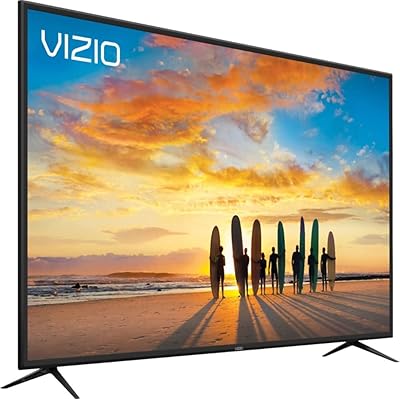
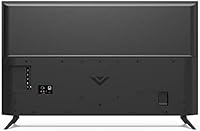
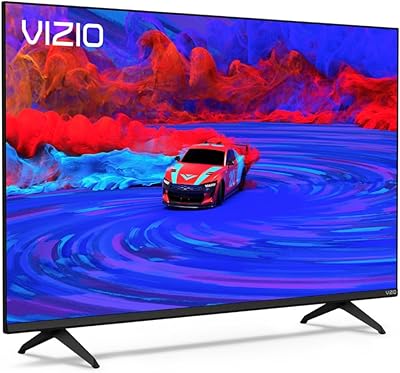
The Vizio M-Series 50″ 4K UHD Smart TV sits comfortably in the mid-range segment, offering genuinely capable picture performance without pushing into premium territory. Vizio's M-Series has built a solid reputation among buyers who want a meaningful 4K upgrade without overspending, and the 50-inch panel fits that brief well — a natural match for medium-sized living rooms or larger bedrooms. The built-in smart platform provides access to Netflix and YouTube right out of the box. That said, this mid-range smart TV is aimed squarely at casual viewers; it won't satisfy anyone chasing a reference-grade picture, but it doesn't pretend to.

Features & Benefits

The headline feature is the 32 Active LED Zones, which allow the panel to dim sections of the backlight independently. It's a real step up from basic edge-lit TVs — dark scenes look noticeably deeper — though don't expect the precision you'd get from a set with far more zones. Vizio's Spatial Scaling Engine handles upscaling, doing a decent job stretching HD content to fill the screen. The 120Hz effective refresh rate is worth understanding: it's processed, not native, but sports and casual gaming still benefit visibly. Clear Action 360 keeps fast action clean, while the VM50 processor maintains solid sharpness across varied content types.

Best For

This Vizio 50-inch 4K TV makes the most sense for buyers ready to leave cable behind and stream directly from the TV. If Netflix and YouTube cover your daily habits, the built-in platform handles both without extra hardware. The 50-inch screen hits a sweet spot — immersive enough for a medium-sized room, compact enough for a bedroom. Light gamers will appreciate the smoother motion feel, even if this set isn't engineered for competitive play. It's also a strong pick for anyone entering the 4K world for the first time and wanting a capable, no-fuss setup that works reliably from day one.

User Feedback

Owners of the M-Series set frequently praise picture brightness and ease of initial setup, and most agree it delivers solid value for its price tier. First-time 4K buyers in particular seem genuinely satisfied. The built-in audio, however, draws consistent criticism — most users end up pairing this mid-range smart TV with a soundbar fairly quickly. The smart platform also shows its age: the app selection is narrow, and the interface can feel sluggish compared to Roku or Fire TV alternatives. Some buyers have raised questions about long-term reliability, though the majority say they would recommend it to someone shopping within a similar budget.

Pros

  • Full-array LED backlighting with 32 dimming zones produces noticeably better contrast than basic edge-lit sets.
  • The 50-inch screen size hits a practical sweet spot for medium rooms without dominating the space.
  • 4K upscaling handles standard HD content well, so older shows and movies still look respectable.
  • Setup is refreshingly straightforward — most buyers report being up and running within minutes.
  • Built-in Wi-Fi and native Netflix and YouTube support mean no extra hardware is needed for core streaming.
  • Motion clarity during sports broadcasts is solid for a TV at this price point.
  • The M-Series set offers a genuinely competitive feature set relative to similarly priced rivals.
  • Picture brightness is a frequent highlight among owners, especially for daytime viewing.

Cons

  • The smart platform app selection is narrow, and adding third-party apps is either limited or impossible.
  • The interface can feel sluggish day-to-day compared to Roku or Amazon Fire TV-powered alternatives.
  • Built-in speakers are underwhelming and a separate soundbar will likely become a necessity.
  • The 120Hz figure is an effective processed rate, not a true native refresh — an important distinction for gamers.
  • Thirty-two local dimming zones is a modest count; blooming around bright objects in dark scenes is noticeable.
  • No HDMI 2.1 port limits compatibility with next-generation console features like 4K at high frame rates.
  • Some owners have flagged questions about long-term durability over multi-year use.
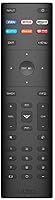
  • The remote control design has drawn mixed reactions, with usability feeling dated compared to newer competitors.

Ratings

The scores below were generated by AI after analyzing thousands of verified buyer reviews for the Vizio M-Series 50″ 4K UHD Smart TV from global sources, with spam, bot-submitted, and incentivized feedback actively filtered out. The result is an honest, balanced snapshot that reflects both where this mid-range set genuinely earns its keep and where real-world owners have run into friction. Strengths and pain points are weighted equally so you can make a clear-eyed purchase decision.

Picture Quality
78%
22%
For a full-array LED set at this price tier, the picture holds up well in typical daytime and evening viewing conditions. Buyers consistently praise the brightness and color accuracy when streaming 4K HDR content on Netflix, noting that the image looks vivid without appearing artificially oversaturated.
In a dark room, the 32-zone local dimming shows its limits — blooming around bright subtitles or lamp highlights in dark scenes is a recurring complaint. Those coming from an OLED or high-zone mini-LED set will notice the contrast ceiling fairly quickly.
Value for Money
83%
Most owners feel the M-Series set punches above its weight relative to what it costs, especially when 4K, full-array backlighting, and motion processing are considered together. First-time 4K buyers in particular describe the purchase as a smart upgrade that did not stretch their budget uncomfortably.
A small but vocal group of buyers feels the smart platform limitations and audio shortcomings mean you end up spending extra on a soundbar or streaming stick, which quietly erodes the initial savings. Factoring in those additions makes the overall value proposition less clear-cut.
Smart Platform
54%
46%
Netflix and YouTube work reliably and load without major complaints, which covers the core streaming habits of a large share of buyers. For straightforward cord-cutters who only need those two services, the built-in platform does the job without any additional hardware.
Beyond the two flagship apps, the ecosystem is frustratingly thin — buyers who want Disney+, Hulu, or HBO Max often discover post-purchase that those apps are absent or require a workaround. The interface also draws criticism for sluggish response times that become more noticeable the longer you own the TV.
Motion & Refresh
71%
29%
Sports fans watching live football or basketball report that fast-motion content looks appreciably smoother than on a standard 60Hz set, which is a genuine day-to-day benefit for the right buyer. The Clear Action 360 processing keeps panning shots cleaner than expected at this price point.
The 120Hz figure is processed, not native, and gamers who compare it side by side with a true native 120Hz display will feel the difference during fast-twitch gameplay. This is not a dealbreaker for casual use, but it is a real limitation that some buyers only discover after connecting a console.
Audio Quality
46%
54%
For background viewing or daytime news, the built-in speakers produce adequate volume and are clear enough to follow dialogue without straining. In well-lit, smaller rooms where ambient noise is low, most buyers find the audio at least functional during initial setup.
Action movies, music-heavy content, and anything with deep bass expose the speakers quickly — thin, hollow sound is the most repeated criticism across owner reviews. The overwhelming majority of long-term owners end up pairing this mid-range smart TV with an external soundbar within a few months of purchase.
Setup & Installation
91%
Unboxing to watching typically takes under 30 minutes, and the guided on-screen setup is one of the most praised aspects of owning this TV. Buyers with no technical background describe connecting to Wi-Fi, attaching the stand, and signing into streaming accounts as genuinely painless.
A small number of buyers encountered issues with the initial network connection step, requiring a router restart or manual IP entry to proceed. Wall mounting also adds complexity since the VESA pattern requires separate confirmation before purchasing a bracket.
Build & Design
73%
27%
The flat panel design with slim bezels looks clean and modern against most entertainment centers, and buyers generally feel the TV looks more premium in person than expected for its price bracket. The stand feels stable on flat surfaces and does not wobble during everyday use.
The plastic casing feels noticeably budget when you handle the edges up close, and a few owners have described the back panel as feeling thinner than comparable sets they have owned previously. It is presentable, but it does not have the build solidity of a flagship-tier display.
4K Upscaling
76%
24%
The Spatial Scaling Engine performs well enough that older HD shows and standard Blu-ray content look reasonably sharp on the 4K panel rather than soft or pixelated. Buyers who watch a lot of non-native 4K content report that upscaled images are clean and watchable in everyday use.
Upscaling quality is inconsistent across different source types — lower-quality streaming resolutions or older DVDs can still look noticeably processed, with occasional edge artifacts around high-contrast areas. It is a solid upscaler for the price, but not a class leader.
Local Dimming
63%
37%
Compared to a basic edge-lit TV, the 32-zone full-array backlighting makes a real difference when watching content with alternating bright and dark scenes, like night-sky sequences or thriller films. Buyers upgrading from entry-level TVs specifically call out the improved black levels as a welcome change.
Thirty-two zones is a modest count for a 50-inch panel, and light bleed behind bright objects in dark scenes is a genuine weakness that surfaces regularly in user feedback. Watching cinema-style content in a fully darkened room is where the dimming limitations become most apparent.
Remote Control
61%
39%
The remote covers all essential functions and feels reasonably comfortable in hand for standard TV navigation and volume adjustment. Buyers who only use the TV for straightforward streaming rarely flag the remote as a problem.
The remote design feels dated compared to the sleek, voice-enabled remotes now shipping with competing TVs at similar prices. Button layout and responsiveness have drawn consistent criticism, with some owners replacing it with a universal remote within weeks of purchase.
Connectivity Options
68%
32%
Built-in Wi-Fi handles streaming reliably, and the available HDMI ports cover most buyers' everyday needs for cable boxes, consoles, and streaming sticks. Ethernet is also available for those who prefer a wired connection for more stable network performance.
The absence of HDMI 2.1 is a meaningful gap for current-generation console owners who want to push higher frame rates at full 4K resolution. Buyers who discover this limitation post-purchase are among the most frustrated reviewers in the feedback pool.
Long-Term Reliability
66%
34%
A solid portion of owners report using the M-Series set for multiple years without hardware failures, and those buyers tend to be among the most enthusiastic recommenders when asked about value over time. For primary household use at a reasonable volume level, durability seems adequate.
A recurring thread in negative reviews involves failures or degraded picture quality appearing after the first or second year of daily use, raising questions about component longevity. Vizio's after-purchase support experience has also been flagged as inconsistent, which amplifies concern when issues do arise.
HDR Performance
69%
31%
HDR content on Netflix and YouTube does produce visibly richer colors and highlights compared to SDR viewing, which buyers upgrading from older non-HDR sets find immediately noticeable and satisfying. Daytime HDR viewing in particular draws positive reactions for its brightness and color pop.
Peak brightness levels limit how impressive HDR looks in practice — specular highlights do not reach the intensity that higher-end panels achieve, so the HDR experience is enhanced rather than transformative. Buyers expecting a dramatic leap from any 4K HDR label may be mildly disappointed.

Suitable for:

The Vizio M-Series 50″ 4K UHD Smart TV is a strong fit for households making their first real jump into 4K, particularly those who want a capable picture without the anxiety of overspending. It works especially well in medium-sized living rooms and larger bedrooms, where the 50-inch panel fills the space naturally without overwhelming it. Cord-cutters who rely primarily on Netflix and YouTube will find the built-in smart platform covers their daily needs without requiring an extra streaming stick or box. Casual sports watchers and light gamers will also get genuine value from the smoother motion handling, even if this isn't a dedicated gaming display. For buyers who simply want a reliable, good-looking 4K TV that is ready to go straight out of the box, this M-Series set delivers exactly that.

Not suitable for:

Buyers who spend a lot of time watching in very dark rooms or who care deeply about cinematic contrast should temper their expectations — the Vizio M-Series 50″ 4K UHD Smart TV offers 32 local dimming zones, which is helpful but nowhere near the precision of higher-end mini-LED or OLED panels. Competitive or serious console gamers will likely find the effective 120Hz refresh rate and the absence of HDMI 2.1 limiting once they start comparing options. The built-in smart platform is also a real sticking point for anyone accustomed to a rich app ecosystem; beyond Netflix and YouTube, the selection is thin and the interface can feel slow. Audiophiles or anyone who values built-in sound quality will almost certainly need to budget for an external soundbar. If you are shopping for a primary living room TV that will anchor a home theater setup, the M-Series set is probably not the right foundation.

Specifications

  • Screen Size: The panel measures 50 inches diagonally, making it well-suited for medium-sized living rooms and larger bedrooms.
  • Resolution: Native 4K UHD resolution at 2160p delivers four times the pixel density of a standard 1080p display.
  • Display Type: Full-array LED backlighting distributes light across the entire panel rather than just the edges, supporting more even illumination.
  • Local Dimming: 32 Active LED Zones allow sections of the backlight to dim independently, improving perceived contrast in dark scenes.
  • Refresh Rate: The TV operates at an effective 120Hz refresh rate, achieved through motion processing rather than a native 120Hz panel.
  • Motion Tech: Clear Action 360 motion processing reduces blur during fast-moving content such as sports broadcasts and action sequences.
  • Upscaling: The built-in Spatial Scaling Engine automatically converts HD and Full HD content up to 4K UHD resolution during playback.
  • Processor: A dedicated VM50 picture processing engine manages sharpness, detail retention, and image clarity across all content types.
  • Contrast Ratio: Vizio rates the dynamic contrast ratio at 20,000,000 to 1, reflecting the range between the deepest blacks and peak brightness levels.
  • Aspect Ratio: The panel uses a standard 16:9 widescreen aspect ratio, matching the format of modern streaming content and broadcast television.
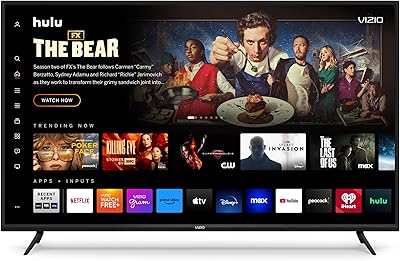
  • Smart Platform: The built-in smart TV platform provides native access to Netflix and YouTube without requiring an external streaming device.
  • Connectivity: Built-in Wi-Fi allows the TV to connect to a home network wirelessly for streaming and smart platform access.
  • Supported Apps: Out of the box, the smart platform officially supports Netflix and YouTube; the broader app ecosystem is limited compared to Roku or Fire TV.
  • Item Weight: The TV weighs 40.8 pounds, which is typical for a 50-inch full-array LED set and generally manageable for two-person wall mounting.
  • Package Dimensions: The retail box measures 53.13 x 32 x 7.25 inches, so buyers should confirm doorway and stairwell clearance before delivery.
  • Included Items: The package includes the TV and an attached stand; no soundbar, cables, or streaming device are bundled in the box.
  • Model Number: The official model identifier for this unit is GG73, which can be used for warranty registration and part lookups.
  • Color Finish: The TV ships in a black finish with a flat panel design that suits most entertainment center setups.

Related Reviews
VIZIO M-Series Quantum 50” 4K HDR Smart TV
84%
89%
Picture Quality
91%
Ease of Setup
87%
Streaming Performance
92%
Value for Money
85%
Color Accuracy
More
VIZIO V Series 50-inch 4K Smart TV
73%
78%
Picture Quality
88%
Value for Money
69%
Smart Platform & Interface
57%
Motion & Refresh Rate
71%
Gaming Performance
More
VIZIO 43-Inch M-Series 4K QLED Smart TV
84%
92%
Picture Quality
85%
Gaming Performance
89%
Ease of Use
91%
Color Accuracy
78%
Sound Quality
More
VIZIO M-Series 75-Inch QLED 4K Smart TV
71%
82%
Picture Quality
88%
Value for Money
67%
Gaming Performance
63%
Smart TV Platform
84%
HDR Performance
More
VIZIO D-Series 50” 4K Ultra HD Smart LED TV
82%
92%
Value for Money
89%
Picture Quality
91%
Ease of Setup
88%
App Access & Streaming
65%
Sound Quality
More
VIZIO V-Series 65-inch 4K UHD Smart TV
69%
76%
Picture Quality
83%
Value for Money
57%
Smart TV Platform
42%
Gaming Performance
73%
HDR Performance
More
Samsung 50-inch DU7200 4K Smart TV
73%
78%
Picture Quality
74%
4K Upscaling
63%
Motion Handling
69%
HDR Performance
51%
Built-in Audio
More
VIZIO V755-J04 75-inch 4K LED Smart TV
73%
78%
Picture Quality
61%
Motion Handling
81%
HDR Performance
74%
Smart TV Platform
88%
Value for Money
More
VIZIO 70-inch V-Series 4K UHD LED HDR Smart TV
84%
88%
Picture Quality
79%
Gaming Performance
93%
Ease of Setup
90%
Streaming Functionality
72%
Sound Quality
More
VIZIO M658-G1 M-Series Quantum 65” 4K HDR Smart TV
83%
91%
Display Quality
86%
Smart Features & Usability
88%
Gaming Performance
68%
Sound Quality
94%
Ease of Setup
More

FAQ

Yes, the M-Series set has HDMI inputs, so you can plug in a Roku, Fire TV Stick, or Apple TV just like any other TV. Many buyers do exactly this to get around the limited built-in app selection and enjoy a richer streaming experience.

It is an effective, processed rate rather than a true native 120Hz panel. In practice, this means motion looks smoother than a standard 60Hz TV, which is noticeable during sports and casual gaming, but it is not the same as what you get from a high-end gaming display with a genuine native 120Hz screen.

Wall mounting is fully supported. The TV is VESA-compatible, so a standard wall mount bracket should work. Just confirm the specific VESA hole pattern for this model before purchasing a mount, and keep in mind it weighs about 40.8 pounds.

The Vizio M-Series 50″ 4K UHD Smart TV has 32 Active LED Zones, which is a meaningful step up from a basic edge-lit panel. That said, 32 zones is a relatively modest count, so you may still notice some light blooming around bright objects against dark backgrounds. For a casual movie watcher it works well enough, but a dedicated home theater setup would benefit from a higher-zone or OLED display.

Bluetooth audio output is not a confirmed feature of this model. If you want a wireless soundbar, look for one that connects via optical audio or HDMI ARC, which are more reliably supported connection methods on this set.

Vizio does push firmware updates to its TVs, but the smart platform on older M-Series models has a limited app ecosystem that has not expanded dramatically over time. If having a wide variety of streaming apps matters to you, pairing this mid-range smart TV with a dedicated streaming device is the more future-proof approach.

It will work with both consoles via HDMI, but it does not support HDMI 2.1, which means you are capped below the bandwidth needed for 4K at high frame rates. For casual gaming the experience is still enjoyable, but competitive or performance-focused gamers will eventually feel the limitations.

The built-in Spatial Scaling Engine upscales HD content to fill the 4K panel, and results are generally solid for everyday cable viewing. Upscaling is not perfect and you will not mistake it for native 4K, but most people find standard HD channels look clean and watchable rather than soft or stretched.

The built-in speakers are functional for casual daytime viewing but lack the depth and volume most people want from a 50-inch TV. A large portion of owners end up adding a soundbar within the first few months, especially for movie watching or anything with dynamic audio. If audio quality matters to you at all, budget for an external speaker setup.

Setup is one of the most praised aspects of this TV. Most buyers report that unboxing, attaching the stand, and connecting to Wi-Fi takes well under 30 minutes. The on-screen setup guide walks you through the basics clearly, and you do not need any technical knowledge to get it running.