Overview

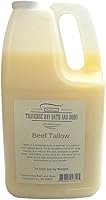
Traverse Bay 7lb Deodorized Beef Tallow is a traditional soap-making fat that has found renewed enthusiasm among artisan crafters who want reliable, time-tested ingredients over modern plant-based alternatives. What sets this deodorized tallow apart is its non-hydrogenated formulation — the natural fatty acid structure stays intact, which matters when you're building a recipe around specific skin-feel and lather goals. At seven pounds, the gallon container makes practical sense for hobbyists running regular batch cycles or small producers who can't justify wholesale minimums. Traverse Bay positions itself as a specialty bath and body supply brand, and this is squarely an ingredient purchase, not a finished product.

Features & Benefits

Because it's non-hydrogenated, this soap-making fat retains its natural oleic and stearic acid profile — the building blocks that give finished bars both a firm texture and lasting skin feel. The deodorized processing is one of the more practical attributes here; tallow sourced without this step can carry a faint barnyard note that bleeds through even assertive fragrance blends. In cold-process or hot-process recipes, it performs similarly to palm oil in SAP value and bar hardening, making it a reasonable swap for crafters who want to move away from palm sourcing. Running at a 6% superfat is widely recommended to preserve conditioning properties. Tallow also carries fat-soluble vitamins A, D, E, and K — commonly cited benefits among crafters, though not clinical guarantees.

Best For

This soap-making fat is a natural fit for home crafters who batch regularly and want a dependable animal-fat base with a neutral scent profile. If you're cold-processing or hot-processing at small to medium scale, the seven-pound quantity hits a practical middle ground — enough for multiple batch runs without the storage demands of wholesale volume. Crafters who have been looking for a palm oil alternative with comparable hardening behavior will find the transition fairly painless formula-wise. It's also well-suited for artisan sellers building a product line around traditional or ancestral skincare narratives, where tallow's history is part of the appeal. And if you're developing recipes with specific fragrance blends, a nose-neutral base like this one keeps those layers clean.

User Feedback

Buyers generally respond well to the purity and scent neutrality of this deodorized tallow — the deodorization process is one area where reviewers notice a clear difference compared to less-processed sources. Finished bars consistently earn praise for hardness and lather, which aligns with what this fat is supposed to deliver. On the critical side, a recurring theme in feedback involves packaging: some orders arrive with leakage or inconsistent fill levels, which can be frustrating when you're measuring by weight. Buyers comparing this to plant-based alternatives tend to stick with it once they see bar performance, though a small number prefer to source locally. Most reviewers highlight the bulk value as a strong point for anyone doing regular production runs.

Pros

  • Deodorized processing eliminates residual animal scent, keeping fragrance blends clean and true.
  • Non-hydrogenated formulation preserves the natural fatty acid profile for more authentic bar performance.
  • Produces hard, long-lasting bars with a reliably creamy lather across batch methods.
  • SAP value closely mirrors palm oil, making formula substitution straightforward for experienced crafters.
  • Seven-pound quantity is practical for regular hobbyist batches without requiring wholesale commitment.
  • Carries fat-soluble vitamins A, D, E, and K — commonly valued properties in tallow-based soap circles.
  • Works well at a 6% superfat, leaving conditioning oils in the finished bar without compromising hardness.
  • Consistent purity is a recurring theme among buyers who have tried multiple tallow sources.

Cons

  • Packaging complaints are common — some orders arrive with leakage or inconsistent fill levels.
  • Not suitable for vegan or plant-based soap lines under any reformulation.
  • Seven pounds may be excessive for infrequent batchers who lack proper fat storage conditions.
  • Skin-conditioning and vitamin benefit claims are anecdotal among crafters, not clinically substantiated.
  • Animal-derived sourcing may conflict with certain retailer or marketplace ingredient policies.
  • No single-use or smaller trial size available for crafters who want to test before committing to bulk.
  • Requires careful storage to avoid rancidity — temperature control and airtight sealing are necessary.
  • Buyers comparing on price per pound may find local butcher-sourced tallow more cost-efficient after rendering.

Ratings

Our AI-generated scores for Traverse Bay 7lb Deodorized Beef Tallow were produced by analyzing verified buyer reviews from multiple global markets, with spam, bot-submitted, and incentivized feedback actively filtered out before any scoring was applied. The ratings below reflect both the genuine strengths that keep crafters reordering and the recurring friction points that honest reviewers consistently flag. Nothing has been smoothed over — the scores tell the full story.

Scent Neutrality
91%
The deodorization process earns consistent praise from crafters who have fought barnyard odor in less-processed tallow sources before. Buyers running delicate floral or citrus fragrance blends report that this soap-making fat stays out of the way and lets their chosen scent profile come through cleanly in finished bars.
A small number of buyers — particularly those with sensitive noses — detect a faint background note on arrival, though most report it dissipates during the melt and pour process. Those who store the tallow in warm or poorly ventilated spaces occasionally notice the scent strengthening over time.
Bar Hardness
89%
The high stearic acid content in this deodorized tallow delivers the kind of firm, dense bar that holds up through daily use without going soft or slimy in a wet soap dish — something crafters who have relied on softer oils as their primary fat frequently comment on. Cold-process batches using this fat as the dominant oil consistently unmold cleanly and hold their shape through cure.
Crafters who blend this tallow with a high percentage of soft oils like sunflower or sweet almond sometimes find the final bar softer than expected, suggesting the fat works best when it makes up a substantial portion of the total oil weight rather than playing a minor supporting role.
Lather Quality
84%
Buyers consistently describe the lather from tallow-based bars as creamy rather than fluffy — a characteristic that suits crafters targeting a luxurious, skin-coating feel over a voluminous foam. When paired with a modest percentage of coconut oil for bubble boost, the combination draws repeated positive comments about the finished bar's overall wash experience.
On its own at high usage levels, this soap-making fat produces a lather that some buyers find underwhelming in terms of bubble volume, particularly those accustomed to high-coconut-oil bars. Achieving a more robust lather typically requires recipe balancing with other oils, which means it performs best as part of a blend rather than as a solo fat.
Ingredient Purity
88%
Multiple buyers who switched from rendering their own tallow at home highlight the consistency and clean appearance of this soap-making fat compared to their DIY results. The non-hydrogenated processing is a meaningful differentiator for crafters who care about keeping the fat profile as close to its natural state as possible.
There is limited third-party verification or detailed sourcing transparency available to buyers who want to know where the beef fat originates or whether it comes from grass-fed animals — a growing concern among crafters who market their products around clean or ethical ingredient stories.
Palm Oil Substitutability
83%
For crafters exiting palm oil due to supply-chain concerns, this deodorized tallow offers a recipe transition that requires minimal reformulation — the SAP value alignment means existing lye calculations need only minor adjustment. Buyers who made the switch report that their customers rarely noticed a meaningful difference in the finished bar.
The substitution is not universally seamless — some crafters note slight differences in trace behavior and acceleration speed compared to palm, which can complicate working time in more complex poured designs or swirl patterns. It also does not address concerns from buyers serving strictly vegan consumer bases.
Packaging Integrity
58%
42%
When orders arrive intact, the container is functional and adequate for short-term storage before the fat gets melted down and portioned out for batching. The one-gallon format is a manageable size to handle and pour from without requiring additional decanting equipment.
Packaging complaints are one of the most consistent negative themes across buyer feedback — leaking containers, insufficiently sealed lids, and orders that arrive with visible fat loss are reported with enough frequency to be a real reliability concern. Buyers who order multiple units at once are especially vulnerable to significant product loss if the shipping environment is warm.
Fill Consistency
61%
39%
Most buyers receive a container that is reasonably close to the labeled seven-pound weight, and for regular batchers who are not measuring to the gram at the sourcing stage, the variation is workable within standard recipe tolerances.
A notable subset of reviewers report receiving containers that appear underfilled relative to the stated weight, which is particularly frustrating when paying for a bulk quantity specifically to reduce per-ounce cost. Without weighing the container on arrival, it is difficult for buyers to confirm they received full value.
Value for Money
74%
26%
For crafters who don't have access to a reliable local rendering source or prefer not to invest the time in processing raw fat themselves, the convenience of a ready-to-use, deodorized product at this quantity makes the per-pound cost defensible. Regular batchers who use it consistently tend to view it as reasonably priced for what it delivers.
Buyers who do have access to raw beef fat from local butchers and are willing to render and deodorize it themselves can achieve meaningfully lower per-pound costs. Packaging loss issues also erode the value proposition for some buyers, making the effective cost per usable pound higher than the listed price implies.
Ease of Use
86%
The tallow block melts evenly and behaves predictably at standard working temperatures, which experienced crafters appreciate when they want a fat that won't introduce unpredictable variables into a recipe they have already dialed in. No pre-treatment, rinsing, or additional processing is required before it goes into the pot.
In colder workshop environments, the fat can arrive quite firm and require more heat or time to fully liquefy before it can be weighed accurately — a minor inconvenience, but one that adds a step for crafters working in unheated spaces during winter months.
Shelf Stability
71%
29%
Properly stored in a cool, sealed environment, this soap-making fat holds up well for several months, which is sufficient for most hobbyist batching cycles. Buyers who refrigerate or freeze unused portions report no quality degradation over extended storage periods.
Without careful storage discipline, rendered tallow is susceptible to rancidity — an issue that comes up in feedback from buyers who left containers in warm workshops or didn't reseal them tightly after partial use. The shelf life is noticeably shorter than many plant-based oils under the same conditions.
Recipe Versatility
77%
23%
This deodorized tallow functions well as the primary hardening fat in a wide range of bar soap formulations, and its neutral scent profile means it doesn't impose limitations on fragrance choices — crafters can build almost any recipe direction around it.
Its utility is largely limited to solid bar soap; it doesn't translate well into liquid soap, lotion bars, or most cream formulations where softer, lighter fats are preferable. Buyers expecting a more versatile all-purpose crafting fat may find it too specialized for their broader needs.
Skin-Feel in Finished Bars
79%
21%
At a recommended 6% superfat, bars made with this tallow consistently receive positive feedback for leaving skin feeling clean without the tight, stripped sensation that high-cleansing soaps can cause — a characteristic that aligns with the fat-soluble vitamin content tallow is known for among crafters.
The skin-conditioning benefits are frequently cited but remain anecdotal in the crafting community rather than clinically established, which matters for artisan sellers who want to make substantiated product claims. Results also vary based on the full recipe composition and the quality of the water in the buyer's region.
Brand Reliability
72%
28%
Traverse Bay Bath and Body maintains consistent availability for this item, which matters for crafters who build regular batch schedules around a stable supply. Repeat buyers indicate the product quality is generally predictable from order to order.
Customer service responsiveness around packaging and fulfillment issues is not universally praised, and some buyers report difficulty resolving complaints about short fills or damaged containers. The brand's transparency around sourcing and quality control documentation is limited compared to what some ingredient-conscious crafters prefer.

Suitable for:

Traverse Bay 7lb Deodorized Beef Tallow is a strong choice for home soap makers who batch regularly and want a dependable animal-fat base that behaves predictably across cold-process and hot-process methods. If you're building recipes around specific fragrance or essential oil profiles, the deodorized formulation means your scent work won't compete with any residual animal odor — a practical win for anyone who has wrestled with less-processed tallow before. Crafters looking to move away from palm oil for ethical or supply-chain reasons will find the SAP value and bar-hardening behavior familiar enough that recipe adjustments are minimal. At seven pounds, the quantity makes sense for hobbyists running several batches a month or small artisan sellers who need a consistent, commercially available source without committing to wholesale volume. It also appeals to makers who market around traditional or ancestral skincare themes, where tallow's historical use in bar soap is itself part of the product story.

Not suitable for:

Traverse Bay 7lb Deodorized Beef Tallow is not the right purchase if you're vegan, plant-based in your sourcing philosophy, or selling to a customer base with strict no-animal-products requirements — there is no workaround here, as this is a beef-derived ingredient by definition. If you only make soap occasionally or in very small quantities, a seven-pound block is likely more than you can cycle through before quality degrades, and storing rendered fat long-term requires attention to temperature and contamination that casual crafters may not want to manage. This is also not a finished skincare product, so buyers expecting something ready to apply to skin will be disappointed — it requires full saponification before it becomes usable soap. Crafters who prefer liquid soap bases or syndet formulations will find little utility here, as this fat is specifically suited to traditional bar soap chemistry.

Specifications

  • Brand: Manufactured and sold by Traverse Bay Bath and Body, a specialty bath and body crafting supply brand.
  • Net Weight: Each container holds 7 pounds of rendered beef tallow, packaged in a one-gallon format.
  • Animal Source: Derived from beef (bovine) fat, making it an animal-based ingredient not suitable for vegan formulations.
  • Processing Method: The tallow is deodorized after rendering to neutralize residual animal scent while preserving fat integrity.
  • Hydrogenation: Non-hydrogenated, meaning the natural fatty acid structure is left intact without chemical hardening.
  • Fatty Acid Profile: High in oleic and stearic acids, which contribute to both skin feel and the structural hardness of finished soap bars.
  • Vitamins Present: Contains fat-soluble vitamins A, D, E, and K, which are retained through the deodorization process.
  • Omega-3 Content: Naturally occurring Omega-3 fatty acids are present in the fat profile, as commonly found in grass-fed or quality beef tallow.
  • Recommended Superfat: A 6% superfat ratio is recommended, leaving a portion of unprocessed oil in the finished bar for added conditioning.
  • Palm Oil Comparison: The saponification (SAP) value and hardening behavior closely mirror palm oil, allowing for straightforward formula substitution.
  • Soap Bar Properties: Produces a hard, long-lasting bar with a light, creamy lather when used as a primary or co-fat in a soap recipe.
  • Scent Profile: Neutral post-deodorization, with no detectable barnyard or animal odor that would interfere with added fragrances.
  • Primary Use: Formulated specifically as a raw soap-making ingredient for cold-process and hot-process handmade bar soap production.
  • Discontinuation Status: This item is confirmed as active and not discontinued by the manufacturer as of the latest available listing data.
  • UPC: Universal product code for this item is 689860002517, useful for inventory and reorder tracking.

Related Reviews
Four Sisters Tallow 100% Grass Fed Beef Tallow Lotion - Unscented, 4oz
88%
91%
Hydration Effectiveness
96%
Suitability for Sensitive Skin
79%
Absorption Speed
100%
Fragrance Sensitivity
85%
Texture and Feel
More
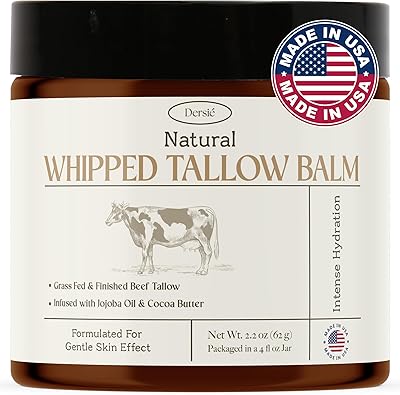
Dersie Beef Tallow Balm 4oz
86%
88%
Effectiveness for Dry Skin
91%
Hydration and Moisturization
85%
Absorption Speed
82%
Texture and Feel on Skin
93%
Suitability for Sensitive Skin
More
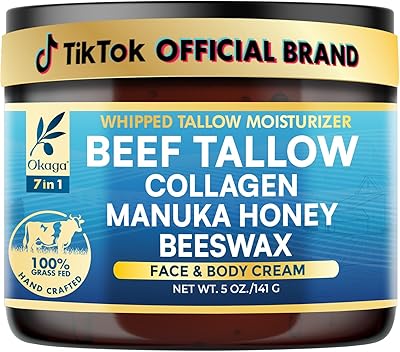
Okaga Organic Grass-Fed Beef Tallow Balm 5oz
78%
88%
Moisture Effectiveness
83%
Texture & Absorption
91%
Ingredient Quality
84%
Value for Money
89%
Skin Sensitivity Safety
More
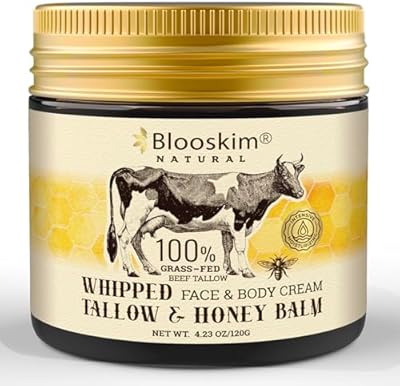
Blooskim Tallow Honey Face Balm 4oz
79%
83%
Texture & Spreadability
88%
Moisturizing Performance
91%
Ingredient Transparency
72%
Skin Compatibility
79%
Value for Money
More
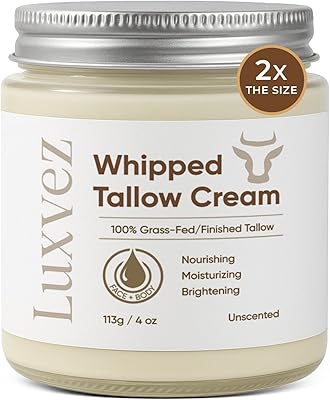
Luxvez Grass-Fed Whipped Tallow Balm 4oz
81%
88%
Skin Hydration
83%
Texture & Absorption
91%
Ingredient Transparency
86%
Sensitive Skin Compatibility
67%
Scent Profile
More
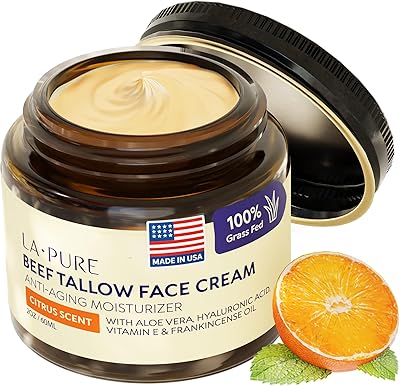
LA PURE Beef Tallow Face Cream 2oz
78%
88%
Texture & Absorption
86%
Hydration Performance
93%
Ingredient Transparency
74%
Scent Experience
81%
Suitability for Sensitive Skin
More
Eavara Beef Tallow Face Wash 6oz
81%
91%
Hydration Performance
83%
Cleansing Effectiveness
93%
Skin Feel After Rinsing
58%
Lather & Texture
66%
Scent Experience
More
BOIUOITI Tallow & Honey Balm 2-Pack
74%
88%
Moisturizing Performance
83%
Texture & Absorption
84%
Ingredient Quality
79%
Skin Sensitivity Compatibility
71%
Scent & Sensory Experience
More
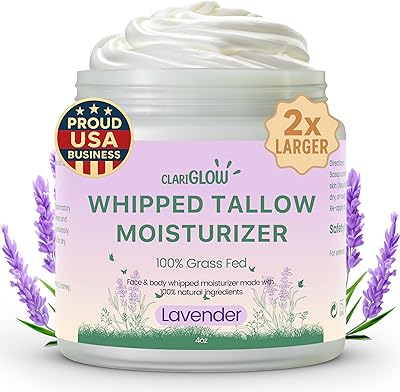
Clariglow Lavender Whipped Beef Tallow Moisturizer 4oz
80%
91%
Moisturizing Effectiveness
83%
Texture & Absorption
93%
Ingredient Quality
78%
Value for Money
67%
Skin Compatibility
More
Laraspi Whipped Grass-Fed Beef Tallow Moisturizer 8.4oz
78%
84%
Moisturizing Efficacy
78%
Texture & Absorption
91%
Formulation Purity
61%
Scent Profile
86%
Sensitivity Compatibility
More

FAQ

The deodorization process does a solid job of removing the raw animal odor. Most crafters report that their finished bars carry no detectable barnyard scent, even when using lighter fragrance loads. That said, if your soap gets too hot during cure or is stored improperly, any fat — tallow included — can develop off-notes over time, so proper curing and storage conditions still matter.

In most cases, yes. The SAP value of beef tallow is close enough to palm oil that you can substitute it at roughly a one-to-one ratio without a full recipe overhaul. You may notice minor differences in trace speed and lather texture, so running your adjusted formula through a lye calculator before your first batch is a good habit.

Hydrogenation is a process that artificially hardens fats by altering their chemical structure, which can change how they behave in a recipe and affect the final bar's feel. Non-hydrogenated tallow retains its naturally occurring fatty acids intact, which many crafters prefer because it behaves more predictably and keeps the fat profile closer to what traditional soap recipes were built around.

Keep it in a cool, dry place away from direct light and heat. If your workshop runs warm, storing it in a sealed container in the refrigerator or freezer is a reliable option and can significantly extend shelf life. Make sure the container is airtight — fat absorbs surrounding odors easily, and you don't want your tallow picking up anything from the fridge.

Seven pounds sits in a useful middle ground. For a hobbyist making one or two full-batch runs per month, you can work through this quantity without it sitting long enough to go rancid. If you only make soap a few times a year, it may be more than you need — smaller quantities from local butchers or rendering sources might be a better fit for very occasional use.

A 6% superfat is the commonly recommended starting point for tallow-based bars. Superfat refers to the percentage of oils in your recipe that stay unreacted — they don't convert into soap and remain as free conditioning oils in the finished bar. Going higher softens the bar and increases conditioning; going lower produces a harder, more cleansing bar with less residual oil.

This is worth being realistic about. The fat-soluble vitamins A, D, E, and K are present in the raw tallow, and crafters commonly cite them as part of the appeal. However, the saponification process converts most of the fat into soap, and the extent to which these vitamins survive in a finished bar and have a measurable effect on skin is not clinically established. Think of them as a feature of the ingredient, not a proven skincare outcome.

Packaging inconsistency is the most commonly mentioned complaint in buyer feedback for this type of bulk tallow product. Some orders have arrived with leakage or containers that weren't filled to the expected level. If your order arrives damaged, documenting it with photos immediately gives you the best footing for a return or replacement claim through the retailer.

This soap-making fat is best suited for solid bar soap production. Liquid soap typically requires a potassium hydroxide lye process and fats with a higher percentage of unsaturated fatty acids — coconut oil, castor oil, and certain soft oils tend to dominate those recipes. Tallow's high stearic and oleic content is well-matched to bar soap, where hardness is a desirable outcome.

Local butcher tallow is often cheaper per pound but usually comes raw and unrendered, meaning you take on the work of rendering, straining, and deodorizing it yourself — a process that involves time, equipment, and some trial and error to get a neutral-scented result. This soap-making fat arrives ready to melt and weigh into your recipe, which is a meaningful convenience advantage for crafters who want to focus on formulation rather than raw material processing.