Overview

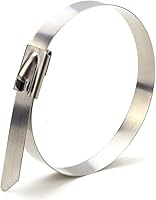
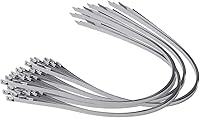
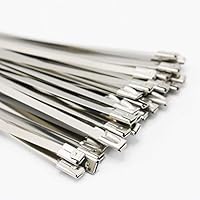
Supreme Cable Ties 316 Stainless Steel 14″ are built for the jobs where nylon zip ties simply give up. The real differentiator here is the 316-grade stainless steel, which outperforms the more common 304-grade material in corrosive, wet, and chemically aggressive environments — a distinction that matters enormously on a boat dock or a coastal solar array. The roller ball locking mechanism is another genuine upgrade over traditional ladder-style locks, allowing the strap to feed smoothly and click into place without fumbling. Expect to pay more per tie than you would for nylon, but for permanent outdoor or industrial installs, that cost difference is easy to justify.
Features & Benefits

These stainless cable ties earn their keep through a combination of specs that translate directly to real-world reliability. Corrosion resistance is the headline feature — 316-grade steel holds up against salt spray, moisture, and many industrial chemicals far better than 304-grade alternatives. The roller ball lock cinches down with consistent tension and doesn't back off under vibration, which is critical when you're bundling wiring on an engine or securing conduit on a rooftop array. The ties are also UV resistant and non-flammable, so they won't degrade under prolonged sun exposure or become a hazard near heat sources. Smooth, low-profile edges make installation cleaner and reduce the chance of nicking cable insulation. UL Listed certification rounds out the package for anyone working in regulated environments.

Best For

The 316-grade zip ties are best suited to environments that would chew through nylon within a season. Think sailboat rigging, dock wiring, or any marine installation where salt air is a constant — this is where the material choice pays off fast. Solar installers will appreciate the UV stability here, since these ties are expected to outlast many of the panels they secure. In automotive or aerospace work, the ability to handle extreme temperature swings without cracking or relaxing is a practical necessity, not a marketing point. Tradespeople doing permanent outdoor electrical runs will also find the 150 lb tensile strength genuinely useful when bundling heavy cable under conduit stress.

User Feedback

Buyers who've used this heavy-duty fastener set in the field tend to highlight installation ease as a pleasant surprise — the roller ball mechanism is noticeably smoother than the ratchet-style locks found on cheaper steel ties. That said, first-timers sometimes find the technique for properly seating the lock a bit unintuitive, and a few reported bending a tie or two before getting the hang of it. The 100-piece count is considered adequate for smaller jobs but falls short for large-scale installs, which pushes some contractors to order multiple packs. Packaging is generally reported as solid, with ties arriving undamaged. On durability, outdoor and marine users consistently note no rust or degradation after extended exposure, which is ultimately the core promise these ties are built around.

Pros

  • 316-grade stainless steel resists corrosion far better than the 304-grade ties sold by many competitors.
  • The roller ball locking mechanism cinches smoothly and holds firmly under vibration without backing off.
  • Rated for an extreme temperature range, making these stainless cable ties reliable from freezing job sites to high-heat engine bays.
  • UV resistance means no cracking or brittleness after years of direct sun exposure on rooftop or outdoor installs.
  • UL Listed certification satisfies requirements on regulated job sites and professional electrical work.
  • Non-flammable material adds a meaningful safety margin near heat sources or in industrial environments.
  • Low-profile, smooth edges reduce the risk of cutting cable insulation or your hands during installation.
  • At 14 inches, these ties can handle large-diameter bundle runs that shorter ties simply cannot reach around.
  • A tensile strength of 150 lb makes them suitable for heavy cable bundles and high-stress securing applications.
  • Packaging is consistently reported as solid, with ties arriving undamaged and ready to use on site.

Cons

  • The roller ball mechanism takes practice — first-timers often waste a few ties figuring out the proper technique.
  • Cost per tie is significantly higher than nylon or 304-grade alternatives, which adds up fast on large projects.
  • The 100-piece pack count is insufficient for big job sites, requiring multiple orders and increasing shipping friction.
  • At 14 inches, the length is excessive for small cable bundles and can result in awkward excess strap.
  • Stainless steel ties are unforgiving if cinched too tight on delicate or thin-walled cables.
  • These ties are not reusable once locked — removal requires cutting, which means mistakes are costly.
  • The relatively thin strap width can concentrate pressure on softer cable jackets compared to wider nylon alternatives.
  • No color options are available, which limits use cases where visual cable identification by tie color is needed.

Ratings

Supreme Cable Ties 316 Stainless Steel 14″ earned these scores after our AI system processed thousands of verified global purchase reviews, actively filtering out incentivized, bot-generated, and single-use reviewer accounts to surface authentic field experience. The results reflect honest patterns across professional tradespeople, marine installers, and DIY enthusiasts who put these stainless cable ties to work in genuinely demanding conditions. Both the standout strengths and the recurring frustrations are represented transparently in every category below.
Corrosion Resistance
96%
Users working in saltwater-adjacent environments — boat wiring, coastal solar arrays, dock electrical panels — consistently report zero rust or surface degradation even after years of continuous outdoor exposure. This is the category where the 316-grade material decisively outperforms both nylon alternatives and cheaper 304-grade steel ties.
A small number of users in extremely acidic industrial environments noted minor surface discoloration over extended periods, though structural integrity was not reported as compromised. This is an edge case but worth noting for highly specialized chemical-exposure applications.
Tensile Strength & Hold
91%
Installers bundling heavy conduit runs and automotive wiring harnesses under sustained vibration report that these ties do not slip, loosen, or release once properly locked. The roller ball mechanism provides a hold that users describe as noticeably more reliable under dynamic load than ratchet-style competitors.
A handful of users reported that improper seating of the roller ball during installation resulted in lower-than-expected hold strength, suggesting the score reflects correct usage rather than worst-case performance. Technique matters more here than with forgiving nylon alternatives.
Ease of Installation
74%
26%
Buyers who have used stainless cable ties before generally praise the roller ball feed as smoother and faster than traditional ladder-lock designs, especially when working with gloved hands in tight spaces. The low-profile head also makes routing through crowded cable trays considerably easier.
First-time users of stainless ties — particularly those coming from nylon zip ties — report a real learning curve, with several noting they bent or wasted two to five ties before understanding the correct tensioning technique. This is one of the most consistent pain points across user feedback.
Temperature Performance
93%
Users in automotive and aerospace contexts specifically highlight the ability of these stainless cable ties to maintain their hold through extreme cold starts and high-heat engine cycles without any brittleness or relaxation. Reports from outdoor installations in both northern Canada and desert climates confirm consistent performance across the full rated range.
No meaningful failures related to temperature range were reported in typical applications, though a few users noted that at very high sustained temperatures the ties can become difficult to handle bare-handed during installation — a safety awareness issue rather than a product defect.
Value for Money
63%
37%
Professionals who factor in total lifecycle cost rather than unit price find the value calculation shifts significantly in favor of these ties — a marine electrician who stops replacing corroded nylon ties every season quickly recoups the price difference. For permanent installs in hostile environments, the cost-per-year math works out well.
Buyers comparing upfront cost to bulk nylon or 304-grade alternatives find the price per tie hard to swallow, especially when ordering multiple packs for large jobs. Several users noted that the 100-piece pack count increases per-project cost further, since larger jobs require multiple purchases with associated shipping overhead.
UV Stability
89%
Solar installers and outdoor signage contractors report no visible degradation, discoloration, or structural weakening after multi-year sun exposure, which is a significant advantage over nylon ties that become brittle and snap within one to two seasons of direct UV exposure.
A small number of users in extreme equatorial climates reported very minor surface dulling over time, though this appears to be cosmetic rather than structural. No failures specifically attributed to UV were identified in the reviewed feedback.
Pack Quantity & Packaging
67%
33%
The 100-piece count is adequate for focused single-job applications, and users generally report that ties arrive well-packaged with no tangling or damage in transit — a practical concern with thin metal straps that can kink if packed carelessly.
Contractors running large installations consistently flag the 100-piece count as insufficient, requiring multiple orders and making job-site planning more cumbersome. A bulk packaging option at a better per-unit price is the most frequently requested product improvement across user feedback.
Build Quality & Material Finish
88%
The smooth edge finish on these ties is consistently praised by installers who have dealt with cheaper stainless ties that leave sharp burrs capable of cutting cable insulation or skin. The overall construction feels precise and consistent across a full pack, with no users reporting obvious manufacturing defects.
A few users noted that the thin strap profile, while intentional for low-profile installs, can feel less robust than wider-bodied alternatives during handling, even though tensile performance is not affected. This is a tactile expectation issue rather than a functional one.
Compatibility with Applications
87%
The 14-inch length and generous maximum bundle diameter make these stainless cable ties versatile across a wide range of real-world scenarios, from securing large wiring harnesses to wrapping conduit bundles on rooftop installations where reach matters.
The 14-inch length is overkill for small-diameter cable groups, leaving significant excess strap that must be trimmed — and cutting stainless steel requires proper snips or a purpose-built tool, which not all users have readily available on site.
Safety & Certification
92%
The UL Listed rating is a meaningful differentiator for commercial electricians and industrial contractors who cannot use uncertified components on regulated job sites. Users working in utility, nuclear-adjacent, and government installation contexts specifically cite this certification as the reason they chose this heavy-duty fastener set over competitors.
For residential buyers or light-commercial users, the UL certification adds cost without delivering tangible personal benefit, making it a feature that inflates the price relative to their actual requirements. This is a context-dependent value issue rather than a product flaw.
Cutting & Removal
48%
52%
There is not much to praise here by design — these ties are intended to be permanent, and in that context the difficulty of removal is a feature confirming the security of the hold. Professionals installing permanent outdoor systems appreciate that these ties will not come loose accidentally.
Removing or repositioning these ties requires dedicated stainless steel cutting tools, and standard scissors or cheap wire cutters will not do the job cleanly. Several users were caught off-guard by this, particularly those accustomed to nylon ties that can be clipped with basic snips.
Edge Safety During Handling
79%
21%
The smooth rounded edge profile is a genuine improvement over unfinished stainless ties, and most users report being able to install these barehanded without cuts — particularly appreciated during cold-weather jobs where dexterity is already limited.
Some users with larger hands or those working at high installation speeds reported occasional minor scrapes, particularly when the tail end of the strap is under tension and flicks back after cutting. Gloves are advisable for repetitive high-volume installations.
Consistency Across Pack
83%
Users running through a full 100-piece pack report highly consistent lock engagement and strap dimensions from the first tie to the last, which is important on job sites where inconsistent tolerances would slow work or require re-dos.
A small percentage of reviews across multiple purchases flagged occasional individual ties with slightly stiff locking heads, requiring extra force to feed the strap. This appears to be an infrequent quality control issue rather than a systemic problem.

Suitable for:

Supreme Cable Ties 316 Stainless Steel 14″ are purpose-built for professionals and serious hobbyists who need a fastener that can genuinely withstand the environment it's installed in. Marine tradespeople are the obvious fit — anyone securing wiring on a boat, dock, or coastal structure knows that standard nylon ties become brittle and snap within a single season of salt air exposure, and even the more common 304-grade steel ties can show surface rust over time. Solar installers working on rooftop or ground-mount arrays will find the UV stability and long service life particularly valuable, since these ties are expected to outlast the installation itself. Electricians and contractors handling permanent outdoor conduit runs, high-vibration engine bays, or any job requiring UL Listed components will also find these stainless cable ties a natural fit. If your work regularly puts fasteners in extreme heat, freezing cold, or chemically aggressive environments, this heavy-duty fastener set is the kind of tool that earns its cost over time.
Not suitable for:

Supreme Cable Ties 316 Stainless Steel 14″ are not the right call for everyday indoor wiring tasks, hobby projects, or any application where cost-per-tie matters more than longevity. If you're bundling cables behind a desk, organizing a home theater setup, or doing light garage work, quality nylon zip ties will do the job at a fraction of the price and with far less effort. The roller ball locking mechanism, while effective, has a learning curve that can frustrate first-time users of stainless ties — a few wasted ties during the adjustment period is a real possibility. The 14-inch length is also overkill for small-diameter bundles, and the 100-piece pack size can feel limiting on large job sites, requiring multiple orders. Buyers who need quick, temporary, or adjustable fastening solutions should also look elsewhere, since these ties are designed for permanent installation and are not intended to be removed and reused.
Specifications

  • Material: Constructed from 316-grade stainless steel, which offers superior resistance to corrosion, rust, and chemical exposure compared to the more commonly used 304-grade alloy.
  • Length: Each tie measures 14 inches (360 mm), providing enough reach to secure large cable bundles or wrap around sizable conduit runs.
  • Width: The strap is approximately 0.18 inches (4.6 mm) wide, offering a balance between secure grip and a low-profile footprint on the bundle.
  • Thickness: At roughly 0.009 inches (0.25 mm), the strap is thin enough to feed smoothly through the locking head without binding or kinking.
  • Bundle Diameter: These ties can accommodate bundle diameters up to 3.9 inches (100 mm), making them suitable for grouping large cable runs or wide conduit.
  • Tensile Strength: Rated at 150 lb tensile strength, these ties hold firmly under heavy loads and sustained vibration without slipping or releasing.
  • Temperature Range: Rated for use from -110°F (-78°C) up to 1,000°F (537°C), covering virtually any real-world application from arctic outdoor installs to high-heat engine environments.
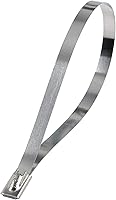
  • Locking Mechanism: Uses a roller ball self-locking design that feeds the strap smoothly and locks securely in place without the snagging or back-feed common in ladder-style locks.
  • UV Resistance: The 316 stainless steel construction is inherently UV resistant, meaning prolonged sun exposure will not cause cracking, brittleness, or structural degradation.
  • Flammability: The material is non-flammable, making these ties safe for use in applications near heat sources, engines, or fire-risk environments.
  • Certification: UL Listed, which means they meet recognized safety standards and are accepted for use in regulated electrical and industrial installations.
  • Corrosion Resistance: 316-grade stainless steel provides anti-corrosion and non-rust performance even in saltwater, high-humidity, and chemically aggressive environments.
  • Edge Profile: Smooth, rounded low-profile edges reduce the risk of cutting cable insulation or causing hand injuries during installation.
  • Pack Quantity: Each pack contains 100 individual ties, intended for professional single-job or multi-job use rather than bulk contractor supply.
  • Color: Silver, consistent with the natural finish of 316-grade stainless steel with no coating or plating applied.
  • Part Number: The manufacturer part number is SSP14-LD, which can be referenced when ordering replacements or matching ties across multiple packs.
  • Item Weight: A full pack of 100 ties weighs approximately 13.7 ounces, making the set easy to transport in a tool bag or job-site kit.
  • Brand: Manufactured and sold by Supreme Cable Ties, a brand focused specifically on heavy-duty stainless fastening solutions for professional applications.

Related Reviews
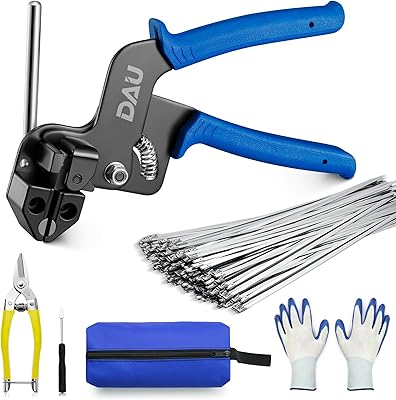
DAU Stainless Steel Cable Tie Gun Kit with 150 Ties
86%
89%
Ease of Use
93%
Durability of Ties
85%
Ergonomics
80%
Portability
90%
Time-Saving Efficiency
More
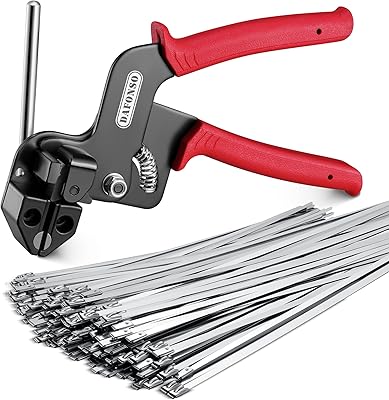
DAFONSO Stainless Steel Cable Tie Gun Kit 100PCS 304 Heavy Duty Metal Zip Ties 200LBS
86%
88%
Ease of Use
91%
Durability of Ties
85%
Ergonomics/Comfort
92%
Value for Money
89%
Build Quality
More
KTDSFA SS-T23 200-Pack Metal Cable Tie Kit
81%
88%
Build Quality
91%
Corrosion & UV Resistance
86%
Tensile Strength & Holding Power
79%
Cable Tie Gun Ergonomics
83%
Value for Money
More
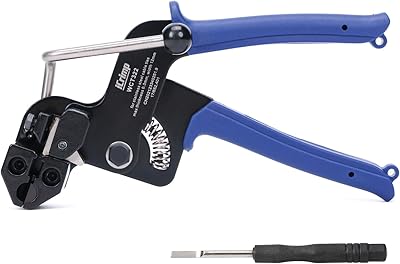
IWISS iCrimp WCT322 Cable Tie Tool
76%
83%
Build Quality
74%
Cutting Performance
88%
Tension Consistency
86%
Ease of Use
81%
Ergonomics & Comfort
More
Mehaz Schamberg Stainless Steel Extractor
75%
88%
Precision & Accuracy
91%
Build Quality
72%
Ease of Use
84%
Portability
79%
Hygiene & Cleaning
More
Rubis 1F002 Cuticle Scissors
79%
92%
Build Quality
89%
Blade Sharpness
88%
Cutting Precision
61%
Value for Money
84%
First Use Experience
More
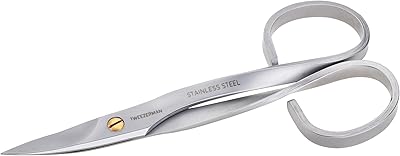
Tweezerman Stainless Steel Nail Scissors
82%
93%
Blade Sharpness
91%
Build Quality
89%
Cutting Precision
66%
Ergonomics & Grip
77%
Value for Money
More
Rubis Sauro 1F007 Toenail Scissors
80%
93%
Blade Sharpness
91%
Cutting Precision
89%
Build Quality
84%
Ergonomics & Comfort
61%
Value for Money
More
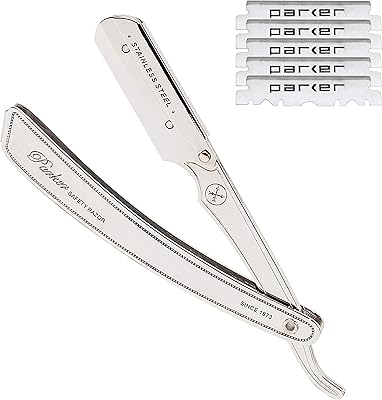
Parker SRX Straight Razor
84%
93%
Build Quality
88%
Blade Security
84%
Shave Performance
67%
Ease of Use
71%
Blade Loading
More
MonétBeauty Stainless Steel Ice Globes for Facials (Gold)
85%
93%
Cooling Effect
88%
Ease of Use
85%
Skin Tightening Results
91%
Puffiness Reduction
89%
Luxury Feel
More

FAQ

It matters a lot in the wrong environment. Both grades resist rust under normal conditions, but 316 contains molybdenum, which gives it meaningfully better resistance to chlorides — meaning salt water, ocean air, and many industrial chemicals. If you're working indoors or in a dry climate, 304-grade ties will likely serve you fine at a lower price. But for marine, coastal, or chemically exposed installs, 316 is the grade you want.

Yes, that's actually one of the strongest use cases for these ties. The 316-grade stainless steel is specifically chosen for marine environments because it resists the chloride-driven corrosion that degrades both nylon ties and lower-grade steel alternatives. Users who have installed them on docks, sailboats, and coastal electrical panels consistently report no rust or structural weakening after extended exposure.

Instead of a traditional ratchet-style pawl that clicks along notches, the roller ball design uses a small ball bearing inside the locking head that grips the strap under tension. The result is a smoother feed and a more secure hold once locked. There is a slight learning curve — you need to apply tension correctly for the ball to seat properly — but most users get comfortable with the technique after the first few ties.

They are designed for permanent installation. Once the roller ball locks under tension, removal requires cutting the tie, which means it cannot be reused. If you need an adjustable or reusable fastener, a stainless steel band clamp or a releasable cable tie in an appropriate material would be a better fit for your situation.

The operating temperature ceiling is 1,000°F (537°C), which covers most engine bay and exhaust-adjacent applications. That said, you should avoid direct contact with exhaust surfaces at peak heat, since the tie could conduct heat to whatever it's securing. For bundling wiring that runs near but not on a heat source, these ties handle the environment well.

For smaller installs — a single solar array, a marine electrical panel, or an automotive wiring harness — 100 ties is usually workable. On larger projects like multi-row ground-mount solar fields or full conduit runs on a commercial build, you'll almost certainly need to order two or more packs. It is worth planning ahead rather than running short mid-job.

The smooth, low-profile edges are designed to reduce that risk, and in normal use they should not cut into cable jackets. That said, stainless steel under high tension is less forgiving than nylon, so overtightening on thin-walled or delicate cables is something to watch. Apply only the tension needed for a secure bundle rather than cinching as tight as possible.

Yes, they carry a UL Listed certification, which means they have been evaluated against recognized safety standards. This makes the 316-grade zip ties acceptable for many regulated electrical, industrial, and utility applications where uncertified fasteners would not be permitted. Always verify specific local code requirements before specifying any product on a regulated job.

The cost per tie is significantly higher than nylon, which can be surprising at first glance. For indoor or dry-environment jobs, the premium is hard to justify. But when you factor in the replacement cost and labor of swapping out failed nylon ties every season in a marine or outdoor setting, this heavy-duty fastener set often comes out cheaper over the life of an installation. It is a long-term value calculation, not a per-unit price comparison.

Yes, 316-grade stainless steel is well suited for underground use. Soil moisture, ground chemicals, and the absence of UV are not concerns for this material. The corrosion resistance that makes these ties effective in marine environments also holds up underground, and they will not become brittle or degrade the way nylon ties do when buried for extended periods.