Overview

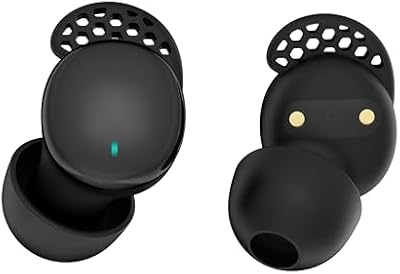
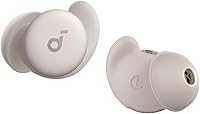
The Soundcore Sleep A20 is Anker's purpose-built answer to a surprisingly underserved problem: how do you block out noise and play calming audio all night without waking up with sore ears? Launched in mid-2024, these sleep earbuds take a different approach than typical in-ears — the housing sits nearly flush, using a balanced armature driver in a compact 5mm shell that barely protrudes beyond the ear canal. There is no active noise cancellation here, which is worth knowing upfront. Instead, Anker bets on passive isolation combined with a layered masking system. Priced in the mid-range for the sleep earbud category, it competes against options like Bose Sleepbuds II.

Features & Benefits

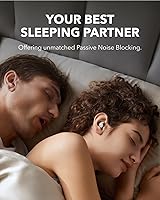
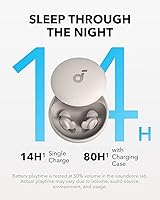
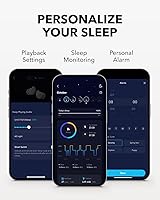
The noise management approach here is worth unpacking. Anker's sleep buds layer twin-seal ear tips for passive blocking, a built-in white noise library, and smart volume adjustment that responds to ambient sound — all targeting high-frequency noise bands, where things like traffic and HVAC hum tend to live. The low-profile Air Wing design and soft-touch shell are shaped around side-sleeper anatomy, reducing the pressure you would normally feel against a pillow. Battery life is generous at 14 hours per charge in sleep mode, stretching to 80 hours total with the case. Sleep tracking via a MEMS sensor adds position and movement data through the Soundcore app, though its clinical value remains limited.

Best For

These sleep earbuds are most likely to click with side sleepers who have tried regular earbuds in bed and ended up with a sore ear canal by 2am. They also suit light sleepers dealing with high-frequency noise — think street traffic, HVAC systems, or a snoring partner — rather than low, rumbling sounds, which passive isolation handles less effectively. If your wind-down routine involves white noise apps, sleep podcasts, or streaming audio, the Bluetooth 5.3 connection covers that. Travelers sharing hotel rooms will appreciate the low profile and long battery life. Just don't expect ANC-level silence or studio-quality audio — that is not what this nighttime earbud is built for.

User Feedback

With a 3.6-star average across more than 4,300 ratings, the reception for Anker's sleep buds is genuinely mixed — and worth taking seriously. On the positive side, buyers consistently highlight all-night comfort for side sleepers alongside the generous battery life. The sleep tracking feature earns curiosity points as a novelty. On the downside, Bluetooth dropping mid-sleep is a recurring complaint, as is the gap between the advertised 30dB noise reduction and what people actually experience night-to-night. App reliability has also drawn criticism. Fit matters more here than with standard earbuds — several users found better results after experimenting with the included tip sizes, so do not settle on the first pair you try.

Pros

  • Flat, low-profile shell stays comfortable against a pillow for side sleepers through a full night.
  • Fourteen hours of battery in sleep mode means no mid-night power anxiety.
  • Eighty hours total with the charging case — most users charge weekly, not nightly.
  • Seven ear tip options and three wing sizes give real flexibility for dialing in a personal fit.
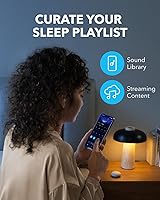
  • Built-in white noise library works offline, so no streaming app needs to stay open.
  • Bluetooth 5.3 pairs quickly and streams cleanly when conditions are stable.
  • Sleep position and movement tracking adds a genuinely novel layer of insight into nighttime habits.
  • IPX waterproof rating handles sweat and humidity without concern.
  • Anker's sleep buds come in well under the price of Bose Sleepbuds II while offering more features.

Cons

  • Bluetooth dropping mid-sleep is a well-documented and recurring complaint, not an isolated issue.
  • Real-world noise reduction falls noticeably short of the advertised 30dB claim for many users.
  • The Soundcore app has reported syncing failures that can cause entire sleep sessions to go unrecorded.
  • Low-frequency noise like deep snoring passes through the passive seal largely unaffected.
  • Ear tip degradation with nightly use has been noted by buyers within a few months of purchase.
  • The charging case has no wireless charging option, which feels like an omission at this price tier.
  • Touch controls are small enough that accidental taps while shifting position in bed are common.
  • Sleep tracking data, while interesting, is not clinically validated and should not be treated as authoritative.
  • Some users find the gap between adjacent tip sizes too large, leaving them stuck between a loose and a tight fit.

Ratings

The scores below were generated by AI after analyzing thousands of verified global user reviews for the Soundcore Sleep A20, with spam, bot-submitted, and incentivized feedback actively filtered out. The goal is a clear-eyed picture of how these sleep earbuds actually perform night after night — not just on the first unboxing. Both the genuine strengths and the recurring frustrations buyers have reported are reflected transparently in every category.

Comfort for Side Sleepers
81%
19%
This is where Anker's sleep buds earn their strongest marks. The low-profile shell and soft-touch finish mean most side sleepers can press their ear into a pillow without that sharp pressure point that makes regular earbuds unbearable after 20 minutes. Many users report wearing them through a full night without discomfort.
Comfort is not universal — ear canal size varies widely, and a handful of users found even the smallest sealed tips created pressure over long wear. The ear wing fit also requires some trial and error, and if you land on the wrong combination, the ergonomic promise falls apart quickly.
Noise Reduction Effectiveness
58%
42%
For high-pitched, consistent ambient noise — think a hotel HVAC system or light street traffic — the combination of sealed tips and the sound masking library does create a noticeable buffer. Pairing the passive seal with a white noise track genuinely helps light sleepers tune out moderate background noise.
The 30dB claim does not hold up for many buyers in real-world conditions. Low-frequency noise like deep snoring, bass from a neighbor's music, or truck rumble passes through largely unaffected. Multiple reviewers felt misled by the marketing, expecting closer to ANC-level blocking and getting noticeably less.
Battery Life
88%
Fourteen hours per charge in sleep mode is more than enough to cover even the longest night, and the 80-hour total with the charging case means most users go well over a week between cable charges. Travelers especially appreciate not having to worry about topping up nightly.
Streaming via Bluetooth trims the per-bud life to around 10 hours, which is still solid but worth knowing if you plan to fall asleep to a podcast or playlist every single night. A small number of users reported battery drain faster than spec after several months of regular use.
Bluetooth Stability
52%
48%
When the connection holds, Bluetooth 5.3 provides a clean, lag-free link within a reasonable range from a phone placed on a nightstand. The initial pairing process is straightforward, and most users get through the first few nights without obvious issues.
Connectivity dropping mid-sleep is one of the most consistently reported frustrations. Buyers describe waking up to silence or a beeping disconnection alert, which is precisely the opposite of what these earbuds are supposed to do. The problem appears more common when the phone is not close to the bed or when both earbuds are in use simultaneously.
Fit & Tip Sizing
63%
37%
The inclusion of seven ear tip options — three breathable pairs, four sealed pairs — plus three ear wing sizes gives users a meaningful range to work with. Buyers who take the time to experiment often find a configuration that stays put through the night, even with moderate tossing.
Getting that fit right takes real patience, and not everyone manages it. A portion of reviewers found the tips either too large or too small regardless of which combination they tried, leading to earbuds that slowly work loose during sleep. The sizing gap between adjacent tip options also feels uneven to some users.
App & Sleep Tracking
54%
46%
The sleep position and movement tracking is a genuinely novel feature for earbuds at this price point. Users curious about their sleep habits find the Soundcore app dashboard engaging at first, and the Real-Time Clock integration means timestamped data is reasonably accurate when everything is working.
App reliability is a recurring complaint — syncing failures, missing sleep sessions, and occasional crashes chip away at the feature's practical value. The sleep data itself is interesting as a rough snapshot but should not be treated as medically meaningful. Several users stopped using tracking entirely after repeated sync issues.
Sound Quality
61%
39%
For white noise, nature sounds, and spoken-word content like sleep meditations or podcasts, the balanced armature driver does a reasonable job. The sound is clean and clear enough for its primary purpose, and the built-in masking library covers the most popular ambient soundscapes.
Music lovers will find the audio thin and lacking bass depth — that is a direct limitation of the 5mm balanced armature driver, which prioritizes a small footprint over full-range reproduction. These are not earbuds you would choose for active listening; the sound profile is strictly functional.
White Noise Library
74%
26%
The built-in library removes the need to keep a streaming app open all night, which helps both battery life and connectivity stability. The selection covers the core categories — rain, ocean, fan sounds, pink noise — that most sleep audio users actually reach for.
The variety is decent but not deep. Users with specific preferences, like a particular rain texture or layered soundscapes, will hit the limits of the library quickly and end up streaming from a third-party app anyway, which partially negates the offline advantage.
Build Quality & Durability
69%
31%
The IPX waterproof rating handles sweat and humidity without issue, which matters for anyone who runs warm at night. The case feels solid for its compact size, and the overall build does not feel flimsy despite the lightweight plastic construction.
Some users report the ear tips degrading or loosening from the housing sooner than expected with nightly use. The plastic case exterior also picks up scratches easily, and a few buyers noted the charging contacts occasionally requiring repositioning to make a reliable connection.
Ease of Use & Controls
72%
28%
Touch controls handle the basics — play, pause, volume — without requiring a phone interaction in the dark. Once muscle memory kicks in, the tap gestures feel natural enough for half-awake adjustments at 3am.
The touch surface is small, and accidental taps while adjusting position in bed are a minor but real annoyance. There is also no physical indicator of whether a touch command registered, so users occasionally repeat gestures unnecessarily, sometimes triggering unintended actions.
Value for Money
62%
38%
At its mid-range price point, this nighttime earbud bundles more features than most direct competitors — sleep tracking, a white noise library, and genuinely long battery life in one package. For buyers whose primary need is comfort and audio, the core proposition is fair.
The Bluetooth reliability issues make the value proposition shakier. When a core function fails — staying connected through the night — paying mid-range money feels harder to justify. Buyers comparing it against the Bose Sleepbuds II or newer competition may find the trade-offs less acceptable at similar price levels.
Charging Case Design
71%
29%
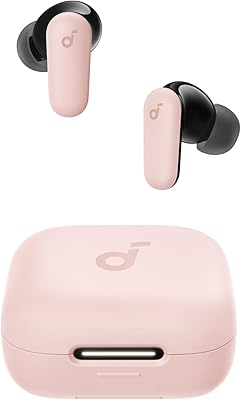
The near-cubic case is compact enough to sit unobtrusively on a nightstand. The capacity to hold over 65 hours of additional battery between charges means most users treat it as a weekly-charge item rather than a daily ritual.
The case is USB-only with no wireless charging option, which feels like an omission at this price tier. At roughly 66mm on each side it is also bulkier than the slim cases that come with some competing sleep earbuds, making it slightly less travel-friendly than it could be.
Setup & Onboarding
73%
27%
Pairing these sleep earbuds to a phone is quick and straightforward — most users are up and running within a few minutes of unboxing. The Soundcore app guides new users through tip selection and sleep mode configuration without requiring much technical know-how.
First-time setup of the sleep tracking features and custom alarm requires navigating several app sub-menus that are not particularly intuitive. A few less tech-savvy users reported giving up on the advanced features entirely and using the earbuds as basic Bluetooth audio only.

Suitable for:

The Soundcore Sleep A20 is a strong fit for side sleepers who have already tried — and given up on — standard earbuds in bed because of the pressure they create against a pillow. If you are a light sleeper bothered primarily by high-frequency ambient noise like a dripping tap, HVAC hum, or a partner's lighter snoring, the combination of sealed ear tips and a built-in sound masking library can genuinely take the edge off those disruptions. People who already use white noise apps or fall asleep to podcasts and sleep meditations will appreciate having that functionality built directly into the earbuds, removing the need to keep a phone screen on or a separate speaker running. Frequent travelers who share hotel rooms or sleep in unpredictable noise environments will also find the low-profile design and strong battery life practical over multiple nights away. If your core need is physical comfort over long wear and a modest reduction in ambient sound — rather than total silence — these sleep earbuds deliver on those specific expectations reasonably well.

Not suitable for:

Anyone expecting active noise cancellation-level silence should look elsewhere before buying — the Soundcore Sleep A20 uses passive isolation and sound masking, which is a fundamentally different and less powerful approach, and the marketing language around 30dB reduction overstates the real-world experience for many buyers. If your primary noise problem is low-frequency sound — a partner's heavy snoring, bass from a neighboring apartment, or traffic rumble — passive isolation will do very little to help, and you are likely to feel let down. People who are particular about audio quality for music listening will also find the sound profile underwhelming; the small balanced armature driver is tuned for comfort and function, not full-range reproduction. If Bluetooth reliability is non-negotiable for you — say you are a heavy sleeper who cannot afford to be woken by a dropped connection alert — the recurring connectivity complaints from real users are a serious consideration. Finally, buyers who are not willing to spend time experimenting with multiple tip and wing size combinations may struggle to get a consistently secure fit, which undermines both the comfort and the noise isolation the design depends on.

Specifications

  • Driver Type: Each earbud uses a balanced armature driver measuring 5mm, prioritizing a compact footprint over full-range audio reproduction.
  • Noise Control: Noise management relies on passive isolation via sealed ear tips combined with a 4-point sound masking system; there is no active noise cancellation.
  • Noise Reduction: The passive and masking system is rated for up to 30dB of reduction in high-frequency bands under optimal fit conditions.
  • Bluetooth: Bluetooth 5.3 provides wireless connectivity with a stated range of 15 meters and compatibility with iPhone, iPad, and computers.
  • Battery (Sleep): In sleep mode, each earbud delivers up to 14 hours of playback on a single charge.
  • Battery (Total): Combined with the charging case, total battery capacity extends to 80 hours in sleep mode or 55 hours in Bluetooth streaming mode.
  • Charging Time: A full charge of the earbuds from empty takes approximately 4.5 hours via the USB charging case.
  • Sleep Tracking: A MEMS motion sensor paired with a Real-Time Clock tracks sleeping positions and movement, syncing data to the Soundcore app.
  • Water Resistance: The earbuds carry an IPX waterproof rating, making them resistant to sweat and humidity during overnight wear.
  • Audio Latency: Audio latency is rated at 300 milliseconds, which is acceptable for sleep audio but noticeable if used for video content.
  • Impedance: Impedance is rated at 16 Ohm, consistent with standard consumer earbuds designed for direct smartphone use.
  • Controls: Both earbuds use touch and tap controls on the outer surface; there are no physical buttons.
  • Earbud Weight: The pair of earbuds weighs approximately 0.14 pounds (around 63 grams) combined.
  • Case Dimensions: The charging case measures 65.86mm long by 65.87mm wide by 29.1mm tall, with a plastic exterior.
  • Ear Tip Options: Seven ear tip pairs are included in total: three breathable pairs and four sealed pairs, plus three sizes of ear wings for fit adjustment.
  • Connectivity: The case charges via USB; there is no wireless or Qi charging support for the case.
  • Compatibility: Designed for use with iOS and Android devices as well as computers with Bluetooth support, managed through the Soundcore app.
  • Product Dimensions: Each earbud measures approximately 0.98 x 0.69 x 0.61 inches, keeping the profile low enough to reduce pillow pressure.

Related Reviews
Soundcore P30i
Soundcore P30i
86%
87%
Noise Cancelling Effectiveness
91%
Bass and Audio Quality
88%
Call Clarity
93%
Battery Life
85%
Comfort and Fit
More
esonstyle S8 Sleep Earbuds
85%
88%
Comfort for Side Sleepers
91%
Bluetooth Connectivity & Pairing
85%
Waterproof Durability
78%
Battery Life
80%
Sound Quality & Noise Cancellation
More
Doubc S29 Sleep Earbuds
87%
88%
Comfort & Fit
93%
Battery Life
85%
Noise Cancellation Effectiveness
80%
Sound Quality
90%
Waterproof Durability
More
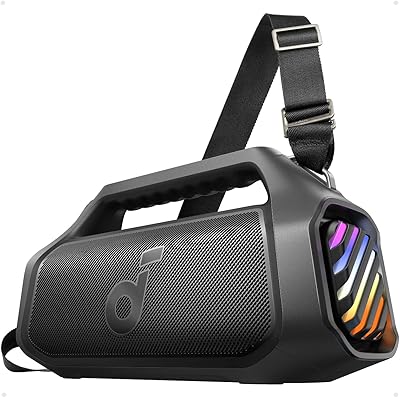
Soundcore Anker Motion Boom
90%
94%
Sound Clarity
91%
Bass Performance
97%
Waterproof Reliability
96%
Battery Life
88%
Portability
More
ZYHKON SU9 Sleep Earbuds
85%
88%
Comfort and Fit for Side Sleepers
91%
Battery Life
85%
Sound Quality
82%
Noise Isolation
89%
Ease of Use (Charging & Controls)
More
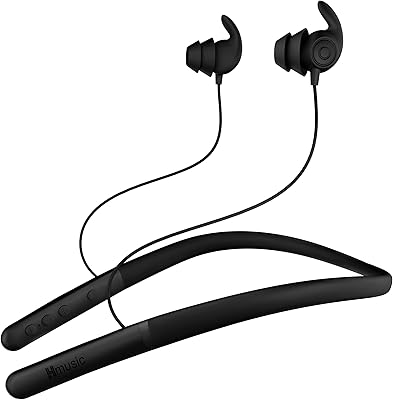
Hmusic HS88 Sleep Earbuds
85%
94%
Comfort for Side Sleepers
88%
Battery Life
82%
Sound Quality
80%
Noise Isolation
85%
Connectivity (Bluetooth 5.4)
More
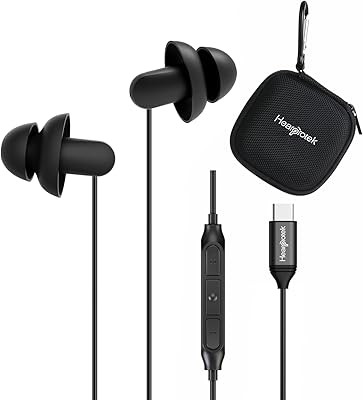
Hearprotek SE01T Sleep Earbuds
85%
88%
Comfort for Side Sleepers
92%
Noise Isolation Effectiveness
85%
Sound Quality
70%
Durability of the Cable
78%
Microphone & Call Quality
More
Sleepals Micro Sleep Earbuds
83%
92%
Comfort for Side Sleepers
78%
Noise Isolation Performance
87%
Battery Life
72%
Sound Quality
80%
Build Quality
More
Soundcore P40i
Soundcore P40i
78%
93%
Value for Money
91%
Battery Life
72%
Active Noise Cancellation
74%
Sound Quality
79%
Call Quality
More
Houlyn LX410P Sleep Earbuds
85%
89%
Comfort for Side Sleepers
80%
Noise Isolation
91%
Battery Life
75%
Bluetooth Connectivity
88%
Ease of Use
More

FAQ

Honestly, it depends on the type and volume of the snoring. The Soundcore Sleep A20 handles high-frequency noise — lighter snoring, ambient hiss, HVAC hum — reasonably well when you get a good seal with the right ear tip size. Deep, low-frequency snoring is a different story; passive isolation does not do much against it, and no amount of white noise fully masks very loud low-frequency sound. Go in with realistic expectations rather than treating the 30dB claim as a guaranteed result.

Active noise cancellation uses microphones and processing to generate an opposing sound wave that cancels incoming noise in real time — it is particularly effective against steady low-frequency sounds. Anker's sleep buds use passive isolation instead, which means physically blocking sound with a tight ear tip seal, then layering a masking sound on top of whatever gets through. It works differently and, for most people, less powerfully than ANC, especially for low-frequency noise.

Most users who toss and turn find the ear wings help anchor the fit well enough for moderate movement. The key is spending time with the included sizes to find the right ear tip and wing combination — a lot of the fit complaints come from people who grabbed the default size and never tried the alternatives. That said, if you are a very active sleeper who fully rolls over frequently, there is a real chance one bud works loose by morning.

This is one of the more honest concerns to raise. A meaningful number of users report connection drops during the night, sometimes accompanied by an audible alert that wakes them — which is exactly what you bought these to avoid. It is not universal, and keeping your phone close to the bed helps, but it is a documented enough issue that it is worth knowing about before you buy rather than after.

It is a fun addition, but treat it as a rough guide rather than a precise health tool. The MEMS sensor picks up movement and position changes, and the Soundcore app presents that as a sleep quality summary. However, app syncing failures have been reported by multiple users, causing sessions to go unrecorded. It is not a medically validated sleep monitor, so if accurate sleep data is your main goal, a dedicated wearable would serve you better.

You can stream anything you like via Bluetooth — Spotify, Apple Music, podcasts, audiobooks, YouTube, whatever your phone plays. The built-in white noise library is there as an offline backup so you do not need to keep a streaming app running all night, which helps battery life and reduces the risk of connection interruptions. Both modes work independently.

Start with the medium sealed tips and insert them so you feel a slight pressure seal in the ear canal — if audio sounds hollow or outside noise seems loud, go up a size. The breathable tips let more ambient sound through and are designed for people who find full isolation uncomfortable; try those if the sealed tips feel too occlusive. It genuinely takes a few nights of experimenting, but the right fit makes a noticeable difference in both comfort and noise blocking.

There is no specific safety concern with nightly use at moderate volume levels. That said, wearing any in-ear device every night for extended periods can affect ear canal hygiene, so cleaning the tips regularly and giving your ears an occasional night off is sensible practice. The IPX waterproof rating means sweat is not a concern, but the ear canal can retain moisture with prolonged wear, so keeping the tips clean matters.

They work with both Android and iOS devices — the listed compatibility for iPhone and iPad reflects common examples, not exclusivity. Any device with Bluetooth 5.3 or a compatible earlier version should pair without issue. The Soundcore app is available on both platforms for sleep tracking and settings customization.

Out of the box, the 14-hour sleep mode claim is accurate for most users. After several months of nightly charging cycles, a handful of long-term reviewers have reported noticeably shorter runtime — which is a normal lithium battery degradation pattern rather than a defect. If you primarily use sleep mode rather than Bluetooth streaming, the battery tends to hold up better over time since it draws less power per session.