Overview

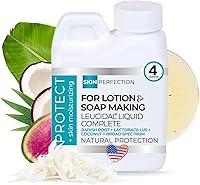
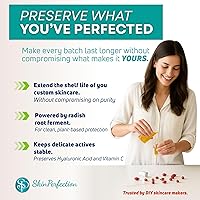
The Skin Perfection Leucidal Liquid Complete 4oz Preservative is a formulation ingredient — not a finished skincare product — designed for DIY makers who want to move away from synthetic preservatives without compromising microbial safety. It blends Lactobacillus ferment filtrate with coconut extract to serve two purposes at once: protecting water-based formulas and adding a light conditioning effect. One practical note upfront: this blend is solid at room temperature and requires gentle heating to between 95 and 104°F before it can be worked into a batch. Within the DIY cosmetic ingredients space, it fills a clear niche as a clean-label preservative alternative worth understanding before you start formulating.
Features & Benefits

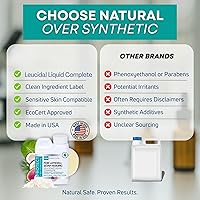
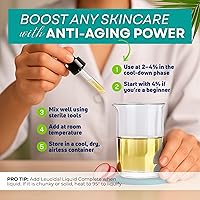
What makes this preservative blend distinct is its three-component makeup. It brings together Leucidal Liquid SF, AMTicide Coconut, and a Lactobacillus ferment filtrate — each contributing something specific. The SF component handles preservation, the AMTicide Coconut adds skin and hair conditioning, and the ferment filtrate supports hydration. For practical use, the 2-4% usage rate is accessible: beginners should start at 4%, while experienced formulators can scale down as needed. It's also heat-stable to 158°F, meaning it survives warm-process workflows without degrading. Vegan, gluten-free, non-GMO, and free of common allergens, it works across water-based lotions, serums, tonics, and hair care products.

Best For

This natural preservative ingredient is best suited to a specific kind of buyer. If you're building water-based formulas and want to skip parabens or conventional synthetics, it slots in naturally. Beginners to lotion and serum making will appreciate that it acts as a dual-purpose ingredient — preservation and conditioning combined, which simplifies the overall formula. It's also a strong fit for small-batch makers developing sensitive or allergy-conscious product lines where clean labeling genuinely matters. That said, it's not the right choice for strictly oil-based formulations — the Radish Root variant handles that better. Anyone already running warm-process recipes will find the heat stability practically useful, not just a label claim.

User Feedback

Sitting at 4.4 out of 5 stars across nearly 680 reviews, the Leucidal Complete has built a reputation for reliable, consistent results. Buyers frequently praise how smoothly it incorporates into water-based batches once properly heated, and many appreciate getting conditioning alongside preservation in a single addition. On the downside, the solid texture trips up newcomers — several reviewers mention clumping problems from skipping or rushing the heating step, so that learning curve is real. A portion of buyers comparing it to the SF Max variant felt the Max delivered stronger microbial protection, while the Complete's dual conditioning function remains its distinguishing advantage for those who value both benefits working together.

Pros

  • Combines preservation and skin conditioning in a single ingredient, simplifying formula development.
  • The 2-4% usage rate is clearly defined and accessible even for newer DIY formulators.
  • Heat-stable up to 158°F, so it holds up reliably in warm-process lotion and serum batches.
  • Vegan, gluten-free, and non-GMO certifications make it easy to market finished products with clean labels.
  • Works across a wide range of water-based applications, from face serums to hair tonics.
  • Free from common allergens, which adds confidence when formulating for sensitive skin audiences.
  • Solid user satisfaction across nearly 680 reviews points to consistent, repeatable results.
  • The AMTicide Coconut component adds genuine hair and skin conditioning value beyond just preservation.
  • Not tested on animals, supporting cruelty-free product positioning for makers who care about that.

Cons

  • Solid texture at room temperature requires a heating step to 95-104°F before every use, adding time and equipment.
  • Buyers comparing it to the SF Max variant report the Max may offer stronger microbial protection for higher-risk formulas.
  • The 4-ounce size runs out quickly for anyone making medium or large batches regularly.
  • Not suitable for oil-based or anhydrous formulas, which limits its versatility for certain product types.
  • Rushing or skipping the heating step causes clumping issues that several users flagged as a real frustration.
  • Natural preservative alternatives generally require more careful pH and usage-rate management than conventional synthetics.
  • No detailed third-party challenge test data is publicly available to independently verify microbial efficacy claims.
  • Formulators new to working with solid ingredients may need a learning curve before getting consistent results.

Ratings

The scores below reflect an AI-driven analysis of verified global buyer reviews for the Skin Perfection Leucidal Liquid Complete 4oz Preservative, with spam, incentivized, and bot-flagged submissions actively filtered out to preserve accuracy. Ratings are calibrated to capture both what this preservative blend genuinely does well and where real formulators have hit frustrating walls. The result is an honest, transparent picture — not a manufacturer summary.

Preservation Effectiveness
78%
22%
Most verified buyers making water-based lotions and serums report solid microbial protection when the blend is used at the recommended 2-4% rate with proper sanitization habits. For everyday DIY personal care products — face toners, conditioning hair rinses, simple emulsions — the feedback is consistently positive on actual shelf performance.
A notable segment of experienced formulators, particularly those comparing it directly to the SF Max variant, feel the protection ceiling is lower than they need for more complex or higher-water-activity formulas. Without publicly available third-party challenge test data, buyers making products for wider distribution are left to verify efficacy themselves.
Ease of Use
71%
29%
The clearly stated 2-4% usage rate is one of the more beginner-accessible instructions in the natural preservative category, and buyers appreciate that the guidance explicitly tells newcomers to start at the higher end of the range. Once the heating step becomes part of a maker's routine, most report the blending process as smooth and reliable.
The mandatory heating step to liquefy the solid texture is the single biggest usability complaint across reviews — formulators who skip or rush it end up with clumping that is difficult to fully disperse. Makers without a dedicated thermometer or warm water bath setup find this ingredient more demanding than liquid alternatives on the market.
Ingredient Quality
88%
The three-component blend — Leucidal Liquid SF, AMTicide Coconut, and Lactobacillus ferment filtrate — draws consistent praise from buyers who track ingredient sourcing carefully. Formulators developing clean-label or natural-positioned skincare lines specifically call out the vegan, non-GMO, and gluten-free certifications as meaningful differentiators for their finished product marketing.
A small but vocal group of buyers notes that the coconut-derived component can be a concern for customers with specific coconut sensitivities, even if it clears general allergen panels. There is also a desire among more advanced formulators for greater transparency around the exact sourcing and concentration ratios of each sub-ingredient.
Dual-Function Value
83%
Getting both preservation and skin or hair conditioning from a single ingredient genuinely simplifies formulation, and buyers making conditioning body lotions or leave-in hair products appreciate not needing a separate conditioning agent. Several reviewers specifically mention that the AMTicide Coconut component produces a noticeable softness improvement in finished emulsions.
Formulators who already use dedicated conditioning agents in their recipes find the dual-function pitch less compelling — they are essentially paying for conditioning they do not need. The conditioning effect at 2-4% usage is also described as subtle rather than dramatic, so anyone expecting a significant moisturizing boost from this ingredient alone may be underwhelmed.
Scent Neutrality
74%
26%
The vast majority of buyers report that at typical usage rates the preservative blend is effectively scent-neutral in a finished formula, which is important for makers crafting fragrance-forward or unscented products where any background odor would be a real problem. This is a meaningful practical advantage over some ferment-based alternatives that carry a noticeable fermented smell.
A handful of buyers with highly sensitive noses or very delicate fragrance profiles report catching a faint, slightly fermented undertone, particularly in products where the blend is used at the upper 4% concentration. This is a minor concern for most makers but worth noting for anyone producing clinical-style unscented formulas with zero scent tolerance.
Heat Stability
91%
Stability up to 158°F (70°C) gives formulators real flexibility in workflow design — it can be incorporated into warm-process emulsions without degradation concerns, which removes a timing constraint that other natural preservatives impose. Buyers running dual-phase hot-process lotions specifically call this out as a practical advantage over more heat-sensitive alternatives.
While the heat stability specification is well-regarded, a few buyers note they would prefer clearer guidance on the minimum temperature threshold for incorporation during cool-down phases, since the product literature focuses mainly on the maximum ceiling rather than the optimal addition window for consistent results.
Formulation Versatility
76%
24%
The range of compatible product types is broad for a natural preservative — water-based lotions, facial serums, hair tonics, conditioners, and liquid soaps all work within its design parameters, which means a maker can standardize on a single preservative across most of their catalog. Buyers running small multi-product lines particularly value this consolidation.
The limitation to water-containing formulas is a genuine constraint that frustrates buyers who work across both water-based and anhydrous product types, as it means maintaining a second preservative system for balms, butters, and oil-based serums. Formulators new to the category occasionally purchase this expecting broader compatibility before discovering the water-phase requirement.
Value for Money
69%
31%
At a 2-4% usage rate, the 4-ounce jar extends across a meaningful number of small batches, and buyers who do the math often acknowledge the per-batch cost is reasonable relative to what the ingredient delivers. The dual preservation and conditioning function also offsets cost somewhat by replacing what would otherwise be two separate line items.
The upfront price per ounce sits on the higher end compared to conventional synthetic preservatives, which is a friction point for cost-sensitive makers scaling up production. Buyers who go through preservative quickly find the 4-ounce size an awkward middle ground — not small enough for casual experimenters and not large enough for anyone making regular medium-sized batches.
Packaging & Presentation
66%
34%
The compact 2 x 2.5 x 4 inch container stores efficiently in a formulation workspace without taking up counter space, and buyers generally report that the jar seals cleanly between uses without residue buildup around the lid. For makers storing ingredients in organized bins or shelves, the footprint is practical.
Several buyers note that scooping out a solid ingredient from a jar — especially after partial use when the remaining amount settles and re-solidifies unevenly — is messier and less precise than working with a liquid dispensed from a bottle. There is no graduated markings or built-in measurement aid, which makes precise small-batch weighing more dependent on having a reliable scale.
Beginner Accessibility
72%
28%
The documented guidance to start at 4% concentration gives new formulators a safety-oriented entry point, and the broad range of compatible formula types means beginners can use it across their first few recipe experiments without needing multiple preservative systems. Many newer DIY makers in the reviews specifically mention it as their first natural preservative purchase.
The heating requirement introduces a variable that trips up beginners who are not yet working with thermometers as standard tools, and mistakes in that step lead to inconsistent blending outcomes that get misattributed to the product rather than technique. The solid form also makes accurate small-batch weighing harder for makers not yet using precision gram scales.
Allergen & Sensitivity Profile
84%
The allergen-free formulation profile and cruelty-free credentials give makers producing products for sensitive skin audiences a clean marketing narrative, which buyers developing lines for eczema-prone or reactive skin types specifically call out as valuable. The non-GMO certification also resonates with buyers targeting wellness-conscious retail customers.
Despite the clean allergen profile, the coconut-derived component remains a consideration for the small subset of consumers with documented coconut sensitivities, which makers need to flag transparently in their own finished product ingredient disclosures. A few buyers also note that the vegan certifications, while appreciated, are not backed by a named third-party certifying body in the product documentation.
Shelf Life Stability
73%
27%
Buyers who store the preservative blend in a cool, dry environment report no visible degradation or performance changes over several months of regular use, which aligns with what you would expect from a well-formulated ferment-based system. For small-batch makers who rotate stock regularly, the shelf stability is largely a non-issue.
The lack of a clearly printed expiration date or period-after-opening symbol on the packaging frustrates buyers who manage multiple ingredient inventories and rely on labeling to track freshness. A few reviewers also report textural changes — graininess or off-coloring — in jars stored in warmer ambient conditions, suggesting temperature control during storage is more critical than the packaging implies.
Comparability to Similar Variants
67%
33%
Within the Leucidal product family, the Complete variant carves out a clear niche for makers who specifically want conditioning added to their preservation system, and buyers who have tried multiple variants generally agree that the conditioning benefit is the tangible differentiator worth paying attention to when choosing between options.
The existence of closely related variants — particularly the SF and SF Max — creates purchase confusion that surfaces repeatedly in the reviews, with buyers unsure which version suits their specific formula type. Several customers report buying this blend when they actually needed the SF Max for stronger standalone preservation, leading to returns or wasted small batches.

Suitable for:

The Skin Perfection Leucidal Liquid Complete 4oz Preservative is a smart buy for DIY skincare makers who are serious about keeping synthetic preservatives out of their formulas without cutting corners on microbial safety. It works especially well for anyone building water-based products — think lotions, facial serums, toners, or conditioning hair rinses — where preservation is non-negotiable but clean labeling also matters. Beginners will find the straightforward 2-4% usage rate approachable, particularly with the guidance to start at the higher end of that range while learning. The dual function of preservation plus conditioning is genuinely useful for small-batch formulators who want to keep their ingredient lists lean. Makers developing products for sensitive or allergy-prone skin will also appreciate the vegan, gluten-free, non-GMO profile and the absence of common allergens.
Not suitable for:

The Skin Perfection Leucidal Liquid Complete 4oz Preservative is not a good fit for formulators working exclusively with oil-based or anhydrous recipes, since its preservation activity is designed for water-containing systems. Buyers expecting a ready-to-apply skincare product will be disappointed — this is strictly a raw formulation ingredient that requires proper blending at the correct concentration. The solid-at-room-temperature form adds a mandatory heating step that can frustrate makers who want a quick, no-fuss workflow, particularly in a small kitchen setup without precise temperature control. Those who need the strongest possible broad-spectrum microbial protection for high-risk formulas may find the Leucidal SF Max variant a more appropriate choice based on user comparisons. Anyone working at commercial scale may also find the 4-ounce size limiting for cost efficiency.
Specifications

  • Brand: Manufactured by Active Micro Tech. LLC and sold under the Skin Perfection brand.
  • Volume: Each container holds 4 fluid ounces (approximately 118ml) of preservative blend.
  • Physical Form: The blend is solid at room temperature and must be heated to between 95°F and 104°F to liquefy before use.
  • Key Ingredients: Formulated with three active components: Leucidal Liquid SF, AMTicide Coconut, and Lactobacillus ferment filtrate.
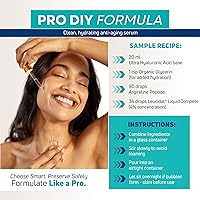
  • Usage Rate: Recommended addition rate is 2-4% of total formula weight, with beginners advised to start at the 4% end.
  • Heat Stability: Remains stable and effective at temperatures up to 158°F (70°C), making it compatible with warm-process formulation methods.
  • Compatible Bases: Designed specifically for water-containing formulations including lotions, serums, toners, hair care products, and soap.
  • Certifications: Certified vegan, gluten-free, and non-GMO, with no ingredients derived from genetically modified organisms.
  • Allergen Status: Formulated without common allergens, making it suitable for use in products targeting sensitive skin types.
  • Animal Testing: This product and its components are not tested on animals.
  • Item Dimensions: The container measures 2 inches in length, 2.5 inches in width, and 4 inches in height.
  • Target Users: Suitable for teen and adult formulators, from beginners making their first small batches to experienced cosmetic makers.
  • Customer Rating: Holds a 4.4 out of 5 star average rating based on approximately 680 customer reviews on Amazon.
  • Market Rank: Ranked #77,908 in Beauty and Personal Care and #1,125 in Body Lotions on Amazon at time of review.
  • Storage: Should be stored in a cool, dry place away from direct sunlight to maintain stability and extend shelf life.
  • Batch Guidance: Beginners are advised to always start with a small test batch using properly sanitized equipment before scaling up.

Related Reviews
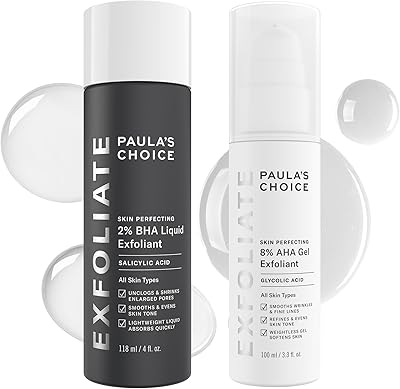
Paula's Choice AHA & BHA Exfoliant Duo
77%
88%
Effectiveness on Pores
91%
Surface Texture Improvement
76%
Formula Gentleness
67%
Ease of Use
72%
Value for Money
More
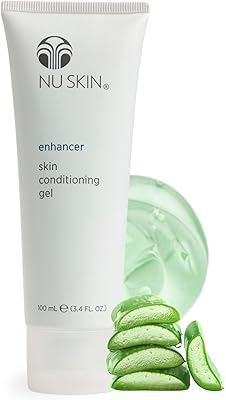
Nu Skin Enhancer Skin Conditioning Gel 3.4oz
86%
88%
Hydration Effectiveness
84%
Pore Refining
92%
Texture and Feel
90%
Absorption Speed
91%
Non-Greasy Formula
More
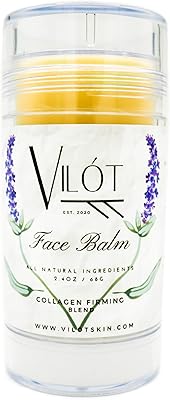
Vilót Skin Face Balm for Skin Barrier Repair 2.4oz
87%
89%
Effectiveness in Skin Barrier Repair
92%
Hydration & Moisture Retention
90%
Gentle Formula for Sensitive Skin
87%
Absorption Speed & Texture
84%
Collagen-Boosting Benefits
More
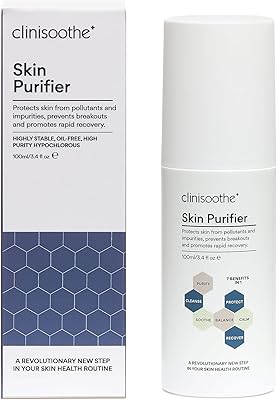
Clinisoothe+ Skin Purifier 3.4oz Acne Treatment Spray
81%
82%
Formulation Efficacy
93%
Skin Tolerance & Safety
88%
Redness & Inflammation Relief
71%
Acne & Breakout Control
61%
Value for Money
More
Bevinas Acrylic Nail Monomer Liquid 4oz
78%
92%
Formula Safety
88%
Adhesion Strength
83%
Cure Time
41%
Odor Level
86%
Yellowing Resistance
More
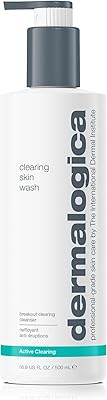
Dermalogica Clearing Skin Wash 8.4 fl oz
80%
88%
Breakout Control
84%
Skin Feel After Rinsing
91%
Ingredient Quality
62%
Value for Money
73%
Gentleness on Sensitive Skin
More
Luxvez Grass-Fed Whipped Tallow Balm 4oz
81%
88%
Skin Hydration
83%
Texture & Absorption
91%
Ingredient Transparency
86%
Sensitive Skin Compatibility
67%
Scent Profile
More
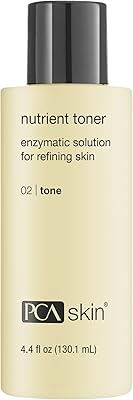
PCA SKIN Hydrating Toner 4.4oz
87%
90%
Effectiveness in Hydration
87%
Gentle Exfoliation
92%
Suitability for Sensitive Skin
84%
Skin Texture Improvement
81%
Packaging and Dispensing
More
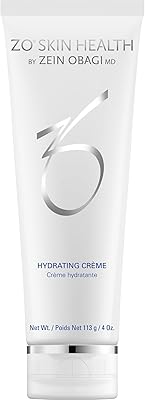
ZO SKIN HEALTH Hydrating Creme 4oz
87%
88%
Hydration Effectiveness
91%
Skin Compatibility (Sensitive Skin)
86%
Absorption & Finish
83%
Texture & Feel
90%
Non-Comedogenic Formula
More
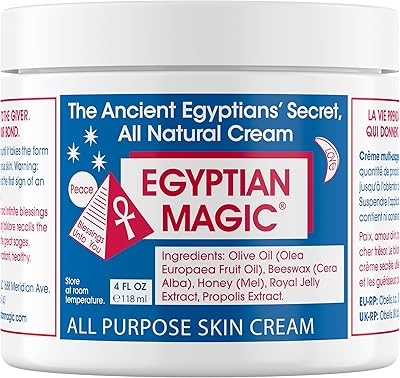
Egyptian Magic All Purpose Skin Cream 4oz
75%
93%
Moisturizing Performance
97%
Ingredient Transparency
88%
Versatility of Use
61%
Texture & Absorption
84%
Eczema & Skin Condition Relief
More

FAQ

Not at all — this is completely normal. The Leucidal Complete is naturally solid at room temperature, which is just how the formula behaves. To use it, gently warm the amount you need to between 95°F and 104°F until it liquefies, then add it to your formulation as usual. A warm water bath works well for this.

The standard addition rate is 2-4% of your total batch weight. If you are new to formulating, start at 4% — it gives you a stronger safety margin while you are still learning. More experienced makers often dial it down to 2-3% once they are confident in their process and have done challenge testing.

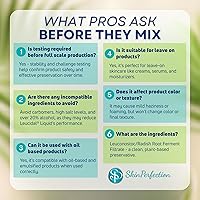
No, this preservative blend is specifically designed for water-containing formulas. It will not provide meaningful microbial protection in anhydrous (water-free) products like straight body butters or lip balms. If your formula contains any water, an emulsion, or a hydrosol, then it is appropriate to use.

At the recommended 2-4% usage rate, it is designed to act as a preservative alternative in typical DIY water-based formulas. That said, no natural preservative system should be used without proper challenge testing if you plan to sell or distribute your products. For personal use with good sanitation practices, most users report solid results.

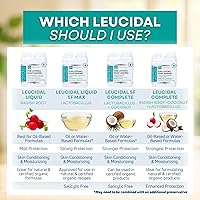
The main difference comes down to function. This blend adds conditioning benefits alongside preservation, which is useful if you want a dual-purpose ingredient. The SF Max is focused more squarely on preservation strength and is often preferred when maximum microbial protection is the priority. If your formula already has good conditioning agents, the SF Max might be the better fit.

At the recommended usage rates, most formulators report that the preservative blend does not noticeably change the texture or skin feel of finished lotions and serums. The coconut-derived AMTicide component can contribute a very slight conditioning effect, which is generally considered a bonus rather than a drawback.

It has a very mild, faint odor on its own that most users describe as barely noticeable once incorporated into a full batch. At 2-4% usage levels, it is unlikely to interfere with fragrances or essential oils in your formula. That said, if you are making an unscented product with very specific odor standards, it is worth doing a small test batch first.

Because it is heat-stable up to 158°F, you have flexibility here. You can add it during the water phase at lower processing temperatures or during cool-down, typically below 104°F after you have liquefied it. Most formulators prefer adding it in the cool-down phase between 104°F and 140°F to keep things straightforward.

It is formulated without common allergens and carries vegan and gluten-free certifications, which makes it a reasonable choice for sensitive skin formulations. However, every person's skin is different, and if you are developing products for someone with known ingredient sensitivities, reviewing the full ingredient list with a dermatologist is always a good idea.

That depends entirely on how much you make. Since you only add 2-4% per batch, a 4-ounce jar goes a surprisingly long way for small personal batches — it could cover several hundred grams of finished product across multiple sessions. If you are scaling up production regularly, you might want to consider purchasing in larger quantities for better value.